- Competition from Other Plants: Turfgrass, weeds, and nearby shrubs can vigorously compete with a tree for available soil moisture, especially in dense plantings or areas where the tree's root zone is invaded.
- Overhead Irrigation: Sprinkler systems designed for lawns often provide frequent, shallow watering. This encourages shallow root growth in trees, making them more vulnerable to drought when the surface dries out quickly.
- Heat and Wind: Extremely hot temperatures increase a tree's water demand. Strong winds further accelerate transpiration, drawing moisture from leaves at a faster rate and exacerbating drought conditions.
Landscaping · Deck or fence project
| Project category | Landscaping |
|---|---|
| Problem type | Deck or fence project |
| Trade required | Landscaping |
| Urgency | Planned project |
| Safety risk | Moderate safety risk |
| DIY suitability | DIY for experienced homeowners |
| Cost category | High cost |
| Typical timeline | Most builds 3–10 days depending on size |
| Contractor type | Landscaping contractor |
Repair option
Replace failed boards, posts, and hardware; reseal the surface.
Replacement option
Rebuild when framing or the ledger connection is unsafe.
Common causes
- Rot at posts and ledger
- Storm damage
- Adding outdoor living space
Relevant tools:home improvement material pricesproject cost estimator
Published July 10, 2026Last updated August 17, 2026
Tools & materials you'll need
Affiliate links- AmazonGarden trowel or soil probeFor checking soil moisture depth
- AmazonGarden hose with slow-drip attachment or soaker hoseEssential for deep watering
- AmazonWatering can (for small trees)
- AmazonHand pruners or loppersFor removing small dead branches, if needed later
- AmazonGarden forkOptional, for light soil aeration
- AmazonOrganic mulch (wood chips, shredded bark)1-2 bags or cubic yard
As an Amazon Associate FixlyGuide earns from qualifying purchases — at no extra cost to you. Prices and availability are accurate as of publication and subject to change.
Quick Answer
Brown leaves on a tree, particularly when appearing during or after periods of low rainfall, are frequently a sign of drought stress. This condition arises when a tree's root system cannot absorb sufficient water to meet the demands of its leaves, leading to the desiccation and browning of foliage. Understanding the specific visual cues and implementing proper watering techniques are crucial for diagnosing and remediating drought-stressed trees before long-term damage occurs.
The Problem
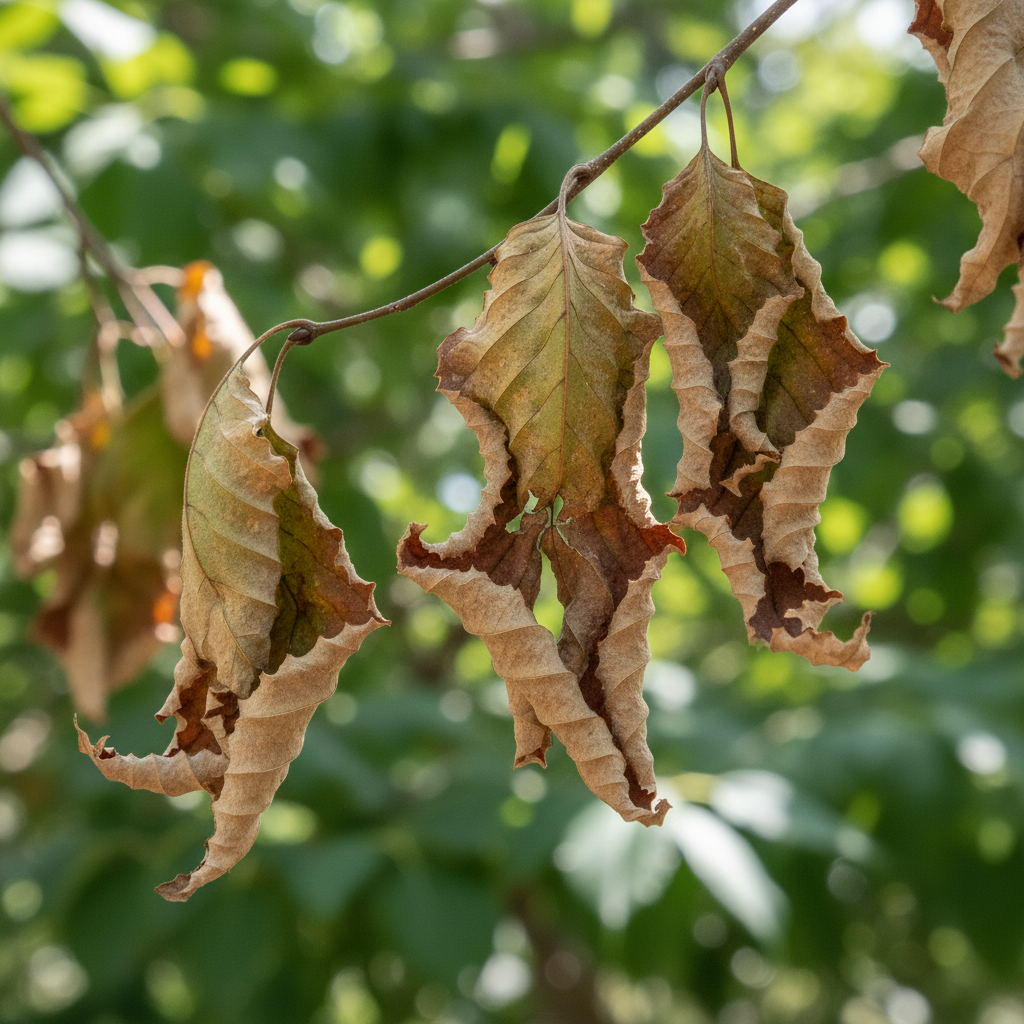
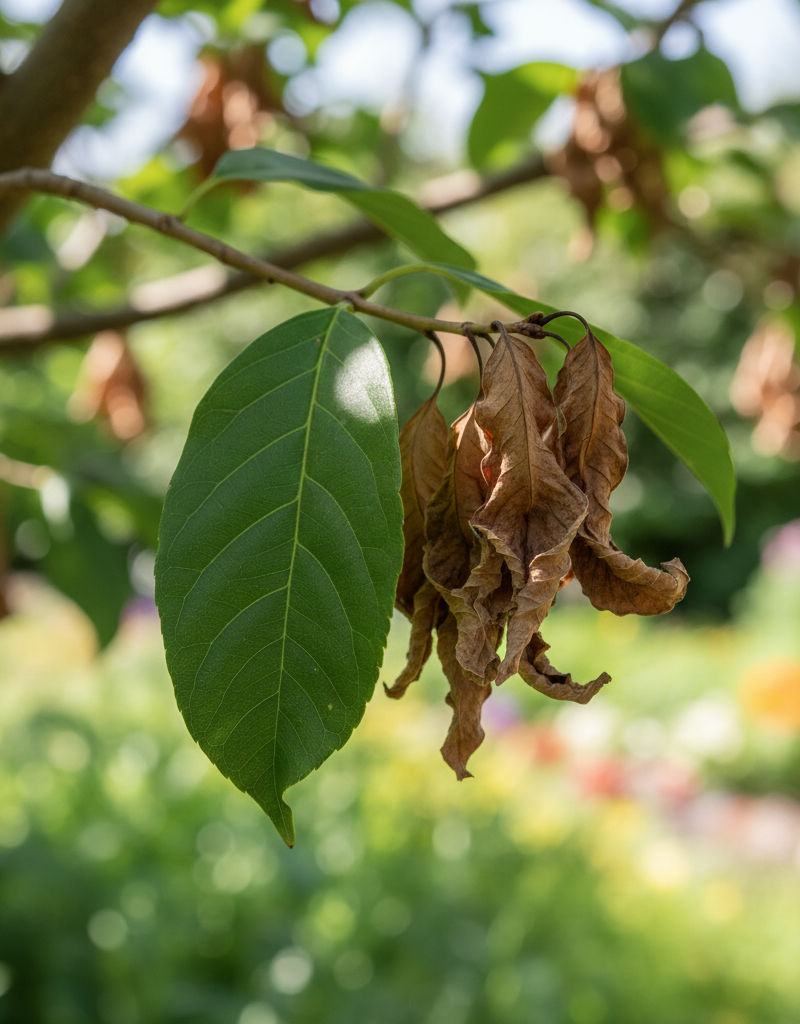
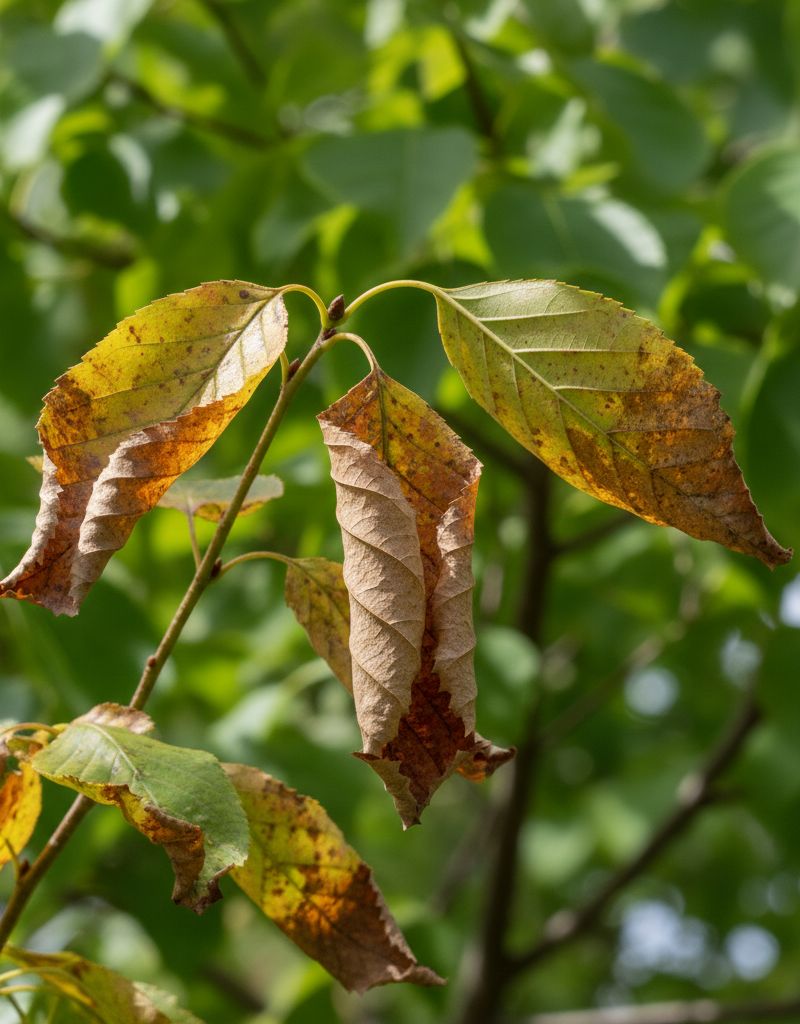
Many homeowners observe their tree leaves turning brown and immediately suspect disease or insect infestation. While these are possibilities, the far more common culprit, especially in climates with dry spells or during hot summers, is environmental stress – specifically, drought. A tree under drought stress is essentially dying of thirst. Its leaves, which normally transpire (release water vapor) to cool the tree and pull water up from the roots, begin to shut down this process to conserve moisture. Initially, you might see wilting or dull foliage. As the stress intensifies and cells within the leaves begin to collapse, the leaves will turn yellow, then brown, starting from the tips or edges and progressing inward. If left unaddressed, prolonged drought stress can severely weaken a tree, making it susceptible to secondary pests and diseases, and eventually leading to its death.
The real challenge for homeowners is differentiating drought stress from other issues that manifest with similar symptoms. Overwatering, nutrient deficiencies, root damage, and certain fungal diseases can all cause leaves to brown. However, the timing (hot, dry weather), the pattern of browning (often uniform across the tree or starting from the top/outer branches), and simple soil moisture tests are key to correctly diagnosing drought and implementing the right solution.
How It Works
Trees are complex hydraulic systems. Water absorbed by the roots travels upward through specialized tissues called xylem, reaching every leaf, branch, and twig. This process is driven primarily by transpiration from the leaves. As water evaporates from microscopic pores (stomata) on the leaf surface, it creates a negative pressure, pulling more water up from the roots – a phenomenon known as transpirational pull. This continuous flow of water is essential for photosynthesis (the process by which trees convert sunlight into energy) and for cooling the tree.
When soil moisture is insufficient due to drought, the roots struggle to absorb enough water to replace what's being lost through transpiration. The tree's immediate response is to conserve water. It may close its stomata to reduce water loss, but this also inhibits photosynthesis. If the water deficit continues, the xylem tissues can experience cavitation, where air bubbles form and disrupt the water column, effectively blocking water flow to parts of the tree. This is similar to giving a person a blood clot. Without an adequate water supply, leaf cells begin to dry out and die, leading to the characteristic browning and crisping. The browning often starts at the leaf margins or tips because these are the furthest points from the water source and the first to experience water deprivation. Over time, entire branches, and eventually the tree itself, can succumb if adequate water is not restored.
Step-by-Step Fix
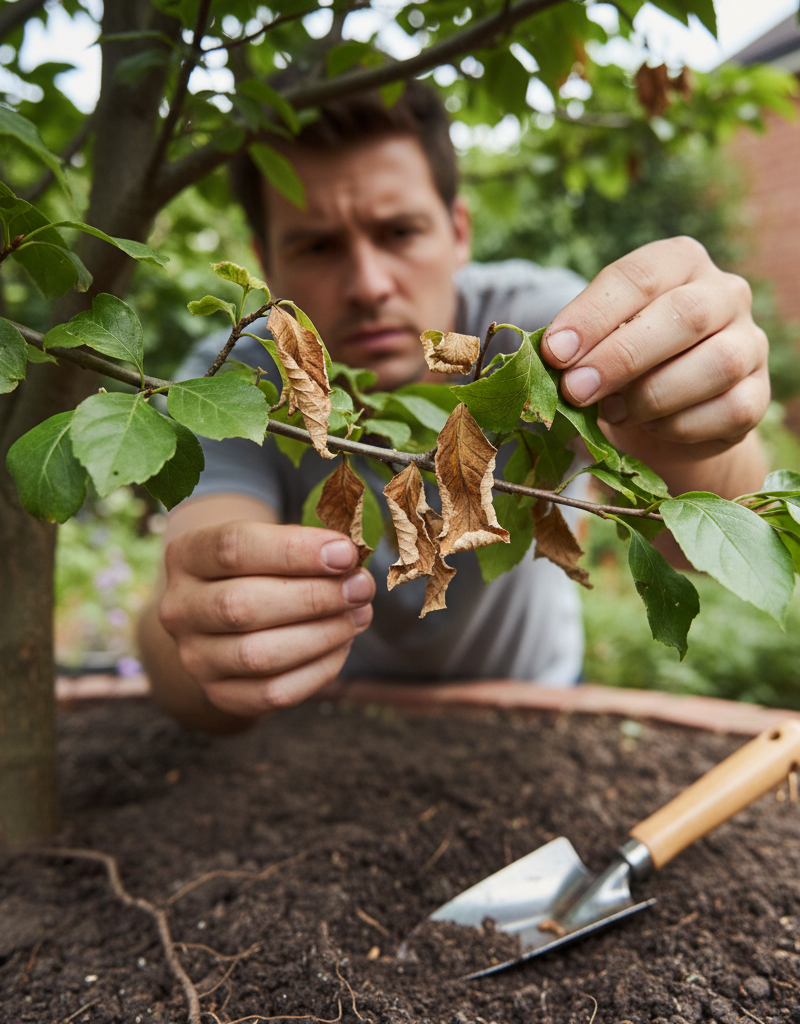
1. Confirm Drought is the Culprit — Don't just assume; verify the problem. Before you start watering heavily, rule out other issues. Check weather patterns for recent dry spells. Visually inspect the tree for signs of disease (spots, cankers, unusual growths) or insect activity (chewed leaves, webs, holes). Most importantly, perform a soil moisture test. Use a trowel, soil probe, or even your finger to check soil moisture at a depth of 4-6 inches around the tree's drip line (the imaginary circle on the ground directly beneath the outer edge of the tree's branches). If the soil is dry and crumbly, drought is highly likely.
2. Prepare the Ground for Deep Watering — Ensure water penetrates where it's needed. Clear away any turf, weeds, or mulch that might be obstructing water from reaching the soil directly above the root zone. If you have a thick layer of mulch, pull it back temporarily. For heavily compacted soil, lightly aerate the area within the drip line using a garden fork, being careful not to damage surface roots. This improves water penetration.
3. Initiate a Deep, Slow Watering Session — Saturate the root zone, don't just wet the surface. The goal is deep saturation. For smaller trees (under 10 feet tall), use a soaker hose or slowly trickle water from a garden hose for 30-60 minutes around the root zone, within the drip line. For larger, established trees, multiple applications or longer durations are needed. A good rule of thumb is to provide 10-15 gallons of water per inch of trunk diameter (measured 4.5 feet from the ground) per week. Use a root feeder if your soil is very compacted, but be cautious not to overdo it at one spot. Water until the soil is moist to a depth of 12-18 inches.
- Tool Note: A soil moisture meter can help you monitor depth.
- If this doesn't work: If water pools on the surface and doesn't penetrate, your soil is likely extremely compacted. Consider applying a liquid aerator or consulting an arborist for deep root fertilization and aeration services.
4. Monitor Soil Moisture and Establish a Watering Schedule — Consistency is key for recovery. After the initial deep watering, check the soil moisture every 2-3 days using your finger or a moisture meter. Allow the top few inches of soil (2-3 inches) to dry out slightly before watering again. During hot, dry periods, young trees may need water 2-3 times a week, while established trees might need it once a week. Adjust frequency based on weather, tree size, and soil type. Sandy soils drain faster and require more frequent watering than clay soils.
5. Apply a Mulch Ring — Conserve moisture and regulate soil temperature. Once the ground is adequately moist, apply a 2-4 inch layer of organic mulch (like wood chips or shredded bark) in a broad ring around the tree, extending to the drip line. Keep the mulch a few inches away from the tree trunk to prevent rot and pest issues. Mulch significantly reduces evaporation, keeps soil cooler, and helps suppress weeds that compete for water.
6. Prune Dead or Severely Damaged Branches (Later) — Remove unsalvageable parts to help the tree recover. Once the tree has been consistently watered for several weeks and shows signs of recovery (new growth, improved leaf turgor), you can carefully prune any branches that are definitively dead. Scrape a small bit of bark with your fingernail; if it's green underneath, it's alive. If it's brown and dry, the branch is likely dead. Use clean, sharp pruners. Do not over-prune, as the tree needs its remaining leaves for photosynthesis.
- Safety Note: For branches requiring a ladder or chainsaw, consider calling an arborist.
Common Causes
- Insufficient Rainfall: Prolonged periods without adequate natural precipitation are the most obvious cause of drought stress. Even during rainy seasons, short, infrequent showers might not penetrate deep enough to reach established root systems.
- New Tree Establishment: Newly planted trees have smaller, less developed root systems and are highly vulnerable to drought. They require consistent, supplemental watering during their first 2-3 years, even if older, established trees nearby seem healthy.
- Competition from Other Plants: Turfgrass, weeds, and nearby shrubs can vigorously compete with a tree for available soil moisture, especially in dense plantings or areas where the tree's root zone is invaded.
- Poor Soil Drainage: Paradoxically, while drought is about lack of water, poor drainage can exacerbate the problem. If soil is heavily compacted or contains a hardpan layer, water might not penetrate deeply, leading to a shallow root system that is very susceptible to drying out during dry spells.
- Overhead Irrigation: Sprinkler systems designed for lawns often provide frequent, shallow watering. This encourages shallow root growth in trees, making them more vulnerable to drought when the surface dries out quickly.
- Heat and Wind: Extremely hot temperatures increase a tree's water demand. Strong winds further accelerate transpiration, drawing moisture from leaves at a faster rate and exacerbating drought conditions.
Common Mistakes
- Assuming All Brown Leaves Mean Death: Many homeowners see browning leaves and assume their tree is unsalvageable. Often, drought-stressed trees can recover with proper intervention, especially if caught early. Don't give up immediately!
- Shallow, Frequent Watering: Providing small amounts of water daily or every other day encourages a shallow root system, making the tree even more susceptible to drought. Deep, infrequent watering is far more effective.
- Overwatering Out of Panic: While drought is the problem, overwatering can also cause browning leaves due to root rot and lack of oxygen. Always check soil moisture before watering. More water isn't always better.
- Watering Only at the Trunk: A tree's primary water-absorbing roots extend far beyond the trunk, typically out to the edge of its canopy (the drip line) and sometimes beyond. Concentrating water only at the base is inefficient.
- Mistaking Drought for Disease/Pests: Reaching for pesticides or fungicides when the real issue is lack of water wastes money and time, and it doesn't solve the underlying problem. Proper diagnosis is crucial.
- Not Mulching: Skipping mulch means more water evaporates directly from the soil, warming the soil and allowing weeds to thrive. Mulch is a simple, effective tool for moisture conservation.
Cost & Time Breakdown
| Task | DIY cost | Pro cost | Time |
|---|---|---|---|
| Soil Moisture Check | $0–$25 | N/A | 5–10 min |
| Deep Watering Setup (Hose/Soaker) | $0–$50 | N/A | 10–30 min |
| Weekly Deep Watering | $5–$20 (water) | N/A | 1–4 hours/tree |
| Organic Mulch Application | $20–$100 | $100–$300+ | 30–60 min |
| Pruning Dead Branches | $0–$30 (tools) | $150–$500+ | 30–90 min |
Tips & Prevention
- Implement a Proactive Watering Schedule: During dry periods, don't wait for leaves to brown. Start deep watering before your trees show signs of stress. New trees need water even more consistently.
- Check Soil Moisture Regularly: Make it a habit to check the soil around your trees, especially young ones, by hand or with a moisture meter. This is especially important during hot, windy, or rainless stretches.
- Use a Rain Gauge: Monitor actual rainfall. A simple rain gauge can help you determine if natural precipitation is truly sufficient, or if supplemental watering is needed.
- Proper Mulching is Key: Maintain a 2-4 inch layer of organic mulch around your trees, keeping it a few inches from the trunk. This is one of the most effective ways to conserve soil moisture.
- Select Drought-Tolerant Species: When planting new trees, consider species native to your region or those known for their drought resistance once established. This reduces future watering needs.
- Avoid Compacting Soil: Minimize foot traffic and vehicle movement around the tree's root zone. Compacted soil restricts root growth and reduces water penetration.
When to Call a Professional
While many drought-related issues can be managed by the homeowner, there are specific situations where a certified arborist's expertise is invaluable. If you have a large, mature tree showing significant browning (more than 30-40% of the canopy), or if the browning progresses rapidly despite your watering efforts, a professional assessment is crucial. Arborists can perform soil tests to rule out nutrient deficiencies or pH imbalances that mimic drought symptoms. They can also provide deep root watering and fertilization, which is more effective for severely stressed trees and compacted soils than typical homeowner methods. If your tree is showing signs of secondary pest or disease infestation (e.g., borers, cankers) as a result of drought stress, an arborist can accurately diagnose these issues and recommend targeted treatments. Finally, if large, dead branches pose a falling hazard, a professional arborist is equipped to safely remove them without further damaging the tree or risking injury.
Related Articles
Keep troubleshooting with these hand-picked guides from FixlyGuide:
- The #1 Mistake Killing Your Tree Leaves (It’s Not What You Think) — Discover the shocking truth behind why your tree leaves are turning brown and how a simple change can revive your tree’s health.
- The #1 Mistake Killing Your Summer Lawn (And How to Fix It in a Weekend) — Overwatering is the silent killer behind many yellow summer lawns, often mistaken for drought. Learn how to diagnose and correct drainage i…
- The Invisible War Under Your Sidewalk: 3 Ways to Stop Tree Roots (Without Killing the Tree) — Tree roots lifting your sidewalk can be a trip hazard and an eyesore. Learn how to address the issue effectively and prevent further damage.
- The #1 Sprinkler Winterization Mistake That Costs Homeowners Thousands — Discover the crucial mistake many homeowners make winterizing sprinklers and how to avoid costly freeze damage with proper blowout techniqu…
- The #1 Mistake Killing Your Thin Lawn (And How to Overseed Like a Pro) — Discover the crucial mistake homeowners make with thin lawns and how proper overseeding can transform your turf.
- The #1 Backsplash Mistake Most DIYers Make (And How to Fix It Before It's Too Late) — Discover the most overlooked mistake in beginner backsplash installations and how to prevent or fix it for a professional-looking finish.
Should you do this yourself?
Answer five quick questions before you start. Safety outranks savings every time.
Your experience with work like this
How high do you have to work?
Does the job involve any of these?
Will it need a permit?
Specialty tools
Free and instant. Educational guidance only — not a quote, inspection, or professional diagnosis.
What should this project cost?
Enter your project details for a realistic cost range before you call anyone.
Cost depends heavily on which system turns out to be the source.
- Regional adjustment
- National average
- Labor share (typical)
- ~$1,620
- Quotes to collect
- 3 written estimates
Educational estimate based on national averages — not a binding quote. Always confirm with written local estimates.
Before you start
Check the difficulty, permits, and safety risk — then decide whether to call a pro.
- Estimate this projectGet a cost range for your scope and ZIP before you call anyone.Open
- Get local estimatesSend one request and compare written estimates from vetted pros.Open
Free, no signup required. Estimates are educational guidance, not a quote or an inspection.
Frequently asked questions
How can I tell if my tree just needs water or if it's really sick?+
The easiest way to differentiate drought stress from disease is by checking the soil moisture. If the soil 4-6 inches deep is dry and crumbly, and you've had little rain, drought is the likely culprit. Diseases often present with more specific symptoms like spots, cankers, or insect evidence. If the soil is wet, but leaves are browning, it could be root rot from overwatering or another issue requiring professional diagnosis.
How much water does a drought-stressed tree need?+
A good starting point is 10-15 gallons of water per inch of trunk diameter (measured 4.5 feet from the ground) per week during dry periods. Apply it slowly and deeply to saturate the root zone (12-18 inches deep). Young trees need more frequent watering than established ones.
Can a tree recover if its leaves have already turned brown?+
Yes, many drought-stressed trees can recover, especially if the browning is not extensive and watering begins promptly. Leaves that have already turned completely brown and crispy will not recover and may eventually fall off. However, the tree can often push out new growth from still-living buds once adequate water is restored. Consistent, deep watering is essential for recovery.
Should I fertilize a drought-stressed tree?+
Avoid fertilizing a severely drought-stressed tree. Fertilizers can encourage new growth, which puts additional demands on an already compromised root system. Focus on deep watering first. Once the tree shows signs of recovery (several weeks of consistent watering and some new growth), a light application of a slow-release, balanced fertilizer can be considered, but it's often best dissolved in water to ensure it gets to the roots.
How long does it take for a tree to recover from drought stress?+
The recovery time varies greatly depending on the severity and duration of the drought, the tree species, and its overall health. Mildly stressed trees might show improvement within a few weeks with consistent watering. Severely stressed trees could take months or even a full growing season to fully recover, and some may not survive. Patience and continued proper care are key.
Discussion
Loading comments…