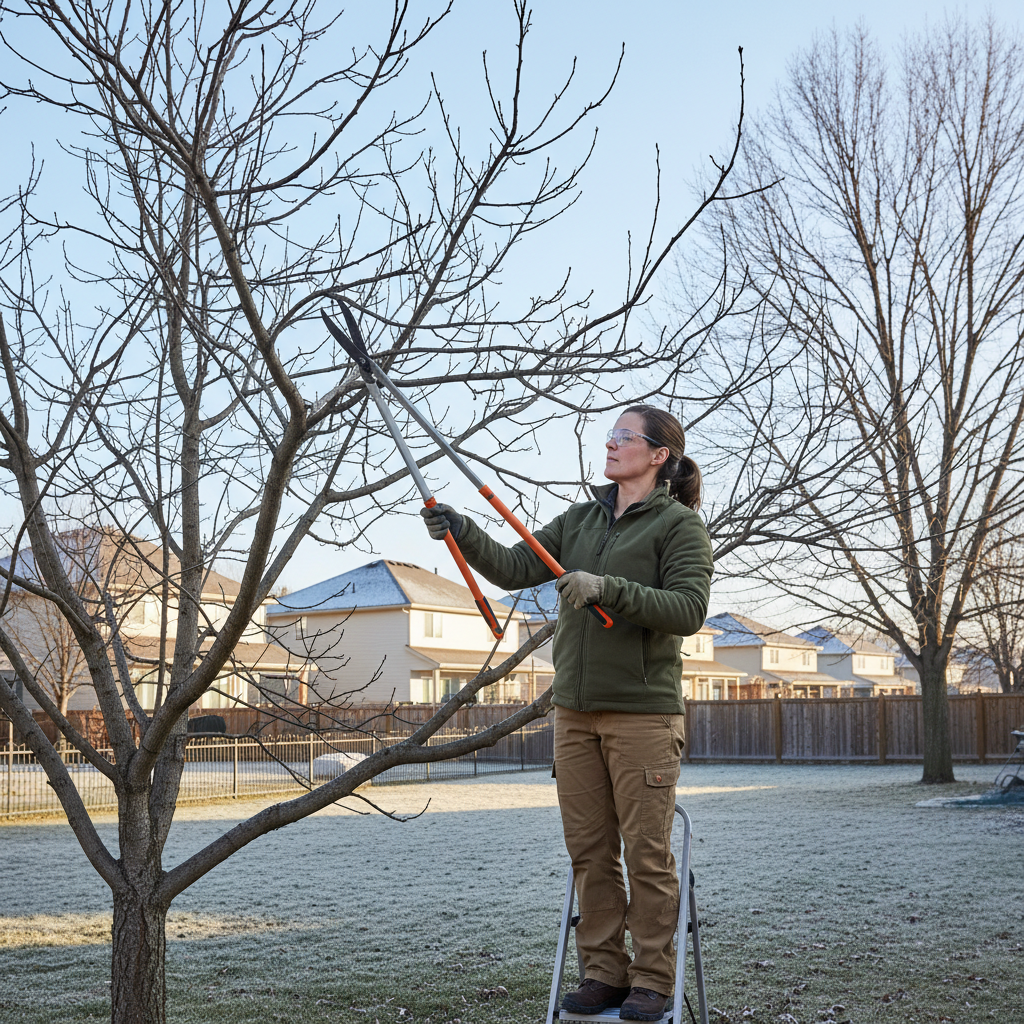
- Apples, Pears: Typically pruned in late winter for structural training and encouraging fruit production. Summer pruning can be done lightly to improve light penetration or remove water sprouts.
- Peaches, Nectarines, Plums, Cherries (stone fruits): Often pruned in late winter or early spring while dormant. Light summer pruning on stone fruits can help manage size and shape, but avoid heavy summer pruning as it can encourage disease.
- Important: Consult specific guides for your fruit tree variety as pruning techniques can vary greatly.
Landscaping · Deck or fence project
| Project category | Landscaping |
|---|---|
| Problem type | Deck or fence project |
| Trade required | Landscaping |
| Urgency | Planned project |
| Safety risk | Moderate safety risk |
| DIY suitability | DIY for experienced homeowners |
| Cost category | High cost |
| Typical timeline | Most builds 3–10 days depending on size |
| Contractor type | Landscaping contractor |
Repair option
Replace failed boards, posts, and hardware; reseal the surface.
Replacement option
Rebuild when framing or the ledger connection is unsafe.
Common causes
- Rot at posts and ledger
- Storm damage
- Adding outdoor living space
Relevant tools:home improvement material pricesproject cost estimator
Published June 6, 2026Last updated August 17, 2026
Tools & materials you'll need
Affiliate links- AmazonBypass PrunersFor branches up to 3/4 inch thick
- AmazonLoppersFor branches up to 1 3/4 inches thick
- AmazonPruning SawFolding or bow saw for branches over 1 3/4 inches
- AmazonSafety Glasses
- AmazonWork Gloves
- AmazonLadderIf needed for reaching higher branches, ensure it's stable and rated for outdoor use
- AmazonRubbing Alcohol or Bleach SolutionFor sterilizing tools
As an Amazon Associate FixlyGuide earns from qualifying purchases — at no extra cost to you. Prices and availability are accurate as of publication and subject to change.
Quick Answer
Many homeowners inadvertently harm their trees by pruning at the wrong time, leading to weakened growth, reduced flowering, and increased susceptibility to pests and diseases. For most deciduous trees, the optimal time for major structural pruning is late winter, while the tree is dormant. Spring-flowflowering trees should generally be pruned immediately after their blooms fade. Understanding your tree's specific needs and growth cycle is crucial to effective and beneficial pruning.
The Problem
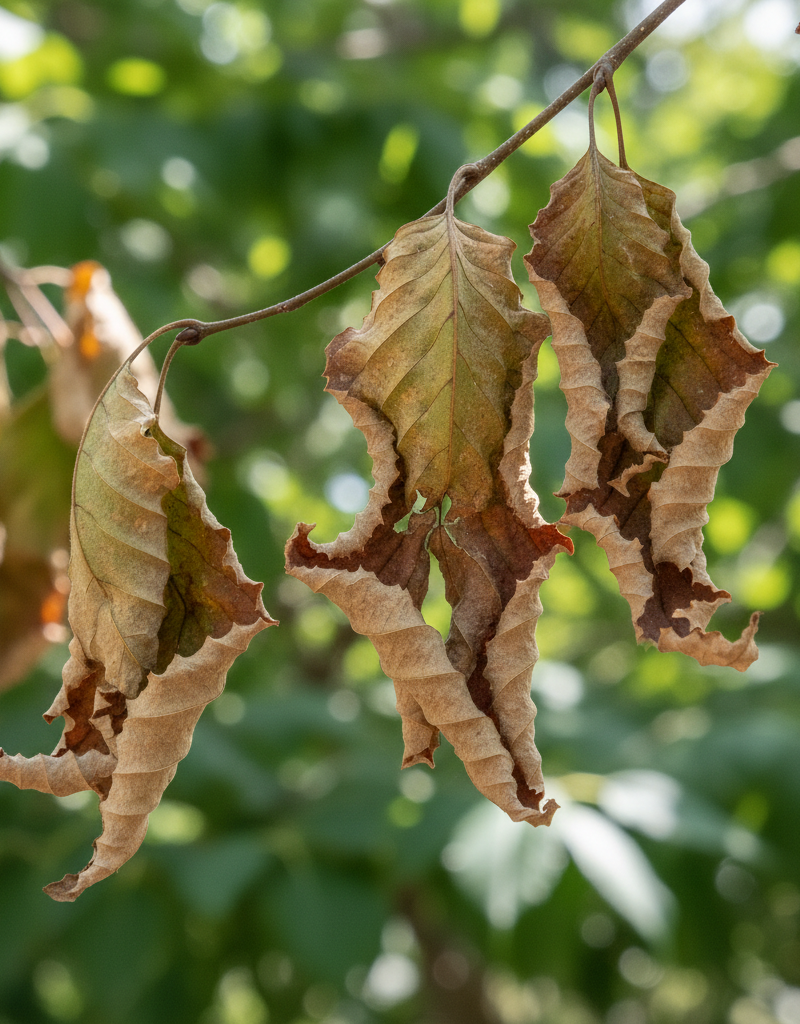
Pruning a tree seems like a straightforward task: trim back branches to improve shape, remove deadwood, or encourage growth. However, the 'when' of pruning is just as, if not more, important than the 'how.' Pruning at the wrong time can disrupt a tree's natural growth cycle, cause excessive sap bleed, reduce fruit or flower production, or even leave it vulnerable to pathogens and insect infestations. For instance, pruning oak trees in spring or summer can expose fresh wounds to oak wilt disease, which is devastating and often fatal. Similarly, removing significant portions of a tree during its active growth phase can stress the plant, diverting energy from essential processes like root development or leaf production.
Incorrect timing can also mean sacrificing a season's bloom. If you prune a spring-flowering tree like a dogwood or a magnolia in late winter or early spring, you're cutting off the very branches that are laden with dormant flower buds, resulting in a tree that produces few, if any, flowers that year. The problem is widespread because most homeowners aren't aware of the specific biological responses trees have to pruning at different times of the year. They often prune simply when they have time, rather than when the tree will most benefit.
How It Works
To understand why timing is so crucial, it helps to grasp a basic understanding of tree physiology. Trees operate on an annual cycle influenced by seasons. During the dormant season (late fall through late winter in most temperate climates), deciduous trees shed their leaves and conserve energy. Their metabolic processes slow down significantly, and sap flow is minimal. This is an ideal time for major pruning for several reasons.
Firstly, with no leaves, the tree's structure is fully visible, making it easier to identify dead, diseased, or crossing branches and to plan structural cuts without obstruction. Secondly, pruning during dormancy minimizes stress. The tree isn't actively growing, so it doesn't need to divert precious energy to heal large wounds immediately. Instead, it can use the stored energy reserves from its roots and trunk to begin the healing process (compartmentalization) as spring approaches, without interrupting active growth. The lack of leaves also means there's less risk of fungal spores or insect pests being attracted to fresh wounds, as many of these organisms are also dormant or less active during cold months.
Spring-flowering trees, on the other hand, produce their flower buds on old wood (branches that grew the previous year). If you prune these trees in late winter or early spring, you're removing those developing flower buds. By waiting until immediately after they finish flowering, you can shape the tree and remove spent blooms without sacrificing the current year's display, and the tree still has ample time during the rest of the growing season to recover and set new buds for the following year.
Summer pruning is typically reserved for minor shaping, removing water sprouts or suckers, or specific applications like fruit tree training where light pruning can enhance fruit production or ripeness. However, heavy pruning in summer can be detrimental because it removes a significant portion of the tree's leaf surface, which is essential for photosynthesis – the process by which the tree produces its food. Reducing too many leaves at this critical time can starve the tree and predispose it to stress.
Finally, early fall pruning should often be avoided, especially for major cuts. Pruning too late in the growing season can stimulate new, tender growth that won't have enough time to harden off before winter's first freeze, leading to frost damage. This tender growth is also more susceptible to winter desiccation and can create entry points for disease during a period when the tree's natural defense mechanisms are winding down for dormancy.
Step-by-Step Fix
There isn't a single 'fix' but rather a strategic approach to pruning timing based on your tree type. These steps outline how to identify the right moment.
1. Identify Your Tree Species – Knowing what kind of tree you have is the first critical step. * Take clear photos of the leaves, bark, and any flowers or fruit. Use a tree identification app (like PictureThis or iNaturalist) or consult a local arborist or nursery expert. Knowing the species will inform its specific pruning needs and optimal timing. * Pro Tip: Look for an arborist's tag if the tree was professionally planted. Consult university extension offices for regional guides on common tree species.
2. Determine Flowering Habits – This dictates when to prune flowering trees. * Spring-flowering trees (e.g., Dogwood, Cherry, Crabapple, Lilac, Magnolia, Rhododendron): These produce flowers on 'old wood' (branches formed the previous year). Prune immediately after the flowers fade in spring. This allows the tree to recover and set new buds for the following year. * Summer-flowering trees (e.g., Crape Myrtle, Rose of Sharon): These bloom on 'new wood' (growth from the current season). Prune in late winter or early spring while dormant, before new growth begins, to encourage vigorous flowering.
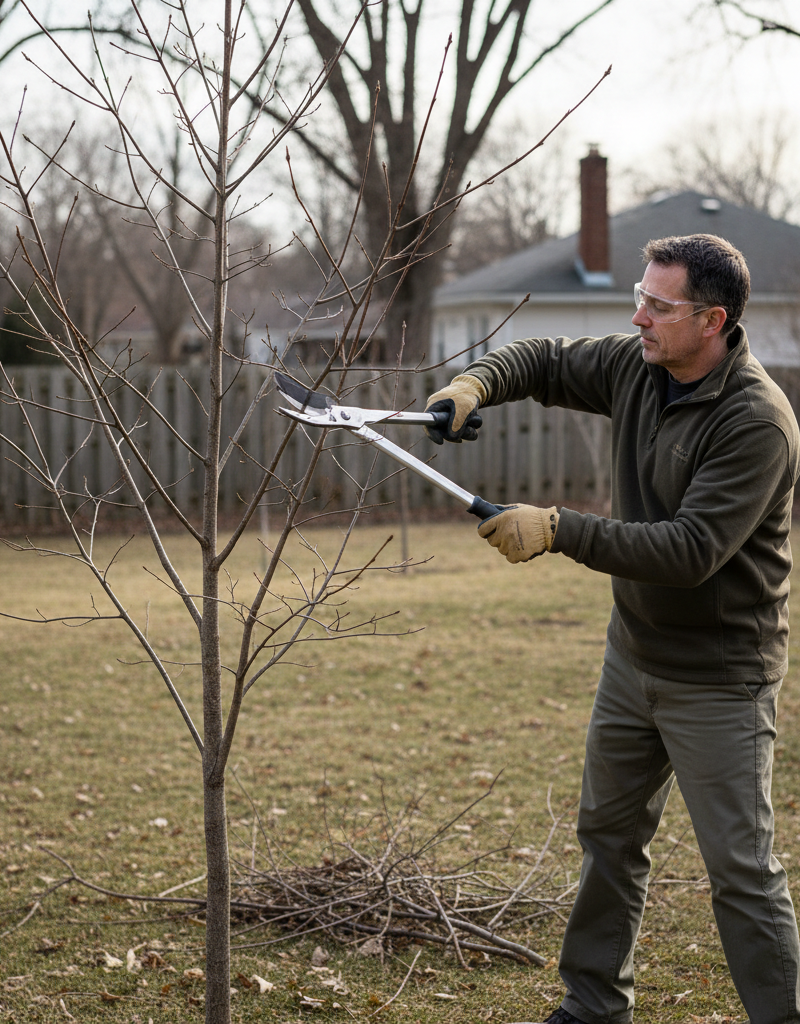
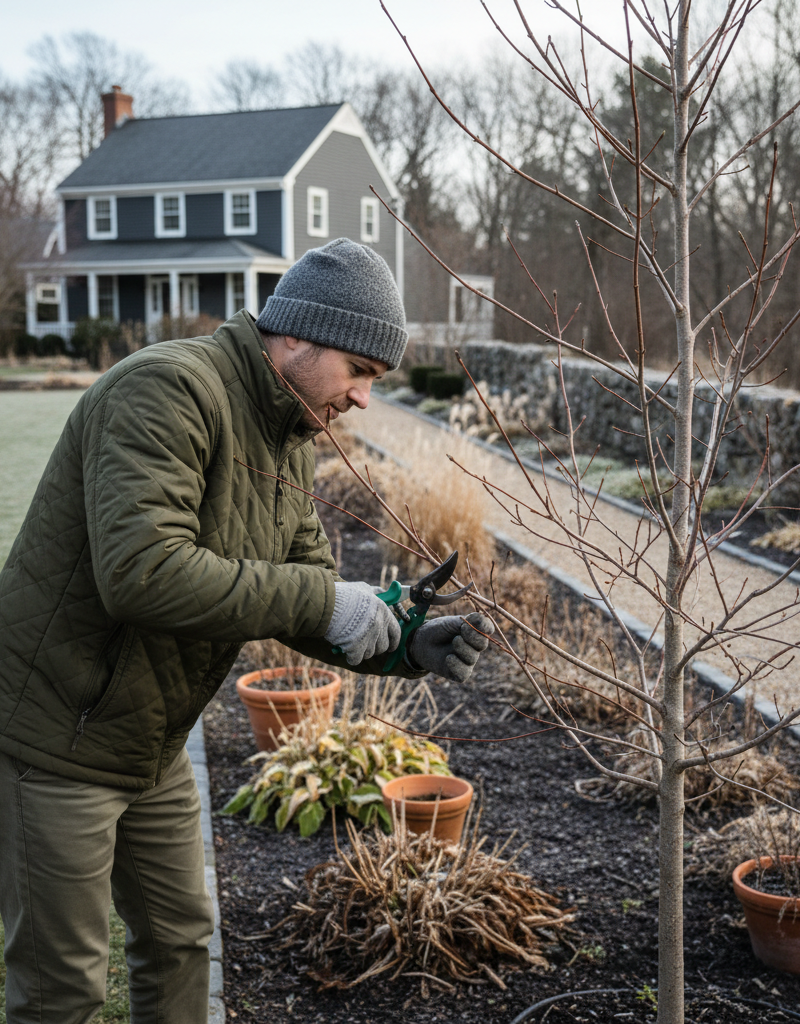
3. Understand Dormant Pruning for Deciduous Trees – The safest and most beneficial time for most major cuts. * For most non-flowering deciduous trees (e.g., Oak, Maple, Ash, Birch, Elm, Linden), the ideal time for structural pruning, removing large branches, or significant shaping is late winter, typically from January through March, before bud break. The tree is dormant, sap flow is low, and disease/pest pressure is minimal. * Safety Note: Always ensure you have a stable ladder and proper safety gear if working above ground level. For any branches requiring a ladder or chainsaw, consider calling a professional arborist.
4. Consider Fruit Tree Specifics – Fruit trees have unique pruning requirements for yield. * Apples, Pears: Typically pruned in late winter for structural training and encouraging fruit production. Summer pruning can be done lightly to improve light penetration or remove water sprouts. * Peaches, Nectarines, Plums, Cherries (stone fruits): Often pruned in late winter or early spring while dormant. Light summer pruning on stone fruits can help manage size and shape, but avoid heavy summer pruning as it can encourage disease. * Important: Consult specific guides for your fruit tree variety as pruning techniques can vary greatly.
5. Avoid Major Pruning in Fall – Protecting your tree from winter damage. * Generally, avoid making significant cuts in late summer or early fall (September-November). New growth stimulated by pruning won't have time to harden off before the first frost, making it susceptible to winterkill. Minor deadwood removal is usually acceptable but avoid structural changes.
6. Address Emergency Pruning Any Time – When safety overrides optimal timing. * Dead, diseased, or hazardous branches (e.g., those threatening your house or power lines) should be removed immediately, regardless of the season. Prioritize safety over ideal timing in these situations. * Pro Tip: If you suspect a branch is diseased, sterilize your pruning tools with rubbing alcohol or a bleach solution (1 part bleach to 9 parts water) between cuts to prevent spreading pathogens.
Common Causes
The primary 'cause' of mistimed pruning is a lack of awareness regarding tree biology and species-specific needs. Homeowners often:
- Prune for aesthetics at an inconvenient time: They decide to improve the tree's look whenever they have free time, without considering the tree's health cycle.
- Follow bad advice: Relying on general, non-specific pruning tips that don't differentiate between tree types or growth habits.
- React to immediate issues without knowledge: Clipping off branches or shaping a tree in response to perceived problems (e.g.,
Related Articles
Keep troubleshooting with these hand-picked guides from FixlyGuide:
- The #1 Pruning Mistake Homeowners Make (It Harms Your Trees!) — Discover the most common pruning mistake homeowners make and how bad timing can permanently damage your trees. Learn the optimal windows fo…
- The #1 Pruning Mistake Homeowners Make (and the Secret to Stronger Trees) — Discover the most common pruning error homeowners make and how to avoid it, ensuring healthier, more resilient trees in your yard.
- The #1 Pruning Mistake Homeowners Make (And How to Time It Right) — Pruning at the wrong time can severely damage your trees. Learn the optimal timing for different tree types to promote health and vibrant g…
- The #1 Mistake Homeowners Make Pruning Trees (And How to Avoid It) — Discover the most common tree pruning mistake homeowners make and how proper timing can save your trees from unnecessary stress and damage.
- The #1 Pruning Mistake That Chokes Your Shrubs (And How to Fix It Right Now) — Discover the most common pruning error homeowners make and how to correct it for healthier, more vigorous shrub growth.
- The #1 Mistake Homeowners Make When a Gas Burner Won't Light (And the Easy Fix) — Before you call a technician, discover the most common, overlooked reason your gas stove burner isn't lighting and how to fix it yourself i…
Should you do this yourself?
Answer five quick questions before you start. Safety outranks savings every time.
Your experience with work like this
How high do you have to work?
Does the job involve any of these?
Will it need a permit?
Specialty tools
Free and instant. Educational guidance only — not a quote, inspection, or professional diagnosis.
What should this project cost?
Enter your project details for a realistic cost range before you call anyone.
Cost depends heavily on which system turns out to be the source.
- Regional adjustment
- National average
- Labor share (typical)
- ~$1,620
- Quotes to collect
- 3 written estimates
Educational estimate based on national averages — not a binding quote. Always confirm with written local estimates.
Before you start
Check the difficulty, permits, and safety risk — then decide whether to call a pro.
- Estimate this projectGet a cost range for your scope and ZIP before you call anyone.Open
- Get local estimatesSend one request and compare written estimates from vetted pros.Open
Free, no signup required. Estimates are educational guidance, not a quote or an inspection.
Frequently asked questions
What is the best time of year to prune most trees?+
For most deciduous shade trees (those that lose their leaves), the best time for significant structural pruning is during late winter (January to March) while the tree is dormant. This minimizes stress, allows for clearer visibility of the tree's structure, and reduces the risk of disease entry.
When should I prune spring-flowering trees?+
Spring-flowering trees, such as dogwoods, magnolias, and lilacs, should be pruned immediately after their flowers fade in spring. These trees produce blooms on 'old wood' (branches grown the previous year), so pruning before blooming would remove the flower buds.
Can I prune trees in the summer?+
Summer pruning should generally be light and focused on removing suckers, water sprouts, or very minor shaping. Avoid heavy pruning in summer as it removes a lot of the active leaf surface, which can stress the tree by reducing its ability to photosynthesize and produce food.
Why should I avoid pruning in the fall?+
Major pruning in late summer or early fall can stimulate new, tender growth that won't have enough time to harden off before winter's first freeze. This makes the new growth susceptible to frost damage and can weaken the tree as it enters dormancy.
Discussion
Loading comments…