- Wear sturdy work gloves to protect your hands.
- Put on safety glasses or goggles to shield your eyes from hot water, sediment, or chemical splashes.
- Consider wearing long sleeves and pants to protect your skin, as the water can be very hot.
Plumbing · Water heater problem
| Project category | Plumbing |
|---|---|
| Problem type | Water heater problem |
| Trade required | Plumbing |
| Urgency | Urgent — within days |
| Safety risk | Moderate safety risk |
| DIY suitability | Pro recommended |
| Cost category | Moderate cost |
| Typical timeline | Diagnosis same day; replacement typically a half-day install |
| Contractor type | Licensed plumber |
Repair option
Element, thermostat, or thermocouple replacement on a tank still in good condition.
Replacement option
Full replacement once the tank leaks or passes roughly a decade of service.
Common causes
- Failed heating element or thermocouple
- Sediment buildup reducing capacity
- Tank corrosion at end of service life
Relevant tools:repair or replaceproject cost estimator
Published May 17, 2026Last updated August 17, 2026
Tools & materials you'll need
Affiliate linksNo materials required.
As an Amazon Associate FixlyGuide earns from qualifying purchases — at no extra cost to you. Prices and availability are accurate as of publication and subject to change.
Quick Answer
Frequent popping from your water heater is usually caused by sediment accumulation at the bottom of the tank. This sediment traps water, which then overheats and creates steam pockets that burst, causing the popping sound. Flushing your water heater and, in some cases, using a delimer can resolve this issue and restore efficiency.
The Problem
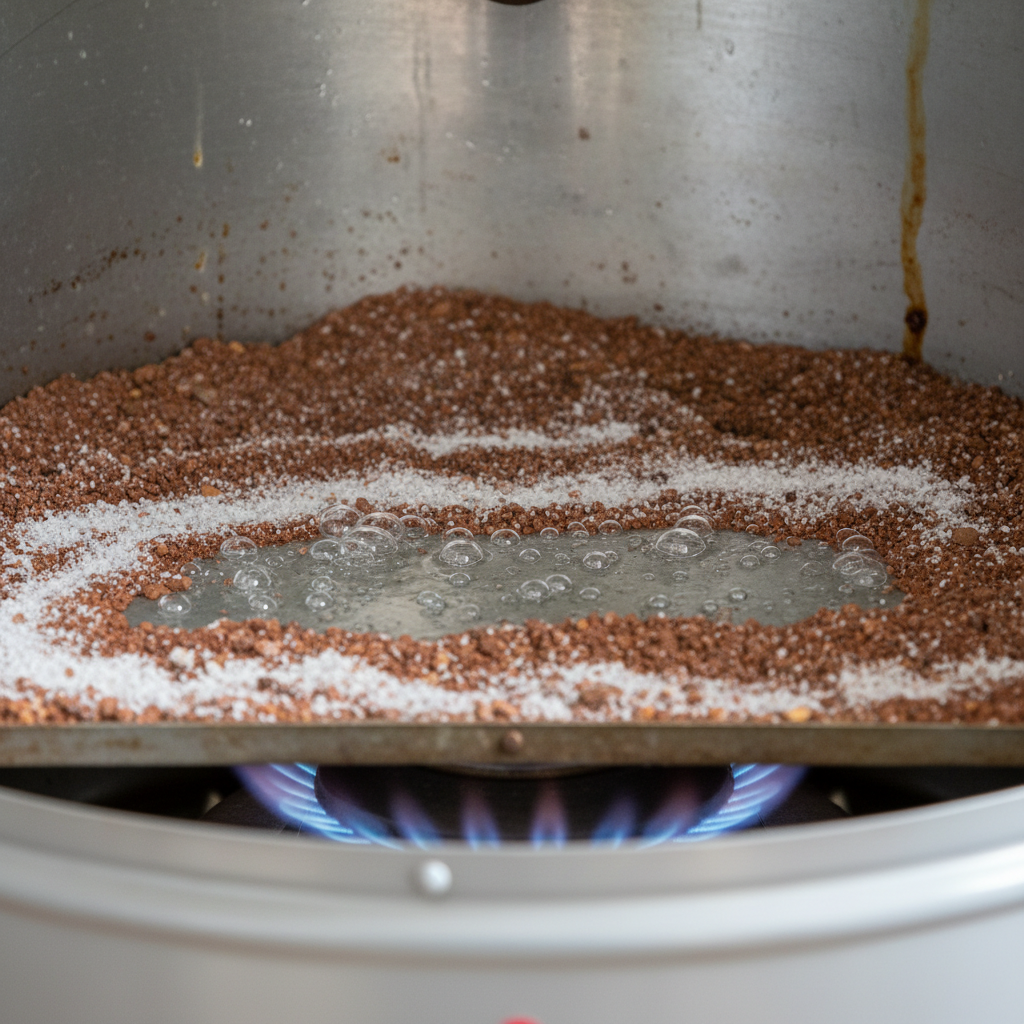
That unsettling popping noise emanating from your water heater isn't just an annoyance; it's a clear warning signal. What you're hearing is often the sound of mineral sediment, primarily calcium carbonate from hard water, building up on the bottom of your water heater tank. As your water heater heats the water, this layer of sediment gets hot, trapping small pockets of water underneath or within it. When these trapped water pockets get hot enough, they rapidly turn into steam. Since steam takes up significantly more space than water, it creates pressure that eventually causes these pockets to burst through the sediment, producing that characteristic popping or rumbling sound. Think of it like a miniature steam explosion happening repeatedly at the bottom of your tank.
While an occasional pop might be normal, persistent and loud popping indicates a significant amount of sediment. This isn't just about noise; it's about efficiency and longevity. Sediment acts as an insulator, forcing your water heater to work harder and longer to heat the water. This increased workload translates directly to higher energy bills and accelerated wear and tear on your heating elements (for electric models) or the bottom of the tank (for gas models). Left unaddressed, chronic sediment buildup can also lead to premature tank corrosion and eventual leaks, turning a minor issue into a costly replacement. Understanding this underlying mechanism is crucial to effectively troubleshooting and resolving the problem.
How It Works
To truly grasp why your water heater is making these noises, it helps to understand the basic mechanics of how it heats water. Both gas and electric water heaters operate on a similar principle: a heat source warms the water stored in an insulated tank.
In a gas water heater, a burner assembly located underneath the tank ignites a flame, and the hot combustion gases rise through a large flue pipe that runs up the center of the tank, transferring heat to the surrounding water. For an electric water heater, immersed heating elements (usually two, one upper and one lower) directly heat the water. In both cases, cold water enters the tank at the bottom, is heated, and then rises as hot water, exiting through the top.
Hard water, which is prevalent in many regions, contains dissolved minerals like calcium and magnesium. These minerals don't simply stay dissolved; when water is heated, these minerals precipitate out of the solution and settle at the lowest point of the tank. Over time, these tiny mineral crystals accumulate, forming a thick, dense layer of sediment on the tank bottom. This layer can be inches thick in older, unmaintained heaters.
When the burner fires (gas) or the lower element activates (electric), it tries to heat the water directly. However, the sediment layer acts as a barrier, trapping water beneath it. The trapped water gets superheated, well beyond its normal boiling point, due to the pressure and insulation from the sediment. Eventually, this superheated water flashes into steam, creating bubbles that expand rapidly and burst through the sediment, producing the distinct popping or rumbling sounds you hear. This continuous cycle of heating, steam formation, and bursting not only creates noise but also puts stress on the tank's lining, accelerating corrosion and reducing the unit's lifespan.
Step-by-Step Fix
1. Safety First — Before starting any work, ensure the water heater’s power is off.
- For electric water heaters: Go to your main electrical panel and locate the circuit breaker labeled for your water heater. Flip it to the “OFF” position. You might need a flashlight. Double-check by trying to get hot water at a faucet – it should only run cold after a few minutes.
- For gas water heaters: Turn the gas control knob on the unit to the “PILOT” or “OFF” setting. If you smell gas at any point, leave the area immediately and call your gas company. If your water heater uses a dedicated electrical outlet for its ignitor or fan, unplug it or switch off its breaker too.
2. Don Your Safety Gear — Protect yourself from hot water and potential splashes.
- Wear sturdy work gloves to protect your hands.
- Put on safety glasses or goggles to shield your eyes from hot water, sediment, or chemical splashes.
- Consider wearing long sleeves and pants to protect your skin, as the water can be very hot.
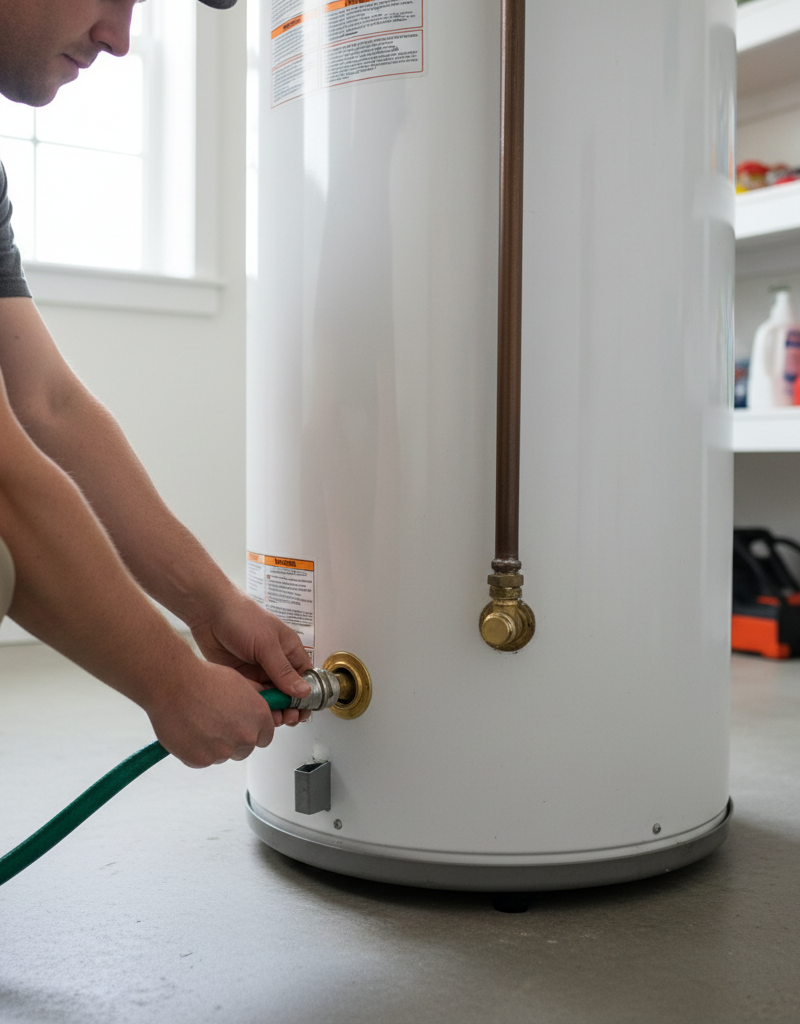
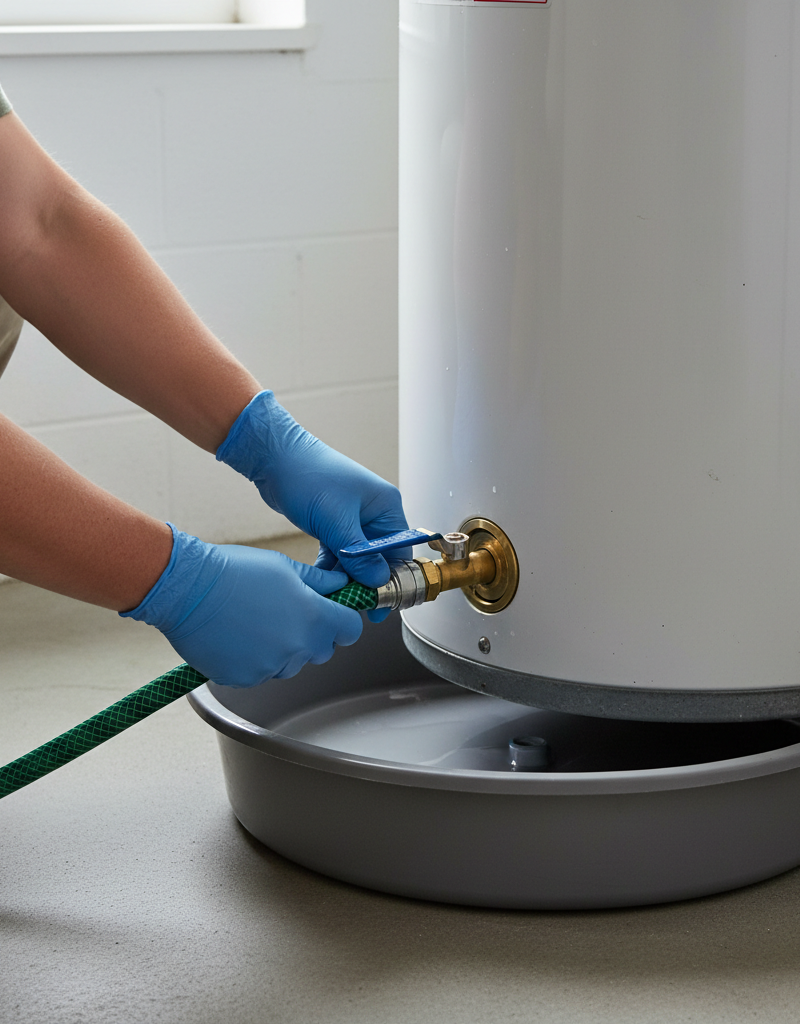
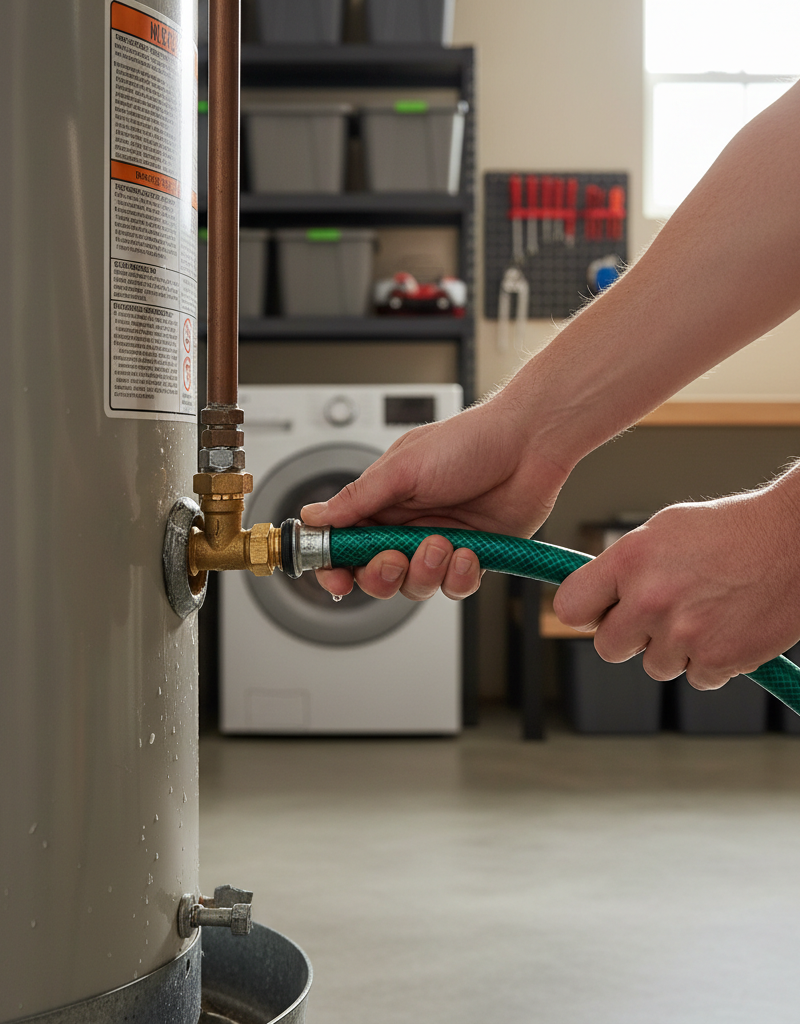
3. Connect a Hose to the Drain Valve — Prepare to drain the tank in a controlled manner.
- Locate the drain valve, typically a spigot near the bottom of the water heater. It often has a garden hose connection.
- Attach a standard garden hose to the drain valve. Make sure the connection is snug to prevent leaks.
- Direct the other end of the hose to a floor drain, a large utility sink, or outside to an area where hot, sediment-laden water can safely drain. Avoid draining onto grass or plants if you plan to use a deliming solution, as it could harm them.
4. Open a Hot Water Faucet — Relieve pressure and allow air to enter the tank.
- Go to a nearby sink or tub and open a hot water faucet. This breaks the vacuum inside the tank and allows air to enter, making the draining process much faster and preventing airlock.
- Leave the faucet open during the entire draining process. You will notice the flow slow down and eventually stop from the faucet as the tank empties.
5. Flush the Tank Until Clear — The primary method for removing sediment.
- Open the drain valve fully. Hot, possibly cloudy or discolored water will begin to flow through the hose. This is the sediment-laden water you want to remove.
- Let the tank drain completely until the water flowing from the hose runs clear. This could take 30 minutes to an hour or more, depending on the amount of sediment.
- Once the water runs clear, close the drain valve. At this point, the tank is empty of the bulk of the sediment, and much of the
Related Articles
Keep troubleshooting with these hand-picked guides from FixlyGuide:
- That Annoying Water Heater Popping Sound? It's Trying to Tell You This One Thing — A popping water heater usually signals a common issue: sediment buildup. Learn why it happens and how to fix it with a simple flush.
- The 4-Step Water Heater Flush That Adds Years to Its Life (and Cures 3 Common Problems) — Flushing your water heater annually is a quick DIY task that prevents sediment buildup, extends the unit's lifespan, and improves efficienc…
- Your shower's cold shock: 1 broken part is the secret culprit. — Tired of your shower going from hot to cold in minutes? Sediment buildup, a failed dip tube, or a bad thermostat in your water heater is li…
- The #1 Mistake Homeowners Make Flushing a Water Heater (And How to Fix It) — Prevent sediment buildup and extend your water heater's life with this essential annual maintenance guide.
- The #1 Mistake Homeowners Make Flushing a Water Heater (And 5 Easy Steps to Get It Right) — Avoid costly damage and inefficiency: learn the right way to flush your water heater and prevent sediment buildup.
- The 4 Hidden Reasons Your Entire Home Has Low Water Pressure (And the Easy Fixes) — Low water pressure throughout your entire home can be a frustrating and often misunderstood problem, with several common culprits. Learn to…
Should you do this yourself?
Answer five quick questions before you start. Safety outranks savings every time.
Your experience with work like this
How high do you have to work?
Does the job involve any of these?
Will it need a permit?
Specialty tools
Free and instant. Educational guidance only — not a quote, inspection, or professional diagnosis.
Estimate your own project cost
National averages are a starting point. Enter your details for a range that fits your house.
Water heater replacement cost
- Unit$550 – $1,400
- Installation labor$350 – $900
- Removal & disposal$60 – $150
- Permit & inspection$50 – $200
These estimates reflect typical US installed costs. Get 2–3 written quotes before committing.
Educational estimate only — always confirm with written local bids.
What should this project cost?
Enter your project details for a realistic cost range before you call anyone.
Common repairs run $150–$650; repipes and water-heater replacements reach $1,500–$4,500.
- Regional adjustment
- National average
- Labor share (typical)
- ~$754
- Quotes to collect
- 3 written estimates
Educational estimate based on national averages — not a binding quote. Always confirm with written local estimates.
Fixly Project Decision Box
- DIY difficulty
- Moderate
- Estimated time
- 30 minutes – half a day
- Cost level
- Moderate
Main tools / materials
- Adjustable wrench
- Plunger or drain auger
- Bucket and towels
- Thread tape
When to stop and call a pro
- Water you cannot shut off at the fixture or main
- Sewage backing up into more than one fixture
- Water near electrical panels or outlets
- Gas water heater work beyond relighting a pilot
Need professional help?
Get a Licensed PlumberFrequently asked questions
Why does my water heater make a popping noise?+
The popping noise is typically caused by mineral sediment (like calcium and magnesium) accumulating at the bottom of your water heater tank. This sediment traps pockets of water, which then get superheated and rapidly turn into steam, bursting through the sediment layer and creating the popping sound.
Is a popping water heater dangerous?+
While it's usually not an immediate danger, persistent popping indicates significant sediment buildup. This buildup can reduce your water heater's efficiency, shorten its lifespan, and potentially lead to tank corrosion and leaks over time. Addressing it promptly is important for the unit's health.
How often should I flush my water heater?+
For most homes, especially those with hard water, flushing your water heater once a year is recommended. In areas with extremely hard water, flushing every six months might be beneficial to prevent excessive sediment buildup.
Can I use a chemical cleaner in my water heater?+
While there are some deliming solutions specifically designed for water heaters, use them with caution and always follow the manufacturer's instructions precisely. Excessive or improper use of chemicals can damage your tank or components. Manual flushing is often sufficient for minor to moderate sediment.
Discussion
Loading comments…