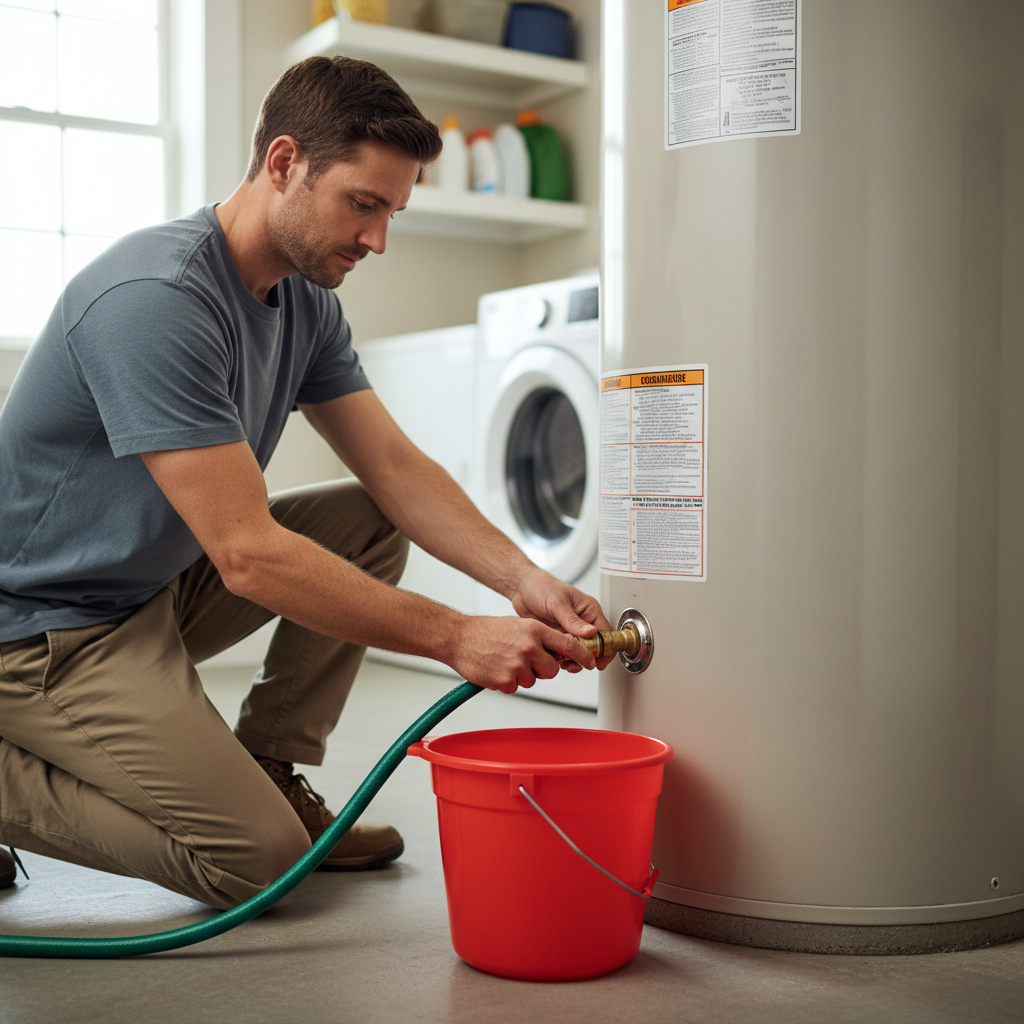
- Purge All Air and Check for Leaks — Ensure the system is sealed and ready for heating.
- Wait for the hissing at the open faucet to stop and for a full, steady stream of water to flow out. This indicates the tank is full of water and all air has been purged. This can take 5-15 minutes depending on tank size.
- Close the hot water faucet. Now, carefully inspect the drain valve and hose connection area for any drips or leaks. If you see a leak, you may need to tighten the valve slightly or replace it.
Plumbing · Water heater problem
| Project category | Plumbing |
|---|---|
| Problem type | Water heater problem |
| Trade required | Plumbing |
| Urgency | Urgent — within days |
| Safety risk | Moderate safety risk |
| DIY suitability | Pro recommended |
| Cost category | Moderate cost |
| Typical timeline | Diagnosis same day; replacement typically a half-day install |
| Contractor type | Licensed plumber |
Repair option
Element, thermostat, or thermocouple replacement on a tank still in good condition.
Replacement option
Full replacement once the tank leaks or passes roughly a decade of service.
Common causes
- Failed heating element or thermocouple
- Sediment buildup reducing capacity
- Tank corrosion at end of service life
Relevant tools:repair or replaceproject cost estimator
Published April 26, 2026Last updated August 17, 2026
Tools & materials you'll need
Affiliate links- AmazonGarden hose1 · Long enough to reach a drain or outdoor area for water disposal
- Amazon5-gallon bucket1 · For catching initial water or testing sediment
- AmazonFlathead screwdriver or socket wrench1 · To open the drain valve, depending on its type
- Amazon(Optional) Water heater flush kit1 · Some kits include a specialized hose and brush
- Amazon(Optional) Channel lock pliers1 pair · For stubborn drain valves
As an Amazon Associate FixlyGuide earns from qualifying purchases — at no extra cost to you. Prices and availability are accurate as of publication and subject to change.
How it works
Your water heater is a simple appliance: a storage tank designed to heat and hold a reservoir of water. When you turn on a hot water tap, cold water enters the tank through a "dip tube," which directs it to the bottom. This pushes the already-heated water, which has risen to the top, out to your faucet. In a gas heater, a burner at the bottom heats the tank directly. In an electric model, one or two heating elements inside the tank do the work.
The "surprising reason" for premature failure lies in your water supply itself. Water contains dissolved minerals, primarily calcium and magnesium carbonate. When water is heated, these minerals precipitate out of the solution and settle at the bottom of the tank as a sandy or flaky solid known as sediment.
This layer of sediment creates two critical problems. First, it acts as an insulator between the heating source and the water. This forces the heating system—either the gas burner or the lower electric element—to run longer and harder to heat the water, wasting energy and increasing your utility bills. Second, and more destructively, it traps heat. In a gas heater, this can superheat the bottom of the steel tank, causing the protective glass lining to crack and leading to rapid corrosion and leaks. For an electric heater, the sediment can bury the lower heating element, causing it to overheat and burn out. By regularly flushing this sediment, you directly address the primary cause of inefficiency and premature tank failure.
Step-by-Step Fix
This procedure applies to both gas and electric tank-style water heaters. The goal is to drain the tank to remove accumulated sediment. The entire process should take 20-60 minutes, depending on the amount of buildup.
-
Gather Tools and Ensure Safety — Before you begin, assemble your tools and take basic safety precautions. This initial setup prevents delays and ensures a smooth process.
- Tools: You will need a standard garden hose (at least 10-15 feet), a 5-gallon bucket, channel-lock pliers or an adjustable wrench, and potentially a flathead screwdriver for older drain valves.
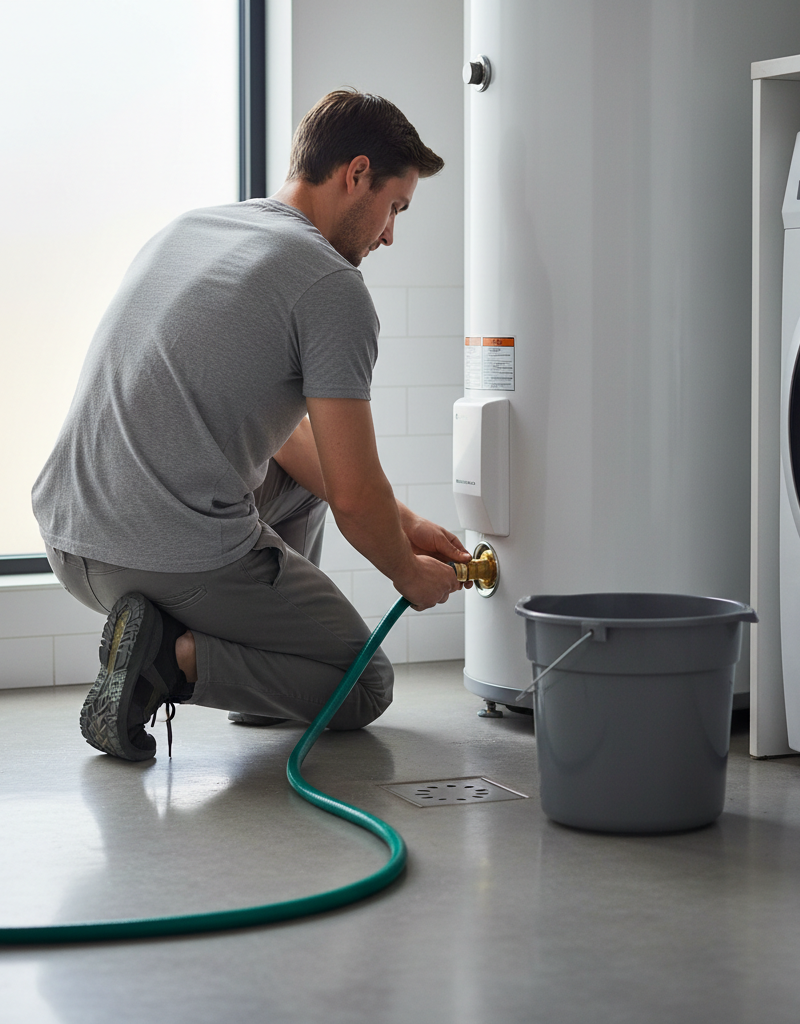
- Safety: Wear sturdy work gloves and safety glasses. The water initially drained from the tank will be hot enough to cause serious scalds. Ensure the end of your drain hose is placed in a location that can safely handle hot, high-volume water, such as a floor drain, utility sink, or an outdoor area away from plants.
-
Turn Off the Power or Gas Supply — This is a critical safety step to prevent damage to the unit. Do not skip it.
- For electric water heaters: Locate the dedicated double-pole breaker for the water heater in your main electrical panel. It is typically a 30-amp breaker. Flip it to the "OFF" position.
- For gas water heaters: Find the gas control knob on the front of the unit. Turn the dial from the "ON" position to "PILOT." This stops the main burner from firing while keeping the pilot light lit, which simplifies relighting later. If you are uncomfortable with this, you can turn it all the way to "OFF."
-
Shut Off the Cold Water Inlet — Prevent new water from entering the tank while you drain it. The cold water inlet valve is located near the top of the heater, on the pipe labeled "Cold" or marked with a blue ring.
- Turn the handle clockwise until it stops. If it is a lever-style ball valve, turn it 90 degrees so it is perpendicular to the pipe. If it's a wheel-style gate valve, turn it until it is firmly seated. Do not force it.
-
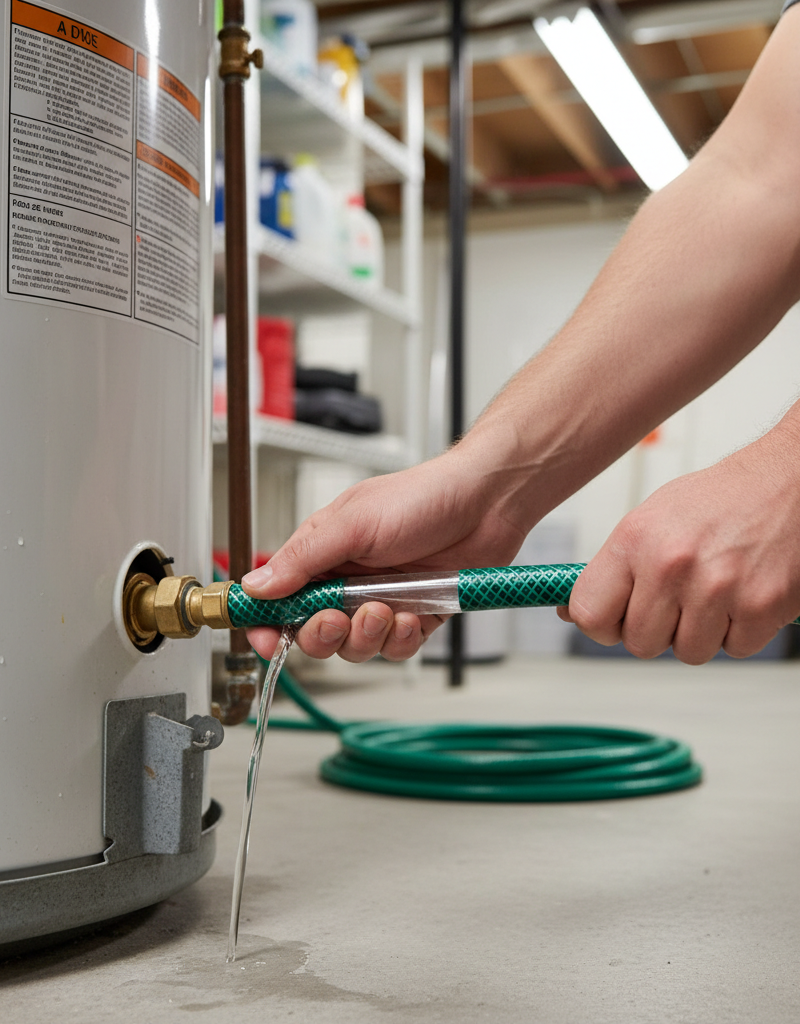
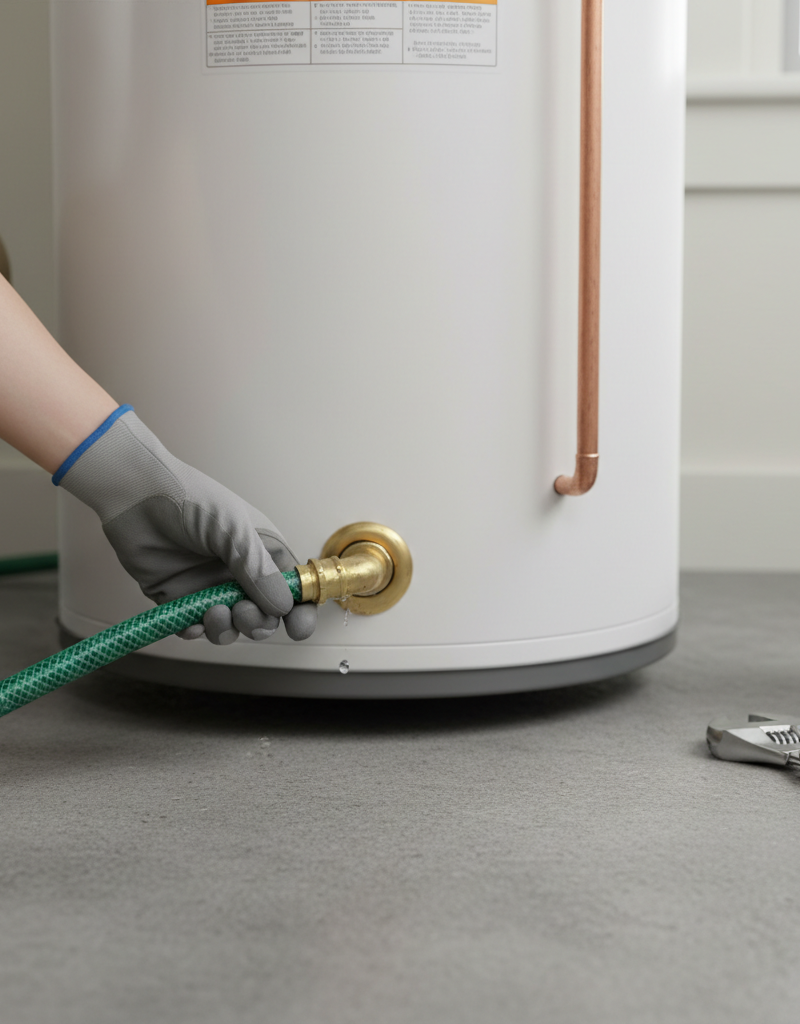
Connect the Drain Hose — Attach your garden hose to the drain valve located at the very bottom of the water heater tank.
- Screw the female end of the hose onto the male threads of the drain valve. Hand-tight is usually sufficient, but you can give it a slight snug with pliers if it drips. Route the other end of thehose to your designated drainage area.
-
Open a Hot Water Faucet — Go to the nearest sink or tub and open a hot water faucet all the way.
- This step is crucial. It allows air to enter the tank as the water drains out, breaking the vacuum that would otherwise hold the water in place. You should hear air being pulled into the faucet as the tank begins to drain. Leave this faucet open for the entire draining process.
-
Open the Drain Valve to Begin Draining — Water will now begin to flow out of the tank through the hose.
- Using your pliers or screwdriver, turn the drain valve handle or slot counter-clockwise to open it. The first few gallons of water will be very hot and likely discolored with sediment. If the valve is a flimsy plastic model and feels brittle, proceed with caution to avoid breaking it.
-
Flush and Agitate the Sediment — To get a truly effective flush, you need to stir up the settled solids. Draining alone is not enough.
- After the tank has drained for 5-10 minutes, partially close the drain valve. With the garden hose still connected and the drain valve partially open, go back to the cold water inlet valve (from Step 3) and open it for 15-20 seconds. This blast of cold water will stir up the sediment at the bottom of the tank.
- Close the cold water inlet valve again and fully open the drain valve. You should see a new surge of cloudy, sediment-filled water exit the hose. Repeat this scouring process 3-4 times for best results.
-
Continue Draining Until Water Runs Clear — The goal is to remove as much sediment as possible.
- Use your 5-gallon bucket to periodically catch a sample of the draining water. When the water consistently runs clear and free of particles, the flush is complete.
-
Close the Drain Valve and Remove the Hose — Secure the tank before refilling.
- Turn the drain valve clockwise until it is tightly closed. Be firm but do not overtighten, especially with a plastic valve. Once the valve is closed, you can disconnect the garden hose. A small amount of water will spill from the hose; be prepared with your bucket.
-
Refill the Tank — It is critical that the tank is completely full before you restore power.
- Leave the hot water faucet (from Step 5) open. Fully open the cold water supply valve at the top of the tank. You will hear water rushing into the tank and air hissing out of the open faucet.
-
Purge All Air and Check for Leaks — Ensure the system is sealed and ready for heating.
- Wait for the hissing at the open faucet to stop and for a full, steady stream of water to flow out. This indicates the tank is full of water and all air has been purged. This can take 5-15 minutes depending on tank size.
- Close the hot water faucet. Now, carefully inspect the drain valve and hose connection area for any drips or leaks. If you see a leak, you may need to tighten the valve slightly or replace it.
-
Restore Power and Test — Safely bring your water heater back online.
- For electric heaters: Once you are certain the tank is full and leak-free, return to the breaker panel and flip the water heater breaker back to the "ON" position.
- For gas heaters: Turn the gas control knob back from "PILOT" to "ON." The main burner should ignite. If you turned it completely off, follow the manufacturer's relighting instructions printed on the side of the tank. Listen for the unit to begin heating. It will take 30-90 minutes to heat the full tank of new water.
Common mistakes
Avoiding these common errors will ensure the job is done safely and effectively, preventing damage to your water heater.
- Forgetting to Turn Off Power. This is the most critical mistake with an electric water heater. If the power is on while the tank is empty, the upper and especially the lower heating elements are exposed to air. They will overheat and burn out in under a minute, a condition known as "dry-firing." Always confirm the breaker is off before starting.
- Not Opening a Hot Water Tap. Homeowners often forget to open a nearby hot water faucet before draining. This creates a vacuum inside the tank, similar to placing your finger on top of a straw filled with liquid. The water will barely trickle out, making the flush ineffective and extremely slow. Opening a tap lets air in, allowing gravity to do its work.
- Creating a Leak by Breaking the Old Drain Valve. Many water heaters are installed with cheap, builder-grade plastic drain valves. Over years of heat and pressure, they become brittle. Applying too much force with pliers can easily snap the handle or crack the valve body. If your valve feels fragile, it's wise to have a replacement brass ball-valve drain cock on hand before you begin.
- Not Flushing Aggressively Enough. Simply draining the water out of the tank is a partial fix at best. The heaviest sediment is caked on the bottom and won't flow out easily. You must actively agitate it by opening the cold water supply in short bursts (as described in Step 7) to scour the bottom of the tank and suspend the particles in the water so they can be flushed out.
- Causing a Scald Injury. The water at the bottom of the tank is often over 120°F. If the drain hose detaches or is pointed in an unsafe direction, it can cause immediate and severe burns. Ensure your hose is securely attached and positioned in a safe drain before opening the valve. Wear gloves and stand clear of the hose outlet.
- Believing the Job is Done Too Soon. The goal is not just to empty the tank, but to remove sediment until the water runs clear. Use a bucket or a clear jar to take samples. If the water is still cloudy, milky, or has visible flakes, continue the flush-and-agitate cycle. Stopping too early leaves behind a significant amount of insulating sediment.
Cost & time breakdown
This table outlines the typical costs and time commitment for flushing a water heater, as well as related maintenance tasks. Professional costs can vary significantly by region.
| Task | DIY cost | Pro cost | Time |
|---|---|---|---|
| Annual Water Heater Flush | $0 - $20 (for a hose) | $125 - $250 | 20 - 60 minutes |
| Replace Plastic Drain Valve with Brass | $10 - $20 (for valve) | $150 - $275 (includes flush) | 45 - 90 minutes |
| Anode Rod Inspection & Replacement | $25 - $60 (for rod/socket) | $175 - $350 | 60 - 120 minutes |
| Replace T&P Relief Valve | $15 - $25 (for valve) | $150 - $250 | 30 - 60 minutes |
| Full Water Heater Replacement | $600 - $1,800 (unit cost) | $1,200 - $3,000 | 2 - 4 hours |
When to call a pro
While flushing a water heater is a manageable DIY task, there are specific situations where calling a licensed plumber is the safer and more effective choice.
If the drain valve is seized or breaks during your attempt to open it, stop immediately. Applying excessive force can snap the valve off, causing an uncontrolled flood. A plumber has the tools and replacement parts to manage this situation without causing water damage. Similarly, if no water comes out after opening the valve, it indicates a severe clog of hardened sediment at the drain opening. A professional can use specialized tools or techniques to clear the blockage.
Another critical sign is an existing leak. If your tank is already weeping or dripping water from its base or seams, flushing will not fix it. This indicates the internal tank has failed, and the unit must be replaced. Furthermore, if your water heater is over 10-12 years old and has never been flushed, an aggressive first flush can sometimes dislodge sediment that was plugging a small, pre-existing hole in the tank, creating a new leak. In this scenario, it's often wise to have a pro assess the situation first. Finally, if you are at all uncomfortable working with gas lines, pilot lights, or your home's main electrical panel, defer to a professional.
Prevention & maintenance
Consistent maintenance is the key to maximizing your water heater's lifespan and efficiency, saving you money on both energy bills and premature replacement costs.
- Perform an Annual Flush. This is the single most important maintenance task. For households with very hard water, a flush every six months may be necessary. Mark it on your calendar to ensure it gets done.
- Check the Anode Rod Every 2-3 Years. The anode rod is a "sacrificial" metal rod (usually magnesium or aluminum) that protects your steel tank from corrosion. It is designed to corrode instead of the tank lining. After draining the tank, use a 1 1/16-inch impact socket to inspect it. If it is less than 1/2-inch thick or coated in heavy calcium buildup, replace it. Replacement is cheap insurance against tank failure.
- Test the T&P Valve Annually. The Temperature and Pressure (T&P) relief valve is a critical safety device. Place a bucket under the discharge pipe and briefly lift the lever. A short burst of hot water should come out. If it only drips or doesn't reseal properly, it must be replaced immediately.
- Set Thermostat to 120°F. Most manufacturers ship water heaters set to 140°F, but this is unnecessarily high for most households. A 120°F setting is sufficient for most needs, reduces scalding risk, and slows the rate of mineral precipitation inside the tank, reducing sediment buildup.
- Install a Water Softener. If you live in an area with extremely hard water, the most effective long-term solution is a whole-house water softener. This system removes calcium and magnesium minerals before they enter your water heater, preventing sediment from forming in the first place.
- Listen for Problems. Pay attention to new sounds. A popping, rumbling, or crackling noise from your water heater is a classic symptom of a heavy sediment layer. The sound is caused by water becoming trapped under the sediment, boiling, and flashing to steam. If you hear this, a flush is overdue.
Related Articles
Keep troubleshooting with these hand-picked guides from FixlyGuide:
- Is Your Water Heater Secretly Draining Your Wallet? — Flushing your water heater annually removes sediment buildup, improving efficiency and extending its lifespan. This guide provides a simple…
- That 5-Minute Shower? Your Water Heater's Secret Problem — Your hot water is likely running out quickly due to a broken internal dip tube, a massive buildup of mineral sediment, or a failing heating…
- Your shower's cold shock: 1 broken part is the secret culprit. — Tired of your shower going from hot to cold in minutes? Sediment buildup, a failed dip tube, or a bad thermostat in your water heater is li…
- Clogged AC Drain Line? Clear It Yourself in 30 Minutes — Learn how to quickly and safely clear a clogged AC drain line to restore your air conditioner's efficiency and prevent water damage.
- The $2 Trick to Stop a Running Toilet (Plumbers Don't Want You to Know) — Discover the simple, two-dollar fix that can stop your running toilet in minutes, saving water and preventing costly repairs.
- Your shower sucks? 3 hidden culprits explained. — Low water pressure throughout your house often points to a few common culprits, from a partially closed main shut-off valve to issues with…
Should you do this yourself?
Answer five quick questions before you start. Safety outranks savings every time.
Your experience with work like this
How high do you have to work?
Does the job involve any of these?
Will it need a permit?
Specialty tools
Free and instant. Educational guidance only — not a quote, inspection, or professional diagnosis.
Estimate your own project cost
National averages are a starting point. Enter your details for a range that fits your house.
Water heater replacement cost
- Unit$550 – $1,400
- Installation labor$350 – $900
- Removal & disposal$60 – $150
- Permit & inspection$50 – $200
These estimates reflect typical US installed costs. Get 2–3 written quotes before committing.
Educational estimate only — always confirm with written local bids.
What should this project cost?
Enter your project details for a realistic cost range before you call anyone.
Common repairs run $150–$650; repipes and water-heater replacements reach $1,500–$4,500.
- Regional adjustment
- National average
- Labor share (typical)
- ~$754
- Quotes to collect
- 3 written estimates
Educational estimate based on national averages — not a binding quote. Always confirm with written local estimates.
Fixly Project Decision Box
- DIY difficulty
- Moderate
- Estimated time
- 30 minutes – half a day
- Cost level
- Moderate
Main tools / materials
- Adjustable wrench
- Plunger or drain auger
- Bucket and towels
- Thread tape
When to stop and call a pro
- Water you cannot shut off at the fixture or main
- Sewage backing up into more than one fixture
- Water near electrical panels or outlets
- Gas water heater work beyond relighting a pilot
Need professional help?
Get a Licensed PlumberGet the print-ready PDF of this guide
A clean, ad-free, printable version you can keep on your phone or pin to the workshop wall. Free with a FixlyGuide account.
- Print-optimized layout
- Tools, materials & every step included
- Saved to your account
Frequently asked questions
How often should I flush my hot water heater?+
Most manufacturers and plumbing professionals recommend flushing your water heater at least once a year. However, if you live in an area with particularly hard water or notice reduced hot water capacity or odd noises, you might consider flushing it every six months.
What happens if I don't flush my water heater?+
Ignoring regular flushing allows sediment to accumulate at the bottom of the tank. This sediment acts as an insulator, forcing the heating element to work harder, reducing efficiency, increasing energy bills, and ultimately corroding the tank from the inside out, leading to premature failure and leaks.
Can flushing a water heater cause a leak?+
While rare, very old water heaters with severe corrosion can develop leaks during or after flushing. This is because sediment might be plugging existing small holes, and its removal exposes them. It’s still essential to flush, as not flushing guarantees more severe problems and eventual failure.
Do tankless water heaters need flushing?+
Yes, tankless water heaters also require periodic flushing, often called descaling, to remove mineral buildup from their heat exchangers. The process is different from tank-style heaters and typically involves circulating a descaling solution through the unit.
Discussion
Loading comments…