- The 5-Minute Fix for Sprinkler Head Chaos (and Why It’s Spraying the Sidewalk) — Tired of your sprinklers watering everything but your lawn? Learn how to quickly adjust sprinkler spray patterns and coverage for a greener…
- The 3 Hidden Reasons Your Sprinkler Head Won't Pop Up (And How to Fix It Fast) — Uncovering why your sprinkler head isn't popping up often comes down to three common, easily fixable issues, helping you restore your lawn'…
- The 3 Hidden Reasons Your Sprinkler Hits The Sidewalk (And How To Fix Each In Minutes) — Proper sprinkler adjustment is crucial for a healthy lawn and efficient water use; learn how to correct common spray pattern issues quickly.
- The 3 Hidden Reasons Your Sprinkler Head Won't Pop Up (And How to Fix Them) — Frustrated by a sprinkler head that won't rise? Discover the top three culprits behind this common irrigation issue and how to resolve them…
- The 1 Sprinkler Winterization Mistake That Leads to $1,000s in Damage — Discover the crucial mistake many homeowners make when winterizing sprinklers and how to properly blow out your system to prevent costly fr…
Landscaping · Deck or fence project
| Project category | Landscaping |
|---|---|
| Problem type | Deck or fence project |
| Trade required | Landscaping |
| Urgency | Planned project |
| Safety risk | Moderate safety risk |
| DIY suitability | DIY for experienced homeowners |
| Cost category | High cost |
| Typical timeline | Most builds 3–10 days depending on size |
| Contractor type | Landscaping contractor |
Repair option
Replace failed boards, posts, and hardware; reseal the surface.
Replacement option
Rebuild when framing or the ledger connection is unsafe.
Common causes
- Rot at posts and ledger
- Storm damage
- Adding outdoor living space
Relevant tools:home improvement material pricesproject cost estimator
Published May 18, 2026Last updated August 17, 2026
Tools & materials you'll need
Affiliate links- AmazonFlathead screwdriver1 · Small (jeweler's) size for some adjustments, standard for others
- AmazonSprinkler adjustment tool1 · Specific for your brand (e.g., Hunter wrench, Rain Bird adjustment tool)
- AmazonSmall brush or paperclip1 · For cleaning nozzles
- AmazonSmall trowel or hand spade1 · For clearing around heads
- AmazonUtility knife1 · For trimming grass if needed
- AmazonReplacement nozzles2-3 · If existing ones are damaged/clogged beyond cleaning
As an Amazon Associate FixlyGuide earns from qualifying purchases — at no extra cost to you. Prices and availability are accurate as of publication and subject to change.
Quick Answer
Uneven sprinkler coverage typically results from misaligned nozzles, incorrect arc settings, or obstructed spray patterns. To fix this, identify your sprinkler head type (fixed spray, rotor, or rotating), then systematically adjust the nozzle alignment, arc, and throw distance using the appropriate adjustment tools for each head, ensuring overlapping coverage for all areas.
The Problem
Is your lawn looking patchy? Are some areas lush and green while others are dry, brown, or even waterlogged? The culprit is often uneven sprinkler coverage, a frustrating issue that wastes water, harms your landscape, and costs you money. You might have one section of grass thriving and another struggling, or perhaps your prize-winning petunias are drowning while your hardy hostas are parched. This isn't just an aesthetic problem; chronic over or under-watering can lead to shallow root systems, fungal diseases, pest infestations, and nutrient runoff, making your entire yard less resilient.
The core of the problem lies in how your sprinkler heads distribute water. An ideal irrigation system delivers water uniformly across every square inch of its coverage area. However, over time, sprinkler heads can get knocked out of alignment, nozzles can become clogged or damaged, or growth in your landscape can obstruct the spray, leading to "brown spots" (underwatering) or "muddy spots" (overwatering). The good news is that for most common residential sprinkler types, adjusting the spray pattern, arc, and distance is a straightforward DIY task that can dramatically improve your lawn's health and water efficiency.
How It Works
Understanding how different sprinkler heads work is key to effective adjustment. Residential irrigation systems primarily use three types of sprinkler heads, each with its own method of water distribution and adjustment mechanism:
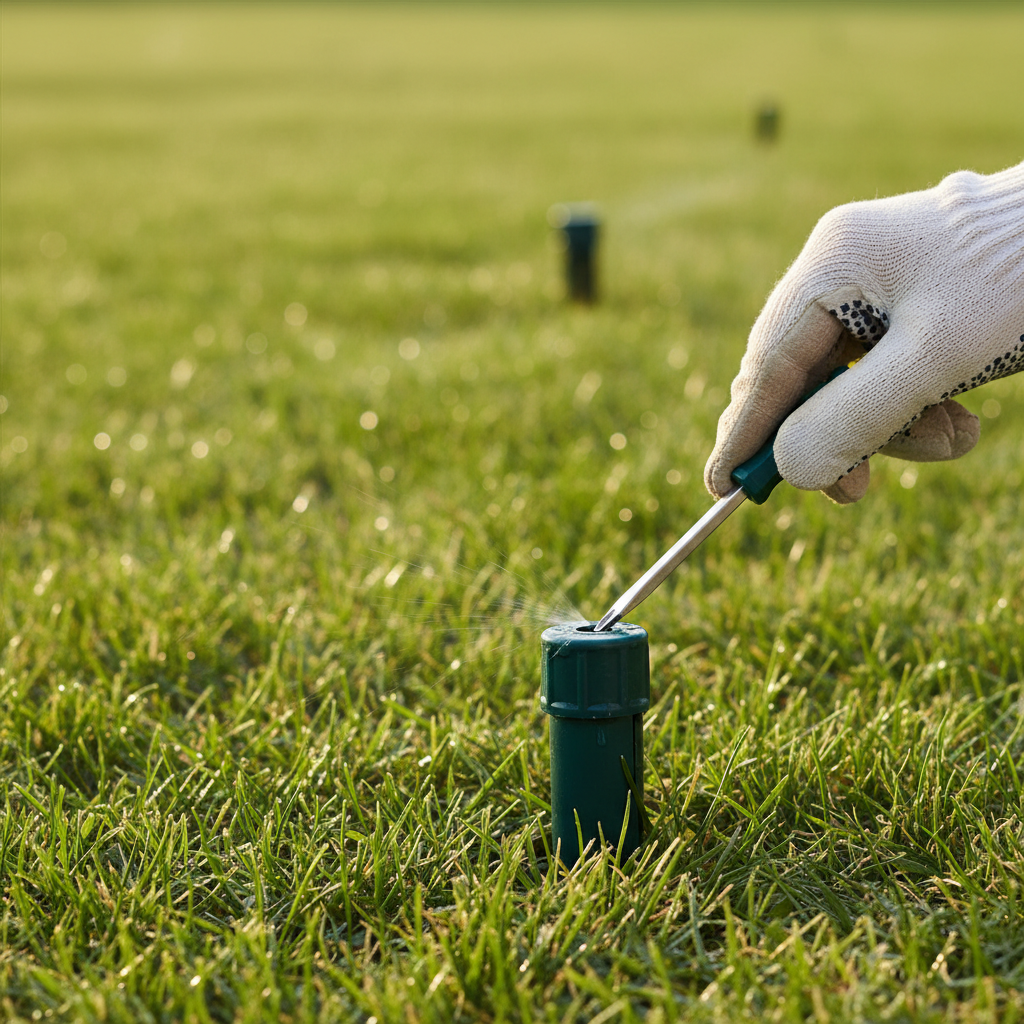
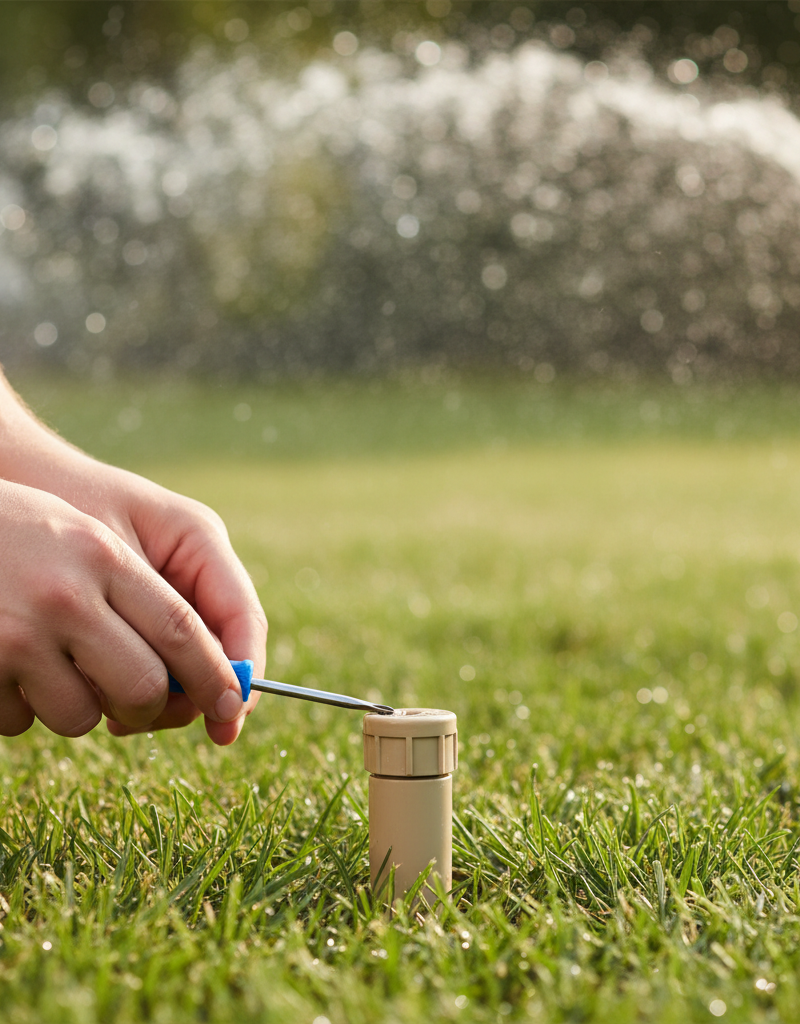
1. Fixed Spray Heads: These are the simplest, most common heads, identified by their stationary stream of water that creates a fan-like, fixed pattern (e.g., quarter-circle, half-circle, full-circle). They have no moving parts internally; the spray pattern is determined by the nozzle itself. Water enters the head, travels up through a small filter, and exits the nozzle opening, forming a consistent sheet of water. Adjustments here primarily involve aligning the nozzle direction and, if the nozzle is interchangeable, swapping it for one with a different throw distance or pattern. Some fixed spray heads also have a small adjustment screw on top, which, when turned, can slightly reduce the throw distance by disrupting the water stream, but it primarily affects distance, not the arc.
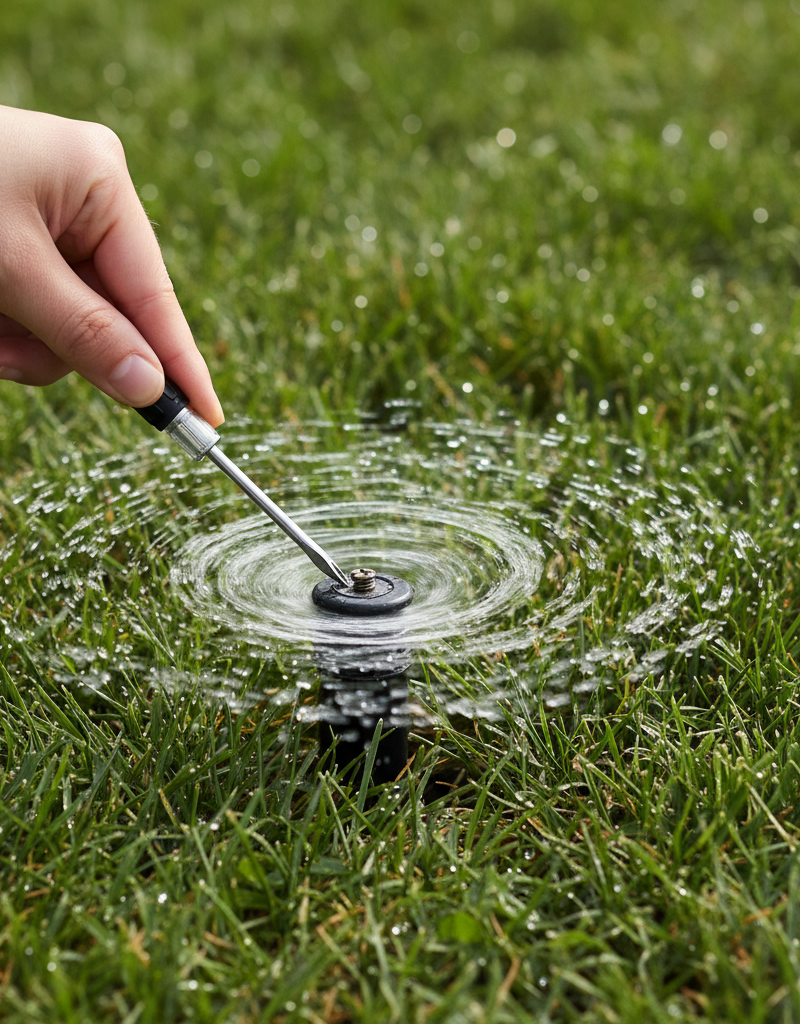
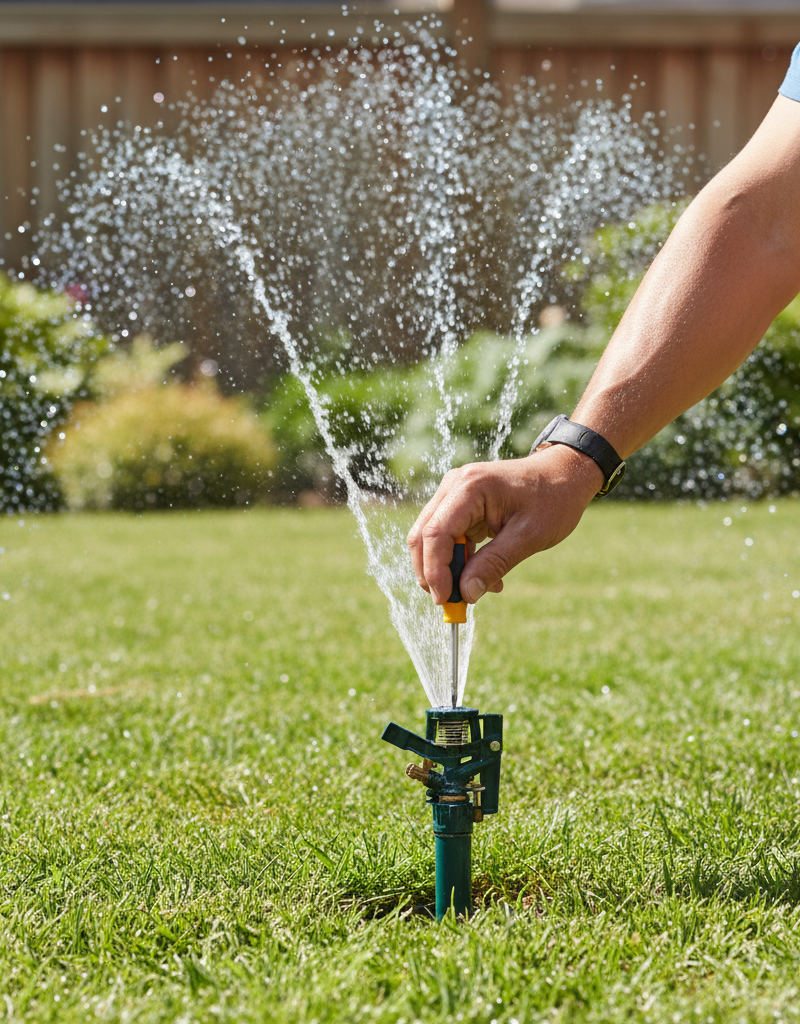
2. Rotor Heads: Unlike fixed sprays, rotor heads have an internal gear-drive mechanism that rotates a single or multiple streams of water in a sweeping motion. This design allows them to cover larger distances (typically 15-50 feet) and apply water more slowly, reducing runoff. Water pressure turns a turbine, which then drives a series of gears that rotate the nozzle. Rotor heads are designed for arc adjustment (determining the degree of rotation from 40° to 360°) and distance adjustment, usually through a small adjustment screw that interferes with the water stream or by swapping out different sized nozzles that come with the head. A key feature of rotors is their "memory" – they return to their starting position after completing their arc.
3. Rotating Nozzle Heads (Rotators): These are a hybrid, often fitting into standard spray head bodies but functioning more like mini-rotors. They feature multiple, distinct streams of water that slowly rotate, delivering water more uniformly and at a lower precipitation rate than traditional fixed spray heads, similar to rotors but over shorter distances (8-30 feet). The slow, rotating streams reduce misting and wind drift. Adjustments typically involve setting the arc and, to a lesser extent, the distance, similar to rotor heads but often with simpler tools or even by hand for some models.
Regardless of the type, the goal of any sprinkler head is to distribute water evenly. This is achieved through proper head spacing and the concept of "head-to-head coverage," meaning that each sprinkler head should spray all the way to the next sprinkler head. When adjustments are made, you're essentially fine-tuning this coverage to ensure every plant receives its fair share of hydration without waste.
Step-by-Step Fix
Before you begin, ensure your irrigation system is turned on and water pressure is adequate. Observe your system running for a few minutes to identify dry and wet spots.
1. Identify Your Sprinkler Head Type – Know your equipment
- Why: Different heads have different adjustment methods. Knowing what you have prevents frustration and potential damage.
- How: Observe the spray. Fixed spray heads have a stationary, fan-like pattern. Rotor heads shoot a single or multiple streams that rotate slowly over a wide arc. Rotating nozzles also have rotating streams, but often multiple and shorter range, fitting into smaller bodies.
- If you have a mix: Note the type for each zone. You'll need to adjust each type differently.
2. Clean Around the Sprinkler Head – Clear obstructions for a clear spray
- Why: Grass, weeds, or debris can block the spray pattern, leading to dry spots.
- How: Carefully clear away any grass blades, soil buildup, or plant growth immediately surrounding the sprinkler head. For pop-up heads, gently pull up the riser (if possible without activating water) to check for obstructions at the nozzle level.
- Material Needed: Small trowel or hand spade.
3. Clean or Replace Clogged Nozzles – Restore full water flow
- Safety Note: Turn off the water to the zone before removing or adjusting nozzles.
- Why: Mineral deposits, dirt, or debris can partially or fully block a nozzle, causing erratic spray or reduced distance.
- How: For fixed spray and rotating nozzles, gently unscrew the nozzle from the riser. Inspect for debris. Use a small brush or a thin piece of wire (like a paper clip) to clear any clogs. Rinse thoroughly with water. If the nozzle is cracked, damaged, or severely scaled, replace it with an identical model. For rotors, check the nozzle opening for obstructions; often, a quick wipe or a gentle probe with a paper clip is sufficient. If a rotor nozzle needs replacement, you
Related Articles
Keep troubleshooting with these hand-picked guides from FixlyGuide:
- The 5-Minute Fix for Sprinkler Head Chaos (and Why It’s Spraying the Sidewalk) — Tired of your sprinklers watering everything but your lawn? Learn how to quickly adjust sprinkler spray patterns and coverage for a greener…
- The 3 Hidden Reasons Your Sprinkler Head Won't Pop Up (And How to Fix It Fast) — Uncovering why your sprinkler head isn't popping up often comes down to three common, easily fixable issues, helping you restore your lawn'…
- The 3 Hidden Reasons Your Sprinkler Hits The Sidewalk (And How To Fix Each In Minutes) — Proper sprinkler adjustment is crucial for a healthy lawn and efficient water use; learn how to correct common spray pattern issues quickly.
- The 3 Hidden Reasons Your Sprinkler Head Won't Pop Up (And How to Fix Them) — Frustrated by a sprinkler head that won't rise? Discover the top three culprits behind this common irrigation issue and how to resolve them…
- The #1 Sprinkler Winterization Mistake That Leads to $1,000s in Damage — Discover the crucial mistake many homeowners make when winterizing sprinklers and how to properly blow out your system to prevent costly fr…
- The #1 Mistake Homeowners Make When Their Ice Maker Stops (And the Easy Fix) — Is your refrigerator ice maker on strike? Often, a simple oversight or minor clog is the culprit, easily fixable with basic tools.
Should you do this yourself?
Answer five quick questions before you start. Safety outranks savings every time.
Your experience with work like this
How high do you have to work?
Does the job involve any of these?
Will it need a permit?
Specialty tools
Free and instant. Educational guidance only — not a quote, inspection, or professional diagnosis.
What should this project cost?
Enter your project details for a realistic cost range before you call anyone.
Cost depends heavily on which system turns out to be the source.
- Regional adjustment
- National average
- Labor share (typical)
- ~$1,620
- Quotes to collect
- 3 written estimates
Educational estimate based on national averages — not a binding quote. Always confirm with written local estimates.
Before you start
Check the difficulty, permits, and safety risk — then decide whether to call a pro.
- Estimate this projectGet a cost range for your scope and ZIP before you call anyone.Open
- Get local estimatesSend one request and compare written estimates from vetted pros.Open
Free, no signup required. Estimates are educational guidance, not a quote or an inspection.
Frequently asked questions
Why is my sprinkler not reaching far enough?+
Check for low water pressure, a clogged nozzle, or an incorrect throw distance setting. Increase pressure if possible, clean or replace the nozzle, and adjust the distance screw or replace with a longer-throw nozzle.
How do I make my sprinkler spray a full circle?+
For rotor heads, adjust the arc setting to 360 degrees using the appropriate adjustment tool. Some fixed spray heads come with full-circle nozzles that cannot be adjusted to different arcs.
Can I adjust water pressure at the sprinkler head?+
No, water pressure is controlled at the main line or zone valve. You can only adjust the distance the water travels from the head, which is indirectly affected by pressure, but you cannot independently change the pressure at a single head.
Discussion
Loading comments…