- Grout Drying Too Quickly: In hot or dry environments, grout can dry on the tile surface faster than you can clean it, making the residue harder to remove. Working in smaller sections can help mitigate this.
- Wrong Sponge/Tool: Using a sponge that's too soft or worn won't effectively pick up grout particles. A firm, hydro-philic grout sponge is designed to lift and retain grout slurry.
- Porous Tile Types: Unglazed ceramic, natural stone (marble, travertine, slate), or handmade tiles can be more prone to haze because their surfaces are more absorbent and can
General remodeling · Renovation planning
| Project category | General remodeling |
|---|---|
| Problem type | Renovation planning |
| Trade required | General contracting |
| Urgency | Planned project |
| Safety risk | Low safety risk |
| DIY suitability | Pro recommended |
| Cost category | Major investment |
| Typical timeline | Design and permitting often 2–4 months before work starts |
| Contractor type | General contractor |
Repair option
Phase the work and fix the building envelope first.
Replacement option
Full renovation with permits, design, and a general contractor.
Common causes
- Space no longer fits how the household lives
- Resale preparation
- Deferred maintenance stacking up
Relevant tools:project cost estimatorcompare quoteshome improvement material prices
Published June 2, 2026Last updated August 17, 2026
Tools & materials you'll need
Affiliate linksAs an Amazon Associate FixlyGuide earns from qualifying purchases — at no extra cost to you. Prices and availability are accurate as of publication and subject to change.
Quick Answer
Grout haze forms when the fine particles and binders in grout dry and adhere to the surface of your beautiful new backsplash tiles, leaving a dull, chalky, or cloudy film. This isn't just an aesthetic issue; it can trap dirt and make your tiles harder to clean over time. The good news is that for most non-epoxy grouts, haze can be effectively removed using readily available cleaners, a little elbow grease, and the right technique, usually within a few hours of focused work.
The Problem
You've just spent hours, or even days, meticulously installing your new kitchen backsplash. The tiles are perfectly aligned, the grout lines are uniform, and you're envisioning the finished result. Then, after the grout dries, you notice it: a persistent, dull film clinging to the surface of your tiles. This unwelcome visitor is grout haze, and it's by far the most common issue DIYers face after grouting. It transforms vibrant, glossy tiles into muted, cloudy surfaces and gives an otherwise professional-looking job an amateur finish. It can be a subtle chalkiness or a more pronounced milky film, depending on the type of grout and how much residue was left behind. If not addressed, this haze will remain, diminishing the aesthetic appeal of your backsplash and potentially making future cleaning more difficult as microscopic pores can trap grime.
How It Works
To understand how to remove grout haze, it helps to know why it forms in the first place. Grout is essentially a mixture of cement, sand (in sanded varieties), polymers, and water. When you apply grout, you're filling the gaps between tiles with this paste. As you wipe the excess grout from the tile faces, you attempt to remove as much of the solid material as possible, leaving only the grout lines filled. However, even with diligent wiping, ultra-fine cementitious or polymer particles, suspended in the water used for cleanup, can adhere to the tile surface. As this thin film of water evaporates, these microscopic particles are left behind, drying into a tenacious film – the grout haze.
The mechanism differs slightly between cement-based and epoxy grouts. For cement-based grouts, the haze is primarily a mineral deposit. Water-based cleaning solutions, particularly acidic ones, can help dissolve these mineral bonds, making the haze easier to remove. Epoxy grouts, on the other hand, use resin and a hardener. If not cleaned immediately and thoroughly, dried epoxy haze is incredibly difficult to remove because it's essentially a cured plastic film. This article primarily focuses on removing haze from traditional cement-based grouts, as epoxy grout haze requires aggressive and often professional-grade removers if not tackled within hours of application.
The porosity of your tile also plays a role. Unglazed, porous tiles (like natural stone or terracotta) can absorb grout particles more readily, making haze more challenging to remove than from smooth, non-porous glazed ceramic or porcelain tiles. This is why sealing porous tiles before grouting is often recommended – it creates a barrier against grout absorption.
Step-by-Step Fix
1. Gather Your Tools — Assemble the necessary supplies before you begin.
Ensure you have all items within reach before starting. This prevents interruptions and makes the process more efficient. Having multiple clean buckets ensures you're not cross-contaminating your cleaning solution or spreading the haze around.
2. Test in an Inconspicuous Area — Always test your chosen cleaning solution on a small, hidden tile section first.
This crucial step prevents accidental damage or discoloration to your tiles or grout lines. Some tiles, especially natural stone, can be sensitive to acidic cleaners like vinegar or commercial haze removers. Apply the solution, let it sit for a few minutes, then wipe and observe for any adverse reactions before proceeding to the main backsplash area.
3. Mix Your Cleaning Solution — Prepare your chosen grout haze remover according to instructions.
For general cement-based grout haze, start with a mild solution. For many situations, a DIY vinegar solution works wonders: mix one part white vinegar with four parts warm water. If you're using a commercial grout haze remover, follow the manufacturer's dilution ratios precisely. Always use warm water, as it helps activate the cleaning agents and makes removal easier. Safety note: When working with commercial cleaners, ensure good ventilation, wear gloves, and eye protection. Never mix different cleaning chemicals, especially bleach with acids, as this can create dangerous fumes.
4. Apply the Solution Liberally — Dampen the hazy tile surface with your cleaning solution.
Using a sponge or soft cloth, generously apply the solution to a manageable section of the backsplash, usually a 3x3 foot area. Ensure the entire hazy film is saturated but avoid pooling. For stubborn haze, you might need to let the solution sit for 5-10 minutes to allow it to penetrate and soften the grout residue. Do not let the solution dry on the tiles.
5. Scrub the Haze Away — Use an abrasive-but-safe tool to physically remove the softened haze.
For most glazed tiles, a nylon scrub brush (like a stiff dish brush) or a white scrubbing pad works well. For delicate or polished tiles, use a soft cloth or sponge. Scrub in small circular motions, applying moderate pressure. You should see the haze begin to lift and dissolve. For textured tiles, a soft-bristle brush can help get into crevices. Avoid metal brushes or scouring pads, as these can scratch your tile or damage the grout lines.
6. Wipe Clean with Water — Rinse the scrubbed area thoroughly with clean water.
Immediately after scrubbing, use a clean sponge dampened with plain, warm water to wipe away the loosened solution and haze. Rinse your sponge frequently in a separate bucket of clean water to avoid redepositing the haze. Work in small sections, always refreshing your rinse water to ensure a streak-free finish.
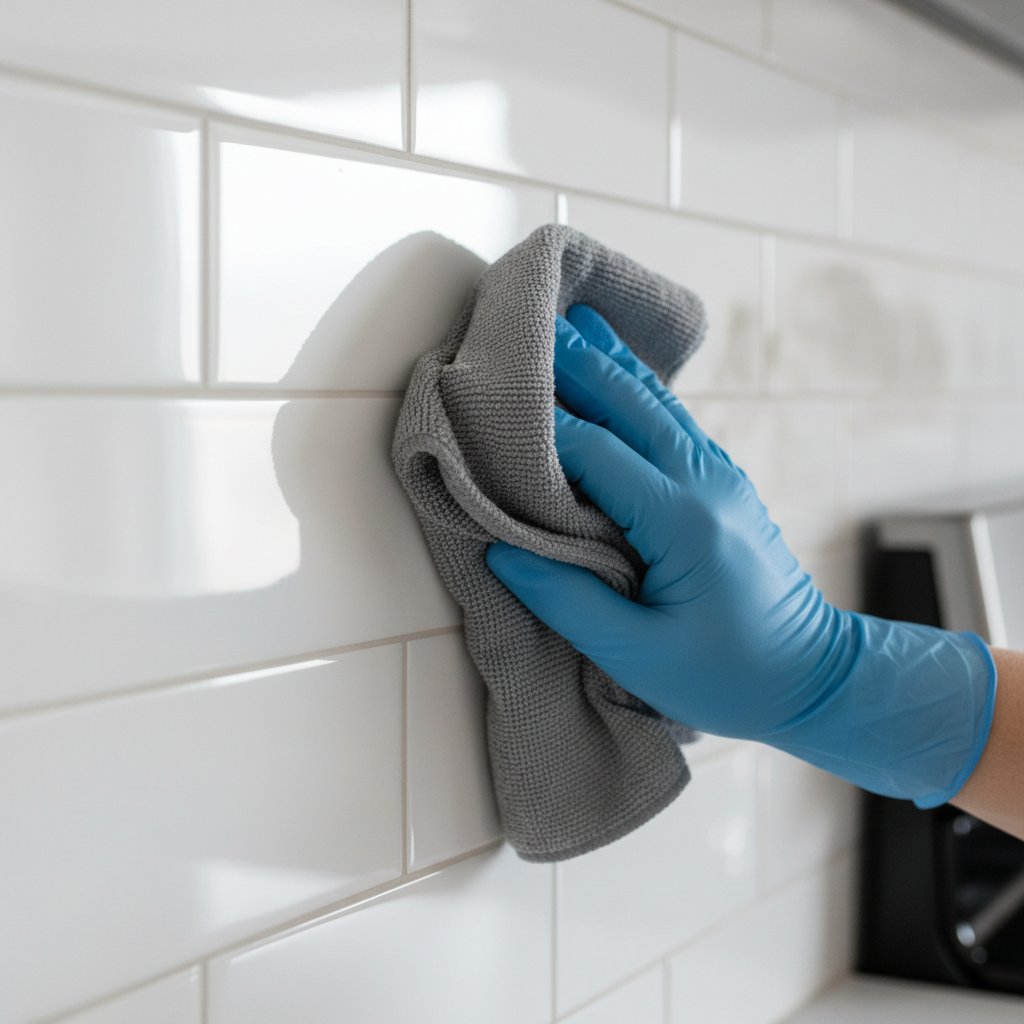
7. Buff for Shine (Optional but Recommended) — For an extra sparkle, buff the dry surface with a micro-fiber cloth.
Once the tiles are dry, a final buff with a clean, dry micro-fiber cloth can remove any minor streaks and enhance the shine, giving your backsplash a truly professional appearance. This step is particularly effective on glossy or polished tiles.
8. Repeat as Necessary — Tackle remaining hazy areas or exceptionally stubborn spots.
If you still see haze after the first pass, be patient. Some stubborn areas might require a second or even third application and scrubbing. It's better to repeat the process gently than to scrub too aggressively the first time. For exceedingly tough cement haze, consider moving to a slightly stronger commercial haze remover, always re-testing in an inconspicuous area.
9. Consider Sealing (After Full Cure) — Protect your grout (and some tiles) from future stains.
Once your grout is fully cured (typically 48-72 hours, but check grout manufacturer's instructions) and completely haze-free, consider applying a good quality grout sealer. Sealing helps prevent future staining and makes cleaning easier. If you have natural stone tiles, you may also need to seal the tiles themselves.
Common Causes
- Insufficient Initial Cleanup: The most common culprit. Not wiping off enough excess grout during the initial application, or not changing rinse water often enough, leaves too much residue on the tile surface. The first wipe should remove the bulk of the grout, and subsequent wipes with a damp (not soaking wet) sponge should capture the lingering film.
- Too Much Water in Cleanup: Paradoxically, using too much water during the cleanup process can spread fine grout particles across the tile surface rather than removing them. Your sponge should be damp, not dripping wet, and often wrung out thoroughly.
- Grout Drying Too Quickly: In hot or dry environments, grout can dry on the tile surface faster than you can clean it, making the residue harder to remove. Working in smaller sections can help mitigate this.
- Wrong Sponge/Tool: Using a sponge that's too soft or worn won't effectively pick up grout particles. A firm, hydro-philic grout sponge is designed to lift and retain grout slurry.
- Not Changing Rinse Water Frequently: Every time you rinse your sponge, grout particles are transferred to the water. If the water becomes saturated with grout, you're essentially just applying a thin layer of dirty grout water back onto your tiles. Frequent water changes are critical.
- Porous Tile Types: Unglazed ceramic, natural stone (marble, travertine, slate), or handmade tiles can be more prone to haze because their surfaces are more absorbent and can
Related Articles
Keep troubleshooting with these hand-picked guides from FixlyGuide:
- The Tiny Gap That Destroys Your Bathtub's Structure (and How to Seal It) — Recaulking your bathtub correctly is crucial to prevent water damage, mold growth, and structural issues in your bathroom.
- The #1 Mistake When Fixing Baseboards That Pull Away From Walls — Discover the crucial mistake homeowners make when reattaching baseboards and how to properly secure them for a lasting fix.
- The #1 Mistake Homeowners Make Recaulking a Tub (And How to Fix It for Good) — Discover the most common recaulking error and a step-by-step guide to resealing your bathtub like a pro, ensuring a watertight, mold-free f…
- The 7 Critical Spring Home Tasks Most Homeowners Forget (And Why You Shouldn't) — Don’t just prune bushes; tackle these often-overlooked spring maintenance items to protect your home’s value and prevent costly repairs.
- The $30 Trick to Melting Ice Dams (Before They Destroy Your Roof) — Discover how to safely remove ice dams from your roof instantly with common household items, preventing costly damage. Stay safe while tack…
- The #1 Mistake Homeowners Make When Caulking a Bathroom Sink (And How to Fix It) — Discover the most common caulk mistake homeowners make around bathroom sinks and follow simple steps to achieve a lasting, watertight seal.
Should you do this yourself?
Answer five quick questions before you start. Safety outranks savings every time.
Your experience with work like this
How high do you have to work?
Does the job involve any of these?
Will it need a permit?
Specialty tools
Free and instant. Educational guidance only — not a quote, inspection, or professional diagnosis.
What should this project cost?
Enter your project details for a realistic cost range before you call anyone.
Cosmetic refreshes start near $5,000; full remodels commonly $25,000–$45,000.
- Regional adjustment
- National average
- Labor share (typical)
- ~$8,550
- Quotes to collect
- 3 written estimates
Educational estimate based on national averages — not a binding quote. Always confirm with written local estimates.
Before you start
Check the difficulty, permits, and safety risk — then decide whether to call a pro.
- Estimate this projectGet a cost range for your scope and ZIP before you call anyone.Open
- Get local estimatesSend one request and compare written estimates from vetted pros.Open
Free, no signup required. Estimates are educational guidance, not a quote or an inspection.
Recommended for DIYers & woodworkers
Sponsored
The Top 20 Tools for Workshops of Any Budget
No stationary machines or power tools required — plus 3 fundamental tools that can't be bought at any price.
Get the free guide
Ted's Woodworking — The #1 Woodworking Resource
Detailed instructions, dimensioned drawings, materials & cutting lists, and 3D schematics for every skill level.
See the plansSponsored: links above are affiliate links. FixlyGuide may earn a commission on qualifying purchases — at no extra cost to you.
Frequently asked questions
How long after grouting can I remove haze?+
Ideally, tackle haze within 24-48 hours after grouting. The newer the haze, the easier it is to remove. Beyond 72 hours, the grout will be fully cured, making removal more challenging and potentially requiring stronger commercial products.
Can I use vinegar on all types of tile?+
A diluted white vinegar solution is generally safe for glazed ceramic and porcelain tiles. However, it should NOT be used on natural stone tiles (like marble, travertine, or limestone) as the acid can etch or dull the surface. Always test in an inconspicuous area first, especially with natural stone, or opt for a pH-neutral commercial grout haze remover designed for all tile types.
What's the difference between grout haze and efflorescence?+
Grout haze is a thin film of dried grout residue. Efflorescence is a white, powdery substance that forms when water carries soluble salts to the surface of porous materials (like grout or unsealed natural stone) and evaporates, leaving the salt deposits behind. While both are white films, efflorescence is typically coarser and can recur if the moisture source isn't addressed.
Will grout haze wear off on its own?+
No, grout haze will not typically wear off on its own. While some very light haze might become less noticeable over time with regular cleaning, significant haze will remain indefinitely and can even attract and trap dirt, making your tiles appear duller and dirtier. It's best to address it proactively.
Discussion
Loading comments…