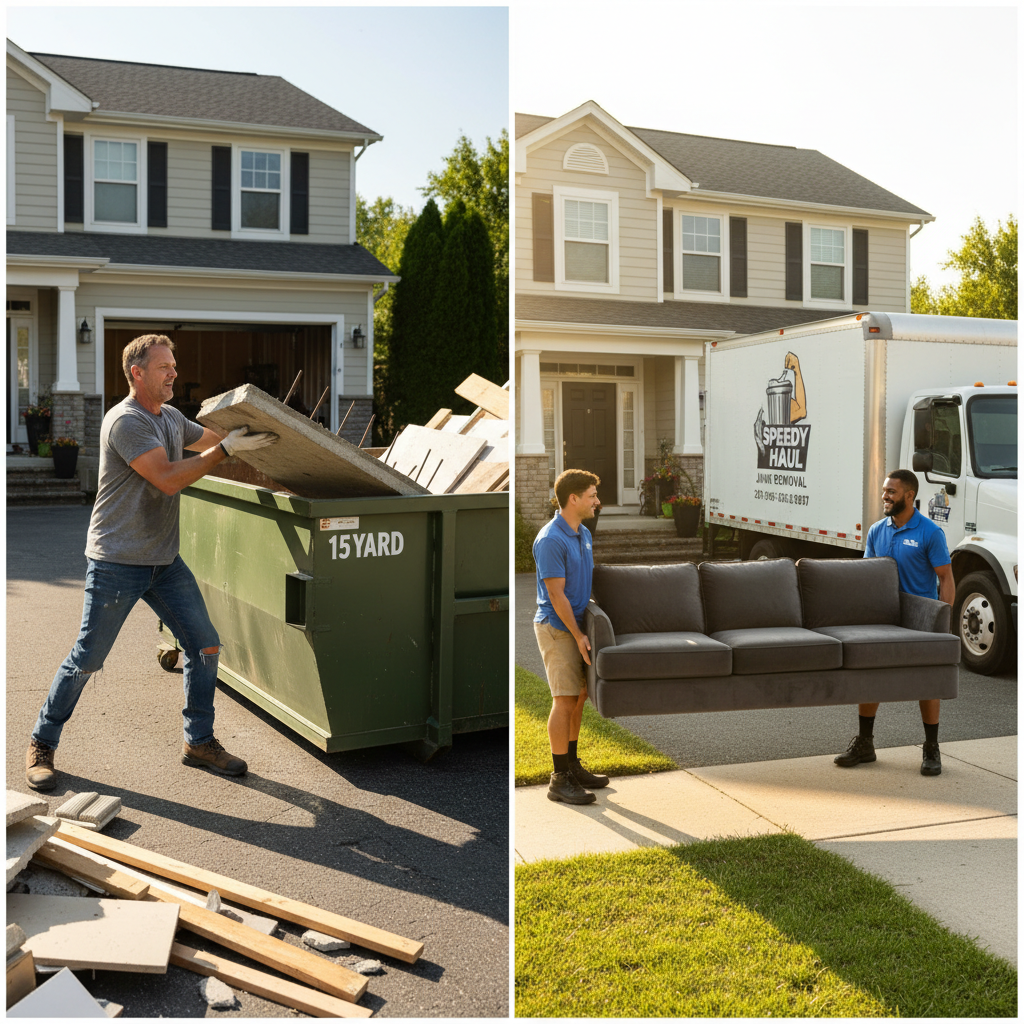
- For smaller, single-item, or hazardous material disposals, a junk removal service is typically more cost-effective.
- Choosing how to get rid of a large amount of waste is a common homeowner dilemma.
- A dumpster rental provides you with a large steel container, delivered to your property, for a set period (typically 3-7 days).
- Choosing the most cost-effective option requires a clear-eyed assessment of your specific project.
Published August 7, 2026Last updated August 17, 2026
Tools & materials you'll need
Affiliate links- AmazonTape Measure1 · To estimate the cubic yards of your debris.
- AmazonCalculator1 · To calculate volume and compare costs.
- AmazonWork Gloves1 pair · Essential for safely loading a dumpster.
- AmazonWheelbarrow1 · Helpful for moving heavy or loose debris to the dumpster.
- AmazonPhone/Computer1 · For researching and calling companies for quotes.
No materials required.
As an Amazon Associate FixlyGuide earns from qualifying purchases — at no extra cost to you. Prices and availability are accurate as of publication and subject to change.
Quick Answer
For smaller, single-item, or hazardous material disposals, a junk removal service is typically more cost-effective. For larger projects like renovations or major cleanouts where you can provide the labor, a dumpster rental is almost always the cheaper option, saving you hundreds of dollars by avoiding professional labor rates.
The Problem
Choosing how to get rid of a large amount of waste is a common homeowner dilemma. You're staring at a pile of debris from a bathroom remodel, a garage full of clutter, or a yard piled high with storm debris. The two primary solutions—renting a dumpster or hiring a junk removal service—seem similar on the surface, but they represent two fundamentally different approaches with vastly different cost structures. Picking the wrong one can cost you not just money but also significant time and effort. A junk removal service offers convenience at a premium; they provide the labor to load and haul everything away. A dumpster rental is a DIY-focused solution; you provide the labor to fill the container, which is then hauled away for you. The core of the problem is understanding the break-even point. When does the convenience of a service outweigh the cost savings of a DIY dumpster? Homeowners often underestimate the volume of their junk, misunderstand local disposal regulations, or get surprised by hidden fees like overweight charges, fuel surcharges, or labor minimums. This decision isn't just about comparing base prices; it's about accurately assessing your project's scale, timeline, and your own capacity for physical labor to determine the true, all-in cost of getting your space back.
How It Works
A dumpster rental provides you with a large steel container, delivered to your property, for a set period (typically 3-7 days). The process is straightforward: you call a local or national rental company, select a size (measured in cubic yards, like 10, 20, or 30 yards), and they drop it off at a designated spot, usually your driveway. You are then responsible for loading all your waste into the container yourself. The key here is the "Do-It-Yourself" labor. You fill it at your own pace over the rental period. Once you're finished (or the rental period ends), the company returns to pick up the full dumpster and transports it to a landfill, recycling center, or transfer station for proper disposal. The rental fee typically includes delivery, pickup, and a specific weight allowance. If you exceed this weight limit, you'll pay overweight fees, which can add up quickly. This option gives you control over the loading process and timeline.
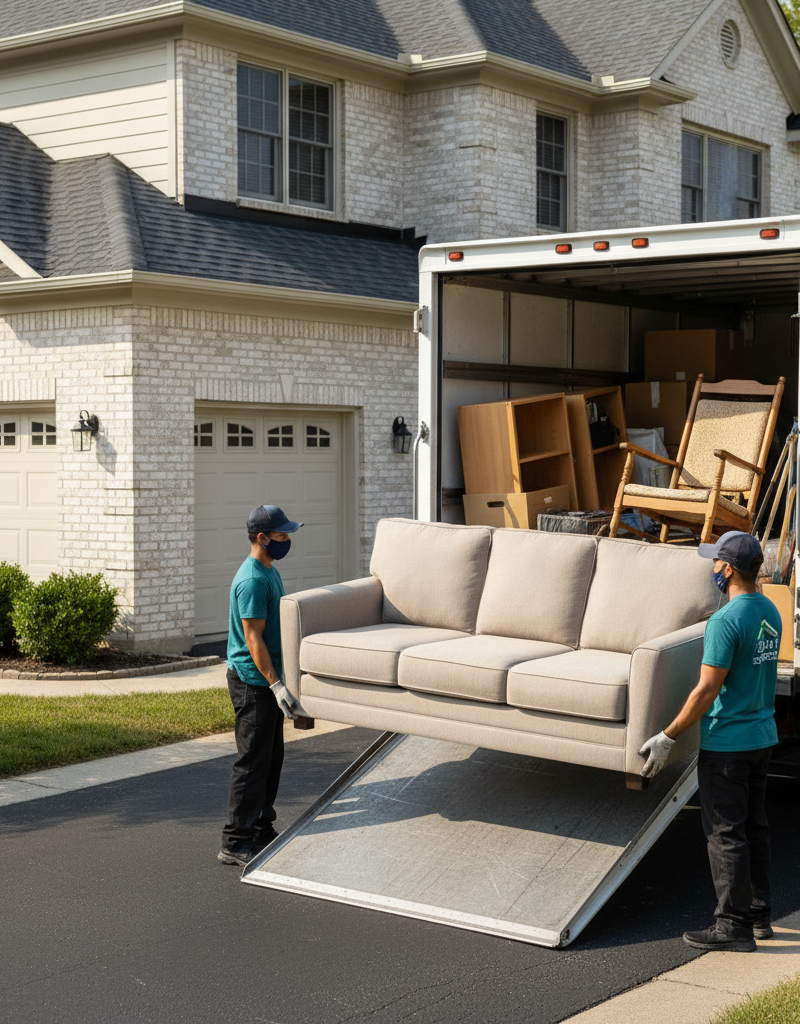
Conversely, a junk removal service is a full-service, "Done-For-You" solution. Instead of a container being left on your property, a crew of two or more people arrives with a large truck. You simply point to the items you want gone, and they do all the heavy lifting, loading, and hauling. They will remove items from anywhere on your property—the basement, the attic, the backyard—and load them onto their truck. Pricing is usually based on the volume your items take up in their truck, often measured in fractions like 1/8, 1/4, 1/2, or a full truckload. Some services may charge by the item for single, heavy objects like a hot tub or piano. This service is fast, often completed in a few hours, and saves you from any physical labor or potential injury. They handle all the logistics of disposal, including sorting for recyclables or donations where possible. It’s the epitome of convenience, but that convenience comes at a significant labor cost.
Step-by-Step Fix
Choosing the most cost-effective option requires a clear-eyed assessment of your specific project. Follow these steps to make the right financial decision.
-
Estimate Your Junk Volume — First, get a realistic estimate of how much stuff you have. Measure the pile's length, width, and height to calculate the cubic footage (L x W x H), then divide by 27 to get cubic yards. A standard pickup truck bed holds about 2.5 cubic yards. This is the single most important factor; be honest and even slightly overestimate to be safe.
-
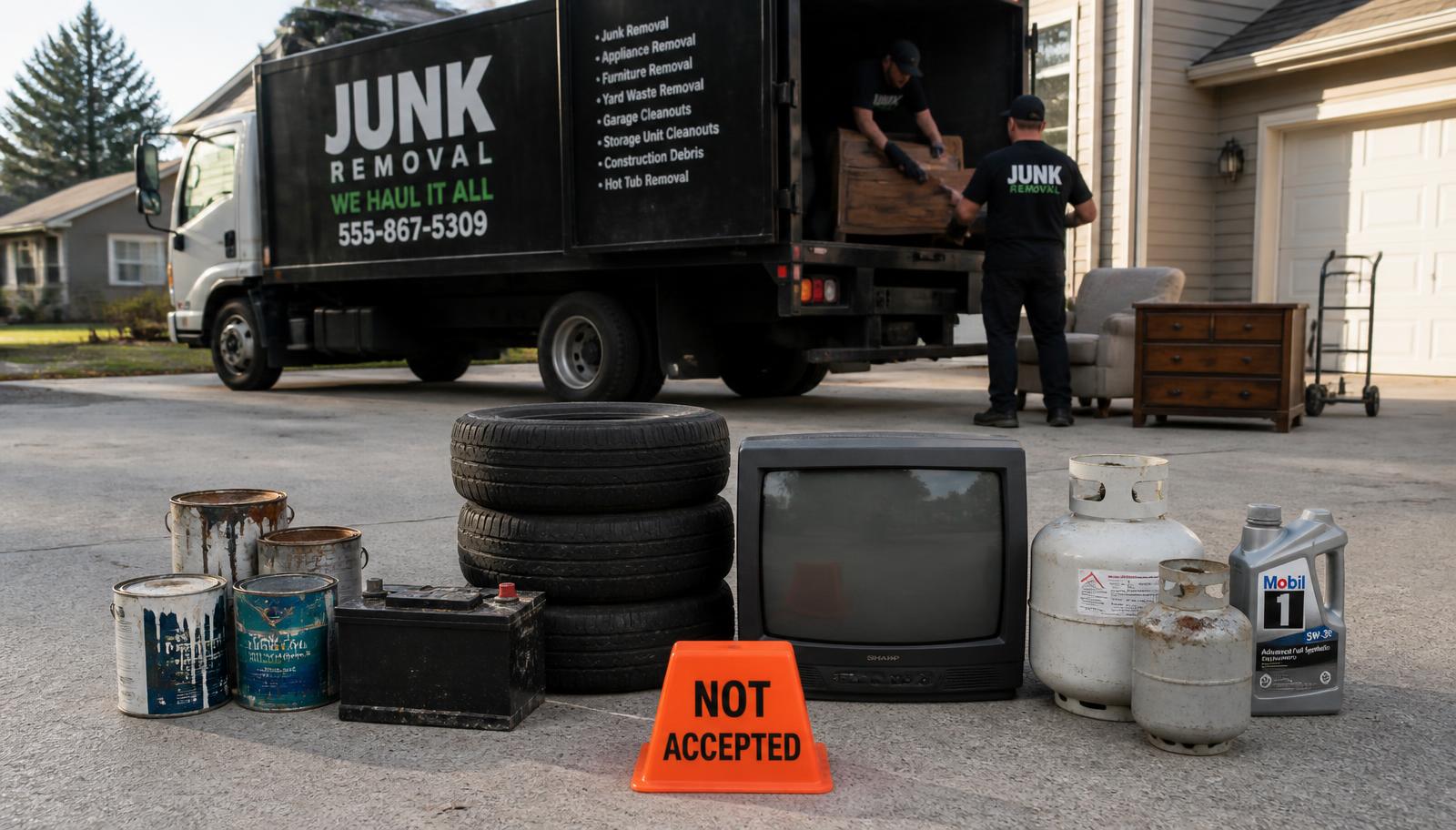
Identify Your Debris Type — Make a list of what you're throwing away. Is it bulky furniture, construction debris (like drywall and wood), yard waste, or general household clutter? Junk removal services may have surcharges for heavy construction materials, and dumpster companies have strict rules about what you can put in (e.g., no hazardous waste, electronics, or tires).
-
Get a Dumpster Rental Quote — Call at least two local dumpster rental companies. Ask for the price of the dumpster size you think you need (e.g., a 10-yard for a small bathroom remodel). Crucially, ask: What is the included weight limit in tons? What is the cost per ton for overages? How long is the rental period, and what are the fees for extra days? What are the fuel and environmental fees?
-
Get a Junk Removal Quote — Next, contact a junk removal service. Many offer free, no-obligation onsite estimates. This is far more accurate than a phone quote. Have them look at your actual pile of junk. They will give you a firm price based on how much space it will take up in their truck. This price includes all labor, transportation, and disposal fees.
-
Factor in Your Time and Labor — This is the "sweat equity" calculation. How long will it take you (and any friends you recruit) to load the dumpster? A 15-yard dumpster might take two people 4-6 hours of steady work. Assign a value to your time. If a junk removal service costs $600 and a dumpster costs $400, are you willing to do 4-6 hours of hard physical labor to save that $200? The answer depends on your physical ability, available time, and personal preference.
-
Analyze Hidden Costs — For dumpsters, the biggest hidden cost is overweight fees. A 20-yard dumpster might have a 3-ton limit, but wet wood or concrete can exceed that easily, costing you an extra $50-$100 per ton. For junk removal, the "hidden cost" is the premium on convenience; their base price is simply higher because it includes a professional crew.
-
Consider Project Timeline — A dumpster rental gives you flexibility. If you're renovating a kitchen over a week, you can toss debris as you create it. A junk removal service is for a single, scheduled pickup. If your project generates waste over several days, you’d need to pile it up until pickup day, which can be messy and inconvenient.
-
Compare Apples-to-Apples — Lay out the final numbers. Your dumpster rental cost is the base fee + potential overweight fees. Your junk removal cost is the single, all-in price they quoted you. Now, look at them side-by-side. For a large volume of material (over 5-6 cubic yards), the dumpster is almost always cheaper if you provide the labor.
-
Evaluate Permits and Placement — Do you have a driveway to place the dumpster? If it needs to go on a public street, you may need a permit from your city, which can cost $50-$150 and take days to secure. A junk removal service avoids this entirely, as their truck is only there for a short time.
-
Make the Final Call — For a 15-yard home cleanout, a junk removal service might quote $800. A 15-yard dumpster might cost $450. The $350 difference is the price of labor. If you can handle the work, the dumpster saves you significant money. If you have a single heavy item or a small, awkward load, the junk removal service's minimum charge (e.g., $150-$250) will likely be cheaper than the smallest dumpster rental.
Common Causes
Homeowners find themselves needing large-scale waste disposal for several predictable reasons. Each scenario has unique characteristics that might push the cost decision toward either a dumpster rental or a junk removal service.
- Home Renovations & Remodeling: This is a top driver. Kitchen, bathroom, or basement remodels generate a mix of bulky and heavy debris like drywall, cabinets, flooring, tile, and wood. This material is often dense, making dumpster weight limits a critical cost factor.
- Major Decluttering Projects: Estate cleanouts, pre-move purging, or tackling a hoarder situation results in a high volume of general household junk. This includes furniture, clothes, boxes, and miscellaneous items. The sheer volume often makes a dumpster more economical.
- Landscaping & Yard Overhauls: Large-scale yard work, tree removal, or storm cleanup creates heavy organic waste like branches, logs, soil, and sod. Many municipalities have rules against putting this in regular trash, necessitating a specialized disposal method. Weight is a primary concern here.
- Roof Replacement: Tearing off old roofing shingles generates an incredibly heavy and uniform type of waste. A 2,000 sq ft roof can produce 2-3 tons of old asphalt shingles. This is a classic dumpster rental scenario, as the weight is predictable and the disposal timeline is tied to the project.
- Flooring Replacement: Removing old carpet, tile, or hardwood from a whole house creates a surprising amount of debris. Rolled-up carpet is bulky, while tile and thinset are exceptionally heavy, again pointing toward a dumpster where you control the careful loading to manage weight distribution.
- Moving In/Out: The process of moving often unearths years of accumulated and unwanted items. Homeowners need a quick and efficient way to dispose of everything left behind or everything they don't want to take to the new home.
Common Mistakes
Choosing the wrong service or mismanaging the process can lead to frustration and unexpected costs. Avoid these common pitfalls:
- Underestimating Volume: This is the most frequent mistake. A homeowner rents a 10-yard dumpster for a "small" project, only to find it overflowing. This forces them to either pay for a second "switch-out" (costing almost as much as the first rental) or illegally pile junk on top, risking fines.
- Ignoring Weight Limits: Homeowners often focus on volume but forget weight. Filling a 20-yard dumpster with clean, broken concrete will almost certainly exceed the weight limit, triggering hundreds of dollars in overage fees. Always ask about the weight allowance and the per-ton overage charge.
- Improper Loading: Throwing items into a dumpster haphazardly wastes a tremendous amount of space. Break down boxes, disassemble furniture, and load heavy items flat on the bottom to maximize capacity. For junk removal, failing to consolidate items in one accessible place can sometimes lead to a higher price quote if the crew has to spend extra time gathering things from all corners of the property.
- Disposing of Prohibited Items: Putting hazardous materials like paint, chemicals, asbestos, tires, or electronics in a dumpster is illegal and dangerous. If the dumpster company finds them at the landfill, they can trace them back to you and issue hefty fines, sometimes weeks after the rental.
- Forgetting About Permits: Placing a dumpster on a public street without a permit is a surefire way to get a citation from your local government. Always check with your city or town clerk's office about permit requirements before ordering a dumpster that won't fit in your driveway.
- Choosing the First Quote: Prices for both dumpster rentals and junk removal can vary significantly between companies. Failing to get at least 2-3 quotes for your specific project is like leaving money on the table. Pay attention to what's included—rental days, weight tonnage, labor—to ensure you're comparing equivalent services.
Cost & Time Breakdown
Costs vary by region, but the relative difference between the two services is consistent. This table illustrates the typical costs for a hypothetical 15-cubic-yard project, such as a large garage cleanout or a small kitchen demolition.
| Task | DIY Cost (Dumpster Rental) | Pro Cost (Junk Removal) | Time |
|---|---|---|---|
| Get Quotes | $0 | $0 | 1-2 hours |
| 15-Yard Waste Disposal | $400 - $550 (dumpster fee) | $700 - $900 (all-inclusive) | 1-3 hours (Junk Crew) |
| Labor (Loading Junk) | $0 (your own labor) | Included in Pro Cost | 4-6 hours (Yourself) |
| Potential Overweight Fees | $50 - $100 per extra ton | N/A (included in quote) | 0 hours |
| Potential Permit Fees | $50 - $150 (if on street) | N/A | 1 hour (application) |
| Total Estimated Cost | $450 - $700 | $700 - $900 | DIY: 5-9 hours / Pro: 1-3 hours |
Tips & Prevention
- Get On-Site Estimates for Junk Removal: Never rely on a phone quote for a junk removal service. Reputable companies will offer a free, no-obligation estimate in person to give you a firm, accurate price. This prevents surprises on pickup day.
- Ask About "Clean Loading" Discounts: Some dumpster companies offer a lower price for dumpsters containing only a single type of recyclable material, like pure concrete, dirt, or metal. If your project fits, this can save you money.
- Negotiate with Junk Removal Services: While dumpster prices are often fixed, junk removal prices can sometimes have wiggle room, especially if your items are easily accessible (e.g., all piled in the driveway) or if it's a slow day for the crew. It never hurts to politely ask if that's their best price.
- Maximize Dumpster Space: Load your dumpster like you're packing a moving truck. Place flat, heavy items on the bottom. Dismantle furniture. Fill in all the gaps. A well-loaded dumpster can hold 20-30% more material than one that is poorly loaded, potentially saving you from needing a larger size.
- Stage Your Junk for Removal: To make a junk removal service as efficient (and potentially cheaper) as possible, consolidate everything in one easily accessible location like the garage or driveway before the crew arrives. This reduces their labor time.
- Pre-Sort and Donate: Before you call either service, do a pass through your items to see what can be donated, sold, or given away for free online. Every item you get rid of this way is an item you don't have to pay to have hauled away, directly reducing your total cost.
When to Call a Professional
While this guide focuses on the cost difference, the decision to "call a professional" in this context means opting for the full-service junk removal crew over the DIY dumpster rental. You should strongly consider hiring a junk removal service, even if it appears more expensive at first glance, in several key situations. First and foremost is if you are physically unable or unwilling to do the heavy lifting. Loading a dumpster is strenuous work that can lead to back strain or other injuries. If you have health limitations or simply lack the time and energy, the labor cost built into junk removal is a worthwhile investment in your well-being.
Second, if your items are in difficult-to-access locations like a cramped attic, a flooded basement, or up several flights of stairs, the expertise and insurance of a professional crew are invaluable. They have the right equipment and techniques to remove items safely without damaging your home. Third, if you need the junk gone now. Junk removal services can often provide same-day or next-day service, making them ideal for urgent situations like a last-minute move-out. Finally, if you are dealing with a small quantity of junk (1-4 cubic yards), a junk removal service is almost always cheaper. Their minimum charge will be less than the cost of even the smallest dumpster rental, making it the clear financial choice for disposing of a single appliance, a couch, or a small pile of debris.
Questions to ask before you sign
Ask every contractor the same questions and the cheapest bid stops looking cheapest. Check them off as you go — your progress is saved on this device.
Free, no signup. Bring this to every walkthrough so you compare bids on the same terms.
What should this project cost?
Enter your project details for a realistic cost range before you call anyone.
Cost depends heavily on which system turns out to be the source.
- Regional adjustment
- National average
- Labor share (typical)
- ~$1,620
- Quotes to collect
- 3 written estimates
Educational estimate based on national averages — not a binding quote. Always confirm with written local estimates.
Check these numbers against your project
National averages are a starting point. These tools narrow it to your scope and ZIP.
- Estimate this projectGet a cost range for your scope and ZIP before you call anyone.Open
- Get local estimatesSend one request and compare written estimates from vetted pros.Open
Free, no signup required. Estimates are educational guidance, not a quote or an inspection.
Get the print-ready PDF of this guide
A clean, ad-free, printable version you can keep on your phone or pin to the workshop wall. Free with a FixlyGuide account.
- Print-optimized layout
- Tools, materials & every step included
- Saved to your account
Frequently asked questions
Is it cheaper to rent a dumpster or hire junk removal?+
For large projects (over 5-6 cubic yards) where you can provide the labor, renting a dumpster is almost always cheaper. For small projects or single-item disposals, junk removal services are more cost-effective as their minimum charge is less than a dumpster rental fee.
What is the 1/4 load price for junk removal?+
The price for a 1/4 truckload for a junk removal service typically ranges from $250 to $400, depending on your location and the company. This price includes all labor, transportation, and disposal fees for the items.
What's the smallest dumpster I can rent?+
The smallest standard dumpster size available for rent is typically a 10-yard dumpster. It's suitable for small bathroom remodels or garage cleanouts. Some smaller, local companies may offer 'dumpster bags' or smaller 4- to 6-yard trailer dumpsters.
Can you put a mattress in a dumpster?+
This depends on the dumpster company and local regulations. Many landfills require mattresses to be handled separately and charge an extra fee. You must ask the dumpster rental company beforehand; some prohibit mattresses entirely, while others will take them for an additional surcharge, often $30-$100 per mattress.
How do I avoid overweight fees on a dumpster rental?+
To avoid overweight fees, be realistic about your debris type. Heavy materials like concrete, dirt, or wet wood will quickly add tonnage. Ask for the weight limit when you rent, and if you are disposing of heavy debris, consider a smaller dumpster or a special 'clean load' dumpster for concrete or dirt, which may have different pricing structures.
Discussion
Loading comments…