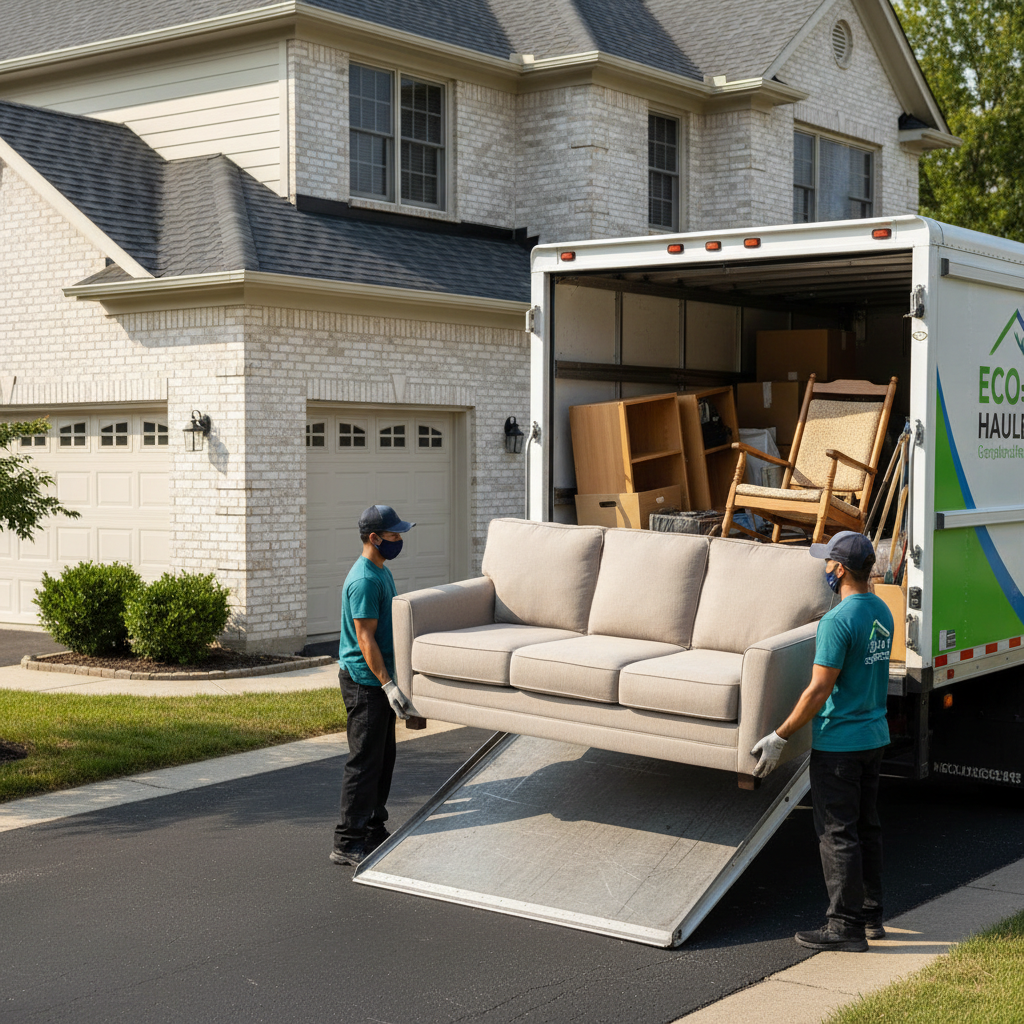
- Moving or Downsizing: One of the most frequent triggers. When packing up a home, you unearth years of accumulated clutter you don't want to pay to move to the new place.
- Estate Cleanouts: After a loved one passes away, families are often left with the overwhelming task of clearing an entire household of possessions, many of which may not have monetary or sentimental value.
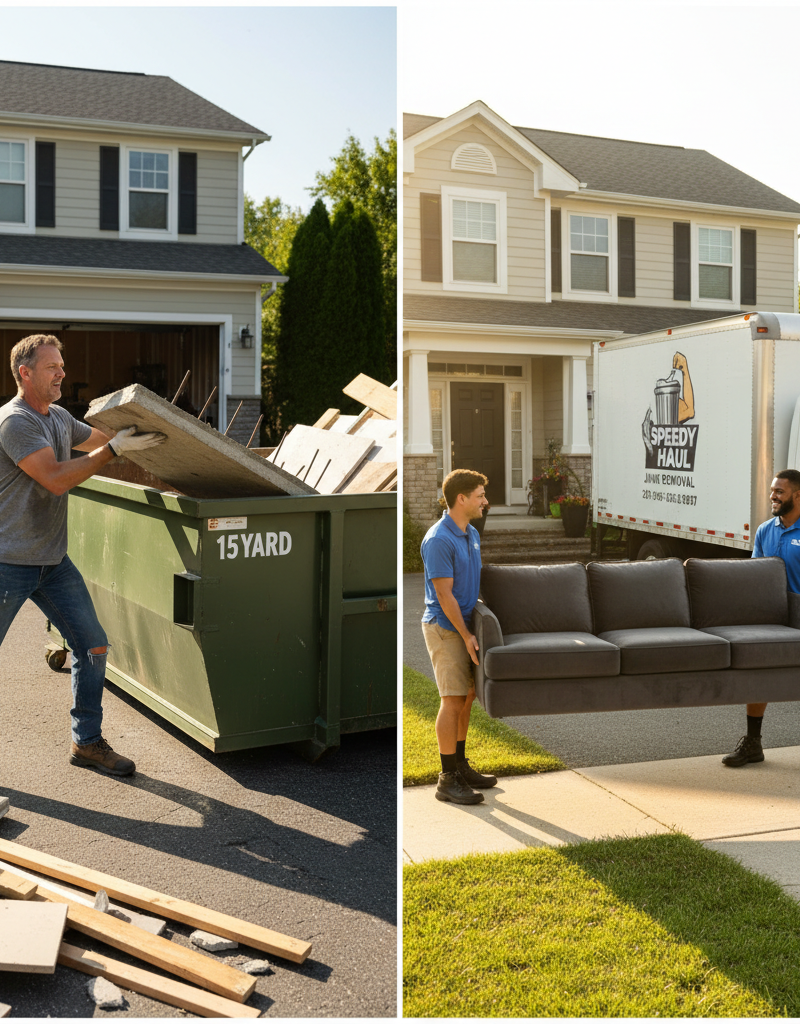
- Renovation & Remodeling Debris: A kitchen remodel or bathroom gut job generates a surprising amount of heavy, bulky waste—old cabinets, drywall, flooring, and fixtures—that can’t go in your weekly trash.
- Appliance & Furniture Upgrades: That new sectional sofa is arriving tomorrow, but what do you do with the old one? Many retailers don't haul away the old item, leaving you to dispose of a large, cumbersome piece of furniture.
- Storm & Yard Cleanup: After a major storm, you might be faced with fallen branches, broken patio furniture, and other debris. Likewise, a large landscaping project can create piles of sod, soil, and old timbers.
Published August 7, 2026Last updated August 17, 2026
Tools & materials you'll need
Affiliate linksAs an Amazon Associate FixlyGuide earns from qualifying purchases — at no extra cost to you. Prices and availability are accurate as of publication and subject to change.
Quick Answer
In 2026, the national average for junk removal is about $250-$300 for a typical load, like an old sofa and some boxes. Haulers price based on the volume your items take up in their truck—usually measured in 1/8th fractions—not by the hour. A full truckload can cost anywhere from $550 to $750, depending on your location and the type of junk.
The Problem
Getting rid of junk is a universal homeowner headache. That old mattress in the basement, the broken-down lawnmower, the mountain of cardboard boxes from your move—it all has to go somewhere. The problem isn't just finding the time and energy to move it; it's understanding the opaque world of junk removal cost. You get a quote over the phone, but the final price changes when the truck arrives. You hear terms like "quarter load," "bed load," and "surcharges," leaving you confused and worried you're being overcharged. Is it about weight? Time? The number of items? This lack of clarity makes it nearly impossible to budget effectively or compare services apples-to-apples. You're left wondering if the $400 you were just quoted for a garage cleanout is a fair price or a total rip-off. Without knowing how haulers actually calculate their fees, you're negotiating from a position of weakness. The core issue is that junk removal isn't like buying a product with a fixed price tag; it's a service based on a variable you can't easily measure: volume. This article will demystify the process, showing you exactly how a professional junk hauler looks at your pile of stuff and translates it into a dollar amount.
How It Works
The secret to junk removal cost lies in a simple concept: volume. Professional junk haulers make money by maximizing the amount of "junk revenue" they can fit into a single truckload before they have to pay to empty it at a landfill, transfer station, or recycling center. Their entire pricing model is built around estimating how much space your items will occupy in their truck.
Think of their truck bed as a pizza, sliced into eighths. This is the industry-standard model. When a junk removal crew arrives, they aren't just looking at your old couch; they're mentally Tetris-ing it into their truck. They estimate, "That's about a quarter-truckload," or "That looks like 3/8ths of a load." Each fraction of the truck corresponds to a specific price point on their rate card. A 1/8th load is the minimum charge, while a full truck is the maximum.
This is why most companies offer free, on-site estimates. It's incredibly difficult for a homeowner—or even a hauler—to accurately estimate volume over the phone. A crew needs to see the items in person to assess how they'll stack and load. A bulky, awkward piece like an old recliner might take up the same volume as a dozen neatly flattened boxes. Weight is a secondary factor, usually only triggering surcharges for extremely heavy, dense materials like concrete, dirt, or shingles. Labor is already baked into the volume price, assuming the items are reasonably accessible. If your junk is in a third-floor attic with no elevator, expect extra labor fees.
Step-by-Step Fix
Here’s how to navigate the junk removal process like a pro, ensuring you get a fair price and a smooth experience.
-
Consolidate and Stage Your Junk — Before you even call for a quote, gather everything you want removed into one easily accessible area, like your driveway, garage, or front yard. This is crucial. Haulers can give a much more accurate (and often lower) quote if they can see everything in a single pile, rather than scattered across the house. It also minimizes labor time, reducing the chance of extra fees.
-
Take a "For Scale" Photograph — Once your items are consolidated, take a few clear photos. Place a common object, like a trash can or a wheelbarrow, next to the pile for scale. This visual reference will be invaluable when you start calling for estimates, helping the company give you a more accurate ballpark range over the phone.
-
Research Local Haulers — Search online for "junk removal near me," but don't just call the first number you see. Look for companies with a strong local presence and positive reviews. Check their websites to see if they publish their pricing structure. Legitimate companies are often transparent about their "truckload fraction" pricing, even if they don't list exact dollar amounts.
-
Request Multiple On-Site Estimates — Never accept the first quote. Schedule at least two (ideally three) different companies to come to your property for a free, no-obligation, on-site estimate. This is the only way to get a firm, written price. Be wary of any company that will only give you a price over the phone without seeing the items.
-
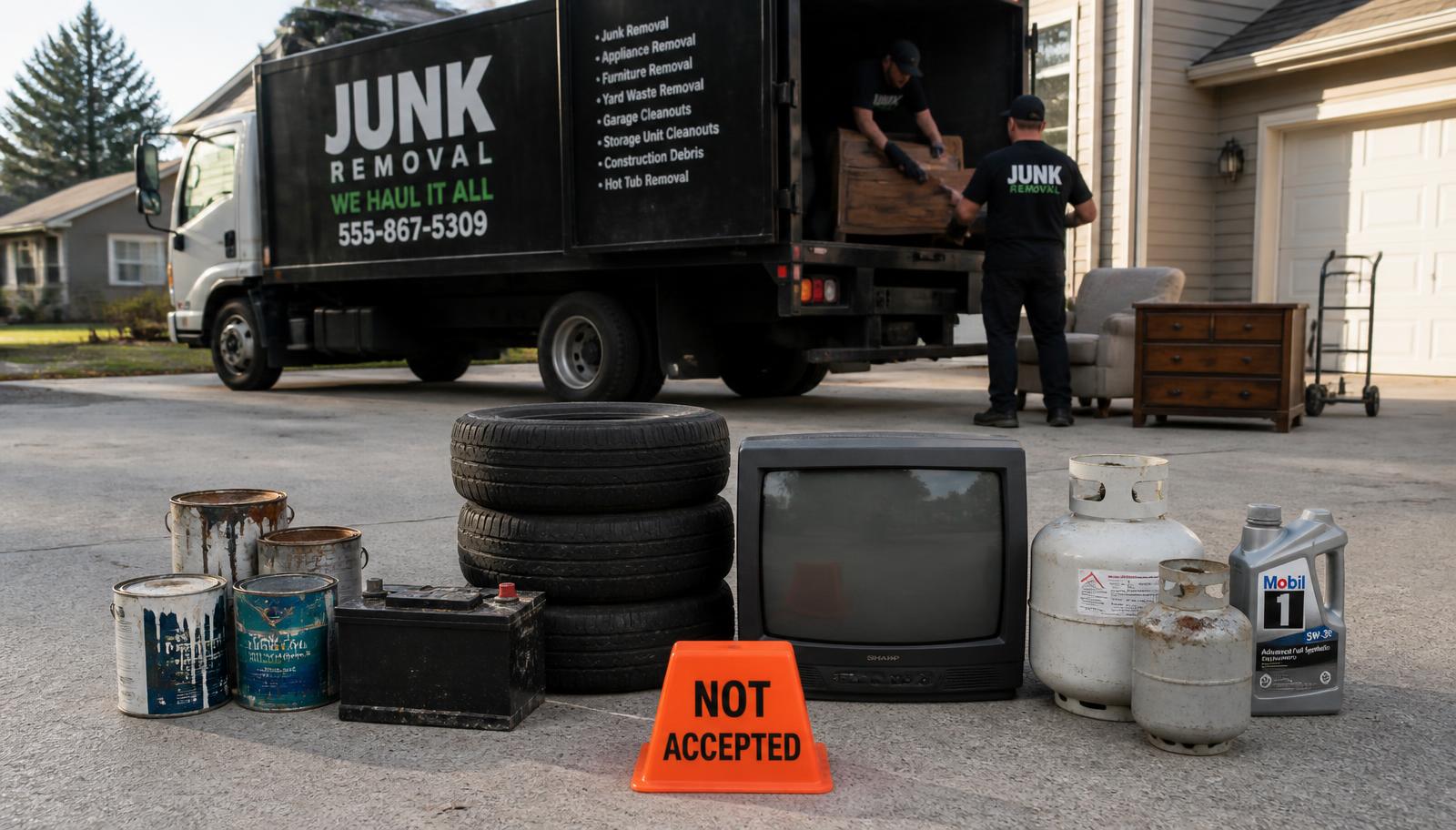
Ask About Surcharges — When the estimator is on-site, ask them directly: "Beyond this quoted price, what other fees or surcharges could apply?" Common surcharges include items like tires, mattresses, appliances with Freon (like refrigerators and AC units), and TVs. These often require special handling and incur separate recycling fees that get passed on to you.
-
Clarify the Volume Estimate — Point to your pile of junk and ask the estimator, "On your company's rate sheet, what fraction of a truckload are you quoting me for?" This forces them to justify the price with a specific volume. If one company quotes you for a half load and another quotes you for a quarter load for the same pile, you know someone is off the mark.
-
Inquire About Heavy Debris — If your pile includes dense materials like concrete, bricks, soil, or roofing shingles, confirm how they charge for it. Many companies have separate "bed load" or "tonnage" pricing for this, as a full truck of concrete would be dangerously overweight. Typically, they will only fill the truck bed about one foot high for a flat rate.
-
Negotiate for a Better Deal — Once you have a written quote in hand, there's often wiggle room. You can ask, "Is that your best price?" or "Your competitor quoted me slightly less, can you match it?" If they're already on-site and have time in their schedule, they are highly motivated to win your business rather than leave empty-handed.
-
Confirm What Happens to Your Junk — Ask about their disposal practices. Responsible companies will try to donate usable items (like furniture or appliances in working order) and recycle materials like metal, cardboard, and electronics. This isn't just good for the environment; it can sometimes reduce the company's disposal costs, which can translate to a better price for you.
-
Get a Final Invoice — Before they start loading, you should have a firm price. Once the job is done and your space is clean, get a digital or paper invoice that breaks down the final cost, including the base price and any taxes or surcharges that were applied. This is your record of the transaction.
Common Causes
Why do homeowners find themselves needing a junk hauler in the first place? The need typically stems from a few common life events and projects.
- Moving or Downsizing: One of the most frequent triggers. When packing up a home, you unearth years of accumulated clutter you don't want to pay to move to the new place.
- Estate Cleanouts: After a loved one passes away, families are often left with the overwhelming task of clearing an entire household of possessions, many of which may not have monetary or sentimental value.
- Renovation & Remodeling Debris: A kitchen remodel or bathroom gut job generates a surprising amount of heavy, bulky waste—old cabinets, drywall, flooring, and fixtures—that can’t go in your weekly trash.
- Appliance & Furniture Upgrades: That new sectional sofa is arriving tomorrow, but what do you do with the old one? Many retailers don't haul away the old item, leaving you to dispose of a large, cumbersome piece of furniture.
- Storm & Yard Cleanup: After a major storm, you might be faced with fallen branches, broken patio furniture, and other debris. Likewise, a large landscaping project can create piles of sod, soil, and old timbers.
- Foreclosure & Eviction Cleanouts: Property managers and landlords frequently use junk removal services to clear out homes left full of abandoned belongings.
Common Mistakes
Homeowners often make a few key errors that lead to paying more for junk removal. Avoid these common pitfalls.
- Getting a "Blind" Quote: Accepting a firm price over the phone without the hauler seeing the junk is the #1 mistake. The price will almost certainly change upon arrival, leading to frustrating on-the-spot renegotiations.
- Not Consolidating Items: Leaving junk scattered in the attic, basement, and garage means the crew has to guess at the total volume and will likely estimate high to cover the unknown. It also invites extra labor fees for the time spent gathering it all.
- Hiding Heavy or Surcharged Items: Thinking you can sneak a few tires or an old TV into the middle of the pile is a bad idea. Crews are trained to spot these. They will find them while loading and you'll be hit with an unexpected surcharge and a loss of trust.
- Assuming All Junk Companies Are Equal: There's a vast difference between a licensed, insured professional company and a "guy with a truck" from a classified ad. The latter may be cheaper but carries significant risk—potential property damage, illegal dumping, and no recourse if the job is done poorly.
- Trying to Haul It Yourself (Without a Plan): Renting a truck, loading it, driving to a landfill, waiting in line, paying disposal fees, and returning the truck can often be more expensive and time-consuming than you think, especially for a large volume of stuff.
- Not Breaking Down Items: Failing to break down furniture or flatten boxes is a major mistake. A large entertainment center can take up a huge amount of space, but if you disassemble it into flat pieces, its volume can be reduced by over 50%, directly lowering your junk removal cost.
Cost & Time Breakdown
This table breaks down the estimated costs and time for common junk removal jobs in 2026. "DIY" assumes you rent a truck (like a U-Haul), pay for fuel, and pay dump fees. "Pro" is the cost to hire a full-service junk removal company.
| Task | DIY Cost | Pro Cost | Time |
|---|---|---|---|
| Single Item (e.g., mattress, sofa) | $70 - $120 | $90 - $180 | 1-2 hours |
| Small Load (1/8 - 1/4 truck) | $100 - $180 | $150 - $300 | 2-4 hours |
| Medium Load (1/2 truck) | $150 - $250 | $350 - $480 | 3-5 hours |
| Full Truckload Cleanout | $200 - $350 | $550 - $750 | 4-6 hours |
| Heavy Debris (Concrete/Dirt - 1 cubic yard) | $120 - $200 | $300 - $500 | 2-4 hours |
| Hot Tub Removal | N/A (specialized) | $350 - $600 | 2-4 hours |
Tips & Prevention
- Disassemble Everything: Use your tools to break down anything you can. Unscrew the legs from tables, take apart bed frames, and dismantle shelving units. The flatter the items, the less volume they occupy, and the lower your junk removal cost.
- Bag and Box Loose Debris: Don't leave a loose pile of small items. Bagging or boxing them makes them easier and faster to load, which crews appreciate and can lead to a lower on-the-spot price.
- Check for Municipal Bulk Pickup: Before you call a hauler, check your city or county's waste management website. Many offer free or low-cost bulk pickup days once or twice a year for large items, though you may have to wait.
- Leverage "If You Can Wait" Discounts: When you call for a quote, mention that your job is not urgent. Ask if they have a slow day coming up or if they can add your items to a truck that's already in your neighborhood. This can often unlock a 10-15% discount.
- Donate Relentlessly: Make a first pass of your junk with donation in mind. Organizations like Goodwill, Habitat for Humanity ReStore, and local shelters will often take furniture, appliances, and housewares in good condition, sometimes offering free pickup.
When to Call a Professional
While the DIY spirit is commendable, there are many situations where hiring a professional junk removal service is the smartest, safest, and most cost-effective choice. If you're dealing with a large volume of material—anything more than what would fit in the back of a pickup truck—a professional service becomes incredibly efficient. They can clear in an hour what might take you an entire weekend. For estate or foreclosure cleanouts, the emotional and physical toll is immense; outsourcing the labor is a wise investment in your own well-being.
Safety is another major factor. Professionals are trained and insured to handle heavy, awkward items. Lifting an old tube TV or a sleeper sofa can easily lead to serious back injury or damage to your walls and floors. Furthermore, some jobs require specialized tools, like dismantling a hot tub or a swing set. Professionals come equipped for this. Finally, consider hazardous or special waste. If you have old electronics (e--waste), appliances with Freon, paint, or chemicals, a professional company knows the legal and environmentally-safe methods for disposal, protecting you from potential fines associated with illegal dumping.
Questions to ask before you sign
Ask every contractor the same questions and the cheapest bid stops looking cheapest. Check them off as you go — your progress is saved on this device.
Free, no signup. Bring this to every walkthrough so you compare bids on the same terms.
What should this project cost?
Enter your project details for a realistic cost range before you call anyone.
Cost depends heavily on which system turns out to be the source.
- Regional adjustment
- National average
- Labor share (typical)
- ~$1,620
- Quotes to collect
- 3 written estimates
Educational estimate based on national averages — not a binding quote. Always confirm with written local estimates.
Check these numbers against your project
National averages are a starting point. These tools narrow it to your scope and ZIP.
- Estimate this projectGet a cost range for your scope and ZIP before you call anyone.Open
- Get local estimatesSend one request and compare written estimates from vetted pros.Open
Free, no signup required. Estimates are educational guidance, not a quote or an inspection.
Get the print-ready PDF of this guide
A clean, ad-free, printable version you can keep on your phone or pin to the workshop wall. Free with a FixlyGuide account.
- Print-optimized layout
- Tools, materials & every step included
- Saved to your account
Frequently asked questions
How much does a full truckload of junk removal cost?+
As of 2026, a full truckload for a standard 12 to 15-foot junk truck typically costs between $550 and $750. The price varies based on your geographic location (urban areas are more expensive), the weight of the debris, and any surcharges for specific items.
Is junk removal priced by weight or volume?+
Junk removal is priced primarily by volume—how much space your items take up in the truck (e.g., 1/4 load, 1/2 load). Weight is usually only a secondary factor that triggers extra fees for very heavy, dense materials like concrete, dirt, or roofing shingles.
What is the cheapest way to get rid of junk?+
The absolute cheapest way is to utilize your municipal bulk pickup days if your city offers them. The next cheapest option is often to rent a small U-Haul or pickup truck and take the items to the local landfill yourself, but be sure to factor in rental fees, fuel, and dump fees to see if the savings are worth the effort compared to hiring a service.
Do you have to be home for junk removal?+
Most professional junk removal companies offer curbside or outdoor pickup. If you can move all your items to the driveway or curb, you can often pay over the phone with a credit card, and you do not need to be home for the actual removal.
What items do junk removers not take?+
Junk removal services are generally prohibited from taking hazardous materials. This includes chemicals, solvents, paints, asbestos, oil, fuel, and biological or medical waste. You will need to contact a specialized hazardous waste disposal company for these items.
Discussion
Loading comments…