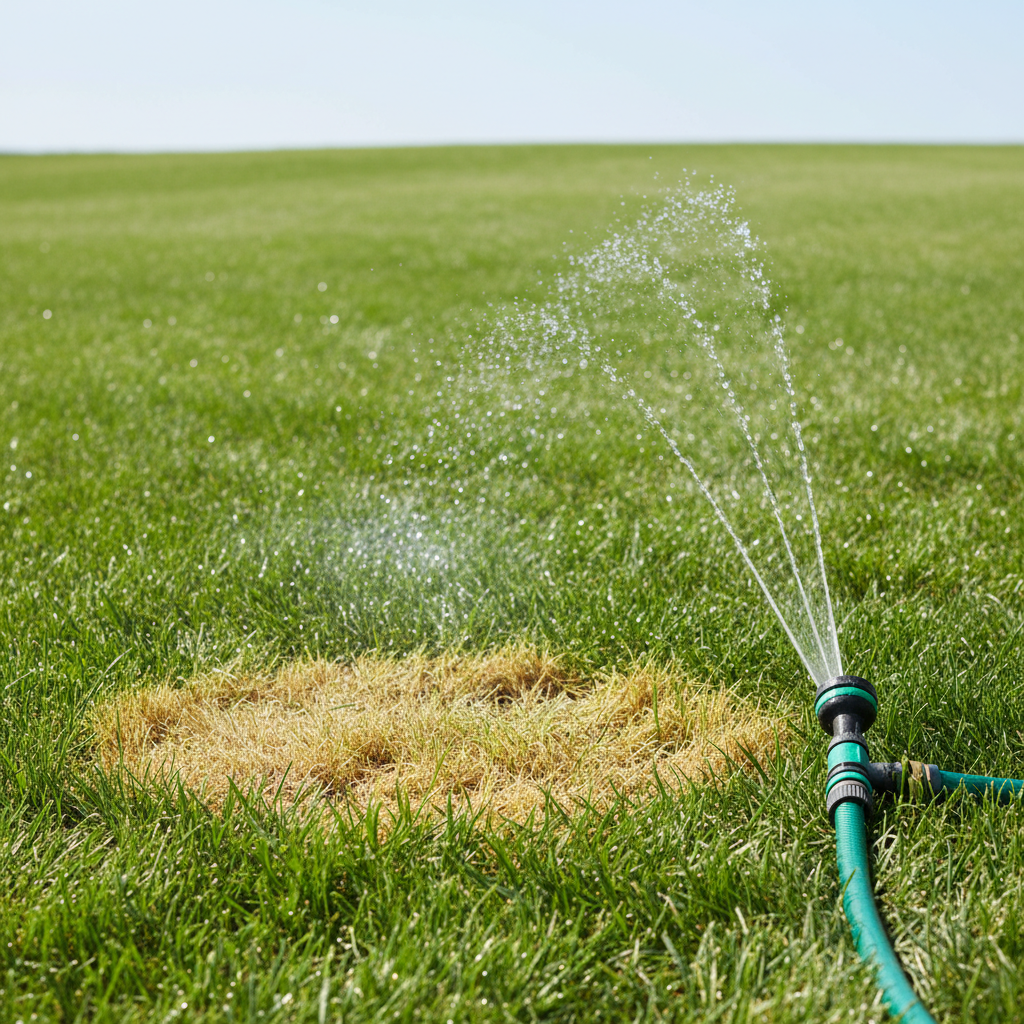
- Wait until the threat of further burn is gone (i.e., you've watered thoroughly for a week). Then, rake out the dead grass and thatch from the bare patches.
- Loosen the top inch or two of soil. Apply a thin layer of new topsoil or compost, spread high-quality grass seed appropriate for your region, lightly cover with more soil or peat moss, and keep consistently moist until germination.
- Tools: Rake, hand trowel, grass seed, topsoil/compost, watering can.
Landscaping · Deck or fence project
| Project category | Landscaping |
|---|---|
| Problem type | Deck or fence project |
| Trade required | Landscaping |
| Urgency | Planned project |
| Safety risk | Moderate safety risk |
| DIY suitability | DIY for experienced homeowners |
| Cost category | High cost |
| Typical timeline | Most builds 3–10 days depending on size |
| Contractor type | Landscaping contractor |
Repair option
Replace failed boards, posts, and hardware; reseal the surface.
Replacement option
Rebuild when framing or the ledger connection is unsafe.
Common causes
- Rot at posts and ledger
- Storm damage
- Adding outdoor living space
Relevant tools:home improvement material pricesproject cost estimator
Published May 6, 2026Last updated August 17, 2026
Tools & materials you'll need
Affiliate linksAs an Amazon Associate FixlyGuide earns from qualifying purchases — at no extra cost to you. Prices and availability are accurate as of publication and subject to change.
Quick Answer
An overdose of synthetic granular or liquid fertilizer, commonly known as 'fertilizer burn,' is the most frequent culprit behind a lawn turning yellow within 48 hours of application. The high concentration of salts in these fertilizers rapidly dehydrates grass blades by drawing out essential moisture, leading to a scorched, yellow, or even brown appearance. Immediate and extensive watering is crucial to flush out the excess nutrients from the soil, mitigating the damage and allowing the grass to recover.
The Problem
Imagine spending your Saturday meticulously fertilizing your lawn, only to wake up two days later to a patchy, yellow, and sickly-looking expanse. This sudden and alarming transformation is almost certainly due to fertilizer burn. It's a frustrating and common mistake, even for experienced homeowners, often caused by applying too much fertilizer, uneven spreading, or fertilizing during hot, dry conditions without adequate watering. The visible yellowing is the grass's distress signal, indicating severe dehydration and nutrient shock. If left unaddressed, these yellow patches can quickly turn brown and die, necessitating costly reseeding or sod replacement. Understanding why this happens and how to react quickly is key to saving your lawn.
How It Works
To understand fertilizer burn, consider how grass absorbs nutrients and the composition of synthetic fertilizers. Grass plants take up water and dissolved nutrients through their roots. Fertilizers, especially those high in nitrogen, phosphorus, and potassium (N-P-K), are essentially concentrated salts. When applied to the lawn, they dissolve into the soil solution. Plants absorb water through a process called osmosis, moving from an area of higher water concentration to an area of lower water concentration.
Normally, the soil solution has a lower salt concentration than the inside of the grass root cells, allowing water to flow into the roots. However, if too much fertilizer is applied, the salt concentration in the soil solution becomes excessively high – higher, in fact, than the concentration inside the grass roots. This reverses the osmotic process. Instead of water flowing into the roots, the high salt concentration in the surrounding soil actively draws water out of the grass roots and blades.
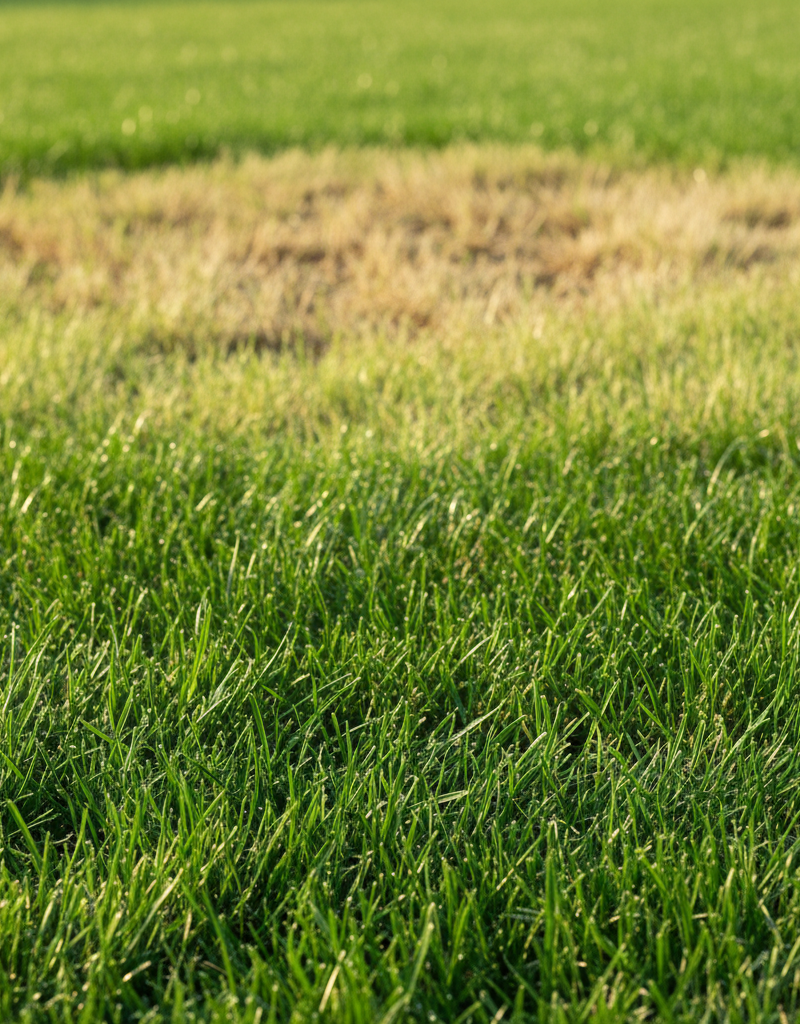
This rapid process starves the grass cells of vital moisture, leading to cellular collapse and desiccation. The grass blades first lose their vibrant green color as chlorophyll production is disrupted (turning yellow), then quickly dry out and turn brown, eventually dying if the condition persists. The speed of this reaction is remarkable; depending on the fertilizer type and environmental conditions (like heat and sun), symptoms can appear within a day or two. Granular fertilizers are particularly prone to causing burn if not watered in immediately, as the pellets sit on the grass blades, concentrating salts in small areas. Liquid fertilizers can cause more uniform burn if over-applied, as they instantly coat the leaves and soak into the topsoil. The 'burn' isn't a chemical burn in the corrosive sense, but rather a severe dehydration at the cellular level, akin to how salt can 'cure' meat by drawing out moisture.
Step-by-Step Fix
1. Act Immediately – Drench the Affected Area — As soon as you notice yellowing, begin watering the affected areas deeply and thoroughly.
- Tools: Garden hose with a sprinkler attachment or a good old-fashioned shower nozzle.
- How much: Apply at least an inch of water, which usually means running your sprinkler for 30-60 minutes, depending on its GPM (gallons per minute) rate. The goal is to flush the excess fertilizer salts deeper into the soil profile, away from the grass roots. Check for runoff; if water starts running off, stop and let it soak in for 30 minutes, then resume. You may need to do this for several hours, repeating the drenching process over a couple of days.
- Safety: Do not walk on saturated soil more than necessary, as it can compact the soil.
2. Water Strategically – Continue for Several Days — Don't just water once and forget it. Consistent, deep watering is essential for recovery.
- For the next 3-5 days, water the burnt areas twice daily – once in the early morning and once in the late afternoon – for about 30 minutes each time. This continued flushing will help dilute remaining salts and rehydrate the stressed grass.
- Avoid watering in the middle of the day during peak sun, as much of the water will evaporate before it can penetrate the soil effectively.
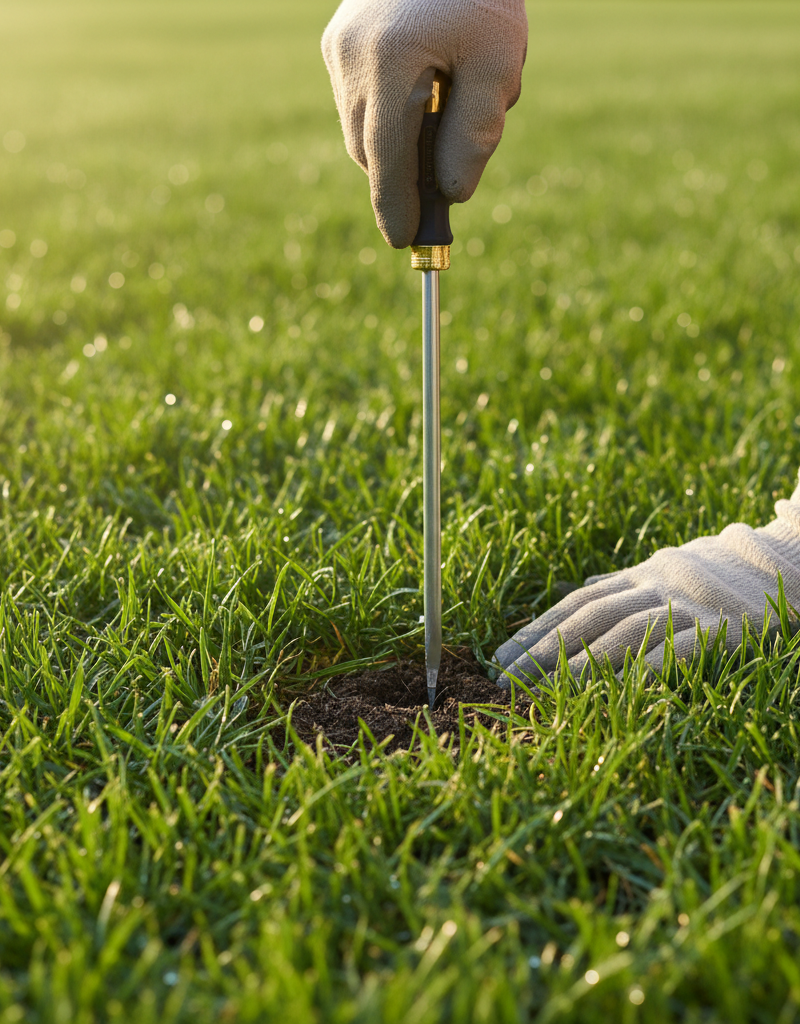
3. Assess Damage – Look for Green in the Crown — After a week of consistent watering, inspect the grass for signs of recovery.
- Gently pull on individual yellow blades. If they come out easily and look completely dead, that patch might require reseeding. However, if there's still some resistance and you can see a tiny bit of green at the very base (the crown) of the plant, it has a chance to recover.
- Give it time. Sometimes, heavily burned areas will look bleak for a week or two before new growth emerges.
4. Mow Carefully – Raise Your Mowing Height — If your lawn is otherwise growing, adjust your mowing practices.
- Set your mower to its highest setting (typically 3-4 inches). Taller grass blades provide more shade to the soil, helping to retain moisture and reduce stress on the recovering plants.
- Do not scalp the lawn, as this will further stress the already weakened grass.
5. Delay Further Fertilization – Let the Grass Recover Naturally — Your lawn has just been overfed; it doesn't need more nutrients right now.
- Do not apply any additional fertilizer for at least 4-6 weeks, or until the grass shows significant signs of healthy new growth. Introducing more chemicals will only exacerbate the problem.
- If growth is slow, consider a very light application of a slow-release, low-nitrogen organic fertilizer or compost tea after several weeks of full recovery.
6. Consider Reseeding or Patching – For Severely Damaged Areas — If parts of your lawn don't recover and remain brown and bare, intervention may be necessary.
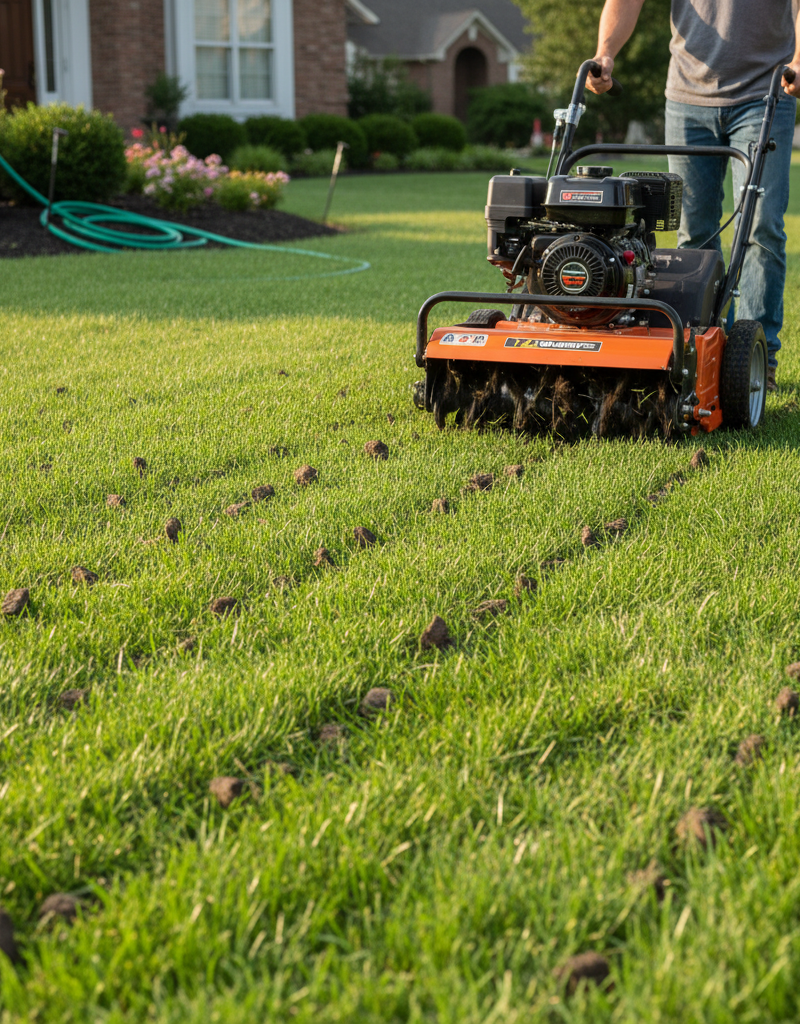
- Wait until the threat of further burn is gone (i.e., you've watered thoroughly for a week). Then, rake out the dead grass and thatch from the bare patches.
- Loosen the top inch or two of soil. Apply a thin layer of new topsoil or compost, spread high-quality grass seed appropriate for your region, lightly cover with more soil or peat moss, and keep consistently moist until germination.
- Tools: Rake, hand trowel, grass seed, topsoil/compost, watering can.
Common Causes
- Over-application: The most frequent cause. Using too much fertilizer per square foot, either by miscalculating the area or just applying a heavy hand, leads to a high concentration of salts. Always read and follow label directions precisely.
- Uneven Spreading: Using a broadcast spreader incorrectly or not calibrating it can lead to concentrated fertilizer in certain spots, creating stripes or patches of burn. Overlapping passes too much is a common issue.
- Spills: Dropping a bag or spilling granular fertilizer while filling your spreader creates a highly concentrated mound that will almost certainly cause severe burn if not cleaned up immediately.
- Fertilizing Dry Lawns: Applying fertilizer to stressed or dry grass, especially during hot weather, makes the grass even more susceptible to dehydration. The grass roots are desperate for moisture, but instead get bombarded with salts that draw water away.
- Not Watering In Granular Fertilizer: Granular fertilizers must be watered in immediately after application. If left sitting on the grass blades, the granules will absorb moisture from the air and grass, dissolving into a highly concentrated solution that burns the leaves directly.
- Incorrect Spreader Settings: Using the wrong setting on your spreader can deliver far more product than intended. Always check the manufacturer's recommendations for your specific fertilizer.
- Applying Liquid Fertilizer During Hot Sun: Liquid fertilizers can cause foliar burn if applied to grass that's already stressed by intense sunlight or high temperatures, as the liquid can magnify the sun's rays or quickly dehydrate the leaves.
Common Mistakes
- Ignoring the problem: Hoping the burn will magically disappear. Fertilizer burn is active damage; immediate flushing is critical.
- Applying more fertilizer: Thinking the lawn needs more nutrients to
Related Articles
Keep troubleshooting with these hand-picked guides from FixlyGuide:
- The #1 Summer Lawn Mistake Turning Your Grass Yellow (and How to Fix It) — Discover the most common summer lawn mistake that causes yellowing grass and learn the simple steps to revive your lawn.
- The #1 Summer Lawn Mistake That Guarantees Yellow Grass (It's Not Drought) — Understanding the most common mistake homeowners make with summer lawn care can save your grass from turning yellow and dying.
- The #1 Mowing Mistake That Starves Your Lawn (And How to Fix It in Minutes) — Learn the surprising reason your lawn might be struggling despite regular mowing and how a simple adjustment can lead to healthier, more vi…
- The #1 Lawn Aeration Mistake Most Homeowners Make (And How to Fix It) — Timing is everything when it comes to lawn aeration, and doing it at the wrong time can do more harm than good for your grass.
- The #1 Mistake Killing Your Lawn (and How to Remove Clover Without Chemicals) — Discover the most common mistake homeowners make when battling clover and learn effective, organic methods to eliminate it without harming…
- That Crooked Crown Molding? Your Ceiling Is Lying — Discover the surprising reason your perfectly level crown molding still looks crooked. It's not your installation—it's an optical illusion…
What should this project cost?
Enter your project details for a realistic cost range before you call anyone.
Cost depends heavily on which system turns out to be the source.
- Regional adjustment
- National average
- Labor share (typical)
- ~$1,620
- Quotes to collect
- 3 written estimates
Educational estimate based on national averages — not a binding quote. Always confirm with written local estimates.
Frequently asked questions
How quickly does fertilizer burn show up?+
Fertilizer burn can appear very quickly, usually within 24 to 72 hours (1 to 3 days) after application. The speed depends on the amount of fertilizer applied, the type of grass, and environmental conditions like heat and sunlight.
Can yellow grass from fertilizer burn recover?+
Yes, often yellow grass from fertilizer burn can recover, especially if you act quickly. The key is to immediately and thoroughly water the affected area to flush out the excess salts. If the crown of the grass plant (the base) is still green, there's a good chance it will bounce back.
What does fertilizer burn look like?+
Fertilizer burn typically looks like scorched or dehydrated grass. It starts as yellowing patches or streaks, which can quickly turn brown, dry, and brittle. In severe cases, the grass blades may appear white or straw-like and easily pull out of the ground.
Discussion
Loading comments…