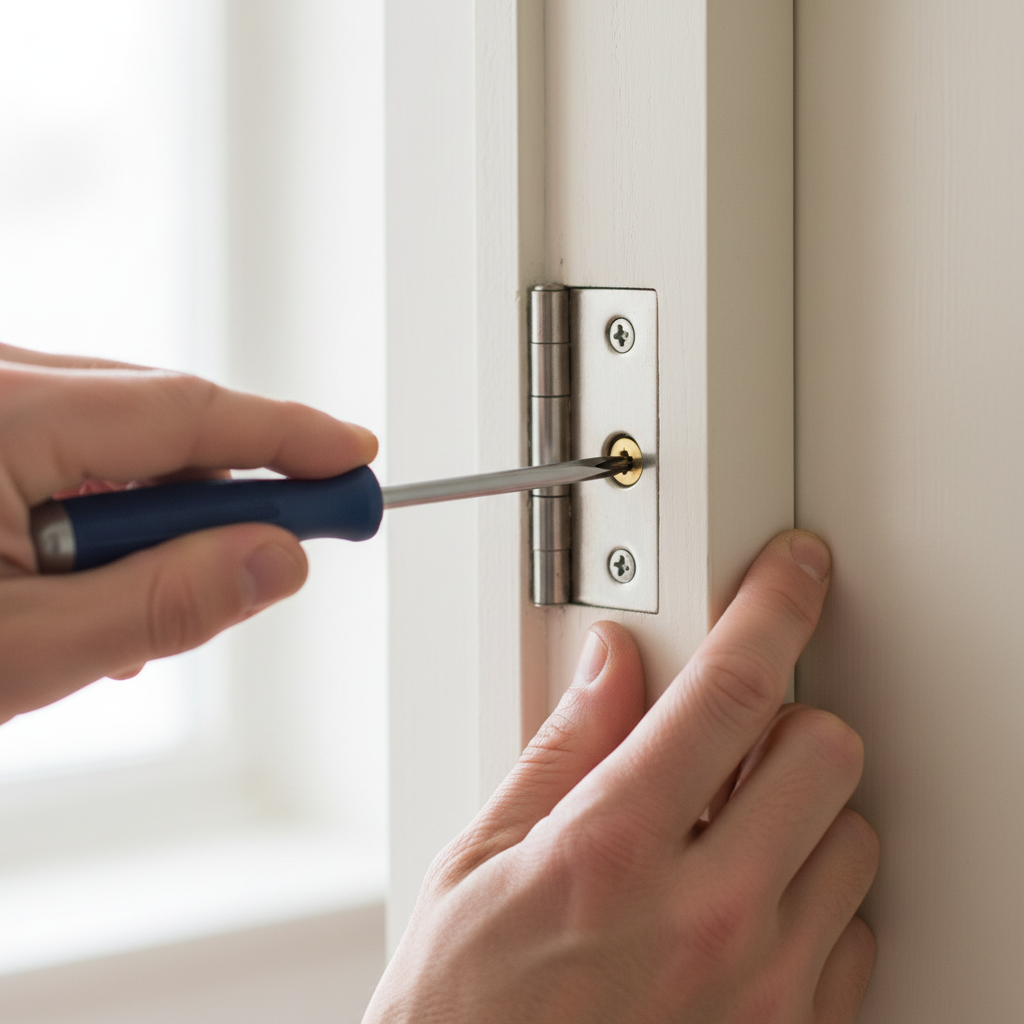
- Loose Hinge Screws: The most frequent culprit. Constant movement and the weight of the door can cause screws to loosen over time, leading to sagging and misalignment.
- Stripped Screw Holes: If hinge screws no longer bite into the wood, the hinge loses its anchoring, causing the door to sag.
- Humidity Fluctuations: Solid wood doors are particularly susceptible. High humidity causes wood to swell, making doors bind in their frames. Low humidity causes wood to shrink, leading to wider gaps and rattling.
- House Settling: Over years, homes settle. This can cause door frames to go out of square or plumb, shifting the geometry that perfectly fitted doors rely on.
- Bent Hinges or Latch Hardware: Impact or age can deform hinges, preventing the door from operating smoothly. Latch mechanisms can also wear out, causing looseness.
HVAC · High energy usage
| Project category | HVAC |
|---|---|
| Problem type | High energy usage |
| Trade required | HVAC |
| Urgency | Planned project |
| Safety risk | Low safety risk |
| DIY suitability | DIY for experienced homeowners |
| Cost category | High cost |
| Typical timeline | Assessment within weeks; replacement planned off-season |
| Contractor type | Licensed HVAC technician |
Repair option
Duct sealing, insulation, and a tune-up before touching the equipment.
Replacement option
High-efficiency replacement sized by a load calculation, not a rule of thumb.
Common causes
- Aging, low-efficiency equipment
- Leaking ducts losing conditioned air
- Insufficient attic insulation
- Oversized system short-cycling
Relevant tools:project cost estimatorrepair or replace
Published May 26, 2026Last updated August 17, 2026
Tools & materials you'll need
Affiliate linksAs an Amazon Associate FixlyGuide earns from qualifying purchases — at no extra cost to you. Prices and availability are accurate as of publication and subject to change.
Quick Answer
Experiencing a door that rattles, swings open on its own, refuses to latch, or shows unsightly gaps? The root cause is rarely the door itself. Most often, issues like a loose or warped door stem from subtle shifts in the home's structure, fluctuating humidity levels causing wood to swell or shrink, or hinges that have worked themselves loose over time. The good news is that many of these problems can be resolved with basic tools and a focused effort, typically involving hinge adjustments, strategic shimming of the door frame, or minor planing of the door slab. Understanding the underlying mechanics will empower you to tackle these common household annoyances efficiently and effectively.
The Problem
Imagine a door that never quite seals, letting drafts invade your living space, hiking up your energy bills. Or a bedroom door that creaks open mysteriously in the dead of night, shattering your sense of security and privacy. Perhaps your front door, once a welcoming entryway, now brushes against the frame, leaving unsightly scuff marks and a frustrating wrestling match every time you try to shut it. These aren't just minor inconveniences; they're symptoms of a door that's out of alignment, loose, or even warped.
A poorly fitting door can manifest in several ways: it might rattle excessively when closed, indicating loose hinges or a frame that's slightly too wide. You might find it swings open on its own, a tell-tale sign that the door frame isn't perfectly plumb, or the hinges are stressed. Gaps around the door jamb can lead to significant thermal leaks, allowing conditioned air to escape and unconditioned air to infiltrate, directly impacting your home's heating and cooling efficiency. In more severe cases, a door might bind against the frame so tightly that it becomes difficult to open or close, potentially damaging the door or the frame itself. These issues not only detract from your home's aesthetic appeal but also compromise its security and comfort, making a seemingly small problem a significant one.
How It Works
At its core, a door functions as a simple mechanical system, designed to pivot smoothly within a rigid frame. This system relies on a few key components working in harmony: the door slab itself, the hinges, and the door frame (consisting of the jambs, head, and sill).
The hinges, typically two or three per door, are the pivot points. Each hinge consists of two leaves joined by a pin. One leaf mounts to the door jamb, and the other to the door slab. When properly installed, these hinges bear the full weight of the door, allowing it to swing freely along a precise arc. The screws securing the hinges are critical; if they loosen, even slightly, the door's pivot point shifts, leading to sag or misalignment. Over time, constant opening and closing, especially with heavy doors, can cause these screws to strip their holes, exacerbating the problem.
Humidity plays a significant, yet often overlooked, role in door performance, particularly for solid wood doors. Wood is hygroscopic, meaning it absorbs and releases moisture from the air. In humid conditions, wood swells; in dry conditions, it shrinks. A solid wood door can expand by up to 1/8 inch across its width during a particularly muggy summer or contract by a similar amount in a dry winter. This dimensional change directly impacts how the door fits within its frame. A door that was perfectly fitted in the winter might bind in the summer, or vice-versa. While engineered doors or hollow-core doors are less susceptible to warping, even they can be affected if exposed to extreme or prolonged moisture.
Finally, the door frame itself is not immutable. Homes settle over time. Minor shifts in foundation or framing members, even fractions of an inch, can pull a door frame out of square or out of plumb. When a frame is no longer perfectly rectangular or vertical, the door will inevitably bind, stick, or show uneven gaps. Understanding these interconnected mechanisms—hinge integrity, wood's response to humidity, and structural stability of the frame—is key to diagnosing and effectively fixing a problematic door.
Step-by-Step Fix
Before you begin, gather your tools from the list below. Work in a well-lit area and wear safety glasses when using power tools.
1. Test the Door's Movement — Identify the specific problem areas.
Open and close the door slowly, observing exactly where it binds, scrapes, or where gaps are uneven. Pay attention to the top, bottom, and hinge and latch sides. Does it stick at the top hinge side? Or drag on the floor at the latch side? This initial assessment will guide your repair strategy.
2. Tighten Hinge Screws — The simplest fix for a sagging or loose door.
With a screwdriver (manual or powered, but be careful not to overtighten with power tools), tighten all screws on both the door and frame sides of each hinge. Sometimes, a screw hole might be stripped. If a screw spins freely, remove it, insert a wooden golf tee or a few wooden matchsticks (without the heads) into the hole with wood glue, let it dry, then snap off flush and reinsert the screw. This provides new wood for the screw threads to grab onto.
- Safety Note: Be careful not to strip the screw heads or overtighten, which can split the wood.
- If this doesn't work: The hinge itself might be bent, or the door frame might be out of plumb.
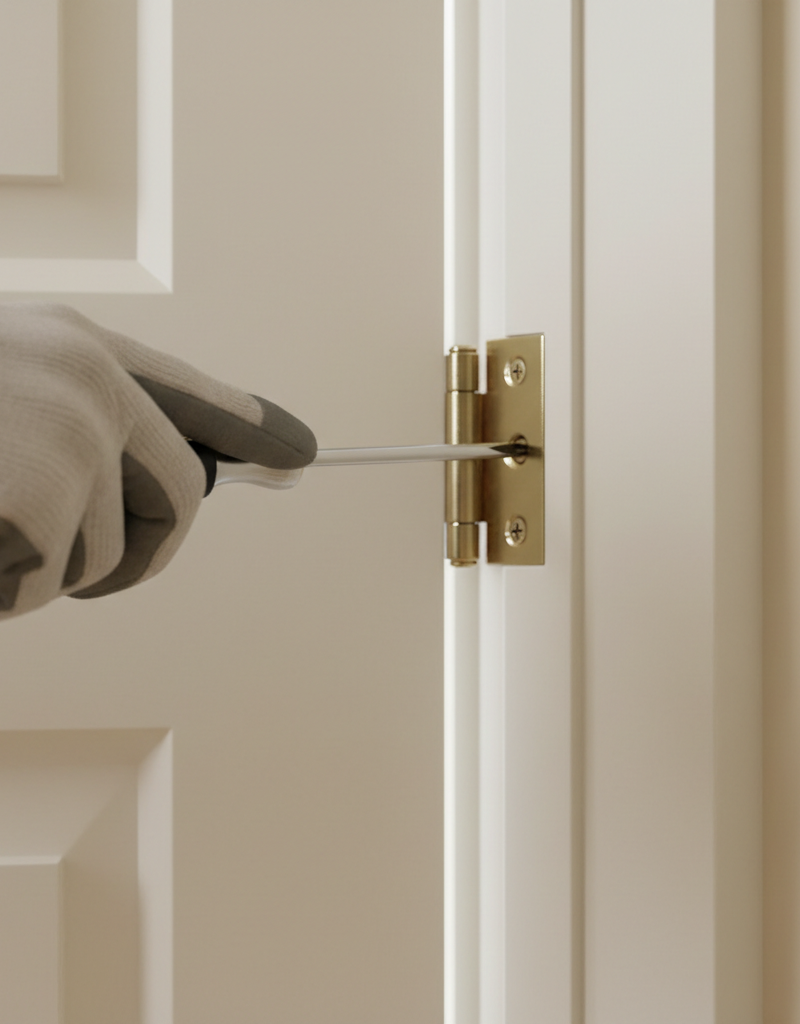
3. Shim Hinges to Adjust Alignment — Correct minor door sag or binding.
If the door sags on the latch side (meaning there's a wider gap at the top hinge side), you can pull the top of the door closer to the frame by shimming the top hinge. Remove the screws from the top hinge on the jamb side. Cut a thin piece of cardboard (from a cereal box, for example) slightly smaller than the hinge leaf. Place this shim behind the hinge leaf and reattach the hinge screws. For the opposite problem (door binding on the top hinge side), you'll need to mortise the hinge deeper into the jamb by carefully chiseling away a thin layer of wood from the hinge mortise.
- Tools Tip: A utility knife or a sharp chisel is useful for cutting and shaping shims or adjusting mortises.
4. Adjust Hinge Pin Alignment — A quick trick for minor adjustments.
For very minor adjustments (e.g., if the door slightly rubs the frame near a hinge), you can gently bend the hinge pin. Remove the hinge pin, place it on a hard surface, and tap it lightly with a hammer. A slightly bent pin (only a few degrees) can subtly change the door's arc of swing. Experiment cautiously, as too much bend can make pins difficult to insert or remove.
5. Plane the Door Slab (for Binding) — Remove material where the door binds consistently.
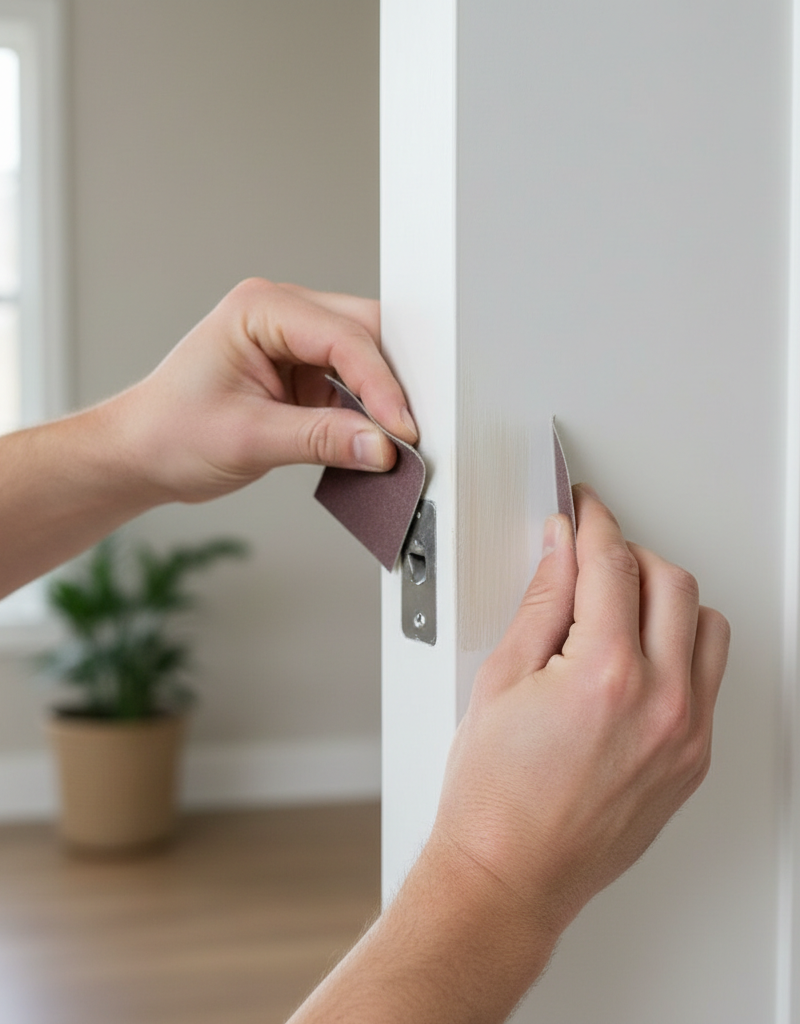
If the door consistently binds against the frame, especially along the lock side or bottom, and hinge adjustments haven't resolved it, you may need to plane the door. Mark the binding area precisely with a pencil. Carefully remove the door from its hinges. Using a block plane or an electric planer, shave off small amounts of wood along your marked line. Always plane with the grain to avoid splintering. Rehang the door and test. Repeat as necessary, taking off very little material at a time. Finish with sanding and touch-up paint or stain.
- Tools Tip: An electric planer is faster but requires a steady hand. A block plane offers more control for fine adjustments.
- Safety Note: Always secure the door slab firmly before planing. Wear eye protection.
6. Address a Warped Door — Strategic moistening and clamping for minor warps.
For minor door warps, lay the door flat on sawhorses or a clean floor. Identify the concave side (the side that's bowed inward). Thoroughly dampen this concave side with a sponge, applying water until the wood darkens, but avoid saturating it. Place heavy weights (like cinder blocks or stacks of books) on the convex side (the side that's bowed outward), applying pressure along the entire length of the warp. Let it sit for several days to a week, allowing the moisture to penetrate and the weights to slowly force the door back into shape. This method works best for solid wood doors and minor warps. For severe warps, replacement is usually the only practical option.
- If this doesn't work: Severe warps may require replacing the door slab.
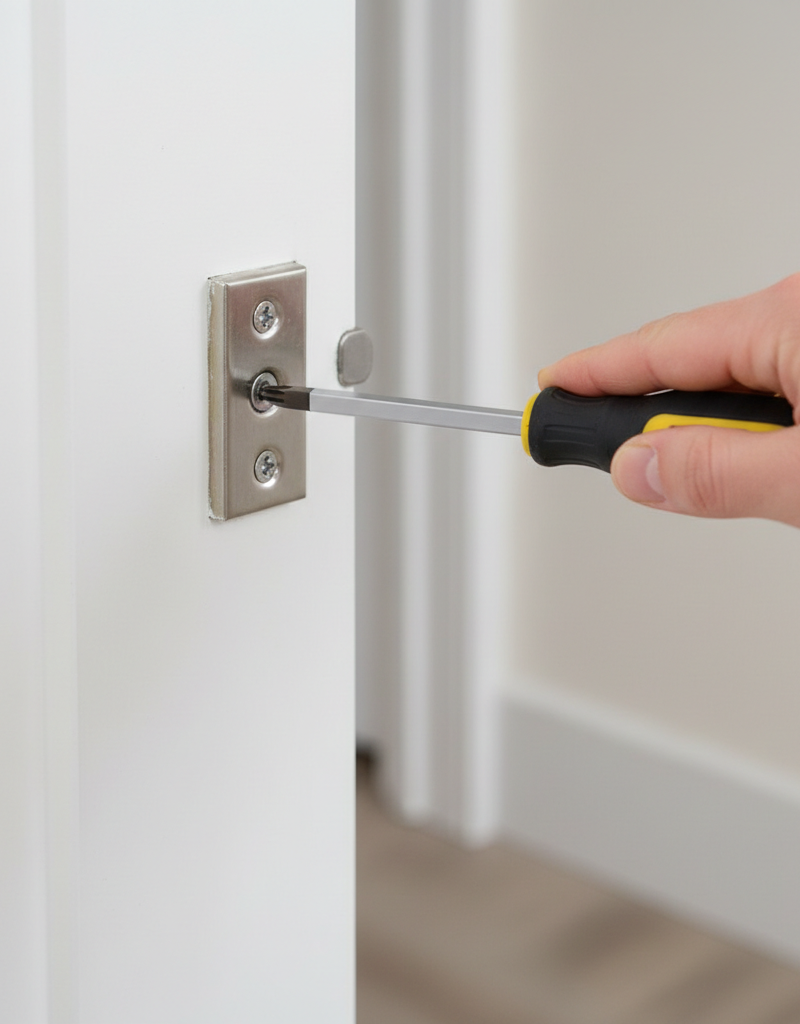
7. Adjust the Strike Plate — Fine-tune latch engagement for a snug fit.
If the door latches but feels loose, rattles, or doesn't pull completely tight into the frame, the strike plate might be misaligned. Examine the strike plate and the latch bolt. If the latch isn't fully engaging, or if the door has too much play when closed, you might need to adjust the strike plate.
- For slight misalignment: Loosen the strike plate screws, nudge the plate slightly in the desired direction (towards the stop for a tighter fit, or away from it if it's too tight), and re-tighten.
- For more significant adjustments: You may need to file the opening of the strike plate with a metal file or carefully chisel out a small amount of wood from the mortise pocket behind the strike plate.
8. Install Door Sweeps or Weatherstripping — Seal gaps for energy efficiency.
If drafts are the primary concern due to gaps around the door, particularly at the bottom or sides, installing door sweeps or weatherstripping can provide an effective seal. Door sweeps attach to the bottom of the door, while weatherstripping can be applied to the door jambs. Choose appropriate materials for your door type and climate. This won't fix a structural problem but will improve comfort and energy efficiency.
Common Causes
- Loose Hinge Screws: The most frequent culprit. Constant movement and the weight of the door can cause screws to loosen over time, leading to sagging and misalignment.
- Stripped Screw Holes: If hinge screws no longer bite into the wood, the hinge loses its anchoring, causing the door to sag.
- Humidity Fluctuations: Solid wood doors are particularly susceptible. High humidity causes wood to swell, making doors bind in their frames. Low humidity causes wood to shrink, leading to wider gaps and rattling.
- House Settling: Over years, homes settle. This can cause door frames to go out of square or plumb, shifting the geometry that perfectly fitted doors rely on.
- Bent Hinges or Latch Hardware: Impact or age can deform hinges, preventing the door from operating smoothly. Latch mechanisms can also wear out, causing looseness.
- Improper Installation: A door or frame that wasn't installed perfectly square or plumb from the beginning will inevitably manifest problems as the house ages.
Common Mistakes
- Ignoring the Obvious: Many homeowners immediately assume the door is warped when the problem is simply loose hinge screws. Always check the hinges first; it's the easiest and most common fix.
- Overtightening Screws: Using a power drill on high torque can strip screw holes or even crack the wood around the hinges. Hand-tighten for the final turns, or use a drill with a clutch set to a low torque setting.
- Planing Too Much Wood: When shaving wood from a binding door, taking off too much material will create new gaps and might require replacing the door. Always take off tiny amounts and re-test frequently.
- Ignoring Humidity Control: If your house experiences extreme humidity swings, simply fixing the door won't prevent future issues. Consider a humidifier or dehumidifier to stabilize indoor moisture levels, especially with solid wood doors.
- **Assuming a Door is
Related Articles
Keep troubleshooting with these hand-picked guides from FixlyGuide:
- The 4-Hour — Transform your garden into a self-sufficient oasis with smart strategies for watering, weeding, and pest control, minimizing your effort.
- The Hidden Reason Your GFCI Trips (It's Not Always a Faulty Outlet) — A continuously tripping GFCI outlet is a critical safety warning, often indicating moisture, a faulty appliance, or a wiring problem that r…
- The Secret to Lush Raised Beds? It's Not Just About How You Water — Smart irrigation for raised garden beds isn't just about automation; it's about delivering the right amount of water precisely when your pl…
- The Hidden Reason Your AC Isn't Cooling (And Why Most Homeowners Get It Wrong) — Is your central AC blowing warm air or struggling to cool your home? The culprit is often a silent but serious issue many homeowners overlo…
- The One Item Every DIYer Needs (And Why You're Probably Using the Wrong Kind) — Unlock comfort and prevent long-term joint damage with the right knee pads for every home project, from gardening to flooring installation.
- The Secret Reason Your Interior Door Sticks (It's Not Always Humidity) — Discover the real reasons your interior door is sticking and how to implement simple, lasting fixes with common household tools.
Should you do this yourself?
Answer five quick questions before you start. Safety outranks savings every time.
Your experience with work like this
How high do you have to work?
Does the job involve any of these?
Will it need a permit?
Specialty tools
Free and instant. Educational guidance only — not a quote, inspection, or professional diagnosis.
What should this project cost?
Enter your project details for a realistic cost range before you call anyone.
Cost depends heavily on which system turns out to be the source.
- Regional adjustment
- National average
- Labor share (typical)
- ~$1,620
- Quotes to collect
- 3 written estimates
Educational estimate based on national averages — not a binding quote. Always confirm with written local estimates.
Before you start
Check the difficulty, permits, and safety risk — then decide whether to call a pro.
- Estimate this projectGet a cost range for your scope and ZIP before you call anyone.Open
- Get local estimatesSend one request and compare written estimates from vetted pros.Open
Free, no signup required. Estimates are educational guidance, not a quote or an inspection.
This article was independently written by FixlyGuide based on the source topic.
Frequently asked questions
Why does my door suddenly not close properly?+
The most common reasons are loose hinge screws, changes in humidity causing the wood to expand or contract, or subtle shifts in your home's foundation that throw the door frame out of square.
Can a warped door be straightened?+
Minor warps in solid wood doors can sometimes be corrected by dampening the concave side and applying weight to the convex side for several days. Severe warps usually require replacing the door.
How do I stop my door from rattling?+
A rattling door is often caused by a loose strike plate or worn weatherstripping. Adjusting the strike plate to make the latch fit tighter or installing new weatherstripping can resolve the issue.
When should I plane my door?+
You should plane your door if it consistently binds or scrapes against the frame, especially on the latch side or bottom, and hinge adjustments haven't resolved the problem.
Is it normal for doors to stick or loosen with seasons?+
Yes, it is common for solid wood doors to swell and stick in humid summer months and shrink slightly, becoming looser in dry winter months, due to wood's natural hygroscopic properties.
Discussion
Loading comments…