- If the door rubs on the top or bottom of the frame, the problem might be sagging hinges or swelling.
- If it sticks on the latch side, the frame might be out of square, or hinge screws are loose.
- If it scrapes the floor, the hinges might be loose, or the door itself has swollen unevenly.
General remodeling · Renovation planning
| Project category | General remodeling |
|---|---|
| Problem type | Renovation planning |
| Trade required | General contracting |
| Urgency | Planned project |
| Safety risk | Low safety risk |
| DIY suitability | Pro recommended |
| Cost category | Major investment |
| Typical timeline | Design and permitting often 2–4 months before work starts |
| Contractor type | General contractor |
Repair option
Phase the work and fix the building envelope first.
Replacement option
Full renovation with permits, design, and a general contractor.
Common causes
- Space no longer fits how the household lives
- Resale preparation
- Deferred maintenance stacking up
Relevant tools:project cost estimatorcompare quoteshome improvement material prices
Published May 21, 2026Last updated August 18, 2026
Tools & materials you'll need
Affiliate linksAs an Amazon Associate FixlyGuide earns from qualifying purchases — at no extra cost to you. Prices and availability are accurate as of publication and subject to change.
Quick Answer
An interior door that sticks, rubs, or scrapes is a common annoyance, often attributed solely to humidity. While moisture plays a role, especially in older homes, several other factors are frequently overlooked. The quicker you diagnose the exact cause—be it loose hinges, a misaligned strike plate, or even seasonal house shifts—the faster and more effectively you can implement a lasting fix. Most sticking door issues can be resolved in under an hour with basic tools, saving you the cost of a professional.
The Problem
You push or pull your interior door, and it catches, drags, or refuses to close smoothly. Perhaps it scrapes against the frame, rubs on the floor, or binds stubbornly at the top or hinge side. This isn't just an inconvenience; a sticking door can damage door finishes, wear down flooring, and even indicate more significant structural issues. Over time, forcing a sticky door can loosen its connection to the hinges, further exacerbating the problem and potentially warping the door itself. Identifying the precise location and nature of the stick is the first critical step toward a solution.
How It Works
An interior door operates as a carefully balanced system within its frame. The door slab, typically made of wood or composite materials, is held by two or three hinges screwed into both the door edge and the door frame. These hinges bear the full weight of the door, allowing it to swing freely. The door frame itself is anchored to the rough opening of the wall. A strike plate, mounted on the door frame, engages with the door's latch bolt, holding it securely closed.
Wood, being a hygroscopic material, absorbs and releases moisture from the air. In humid conditions, wood swells; in dry conditions, it shrinks. This natural expansion and contraction can subtly change the dimensions of your door slab and frame, leading to rubbing or binding. Beyond humidity, houses settle over time. Foundations can shift, wall studs can bow, and door frames can twist, all of which throw the formerly plumb and square door system out of alignment. Loose hinge screws are another major culprit. When hinges aren't firmly attached, the door sags, causing its edges to bind against the frame or floor. The interaction of these elements—wood, hinges, frame, and house movement—dictates whether your door glides effortlessly or becomes a frustrating obstacle.
Step-by-Step Fix
1. Inspect the Door for Clues — Before grabbing any tools, observe exactly where and how the door is sticking.
- Close the door slowly. Listen for rubbing sounds and visually identify the contact points. Is it the top corner, the bottom, the latch side, or the hinge side? Gaps around the door should be consistent, about 1/8 inch on the top and sides, and 1/2 to 3/4 inch at the bottom (depending on flooring).
- If the door rubs on the top or bottom of the frame, the problem might be sagging hinges or swelling.
- If it sticks on the latch side, the frame might be out of square, or hinge screws are loose.
- If it scrapes the floor, the hinges might be loose, or the door itself has swollen unevenly.
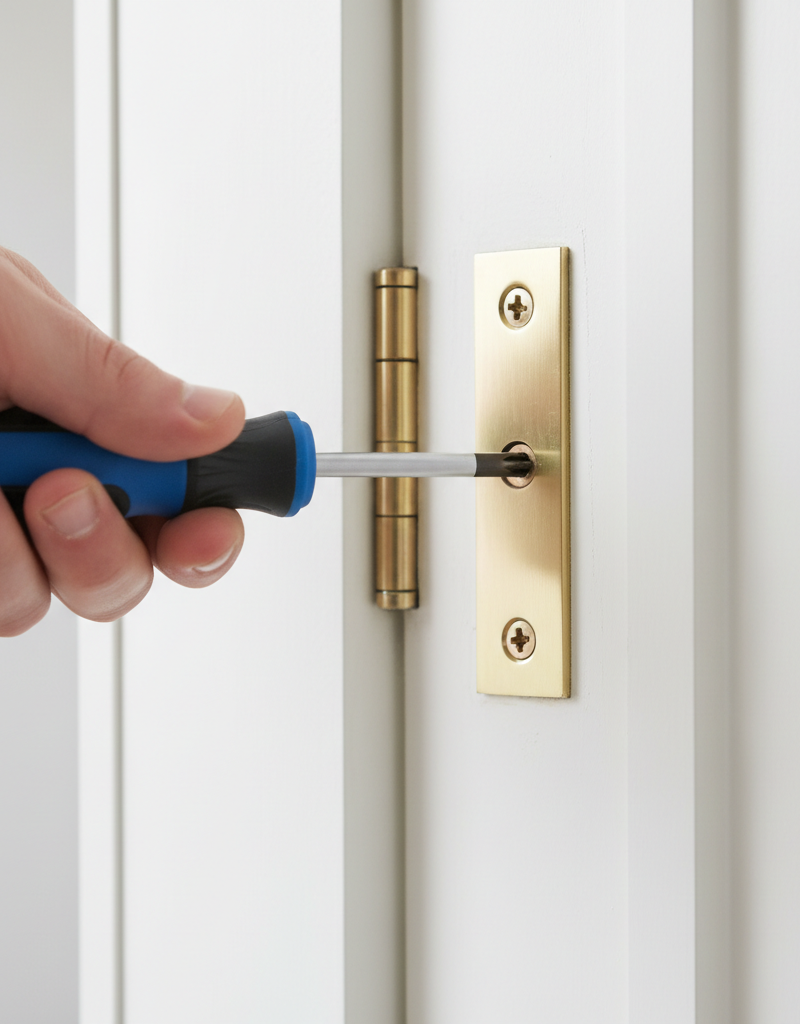
2. Tighten All Hinge Screws — Often, a simple fix for a sagging door is securing loose hinge screws.
- Safety First: Ensure the door is supported if screws are very loose to prevent it from falling.
- Use a screwdriver (manual or electric with a clutch set to low torque) to tighten every screw on both the door-side and frame-side of all hinges. Don't overtighten, as you could strip the wood.
- If a screw spins freely: The hole is stripped. Remove the screw, insert a few wooden toothpicks (or a golf tee) with wood glue into the hole, let it dry, then break off flush and reinsert the screw. Alternatively, replace the short hinge screw with a longer, 2.5-inch or 3-inch screw that can reach the framing stud behind the jamb.
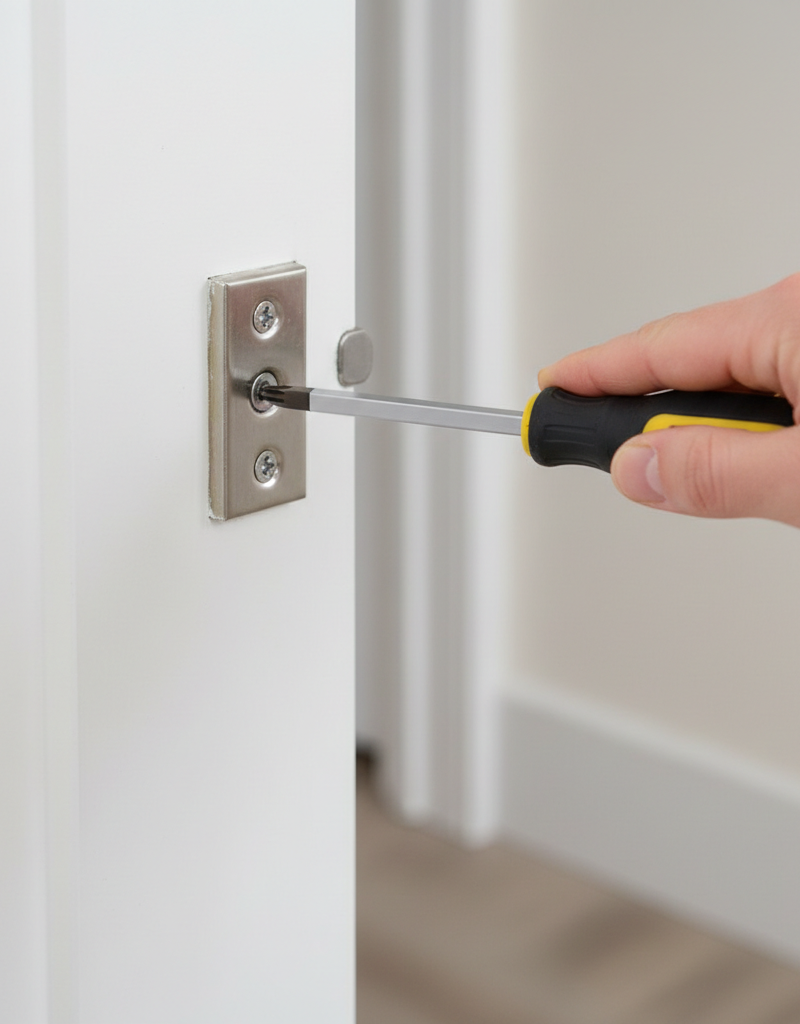
3. Check for Misaligned Strike Plate — A door that doesn't latch easily or sticks on the latch side might have a problem here.
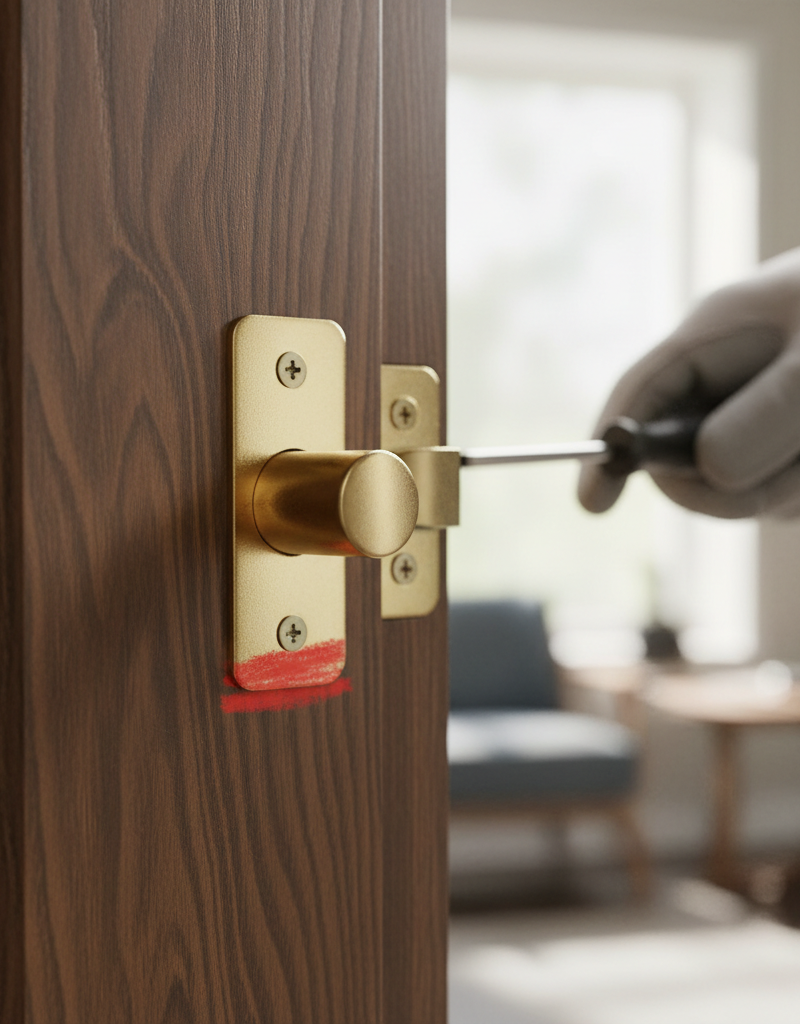
- Examine the strike plate where the latch bolt enters. Are there scuff marks above or below the latch hole? This indicates the latch isn't aligning properly.
- Use a screwdriver to loosen the strike plate screws. Gently shift the plate slightly up, down, or sideways, just enough to align with the latch. Retighten the screws. Some strike plates have larger holes allowing for more adjustment.
- If the adjustment isn't enough: You might need to slightly enlarge the strike plate mortise (the recessed area) using a chisel. Trace the new position, carefully chisel out the excess wood, then reposition and screw the strike plate.
4. Adjust Hinges with Cardboard Shims (If Door Rubs on Hinge Side or Top Latch Corner) — This trick can realign a slightly warped door or frame.
- If the door rubs on the latch side at the top: The top of the door is too far into the frame. Remove the middle hinge from the door frame, place a thin piece of shim material (like a cereal box cardboard piece) behind the hinge plate, and screw the hinge back in. This will push the top of the door slightly away from the jamb. You might need to do this on the bottom hinge as well, depending on the rub.
- If the door rubs heavily on the hinge side: The hinge side is too far into the frame. Reverse the previous step: remove the hinge, chisel a shallow recess for the back of the hinge, or simply remove the hinge and sand down the wood behind it. This pulls the hinge side of the door into the frame. This is less common but effective for a very tight hinge-side gap.
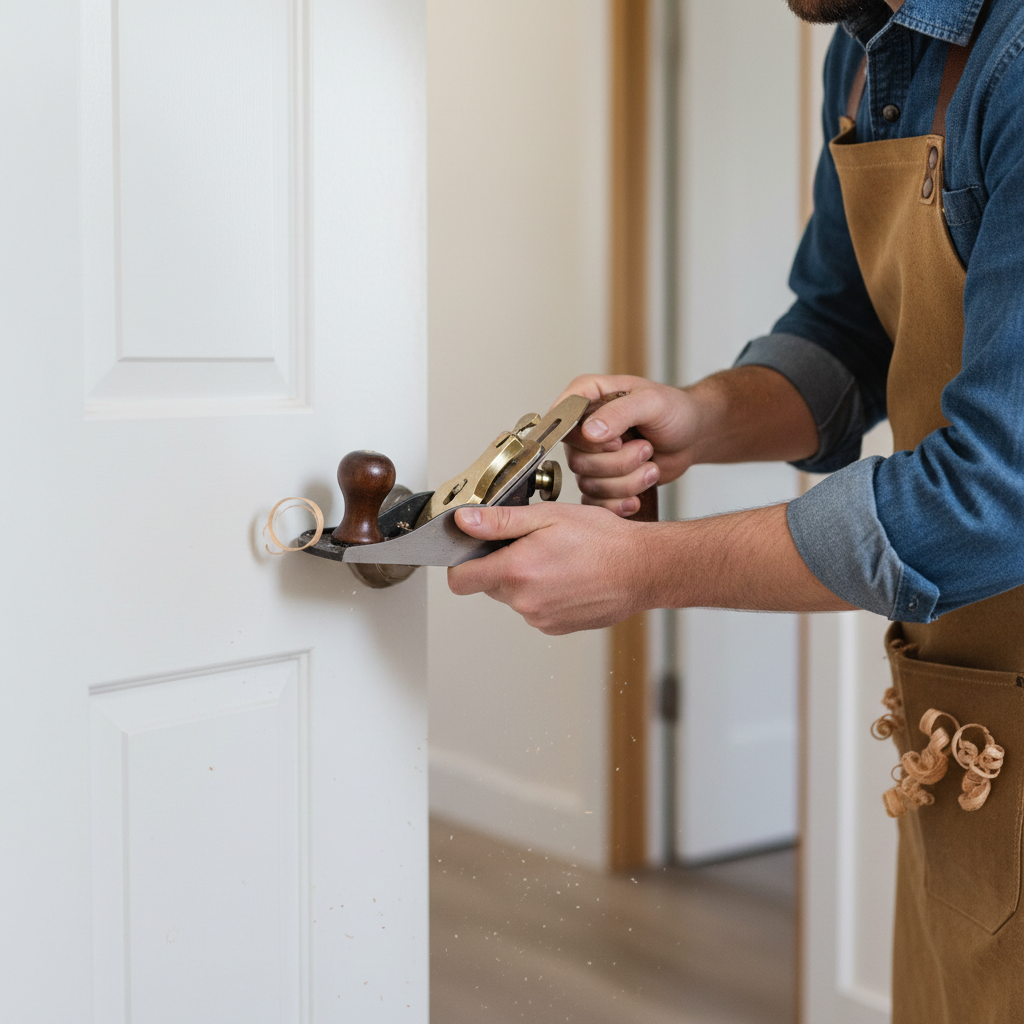
5. Plane or Sand the Door Edge (If Door Swells Uniformly) — For doors primarily affected by humidity, carefully removing a small amount of wood can provide permanent relief.
- Safety Note: Eye protection and dust mask are recommended. Ensure the door is securely supported if removed.
- Mark the exact area where the door is rubbing with a pencil. It helps to run a piece of sandpaper between the door and frame at the rub point to transfer material onto the door's edge.
- For minor rubbing: Use an orbital sander with 80-grit sandpaper to gradually remove wood from the marked area. Keep the sander flat and move with the grain. Check frequently.
- For significant rubbing: Remove the door by tapping out the hinge pins (have someone help hold the door). Use a block plane or an electric planer to carefully shave wood from the sticking edge. Always plane with the grain. Start with very shallow passes. Check the door's fit often by reinstalling it.
- IMPORTANT: Only remove as much wood as necessary. Once wood is removed, it cannot be put back. After planing/sanding, reseal any exposed wood with primer and paint/stain to prevent future moisture absorption.
6. Adjust or Re-Cut Door Bottom (If Door Scrapes Floor/Threshold) — A door dragging on the floor often requires removing material from the bottom edge.
- Safety Note: Eye protection is crucial. Ensure stable support for the door.
- Remove the door from its hinges. Mark the bottom edge, indicating how much material needs to be removed. You can use a thin piece of wood or a ruler as a guide to draw a straight line. Measure the gap needed (typically 1/2 to 3/4 inch from finished floor).
- For minor scraping: Use a belt sander or orbital sander to carefully remove a small amount of wood from the bottom edge, following your pencil line. Keep the sander flat.
- For significant scraping: Use a circular saw with a fine-toothed blade. Apply painter's tape along your cut line to minimize splintering. Clamp a straight edge or a scrap piece of wood to the door as a guide for your saw. Cut slowly and carefully. Reinstall and test.
Common Causes
- Humidity & Moisture Absorption: The most frequent culprit. Wood doors and frames absorb moisture from the air during humid seasons, causing them to swell and rub against the jamb or floor. During drier periods, they can shrink, sometimes leading to new gaps or rattles. This is particularly noticeable in solid wood doors or those in bathrooms or basements.
- Loose Hinge Screws: Over time, the screws holding hinges to the door or frame can work themselves loose. This allows the door to sag, causing its top or bottom edge on the latch side to bind against the frame. This is especially common with heavy doors.
- House Settling or Shifting: All houses settle to some degree. Foundations can shift, wall studs can bow, or floor joists can sag, subtly distorting door frames and throwing them out of square. This can lead to persistent sticking in different areas of the door.
- Improper Installation: If a door or frame was not installed plumb (perfectly vertical) or square (at right angles) initially, it's prone to sticking from day one or becoming worse with minor house movement.
- Paint Buildup: Multiple layers of paint on the door edges or frame can gradually reduce the necessary clearance, eventually causing the door to stick, especially if paint drips into the hinge mortises.
- Damaged or Warped Door Slab: Physical damage, prolonged exposure to moisture, or manufacturing defects can cause a door slab to warp or bow, leading to uneven rubbing.
Common Mistakes
- Ignoring Loose Hinges: Many homeowners immediately think the door needs planing without checking the hinges. Loose screws are a primary cause of sagging and sticking, and tightening them is a much easier first step than removing wood.
- Planing Too Much Wood: Once wood is removed, it's gone for good. Always take off tiny amounts and thoroughly test the door's fit repeatedly. Remove a thin shaving, rehang, check, and repeat. Over-planing creates unsightly gaps and can make the door rattle if it shrinks in dry weather.
- Using the Wrong Tools: Trying to plane a door with a utility knife or rough sandpaper will lead to uneven, ugly results. A sharp block plane or an orbital sander is essential for a clean finish. For cutting the bottom, a circular saw with a fine blade and a guide ensures a straight, professional edge.
- Forgetting to Reseal Exposed Wood: After sanding or planing, any bare wood needs to be primed and painted or stained immediately. Leaving it exposed allows it to quickly reabsorb moisture, negating your efforts and likely leading to the door sticking again.
- Not Checking for Square/Plumb: Before making major adjustments, use a level to check the door frame for plumb and square. If the frame itself is significantly out, superficial fixes may only be temporary. Identifying a severely out-of-square frame can guide you toward calling a professional for frame adjustment instead of endlessly adjusting the door.
- Adjusting the Hinge Pin Instead of Hinge Plate: Some DIY guides suggest bending a hinge pin to adjust a door. This is generally ineffective for sticking doors and can damage the hinges themselves. Adjusting the hinge plate with shims is a more precise and correct method.
Cost & Time Breakdown
| Task | DIY Cost | Pro Cost | Time |
|---|---|---|---|
| Tighten Screws / Shim Hinges | $0-$5 | $75-$150 | 15-30 mins |
| Adjust Strike Plate | $0-$5 | $75-$150 | 15-30 mins |
| Sanding Door Edge | $5-$20 | $100-$250 | 30-60 mins |
| Planing Door Edge | $10-$30 | $150-$350 | 1-2 hours |
| Re-cutting Door Bottom | $10-$50 | $200-$400 | 1-3 hours |
| Extensive Frame Adjustment | N/A | $300-$800+ | N/A |
Tips & Prevention
- Climate Control: Maintain consistent indoor humidity levels, especially if you have solid wood doors. Use a dehumidifier in basements or during humid seasons, and a humidifier in very dry seasons to prevent excessive swelling and shrinking.
- Regular Hinge Checks: Periodically (e.g., bi-annually) check all hinge screws and tighten any that are loose. This simple maintenance can prevent many sticking door issues before they start.
- Proper Painting Technique: When painting doors or frames, remove them from their hinges if possible to ensure even, thin coats without drips or excess paint building up on the edges or inside hinge mortises. Lightly sand between coats.
- Seal Exposed Wood: Always prime and paint or stain any raw wood edges, especially after planing or sanding, to protect against moisture absorption. Ensure all six sides of a door (front, back, and all four edges) are sealed.
- Install Door Stops: If a door consistently swings open or closed and hits something, installing a door stop can prevent damage to the door or frame that might lead to sticking.
- Consider Door Type for High Humidity Areas: In bathrooms or other high-humidity zones, consider installing composite or hollow-core doors, which are less prone to swelling and warping than solid wood.
When to Call a Professional
While most sticking door issues can be a successful DIY project, there are specific situations where calling a licensed professional is the wiser choice. If, after tightening screws and attempting minor adjustments, the door still binds severely, or if the door frame itself appears significantly out of square or plumb, a carpenter or general contractor might be needed. Visible cracks in the wall around the door frame, doors sticking throughout the house simultaneously, or difficulty closing multiple windows could indicate foundation issues, which require a structural engineer or foundation specialist. If your interior door sticks and also shows signs of termite damage, rot, or severe structural compromise to the frame, a professional can assess the extent of the damage and recommend appropriate repairs, which may involve replacing the door and frame entirely.
Related Articles
Keep troubleshooting with these hand-picked guides from FixlyGuide:
- The 3 Hidden Reasons Your Interior Door Sticks (and the Easy Fixes) — Your interior door sticking isn't just annoying; it's often a symptom of underlying issues that are surprisingly easy to fix with the right…
- The Secret Reason Your Interior Door Sticks (and the 15-Minute Fix) — Discover the common culprits behind a sticky interior door and learn how to fix it in 15 minutes with simple tools.
- The Secret Reason Your Interior Door Sticks (It's Not Always Humidity) — Before you blame humidity, learn the less obvious culprits behind a sticking interior door and how to fix it with simple steps.
- The 3 Hidden Reasons Your Door Won't Latch (And the Easy DIY Fixes) — Don't live with a door that refuses to latch; discover simple, DIY solutions for common door latch problems and restore security and privac…
- The 5-Minute Trick for a Door That Won't Latch (And Why It Keeps Happening) — Discover the simplest fixes for a door that won't latch, from minor adjustments to tackling persistent alignment issues.
- The #1 Gutter Mistake You're Making (And 3 Hidden Causes of Overflow) — Overflowing gutters in heavy rain are often a sign of a deeper issue than just debris, leading to potential foundation damage and costly re…
Should you do this yourself?
Answer five quick questions before you start. Safety outranks savings every time.
Your experience with work like this
How high do you have to work?
Does the job involve any of these?
Will it need a permit?
Specialty tools
Free and instant. Educational guidance only — not a quote, inspection, or professional diagnosis.
What should this project cost?
Enter your project details for a realistic cost range before you call anyone.
Cost depends heavily on which system turns out to be the source.
- Regional adjustment
- National average
- Labor share (typical)
- ~$1,620
- Quotes to collect
- 3 written estimates
Educational estimate based on national averages — not a binding quote. Always confirm with written local estimates.
Recommended for DIYers & woodworkers
Sponsored
The Top 20 Tools for Workshops of Any Budget
No stationary machines or power tools required — plus 3 fundamental tools that can't be bought at any price.
Get the free guide
Ted's Woodworking — The #1 Woodworking Resource
Detailed instructions, dimensioned drawings, materials & cutting lists, and 3D schematics for every skill level.
See the plansSponsored: links above are affiliate links. FixlyGuide may earn a commission on qualifying purchases — at no extra cost to you.
Frequently asked questions
Why does my door stick only in summer?+
Doors often stick in the summer due to increased humidity. Wood absorbs moisture from the air and expands, causing the door slab to swell and rub against the door frame. This is a common seasonal issue, especially with solid wood doors.
Can loose hinges cause a door to stick?+
Yes, absolutely. Loose hinge screws are one of the most common reasons an interior door sticks. When hinges aren't securely fastened, the door sags out of alignment, causing it to drag on the floor or bind against the top and latch side of the frame. Tightening the screws (or using longer ones for stripped holes) is usually the first step in troubleshooting.
How do I know if my door needs to be planed?+
Your door likely needs planing if it uniformly rubs along a significant portion of its edge (usually the latch side) or the top, especially after you've already checked and tightened all hinge screws and adjusted the strike plate. Mark the exact rubbing points with a pencil to confirm, and consider planing only after ruling out other easier adjustments.
Discussion
Loading comments…