- Loose Hinge Screws: This is overwhelmingly the most common cause. The door's weight gradually loosens the screws in the jamb or door, causing it to sag.
- Stripped Screw Holes: Similar to loose screws, but the wood fibers around the screw have failed, preventing the screw from holding tight.
- House Settling: Minor shifts in a home's foundation or framing can cause door frames to go out of square.
- Humidity Changes: Wood expands in high humidity and contracts in low humidity. While usually minor, significant changes can cause temporary sticking. Our fix addresses the more persistent, structural issues.
- Paint Buildup: Multiple layers of paint on the door edges or inside the jamb can cumulatively reduce clearance.
General remodeling · Renovation planning
| Project category | General remodeling |
|---|---|
| Problem type | Renovation planning |
| Trade required | General contracting |
| Urgency | Planned project |
| Safety risk | Low safety risk |
| DIY suitability | Pro recommended |
| Cost category | Major investment |
| Typical timeline | Design and permitting often 2–4 months before work starts |
| Contractor type | General contractor |
Repair option
Phase the work and fix the building envelope first.
Replacement option
Full renovation with permits, design, and a general contractor.
Common causes
- Space no longer fits how the household lives
- Resale preparation
- Deferred maintenance stacking up
Relevant tools:project cost estimatorcompare quoteshome improvement material prices
Published May 19, 2026Last updated August 17, 2026
Tools & materials you'll need
Affiliate linksAs an Amazon Associate FixlyGuide earns from qualifying purchases — at no extra cost to you. Prices and availability are accurate as of publication and subject to change.
Quick Answer
The most frequent cause of an interior door sticking isn't just humidity, but rather loose hinge screws allowing the door to sag out of alignment. This sagging creates friction between the door edge and the frame. By tightening these hinge screws, you can often pull the door back into its proper position, eliminating the sticking. If the screws are stripped and won't hold, using longer screws or repairing the pilot holes with wood filler offers a more robust solution.
The Problem
That annoying squeak and stubborn drag when you open or close an interior door is almost always a sign of misalignment. While temperature and humidity fluctuations can cause minor expansion and contraction of wood, the primary issue for a persistently sticking door is usually structural: the door itself has shifted within its frame. This often results in the door rubbing against the top, side, or bottom of the doorjamb. This isn't just an inconvenience; repeated rubbing can damage the door and frame's finish, leading to chipped paint or worn wood, and in some cases, can even prevent the door from latching properly.
Understanding the precise location of the rub is the first step to a successful fix. A rub at the top hinge side usually points to a sagging door at the bottom hinge. A rub higher up on the latch side might mean the top hinge has loosened. Observing exactly where the door makes contact with the frame will guide your repair strategy.
How It Works
An interior door hangs from a frame by two or three hinges, each consisting of two leaves joined by a pin. One leaf is attached to the door, the other to the door jamb. The door's entire weight is suspended by the screws that secure these hinges. Over time, especially with frequent use, the constant stress of the door's weight can cause these screws to loosen their grip in the wood of the door frame or the door itself. This loosening allows the door leaf to shift slightly, creating a small but significant sag or twist in the door's position relative to the frame.
Even a millimeter or two of movement at a hinge can translate to a noticeable misalignment along the door's edge. When the top hinge screws loosen, the top of the door might sag towards the latch side, causing rubbing at the top corner of the frame. If the bottom hinge screws loosen, the bottom of the door can sag, causing it to drag along the threshold or rub against the bottom of the jamb on the hinge side. The wood fibers around the screw holes can also compress or strip out, further exacerbating the issue and preventing the screws from holding tightly. The goal of the fix is to re-secure the door's position by ensuring the hinges are firmly anchored, effectively pulling the door back into its original, plumb alignment within the frame.
Step-by-Step Fix
This method addresses the most common cause of sticking doors: loose hinge screws and minor frame misalignment. Always start with the simplest solution and work your way up.
-
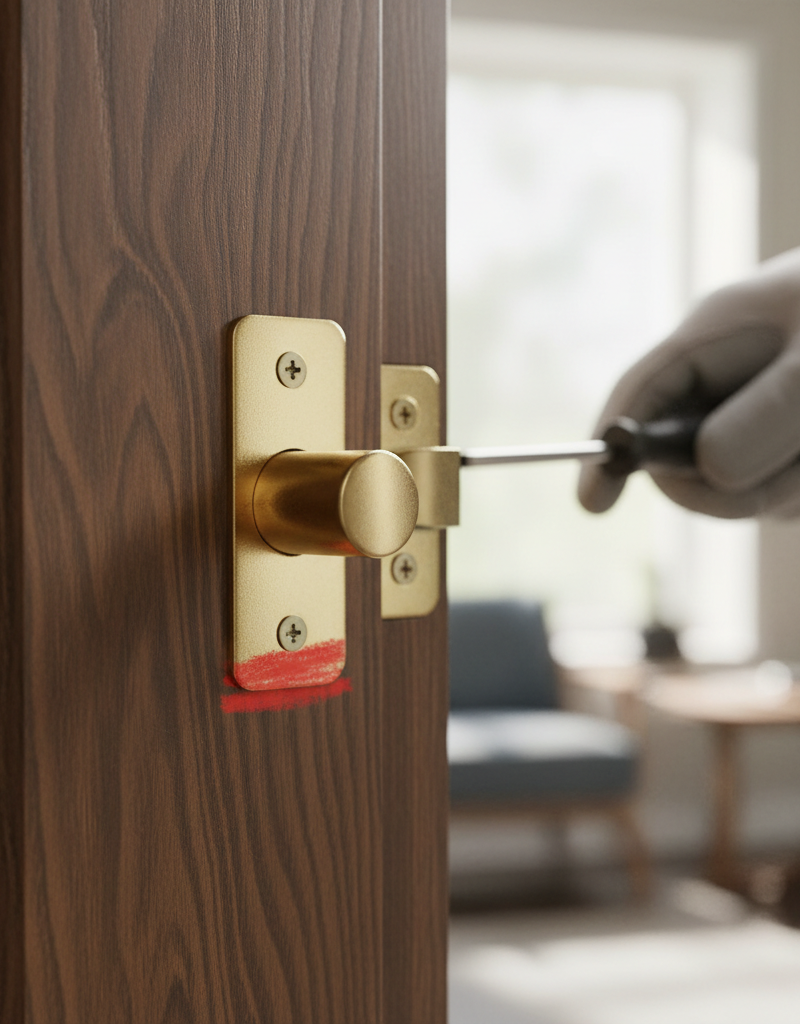
Identify the Rub Point — Hold a piece of paper between the door and the jamb at various points as you slowly close the door. When the paper snags or rips, you've found the contact point. Use a pencil to lightly mark the exact area on the door or jamb. This tells you which hinge (top, middle, or bottom) is likely causing the issue.
-
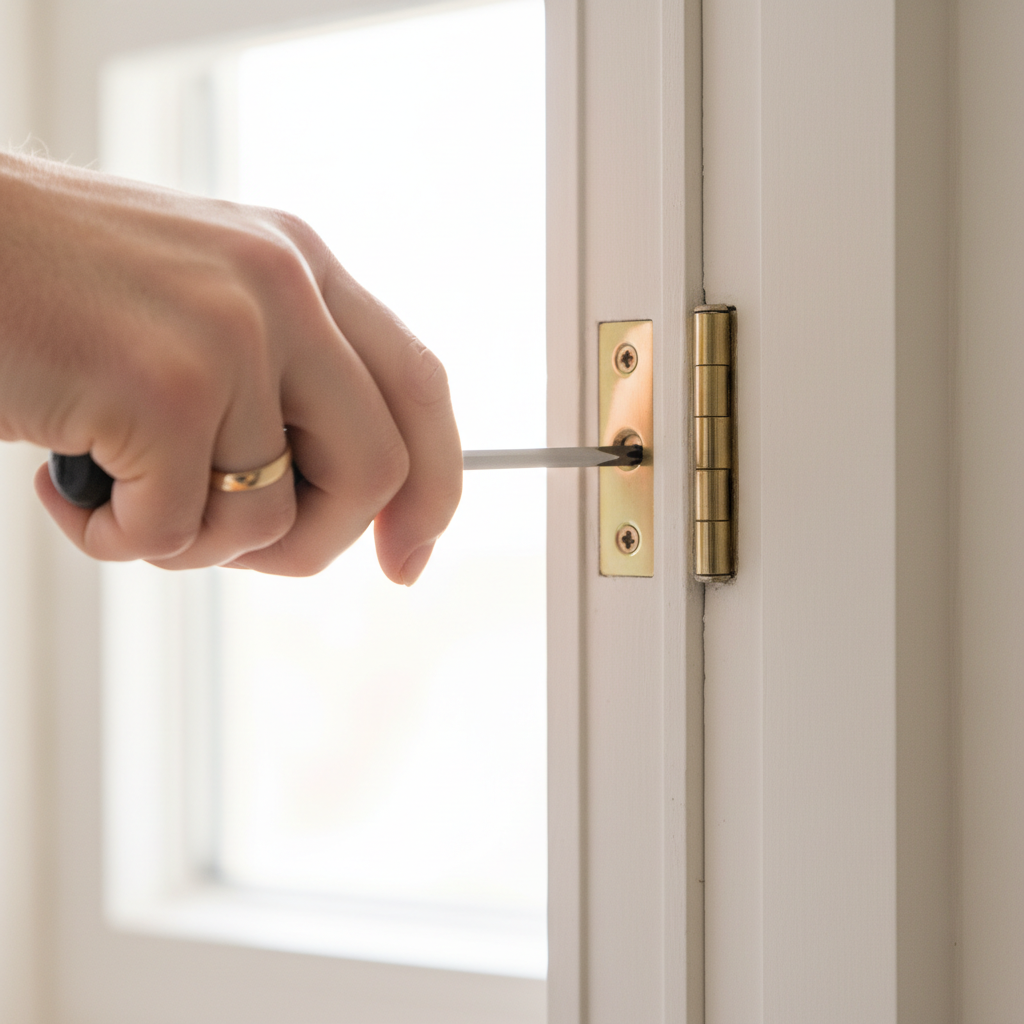
Tighten the Hinge Screws — Start with the hinge closest to the rub point. Using a Phillips head screwdriver (don't overtighten with a drill, which can strip screws), tighten all screws on both hinge leaves, both into the door and into the jamb. Work methodically. Test the door after tightening each hinge.
- Safety Note: Be careful not to strip the screw heads or overtighten, which can split the wood.
- If this doesn't work: Proceed to the next step if screws won't tighten or the door still rubs.
-
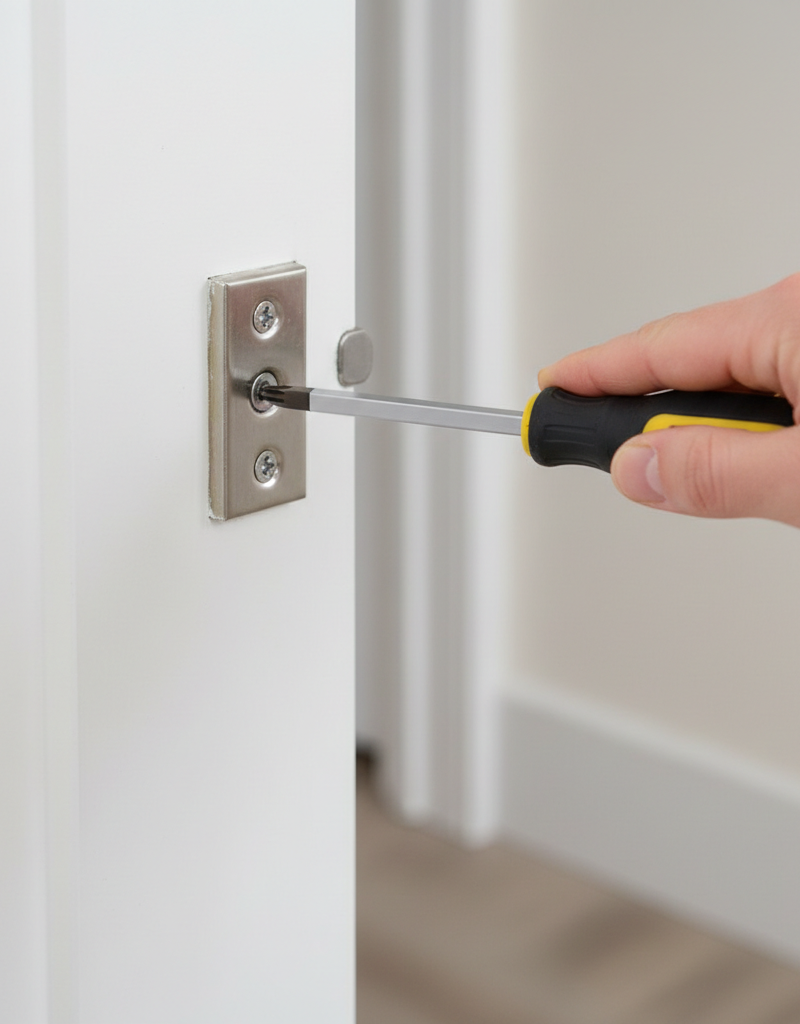
Replace Short Hinge Screws with Longer Ones — Many door installations use short, 3/4-inch screws that only penetrate the door frame's trim. For the hinge leaf attached to the jamb, remove one screw at a time (starting with the hinge closest to the rub) and replace it with a 2.5-inch or 3-inch wood screw. These longer screws will bite into the structural framing (stud) behind the jamb, providing much greater holding power and often pulling the entire jamb slightly inward, correcting the alignment. For the hinge leaf attached to the door, ensure those screws are also at least 1-inch to 1.5-inch long.
- Material Tip: Use flat-head wood screws with a similar finish to your existing hinge screws.
- If this doesn't work: If the screw spins freely, the hole is stripped. Proceed to step 4.
-
Repair Stripped Screw Holes — If a screw won't tighten and just spins, the pilot hole is stripped. Remove the loose screw. Insert several wooden toothpicks or a wooden golf tee (snapped off flush) into the hole. Apply a small amount of wood glue to the toothpicks/tee for extra adhesion, though it's not strictly necessary. Reinsert the original screw or a new, slightly longer one. The wood shims will give the screw new material to grip.
- Pro Tip: Let the glue dry for an hour or two before driving the screw if you used glue.
-
Shim a Hinge (If Needed) — If the door is rubbing on the latch side or the side opposite the hinges, you may need to bring the hinge side of the door closer to the jamb. This can be achieved by shimming out a hinge. Remove the entire hinge from the jamb. Cut a piece of thin cardboard (e.g., from a cereal box) or use a thin veneer shim the size of the hinge leaf. Place it behind the hinge leaf and reattach the hinge. Start with the top hinge if the rub is at the top, or the bottom hinge if the rub is at the bottom.
- Test and Adjust: Only shim one hinge at a time and retest the door's operation.
-
Mortise a Hinge Deeper (If Door is Too Tight) — If the door is rubbing on the hinge side or is too tight in the frame (often after shimming), it might mean the hinge mortise (the recessed area where the hinge sits) isn't deep enough. Remove the hinge from the jamb. Using a sharp chisel and a hammer, carefully deepen the mortise by scraping away a thin layer of wood. Reinstall the hinge and test. This moves the hinge leaf (and thus the door) slightly deeper into the jamb.
- Patience is Key: Remove very small amounts of wood at a time. It's easier to remove more than to add it back.
-
Address Paint Buildup — Sometimes, years of paint layers can build up on the edges of the door or the inside of the door frame, creating friction. Lightly sand the painted edges where the door is sticking. Use 120-grit sandpaper and then repaint the smoothed surface. This is a common culprit especially after multiple repaints.
-
Plane the Door Edge (Last Resort) — If all other methods fail and the door is still significantly rubbing, you might need to plane a small amount of wood off the door's edge. Mark the exact rub point with a pencil. Remove the door from its hinges. Using a block plane or an electric planer, carefully shave off a thin layer of wood along the marked edge. Rehang the door and test. Repeat as necessary, removing very little material at a time. Always plane with the wood grain.
- Advanced DIY: This step requires confidence and precision. Take too much off, and you can create a gap or ruin the door.
Common Causes
- Loose Hinge Screws: This is overwhelmingly the most common cause. The door's weight gradually loosens the screws in the jamb or door, causing it to sag.
- Stripped Screw Holes: Similar to loose screws, but the wood fibers around the screw have failed, preventing the screw from holding tight.
- House Settling: Minor shifts in a home's foundation or framing can cause door frames to go out of square.
- Humidity Changes: Wood expands in high humidity and contracts in low humidity. While usually minor, significant changes can cause temporary sticking. Our fix addresses the more persistent, structural issues.
- Paint Buildup: Multiple layers of paint on the door edges or inside the jamb can cumulatively reduce clearance.
- Improper Hinge Mortising: If hinges were not mortised (recessed) correctly during installation, the door might sit too far proud or too deep in the frame.
Common Mistakes
- Ignoring the Root Cause: Don't just sand down the door without checking hinges first. You might remove material unnecessarily.
- Overtightening Screws with a Drill: An electric drill can easily strip screw heads or overtighten and split wood. Use a hand screwdriver for hinge screws.
- Using Too Short Screws: Standard hardware store screws for hinges (especially on the jamb side) are often too short to reach the wall stud, leading to recurring issues.
- Planing Without Diagnosis: Removing wood from the door is a last resort. Always exhaust hinge adjustments and frame shimming first.
- Not Testing After Each Adjustment: Make one change, then test the door. This helps you pinpoint what worked and prevents over-correcting.
- Forgetting to Lubricate: Even after fixing alignment, a dry hinge can still squeak. A drop of lubricant can make a big difference.
Cost & Time Breakdown
| Task | DIY Cost | Pro Cost | Time |
|---|---|---|---|
| Tighten existing screws | $0 | $75–$150 | 5–10 minutes |
| Replace with longer screws | $3–$10 | $75–$150 | 15–30 minutes |
| Repair stripped holes | $5–$15 | $75–$175 | 20–45 minutes |
| Shim hinges | $0–$5 | $75–$175 | 30–60 minutes |
| Deepen hinge mortise | $0 (if tools exist) | $100–$250 | 45–90 minutes |
| Sand/plane door edge | $0–$20 | $150–$300+ | 1–3 hours |
Tips & Prevention
- Regular Screw Check: Periodically (e.g., once a year) check all hinge screws on high-traffic doors and tighten any that feel loose. This proactive step can prevent most sticking issues.
- Use 3-Inch Screws for Jamb Hinges: When installing new doors or if you're replacing hinges, always use 3-inch screws for at least one screw per hinge into the jamb. This anchors the hinge directly to the wall stud, providing maximum stability.
- Lubricate Hinges Annually: A small amount of silicone spray or a lubricating oil (like 3-in-1 oil) on the hinge pins can prevent squeaking and reduce wear.
- Proper Door Installation: Ensure the door frame is plumb and square during initial installation. This prevents a host of future problems.
- Address Humidity Extremes: While not the primary cause of chronic sticking, maintaining consistent indoor humidity levels (e.g., with a dehumidifier in summer) can minimize minor wood movement.
- Careful Repainting: When repainting doors and frames, avoid heavy paint buildup on the door edges and within the jamb rebates. Lightly sand between coats.
When to Call a Professional
If, after attempting these fixes, your interior door continues to stick, or if you encounter significant structural issues, it's time to call a professional. This includes situations where the door frame itself appears severely out of square and cannot be easily adjusted, if you suspect foundation issues are affecting multiple doors and windows, or if you're uncomfortable with precision tasks like planing or deepening hinge mortises with a chisel. Additionally, if the door is rubbing significantly along the top or bottom and requires substantial material removal that you're not equipped to handle, a carpenter or handyman can ensure the job is done correctly without damaging your door. They can also assess if the issue points to larger structural concerns within your home that might require more extensive repair.
Related Articles
Keep troubleshooting with these hand-picked guides from FixlyGuide:
- The Surprising Reason Your Interior Door Sticks (It's Not Always Humidity) — Before you blame humidity, learn the common culprits behind a sticking interior door and how to fix them with simple DIY steps.
- The Secret Reason Your Interior Door Sticks (It's Not Always Humidity) — Before you blame humidity, learn the less obvious culprits behind a sticking interior door and how to fix it with simple steps.
- The Secret Reason Your Interior Door Sticks (It's Not Always Humidity) — Before you blame humidity, learn the true culprits behind a sticky interior door and how to fix them with simple DIY steps.
- The Secret Reason Your Interior Door Sticks (and the 15-Minute Fix) — Discover the common culprits behind a sticky interior door and learn how to fix it in 15 minutes with simple tools.
- The 3 Hidden Reasons Your Interior Door Sticks (and The 15-Minute Fix) — Discover the surprisingly common reasons your interior door sticks and learn how to fix it in under 15 minutes with simple tools.
- The Surprising Culprit Behind Your Refrigerator's Water Leak (It's Not Always the Ice Maker) — Discover the most common, often overlooked reason your refrigerator is leaking water and how to fix it with simple steps.
Should you do this yourself?
Answer five quick questions before you start. Safety outranks savings every time.
Your experience with work like this
How high do you have to work?
Does the job involve any of these?
Will it need a permit?
Specialty tools
Free and instant. Educational guidance only — not a quote, inspection, or professional diagnosis.
What should this project cost?
Enter your project details for a realistic cost range before you call anyone.
Cost depends heavily on which system turns out to be the source.
- Regional adjustment
- National average
- Labor share (typical)
- ~$1,620
- Quotes to collect
- 3 written estimates
Educational estimate based on national averages — not a binding quote. Always confirm with written local estimates.
Get the print-ready PDF of this guide
A clean, ad-free, printable version you can keep on your phone or pin to the workshop wall. Free with a FixlyGuide account.
- Print-optimized layout
- Tools, materials & every step included
- Saved to your account
Recommended for DIYers & woodworkers
Sponsored
The Top 20 Tools for Workshops of Any Budget
No stationary machines or power tools required — plus 3 fundamental tools that can't be bought at any price.
Get the free guide
Ted's Woodworking — The #1 Woodworking Resource
Detailed instructions, dimensioned drawings, materials & cutting lists, and 3D schematics for every skill level.
See the plansSponsored: links above are affiliate links. FixlyGuide may earn a commission on qualifying purchases — at no extra cost to you.
Frequently asked questions
Why does my interior door stick only sometimes?+
Intermittent sticking often points to minor fluctuations, like humidity causing the wood to swell slightly. However, if it's consistent during certain times or seasons, it's likely a subtle misalignment that could be addressed by tightening hinge screws or repairing stripped holes.
Can I use WD-40 on my door hinges?+
While WD-40 can temporarily mitigate squeaking, it's primarily a solvent and can attract dust and dirt, leading to more issues long-term. For lubrication, a silicone spray, lithium grease, or a few drops of 3-in-1 oil on the hinge pin is more effective and durable.
My door sticks at the top and bottom. What does that mean?+
If both the top and bottom of your door are sticking, it often suggests the door isn't plumb (vertically straight) in the frame, or the frame itself is out of square. This could indicate significant settling or severely loose hinges, requiring careful diagnosis of which hinge is allowing the most sag.
How do I know if my door frame is square?+
To check if your door frame is square, use a large carpenter's square or measure the diagonals of the door frame opening. If the diagonal measurements are identical, the frame is square. If they differ, the frame is out of square, which might require more advanced shimming or repair.
Is it safe to replace hinge screws with longer ones?+
Yes, it is generally safe and often recommended to replace one or two short hinge screws in the jamb with longer 2.5-inch or 3-inch wood screws. These longer screws anchor into the structural stud behind the door frame, providing much better support and stability for the door. Just be sure to use the correct type of screw (flat-head wood screw) to fit flush with the hinge plate.

Discussion
Loading comments…