- Alignment: The latch bolt must line up precisely with the strike plate opening. Even a millimeter off can prevent full engagement.
- Depth: The strike plate opening must be deep enough for the entire latch bolt to extend into it, allowing the door to sit flush against the frame.
- Operation: The doorknob mechanism must fully retract and extend the latch bolt smoothly.
General remodeling · Renovation planning
| Project category | General remodeling |
|---|---|
| Problem type | Renovation planning |
| Trade required | General contracting |
| Urgency | Planned project |
| Safety risk | Low safety risk |
| DIY suitability | Pro recommended |
| Cost category | Major investment |
| Typical timeline | Design and permitting often 2–4 months before work starts |
| Contractor type | General contractor |
Repair option
Phase the work and fix the building envelope first.
Replacement option
Full renovation with permits, design, and a general contractor.
Common causes
- Space no longer fits how the household lives
- Resale preparation
- Deferred maintenance stacking up
Relevant tools:project cost estimatorcompare quoteshome improvement material prices
Published May 18, 2026Last updated August 17, 2026
Tools & materials you'll need
Affiliate linksAs an Amazon Associate FixlyGuide earns from qualifying purchases — at no extra cost to you. Prices and availability are accurate as of publication and subject to change.
Quick Answer
A door that refuses to latch is irritating, but in most cases, the culprit is a misaligned strike plate. A few simple adjustments, like slightly filing the strike plate opening or adding shims behind the plate, can often resolve the issue in under 30 minutes, usually without needing to replace any hardware. Less common causes include loose hinges, a sagging door frame, or a problematic doorknob mechanism, all of which have straightforward DIY solutions.
The Problem
You've got a door that just won't stay closed. You shut it, and instead of the satisfying click of the latch bolt engaging, it simply bounces open or remains ajar. This isn't just an annoyance; it can be a privacy issue, a security concern, or an energy drain if it's an exterior door. The door might be difficult to close, requiring a hard shove, or it might close but the latch bolt doesn't fully extend into the strike plate opening. This problem can develop gradually over time due to house settling, humidity changes affecting the wood, or simply loosening hardware.
How It Works
To understand the fix, let's quickly review how a door latches. The doorknob assembly contains a spring-loaded latch bolt. When you turn the knob, a mechanism retracts this bolt. When you release the knob, the spring pushes the bolt back out. On the door frame, there's a metal plate called the strike plate. This plate has an opening (the strike box) perfectly sized to receive the latch bolt when the door closes. For the door to latch properly, three things must happen:
- Alignment: The latch bolt must line up precisely with the strike plate opening. Even a millimeter off can prevent full engagement.
- Depth: The strike plate opening must be deep enough for the entire latch bolt to extend into it, allowing the door to sit flush against the frame.
- Operation: The doorknob mechanism must fully retract and extend the latch bolt smoothly.
Over time, several factors can throw off this delicate balance. House settlement can cause door frames to shift, literally moving the strike plate out of alignment with the latch bolt. Wood doors and frames can swell or shrink with changes in humidity, altering the gap between the door and the frame. Loose hinge screws allow the door to sag, again misaligning the latch. Worn or loose doorknob mechanisms can prevent the latch bolt from extending fully. Identifying which of these issues is at play is the key to a quick and effective repair.
Step-by-Step Fix
Here's how to diagnose and fix a door that won't latch.
-
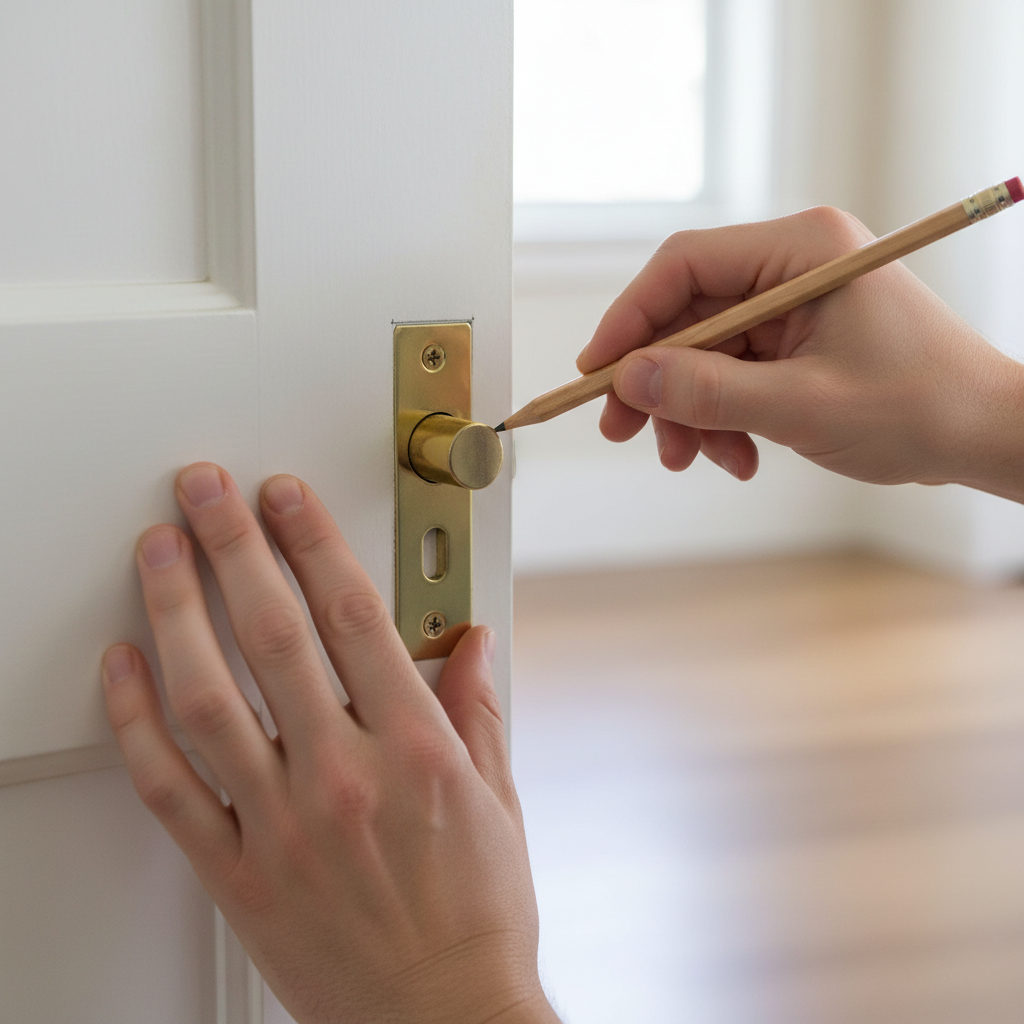
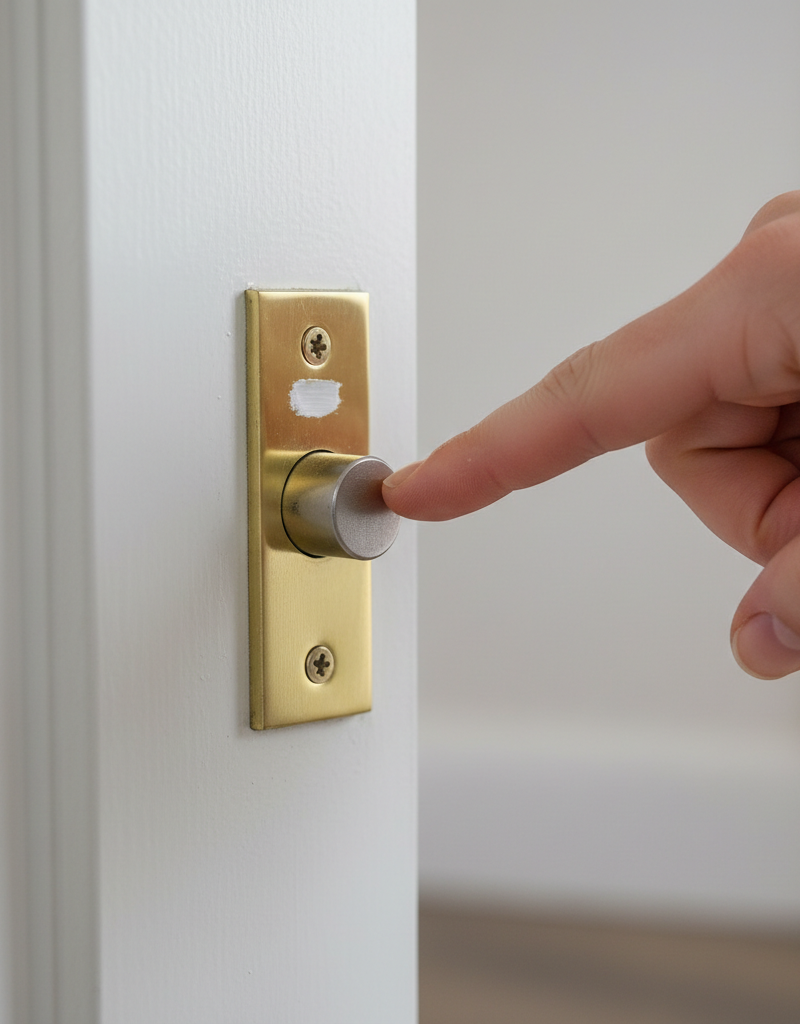
Diagnose the Misalignment — The pencil test reveals all. Close the door slowly until it just touches the frame, but don't force it to latch. Use a pencil to carefully trace the outline of the latch bolt onto the door frame or existing strike plate. Now, open the door and compare your pencil outline to the opening in the strike plate.
- If the pencil mark is higher or lower than the strike plate opening: The strike plate needs vertical adjustment.
- If the pencil mark is to the left or right of the strike plate opening: The strike plate needs horizontal adjustment.
- If the pencil mark perfectly matches but the door still won't latch: The strike plate opening might not be deep enough, or the doorknob mechanism itself might be faulty.
-
Tighten the Hinges — Often the simplest first step. Before any other adjustments, check all the screws on both hinges (the ones on the door and the ones on the frame). Use a screwdriver to tighten any loose screws. Be careful not to strip the screw heads or overtighten and damage the wood.
- Pro Tip: If a screw spins freely, the hole is stripped. Remove the screw, insert a few wooden toothpicks (or a golf tee) with a bit of wood glue into the hole, let it dry, trim flush, and then reinsert the screw. This gives the screw something new to bite into.
-
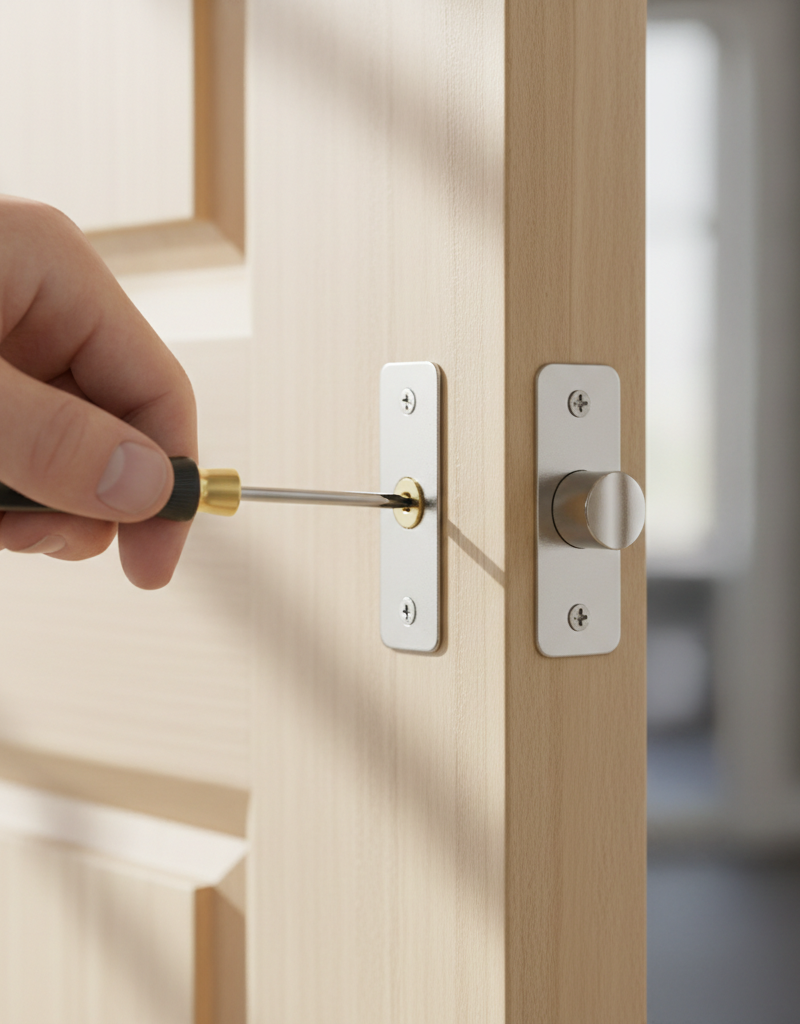
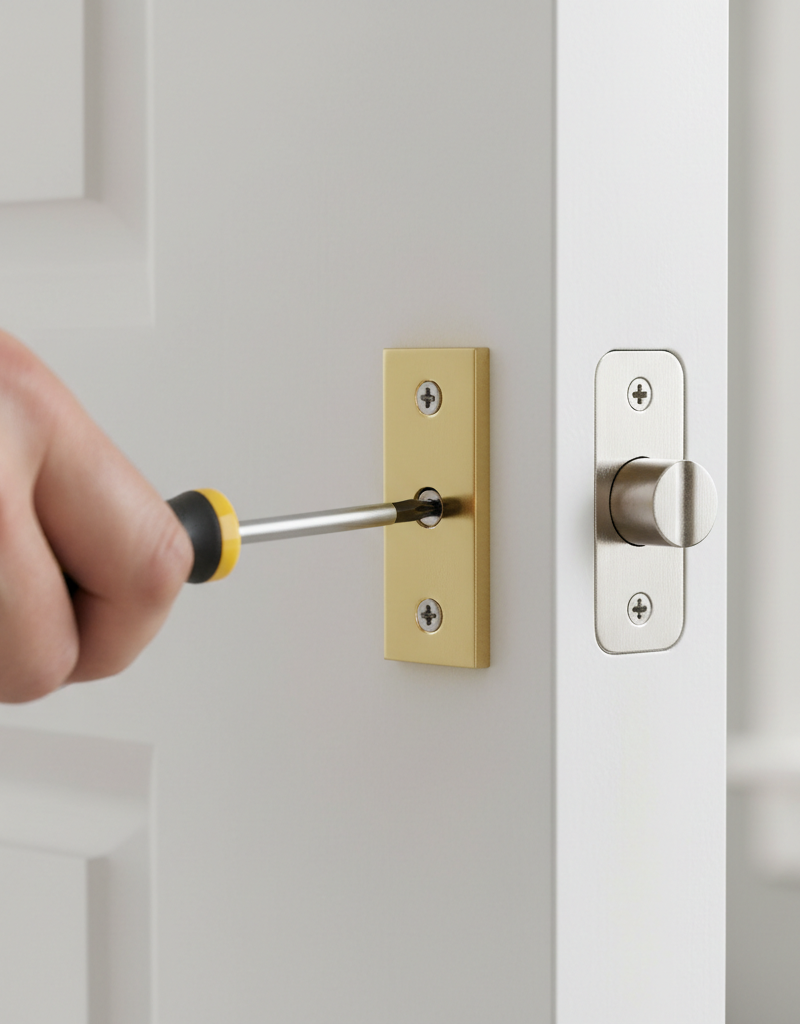
Adjust the Strike Plate (Horizontal) — Shifting the strike plate side-to-side. If your pencil test showed the latch bolt is hitting the frame either too far inward or too far outward from the strike plate opening, you'll need to move the strike plate.
- Too far inward: Remove the strike plate. If there's a mortise (a routed-out recess) for the strike plate, you might need to chisel a tiny bit more wood from the inner edge of the mortise. Alternatively, you can fill the existing screw holes with toothpicks and wood glue (as described above), then re-drill pilot holes slightly closer to the door stop and reinstall the strike plate.
- Too far outward: This is usually easier. Remove the strike plate. If there's a mortise, you can take a thin piece of cardboard (from a cereal box, for example) and cut it to fit behind the strike plate. This acts as a shim, pushing the plate outward just enough. Reinstall the strike plate with the shim behind it. You may need to use longer screws if adding a substantial shim.
-
Adjust the Strike Plate (Vertical) — Moving the strike plate up or down. If the latch bolt is hitting above or below the strike plate opening, the approach is similar to horizontal adjustment.
- Remove the strike plate. Fill the old screw holes with wood glue and toothpicks. Once dry, mark new pilot holes slightly higher or lower, as needed, and reinstall the strike plate.
- Fine-tuning with a file: For very minor vertical misalignments, you can use a metal file to carefully enlarge the top or bottom edge of the strike plate opening. File slowly and check frequently. Smooth any rough edges with sandpaper after filing.
-
Enlarge the Strike Plate Opening Depth — When the latch bolt doesn't fully enter. If the latch bolt is hitting the frame edge, not the strike plate, or if it's hitting the back of the strike box area, the opening isn't deep enough.
- Use a chisel: Very carefully, use a sharp wood chisel to remove a small amount of wood from the inside of the strike box, behind the strike plate. Only take off small increments and keep checking. Be exceptionally careful not to damage the visible part of the door frame or the strike plate mortise.
-
Check for a Sagging Door Frame — A less common, but significant issue. Stand back and observe the entire door frame. Is it plumb (vertical)? Is the gap around the door consistent? If the frame itself has sagged, especially at the top, it can prevent proper latching.
- Look for gaps: Check the gap between the top of the door and the frame. If it's wider on the latch side than the hinge side, the frame might be sagging.
- Small adjustments: For minor sag, sometimes tightening the top hinge screws on the frame side, or replacing them with longer screws (3-inch screws that reach the wall stud), can pull the frame back slightly.
- Serious sag: If the frame is significantly out of square, this is a more complex structural issue that may require a professional carpenter.
-
Inspect the Doorknob Mechanism — Is the latch bolt operating correctly? If the strike plate seems perfectly aligned and the door frame is sound, the problem might be with the doorknob itself.
- Remove the doorknob: Unscrew the doorknob assembly from both sides of the door. Carefully pull the two halves apart.
- Examine the latch mechanism: Pull out the separate latch mechanism (the part with the bolt on the edge of the door). Check if the spring is broken or if there's any debris preventing the bolt from extending fully. Apply a small amount of graphite lubricant or silicone spray to the moving parts. If the spring is broken or the mechanism is visibly damaged, you'll need to replace the entire latch mechanism or the doorknob set.
-
Reinstall and Test — The moment of truth. After making any adjustments, reinstall the strike plate and screws (if you removed them) and test the door. Close it slowly and quickly. Does it latch smoothly and securely? Make fine-tune adjustments as needed.
Common Causes
- House Settling: Over time, foundations can shift slightly, causing door frames to move out of square, misaligning the strike plate and latch bolt.
- Humidity Changes: Wood doors and frames can absorb moisture and swell in humid conditions, or shrink in dry conditions. This changes the door's dimensions relative to the frame, altering clearances.
- Loose Hinges: Screws on the door hinges or frame hinges can loosen over time, allowing the door to sag or shift, pulling the latch bolt out of alignment.
- Worn or Damaged Latch Mechanism: The internal spring or components within the doorknob's latch assembly can wear out or break, preventing the latch bolt from fully extending.
- Improper Installation: If the strike plate was never perfectly aligned during initial installation, the problem may manifest only after minor settling or wear.
Common Mistakes
- Ignoring the Pencil Test: Guessing where the misalignment is wastes time and can lead to unnecessary adjustments. Always mark the latch bolt's position.
- Overtightening Screws: Stripping screw holes in door frames or hinges makes the problem worse and requires a more involved repair (like using wood filler or toothpicks).
- Filing Too Much: When enlarging the strike plate opening, filing aggressively can create an unsightly, overly large hole. Always file in small increments and check frequently.
- Not Checking Hinges First: Many latching problems are simply due to loose hinges. Address these before moving on to strike plate adjustments.
- Jumping to Hardware Replacement: Most latching issues are alignment problems, not faulty hardware. Don't buy a new doorknob or strike plate until you've exhausted adjustment options.
- Ignoring Door Frame Sag: If the entire frame is out of square, adjusting just the strike plate is a temporary fix for a larger problem.
Cost & Time Breakdown
| Task | DIY cost | Pro cost | Time |
|---|---|---|---|
| Diagnose misalignment & tighten hinges | $0 | $50–$100 | 5–15 min |
| Adjust strike plate (filing/shimming) | $0–$5 | $75–$150 | 15–30 min |
| Repair stripped hinge screw holes | $2–$10 | $75–$150 | 20–45 min |
| Replace latch mechanism | $15–$40 | $100–$180 | 30–60 min |
| Minor door frame realignment | $0–$10 | $150–$300 | 1–2 hours |
Tips & Prevention
- Routine Check-ups: Periodically check all door hinges and doorknob screws for looseness and tighten them as needed to prevent sagging and misalignment.
- Lubricate Latch Mechanisms: Apply a tiny amount of graphite powder or silicone spray to your doorknob's latch bolt and internal mechanism once a year to ensure smooth operation, especially for frequently used doors.
- Control Indoor Humidity: Maintaining consistent indoor humidity levels (e.g., with a humidifier or dehumidifier) can minimize wood expansion and contraction in doors and frames.
- Inspect Door Sweeps/Weatherstripping: For exterior doors, ensure weatherstripping isn't too thick, as it can create resistance and prevent the door from closing fully, making it seem like a latching issue.
- Don't Force It: If a door isn't latching, don't repeatedly slam it. This can damage the door, frame, or latch mechanism further. Address the problem promptly.
When to Call a Professional
While most door latching issues are DIY-friendly, there are times when calling a professional is the smartest course of action. If, after tightening all hinges, shimming, and filing the strike plate, the door still won't latch, or if you suspect a more significant underlying problem, it's time to bring in a pro. Specifically, if the entire door frame appears to be significantly out of square or severely warped, this could indicate structural issues within your wall or house settlement that requires the expertise of a carpenter or general contractor. Similarly, if the latch bolt mechanism inside the door is completely seized or broken beyond a simple lubrication, and you're uncomfortable disassembling and rebuilding the doorknob's internal components, a locksmith can efficiently replace the mechanism. For historic homes with original, intricate door hardware, a professional can often repair rather than replace, preserving the home's character. Avoid attempting complex frame repairs if you lack experience, as improper adjustments could lead to further damage to your door or wall structure.
Related Articles
Keep troubleshooting with these hand-picked guides from FixlyGuide:
- The 5-Minute Trick to Fix a Door That Won't Latch (No New Hardware Needed) — Discover the simple, often overlooked reasons why your door isn't latching and how to fix it in minutes without replacing any hardware.
- The 5-Minute Trick to Fix a Door That Won't Latch (No New Hardware Needed) — Discover the simple, often overlooked reason your door isn't latching and how to fix it in minutes with basic tools, no new hardware requir…
- The 3 Hidden Reasons Your Door Won't Latch (And the Easy Fixes) — A door that won't latch properly is a common household nuisance, often caused by simple issues that are easy to diagnose and repair.
- The 5-Minute Trick for a Door That Won't Latch (And Why It Keeps Happening) — Discover the simplest fixes for a door that won't latch, from minor adjustments to tackling persistent alignment issues.
- The 5-Minute Trick to Fix a Door That Won't Latch (No, It's Not the Latch Itself) — Discover the surprisingly simple trick to fix a door that won't latch properly, often without even touching the latch mechanism itself.
- The 5-Minute Trick to Fix a Kitchen Sink Sprayer's Weak Stream — A weak kitchen sink sprayer can be frustrating, but often a simple cleaning or adjustment can restore full pressure in minutes.
Should you do this yourself?
Answer five quick questions before you start. Safety outranks savings every time.
Your experience with work like this
How high do you have to work?
Does the job involve any of these?
Will it need a permit?
Specialty tools
Free and instant. Educational guidance only — not a quote, inspection, or professional diagnosis.
What should this project cost?
Enter your project details for a realistic cost range before you call anyone.
Cost depends heavily on which system turns out to be the source.
- Regional adjustment
- National average
- Labor share (typical)
- ~$1,620
- Quotes to collect
- 3 written estimates
Educational estimate based on national averages — not a binding quote. Always confirm with written local estimates.
Get the print-ready PDF of this guide
A clean, ad-free, printable version you can keep on your phone or pin to the workshop wall. Free with a FixlyGuide account.
- Print-optimized layout
- Tools, materials & every step included
- Saved to your account
Recommended for DIYers & woodworkers
Sponsored
The Top 20 Tools for Workshops of Any Budget
No stationary machines or power tools required — plus 3 fundamental tools that can't be bought at any price.
Get the free guide
Ted's Woodworking — The #1 Woodworking Resource
Detailed instructions, dimensioned drawings, materials & cutting lists, and 3D schematics for every skill level.
See the plansSponsored: links above are affiliate links. FixlyGuide may earn a commission on qualifying purchases — at no extra cost to you.
Frequently asked questions
Why won't my door latch shut?+
The most common reasons a door won't latch shut are a misaligned strike plate, loose door hinges causing the door to sag, or humidity changes affecting the wood door and frame.
How do you adjust a door strike plate?+
To adjust a strike plate, first determine if the latch bolt is hitting too high, low, or to the side. For minor adjustments, you can file the opening. For larger shifts, remove the plate, fill old screw holes, and redrill new pilot holes slightly repositioned, or use shims behind the plate.
Can a door's latch mechanism be repaired?+
Yes, often a door's latch mechanism can be repaired. If the parts are just stiff, lubrication can help. If parts are broken, you can usually replace the internal latch mechanism without replacing the entire doorknob set, provided a replacement part is available. If not, a new doorknob set is the solution.
What tools do I need to fix a door that won't latch?+
Typically, you'll need a screwdriver (Phillips and flathead), a pencil, a hammer, a wood chisel, and a metal file. For stripped holes, add wooden toothpicks and wood glue. For shimming, a piece of cardboard is useful.
Discussion
Loading comments…