- B. Start closing and immediately reverse?
- C. Almost reach the floor and then go back up?
- D. Close only when you hold the wall button?
- E. Move crooked or make grinding noises?
Published September 29, 2026
Tools & materials you'll need
Affiliate linksNo materials required.
As an Amazon Associate FixlyGuide earns from qualifying purchases — at no extra cost to you. Prices and availability are accurate as of publication and subject to change.
You hit the button.
The garage door starts coming down.
Everything looks normal.
Then suddenly...
It stops.
And goes right back up.
You try again.
Down...
Stop...
Back up.
Now you're standing in the driveway pressing the remote six times like pressing it harder is somehow going to convince the garage door to cooperate.
Sound familiar?
Before calling somebody—or trying to force the door closed—there are several things worth checking.
Because one of the most common reasons a garage door refuses to close is actually a safety feature doing exactly what it was designed to do.
But that's not the only possibility.
Your problem could involve:
- safety sensors
- an obstruction
- sunlight
- opener settings
- tracks
- rollers
- wiring
- springs
- cables
- or the opener itself
The trick is figuring out which one you're dealing with.
And there's one clue that can narrow things down quickly:
What EXACTLY does the door do?
Does it:
- A. Not move at all?
- B. Start closing and immediately reverse?
- C. Almost reach the floor and then go back up?
- D. Close only when you hold the wall button?
- E. Move crooked or make grinding noises?
Those aren't necessarily the same problem.
Let's investigate.
1. Something Is Blocking the Safety Sensors
Start here.
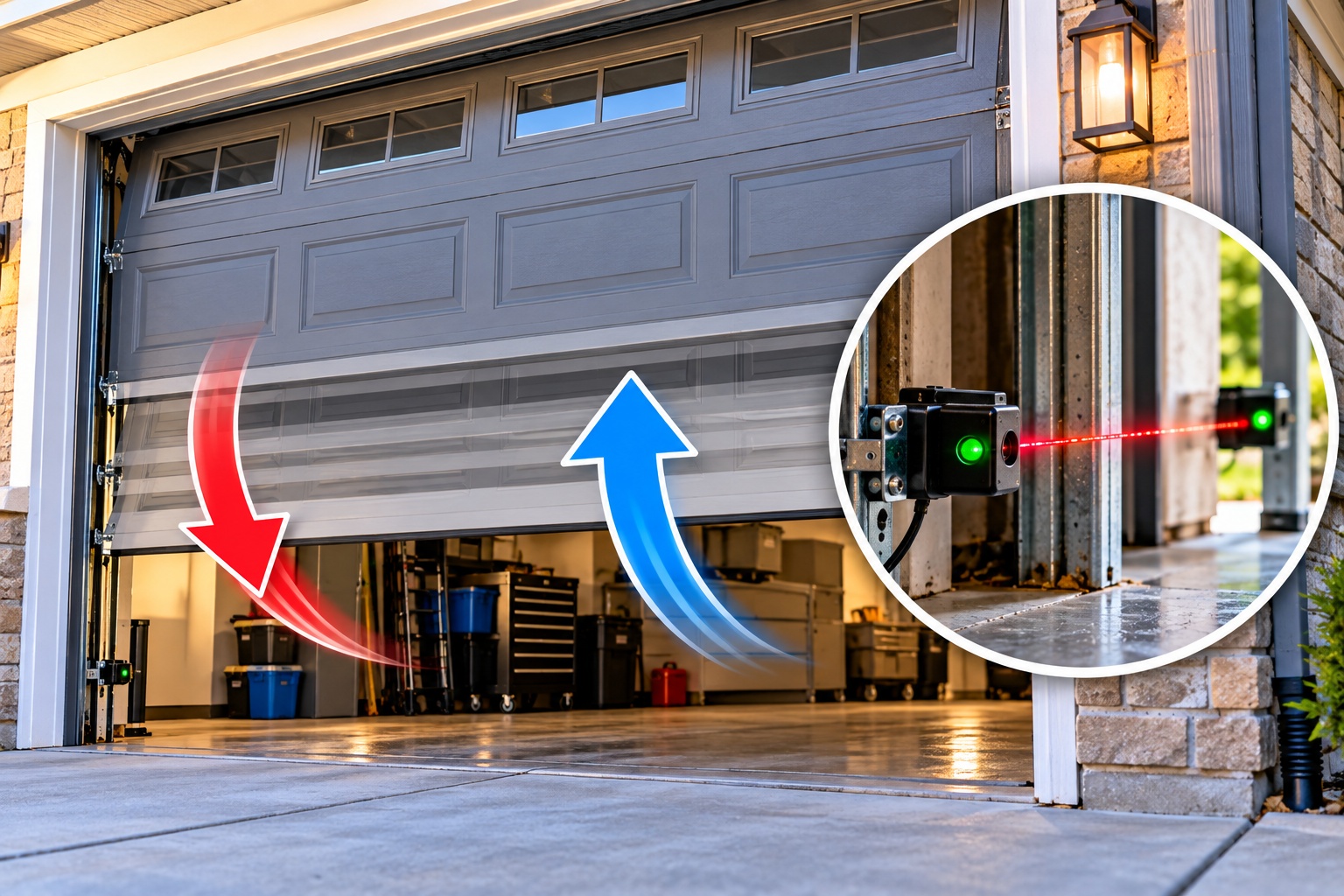
Near the bottom of many modern garage-door tracks you'll find two small sensors facing each other.
These are commonly called:
photo eyes or safety sensors.
They send a beam across the garage-door opening.
If something interrupts that beam while the door is closing, the opener is designed to stop or reverse the door.
That's an important safety feature.
In fact, automatic residential garage-door operators are subject to a federal safety standard addressing entrapment protection.
So before grabbing any tools, look across the bottom of the opening.
You might find:
- a cardboard box
- broom
- bicycle tire
- trash can
- extension cord
- leaf
- spiderweb
- children's toy
Sometimes the problem is ridiculously simple.
And that's exactly why you should check the simple things first.
2. The Sensors May Be Dirty
Nothing blocking the doorway?
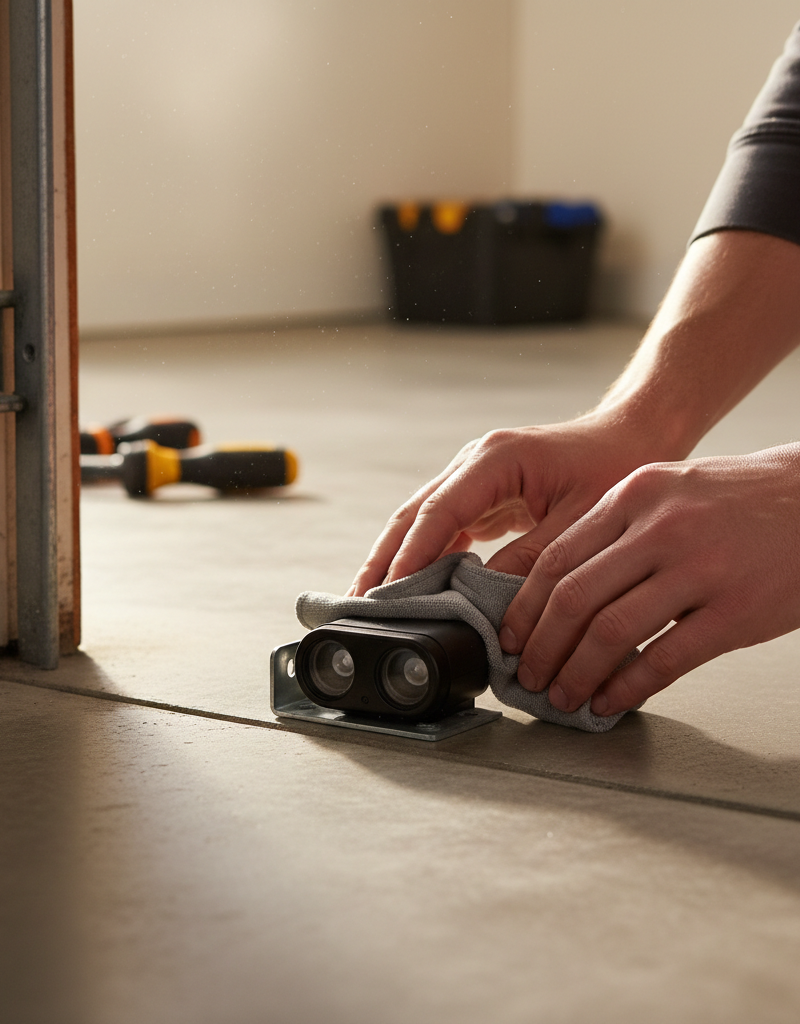
Look directly at the sensor lenses.
Garages aren't exactly operating-room environments.
They collect:
- dust
- dirt
- grass clippings
- cobwebs
- bugs
- moisture
A dirty sensor lens can interfere with the system.
Current 2026 garage-door troubleshooting guidance recommends checking for debris and cleaning sensor lenses when a door refuses to close properly.
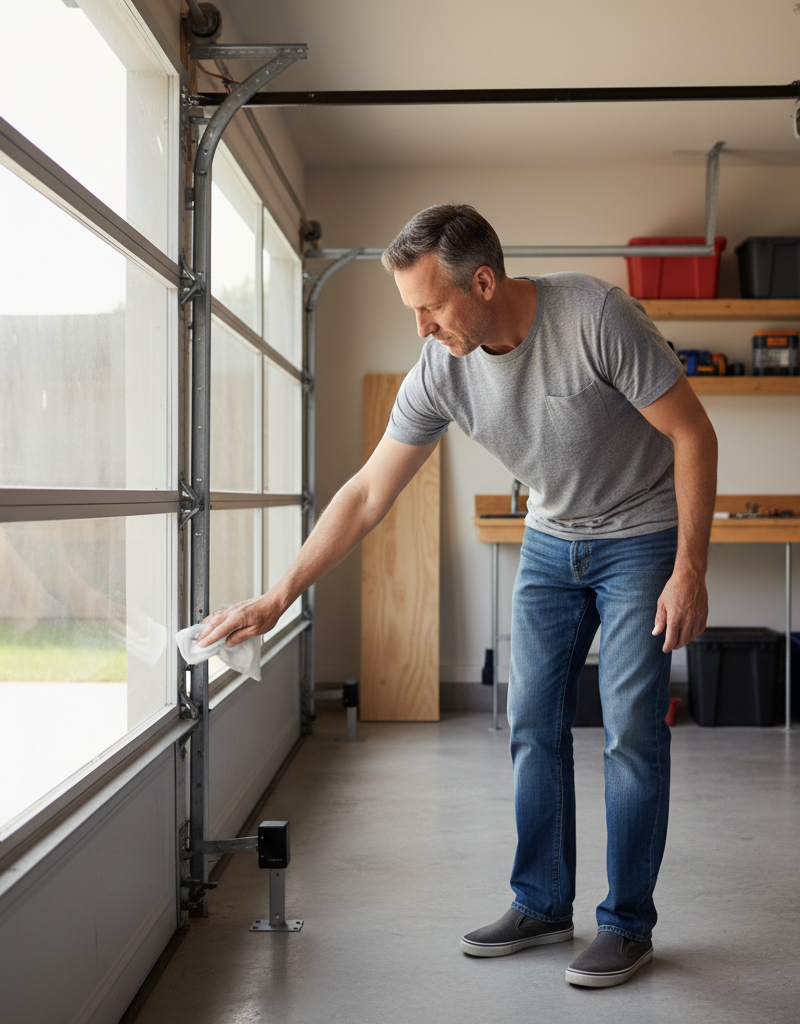
Use a clean, soft cloth.
Don't start dismantling anything.
Clean the lenses.
Then try the door again.
Sometimes your $300 repair starts with a 30-second cleaning.
3. The Sensors May Be Misaligned
This is another very common culprit.
The two sensors need to communicate across the garage-door opening.
But think about where they're mounted:
A few inches off your garage floor.
Exactly where people:
- move boxes
- push lawn equipment
- sweep
- carry lumber
- park bicycles
- kick things accidentally
It doesn't take much to bump one.
If one sensor gets knocked out of alignment, the opener may behave as though something is blocking the doorway—even when nothing is there.
Current 2026 garage-door guidance identifies misaligned or obstructed sensors as one of the most common reasons a door won't close.
Look at the indicator lights on the sensors.
A blinking or unlit indicator may provide a clue, although exact light behavior varies by manufacturer.
And that's important:
Don't assume every brand uses the same diagnostic lights.
Check your opener's manual for what your particular lights mean.
4. Sunlight Could Be Confusing the Sensor
Here's one homeowners don't always expect.
Your garage door works perfectly in the morning.
Then every afternoon around the same time...
It refuses to close.
Later that evening?
Works again.
Before declaring your garage haunted, look at where the sun is shining.
Direct sunlight hitting a photo-eye sensor can sometimes interfere with its operation. Current garage-door troubleshooting guidance specifically notes sunlight as a possible source of sensor interference.
That's why timing matters.
If your garage door fails:
every day at 5:30 PM
but works:
every morning at 8:00 AM
that's useful diagnostic information.
Don't just tell the technician:
“It works sometimes.”
Tell them:
“It usually refuses to close in the late afternoon when sunlight is hitting this side of the garage.”
Now you've given them a clue.
5. The Door's Travel or Limit Setting May Be Wrong
Your garage-door opener needs to know where:
OPEN
ends...
and where:
CLOSED
ends.
Depending on the opener, travel or limit settings tell the system how far the door should move.
If that setting is incorrect, the opener may interpret what's happening at the floor incorrectly and reverse the door.
Current guidance lists incorrect limit settings among the reasons a garage door can reach the bottom and then reverse.
Here's the clue:
Does the door almost completely close before reversing?
That's a different pattern from a door that moves six inches and immediately goes back up.
Again:
Watch what the door actually does.
6. The Tracks Could Be Obstructed or Damaged
Your garage door doesn't simply float through the air.
Its rollers travel along tracks.
Look at them from a safe position.
Do you see:
- debris
- visible damage
- obvious bending
- a roller out of position
- something rubbing
- something caught in the track?
A door that's binding mechanically may:
- move unevenly
- jerk
- stop
- reverse
- make unusual noises
Current 2026 troubleshooting guidance includes damaged rollers and track problems among possible causes of incomplete garage-door travel.
But here's where DIY troubleshooting needs a boundary.
Looking is one thing.
Trying to force, bend or dismantle a loaded garage-door system is another.
7. A Roller Could Be Worn or Damaged
Watch the door from a safe distance while it operates.
Does it move smoothly?
Or does it:
jerk... hesitate... bind... then move again?
A damaged or worn roller can interfere with smooth movement.
Listen too.
New sounds matter.
Grinding.
Scraping.
Popping.
Metal-on-metal noise.
Those can provide additional clues.
Don't stand underneath the door while testing it.
And don't put your hands into moving tracks.
Observe.
Document.
Don't become part of the garage door.
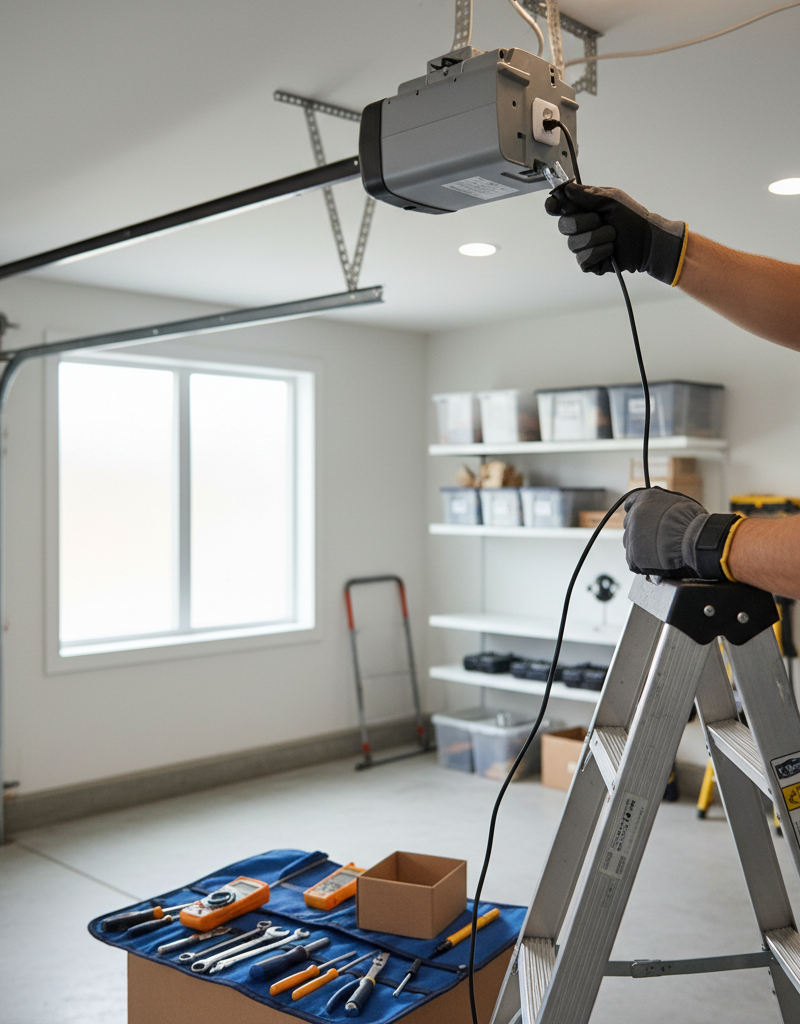
8. There Could Be an Opener or Wiring Problem
Let's say:
- nothing blocks the sensors
- lenses are clean
- sensors appear aligned
- tracks look normal
- the door still refuses to close
Now the problem may involve:
- sensor wiring
- opener electronics
- wall control
- trolley
- travel settings
- other opener components
If the opener has diagnostic lights or displays a code, take a picture.
Then find the manufacturer's manual.
Don't just search:
“garage door blinking light.”
Search the exact:
brand + model + diagnostic code.
That will usually get you much closer to the correct explanation.
9. The Door Could Have a Spring Problem
Now we're entering different territory.
Garage doors are heavy.
Springs help counterbalance that weight.
If a spring breaks or another part of the counterbalance system fails, the door may suddenly behave very differently.
Possible clues can include:
- door suddenly feels extremely heavy
- door won't lift normally
- door moves unevenly
- opener struggles
- you heard a loud bang in the garage
- visible separation in a torsion spring
This is not where I want Fixly Guide homeowners experimenting.
Garage-door springs store substantial energy and can cause serious injury.
Current 2026 repair guidance specifically recommends professional help for broken springs because of the tension involved.
Don't loosen spring hardware.
Don't remove spring brackets.
Don't try to wind torsion springs yourself because you watched a two-minute video.
This is one of those times when knowing what not to DIY is valuable homeowner knowledge.
10. A Cable or Other Mechanical Component Could Be Damaged
Look along both sides of the door.
Do you see:
- a loose cable
- frayed cable
- cable hanging strangely
- crooked door
- roller outside its track
- obviously damaged hardware?
Stop repeatedly operating the door.
A garage door that's visibly crooked or has damaged lifting hardware deserves professional evaluation.
The important distinction is this:
Sensor problem?
The door may be mechanically fine but refusing to close because its safety system isn't satisfied.
Mechanical problem?
The door itself may not be moving correctly.
Those are very different situations.
Here's the 5-Minute Garage Door Test
Before calling somebody, collect information.
Step 1 — Clear the opening.
Remove anything near the doorway and sensors.
Step 2 — Clean the sensor lenses.
Use a soft cloth.
Step 3 — Look at the sensor lights.
Are they steady?
Blinking?
Off?
Take a picture.
Step 4 — Try the wall control.
Does the behavior differ from the remote?
That may provide another clue.
Step 5 — Watch exactly where the door reverses.
Immediately?
Halfway?
At the floor?
Step 6 — Listen.
Any:
- grinding
- scraping
- popping
- squealing
- unusual vibration?
Step 7 — Look at the door.
Does it appear level?
Are the tracks obviously damaged?
Are cables hanging loose?
Step 8 — Record it.
Use your phone.
Take a video showing exactly what the door does.
That can be incredibly useful for a garage-door technician.
Don't Make This Dangerous Mistake
Your garage door won't close.
So you decide:
“I'll just force it.”
Bad idea.
The system is telling you something isn't right.
Maybe the sensor thinks an object is underneath the door.
Maybe something is binding.
Maybe a mechanical component is damaged.
Maybe a spring has failed.
Don't turn:
“My garage door won't close”
into:
“My garage door fell.”
What About the Emergency Release Cord?
Most automatic garage-door systems have an emergency release that disconnects the door from the opener.
But don't automatically pull it every time something goes wrong.
Why?
Because once disconnected, you're dealing with the weight and balance of the door itself.
If a spring or cable problem exists, the door may be unexpectedly heavy or unstable.
A mechanically sound, properly balanced door is different from a door with damaged lifting components.
If you're unsure what's wrong, don't put yourself underneath a heavy garage door and experiment.
Never Disable the Safety Sensors Just to Make the Door Close
This one deserves its own section.
If the sensors are stopping the door:
Find out why.
Don't permanently bypass a safety system simply because it's inconvenient.
The photo-eye/entrapment-protection system exists to reduce the risk of a closing door trapping a person or object. Federal safety requirements apply to automatic residential garage-door operators.
Your garage door staying open is frustrating.
A garage door closing when it shouldn't is a much bigger problem.
When Should You Call a Garage Door Professional?
Simple homeowner checks make sense when you're dealing with things like:
- obvious obstruction
- dirty sensor
- possibly bumped sensor
- remote battery
- manufacturer troubleshooting code
Professional diagnosis makes much more sense when you see:
- ⚠️ Broken spring
- ⚠️ Loose or damaged cable
- ⚠️ Crooked door
- ⚠️ Damaged track
- ⚠️ Door unexpectedly dropping
- ⚠️ Door extremely heavy
- ⚠️ Grinding or severe mechanical binding
- ⚠️ Repeated unexplained reversal
- ⚠️ Safety system that isn't working correctly
- ⚠️ Problem that continues after basic troubleshooting
Don't measure DIY success by:
“Can I physically do this?”
Ask:
“Can I safely do this without creating a bigger problem?”
Those aren't the same question.
Questions to Ask a Garage Door Contractor
If you call someone, don't just ask:
“How much to fix my garage door?”
Ask:
- What is causing the door to reverse?
- Are the sensors working correctly?
- Is the door mechanically balanced?
- Are the springs and cables in good condition?
- Is anything binding in the tracks?
- Is the opener itself failing?
- Does anything need replacement—or can it be adjusted?
- Are all safety-reversal features working correctly?
And my favorite:
“Can you show me what failed?”
A good contractor should be able to explain the problem.
What If the Garage Door Works From the Wall Button but Not the Remote?
That's useful information.
If one control works while another doesn't, the problem may be related to the remote, its battery, programming or communication rather than the door's mechanical system.
That's why troubleshooting should be systematic.
Don't replace an opener because a $5 battery died.
And don't replace a battery when there's a broken spring hanging over your head.
Diagnose first. Spend second.
What If It Closes and Immediately Opens Again?
Pay attention to where the reversal happens.
If it reverses before reaching the floor, sensors or another obstruction/safety issue may be involved.
If it reaches the floor and then reverses, travel/limit settings become another possibility.
That's a great example of why:
“My garage door won't close.”
isn't enough information.
A better description is:
“It reaches the floor, pauses, then immediately opens again.”
Specific symptoms lead to better diagnosis.
The Fixly Guide Rule
When your garage door starts coming down...
stops...
and shoots right back up...
don't immediately assume:
“The opener is shot.”
Start with the clues.
What exactly does the door do?
Where does it stop?
Are the sensors clear?
Are their lights behaving differently?
Does the door move crooked?
Did you hear a loud bang?
Did this problem suddenly start?
Your goal isn't to become a garage-door technician.
Your goal is to understand the difference between a simple homeowner check and a mechanical problem that shouldn't be DIYed.
Something changed. Find out why.
And as always:
Diagnose first. Spend second.
Homeowners: Has your garage door ever started closing and then suddenly gone right back up?
Garage-door contractors: What's the first thing you check when a homeowner tells you, “There's nothing underneath it, but it still won't close”?
Follow Fixly Guide for more home tips, DIY guidance, repair costs, contractor insights and warning signs that can help you catch home problems before they become expensive.
What should this project cost?
Enter your project details for a realistic cost range before you call anyone.
Cost depends heavily on which system turns out to be the source.
- Regional adjustment
- National average
- Labor share (typical)
- ~$1,620
- Quotes to collect
- 3 written estimates
Educational estimate based on national averages — not a binding quote. Always confirm with written local estimates.
Frequently asked questions
Why does my garage door start closing and then go back up?+
A blocked or misaligned safety sensor is a common cause. Incorrect travel/limit settings, mechanical resistance or opener problems can also cause reversal.
Why won't my garage door close when nothing is blocking it?+
The safety sensors may be dirty, misaligned, damaged or experiencing another communication problem even when the doorway looks clear.
Can sunlight stop a garage door from closing?+
In some systems, direct sunlight can interfere with the photo-eye sensor. If the problem happens consistently at a particular time of day, sunlight exposure is worth investigating.
Is it safe to fix a garage-door spring myself?+
Garage-door springs operate under substantial tension. Professional repair is the safer approach when springs or lifting hardware are damaged.
Why does my garage door close only when I hold the wall button?+
That behavior can be associated with the safety-sensor system on some openers, but operation varies by manufacturer. Check your model's manual rather than assuming a specific diagnosis.
Should I bypass my garage-door sensors?+
No. The sensors are part of the door's entrapment-protection system. Diagnose why the safety system is preventing normal operation rather than permanently defeating it.
Discussion
Loading comments…