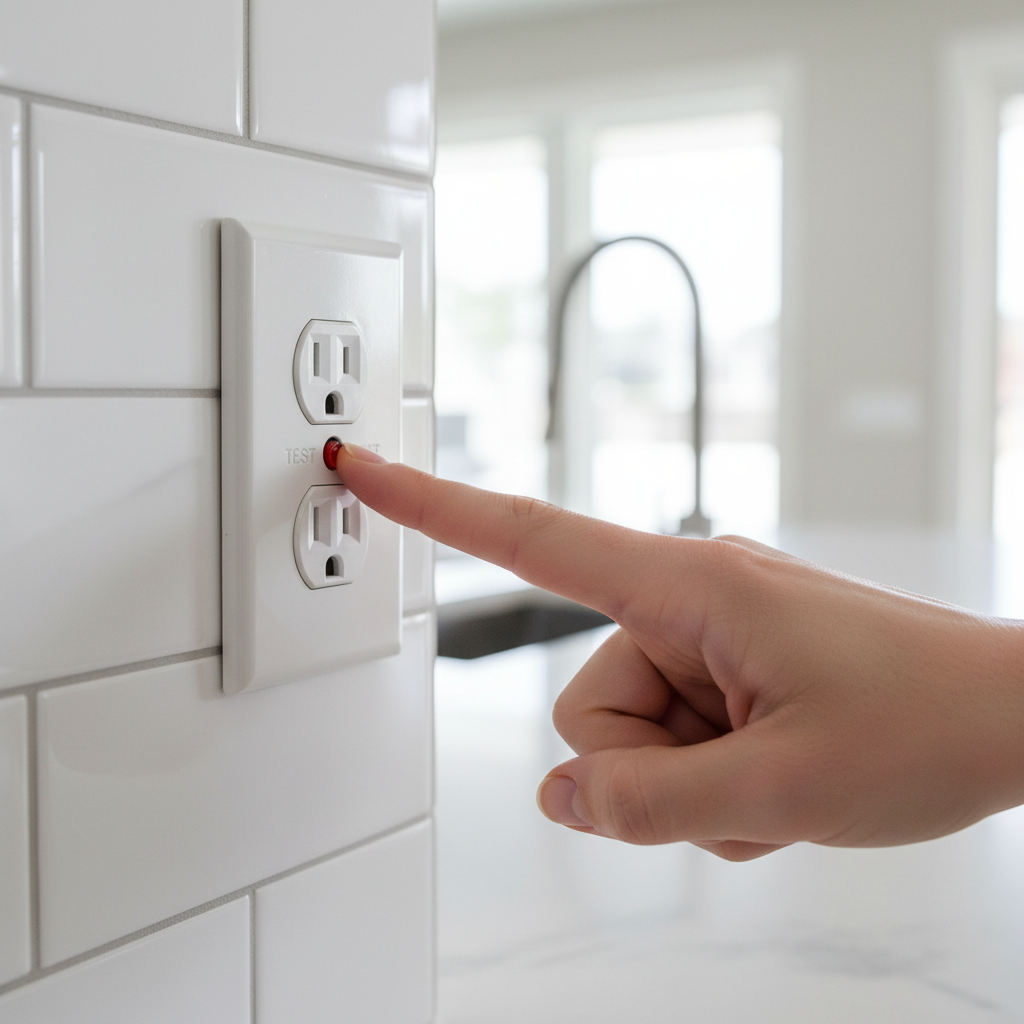
- Faulty Appliance: The most common cause. A hair dryer, toaster, refrigerator, or even an old lamp with a slightly frayed cord can create a small, persistent ground fault that the GFCI detects immediately.
- Moisture Intrusion: Water getting into an outlet, a junction box, or an appliance can create a short to ground, continuously tripping the GFCI. This is especially prevalent in kitchens, bathrooms, and outdoor areas.
- Damaged Wiring: Frayed wires, loose connections within the outlet box, inside appliances, or along the circuit can cause current leakage to ground or an open neutral condition that prevents resetting.
- Overloaded Circuit: While GFCIs primarily protect against ground faults, a heavily overloaded circuit might occasionally cause unexpected tripping, though this is less common for a GFCI that specifically won't reset.
- Defective GFCI Unit: Like any electronic device, GFCIs can fail internally due to age, power surges, or manufacturing defects. Their internal sensing mechanisms can degrade over time.
Electrical · Panel or service upgrade
| Project category | Electrical |
|---|---|
| Problem type | Panel or service upgrade |
| Trade required | Electrical |
| Urgency | Planned project |
| Safety risk | High safety risk |
| DIY suitability | Licensed pro only |
| Cost category | High cost |
| Typical timeline | Permit plus utility scheduling, commonly 2–6 weeks |
| Contractor type | Licensed electrician |
Repair option
Add a subpanel when the main service is adequate.
Replacement option
Full service upgrade with utility coordination and permits.
Common causes
- Obsolete or recalled panel brands
- Service capacity too small for added loads
- No room for required AFCI/GFCI breakers
Relevant tools:project cost estimatorcompare quotes
Published June 4, 2026Last updated August 17, 2026
Tools & materials you'll need
Affiliate linksAs an Amazon Associate FixlyGuide earns from qualifying purchases — at no extra cost to you. Prices and availability are accurate as of publication and subject to change.
Quick Answer
A GFCI outlet that won't reset is a common, often frustrating, issue for homeowners. While it immediately suggests a ground fault, the cause isn't always a simple, obvious short circuit. Often, the problem lies with another appliance or fixture connected to the GFCI's 'load' side, a loose wire connection, or even a damaged GFCI unit itself. Understanding the hierarchy of troubleshooting – from simple appliance checks to more involved electrical diagnostics – is crucial for safely restoring power.
The Problem
You're in the bathroom, kitchen, garage, or even outdoors, and suddenly an essential outlet stops working. You press the 'RESET' button on the GFCI, and nothing happens – it just won't click back into place, or it trips immediately after resetting. This isn't just an inconvenience; it means a protective device is doing its job, responding to an electrical anomaly. The challenge is that a GFCI's primary function is to detect ground faults – instances where electricity takes an unintended path to the ground. However, other issues, like an open neutral or even internal damage to the GFCI, can mimic a ground fault and prevent the device from resetting, leading to confusion and potential safety hazards if not addressed correctly. The immediate concern is identifying why it's not resetting and ensuring any underlying electrical issues are resolved to prevent shock or fire.
How It Works
To understand why a GFCI won't reset, it's essential to grasp how it operates. A Ground Fault Circuit Interrupter (GFCI) outlet is not just a regular outlet; it's a safety device designed to protect you from electrical shock. It continuously monitors the electrical current flowing through the hot and neutral wires in a circuit. In a balanced system, the current flowing out on the hot wire should exactly equal the current returning on the neutral wire.
The magic of a GFCI lies in its current transformer, which precisely compares these two currents. If there's an imbalance as minuscule as 4-6 milliamperes (mA), it means electricity is leaking somewhere – an unintended path to ground, possibly through a person. This split-second detection (within 1/40 of a second) triggers an internal solenoid, which mechanically trips the circuit, cutting off power before a dangerous shock can occur. Think of it like a finely tuned lifeguard for your electrical system.
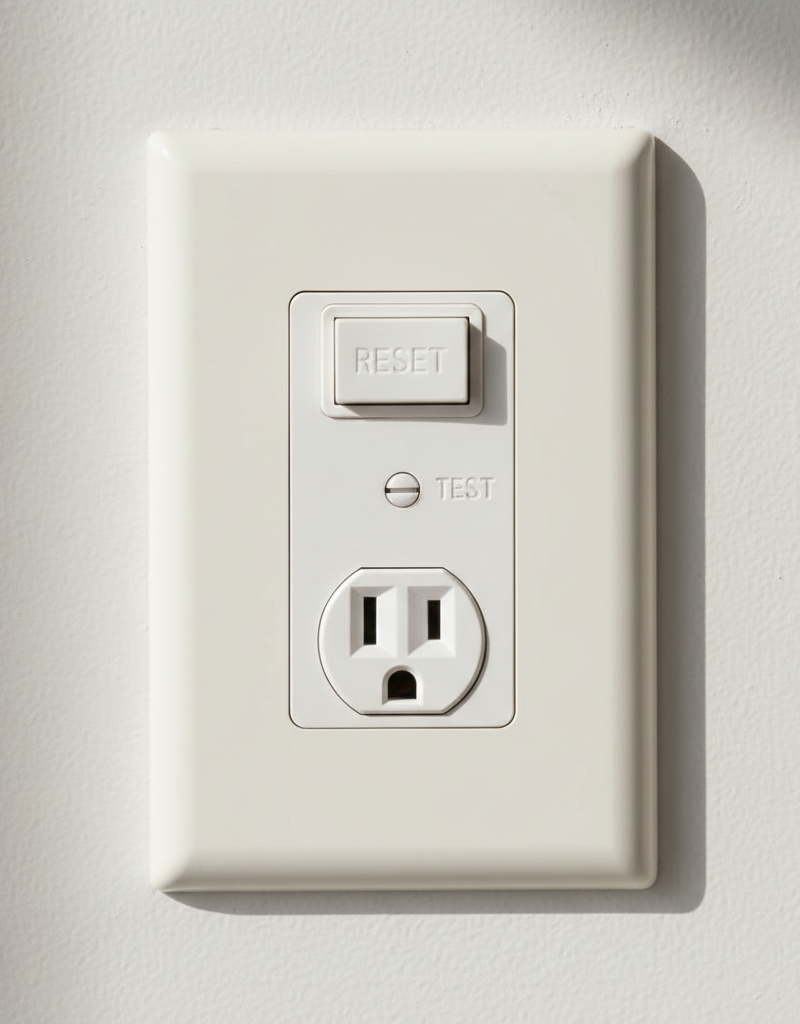
When you press the 'RESET' button, you are manually attempting to close the internal contacts and restore power. However, if the GFCI's sensing coil still detects an imbalance, or if other internal conditions aren't met (such as a proper neutral connection), it will refuse to reset. It's designed to not allow power to flow if a fault condition persists, ensuring continuous protection. The 'TEST' button, conversely, creates a small, intentional ground fault within the device, simulating a fault and confirming the GFCI's ability to trip. If it doesn't trip when you press 'TEST', the GFCI unit itself might be faulty.
Step-by-Step Fix
1. Unplug Everything — Clear the circuit of potential faults
Before you do anything else, go to the GFCI outlet that won't reset and unplug every single item connected to it and any other ordinary outlets downstream that might be protected by it. This includes lamps, chargers, hair dryers, toasters, refrigerators, and anything else drawing power. Sometimes, a faulty appliance, even if it appears off, can create a continuous minor ground fault that prevents the GFCI from resetting. Ensure all load is completely disconnected.
- Safety Note: Even if the GFCI is tripped, assume the circuit is live until you've verified otherwise. Do not touch exposed wires.
- If this doesn't work: Proceed to check other GFCIs and the breaker.
2. Check Other GFCIs and Breakers — Rule out upstream issues
Look for other GFCI outlets in nearby bathrooms, kitchens, laundry rooms, or the garage that might be protecting the problematic one. Sometimes, a 'master' GFCI can trip, cutting power to several 'slave' outlets downstream, including your stubborn one. Also, check your main electrical panel for any tripped circuit breakers. A tripped breaker will be halfway between 'ON' and 'OFF' and needs to be fully pushed to 'OFF' before resetting to 'ON'.
- Locate all GFCIs: Make sure to check all of them, especially any that might be hidden behind appliances or in less-used areas.
- Breaker Check: If a breaker is tripped, reset it firmly. If it immediately trips again, do not attempt to reset it repeatedly. Call a licensed electrician.
3. Reset the GFCI Correctly — Confirm proper reset procedure
With everything unplugged and the breaker confirmed on (if applicable), firmly press the 'RESET' button on the GFCI. You should hear a distinct click and feel the button latch into place. If it doesn't latch or clicks off immediately, the fault is still present, or the GFCI itself is defective.
- Firm Press: Don't just tap it. Push it in completely and release.
- Listen for the Click: The audible click confirms the internal mechanism has engaged.
4. Test the GFCI Unit Itself — Diagnose internal failure
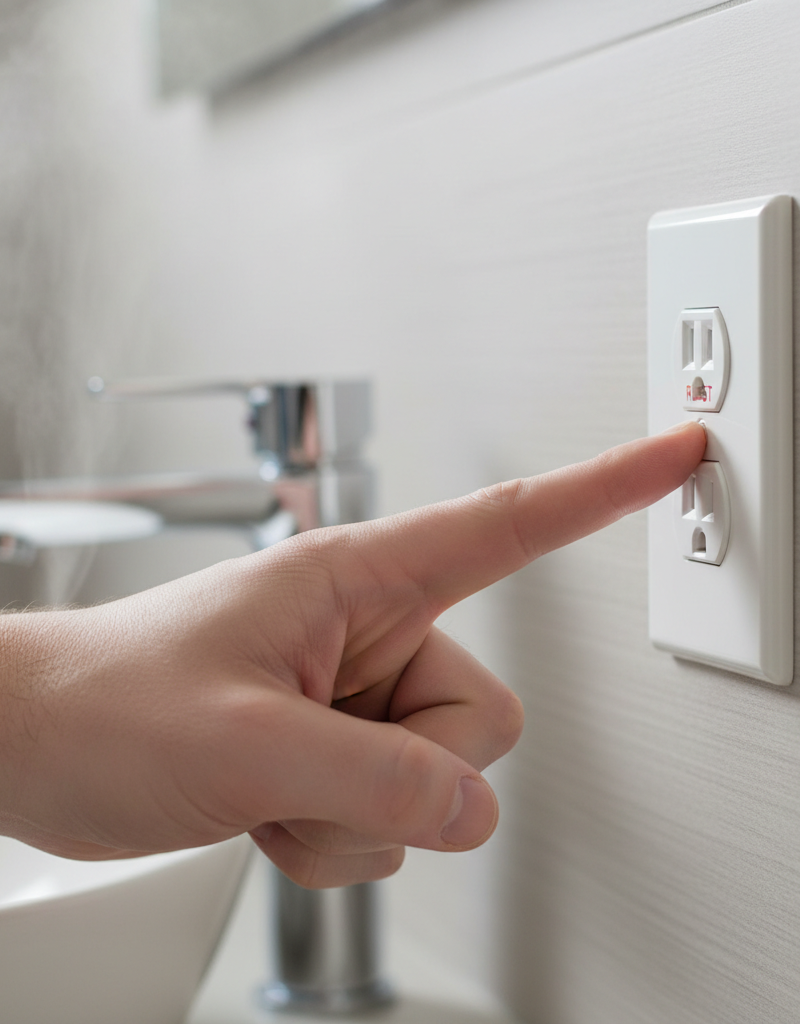
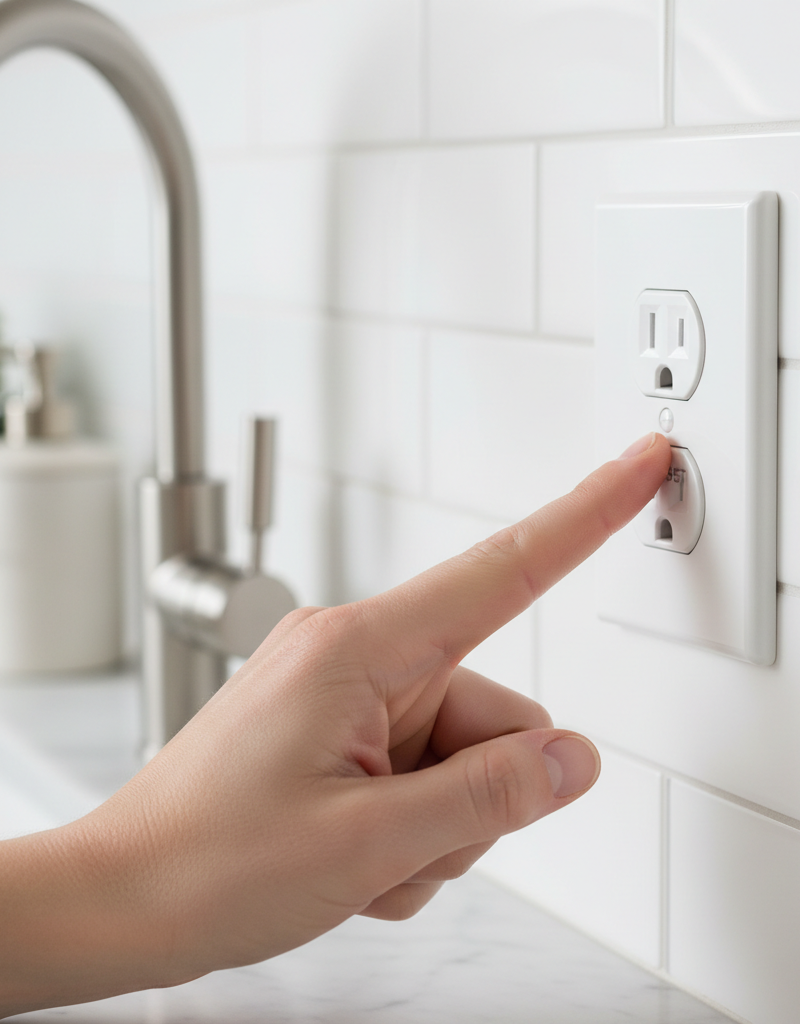
If the GFCI still won't reset, even with nothing plugged in, try pushing the 'TEST' button first, and then the 'RESET' button. If the 'TEST' button doesn't trip the GFCI (meaning it stays in the 'reset' position even when pressed), the GFCI unit itself is likely faulty and needs replacement.
- Functionality Check: A functional GFCI should trip when 'TEST' is pressed and then reset when 'RESET' is pressed.
- If the GFCI is old: Older units (10+ years) are more prone to internal failure.
5. Check for Open Neutral Connections (Pro Recommended) — A common hidden cause
An open neutral on the load side of a GFCI can prevent it from resetting. This can be due to a loose wire terminal, a splice coming undone, or a damaged wire. While an open neutral isn't a ground fault, modern GFCIs are designed to detect this condition as a safety measure and will often refuse to reset. This fault is not detectable with simple visual inspection and typically requires a multimeter to confirm. This step should ideally be performed by a qualified electrician.
- Pro Safety: Dealing with open neutrals requires careful handling of live electrical wires. If you are not experienced, do not attempt this yourself.
- Signs of Loose Wires: Faint buzzing, flickering lights on the same circuit, or scorch marks can indicate loose connections.
6. Inspect for Moisture Intrusion — Water and electricity don't mix
If the GFCI is in a damp location (bathroom, kitchen, outdoors), check for any signs of water or condensation in or around the outlet box. Moisture is a primary cause of ground faults and can continuously trip a GFCI, preventing it from resetting. Ensure the cover is sealed properly and there are no leaks.
- Turn Off Power: Crucially, if you suspect moisture, turn off power to the entire circuit at the breaker before inspecting or removing the GFCI cover.
- Dry Thoroughly: Allow ample time for the area to dry completely before restoring power.
7. Isolate the Circuit (Advanced DIY/Pro) — Pinpointing a problematic downstream device
If the GFCI resets with everything unplugged, but trips immediately when you plug in one specific item or when you restore power to one specific downstream outlet, you've found your culprit. The issue isn't the GFCI, but the device or the wiring to that specific downstream outlet. Systematically plug in devices one by one (or disconnect downstream outlets one by one) to identify the problematic item or section of wiring.
- Systematic Approach: Patience is key here. Test each device individually.
- Load Side Wiring: If you suspect an issue in the wiring to a downstream outlet, turn off the breaker and carefully inspect the wiring connections in that outlet box for looseness or damage. If uncomfortable, call a pro.
8. Replace the GFCI Outlet — When all else fails
If you've followed all the steps, confirmed no external ground faults, unplugged all appliances, and the GFCI still refuses to reset (especially if the 'TEST' button doesn't work), the unit itself is likely defective. Modern GFCIs have internal mechanisms that can wear out over time, or they can be damaged by surges. Replacing a GFCI is a moderate DIY task, but requires cutting power at the breaker and careful wire matching.
- Safety First: ALWAYS turn off the power at the main breaker before attempting to replace any electrical outlet. Use a voltage tester to verify the power is off.
- Wiring: Match wire colors exactly: black (hot) to brass screws, white (neutral) to silver screws, and bare/green (ground) to the green screw. Pay close attention to 'LINE' and 'LOAD' terminals. Incorrect wiring can prevent proper function.
Common Causes
- Faulty Appliance: The most common cause. A hair dryer, toaster, refrigerator, or even an old lamp with a slightly frayed cord can create a small, persistent ground fault that the GFCI detects immediately.
- Moisture Intrusion: Water getting into an outlet, a junction box, or an appliance can create a short to ground, continuously tripping the GFCI. This is especially prevalent in kitchens, bathrooms, and outdoor areas.
- Damaged Wiring: Frayed wires, loose connections within the outlet box, inside appliances, or along the circuit can cause current leakage to ground or an open neutral condition that prevents resetting.
- Overloaded Circuit: While GFCIs primarily protect against ground faults, a heavily overloaded circuit might occasionally cause unexpected tripping, though this is less common for a GFCI that specifically won't reset.
- Defective GFCI Unit: Like any electronic device, GFCIs can fail internally due to age, power surges, or manufacturing defects. Their internal sensing mechanisms can degrade over time.
- Open Neutral on Load Side: This is a less obvious but significant cause. If the neutral wire connected to the 'LOAD' terminals of the GFCI is loose or open (broken), the GFCI may interpret this as an unsafe condition and prevent itself from resetting.
Common Mistakes
- Ignoring the 'Unplug Everything' Step: Many homeowners skip this, immediately assuming a major electrical issue when a simple faulty appliance is to blame. Always unplug everything first.
- Repeatedly Pressing Reset: If a GFCI won't reset, repeatedly mashing the button won't fix it. It indicates a persistent fault. Each attempt risks further damage if the underlying electrical issue isn't resolved.
- Not Checking Downstream Outlets/Appliances: GFCIs protect all standard outlets connected to their 'LOAD' terminals. Forgetting to check these can lead to missed faulty devices or wiring.
- Assuming the GFCI is Bad without Testing: Don't replace the GFCI immediately. Test it first using the 'TEST' button. If it trips and then won't reset, the fault is external. If it doesn't trip when tested, then it's likely faulty.
- Improper Wiring When Replacing: Mixing up the 'LINE' and 'LOAD' terminals during replacement is a common error. This can prevent the GFCI from working correctly or providing protection to downstream outlets.
- Ignoring Moisture Sources: Overlooking a small leak or condensation in damp areas can lead to recurring GFCI trips and potentially dangerous conditions.
Cost & Time Breakdown
| Task | DIY Cost | Pro Cost | Time |
|---|---|---|---|
| Unplug/Troubleshoot Appliances | $0 | N/A | 5–15 min |
| Check/Reset Breakers & GFCIs | $0 | N/A | 5–10 min |
| Diagnose GFCI Unit | $0 | $50–$100 | 10–20 min |
| Replace GFCI Outlet (Parts) | $15–$30 | Included in labor | 30–60 min |
| Pro GFCI Replacement (Labor) | N/A | $150–$300 | 30–60 min |
| Diagnose Loose Wiring (Pro) | N/A | $150–$400+ | 1–2 hours+ |
Tips & Prevention
- Regular Testing: Press the 'TEST' button on all your GFCIs monthly. They should trip instantly, and then reset. This confirms they are functional and ready to protect you.
- Protect from Moisture: Ensure GFCIs in wet locations (bathrooms, outdoors) have appropriate weather-resistant covers. Seal any cracks around outdoor boxes.
- Avoid Overloading: Don't plug too many high-draw appliances into a single GFCI-protected circuit. While not its primary tripping mechanism, consistent overloading stresses the wiring and devices.
- Inspect Cords and Plugs: Periodically check appliance cords for fraying or damage, and ensure plugs fit snugly into outlets. Replace damaged items promptly.
- Understand 'LINE' and 'LOAD': When installing or replacing GFCIs, always connect the incoming power to the 'LINE' terminals and any downstream protected outlets to the 'LOAD' terminals. Miswiring is a common cause of issues.
- Consider Age: GFCIs typically have a lifespan of 10-15 years. If your GFCIs are older and causing issues, consider proactive replacement.
When to Call a Professional
While identifying and fixing a tripped GFCI can often be a successful DIY project, there are clear instances when calling a licensed professional electrician is not just recommended, but essential for safety and proper resolution. You should immediately call an electrician if the GFCI trips repeatedly after resetting, especially if you haven't identified a faulty appliance or if you suspect water intrusion into your electrical system. Specifically, if a circuit breaker is tripping along with the GFCI, or if the GFCI refuses to reset even after unplugging everything and confirming no obvious issues, there's likely a more serious underlying electrical fault, such as a short circuit in the wiring, a persistent ground fault, or an open neutral connection within the wall. Dealing with live electrical wires, diagnosing hidden wiring faults, or any situation involving water near electrical components can be extremely dangerous. Electricians have the specialized tools (like circuit tracers and advanced multi-meters) and expertise to safely diagnose and repair these complex issues, ensuring your home's electrical system is safe and up to code.
Related Articles
Keep troubleshooting with these hand-picked guides from FixlyGuide:
- The Hidden Reason Your GFCI Won't Reset (And It's Not Always a Short) — When your GFCI outlet refuses to reset, it's often more than a simple tripped circuit, pointing to underlying electrical issues you can saf…
- The Hidden Reason Your GFCI Won't Reset (And It's Not Always a Faulty Outlet) — A GFCI outlet that won't reset usually indicates an underlying electrical issue, most commonly a ground fault or overloaded circuit, not al…
- The Hidden Reason Your GFCI Won't Reset (And It's Not Always a Short) — Discover the often-overlooked culprits behind a GFCI outlet that refuses to reset and learn how to safely diagnose and fix the issue yourse…
- The Hidden Reason Your GFCI Won't Reset (And It's Not Always a Short) — Uncover the mysterious reasons your GFCI outlet refuses to reset and learn the exact steps to diagnose and fix the problem safely, preventi…
- The Hidden Reason Your GFCI Won't Reset (And It's Not Always a Damaged Outlet) — A GFCI outlet that won't reset can be frustrating, but often the cause isn't the outlet itself, but a hidden electrical issue downstream th…
- The Hidden Reason Your GFCI Trips (It’s Not Always a Bad Outlet) — A tripping GFCI outlet is a safety mechanism doing its job, often indicating a problem like moisture, a faulty appliance, or a wiring issue…
What should this project cost?
Enter your project details for a realistic cost range before you call anyone.
Outlet and switch work usually $150–$400; panel upgrades commonly $1,800–$4,200.
- Regional adjustment
- National average
- Labor share (typical)
- ~$709
- Quotes to collect
- 3 written estimates
Educational estimate based on national averages — not a binding quote. Always confirm with written local estimates.
Fixly Project Decision Box
- DIY difficulty
- Professional Recommended
- Estimated time
- Diagnosis 1–2 hours
- Cost level
- Moderate
Main tools / materials
- Non-contact voltage tester
- Outlet tester
- Flashlight
When to stop and call a pro
- Burning smell, scorch marks, or a warm outlet or switch plate
- A breaker that trips again right after being reset
- Any work inside the service panel
- Aluminum wiring or cloth-insulated wiring
Need professional help?
Talk to a Licensed ElectricianFrequently asked questions
Why won't my GFCI outlet reset?+
A GFCI outlet typically won't reset due to a persistent ground fault being detected somewhere on the circuit it protects (including downstream outlets and appliances), an open neutral connection, or internal damage to the GFCI unit itself. The most common immediate cause is a faulty appliance plugged into the GFCI or one of its protected outlets.
What's the difference between 'LINE' and 'LOAD' on a GFCI?+
'LINE' terminals are where the incoming power from the circuit breaker connects, providing power to the GFCI itself. 'LOAD' terminals are for wires that extend power to other standard outlets downstream, providing them with GFCI protection. It's crucial not to reverse these connections.
How often should I test my GFCI outlets?+
It is recommended to test your GFCI outlets monthly by pressing the 'TEST' button, which should cause the 'RESET' button to pop out, cutting power. Then, press 'RESET' to restore power. This ensures the internal mechanism is functional.
Can an old GFCI outlet stop working properly?+
Yes, like any electrical component, GFCI outlets can wear out or become defective over time, typically after 10-15 years. Internal components can fail due to age, power surges, or repeated tripping, leading to a GFCI that won't reset or won't trip when tested.
Discussion
Loading comments…