- 7 Hidden Equity Drains Costing You Thousands Annually — Your home is an asset, but silent problems like minor leaks, poor insulation, and deferred maintenance can drain its value. Discover the se…
- 7 Inspection Red Flags That Secretly Signal a $20,000 Bill — Don't let your dream home become a money pit. Many buyers and even some inspectors overlook subtle home inspection red flags that lead to f…
- The Hidden Truth About — Uncover the surprising risks of buying used furniture and appliances, and learn essential inspection tips to protect your home and wallet.
- The 12 Checks That Prevent 80% of Costly Home Repairs — Don't wait for a disaster. Our comprehensive monthly home maintenance checklist reveals the surprising, simple tasks that catch small issue…
- The Hidden Reason Your AC Isn't Cooling (And 7 Fixes Homeowners Miss) — If your central AC isn't cooling your home, the culprit often lies in an overlooked issue that's simple to fix, preventing costly professio…
General remodeling · Renovation planning
| Project category | General remodeling |
|---|---|
| Problem type | Renovation planning |
| Trade required | General contracting |
| Urgency | Planned project |
| Safety risk | Low safety risk |
| DIY suitability | Pro recommended |
| Cost category | Major investment |
| Typical timeline | Design and permitting often 2–4 months before work starts |
| Contractor type | General contractor |
Repair option
Phase the work and fix the building envelope first.
Replacement option
Full renovation with permits, design, and a general contractor.
Common causes
- Space no longer fits how the household lives
- Resale preparation
- Deferred maintenance stacking up
Relevant tools:project cost estimatorcompare quoteshome improvement material prices
Published July 31, 2026Last updated August 17, 2026
Tools & materials you'll need
Affiliate linksAs an Amazon Associate FixlyGuide earns from qualifying purchases — at no extra cost to you. Prices and availability are accurate as of publication and subject to change.
Quick Answer
Look, I’ve been doing this trade for over two decades, and one of the nastiest surprises I see in older houses isn’t a sagging floor or sketchy knob-and-tube. It’s lead paint. If your place was built before 1978, odds are pretty good it’s in there somewhere. The paint itself usually sits there harmless enough when it’s sealed up and left alone. Trouble starts the minute you get after it. Sanding, scraping, drilling, demo, even yanking up old carpet that’s got painted-over edges — all that stirs up invisible lead dust, and that’s where the real headache begins. Knowing how to test it, contain it, and remove it safely if you’ve got to isn’t just smart. It’s the difference between a normal remodel and a very expensive mess for your family and your bank account, because a professional lead remediation job can easily run you into the tens of thousands.
The Problem
I’ve walked into plenty of homes in places like Northgate and Ravenna where a homeowner thought they were just doing a quick bathroom demo or sanding a little trim to get ready for paint, only to find out they’d made a hazardous waste site right in the middle of the house. And I get it — it doesn’t look like much at first. Lead paint isn’t a problem if it’s in good shape, undisturbed, and covered. The danger spikes fast once that paint gets messed with. Sand it, and you’re making microscopic lead dust that can hang in the air for hours. Scrape it, and now you’ve got chips and flakes, some so small you’d miss ’em, all loaded with lead. Even opening and closing an old painted window can grind up dust where the sash rubs the frame.
Think about kids for a second. They put everything in their mouths. One tiny chip from a windowsill or a little dust on a toy can get swallowed. Adults can breathe it in, too. Once that lead gets into your body, it can cause all kinds of ugly health issues, especially in children, where it can mess with brain development and the nervous system. For adults, it’s kidney damage, reproductive problems, high blood pressure, and a few other winners nobody wants. I had a client in Bellevue who spent a few weeks doing a DIY renovation and breathing lead dust the whole time — by the end of it, he had headaches and stomach pain bad enough that he wound up in the hospital. That’s not scare talk. That’s just the job.
How It Works
Back before 1978, lead was common in paint. Why? Simple. It made paint tougher, helped it dry quicker, and gave it a nice bright finish. Those glossy white window sills that’ve been baked by sun and weather for decades? There’s a decent chance lead’s in that coating. The lead compounds, usually lead carbonate or lead chromate, get mixed right into the pigment and binder.
The real issue isn’t the lead sitting there inside the paint film. It’s what happens when that film breaks apart into tiny particles you can inhale or swallow. Sand it, and you’re grinding that lead-laced coating into fine powder. A power sander can make millions of particles in minutes. Scraping knocks off flakes and dust. Drilling kicks up localized dust. Even something that sounds harmless — like swapping out old windows or doors — can stir up lead dust that’s been settling in the jambs and frames for years from all that rubbing and wear.
Once those particles are airborne, they don’t just vanish. They settle on floors, furniture, toys, vents — the whole nine yards. And they’re tough to clean out completely without the right gear. A regular vacuum, even one with a HEPA filter, might not cut it depending on how much contamination you’re dealing with. That’s why containment matters so much. You’re not just handling paint chips you can see. You’re dealing with an invisible mess that can hang around long after the remodel’s done. The EPA set the standard for lead dust on floors at 40 micrograms per square foot (µg/ft²) and on window sills at 250 µg/ft². And trust me, it doesn’t take much to blow past those numbers.
Step-by-Step Fix
Alright, so you’ve got an older house and you’re planning some work. Here’s how I’d handle potential lead paint without making a bigger problem for myself.
-
Test, Don't Guess — Before you even think about scraping a single piece of trim.
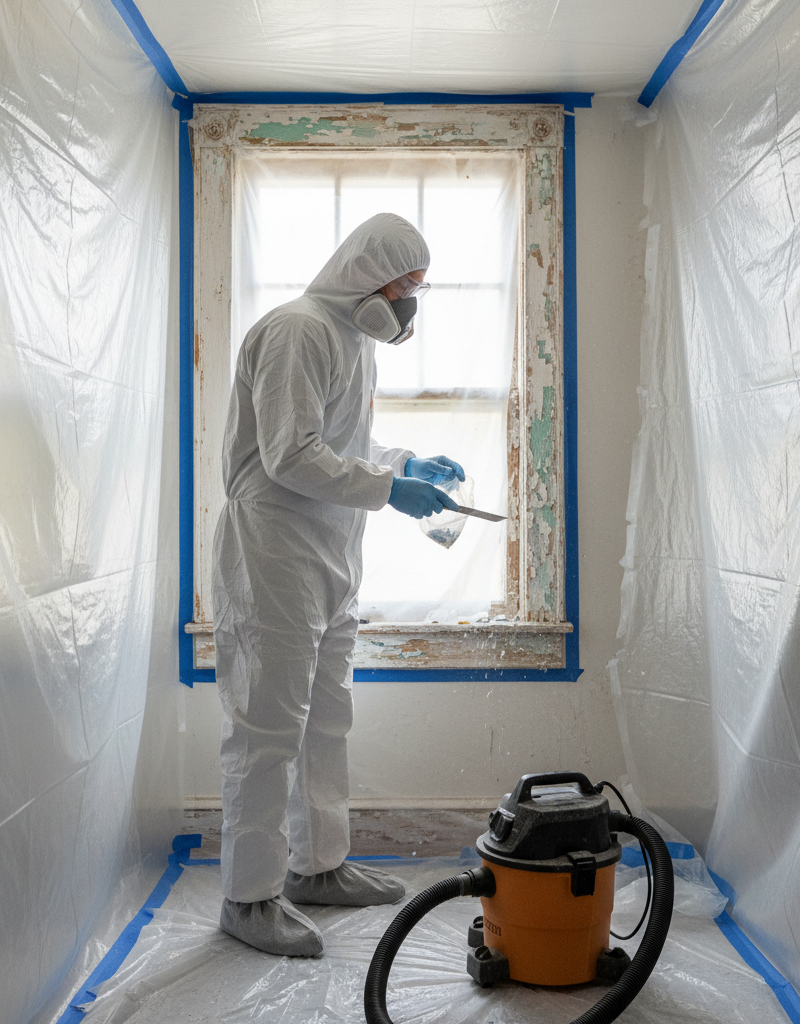
- Get a Lead Test Kit: You can pick these up at just about any hardware store for about $10-$30. The 3M LeadCheck Swabs are pretty solid. Rub the swab on a suspect surface; if it turns red, you’ve got lead. Test more than one layer, especially on windows, doors, and trim. You can also send paint chips to a lab, which is more accurate but takes longer and costs more – typically $30-$50 per sample.
-
Contain the Work Area — This is non-negotiable for ANY lead paint disturbance.
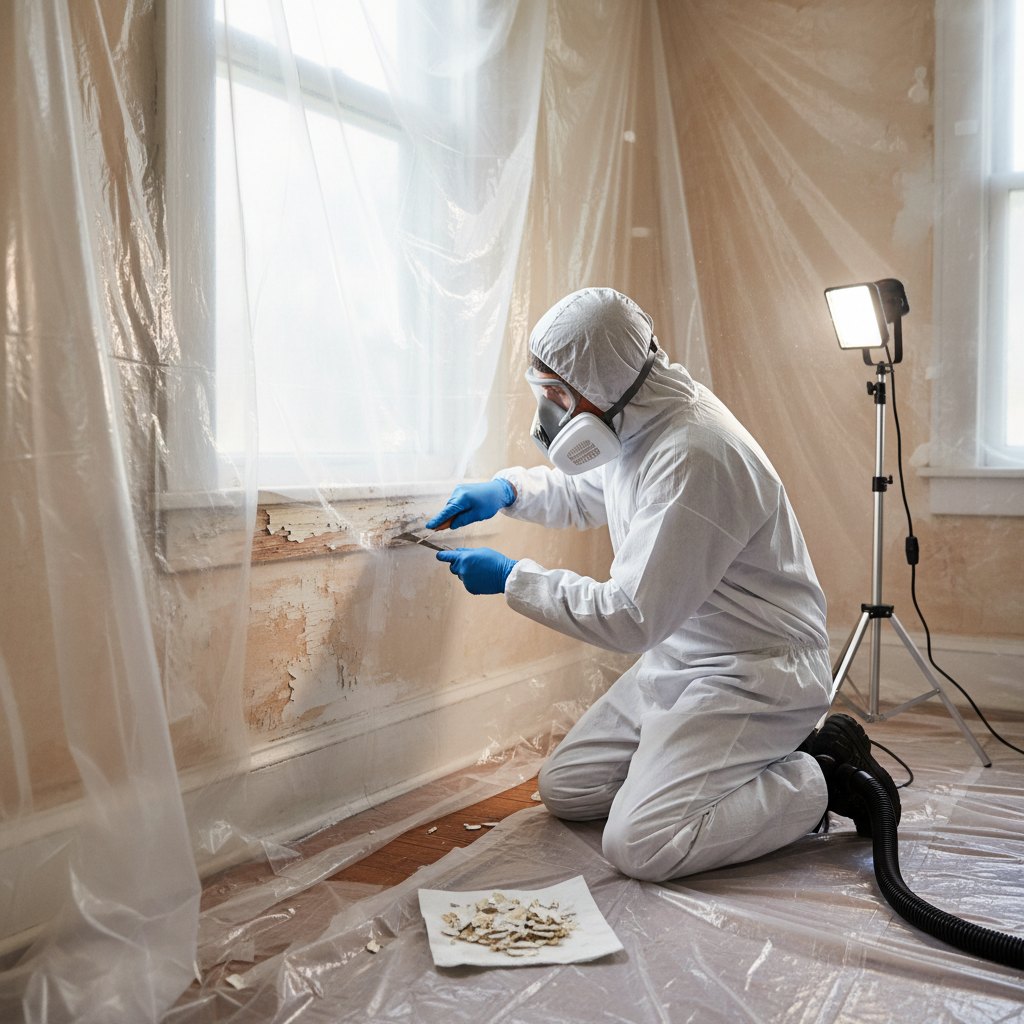
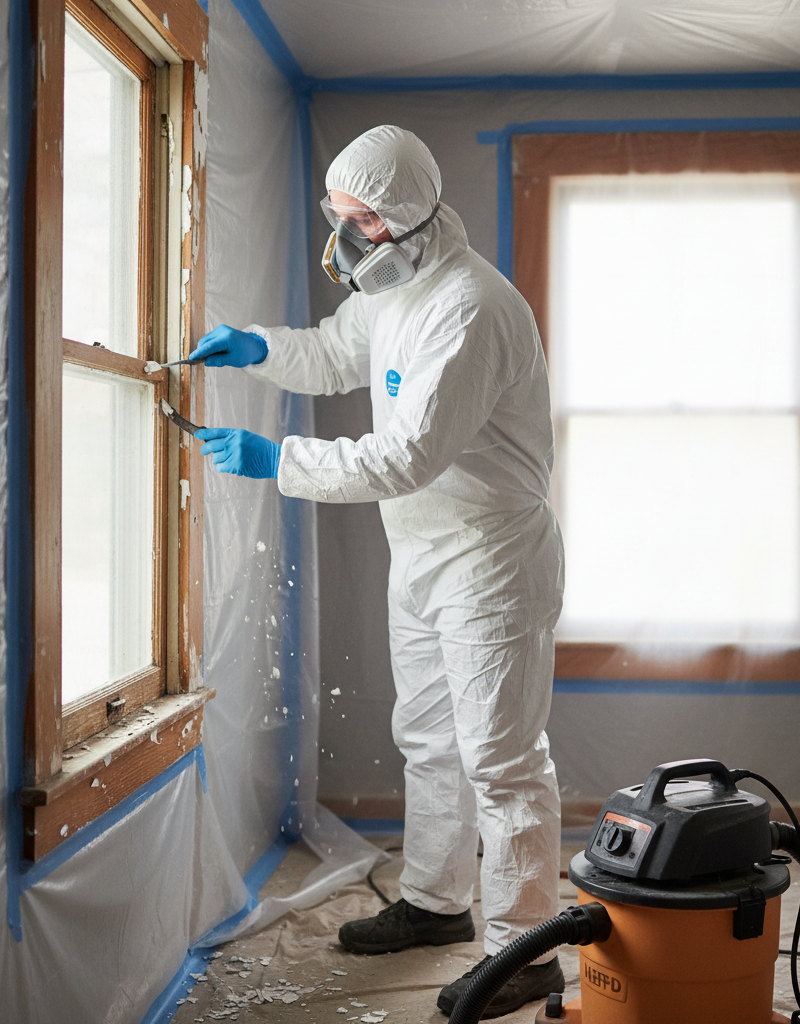
- Seal it off: Shut all the windows and doors in the room. Kill the HVAC system completely so you’re not feeding dust through the ductwork. Cover furniture, floors, and anything else you care about with 6-mil plastic sheeting. Tape it down tight with painter’s tape and make yourself a sealed perimeter. If I’m doing major work, I’ll go floor-to-ceiling with plastic walls. No shortcuts.
- Negative Air Pressure (Pro Tip): On bigger jobs, I’ll often set a fan in a window blowing out so the room’s under negative air pressure. That helps keep dust from sneaking out. Just don’t point that discharge where it’s going to blow lead dust into a neighbor’s yard or an open window.
-
Gear Up Safely — Protect yourself; this isn't optional.
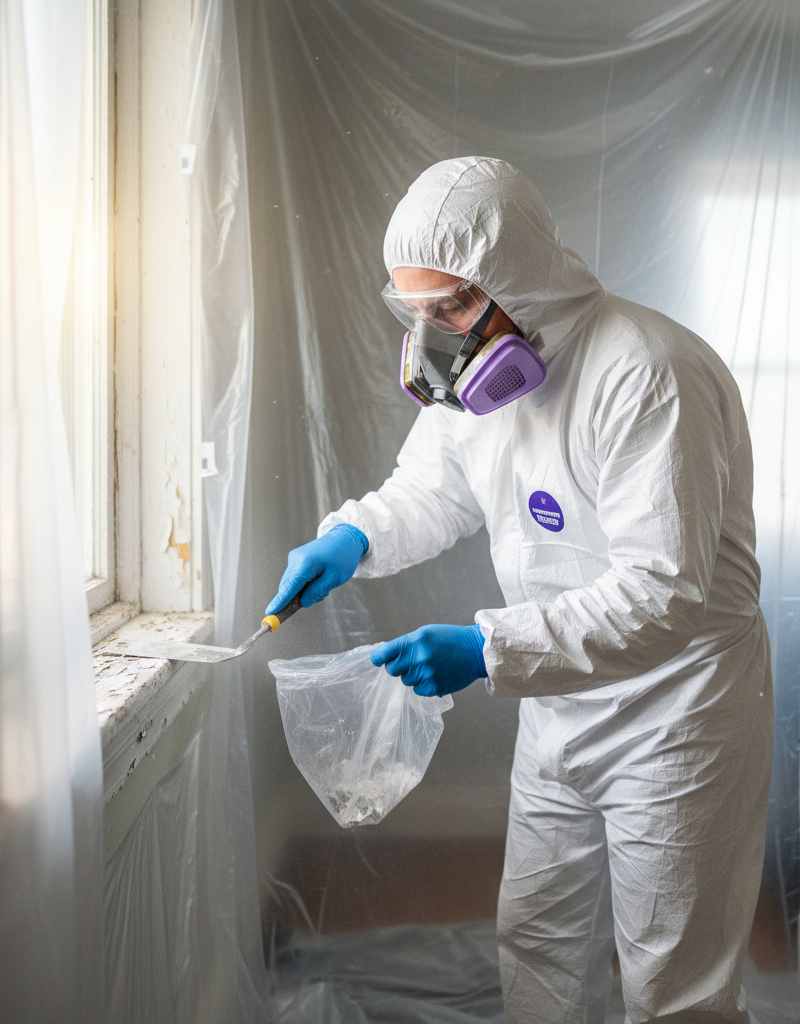
- PPE is Paramount: At a minimum, wear disposable overalls, shoe covers, safety glasses, and a P100 respirator. Not some flimsy dust mask — a real P100 respirator. I’ve seen guys get sick because they tried to save a few bucks here. If you’re handling old paint chips, double up on gloves.
-
Wet Methods Are Your Friend — Minimize dust generation whenever possible.
- Spray it Down: If you’re scraping, mist the surface with water first. A small spray bottle works fine. It keeps the dust from going airborne. Don’t flood it, just dampen it.
- Chemical Strippers: For smaller areas, chemical strippers can be the better move. They usually make less dust than sanding or hard scraping. Follow the directions on the label, and give yourself some ventilation — some of those chemicals are rough in their own right.
-
Scrape, Don't Sand — Unless you absolutely can't avoid it.
- Hand Scrapers: Use a good hand scraper or a heat gun on a low setting, no burning, to remove the paint. Catch the chips on your plastic sheeting as you go. Don’t hit lead paint with a power sander unless you’ve got professional lead-safe tools with HEPA vac attachments — that’s a guaranteed lead bomb.
- Heat Guns: If you’re using a heat gun, keep the temperature below 1100°F. Any hotter and you can vaporize lead, which means even nastier fumes. A decent heat gun should give you temperature control.
-
Clean Up Meticulously — This is where most DIYers blow it.
- Three-Stage Clean: First, wet wipe every surface. Use disposable rags. Second, vacuum with a HEPA vacuum. A regular shop vac just throws the dust right back out there. Third, wet wipe everything again. Keep at it until you’re not seeing any dust.
- Dispose Carefully: Fold your plastic sheeting inward so the debris stays trapped. Bag all contaminated materials — paint chips, rags, plastic, overalls, shoe covers, respirator filters — in heavy-duty plastic bags, seal them, then put them in a second sealed bag. Call your local waste management folks for the right disposal method on lead-contaminated waste; it can’t just go in the regular trash. I pulled a water heater in Frisco last month that had exactly this kind of dust hiding behind it — looked clean until we started moving things around.
-
Post-Remediation Testing — The only way to be sure it's safe.
- Dust Wipes: After cleanup, think about hiring a certified lead pro to do dust wipe samples. They’ll send them to a lab and check the results against federal standards. It’s a small price for real peace of mind, usually $200-$500 depending on the number of samples. Don’t skip this if kids or pregnant women live in the house.
Common Causes
The main
Related Articles
Keep troubleshooting with these hand-picked guides from FixlyGuide:
- 7 Hidden Equity Drains Costing You Thousands Annually — Your home is an asset, but silent problems like minor leaks, poor insulation, and deferred maintenance can drain its value. Discover the se…
- 7 Inspection Red Flags That Secretly Signal a $20,000 Bill — Don't let your dream home become a money pit. Many buyers and even some inspectors overlook subtle home inspection red flags that lead to f…
- The Hidden Truth About — Uncover the surprising risks of buying used furniture and appliances, and learn essential inspection tips to protect your home and wallet.
- The 12 Checks That Prevent 80% of Costly Home Repairs — Don't wait for a disaster. Our comprehensive monthly home maintenance checklist reveals the surprising, simple tasks that catch small issue…
- The Hidden Reason Your AC Isn't Cooling (And 7 Fixes Homeowners Miss) — If your central AC isn't cooling your home, the culprit often lies in an overlooked issue that's simple to fix, preventing costly professio…
- The 7 Overlooked Home Inspection Items That Cost Homeowners Thousands Annually — Discover the seven most commonly missed home inspection items that lead to costly repairs for homeowners every year and learn how to perfor…
Estimate your own project cost
National averages are a starting point. Enter your details for a range that fits your house.
Interior paint estimator
- Paint$96
- Supplies (tape, rollers, drop cloth)$35
- Estimated total (DIY)$131
Hiring a pro? Add roughly $1.50–$4.00/sq ft for labor depending on prep work and trim detail.
Educational estimate only — always confirm with written local bids.
Questions to ask before you sign
Ask every contractor the same questions and the cheapest bid stops looking cheapest. Check them off as you go — your progress is saved on this device.
Free, no signup. Bring this to every walkthrough so you compare bids on the same terms.
What should this project cost?
Enter your project details for a realistic cost range before you call anyone.
Cost depends heavily on which system turns out to be the source.
- Regional adjustment
- National average
- Labor share (typical)
- ~$1,620
- Quotes to collect
- 3 written estimates
Educational estimate based on national averages — not a binding quote. Always confirm with written local estimates.
Check these numbers against your project
National averages are a starting point. These tools narrow it to your scope and ZIP.
Free, no signup required. Estimates are educational guidance, not a quote or an inspection.
Get the print-ready PDF of this guide
A clean, ad-free, printable version you can keep on your phone or pin to the workshop wall. Free with a FixlyGuide account.
- Print-optimized layout
- Tools, materials & every step included
- Saved to your account
This article was independently written by FixlyGuide based on the source topic.
Frequently asked questions
How do I know if my house has lead paint?+
The easiest way is to use an at-home lead test kit, readily available at hardware stores. For more accurate results, you can also send paint chip samples to a certified lab. Always test homes built before 1978, as lead paint was common then.
What's the biggest risk with lead paint?+
The biggest risk comes from disturbing the paint through activities like sanding, scraping, or demolition. This creates invisible lead dust that can be inhaled or ingested, leading to serious health problems, especially in children.
Can I remove lead paint myself?+
Yes, for small, localized areas, DIY removal is possible using lead-safe work practices like wet scraping and thorough containment. However, for large areas or if you're unsure, calling a certified professional is always the safest bet.
What kind of respirator do I need for lead paint removal?+
You need a P100 rated respirator. A simple dust mask is not sufficient to protect against microscopic lead dust particles.
How should I dispose of lead-contaminated waste?+
All lead-contaminated materials, including paint chips, plastic sheeting, and used rags, should be double-bagged in heavy-duty plastic bags and sealed. Contact your local waste management facility for specific instructions on disposal, as it's considered hazardous waste.
Is intact lead paint dangerous?+
Generally, intact lead paint that isn't chipping, peeling, or being disturbed is not considered a significant hazard. The danger arises when the paint deteriorates or is disturbed, releasing lead dust or chips.
How much does professional lead paint removal cost?+
Professional lead remediation can be expensive, ranging from a few thousand dollars for a small area to tens of thousands for an entire house, depending on the scope of work and containment requirements.
What are the common health effects of lead exposure?+
In children, lead exposure can cause developmental delays, learning difficulties, and nervous system damage. In adults, it can lead to high blood pressure, kidney damage, reproductive problems, and joint and muscle pain.
Discussion
Loading comments…