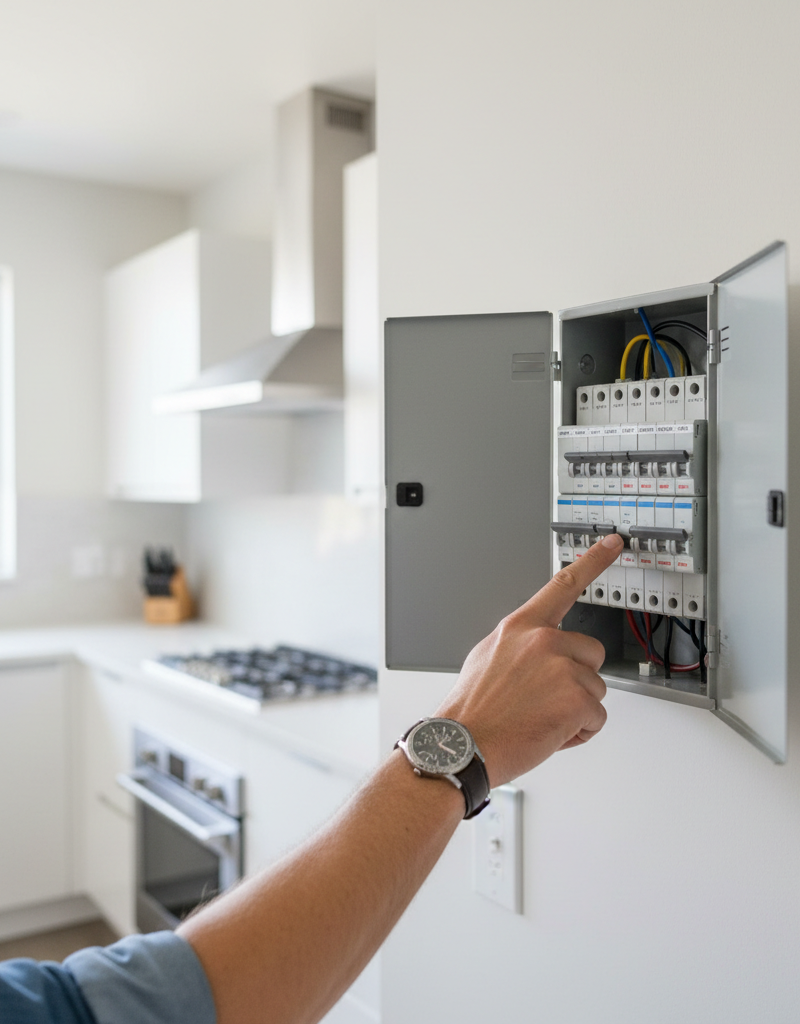
- Locate Your Electrical Panel: This is usually in your basement, garage, or a utility closet.
- Safety Note: Always use caution when working near your electrical panel. Never touch bare wires. If you're unsure, consult a professional.
- If this doesn't work: Check other kitchen appliances on the same circuit to see if they are also without power. This can help confirm a circuit issue.
Plumbing · Clog
| Project category | Plumbing |
|---|---|
| Problem type | Clog |
| Trade required | Plumbing |
| Urgency | Soon — within weeks |
| Safety risk | Low safety risk |
| DIY suitability | DIY friendly |
| Cost category | Low cost |
| Typical timeline | Same-day DIY attempt; pro visit within a day or two |
| Contractor type | Licensed plumber |
Repair option
Plunger, hand auger, or trap cleanout before chemicals.
Replacement option
Line replacement when clogs return in the same spot repeatedly.
Common causes
- Hair and soap buildup in the trap
- Grease cooling in the branch line
- Flushed wipes or foreign objects
Relevant tools:diy difficultydiy or hire a pro
Published May 10, 2026Last updated August 17, 2026
Tools & materials you'll need
Affiliate linksAs an Amazon Associate FixlyGuide earns from qualifying purchases — at no extra cost to you. Prices and availability are accurate as of publication and subject to change.
Quick Answer
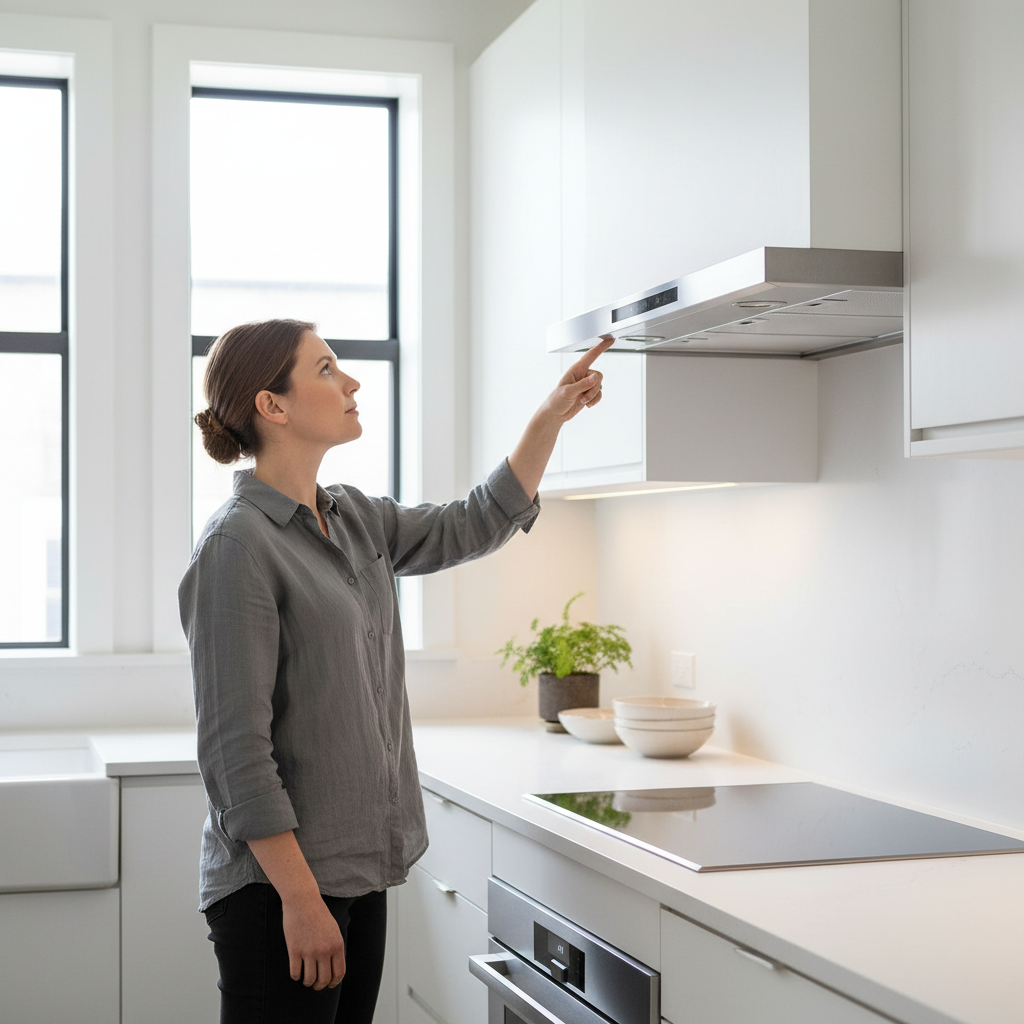
If your range hood fan has stopped working, the most frequent causes homeowners encounter are a tripped circuit breaker at your electrical panel, a heavily clogged grease filter restricting airflow and potentially overheating the motor, or a loose power connection to the unit. Begin your troubleshooting by heading to your home's electrical panel and resetting any tripped breakers. Next, remove and thoroughly clean or replace your range hood's grease filters. If these initial steps don't resolve the issue, carefully inspect the fan's power cord and, for the more adventurous DIYer, consider testing the motor for continuity with a multimeter.
The Problem
Your range hood fan, once a reliable workhorse for clearing cooking odors, steam, and smoke, now sits silent. A non-functional range hood isn't just an annoyance; it can lead to a buildup of grease and moisture in your kitchen, promoting mold growth, attracting pests, and setting off smoke detectors with alarming frequency. The smell of last night's dinner lingering through the house is a clear indicator that something isn't right. While the immediate symptom is a lack of airflow or motor noise, the underlying problem could range from a simple power interruption to a mechanical failure within the fan assembly. Ignoring a broken range hood not only impacts your kitchen's air quality but can also degrade the lifespan of your cabinetry and appliances due to increased moisture and grease particles in the air.
How It Works
A range hood fan operates on a relatively straightforward principle: drawing air from above your stovetop, filtering it, and then exhausting it either outside your home (ducted systems) or back into the kitchen (ductless/recirculating systems). At its core, the system consists of an electric motor driving a fan blade (either a centrifugal blower or an axial fan), which creates a vacuum to pull in air. Power from your home's electrical circuit flows through a wall switch or a control panel on the hood itself, activating the motor.
Ducted range hoods have a direct path through ductwork to an exterior vent, expelling grease, smoke, and odors completely. These are generally more effective. Ductless range hoods, on the other hand, use charcoal or activated carbon filters to clean the air of odors and some particulates before recirculating it into the kitchen. Both types utilize metal mesh or baffle filters to capture grease. When these filters become heavily saturated with grease and debris, they obstruct the airflow, forcing the motor to work harder, which can lead to overheating and, in some cases, a thermal cut-off switch tripping or even motor failure. The electrical connection is crucial; any interruption, whether from a loose wire, a faulty switch, or a tripped circuit breaker, will prevent the motor from receiving power and thus operating the fan.
Step-by-Step Fix
Here’s how to systematically troubleshoot and fix your non-working range hood fan.
Step 1: Inspect the Power Supply — Start with the simplest potential issue: no power.
- Check the Wall Switch: Ensure the switch that controls the range hood (if separate from the hood controls) is in the "On" position. Sometimes these get flipped accidentally.
- Verify the Hood's Control Panel: Make sure the fan speed setting on the hood itself isn't set to "off" or the lowest, inaudible setting. Some touch controls can be finicky.
Step 2: Reset the Circuit Breaker — A tripped breaker is a very common cause of power loss.
- Locate Your Electrical Panel: This is usually in your basement, garage, or a utility closet.
- Identify the Correct Breaker: Look for the breaker labeled for your "Kitchen," "Range Hood," or "Appliance." If not labeled, look for a breaker that is in the "tripped" position (usually halfway between "On" and "Off" or slightly sticking out).
- Safety Note: Always use caution when working near your electrical panel. Never touch bare wires. If you're unsure, consult a professional.
- Reset the Breaker: Firmly push the tripped breaker completely to the "Off" position, then firmly push it back to the "On" position. If it immediately trips again, there's a short circuit or an overloaded circuit, and you should call a licensed electrician.
- If this doesn't work: Check other kitchen appliances on the same circuit to see if they are also without power. This can help confirm a circuit issue.
Step 3: Clean or Replace Grease Filters — Clogged filters are a frequently overlooked cause of fan failure and reduced performance.
- Remove the Filters: Most range hoods have metal mesh or baffle filters that can be removed by pulling a tab, sliding them out, or releasing a latch. Consult your owner's manual if you're unsure.
- Inspect for Clogs: Hold the filters up to a light source. If you can't see light clearly through them, they are heavily clogged with grease and debris.
- Clean the Filters: Soak metal mesh filters in hot, soapy water (dish soap works well) or a degreasing solution for 15-30 minutes. Scrub them with a stiff brush. Many metal filters are also dishwasher-safe; check your manual. Rinse thoroughly and allow to air dry completely before reinstalling.
- For charcoal filters (ductless models): These are not washable and must be replaced every 3-6 months, or more frequently with heavy cooking. Consult your manual for the correct replacement part number.
- Reinstall Clean/New Filters: Ensure they are securely seated.
- If this doesn't work: Heavily gunked-up filters can lead to motor strain and overheating. If the fan still doesn't work after cleaning, the motor may have suffered damage or tripped an internal thermal fuse.
Step 4: Check for Obstructions in the Ductwork (Ducted Systems Only) — Blockages can prevent the fan from moving air and cause it to cease functioning.
- Visual Inspection: With the filters removed, shine a flashlight into the duct opening. Look for obvious obstructions like bird nests, rodent nests, or excessive grease buildup.
- Safety Note: Never put your hand into the ductwork without first ensuring the power to the range hood is completely off at the circuit breaker.
- Exterior Vent: Check the exterior vent cap to ensure it's not blocked by debris, snow, ice, or animal nests. Make sure the louvers can open freely.
- If this doesn't work: Significant blockages might require professional duct cleaning or access from the attic/exterior, which is often beyond DIY scope.
Step 5: Inspect the Power Cord Connection — A loose plug can mean no power.
- Unplug the Hood: If your range hood plugs into an outlet (many do under a cabinet), unplug it and plug it back in firmly. Ensure the outlet itself has power by testing it with another appliance or a voltage tester.
- Direct-Wired Hoods: If your hood is hardwired, this step is more complex and involves opening the electrical junction box (usually on top of the hood or inside the cabinet above it). You will need a non-contact voltage tester to confirm power is off. Only proceed if you are comfortable with basic electrical work. Check for loose wire nuts. Tighten any that feel loose. If wires are frayed or burnt, call an electrician.
- Safety Note: Always turn off power at the breaker before opening any electrical junction box or working with hardwired appliances.
Step 6: Test the Fan Motor (Advanced) — If all else fails, it might be the motor itself.
- Access the Motor: This often requires removing the fan housing, which varies significantly by model. Consult your owner's manual for specific instructions.
- Safety Note: Ensure power is OFF at the circuit breaker before attempting to access or manipulate the fan motor.
- Inspect for Obvious Damage: Look for burnt wires, corrosion, or physical damage to the motor or fan blades.
- Test Continuity with a Multimeter: Disconnect the motor from power. Set your multimeter to continuity mode. Touch the probes to the motor's power terminals. A reading of "OL" or infinity indicates an open circuit, meaning the motor is likely faulty and needs replacement. A numerical reading indicates continuity, suggesting the motor itself might be fine, and the issue lies elsewhere (like the control board).
- If this doesn't work: A faulty motor often means a complete range hood replacement or professional repair, as motors can be expensive and difficult to source/replace.
Common Causes
- Tripped Circuit Breaker: The most common and easiest fix. An overloaded circuit or a brief power surge can cause the breaker to trip, cutting power to the hood.
- Clogged Grease Filters: Over time, grease and cooking debris accumulate, restricting airflow. This forces the motor to work harder, generating excessive heat, and can cause a thermal overload switch within the motor to trip, or even burn out the motor entirely.
- Loose Power Connection: A slightly dislodged plug or a loose wire nut in a hardwired connection can interrupt the electrical flow.
- Faulty Control Switch/Board: The internal switch that turns the fan on and off can wear out or develop a fault. Modern hoods with electronic touch controls can have issues with their control boards.
- Motor Failure: Like any mechanical component, the fan motor has a finite lifespan. Bearings can seize, windings can burn out, or an internal thermal fuse can blow, rendering the motor inoperable.
- Ductwork Obstruction (Ducted Only): Bird nests, rodent nests, or significant grease buildup in the ducting can restrict airflow so severely that the fan motor struggles and eventually ceases to function or trips a safety switch.
Common Mistakes
- Ignoring the Circuit Breaker: Many homeowners jump straight to more complex diagnostics without checking the simplest power interruption. Always start with the breaker.
- Neglecting Filter Cleaning: Thinking the filters "look fine" when they
Related Articles
Keep troubleshooting with these hand-picked guides from FixlyGuide:
- The 7 Head-Scratching Reasons Your Outlet Died (Even With The Breaker On) — Discover the surprising reasons why an electrical outlet might stop working even when its circuit breaker is fully engaged, and how to safe…
- The Hidden Reason Your Circuit Breaker Keeps Tripping (It's Not Always an Overload) — Discover the often-overlooked causes behind a frequently tripping circuit breaker and learn how to diagnose and fix them safely.
- The Hidden Reason Your Extension Cord Keeps Tripping the Breaker (and What to Do) — Discover why your extension cord might be tripping a circuit breaker and learn how to diagnose and fix common electrical issues safely.
- Why Your Extension Cord Keeps Tripping the Breaker (And the Simple Test to Find the Hidden Cause) — Discover why your extension cord keeps tripping the circuit breaker and learn how to safely diagnose and fix the real problem with a simple…
- The Hidden Reason Your Circuit Breaker Keeps Tripping (It's Not Always an Overload) — Discover the often-overlooked electrical issues that cause circuit breakers to trip repeatedly, and how to accurately diagnose and fix them.
- The #1 Reason Your AC Blows Warm Air (And It's Not What You Think) — A dirty air filter is often the overlooked culprit behind an air conditioner blowing warm air, hindering its ability to cool your home effi…
Should you do this yourself?
Answer five quick questions before you start. Safety outranks savings every time.
Your experience with work like this
How high do you have to work?
Does the job involve any of these?
Will it need a permit?
Specialty tools
Free and instant. Educational guidance only — not a quote, inspection, or professional diagnosis.
What should this project cost?
Enter your project details for a realistic cost range before you call anyone.
Outlet and switch work usually $150–$400; panel upgrades commonly $1,800–$4,200.
- Regional adjustment
- National average
- Labor share (typical)
- ~$709
- Quotes to collect
- 3 written estimates
Educational estimate based on national averages — not a binding quote. Always confirm with written local estimates.
Frequently asked questions
Why did my range hood fan suddenly stop working?+
The most common reasons are a tripped circuit breaker, heavily clogged grease filters, or a loose power connection. Start by checking your electrical panel for a tripped breaker, then clean your filters, and finally inspect the power cord connections.
How often should I clean my range hood filters?+
For most homeowners, cleaning metal mesh grease filters every 3-4 weeks is recommended, especially with frequent cooking. If you have non-washable charcoal filters (for ductless hoods), replace them every 3-6 months.
Can a dirty range hood filter cause the fan to stop working?+
Yes, absolutely. Heavily clogged filters significantly restrict airflow, forcing the fan motor to work harder. This can lead to overheating, causing the motor's internal thermal overload switch to trip and shut off the fan as a safety measure, or even lead to motor burnout over time.
When should I call a professional for a broken range hood fan?+
If you've checked the circuit breaker, cleaned the filters, and verified power but the fan still doesn't work, and you're uncomfortable with electrical testing or disassembling the unit, it's time to call a professional. Issues like control board failure, motor burnout, or complex wiring problems are best left to licensed electricians or appliance repair technicians.
Is it dangerous to use a range hood fan that's making unusual noises?+
If your range hood fan is making grinding, buzzing, or rattling noises, it usually indicates a failing motor bearing, a loose fan blade, or debris caught in the fan. While not immediately dangerous in most cases, it can be a sign of impending motor failure and should be addressed promptly to prevent further damage or complete breakdown.
Discussion
Loading comments…