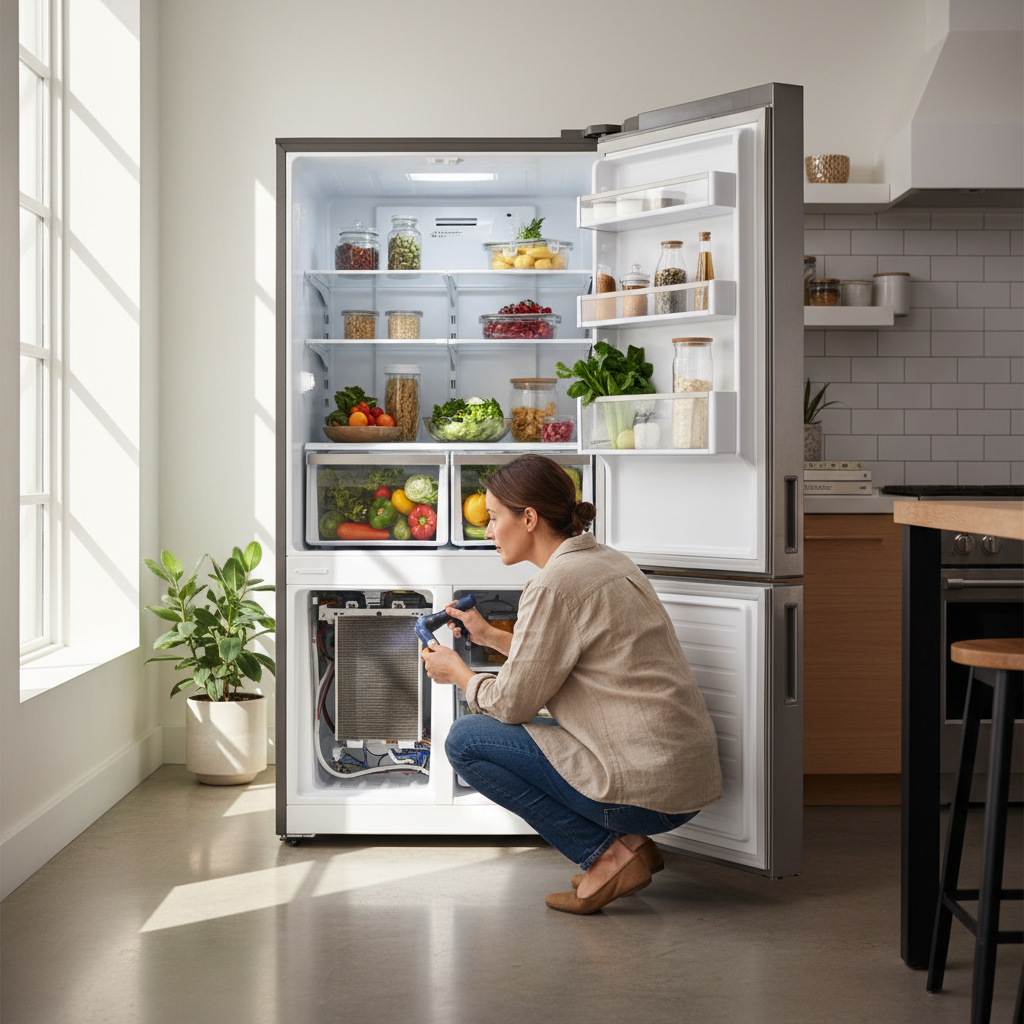
- Inspect the Evaporator Coils — The appearance of the coils is the single most important diagnostic clue.
- Normal: The coils should have a very light, even coating of white frost, like a flocked Christmas tree. You should be able to see the individual metal fins.
- Problem Sign: If there is frost only on one section of the coils (e.g., the top half), or no frost at all while the compressor is running, this points to a more serious sealed system problem (refrigerant leak or compressor issue).
HVAC · High energy usage
| Project category | HVAC |
|---|---|
| Problem type | High energy usage |
| Trade required | HVAC |
| Urgency | Planned project |
| Safety risk | Low safety risk |
| DIY suitability | DIY for experienced homeowners |
| Cost category | High cost |
| Typical timeline | Assessment within weeks; replacement planned off-season |
| Contractor type | Licensed HVAC technician |
Repair option
Duct sealing, insulation, and a tune-up before touching the equipment.
Replacement option
High-efficiency replacement sized by a load calculation, not a rule of thumb.
Common causes
- Aging, low-efficiency equipment
- Leaking ducts losing conditioned air
- Insufficient attic insulation
- Oversized system short-cycling
Relevant tools:project cost estimatorrepair or replace
Published April 21, 2026Last updated August 17, 2026
Tools & materials you'll need
Affiliate linksAs an Amazon Associate FixlyGuide earns from qualifying purchases — at no extra cost to you. Prices and availability are accurate as of publication and subject to change.
How it works
A modern frost-free refrigerator uses a single cooling system located in the freezer compartment. This is a crucial concept: the refrigerator section does not generate its own cold but borrows it from the freezer. The system, known as the sealed system, circulates refrigerant through a cycle of compression and expansion to absorb heat from inside the freezer, making the evaporator coils intensely cold (often -10°F or colder).
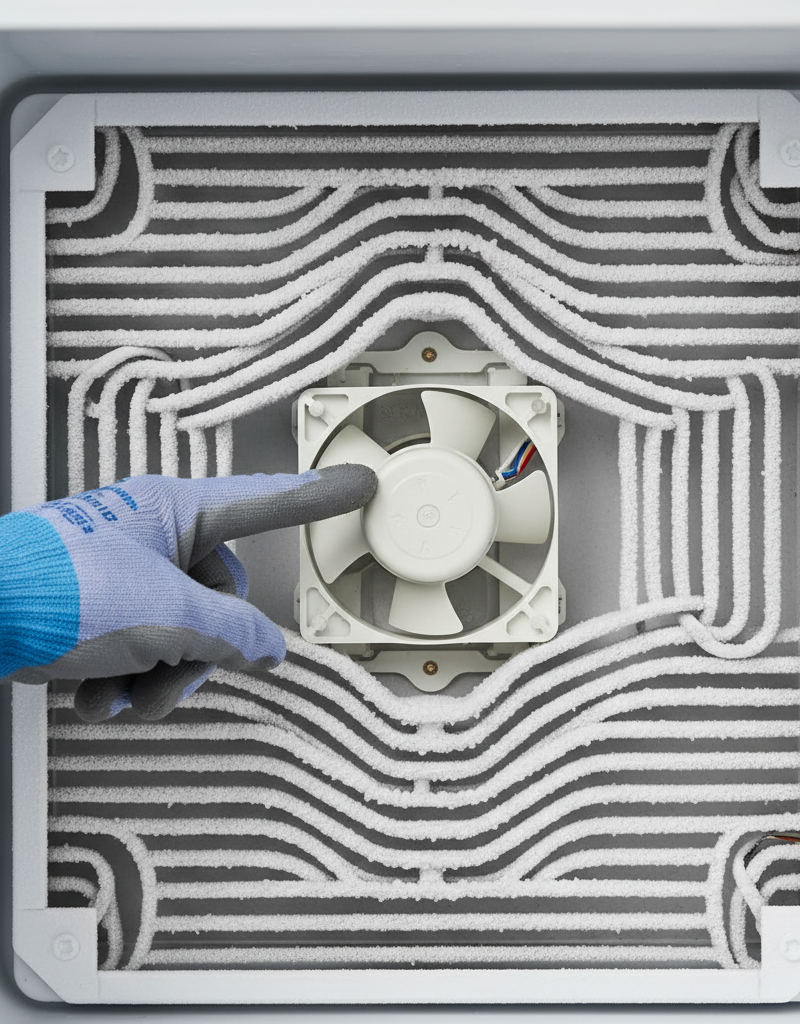
A small component, the evaporator fan motor, is the heart of the air distribution system. It is positioned directly behind the evaporator coils. This fan draws air over the frigid coils and actively pushes the chilled air into the refrigerator compartment through a small duct or vent. A device called a damper, which is a small, motorized or temperature-sensitive door, is located in this duct. It opens and closes to regulate the amount of cold air entering the refrigerator, allowing it to maintain a temperature (e.g., 37°F) that is much warmer than the freezer (0°F).
Because this system introduces moist air from the food compartments to the freezing coils, frost inevitably forms. To manage this, a defrost system—comprising a heating element, a defrost thermostat, and a timer or electronic control board—periodically warms the coils to melt the ice, which then drains out to an evaporation pan under the unit. When any part of this airflow path—the fan, the damper, or clear passage around the coils—is compromised, the freezer remains cold, but the refrigerator warms up.
Step-by-Step Fix
This diagnostic sequence moves from simple external checks to more involved internal inspection. Always unplug the refrigerator before any disassembly.
-
Verify Temperature Controls — Before assuming a mechanical failure, check the controls. They can be bumped during cleaning or by shifting food items.
- Action: Set the refrigerator control to its midpoint or to the recommended 37°F (3°C). Set the freezer to 0°F (-18°C). On models with a single dial (1-9), set it to a 4 or 5. Wait at least 6-8 hours for temperatures to stabilize before proceeding.
-
Check for Airflow Obstructions — Proper cooling relies on air circulation. Overpacking is a common cause of warm fridge symptoms.
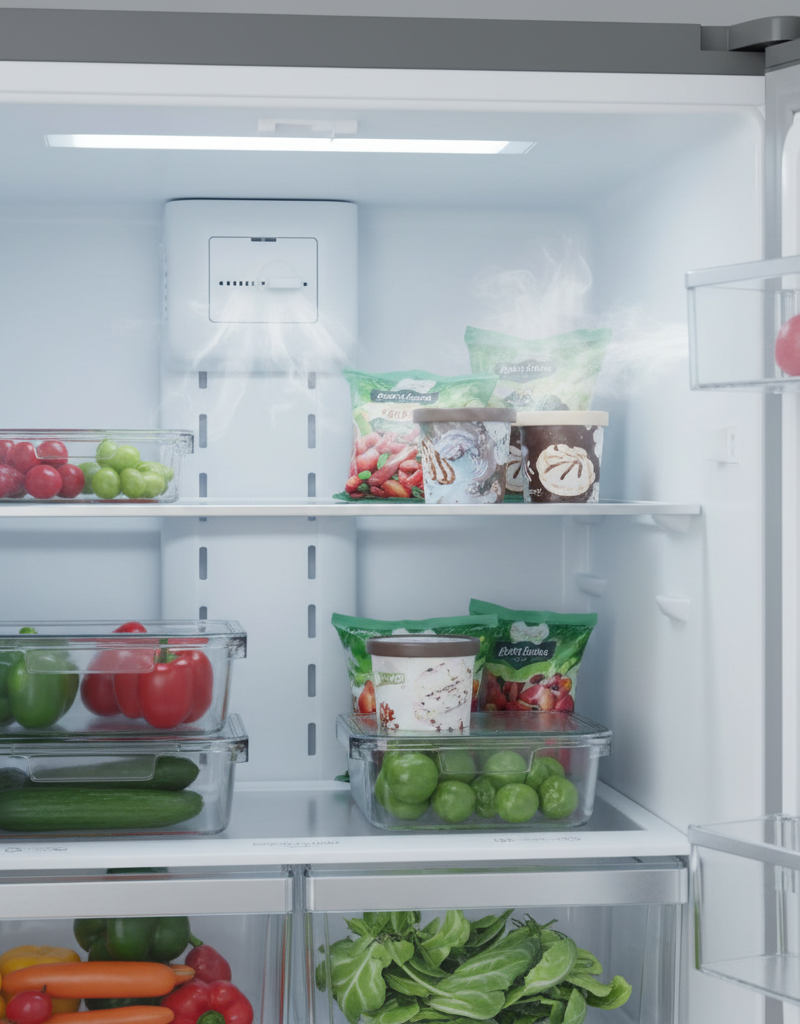
- Action: Look for the air outlet vent inside the refrigerator, typically at the top or along the back wall. Ensure it isn't blocked by food containers. In the freezer, identify the vents in the lower back panel; these are the return air paths and must also be clear. Rearrange items to create air channels, aiming to keep the unit no more than 75% full.
-
Prepare for Internal Inspection and Defrost — If simple checks fail, the next step requires accessing the internal components. This process will involve a full manual defrost.
- Tools: Phillips head screwdriver, 1/4-inch nut driver, coolers, towels, a hairdryer or steamer (optional, for faster defrosting).
- Action: Transfer all contents from the freezer and refrigerator to coolers. Unplug the refrigerator from the wall outlet. Place towels inside the freezer and on the floor below it to absorb melting ice and condensation. Pull the unit away from the wall to improve airflow and provide access to the back.
-
Remove the Freezer's Interior Back Panel — The evaporator coil and fan are located behind a panel at the very back of the freezer compartment.
- Action: Locate the screws or hex-head bolts holding the panel in place. There are typically 2-6 of them. Use your screwdriver or nut driver to remove them. The panel may be frozen to the wall with ice; do not pry or force it. If it is stuck, direct a hairdryer on a low setting toward the panel's edges until the ice releases its grip. Gently lift the panel out, being mindful of any attached wires.
-
Inspect the Evaporator Coils — The appearance of the coils is the single most important diagnostic clue.
- Normal: The coils should have a very light, even coating of white frost, like a flocked Christmas tree. You should be able to see the individual metal fins.
- Problem Sign: If the coils are encased in a solid block of ice, sometimes several inches thick, you have found the primary problem. This ice block completely prevents the fan from circulating air. This indicates a failure in the automatic defrost system.
- Problem Sign: If there is frost only on one section of the coils (e.g., the top half), or no frost at all while the compressor is running, this points to a more serious sealed system problem (refrigerant leak or compressor issue).
-
Test the Evaporator Fan Motor — With the coils exposed, you can check the fan that moves the cold air.
- Action: First, check if the fan blade is physically encased in ice. This is common when the coils are iced over. After melting the ice, spin the blade by hand. It should turn freely with no grinding or significant resistance. If it's stiff or noisy, the motor is failing. With the panel off, you can also temporarily plug the fridge in and press the freezer door switch (a small plunger or flap in the door frame) to see if the fan runs. Unplug the unit again before proceeding.
-
Perform a Thorough Manual Defrost — You must completely remove all ice from the coils and surrounding area to restore airflow.
- Passive Method (Slow/Safe): Leave the freezer door open and allow the ice to melt naturally. This can take 8-24 hours depending on ambient temperature. It is the safest method and requires no direct interaction.
- Active Method (Fast/Requires Caution): Use a hairdryer on a medium or low heat setting to melt the ice block. Keep the hairdryer constantly moving and at least 6-8 inches away from the coils and plastic liner to prevent damage. NEVER use a heat gun. Alternatively, placing bowls of hot water in the freezer and closing the door can accelerate melting. Ensure all water is wiped from the freezer floor and drainage trough before reassembly.
-
Locate and Inspect the Damper — While the system is defrosting, check the component that lets cold air into the fridge.
- Action: The damper is a small gate located in the duct between the freezer and refrigerator. Look for it inside the top-rear of the refrigerator compartment, sometimes behind a light housing or a small plastic cover. Check if it is iced shut or if its path is blocked by debris. On electronic models, you may see a small motor; on simpler models, it might be a thermally-controlled sliding door. Ensure it can move.
-
Clean the Condenser Coils — Since the refrigerator is already pulled out and unplugged, this is the perfect time for essential maintenance.
- Action: The condenser coils are located either on the back of the unit or underneath it, behind a front kick plate or rear access panel. They look like a large, black radiator. Use a long, flexible condenser coil brush and a vacuum with a hose attachment to thoroughly remove all dust, lint, and pet hair from the coils. Clogged coils force the compressor to work harder and can contribute to a variety of cooling issues.
-
Reassemble and Monitor — Once the evaporator is clear, the fan is free, and the condenser coils are clean, you can put the unit back together.
- Action: Carefully reinstall the freezer's back panel, ensuring any wires are reconnected. Reposition shelves and drawers. Plug the refrigerator in and push it back into place, leaving a few inches of clearance from the wall. Before reloading food, wait at least 4-6 hours for the system to reach stable operating temperatures. Use a thermometer to verify the freezer is near 0°F and the fridge is below 40°F.
-
Diagnose a Recurring Frost Problem — If the manual defrost fixes the issue but the refrigerator warms up again after 1-3 weeks, the defrost system has failed. The manual defrost was a temporary fix, not the final solution.
- Next Steps: The failure is in one of three components: the defrost heater (an element that warms the coils), the defrost thermostat (a sensor that tells the heater when to turn on and off), or the main control board/defrost timer (the brain that initiates the cycle). Testing these components requires a multimeter to check for electrical continuity and is a more advanced repair.
Common mistakes
- Assuming it's a refrigerant ("Freon") issue. A refrigerant leak or sealed system failure almost always results in poor cooling in both the freezer and the refrigerator. If your freezer is still freezing food solid, the sealed system is likely working correctly.
- Forcing or prying frozen panels. The interior freezer panel and styrofoam insulation are brittle plastic. If they are frozen in place with ice, attempting to pry them off will cause them to crack. Always melt the ice along the edges with a hairdryer on low before trying to remove stuck components.
- Using sharp objects or high heat to defrost. Never use a screwdriver, knife, or ice pick to chip ice away from the evaporator coils. The coils are made of soft aluminum and are easily punctured, which will release the refrigerant and destroy the refrigerator. Similarly, a heat gun will quickly melt the plastic liner of the freezer, causing irreparable damage.
- Replacing parts without a diagnosis. If a manual defrost solves the problem temporarily, do not guess which defrost component to replace. The defrost heater, thermostat, and control board can all cause the same symptom. They must be tested individually with a multimeter to identify the true failure point, saving you money on unneeded parts.
- Not waiting long enough for temperatures to stabilize. After plugging a refrigerator in, it can take 4 to 8 hours (or even longer for a large, empty unit) to reach its target temperature. Do not assume the fix has failed if the fridge isn't cold an hour after you plug it back in.
Cost & time breakdown
| Task | DIY cost | Pro cost | Time |
|---|---|---|---|
| Initial Inspection & Airflow Check | $0 | $90–$150 (Service Call Fee) | 20 minutes |
| Complete Manual Defrost | $0 | $150–$250 | 2–24 hours (mostly waiting) |
| Condenser Coil Cleaning | $10–$20 (Coil Brush) | $100–$175 | 30 minutes |
| Replace Evaporator Fan Motor | $40–$85 | $225–$375 | 1–1.5 hours |
| Replace Defrost Thermostat | $20–$50 | $180–$300 | 1–1.5 hours (includes defrost time) |
| Replace Defrost Heater | $30–$75 | $250–$425 | 1.5–2 hours (includes defrost time) |
When to call a pro
While airflow issues are common and often fixable, certain symptoms indicate a problem beyond the scope of a typical DIY repair. Call a qualified appliance technician if you observe the following:
- The compressor is not running. If the lights are on but you never hear the low hum of the compressor from the back of the unit (and you've confirmed the outlet has power), you may have a failed start relay, overload protector, or a seized compressor.
- The compressor runs constantly, but neither compartment gets cold. This is the classic sign of a sealed system problem, such as a refrigerant leak or an inefficient compressor. This type of repair is federally regulated, requires specialized equipment, and is not a DIY job.
- Loud clanking, buzzing, or clicking from the compressor area. A sharp click followed by silence, repeating every few minutes, often points to a failing start relay trying to engage a faulty compressor.
- You've performed a manual defrost with no success. If you have confirmed the evaporator coils are clear, the fan is running, and the damper is open, but the refrigerator still won't cool, the issue could be a blocked capillary tube or other sealed system fault.
- You are not comfortable with electrical testing. If a manual defrost provides only a temporary fix, the next step is diagnosing the defrost system with a multimeter. If you lack the tools or confidence to safely test for electrical continuity and voltage, a professional can do so quickly and accurately.
Prevention & maintenance
- Clean the condenser coils every 6-12 months. Use a coil brush and vacuum to remove dust and pet hair. This is the single most effective maintenance task to ensure cooling efficiency and prolong compressor life.
- Maintain adequate airflow inside. Avoid overpacking the refrigerator and freezer. Keep food items away from the air vents at the back of each compartment to allow cold air to circulate freely.
- Check door seals quarterly. Wipe the rubber door gaskets down with warm water and a mild detergent. Inspect for cracks or tears. Test the seal by closing the door on a dollar bill; if it slides out with no resistance, the gasket may be weak or the door may need alignment.
- Ensure the unit is level. A refrigerator that leans forward can prevent the doors from sealing properly. Use a level and adjust the front feet or rollers so the unit is level side-to-side and tilted slightly backward, allowing gravity to help close the doors.
- Listen for changes in sound. Pay attention to the normal sounds of your appliance. If the evaporator fan becomes noisy or you stop hearing it when the freezer door is open (and the door switch is pressed), it's an early warning sign that the motor may be failing.
Related Articles
Keep troubleshooting with these hand-picked guides from FixlyGuide:
- Is Your Refrigerator Buzzing Loudly in the Quiet of Night? — A loud buzzing from your fridge at night often points to the icemaker, a dirty fan, or a vibrating component, many of which are simple home…
- Your Dishwasher Dishes Come Out Cloudy? It's This, Not Soap — Tired of cloudy glasses and spotty plates? The unsightly white residue from your dishwasher is almost always caused by hard water mineral d…
- Chalky dishes? It’s not always hard water. — If you're seeing a chalky white film on your glassware, the cause is likely hard water minerals, but using the wrong detergent or a malfunc…
- That Midnight Buzz: 5 Reasons Your Refrigerator Is So Loud — A refrigerator making a loud buzzing sound at night is often a sign of a struggling component, from a dirty condenser fan to an aging compr…
- The #1 Mistake Homeowners Make When Their Dryer Isnt Drying (And How to Fix It Free) — Most homeowners assume a slow dryer means a broken dryer, but the most common culprit is a simple, often overlooked maintenance issue that'…
- Oven Not Heating to Correct Temperature? How to Diagnose and Fix — An oven that doesn't heat to the correct temperature can ruin meals. This guide helps you diagnose common issues like a faulty igniter or h…
Should you do this yourself?
Answer five quick questions before you start. Safety outranks savings every time.
Your experience with work like this
How high do you have to work?
Does the job involve any of these?
Will it need a permit?
Specialty tools
Free and instant. Educational guidance only — not a quote, inspection, or professional diagnosis.
What should this project cost?
Enter your project details for a realistic cost range before you call anyone.
Cost depends heavily on which system turns out to be the source.
- Regional adjustment
- National average
- Labor share (typical)
- ~$1,620
- Quotes to collect
- 3 written estimates
Educational estimate based on national averages — not a binding quote. Always confirm with written local estimates.
Fixly Project Decision Box
- DIY difficulty
- Advanced
- Estimated time
- Homeowner checks 20–30 minutes
- Cost level
- Moderate
Main tools / materials
- Clean air filter
- Garden hose for condenser coils
- Shop vac for the condensate line
When to stop and call a pro
- Burning smell, smoke, or a tripping breaker
- Refrigerant lines iced over or hissing
- Any work inside the sealed refrigerant circuit (EPA-licensed only)
- Gas smell near a furnace — leave and call the utility
Need professional help?
Find an HVAC Pro Near YouBefore you start
Check the difficulty, permits, and safety risk — then decide whether to call a pro.
- Estimate this projectGet a cost range for your scope and ZIP before you call anyone.Open
- Get local estimatesSend one request and compare written estimates from vetted pros.Open
Free, no signup required. Estimates are educational guidance, not a quote or an inspection.
Get the print-ready PDF of this guide
A clean, ad-free, printable version you can keep on your phone or pin to the workshop wall. Free with a FixlyGuide account.
- Print-optimized layout
- Tools, materials & every step included
- Saved to your account
Frequently asked questions
How long does a manual defrost take?+
Plan on 24 hours with the doors open. You can speed it up with a fan blowing into the freezer — no hair dryers, the heat can warp interior plastic.
Why does my fridge get warm only after a few weeks?+
Classic intermittent defrost system failure. Frost builds gradually until airflow is blocked. Manually defrosting buys you a few weeks at a time, but the underlying part needs replacement.
How do I know if my evaporator fan is bad?+
Open the freezer door, depress the door switch with a finger, and listen. No fan noise means either the fan is dead or the door switch is bad.
Should I repair or replace a 10-year-old fridge?+
Rule of thumb: if the repair cost exceeds 50% of a new fridge, replace. A failed compressor on a 10-year-old fridge ($600+) usually isn't worth fixing.
Discussion
Loading comments…