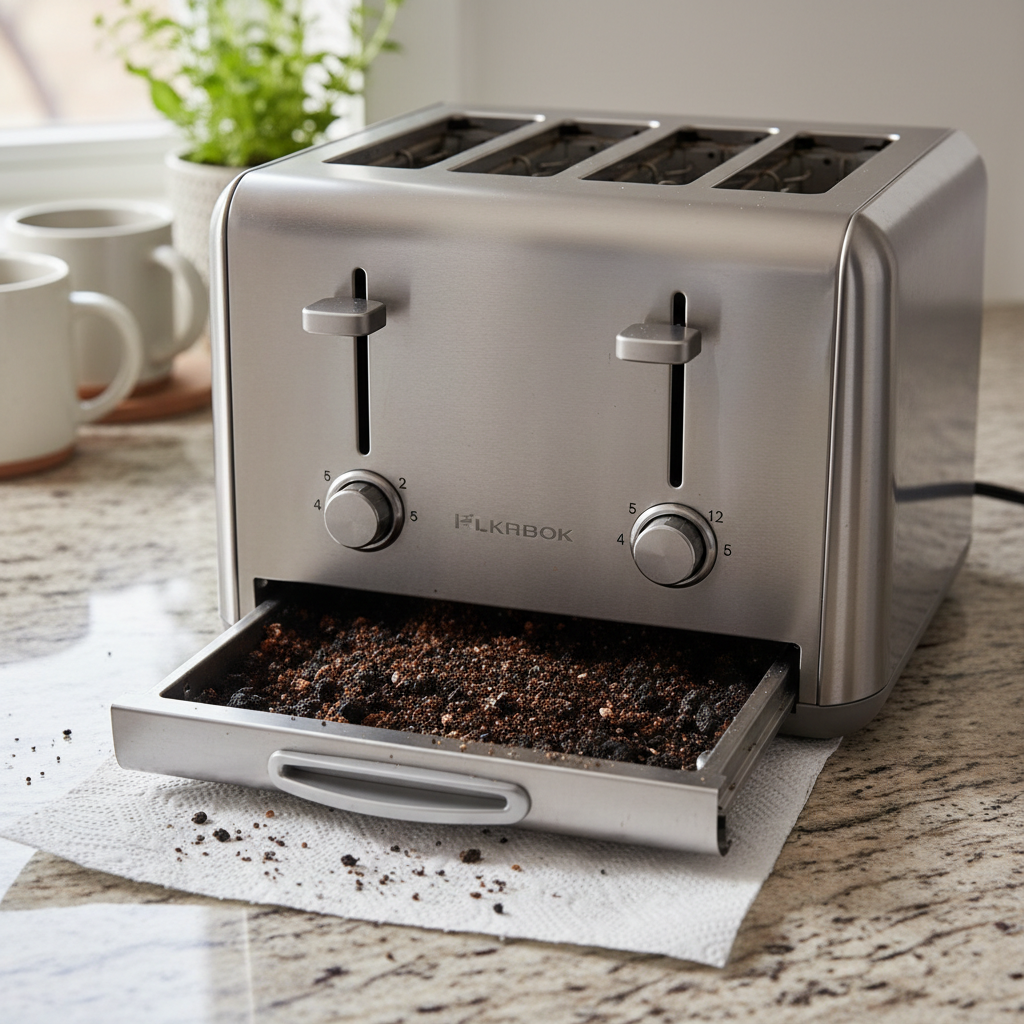
- Massive Crumb Buildup: The 1 cause. Carbonized crumbs create a short circuit.
- Sagging/Broken Heating Element: The nichrome wire touches the metal chassis, causing a direct short.
- Foreign Object: Metal foil or other items creating a bridge for electricity.
- Damaged Power Cord: An internal break or fray in the cord can cause a short.
- Circuit Overload: Running the toaster along with other high-power appliances (microwave, coffee maker, air fryer) on the same 15-amp circuit.
HVAC · High energy usage
| Project category | HVAC |
|---|---|
| Problem type | High energy usage |
| Trade required | HVAC |
| Urgency | Planned project |
| Safety risk | Low safety risk |
| DIY suitability | DIY for experienced homeowners |
| Cost category | High cost |
| Typical timeline | Assessment within weeks; replacement planned off-season |
| Contractor type | Licensed HVAC technician |
Repair option
Duct sealing, insulation, and a tune-up before touching the equipment.
Replacement option
High-efficiency replacement sized by a load calculation, not a rule of thumb.
Common causes
- Aging, low-efficiency equipment
- Leaking ducts losing conditioned air
- Insufficient attic insulation
- Oversized system short-cycling
Relevant tools:project cost estimatorrepair or replace
Published June 8, 2026Last updated August 17, 2026
Tools & materials you'll need
Affiliate links- AmazonReplacement Toaster1 · Likely needed if cleaning doesn't solve the issue.
As an Amazon Associate FixlyGuide earns from qualifying purchases — at no extra cost to you. Prices and availability are accurate as of publication and subject to change.
Quick Answer
Your toaster is likely tripping the breaker due to either an overloaded circuit or, more commonly, an internal short circuit. A short is often caused by a buildup of carbonized crumbs creating an unintended electrical path, a failing heating element sagging against the chassis, or a damaged power cord. A thorough cleaning to remove all crumbs and debris is the first and most effective solution.
The Problem
You push down the lever on your toaster, anticipating a perfectly browned slice of sourdough. Instead of the gentle hum and growing warmth, you hear a sharp click from the other room, and the power to your kitchen cuts out. The toaster, the coffee maker, the under-cabinet lights—all dead. You've tripped the circuit breaker... again. This daily frustration is more than an inconvenience; it's your home's electrical system screaming for attention. The toaster, a seemingly simple appliance, is causing a significant electrical event. The root cause could be as simple as an overloaded circuit, but it often points to a developing fault within the toaster itself—a fault that, if ignored, poses a genuine toaster trips breaker and fire risk.
How It Works
To understand why your toaster is causing such trouble, you need to know how it operates in tandem with your home's electrical safety system.
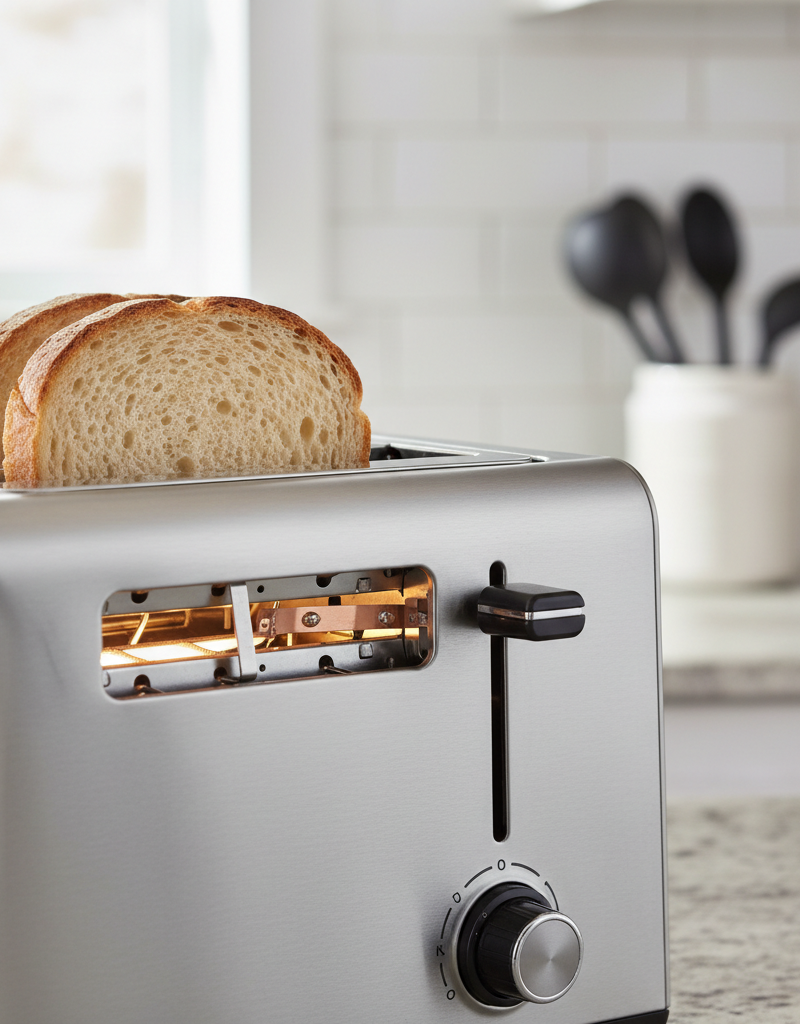
Inside Your Toaster: A toaster is essentially a controlled short circuit. When you press the lever, you complete a circuit that sends electricity through a series of specialized wires called heating elements. These elements are typically made of a nickel-chromium alloy called nichrome wire. Nichrome has high electrical resistance, meaning it fights the flow of electricity. This "fight" converts electrical energy into intense heat (glowing red hot), which toasts your bread. A simple timer, either spring-loaded or electronic, determines the toasting duration and, when the time is up, releases the lever and shuts off the power.
The key is that this entire process happens within a contained, insulated metal box. The electricity is supposed to flow only through the nichrome elements.
Inside Your Breaker Panel: A circuit breaker is a safety switch. Your kitchen will have one or more circuits, each protected by a breaker rated for a specific amperage (typically 15 or 20 amps for standard kitchen outlets). This breaker constantly monitors the amount of current (amps) flowing through the circuit. It's designed to tolerate the normal draw of your appliances.
However, it has two critical trip conditions:
- Overload: If you plug in and run too many appliances at once on a single circuit (e.g., a 1200W toaster + a 1000W coffee maker + a 900W microwave on a 15A circuit), the total current draw exceeds the breaker's rating. The breaker heats up and, after a short delay, trips to prevent the circuit wiring from overheating in your walls.
- Short Circuit: This is a much more sudden and dangerous event. A short circuit occurs when electricity finds an unintended, low-resistance path back to ground or neutral. Instead of flowing through the toaster's high-resistance elements, it might flow directly through a stray crumb or a broken wire touching the metal chassis. This causes a massive, near-instantaneous surge of current. The breaker detects this surge and trips instantly to prevent a fire or electrical shock.
When your toaster trips the breaker, you're experiencing one of these two events. Your job is to figure out which one it is.
Step-by-Step Fix: Diagnosing the Toaster-Tripped Breaker
Follow these steps methodically to pinpoint the exact cause of the problem.
SAFETY NOTE: Your primary safety concerns are electric shock and fire. Unplug the toaster before any inspection or cleaning. If a breaker trips, do not simply keep resetting it without investigation; this defeats the purpose of the safety device.
Step 1: Unplug the Toaster and Reset the Breaker Before touching anything else, disconnect the toaster from the wall outlet. Go to your electrical panel (usually in the garage, basement, or a utility closet). Locate the tripped breaker—it will be in the "OFF" position or halfway between "ON" and "OFF". To reset it, push it firmly to the "OFF" position first, then flip it back to "ON".
Step 2: Isolate the Problem: Appliance vs. Circuit Plug a different, known-working appliance into the exact same outlet. The new appliance should have a similar power draw to your toaster. A hairdryer (on high) or an electric kettle are good choices. Turn it on.
- If the breaker trips again, the problem is not your toaster. The circuit is likely overloaded, or there is a fault in the outlet or wiring. (See "When to Call a Professional").
- If the new appliance works fine, the toaster is almost certainly the culprit. Proceed to the next step.
Step 3: Inspect the Power Cord and Plug With the toaster still unplugged, meticulously examine the entire length of its power cord. Look for cracks, brittleness, melted spots, or exposed wires. Pay close attention to where the cord enters the toaster body and the area around the plug prongs—these are common failure points from years of being bent and pulled.
Step 4: The Overlooked Fire Hazard: Clean the Crumb Tray This is the most common cause of a toaster trips breaker issue and a significant fire risk. Pull out the crumb tray. Don't just dump it; inspect the contents. If it's overflowing with dark, burnt-looking crumbs, you've found a major suspect. Crumbs, over time, become carbon. Carbon is electrically conductive. A pile of carbonized crumbs can physically bridge the gap between a live electrical contact and the metal frame of the toaster, creating a perfect short circuit.
Step 5: Deep Clean the Toaster's Interior Take the unplugged toaster outside or hold it over a large trash can. Turn it upside down and shake it gently to dislodge trapped crumbs and debris. You might be shocked at what falls out. For stubborn, lodged-in debris, use a can of compressed air to blow it out. A small, dry, non-metallic brush (like a stiff-bristled pastry brush or an old toothbrush) can be used to carefully brush crumbs away from the heating element guides.
SAFETY WARNING: Never, ever stick a knife, fork, or any metal object into a toaster to clean it or retrieve food, even if it's unplugged. You can easily damage the fragile nichrome heating elements, guaranteeing a short circuit the next time you use it. You might also forget it's plugged in one day, leading to severe electric shock.
Step 6: Visually Inspect the Heating Elements Shine a bright flashlight into the toaster slots. Look closely at the nichrome wires. They should be neatly suspended and evenly spaced. If you see a wire that is broken, sagging, or physically touching the metal grate inside the slot, you have found your short circuit. A sagging element can make contact with the metal chassis a soon as it heats up and expands.
Step 7: Check for Foreign Objects A stray twist-tie, a piece of aluminum foil from a pastry, or a chunk of a hard bagel can become wedged inside, causing a direct short between the element and the chassis. Look carefully for anything that doesn't belong.
Step 8: Test on a Different Circuit As a final confirmation, take your clean, inspected toaster to an outlet on a completely different circuit. A bathroom GFCI outlet or a garage outlet are good choices. A GFCI (Ground Fault Circuit Interrupter) outlet is especially sensitive to the kinds of faults that cause breaker trips. If the toaster works here but not in the kitchen, it points back to a potential overloading issue on the original kitchen circuit. If it trips the GFCI or the new breaker immediately, the toaster has a definite internal fault.
Step 9: The Verdict: Repair or Replace? If your inspection revealed a broken or sagging heating element, the toaster is generally not repairable and should be replaced. If the cause was simply a massive buildup of crumbs that you've now cleaned, the toaster may work perfectly. Plug it into its original outlet (with no other major appliances running on that circuit) and try toasting a slice of bread. If it works, you've solved the problem. If it trips the breaker again even after a thorough cleaning, it has an internal fault and needs to be replaced.
Common Causes
- Massive Crumb Buildup: The #1 cause. Carbonized crumbs create a short circuit.
- Sagging/Broken Heating Element: The nichrome wire touches the metal chassis, causing a direct short.
- Foreign Object: Metal foil or other items creating a bridge for electricity.
- Damaged Power Cord: An internal break or fray in the cord can cause a short.
- Circuit Overload: Running the toaster along with other high-power appliances (microwave, coffee maker, air fryer) on the same 15-amp circuit.
- Internal Wiring Fault: A wire inside the toaster's mechanism may have come loose or its insulation may have worn away.
Common Mistakes to Avoid
- Ignoring the Crumb Tray: Letting crumbs accumulate for years is asking for a fire or a short circuit.
- Using Metal Utensils: Sticking a fork in a toaster is a classic and dangerous mistake that can cause electrocution and damage the appliance.
- Repeatedly Resetting the Breaker: If a breaker trips, it's for a reason. Resetting it without finding the cause can lead to overheating wires in your walls and a potential fire.
- Violent Shaking: Shaking the toaster too hard to dislodge crumbs can cause the fragile heating elements to break or become dislodged.
Cost & Time Breakdown
| Task | Time Estimate | Cost Estimate | Notes |
|---|---|---|---|
| DIY Cleaning & Inspection | 15-30 minutes | $0 | The most common fix. |
| New Toaster Purchase | N/A | $30 - $200+ | The solution for any internal, non-fixable fault. |
| Electrician Service Call | 1-2 hours | $150 - $300 | Necessary if the problem is with your home's circuit, not the appliance. |
Tips & Prevention
- Weekly Crumb Tray Cleaning: Make it a habit. Unplug the toaster, pull the tray, empty it, and slide it back in. It takes 15 seconds.
- Monthly Deep Cleaning: Once a month, unplug the toaster and perform the "upside-down shake" over a trash can to clear the interior chassis.
- Know Your Circuits: Map out your kitchen circuits. Use a label maker inside your breaker panel. Try to avoid running your toaster on the same circuit as your coffee maker or microwave simultaneously.
- Unplug When Not in Use: This is the simplest way to guarantee it can't cause a problem when you're not around. It also saves a tiny amount of "vampire" power.
When to Call a Professional
In this scenario, the professional is a licensed electrician, not an appliance repair person (it's almost never cost-effective to repair a toaster). Call an electrician if:
- The breaker trips even with a different appliance plugged into the same outlet.
- The breaker will not stay reset, even with nothing plugged into the circuit.
- You notice scorch marks, melting, or a burning smell coming from the wall outlet itself.
- Multiple outlets in your kitchen are dead and are not fixed by a single breaker reset.
Pro Callout
Here’s the bottom line: a modern toaster is an inexpensive, disposable appliance. If a thorough cleaning doesn't solve your breaker-tripping issue, or if you find a broken heating element, do not attempt a repair. The cost of parts and your time far outweighs the price of a new, safer, and more efficient model. Your focus should be on diagnosis: if the problem is definitively in the toaster, replace it. If the problem persists with a new toaster, the issue is with your home’s wiring, and it’s time to call an electrician immediately. Do not risk an electrical fire by ignoring a faulty circuit.
What should this project cost?
Enter your project details for a realistic cost range before you call anyone.
Cosmetic refreshes start near $5,000; full remodels commonly $25,000–$45,000.
- Regional adjustment
- National average
- Labor share (typical)
- ~$8,550
- Quotes to collect
- 3 written estimates
Educational estimate based on national averages — not a binding quote. Always confirm with written local estimates.
Fixly Project Decision Box
- DIY difficulty
- Professional Recommended
- Estimated time
- Diagnosis 1–2 hours
- Cost level
- Moderate
Main tools / materials
- Non-contact voltage tester
- Outlet tester
- Flashlight
When to stop and call a pro
- Burning smell, scorch marks, or a warm outlet or switch plate
- A breaker that trips again right after being reset
- Any work inside the service panel
- Aluminum wiring or cloth-insulated wiring
Need professional help?
Talk to a Licensed ElectricianFrequently asked questions
How often should I clean my toaster's crumb tray?+
You should empty the crumb tray at least once a week to prevent excessive buildup. A full deep cleaning, where you turn the toaster upside down to shake out trapped debris, should be done monthly. This is the single best way to prevent a crumb-related short circuit or fire.
Is it worth repairing an old toaster?+
In almost all cases, no. Toasters are inexpensive appliances, and the cost of replacement parts and the time required for a safe repair are not cost-effective. If the toaster has an internal fault like a broken heating element, it should be replaced.
Why does my toaster trip a GFCI outlet specifically?+
A GFCI (Ground Fault Circuit Interrupter) outlet is designed to detect tiny leakages of current to ground, which is a specific type of short circuit. If your toaster trips a GFCI, it's a very strong indicator that there is an internal fault where electricity is leaking, likely from a failing heating element or damaged wiring touching the metal chassis. It's a clear sign to replace the toaster.
Can using an extension cord cause my toaster to trip the breaker?+
Yes, if you use an improper cord. Toasters draw a lot of power (up to 1500 watts). Using a thin, light-duty extension cord can cause the cord itself to overheat, creating a fire risk and potentially causing a voltage drop that can affect the appliance or trip the breaker. If you must use an extension cord, ensure it is a heavy-duty, appliance-rated cord (14-gauge or lower).

Discussion
Loading comments…