- Soft Water (0-60 PPM): Descale every 3-4 months.
- Moderately Hard Water (61-120 PPM): Descale every 2 months.
- Hard to Very Hard Water (121+ PPM): Descale monthly.
HVAC · High energy usage
| Project category | HVAC |
|---|---|
| Problem type | High energy usage |
| Trade required | HVAC |
| Urgency | Planned project |
| Safety risk | Low safety risk |
| DIY suitability | DIY for experienced homeowners |
| Cost category | High cost |
| Typical timeline | Assessment within weeks; replacement planned off-season |
| Contractor type | Licensed HVAC technician |
Repair option
Duct sealing, insulation, and a tune-up before touching the equipment.
Replacement option
High-efficiency replacement sized by a load calculation, not a rule of thumb.
Common causes
- Aging, low-efficiency equipment
- Leaking ducts losing conditioned air
- Insufficient attic insulation
- Oversized system short-cycling
Relevant tools:project cost estimatorrepair or replace
Published June 8, 2026Last updated August 17, 2026
Tools & materials you'll need
Affiliate links- AmazonSponge or cloth
As an Amazon Associate FixlyGuide earns from qualifying purchases — at no extra cost to you. Prices and availability are accurate as of publication and subject to change.
'''
Quick Answer
The fastest way to fix a slow, underperforming coffee maker is to descale it. For most standard 12-cup drip coffee makers, this involves running a brew cycle with a solution of 5-6 cups of distilled white vinegar and 5-6 cups of water. Allow the machine to run about halfway, then pause it for 60 minutes to let the hot vinegar dissolve the mineral scale inside. Finish the brew cycle, discard the solution, and then run a minimum of two full cycles with fresh, clean water to rinse any lingering vinegar taste.
The Problem
You press the brew button, and instead of the familiar, comforting gurgle and the quick drip-drip-drip of fresh coffee, you hear a strained, wheezing sound. The brewing process takes twice as long as it used to, and when the coffee is finally ready, it's disappointingly lukewarm and tastes flat, weak, or even slightly metallic. You might even see chalky white flakes or residue in the bottom of the pot or, worse, floating in your cup.
These are not signs that your coffee maker is broken; they are symptoms of a machine slowly being clogged from the inside out by mineral deposits. This buildup, known as "scale," directly impacts three key areas:
- Brew Time: The heating element, a small aluminum tube called a thermoblock, becomes coated in scale. This acts as an insulator, forcing the machine to work harder and longer to heat the water to the optimal brewing temperature (195-205°F). This struggle is what causes the extended brew time and the loud, unhappy gurgling noises.
- Coffee Temperature: Because the insulated heating element can no longer efficiently transfer heat to the water, the water passing through to the coffee grounds is not hot enough. This results in under-extracted coffee, which is the primary reason for a weak or sour taste. Your coffee isn't just lukewarm; its flavor is fundamentally compromised.
- Appliance Lifespan: The constant strain on the heating element and water pump to overcome the scale buildup leads to premature component failure. The machine has to run hotter and longer, which wears out seals, tubes, and the heating element itself. A simple, regular coffee maker descaling routine can realistically double the functional lifespan of your appliance, saving you from spending $50-$150 on a new one every other year.
How It Works
To understand why descaling is so effective, you need to understand the enemy: limescale. Most tap water in the United States contains dissolved minerals, primarily calcium (Ca) and magnesium (Mg). Water with high concentrations of these minerals is called "hard water."
Inside your coffee maker, the process is simple and destructive. When the heating element flash-heats the water, the temperature change causes the dissolved calcium and magnesium ions to precipitate out of the solution and form solid, rock-like deposits of calcium carbonate (CaCO₃) and magnesium hydroxide (Mg(OH)₂). This is limescale.
These off-white, chalky deposits stick to the hottest surfaces they can find—namely, the interior walls of your machine's heating element and the associated tubing. Over dozens of brew cycles, this layer thickens, constricting the flow of water and preventing the element from making direct contact with it.
This is where the acidic solution comes in. We use distilled white vinegar because it contains acetic acid (CH₃COOH). Acetic acid is a mild acid that is perfectly suited for dissolving alkaline mineral deposits like calcium carbonate. When the hot vinegar solution flows through the machine, a chemical reaction occurs. The acetic acid reacts with the calcium carbonate, breaking it down into three harmless, water-soluble substances: water (H₂O), carbon dioxide (CO₂), and calcium acetate. The bubbles you might see in the carafe are the carbon dioxide being released.
Essentially, the vinegar dissolves the solid rock back into a liquid form that can be easily flushed out of the machine, leaving the heating element and water channels clean and clear.
Step-by-Step Fix
SAFETY NOTE: Never mix vinegar with other cleaning solutions, especially bleach, as this can create toxic chlorine gas. The vinegar solution will be hot; handle the carafe with care. If you have sensitive skin, consider wearing gloves.
This process is for a standard 12-cup automatic drip coffee maker. Adjust volumes accordingly for smaller or larger machines, keeping the 1:1 ratio.
Step 1: Empty and Disassemble Ensure the coffee maker is off and cool. Empty any old coffee from the carafe and discard any used grounds and the paper filter from the filter basket. Remove the filter basket and the carafe and set them aside.
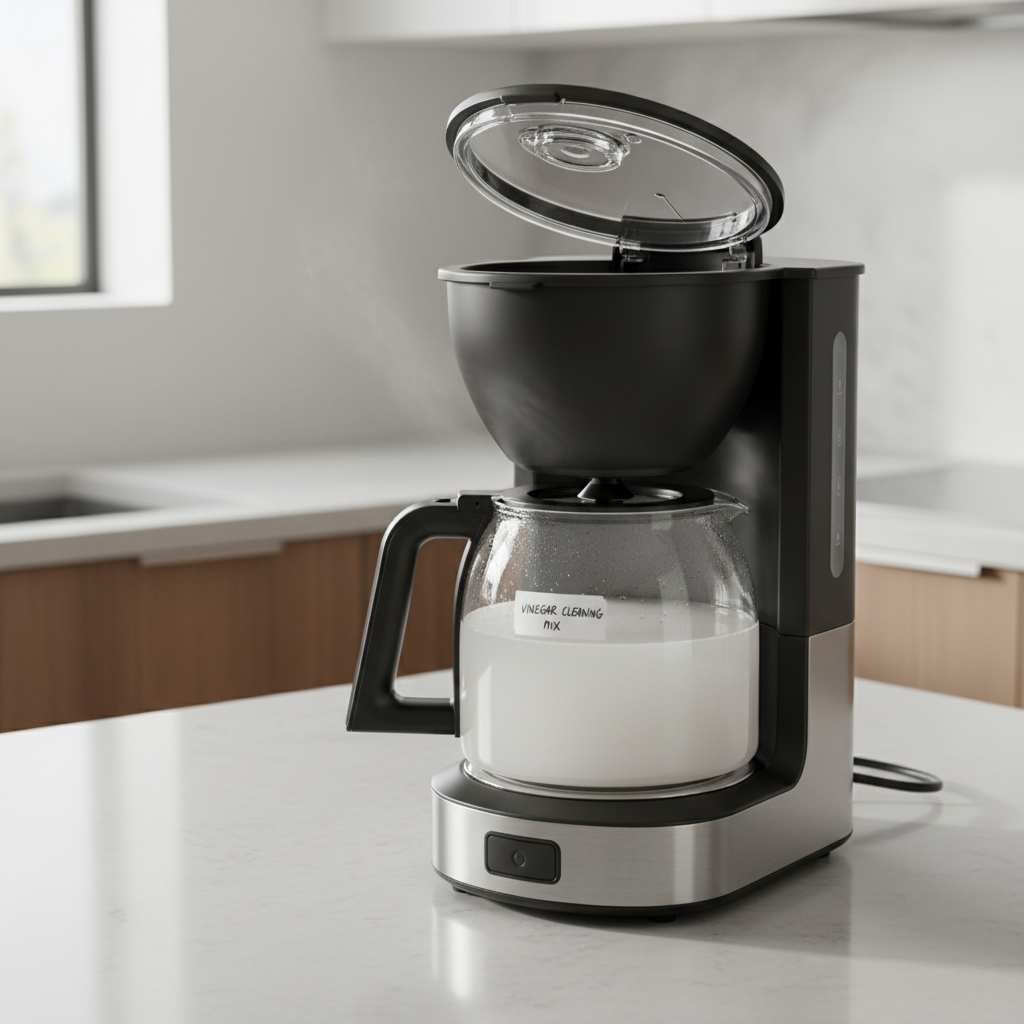
Step 2: Create the Descaling Solution The ideal and most widely recommended coffee maker descaling ratio is 1:1 distilled white vinegar to water. For a 12-cup machine, you will pour 6 cups (48 oz) of plain white vinegar directly into the water reservoir. Then, add 6 cups (48 oz) of fresh, cool water on top of it. You now have a full 12-cup reservoir of descaling solution.
Step 3: Place the Empty Carafe Position the empty carafe back on the warming plate, ensuring it is seated correctly under the filter basket drip.
Step 4: Initiate the Brew Cycle and Pause Halfway Turn the coffee maker on and press the 'Brew' button to start a full cycle. Watch the machine closely. Allow it to brew approximately half of the solution—about 6 cups—into the carafe. Once it's about halfway done, turn the coffee maker off.
Step 5: The Critical 60-Minute Soak This is the most important step. With the brew cycle paused and hot vinegar solution sitting inside the machine's internal components, let the coffee maker sit undisturbed for a full 60 minutes. This "soaking" time allows the hot acetic acid to work on breaking down the stubborn, caked-on mineral deposits. Don't skip or shorten this step.
Step 6: Complete the Brew Cycle After 60 minutes have passed, turn the coffee maker back on and allow it to finish brewing the rest of the vinegar-and-water solution into the carafe. You may notice that the flow rate is already faster than it was before.
Step 7: Discard the Solution and Inspect Once the cycle is complete, carefully remove the hot carafe and pour the entire vinegar solution down the drain. Look inside the carafe. You will likely see off-white, flaky, or sandy particles at the bottom. This is the dissolved limescale, and it's proof the process worked.
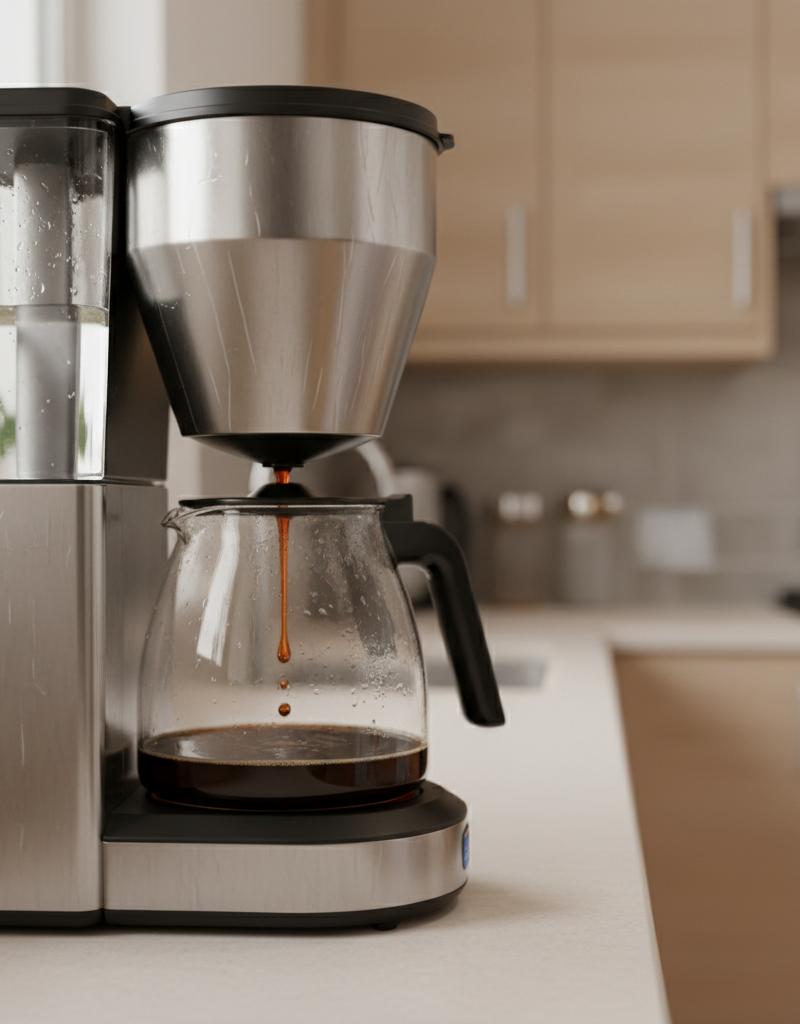
Step 8: The First Rinse Cycle Let the machine cool for 5-10 minutes. Rinse the carafe thoroughly with warm, soapy water to remove any scale particles. Fill the water reservoir with 12 cups of fresh, clean water (no vinegar this time). Run a complete brew cycle.
Step 9: The Second (and Third) Rinse Cycle When the first rinse cycle is done, discard the water. The water will likely still carry a strong vinegar odor. Fill the reservoir again with 12 cups of fresh water and run another full brew cycle. For many machines, two rinses are enough. However, if you are sensitive to the smell or taste of vinegar, a third full rinse cycle is highly recommended. Smell the water from the final rinse; if you can't detect any vinegar, you are good to go.
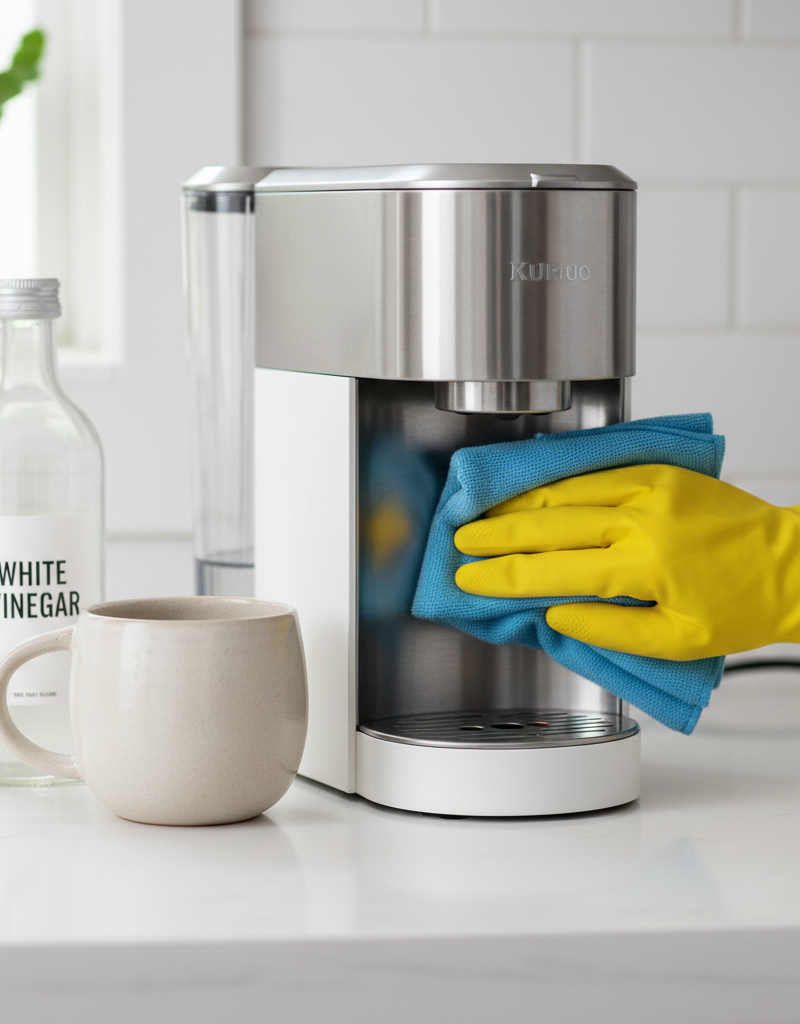
Step 10: Clean the Exterior and Components While the rinse cycles are running, take the time to wash the carafe, lid, and filter basket in warm, soapy water. Use a damp cloth to wipe down the exterior of the coffee maker, including the warming plate.
Common Causes
The single, overwhelming cause of scale buildup is hard water. Water hardness is measured in Parts Per Million (PPM) or Grains Per Gallon (GPG). Water with over 120 PPM (or 7 GPG) is considered hard. This water is perfectly safe to drink, but it will inevitably cause scale in any appliance that heats it, from your water heater to your coffee maker.
If you have a private well, you almost certainly have hard water. If you are on a municipal supply, your water utility company is required to provide an annual water quality report that will state the hardness. Look for it on their website or call them to ask. Knowing your water hardness level helps you set a proper coffee maker descaling schedule:
- Soft Water (0-60 PPM): Descale every 3-4 months.
- Moderately Hard Water (61-120 PPM): Descale every 2 months.
- Hard to Very Hard Water (121+ PPM): Descale monthly.
Common Mistakes
Avoid these common errors to ensure your descaling is effective and safe.
- Using the Wrong Vinegar: Only use distilled white vinegar. Apple cider vinegar can contain sugars that leave a sticky residue, and cleaning or industrial vinegars can have acid concentrations that are too high and may damage plastic or rubber components.
- Not Rinsing Enough: This is the #1 mistake. Lingering vinegar will ruin your next few pots of coffee. Two full rinse cycles are the minimum; three is better. Don't skimp on this.
- Forgetting the 60-Minute Soak: Just running the vinegar solution straight through is not nearly as effective. The soaking period is when the majority of the scale dissolution happens. Pausing the cycle is critical.
- Using Bleach: Never, ever put bleach in your coffee maker. It can degrade the plastic and metal components, and as mentioned, mixing it with any residual acid can create toxic gas.
- Only Descaling When There's a Problem: Descaling should be preventative maintenance, not just a reactive fix. Waiting until your machine is slow and your coffee is cold means the scale is already very thick and putting stress on the components. Stick to a schedule.
Cost & Time Breakdown
Descaling is one of the cheapest and quickest home maintenance tasks you can perform, with a huge return on investment.
| Item/Task | Quantity | Estimated Cost | Estimated Time | Notes |
|---|---|---|---|---|
| Distilled White Vinegar | 48 oz (half gallon) | $1 - $3 | - | One bottle will last for several cleanings. |
| Water | ~3 Gallons | <$0.50 | - | Cost from municipal water supply. |
| Labor | - | - | 45-60 mins | Most of this time is passive (waiting for cycles). |
| TOTAL | $1 - $3 | 45-60 mins | An incredibly low cost to extend appliance life. |
Tips & Prevention
While descaling is essential, you can reduce its frequency and severity.
- Use Filtered or Distilled Water: The absolute best way to prevent scale is to remove the minerals before they enter the machine. Using water from a reverse osmosis system or buying distilled water will virtually eliminate scale buildup. Standard carbon filters (like Brita or Pur) improve taste but are not very effective at removing the dissolved minerals that cause scale.
- Don't Let Water Sit: Avoid leaving unused water in the reservoir for long periods. Empty it after each use to reduce the chance of minerals settling.
- Regular External Cleaning: Clean your carafe and filter basket after every use. This prevents coffee oils from building up, which can turn rancid and affect the flavor of your coffee.
When to Call a Professional
For a small appliance like a coffee maker, "calling a professional" almost always means replacing the unit. It is not cost-effective to have a technician service a $100 coffee maker. If you have performed a thorough coffee maker descaling and the machine still exhibits major problems, it's time for a new one. These terminal symptoms include:
- Leaking: If water is pooling under the unit, an internal hose or seal has likely failed.
- Failure to Power On: If the unit is plugged in but shows no signs of life, the switch or an internal electrical component has failed.
- Not Heating at All: If the machine runs water through but the water remains completely cold, the heating element has burned out.
These issues are signs of a definitive hardware failure that no amount of cleaning can fix. Celebrate the long life your old machine had thanks to your diligent maintenance, and invest in a new one. '''
What should this project cost?
Enter your project details for a realistic cost range before you call anyone.
Cost depends heavily on which system turns out to be the source.
- Regional adjustment
- National average
- Labor share (typical)
- ~$1,620
- Quotes to collect
- 3 written estimates
Educational estimate based on national averages — not a binding quote. Always confirm with written local estimates.
Frequently asked questions
Can I use lemon juice instead of vinegar to descale my coffee maker?+
Yes, you can, but it's not as effective. You would need to use a solution of 1 part lemon juice to 2 parts water. Vinegar (acetic acid) is generally better at breaking down the specific mineral deposits found in coffee makers. If you do use lemon juice, make sure it is strained to remove all pulp.
What are the white, flaky things in my coffee pot?+
Those white, flaky or chalky particles are bits of limescale (calcium and magnesium deposits) that have broken free from the inside of your coffee maker's heating element and water channels. It's a definitive sign that your machine is overdue for a thorough descaling.
How often should I descale my coffee maker if I have very hard water?+
If you know you have hard water (over 120 PPM), you should perform a coffee maker descaling every month. This preventative schedule is crucial to prevent heavy buildup that can permanently damage the heating element and water pump.
Is it safe to use a commercial descaling solution instead of vinegar?+
Absolutely. Commercial descaling solutions are specifically formulated to safely dissolve mineral scale. They are often made from citric acid or other food-safe acids and are a great alternative if you dislike the smell of vinegar. Always follow the package directions exactly for the correct water-to-solution ratio.
Discussion
Loading comments…