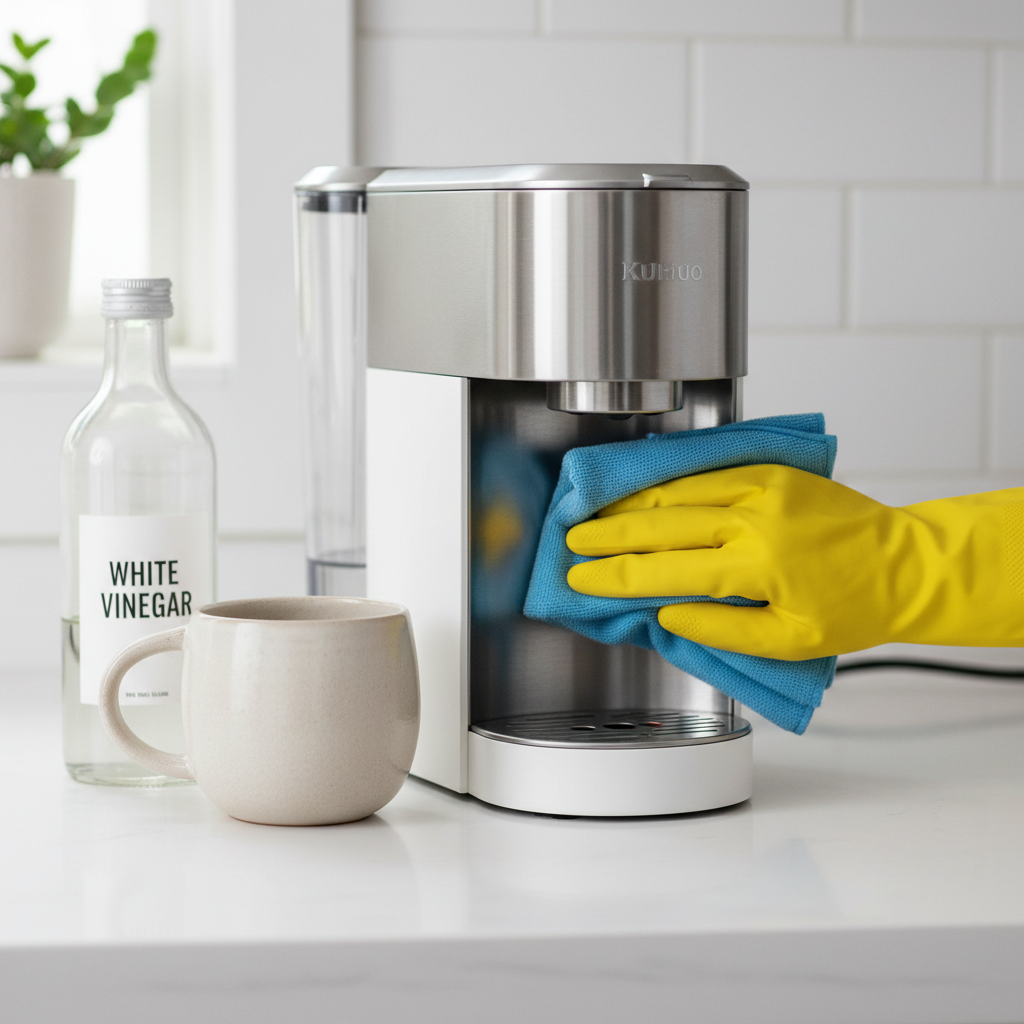
- Cleaning Agent (Choose One):
- Distilled White Vinegar (5% acidity): The most common and affordable choice. You'll need at least 16 oz.
- Commercial Descaler: Products like Keurig's own solution, Impresa Descaler, or even a dose of CLR (Calcium, Lime, Rust Remover) are highly effective. Follow package directions for dilution.
- Fresh Water: For rinsing. Using filtered or distilled water for this and future brewing can slow down future scale buildup.
- Dawn Dish Soap: A few drops for cleaning removable parts.
Published June 3, 2026Last updated August 17, 2026
Tools & materials you'll need
Affiliate links- AmazonDistilled White Vinegar24 oz · 5% acidity is standard. Or use a commercial descaler like CLR.
- AmazonFresh Water1-2 gallons · Filtered or distilled is best for rinsing and future use.
- AmazonDawn Dish SoapA few drops · For washing removable parts.
- AmazonOxiClean Versatile Stain Remover1-2 tbsp · Optional, for a deep clean of the reservoir.
As an Amazon Associate FixlyGuide earns from qualifying purchases — at no extra cost to you. Prices and availability are accurate as of publication and subject to change.
Quick Answer
To properly descale and sanitize your single-serve coffee maker, run brewing cycles with a descaling solution like a 1:1 white vinegar and water mix or a commercial descaler like CLR. Follow this with several rinse cycles using only fresh water to flush the system completely. Finally, wash all removable parts like the reservoir and drip tray in warm, soapy water.
Why This Works
The sluggish, sputtering performance of your single-serve coffee maker and the chalky film you might spot inside are symptoms of a classic chemistry problem: mineral scale. This isn't just an aesthetic issue; it directly impacts your machine's performance and your coffee's flavor. Over time, water—especially hard water—deposits minerals, primarily calcium carbonate and magnesium carbonate. These compounds are alkaline and build up on the heating element and in the narrow internal tubing of your machine. This layer of scale acts as an insulator, forcing the heating element to work harder and less efficiently. The result is coffee that isn't brewed at the optimal temperature, leading to a sour or underdeveloped taste. The mineral buildup can also flake off into your cup and, if left unchecked, can completely clog the machine.
This is where a descaling solution comes in. The active ingredient in most descalers is a mild acid. For a homemade solution, we use distilled white vinegar, which contains acetic acid. For commercial products, you'll often find citric acid, sulfamic acid, or malic acid. These acids react with the alkaline mineral deposits in a classic acid-base neutralization reaction. The acid dissolves the calcium and magnesium carbonates, breaking them down into water, carbon dioxide gas, and a soluble salt (like calcium acetate). This allows the dissolved minerals to be easily flushed out of the machine's internal components.
Sanitizing, while related, is a distinct process. The dark, moist, and warm environment inside a coffee maker is a perfect breeding ground for bacteria, mold, and yeast. While the descaling process with vinegar has some mild antimicrobial properties, a more thorough sanitizing step is wise, especially if you see any "biofilm" or visible mold. A very dilute bleach solution can be used for this, but it requires extreme caution and thorough rinsing. An alternative is to use a product like OxiClean (an oxygen-based cleaner) for the reservoir, which uses sodium percarbonate to break down organic matter and kill microbes without the harshness of chlorine bleach.
What You Need
Safety First: Always work in a well-ventilated area. Wear protective gloves, especially when handling cleaning agents. Never, under any circumstances, mix different cleaning chemicals. Specifically, NEVER mix bleach and ammonia or bleach and vinegar (or any acid), as this creates toxic chloramine or chlorine gas, respectively.
- Cleaning Agent (Choose One):
- Distilled White Vinegar (5% acidity): The most common and affordable choice. You'll need at least 16 oz.
- Commercial Descaler: Products like Keurig's own solution, Impresa Descaler, or even a dose of CLR (Calcium, Lime, Rust Remover) are highly effective. Follow package directions for dilution.
- Fresh Water: For rinsing. Using filtered or distilled water for this and future brewing can slow down future scale buildup.
- Dawn Dish Soap: A few drops for cleaning removable parts.
- Microfiber Cloths: Two cloths—one for cleaning, one for drying and polishing.
- Small, Soft Brush or Toothbrush: For scrubbing tight corners and the pod holder assembly.
- Paper Clip: To manually clear any clogs from the exit needle.
- Optional - OxiClean Versatile Stain Remover: For a deep clean and sanitization of the water reservoir if it has visible grime or biofilm.
Step-by-Step Method
-
Disassemble and Prep — First, unplug the machine for safety. Remove all the detachable parts: the water reservoir, the lid, the drip tray and cover, and the K-Cup pod holder. Set these aside. Empty any remaining water from the reservoir and remove any K-Cup from the chamber.
-
Wash Removable Parts — In a sink filled with warm, soapy water using a few drops of Dawn, wash all the parts you just removed. Use a soft brush to scrub away any coffee grounds or oily residue. For the water reservoir, if you notice a slimy biofilm, you can create a paste of OxiClean and water, apply it to the interior, let it sit for 15-20 minutes, then scrub and rinse thoroughly.
-
Inspect and Clear the Needle — Look inside the pod chamber. You'll see a sharp needle that punctures the top of the K-cup and a lower "exit" needle in the pod holder you removed. These can get clogged with coffee grounds. Take a straightened paper clip and carefully insert the tip into the exit needle's channel, gently wiggling it to dislodge any debris.
-
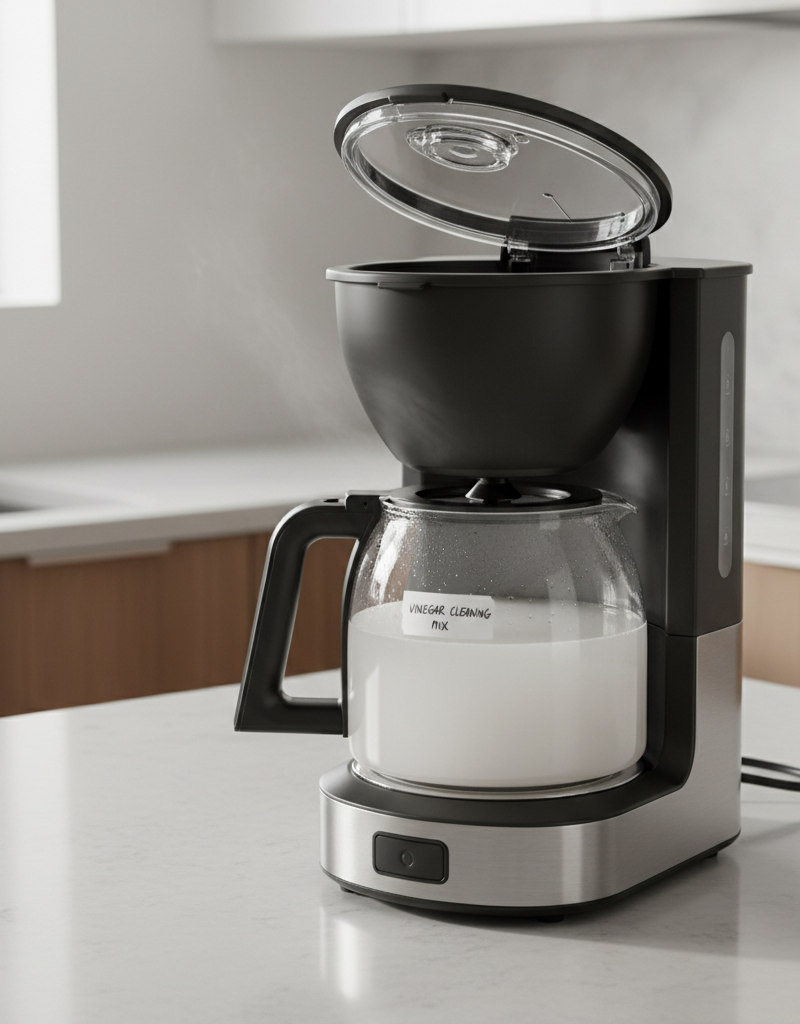
Prepare the Descaling Solution — If using vinegar, fill the water reservoir with a 1:1 solution of distilled white vinegar and water. For a standard 48-ounce reservoir, this means 24 ounces of vinegar and 24 ounces of water. If using a commercial descaler like CLR, follow the manufacturer's dilution ratio carefully (often around 1 part CLR to 8 parts water).
-
Initiate the Descaling Brews — Place a large ceramic mug (at least 10 oz) on the drip tray. Plug the machine back in. Do not insert a K-Cup. Run a brewing cycle using the largest cup size setting. The machine will now brew the hot acidic solution through its internal pipes.
-
Discard and Repeat — Once the cycle is complete, carefully discard the hot, pungent solution from the mug down the drain. Place the empty mug back on the tray and repeat the brewing cycles until the machine indicates "Add Water." You want to run the entire reservoir of descaling solution through the system.
-
The Important Dwell Time — After the last of the descaling solution has been brewed, let the machine sit (while still on) for at least 30 minutes, or up to an hour. This "dwell time" allows the hot acid remaining inside the pipes and on the heating element to continue dissolving the most stubborn mineral deposits.
-
Begin the Freshwater Rinse — Thoroughly rinse the water reservoir with clean water multiple times to remove any residual vinegar or descaler scent. Then, fill the reservoir to the max fill line with fresh, clean water (preferably filtered or distilled).
-
Execute Rinse Cycles — Place the empty mug back on the drip tray. Run at least 10-12 full brewing cycles using only the fresh water. This step is critical to flush out all traces of the cleaning solution. The coffee you brew afterward will taste terrible if you skimp on rinsing.
-
Final Wipe-Down and Reassembly — While the rinse cycles are running, use a damp microfiber cloth to wipe down the entire exterior of the machine, removing any dust or coffee splashes. Once the rinsing is complete and the reservoir is empty, dry and re-install the drip tray, pod holder, and reservoir. Your machine is now descaled, sanitized, and ready for use.
Common Mistakes
- Only Using Water: Many people believe running water through the system is enough. It is not. Water alone cannot dissolve hardened mineral scale.
- Not Rinsing Thoroughly: Failing to run enough freshwater cycles after descaling will leave a vinegary or chemical taste in your coffee.
- Forgetting the Pod Needle: A clogged needle is a common cause of machine malfunction and weak coffee. This small port needs to be cleared manually.
- Using Bleach Incorrectly: Never run pure bleach through your machine. If you must sanitize with bleach due to heavy mold, use a highly diluted solution (1 teaspoon of bleach per gallon of water) and follow with an excessive number of rinse cycles. However, using vinegar or a dedicated descaler is much safer.
- Mixing Cleaners: Never mix vinegar with bleach. Never mix any acid-based descaler with bleach. This creates hazardous chlorine gas. Stick to one cleaning agent at a time, rinse completely, then use another if necessary.
- Ignoring the Reservoir: The water reservoir can develop a slimy biofilm that needs to be scrubbed off. Simply refilling it is not enough for a true clean.
Cost & Time Breakdown
| Task | DIY Cost | Pro Cost / Replacement | Time Required |
|---|---|---|---|
| Basic Vinegar Descale | $2 - $4 | $90 - $150 (Replacement) | 45-60 minutes |
| Commercial Descaler Clean | $5 - $10 | $90 - $150 (Replacement) | 45-60 minutes |
| Needle Clog Removal | < $0.01 (paperclip) | $90 - $150 (Replacement) | 5 minutes |
| Full Sanitization & Deep Clean | $5 - $12 | $90 - $150 (Replacement) | 75-90 minutes |
Pro costs for single-serve machines are typically non-existent; the cost reflects full replacement as most repair services won't service these small appliances.
Prevention & Maintenance
- Use Filtered Water: This is the single best thing you can do. Using water filtered through a Brita, Pur, or refrigerator filter significantly reduces the amount of calcium and magnesium entering your machine, drastically slowing scale buildup.
- Don't Let Water Sit: Empty the reservoir and leave the lid off to dry overnight. This prevents the stagnant, dark environment where bacteria and mold thrive.
- Regular Rinse Routine: After brewing your coffee, run one cycle with no pod. This quick flush of hot water helps clear residual grounds and oils.
- Descale on a Schedule: Set a calendar reminder. For heavy users or those with hard water, descale every 3 months. For light users or those with soft/filtered water, every 6 months is sufficient.
- Wipe Down Weekly: Give the exterior and the pod area a quick wipe with a damp cloth every week to prevent coffee oils and dust from building up.
When to Call a Professional
For small appliances like single-serve coffee makers, "calling a professional" usually means deciding it's time for a replacement. A repair service will often cost more than a new machine. It's time to replace your unit if you experience any of the following issues that cleaning cannot solve:
- Electrical Malfunctions: If the machine fails to power on, the lights are blinking erratically, or it trips your circuit breaker, unplug it immediately. This indicates an internal electrical fault, not a cleaning issue.
- Pump Failure: If you can hear the machine trying to work but no water is being drawn from the reservoir at all, even after a thorough descaling and needle cleaning, the internal water pump has likely failed.
- Complete, Unmovable Clog: If you have run multiple descaling cycles and manually cleared the needles, but the machine still only sputters out a tiny amount of water or steam, you may have a terminal clog deep within the tubing that is inaccessible.
- Cracked Housing or Leaks: If the body of the machine is cracked or if water is leaking from the internal base of the unit (not just the drip tray), it's a safety hazard and should be replaced.
What should this project cost?
Enter your project details for a realistic cost range before you call anyone.
Cost depends heavily on which system turns out to be the source.
- Regional adjustment
- National average
- Labor share (typical)
- ~$1,620
- Quotes to collect
- 3 written estimates
Educational estimate based on national averages — not a binding quote. Always confirm with written local estimates.
Get the print-ready PDF of this guide
A clean, ad-free, printable version you can keep on your phone or pin to the workshop wall. Free with a FixlyGuide account.
- Print-optimized layout
- Tools, materials & every step included
- Saved to your account
Frequently asked questions
How often should I descale my single-serve coffee maker?+
If you use it daily and have hard water, descaling every 3 months is ideal. If you have soft water or use filtered water, you can extend this to every 6 months. Most machines will also have a 'descale' indicator light that will turn on when it's time.
Can I use lemon juice instead of vinegar to descale my Keurig?+
Yes, you can, but it's not as effective. Lemon juice contains citric acid, but in a lower and less consistent concentration than the acetic acid in distilled vinegar. For best results, stick with white vinegar or a commercial descaling solution.
Is it safe to use CLR in a coffee maker?+
Yes, CLR (Calcium, Lime, Rust Remover) is safe to use in coffee makers when diluted correctly. Their website recommends a dilution of 1 part CLR to 8 parts water. It is absolutely critical to run many freshwater rinse cycles afterward.
What happens if I never descale my coffee machine?+
If you never descale it, mineral scale will continue to build up on the heating element, making it less efficient and eventually causing it to fail. Your coffee will brew at a lower temperature, tasting sour, and the machine's water flow will slow to a trickle before stopping completely.

Discussion
Loading comments…