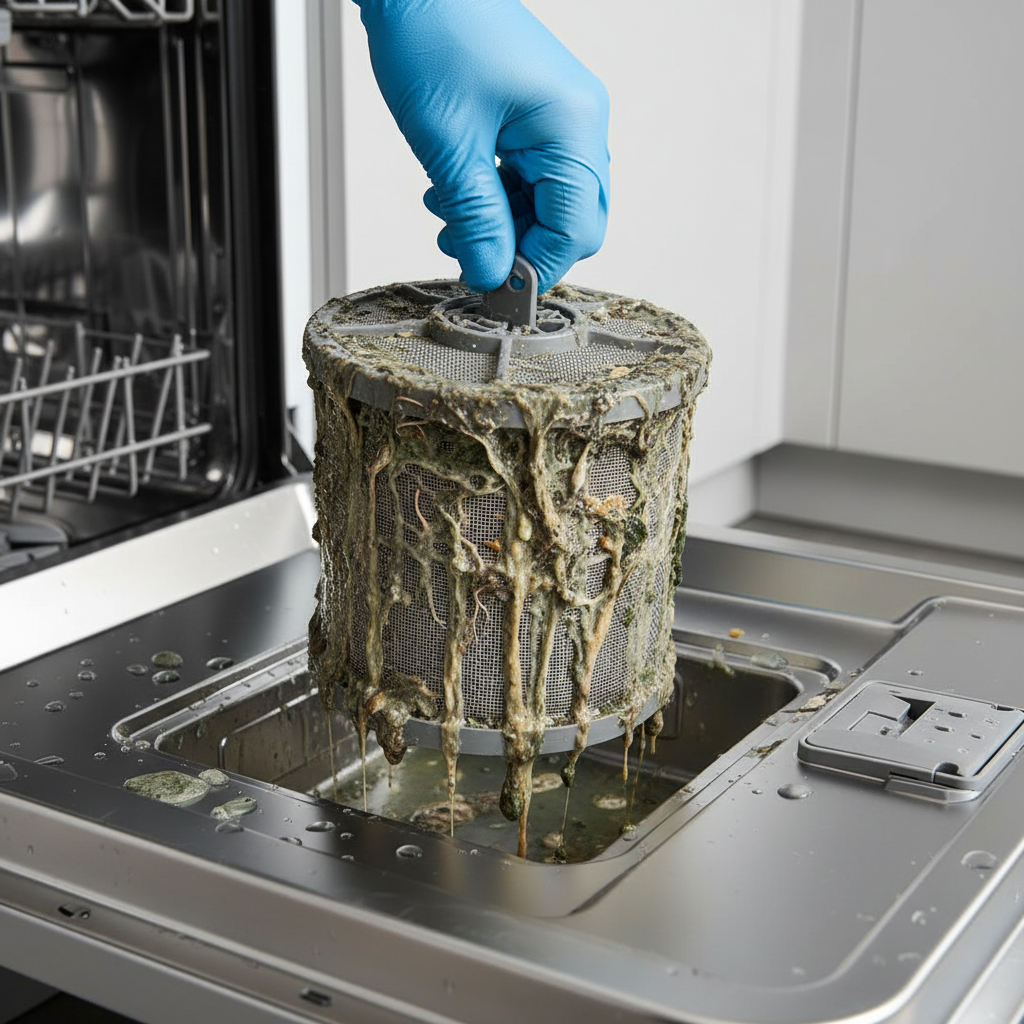
- Ignoring the Filter Completely: Many people assume their dishwasher is a "set it and forget it" appliance. They rely on the detergent and hot water to do all the work, not realizing the filter requires manual cleaning.
- Using Abrasive Scrubbing Tools: Do not use steel wool, wire brushes, or other abrasive pads to clean the filter. The fine mesh is delicate and can be easily torn. A torn filter is useless and must be replaced.
- Forgetting to Clean the Sump Area: It does little good to reinstall a sparkling clean filter into a sump that is still filled with a backlog of gunk. Always wipe out the area under the filter.
Plumbing · Clog
| Project category | Plumbing |
|---|---|
| Problem type | Clog |
| Trade required | Plumbing |
| Urgency | Soon — within weeks |
| Safety risk | Low safety risk |
| DIY suitability | DIY friendly |
| Cost category | Low cost |
| Typical timeline | Same-day DIY attempt; pro visit within a day or two |
| Contractor type | Licensed plumber |
Repair option
Plunger, hand auger, or trap cleanout before chemicals.
Replacement option
Line replacement when clogs return in the same spot repeatedly.
Common causes
- Hair and soap buildup in the trap
- Grease cooling in the branch line
- Flushed wipes or foreign objects
Relevant tools:diy difficultydiy or hire a pro
Published June 11, 2026Last updated August 17, 2026
Tools & materials you'll need
Affiliate linksAs an Amazon Associate FixlyGuide earns from qualifying purchases — at no extra cost to you. Prices and availability are accurate as of publication and subject to change.
Quick Answer
That rotten egg or sewer smell in your dishwasher is almost always caused by bacteria feasting on trapped food particles and grease in the filter. Over time, this decomposition releases hydrogen sulfide gas. The solution is to remove and thoroughly clean the dishwasher's filter assembly located at the bottom of the tub.
The Problem
You swing open the dishwasher door, expecting to be greeted by a waft of steam and the scent of clean dishes. Instead, you're hit with a foul, sulfurous odor, like rotten eggs or a backed-up sewer. It’s an unpleasant and embarrassing problem, especially when you have guests. The dishes themselves might even look clean, but a faint, funky smell clings to them, making you question their cleanliness. You might run another cycle, use extra detergent, or hope the problem just goes away. But the smell persists, sometimes getting worse. This odor isn't just a nuisance; it's a clear signal that your machine is overdue for a specific, crucial cleaning task that millions of homeowners overlook: cleaning the dishwasher filter.
How It Works
To understand the source of the smell, you first need to understand how your dishwasher cleans. It’s not magic; it’s a recirculating water system. When a cycle starts, water is heated and sprayed forcefully onto your dishes through rotating spray arms. This water, now mixed with detergent and laden with food soils—grease, sauces, starches, and tiny particles—falls to the bottom of the dishwasher tub. Before this dirty water is pumped out, it must pass through a filtration system. This system is the unsung hero of your appliance.
Its job is to trap food debris to prevent it from clogging the drain pump, the drain hose, or your home's plumbing. Modern dishwasher filters are highly efficient and typically consist of two or three parts: a flat, coarse screen for larger items (like a stray pea or popcorn kernel) and a fine, cylindrical mesh filter that captures finer particles and grease. This is where the problem begins. The filter does its job perfectly, but it can’t clean itself. All that trapped organic matter sits in a warm, dark, and wet environment—the perfect breeding ground for bacteria. As these microorganisms break down the proteins and fats, they undergo anaerobic digestion, a process that releases smelly byproducts, most notably hydrogen sulfide gas. This gas has a distinct and powerful rotten egg odor. So, the smell isn’t a sign that your dishwasher is broken; it’s a sign that a feast for odor-causing bacteria is happening in its belly.
Step-by-Step Fix
1. Safety First: Disconnect the Power — Before performing any maintenance, ensure your safety. The easiest way is to unplug the dishwasher from the wall outlet, which is often under the sink. If the plug is inaccessible, go to your home’s main electrical panel and turn off the circuit breaker dedicated to the dishwasher.
2. Empty the Dishwasher Completely — To get unobstructed access to the floor of the tub, you need to remove everything. Take out all dishes, cutlery, and, most importantly, the lower dish rack. The rack should slide out easily just like it does when you load it.
3. Locate the Dishwasher Filter — Look at the bottom of the dishwasher basin, directly beneath where the lower spray arm sits. You will see a circular component, usually made of plastic and mesh. Most modern filters are a cylindrical, "twist-to-lock" style assembly, often with directional arrows printed on top indicating how to lock and unlock it.
4. Remove the Lower Spray Arm If Needed — In many designs, the lower spray arm is positioned directly over the filter and must be removed first. Most spray arms can be simply lifted straight up. Others may be held by a plastic nut that you can unscrew by hand (clockwise, a reverse thread in some models) or they might just pull off a central retaining clip.
5. Unlock and Remove the Filter Assembly — Grasp the top of the cylindrical filter and turn it counter-clockwise about a quarter turn. You should feel it release from its locked position. Once unlocked, you can lift it straight out. You will likely find it’s covered in a slimy, foul-smelling film and bits of old food. Many filter assemblies also have a flat, coarse filter plate underneath the cylinder; this may lift out with the main filter or may need to be removed separately.
6. Inspect and Clean the Sump — With the filter removed, you’ll see the sump opening it was covering. This is the lowest point where water collects before entering the pump. Carefully inspect this area for any larger debris that got past the filter, such as glass shards, bones, or fruit pits. Wearing gloves is a good idea. Wipe the area clean with a damp cloth or paper towel.
7. Wash the Filter Components Thoroughly — Take the filter parts to your sink. Do not bang them against the side of the trash can, as the plastic can be brittle. Under warm running water, use a soft brush (an old toothbrush is perfect) and a little dish soap to gently scrub every surface. Pay close attention to the fine mesh screen, clearing all the tiny holes of the greasy, impacted gunk until you can see light clearly through it. Rinse thoroughly to remove all soap residue.
8. Reinstall the Clean Filter — Place the filter components back into the dishwasher. The flat coarse filter (if separate) goes in first, followed by the cylindrical fine filter. Press it down firmly and turn it clockwise to lock it securely in place. You should feel a distinct click or stop. An improperly seated or unlocked filter can allow debris into the pump, potentially causing serious damage.
9. Reinstall the Spray Arm — If you removed the lower spray arm, place it back onto its mount. Give it a spin with your hand to ensure it rotates freely without wobbling or hitting anything. A stuck spray arm will result in poorly cleaned dishes.
10. Run a Sanitizing Vinegar Cycle — For a full system deodorization, pour one cup of plain white vinegar into a dishwasher-safe bowl or measuring cup. Place this on the top rack of the now-empty dishwasher. Run a full cycle using the hottest water setting available (often labeled "Heavy," "Pots & Pans," or "Sanitize"). The acetic acid in the vinegar will help dissolve mineral buildup and neutralize lingering odors.
11. Follow Up with a Baking Soda Rinse — After the vinegar cycle is complete, open the door and sprinkle one cup of baking soda across the bottom of the dishwasher tub. Run a short, hot rinse cycle. Baking soda is a mild alkali that is excellent at absorbing and neutralizing any remaining acidic or foul odors, leaving your machine smelling fresh and neutral.
Common Causes
Understanding why your filter gets so dirty can help you prevent the dreaded rotten egg smell from returning.
- Not Scraping Dishes Properly: You don’t need to pre-rinse, but you absolutely must scrape large food solids into the trash or compost. Chunks of meat, vegetables, pasta, and rice are the primary fuel for the bacteria in your filter.
- Greasy and Oily Foods: Fats, oils, and grease congeal when they cool. They create a sticky, slimy coating on the filter mesh that acts like flypaper, trapping other food particles and creating a compact, anaerobic environment perfect for decomposition.
- Infrequent Dishwasher Use: If you only run your dishwasher every few days, you’re giving trapped food and standing water more time to stagnate and fester in a warm, enclosed space. This dramatically accelerates bacterial growth and odor production.
- Exclusive Use of Low-Temperature Washes: Eco-friendly and quick-wash cycles are great for saving energy, but they often use lower water temperatures. Running exclusively cool cycles may not be sufficient to effectively melt grease and kill odor-causing bacteria.
- Hard Water Buildup: If you live in an area with hard water, limescale (calcium and magnesium deposits) can build up on the filter, spray arms, and heating element. This rough, porous surface traps food particles and gives bacteria more places to hide and multiply.
Common Mistakes
When tackling a smelly dishwasher, avoid these common missteps that can make the problem worse or damage your appliance.
- Using Bleach or Harsh Drain Cleaners: Never pour chlorine bleach or aggressive chemical drain openers into your dishwasher. They can degrade rubber gaskets and seals, damage plastic components, and etch stainless steel interiors. Crucial Safety Warning: Never mix bleach with other cleaners, especially anything containing ammonia, as this can create toxic chloramine gas.
- Ignoring the Filter Completely: Many people assume their dishwasher is a "set it and forget it" appliance. They rely on the detergent and hot water to do all the work, not realizing the filter requires manual cleaning.
- Not Locking the Filter Back in Place: After cleaning, it's easy to forget to twist the filter until it locks. A loose filter can allow food debris to bypass the screen and get into the drain pump, which can destroy the pump’s impeller and lead to a costly repair.
- Using Abrasive Scrubbing Tools: Do not use steel wool, wire brushes, or other abrasive pads to clean the filter. The fine mesh is delicate and can be easily torn. A torn filter is useless and must be replaced.
- Forgetting to Clean the Sump Area: It does little good to reinstall a sparkling clean filter into a sump that is still filled with a backlog of gunk. Always wipe out the area under the filter.
Cost & Time Breakdown
Cleaning a dishwasher filter is one of the most cost-effective DIY repairs you can perform. Professional intervention is only needed if the problem is more complex.
| Task | DIY Cost | Pro Cost | Time Investment |
|---|---|---|---|
| Manual Filter & Sump Cleaning | $0 - $5 (for soap/brush) | $100 - $150 (service call) | 15-20 minutes |
| Deep Clean w/ Vinegar & Baking Soda | $2 - $7 | N/A | 2-3 hours (machine run time) |
| Drain Line Inspection & Flush | $10 - $20 (for tools) | $150 - $250 | 1-2 hours |
| Damaged Filter Assembly Replacement | $15 - $50 (part cost) | $120 - $200 | 5 minutes |
| Clogged/Failed Drain Pump Replacement | $50 - $150 (part cost) | $250 - $450 | 2-4 hours (advanced) |
Tips & Prevention
Keep your dishwasher smelling fresh and cleaning effectively with these preventative habits.
- Schedule a Monthly Filter Check: The single best habit is to make filter cleaning part of your routine. Set a calendar reminder to check and clean the filter on the first of every month. It only takes a few minutes.
- Scrape, Don’t Rinse: Scrape all solid food scraps into the garbage before loading dishes. A little sauce or residue is fine—in fact, modern detergents need some soil to work on—but chunks of food are the enemy.
- Run High-Temp Cycles Regularly: At least once a week, use a "heavy" or "sanitize" cycle. The higher temperatures are much more effective at melting and washing away greasy buildup from the filter and interior walls.
- Use a Commercial Dishwasher Cleaner: Every 1-3 months, use a dedicated dishwasher cleaning tablet or solution (such as Affresh, Finish, or Lemi Shine). These products are formulated to break down grease and limescale throughout the entire system.
- Don’t Let It Sit Dirty: Run the dishwasher as soon as it’s full. If you won’t have a full load for a day or two, use the "rinse only" cycle to wash away food particles before they have a chance to decompose and smell.
- Prop the Door Open Post-Cycle: Once a cycle is finished, crack the door open slightly. This allows the humid interior to air out and dry completely, creating a less hospitable environment for bacteria and mold.
When to Call a Professional
While cleaning the filter resolves the odor in over 90% of cases, sometimes the problem is more stubborn. If you have meticulously cleaned the filter, run vinegar and baking soda cycles, and the rotten egg smell persists or returns immediately, it’s time to call an appliance repair professional. This indicates the clog or buildup is further down the line. A pro will investigate issues like a clogged drain hose (which can get blocked with years of accumulated grime), a blockage in the connection to your garbage disposal, a problem with your home’s plumbing air gap, or a failing drain pump that isn’t powerful enough to expel all the dirty water. If you hear grinding or humming noises, or if the dishwasher fails to drain at all, it strongly points to a mechanical failure that is best left to an expert. Attempting to replace a pump or fiddle with drain lines without experience can lead to leaks and water damage, turning a smelly inconvenience into a major household repair.
Should you do this yourself?
Answer five quick questions before you start. Safety outranks savings every time.
Your experience with work like this
How high do you have to work?
Does the job involve any of these?
Will it need a permit?
Specialty tools
Free and instant. Educational guidance only — not a quote, inspection, or professional diagnosis.
What should this project cost?
Enter your project details for a realistic cost range before you call anyone.
Cosmetic refreshes start near $5,000; full remodels commonly $25,000–$45,000.
- Regional adjustment
- National average
- Labor share (typical)
- ~$8,550
- Quotes to collect
- 3 written estimates
Educational estimate based on national averages — not a binding quote. Always confirm with written local estimates.
Frequently asked questions
How often should I clean my dishwasher filter?+
For an average family, checking and cleaning the dishwasher filter once a month is a great preventative measure. If you frequently cook greasy or oily foods, or if you notice any odors returning, you may want to increase the frequency to every two weeks.
Can I just pour bleach in my dishwasher to kill the smell?+
Absolutely not. Chlorine bleach is a harsh chemical that can damage the stainless steel tub, plastic components, and rubber seals and gaskets in your dishwasher. More importantly, if any ammonia from food waste or other cleaners is present, mixing it with bleach will create toxic chloramine gas. Stick to vinegar and baking soda for safe and effective cleaning.
What if my dishwasher doesn't seem to have a removable filter?+
Some older dishwasher models (typically from before 2010) have a hard food disposer, which is like a small garbage disposal at the bottom that grinds up food waste. These are 'self-cleaning' systems and do not have a removable filter. If a dishwasher of this type smells, the problem likely lies with buildup on the tub walls, in the spray arms, or in the drain line. A deep cleaning cycle with vinegar and baking soda is the best first step, followed by a professional service call if the odor persists.
My dishes come out gritty. Is that related to the filter?+
Yes, a gritty residue on your dishes is a classic symptom of a clogged filter or clogged spray arm nozzles. When the filter is dirty, food particles can't be effectively flushed and end up recirculating and re-depositing onto your clean dishes. A thorough filter and spray arm cleaning will almost always solve this problem.
Discussion
Loading comments…