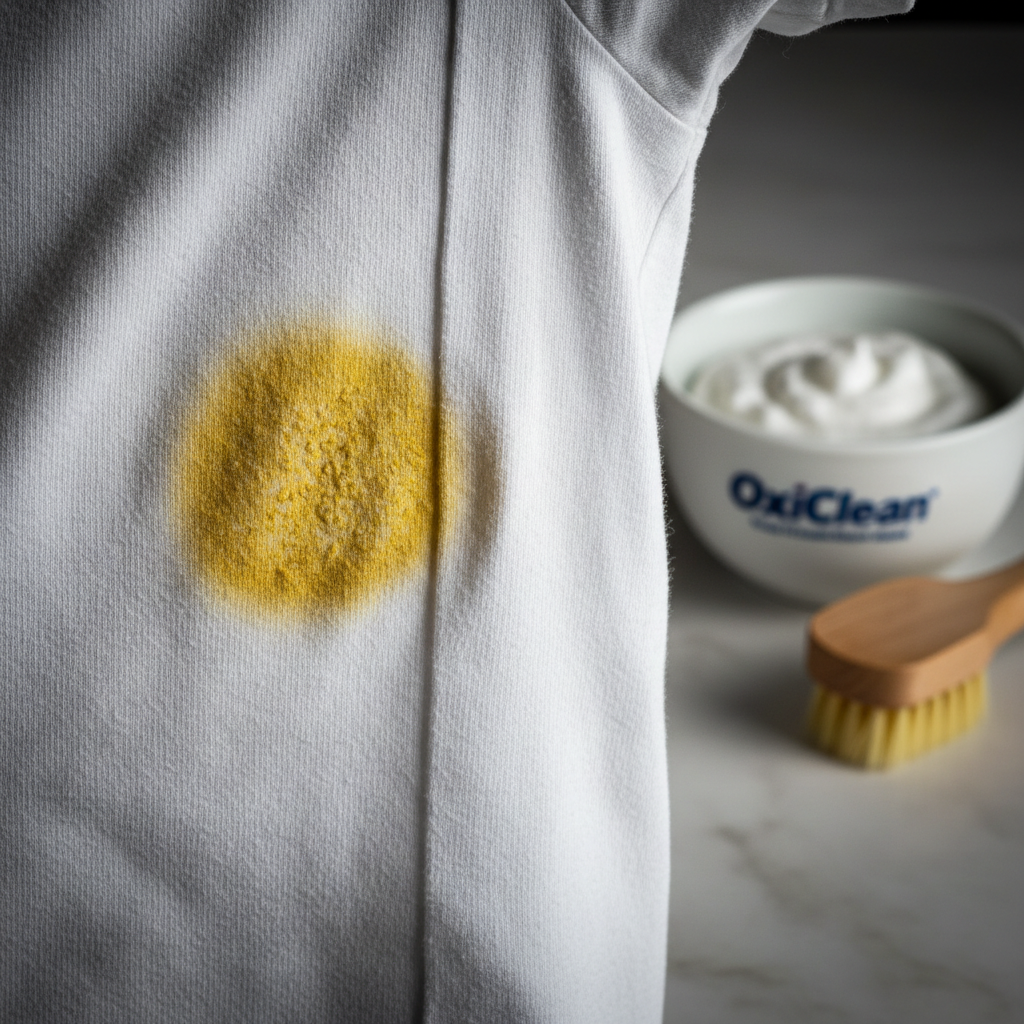
- OxiClean Versatile Stain Remover: This is the primary stain remover. You will need about 2-4 scoops per shirt.
- Persil ProClean or Tide Heavy Duty Liquid Laundry Detergent: A high-quality detergent with enzymes is critical for the final wash.
- Hot Water: Used to activate the OxiClean and to create the soaking solution.
Published May 28, 2026Last updated August 17, 2026
Tools & materials you'll need
Affiliate linksAs an Amazon Associate FixlyGuide earns from qualifying purchases — at no extra cost to you. Prices and availability are accurate as of publication and subject to change.
Quick Answer
To remove old yellow underarm stains, create a thick paste from a scoop of OxiClean Versatile Stain Remover and a small amount of hot water. Using an old toothbrush, scrub this paste deep into the fabric of the yellowed areas and let the shirt sit for a minimum of 8 hours, or even overnight. After this crucial dwell time, submerge the entire garment in a bucket filled with a gallon of hot water and a full scoop of OxiClean for another 8-hour soak. Finally, wash the shirt in the hottest water the fabric care label permits, using a heavy-duty detergent like Persil ProClean. Always air dry the shirt first to ensure the stain is completely gone, as machine drying will set any remaining discoloration permanently.
Why This Works
Those dreaded yellow stains are not just from sweat. They are the result of a chemical reaction between the proteins and lipids in your sweat and, most significantly, the aluminum compounds (like aluminum zirconium tetrachlorohydrex gly) found in most antiperspirants. This combination creates a stubborn, layered deposit that effectively bonds to and discolors the fabric fibers. It’s a compound stain, which is why a simple wash often does nothing.
Our chosen method attacks this compound stain on two chemical fronts.
First, we use a concentrated, alkaline paste. The hero ingredient here is OxiClean Versatile Stain Remover, a brand name for sodium percarbonate. When mixed with water, sodium percarbonate breaks down into hydrogen peroxide (a powerful oxidizing agent) and sodium carbonate (also known as washing soda). The hydrogen peroxide acts as a gentle, color-safe bleach, breaking apart the chemical bonds of the organic sweat components (the chromophores that create the yellow color). The sodium carbonate raises the pH of the solution, creating an alkaline environment. This alkalinity is crucial for breaking down the fatty, oily lipids from your sweat and sebum, a process called saponification. Furthermore, the slightly abrasive texture of the paste, worked in with a toothbrush, physically dislodges the embedded stain particles.
Second, the long dwell and soaking times are non-negotiable. This is where the principle of dwell time comes into play. Chemical reactions take time. The 8+ hour paste application and the subsequent 8+ hour soak give the hydrogen peroxide and sodium carbonate ample time to penetrate the fabric deeply and methodically break down the complex, set-in stain. The hot water used in the soaking solution accelerates these chemical reactions.
Finally, washing with a high-quality enzyme-based detergent like Persil ProClean or Tide Heavy Duty provides the final blow. These detergents contain specific enzymes—protease to break down the protein-based parts of the stain and lipase to tackle any remaining lipids or oils. The surfactants in the detergent then surround these broken-down soil particles, lifting them from the fabric and carrying them away in the wash water. Using chlorine bleach is strictly forbidden because it can react with the proteins in sweat, oxidizing them and making the yellow stains even more pronounced and permanent.
What You Need
Materials:
- OxiClean Versatile Stain Remover: This is the primary stain remover. You will need about 2-4 scoops per shirt.
- Persil ProClean or Tide Heavy Duty Liquid Laundry Detergent: A high-quality detergent with enzymes is critical for the final wash.
- Hot Water: Used to activate the OxiClean and to create the soaking solution.
Tools:
- A Bucket or Basin: Large enough to fully submerge a shirt in a gallon of water.
- An Old Toothbrush or Small Scrub Brush: For working the pre-treatment paste into the fabric.
- A Small Bowl: For mixing the initial OxiClean paste.
- Protective Gloves: To protect your hands from the cleaning agents, especially during the scrubbing step.
Step-by-Step Method
-
Safety First & Initial Prep — Put on your protective gloves. Find a well-ventilated area to work in, like a laundry room or bathroom with a fan on. Lay the stained white shirt flat on a towel on a hard surface, with the underarm stains facing up.
-
Create the Treatment Paste — In your small bowl, mix one scoop of OxiClean Versatile Stain Remover with just enough hot water to form a thick, concentrated paste. The consistency should be similar to toothpaste, thick enough to stay put on the fabric without dripping away.
-
Apply and Agitate — Scoop the paste onto the yellowed underarm areas using the old toothbrush. Gently but firmly scrub the paste into the fabric. Use circular motions to work the paste deep into the fibers. Be thorough; you want to saturate the entire stained area from both the outside and inside of the shirt.
-
Crucial Dwell Time — This is the most important step for success. Leave the paste on the shirt for a minimum of 8 hours. For very old, dark, or stubborn stains, letting it sit overnight (12-24 hours) is even better. The shirt will dry and the paste will become crusty; this is normal and expected. The chemical reaction is still working.
-
Prepare the Soaking Solution — After the paste has dwelled, fill your bucket or basin with one gallon of the hottest water that is safe for your shirt's fabric (check the care label; for cotton, this can be very hot). Add one to two full scoops of OxiClean to the water and stir until it fully dissolves.
-
Submerge and Soak — Place the entire shirt into the bucket of OxiClean solution. Ensure the garment is fully submerged. Let the shirt soak for another 8 hours, or overnight. This long soak will lift the now-broken-down stain components from the fabric.
-
Inspect the Stain — After the soak, remove the shirt and wring it out gently. Inspect the underarm area in good light. The stain should be significantly lighter or completely gone. If a faint yellowing remains, you can repeat the paste and soak process for another round.
-
Machine Wash with a Power-Boost — Wash the shirt in your washing machine on a normal or heavy-duty cycle using the warmest water the care label allows. Use a full dose of a high-performance enzymatic detergent like Persil ProClean. Do not add any other clothing to this load to focus the detergent's power on the treated shirt.
-
Air Dry to Verify — Do not put the shirt in the dryer. Tumble drying with high heat will permanently set any faint, remaining traces of the stain, making it nearly impossible to remove later. Hang the shirt to air dry completely, preferably in the sun, which provides a natural, gentle bleaching effect.
-
Final Check — Once the shirt is completely dry, give the underarm area a final inspection. If the stain is completely gone, the shirt is ready to be ironed and worn. If any stain remains, repeat the process from Step 2. Set-in stains are stubborn, and a second treatment is often the key to full restoration.
Common Mistakes
- Using Chlorine Bleach: This is the biggest mistake. Chlorine bleach can have a chemical reaction with the proteins in sweat and the aluminum in antiperspirant, which can paradoxically make the yellow stains brighter and more permanent.
- Not Allowing Enough Dwell Time: Trying to rush the process in an hour or two will not work. The chemical reactions in the OxiClean need 8+ hours to break down the complex, set-in stain. Patience is key.
- Putting the Shirt in the Dryer Too Soon: Heat is the enemy of stain removal. Tumble drying a still-stained shirt will cook the stain into the fabric fibers, setting it for good. Always air dry until you are 100% certain the stain is gone.
- Scrubbing Too Aggressively: While agitation is important, scrubbing too hard with a stiff brush can damage the fabric fibers, causing pilling or thinning, especially on softer cottons or blends. Use firm but gentle pressure.
- Ignoring the Care Label: Disregarding the fabric type and washing instructions can lead to shrinking, warping, or other damage. Always use water temperatures and washing cycles that are appropriate for the garment.
- Expecting a Single Wash to Work: These are not simple surface stains; they are chemically bonded discoloration. A simple toss in the wash, even with stain remover, is not enough. A dedicated, multi-step treatment is required.
Cost & Time Breakdown
This table outlines the estimated cost and time for a DIY approach versus hiring a professional dry cleaner for severe staining.
| Task | DIY Cost | Pro Cost (Dry Cleaner) | Time (per shirt) |
|---|---|---|---|
| Stain Pre-Treatment | $0.50 (OxiClean & water) | ~$5-$10 (specialist fee) | 10 mins active, 8-24 hrs passive |
| Soaking | $0.50 (OxiClean & water) | Included in fee | 2 mins active, 8+ hrs passive |
| Washing & Drying | ~$1.00 (detergent/energy) | Included in fee | 5 mins active, 1.5-3 hrs passive (wash/air dry) |
| Total for One Shirt | ~$2.00 | ~$5-$10 | ~17 mins active, 16-36 hrs passive |
DIY costs are estimates based on bulk purchase prices of cleaning supplies.
Prevention & Maintenance
An ounce of prevention is worth a pound of OxiClean paste. Here's how to stop yellow stains from forming.
- Switch to Aluminum-Free Deodorant: The primary culprit is the aluminum in antiperspirant. Switching to a natural, aluminum-free deodorant will prevent the specific chemical reaction that causes yellowing. Note: Deodorant controls odor, while antiperspirant blocks sweat.
- Wear an Undershirt: A simple cotton undershirt provides a physical barrier, absorbing the majority of sweat and antiperspirant before it can reach your outer shirt. This is the most effective preventative measure.
- Apply Deodorant Sparingly and Let It Dry: Don't over-apply antiperspirant. Use a thin layer and, critically, allow it to dry completely for a few minutes before putting on your shirt. This prevents the wet product from rubbing directly onto the fabric.
- Wash Shirts Promptly: Don't let worn white shirts sit in the hamper for days. The sooner you can wash a shirt after wearing it, the less time the sweat and antiperspirant have to set into the fabric.
- Pre-treat the Pits: For new or unstained white shirts, periodically spray the underarm areas with a pre-treater like Dawn Powerwash (its surfactants are great at breaking down oils) before washing to prevent buildup.
When to Call a Professional
While the DIY method is highly effective for cotton and poly-blend shirts, there are times when it's best to consult a professional dry cleaner. If the stained garment is made of a delicate fabric like silk, wool, or rayon, do not attempt this method. The aggressive alkalinity of the OxiClean solution and the required water temperatures can cause irreversible damage, such as shrinking, stretching, or fiber degradation. Vintage or heirloom clothing, which may have older, more fragile fibers, should also be entrusted to a professional.
Furthermore, if you have already tried the full DIY process twice with no significant improvement, the stain may be too old or set for at-home removal. A professional cleaner has access to a wider range of chemical solvents and stain removal agents that are not available to consumers. They can assess the specific nature of the stain and the fabric type to apply a more targeted, and often stronger, treatment without damaging the garment. When the shirt is valuable, sentimental, or made of a delicate material, the small cost of professional cleaning is a worthwhile investment to avoid a costly mistake.
Should you do this yourself?
Answer five quick questions before you start. Safety outranks savings every time.
Your experience with work like this
How high do you have to work?
Does the job involve any of these?
Will it need a permit?
Specialty tools
Free and instant. Educational guidance only — not a quote, inspection, or professional diagnosis.
What should this project cost?
Enter your project details for a realistic cost range before you call anyone.
Cost depends heavily on which system turns out to be the source.
- Regional adjustment
- National average
- Labor share (typical)
- ~$1,620
- Quotes to collect
- 3 written estimates
Educational estimate based on national averages — not a binding quote. Always confirm with written local estimates.
Before you start
Check the difficulty, permits, and safety risk — then decide whether to call a pro.
- Estimate this projectGet a cost range for your scope and ZIP before you call anyone.Open
- Get local estimatesSend one request and compare written estimates from vetted pros.Open
Free, no signup required. Estimates are educational guidance, not a quote or an inspection.
Get the print-ready PDF of this guide
A clean, ad-free, printable version you can keep on your phone or pin to the workshop wall. Free with a FixlyGuide account.
- Print-optimized layout
- Tools, materials & every step included
- Saved to your account
Frequently asked questions
Can I use chlorine bleach to remove yellow underarm stains?+
No, you should never use chlorine bleach on sweat stains. The chlorine can react with the proteins in the sweat, actually making the yellow discoloration worse and more permanent. Always use an oxygen-based bleach like OxiClean (sodium percarbonate) instead.
Will this method work on colored shirts?+
This method is safest for white shirts. Oxygen bleach like OxiClean is generally color-safe, but you should always perform a spot test first. Apply a small amount of the treatment paste to an inconspicuous area, like an inside seam, let it sit for 30 minutes, and rinse. If there is no color change, you can proceed, but be aware there is always a slight risk of fading on non-white garments.
What is the difference between deodorant and antiperspirant?+
Deodorants work by neutralizing the smell of sweat; they contain antimicrobial agents to kill odor-causing bacteria. Antiperspirants work by physically blocking your sweat glands to prevent you from sweating. Most antiperspirants use aluminum-based compounds as the active ingredient, which is the primary cause of yellow stains on shirts.
Why do my shirts need to soak for so long?+
The long soaking time, known as 'dwell time,' is critical because the chemical reactions needed to break down the stain take time. The hydrogen peroxide released by the OxiClean needs many hours to fully penetrate the fabric fibers and break apart the complex bonds of the set-in sweat and aluminum stain. Rushing this step will only yield partial results.


Discussion
Loading comments…