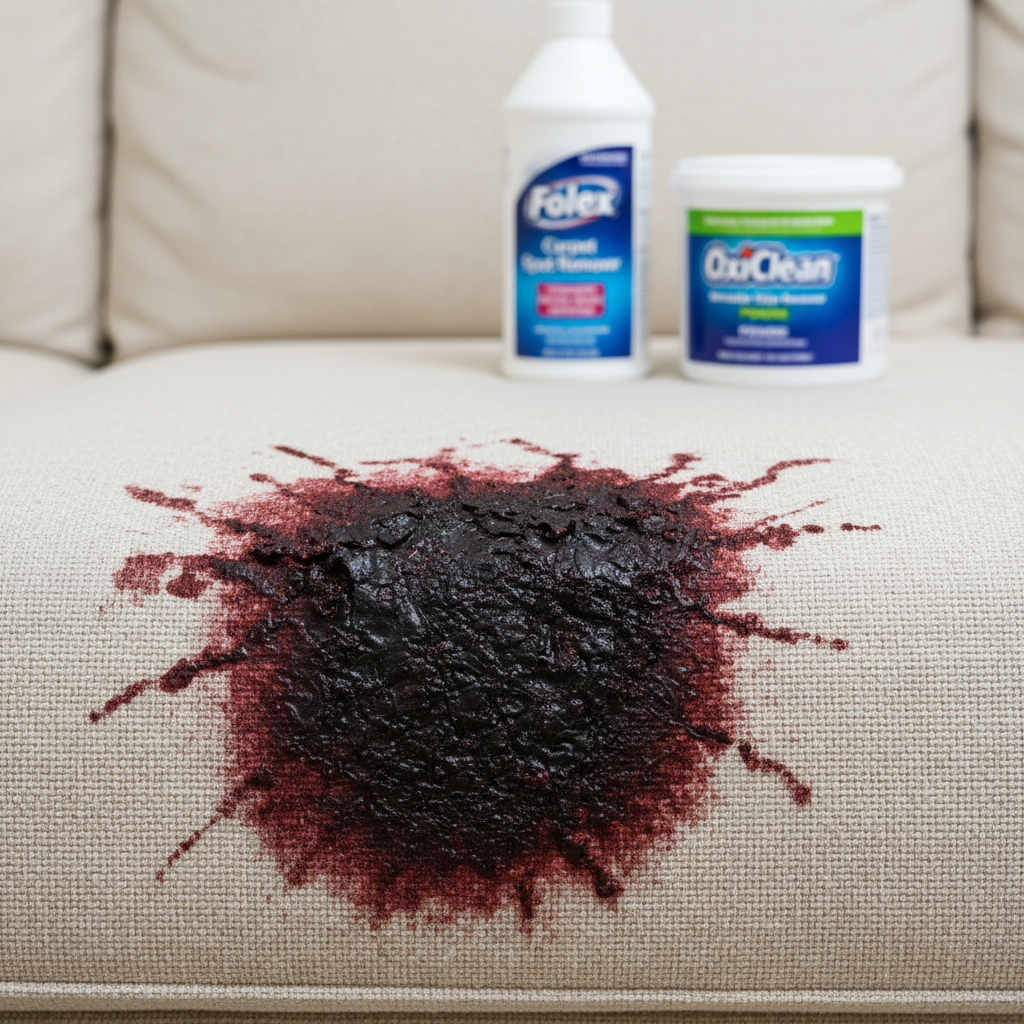
- Primary Cleaner (Choose One):
- OxiClean Versatile Stain Remover
- Folex Instant Carpet Spot Remover
- Vacuum Cleaner with Upholstery Attachment
- Several clean, white microfiber or terry cloths
Published June 3, 2026Last updated August 17, 2026
Tools & materials you'll need
Affiliate links- AmazonOxiClean Versatile Stain RemoverPrimary choice for a powerful DIY paste cleaner.
- AmazonFolex Instant Carpet Spot RemoverPrimary choice for a ready-to-use spray cleaner.
- AmazonDistilled White VinegarUsed for the final rinse to neutralize residue.
- AmazonDawn PowerwashOptional pre-treatment spray; test carefully.
As an Amazon Associate FixlyGuide earns from qualifying purchases — at no extra cost to you. Prices and availability are accurate as of publication and subject to change.
'''
Quick Answer
To remove a dried red wine stain from a light-colored couch, first vacuum any crusty residue. Next, apply a specialized cleaner like Folex or an OxiClean paste, letting it dwell for up to 30 minutes to break down the pigments. Gently blot the area (never rub) with a damp, white cloth, working from the outside-in, and finish with a diluted vinegar rinse to remove any lingering residue.
Why This Works
The sinking feeling of spotting a dried, dark red splash on a light-colored couch is universal. It looks permanent, almost like a dye. That's because, chemically speaking, it is. Red wine is rich in anthocyanins and tannins, natural pigments found in grape skins that act as a potent dye, eager to latch onto and penetrate porous fibers like cotton, linen, or polyester. When the wine dries, the water and alcohol evaporate, leaving a concentrated patch of these pigments that chemically bond to the upholstery fibers. This is why a simple soap-and-water scrub often fails and can even make the stain larger and more set-in.
Our multi-stage approach is designed to systematically break these chemical bonds without harming your couch. The first star of the show is an oxidizing agent. OxiClean's active ingredient, sodium percarbonate, reacts with water to release hydrogen peroxide. This is a form of oxygen bleach—much gentler than chlorine bleach—that performs a targeted chemical reaction. It alters the chemical structure of the wine's color molecules (chromophores), effectively rendering them colorless. For an already-dried stain, creating a paste allows for a longer "dwell time," giving the peroxide the minutes it needs to work its magic. For a ready-made solution, a product like Folex works on a different principle. It's a surfactant- and solvent-based cleaner. Its ingredients are designed to surround the stain molecules, reducing their adhesion to the fabric fibers so they can be lifted away and blotted up. Finally, the concluding rinse with diluted distilled white vinegar serves two purposes: its mild acidity helps to break down any remaining stubborn tannin particles and it neutralizes the alkaline residue left by many cleaners, preventing the dreaded "re-soiling" ring that can appear after a spot treatment.
What You Need
- Primary Cleaner (Choose One):
- OxiClean Versatile Stain Remover
- Folex Instant Carpet Spot Remover
- Rinsing Agent:
- Distilled White Vinegar
- Tools:
- Vacuum Cleaner with Upholstery Attachment
- Several clean, white microfiber or terry cloths
- Small bowl (if using OxiClean)
- Spoon or old credit card
- Spray bottle
- Liquids:
- Cold Water (Do NOT use hot water)
- Optional:
- Dawn Powerwash (for pre-treatment on some fabrics)
- A small fan for drying
Step-by-Step Method
-
Prep and Vacuum — Before you introduce any liquid, you must deal with the solid. A dried wine stain will have a crusty surface. Use your vacuum's upholstery attachment to thoroughly vacuum the entire stained area. This removes dried-on particles and prevents you from turning them into a muddy mess when you add cleaner. If the cushion is removable, take it off the couch and place it on a flat, protected surface.
-
Crucial Spot Test — Find an inconspicuous spot on the couch—a seam on the back, the underside of the cushion, or the skirt. Apply a small amount of your chosen cleaner (either the Folex or the mixed OxiClean paste). Let it sit for 5-10 minutes, then blot it away with a damp cloth. If you see any color transfer to the cloth or any change in the upholstery color, stop immediately.
-
Path A: The Folex Method — If you're using the ready-to-use Folex, this is your path. It's generally safer for a wider variety of fabrics and requires no mixing. Spray the Folex directly and generously onto the dried red wine stain. You want to saturate the stain itself, but try to avoid soaking the entire cushion through to the foam core.
-
Agitate and Dwell — Gently agitate the sprayed area with your fingertip or a very soft-bristled brush (an old toothbrush works). Work the product into the stain a bit. Now, let it dwell for 5-10 minutes. This dwell time allows the surfactants in Folex to get to work breaking the bond between the stain and the fabric fibers.
-
Path B: The OxiClean Paste Method — If you chose OxiClean for its powerful oxidizing action, now is the time to mix your paste. In a small bowl, combine one part OxiClean powder with just enough cool water to form a thick paste, roughly the consistency of toothpaste. Using warm or hot water can accelerate the reaction too quickly and potentially damage the fibers, so stick with cool water.
-
Apply the OxiClean Paste — Using a spoon or spatula, apply a thick layer of the OxiClean paste directly onto the entire surface of the red wine stain, making sure it's fully covered. Extend the paste about a quarter-inch beyond the stain's border to ensure you get the edges. Let the paste sit and work for a significant amount of time—anywhere from 15 to 30 minutes. You may even see the paste start to "lift" the color as it works.
-
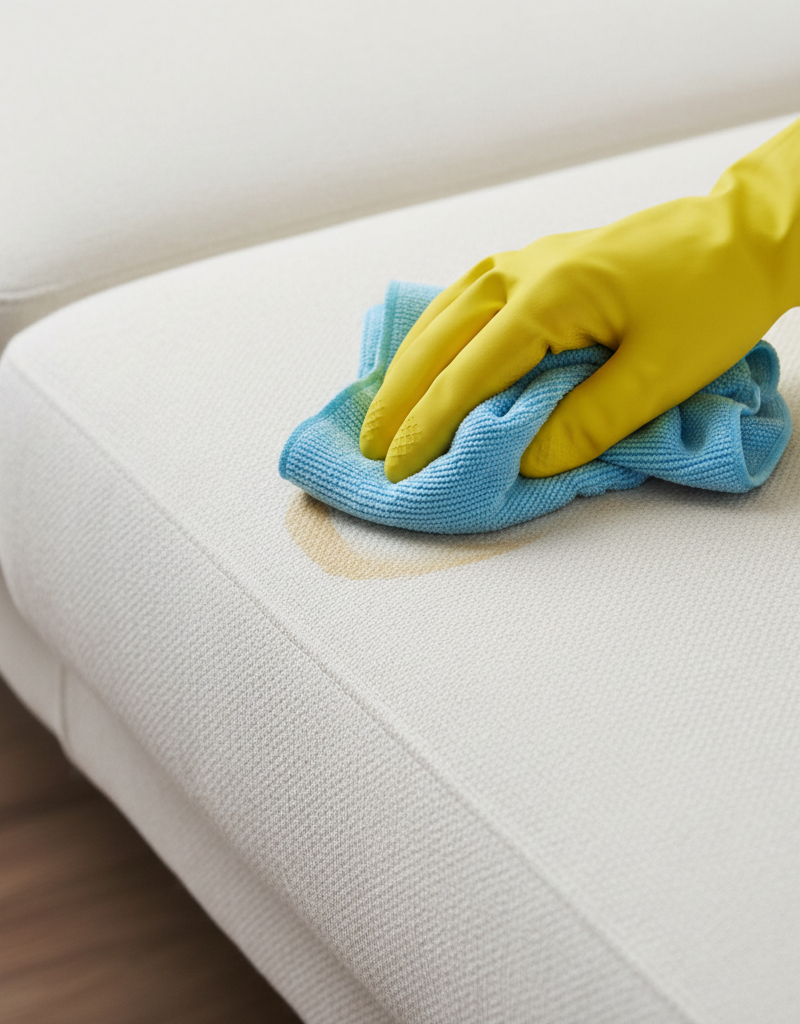
Scrape and Blot — If you used OxiClean, use a spoon or the edge of an old credit card to gently scrape the dried paste off the surface. Discard the paste. Now, take a clean, white cloth, dampen it with cold water, and begin blotting the stain area. If you used Folex, you can skip the scraping and go straight to blotting with your damp cloth. Blot from the outside edge of the stain inward to prevent spreading it. As the wine color transfers to your cloth, refold it to a clean section. Continue until no more color is transferring.
-
The Essential Vinegar Rinse — Mix a solution of one part distilled white vinegar to two parts cool water in a spray bottle. Lightly mist the area you just cleaned. Do not soak it. The vinegar will help dissolve any remaining detergent residue and break down the last traces of the wine's tannins. Let it sit for a minute.
-
The Final Water Rinse — Dampen a new, clean white cloth with plain cool water. Blot the entire area again to "rinse" the vinegar solution out of the fabric. This is a critical step to prevent the fabric from smelling like vinegar once it dries.
-
Dry and Inspect — Press a thick, dry towel firmly onto the wet spot to absorb as much moisture as possible. Stand on it if you can. Once you've absorbed the excess water, let the cushion air dry completely. Aiming a small fan at the spot will speed this up and help prevent water rings. Do not apply heat from a hairdryer, as it can set any stain remnants you might have missed.
Common Mistakes
- Scrubbing Vigorously: Rubbing or scrubbing a stain grinds the pigment particles deeper into the fabric's fibers and can fray the upholstery, creating a fuzzy, damaged patch.
- Using Heat: Applying hot water, steam, or a hot hairdryer will effectively cook the tannins into the fabric, setting the stain permanently. Always use cool water and air dry.
- Skipping the Spot Test: The five minutes it takes to test an unseen area can save you from discoloring an entire couch cushion. All fabrics react differently, and it is a non-negotiable step.
- Soaking the Cushion: Oversaturating the area with water or cleaner can cause the liquid to penetrate deep into the cushion's foam core, leading to mildew, mold, and unpleasant odors that are nearly impossible to remove.
- Using the Wrong Cleaner: Never use chlorine bleach or ammonia-based cleaners (like some window cleaners) on upholstery. They are overly harsh and can cause irreversible color loss and fiber damage. Mixing cleaners is also incredibly dangerous; for example, OxiClean (a peroxide-based cleaner) and vinegar should be used in sequence, not mixed.
- Forgetting the Final Rinses: If you leave OxiClean or vinegar residue in the fabric, it can attract dirt over time, creating a new, dark spot where the old stain used to be.
Cost & Time Breakdown
| Task | DIY Cost | Pro Cost | Time |
|---|---|---|---|
| Supplies & Material Gathering | $5 - $15 | Included in service | 10 mins |
| Stain Vacuuming & Prep | $0 | Included in service | 5 mins |
| Cleaner Application & Dwell Time | <$1 | Included in service | 20-40 mins |
| Blotting and Stain Removal | <$1 | Included in service | 15 mins |
| Rinsing and Drying Setup | <$1 | Included in service | 15 minutes |
| Total | ~$7 - $17 | $125 - $250+ | ~65-85 minutes |
Prevention & Maintenance
- Apply a Fabric Protectant: When you first buy a couch, or after a deep cleaning, treat it with a quality fabric protector like Scotchgard. This creates an invisible shield that causes spills to bead up on the surface rather than soaking in immediately.
- Act Immediately: The faster you get to a spill, the easier it is to remove. A wet red wine spill can often be almost completely removed just by blotting and using the salt method (piling salt on to draw out the liquid).
- Keep a "Spill Kit" Ready: Store a bottle of Folex and a few clean white cloths together in a closet. Having them on hand means you can address a spill in seconds rather than minutes, dramatically increasing your success rate.
- Vacuum Upholstery Regularly: Use your vacuum's upholstery attachment to clean your couch weekly. This removes abrasive dirt and dust that can weaken fibers and make them more susceptible to staining.
- Enforce a "No Red Wine on the Couch" Rule: This is the only 100% effective method of prevention!
When to Call a Professional
While the DIY method is surprisingly effective, there are definite times to put down the OxiClean and pick up the phone. If your couch is made of a delicate or non-colorfast material like silk, velvet, or wool, it is best to call a professional. These materials require specialized solvents and cleaning techniques to avoid water marking, shrinkage, or texture change. Furthermore, if you check the cleaning tag on your couch and it is marked with an "S" (for "solvent-based cleaner only") or "X" (vacuum only), do not attempt to use water-based cleaners. If the stain is exceptionally large (covering more than one cushion) or has been there for many months or years, the pigments may be too deeply set for household methods. Lastly, if you have tried the steps above and the stain persists or you've created a large water ring, a certified technician from the Institute of Inspection Cleaning and Restoration Certification (IICRC) has truck-mounted equipment and access to professional-grade chemicals that can often salvage the piece without the risk of further damage. '''
What should this project cost?
Enter your project details for a realistic cost range before you call anyone.
Cost depends heavily on which system turns out to be the source.
- Regional adjustment
- National average
- Labor share (typical)
- ~$1,620
- Quotes to collect
- 3 written estimates
Educational estimate based on national averages — not a binding quote. Always confirm with written local estimates.
Get the print-ready PDF of this guide
A clean, ad-free, printable version you can keep on your phone or pin to the workshop wall. Free with a FixlyGuide account.
- Print-optimized layout
- Tools, materials & every step included
- Saved to your account
Frequently asked questions
Can I use salt on a dried red wine stain?+
No, salt is only effective on fresh, wet stains. It works by absorbing the liquid through osmosis before the pigments can set. On a dry stain, salt has no chemical cleaning power and will not be effective.
Will hydrogen peroxide work instead of OxiClean?+
OxiClean's active ingredient is sodium percarbonate, which creates hydrogen peroxide when mixed with water. Using OxiClean is generally safer as it's a more controlled, buffered-for-fabric solution. While you can use standard 3% hydrogen peroxide, it carries a much higher risk of bleaching your couch fabric and should only be considered as a last resort after extensive spot testing in a hidden area.
What can I do about the water ring left after cleaning?+
A water ring or 'tidemark' is typically caused by mineral deposits from tap water drying at the edge of the wet area. To fix it, you need to feather out the edges. Lightly mist the entire section of the cushion, from seam to seam, with distilled water (which contains no minerals). Then, use a dry cloth to blot the area thoroughly to absorb the moisture evenly. Finally, point a fan at the cushion to speed up drying, which helps prevent a new ring from forming.
Can I use bleach on a white couch?+
You should never use chlorine bleach on upholstery, even if it's white. Most 'white' fabrics are actually dyed white, and bleach can turn them yellow or grey. Furthermore, bleach can catastrophically damage the fabric fibers, making them brittle and easy to tear. Always opt for an oxygen bleach like OxiClean instead.

Discussion
Loading comments…