- Dirty Air Filters: They choke airflow and make your AC work too hard to pull air across the coils.
- Lack of Condenser Coil Cleaning: The unit can’t dump heat outside the way it should.
- Refrigerant Leaks: Low refrigerant means the system can’t transfer heat efficiently. That one needs a pro.
- Clogged Condensate Drain: Stops dehumidification, can cause water damage, or shut the unit down.
- Leaky Ductwork: Conditioned air escapes into unconditioned spaces.
Published July 30, 2026Last updated August 17, 2026
Tools & materials you'll need
Affiliate linksAs an Amazon Associate FixlyGuide earns from qualifying purchases — at no extra cost to you. Prices and availability are accurate as of publication and subject to change.
Quick Answer
Forget those crazy sit-in refrigerators — you’re not a side of beef. When the house feels like an oven, the fix usually isn’t some novelty cooler; it’s getting your existing AC to run the way it should and keeping that cold air from leaking out. I’m talking about stuff you can actually do yourself — clean the filters, seal up those leaky ducts, make sure the insulation isn’t worthless. You’d be surprised how much cooler the place gets for a few bucks and an afternoon.
The Problem
Around here, people are always chasing that sweet indoor temp, especially when it’s brutal outside. Once the mercury gets past 90°F, a lot of folks start thinking their AC is junk. They crank it down to 68°F, let it run all day, and still feel like they’re baking cookies on the countertop. Then the power bill lands in the mailbox like a kick in the teeth, and they start thinking they need a whole new system or some fancy gadget.
But a lot of the time, the AC unit itself isn’t the real problem. It’s everything around it. The house is bleeding heat in and cool air out, so the system’s working its tail off and getting nowhere. I’ve been on hundreds of calls where the homeowner swore the unit was dying, and all I found was a filthy filter or a duct hanging open in the attic. I pulled a water heater in Frisco last month that had exactly this kind of “the equipment’s bad” story — turned out the house was the problem, not the appliance.
Those sit-in fridges from Japan? Funny for a commercial, sure. Not much help for a whole house.
How It Works
Alright, let’s walk through how your AC actually cools the house, because once you know the cycle, it gets a lot easier to spot what’s going sideways. Most homes run a split system: one outdoor unit, which is the condenser, and one indoor unit with the evaporator coil and air handler.
Here’s the short version. The refrigerant — that’s the chemical that grabs heat and dumps it somewhere else — starts out as a low-pressure, cool gas inside the indoor evaporator coil. Your air handler fan pulls warm, humid indoor air across that coil, the refrigerant sucks up the heat, and the air coming out gets cold. Then that now-warm refrigerant heads outside to the condenser unit. There, the compressor — basically a big pump — squeezes it into a hot, high-pressure gas. After that, it runs through the condenser coil, and the fan blows that heat outside where it belongs. As the heat leaves, the refrigerant cools back down into a high-pressure liquid. Then it passes through an expansion valve, which drops the pressure and temperature, and sends it right back to the indoor coil to start the whole thing over again.
So yeah, it’s a closed loop. Constantly moving heat from inside your house to outside. If one part of that loop gets sloppy — dirty coil, refrigerant leak, weak airflow, any of it — your AC can’t move heat worth a darn. It runs longer, fights harder, and your house still feels sticky. Like trying to bail out a leaky boat with a coffee cup. No dice.
Step-by-Step Fix
1. Swap Out Your Air Filter — Don’t underestimate this one, it’s the simplest fix with the biggest impact.
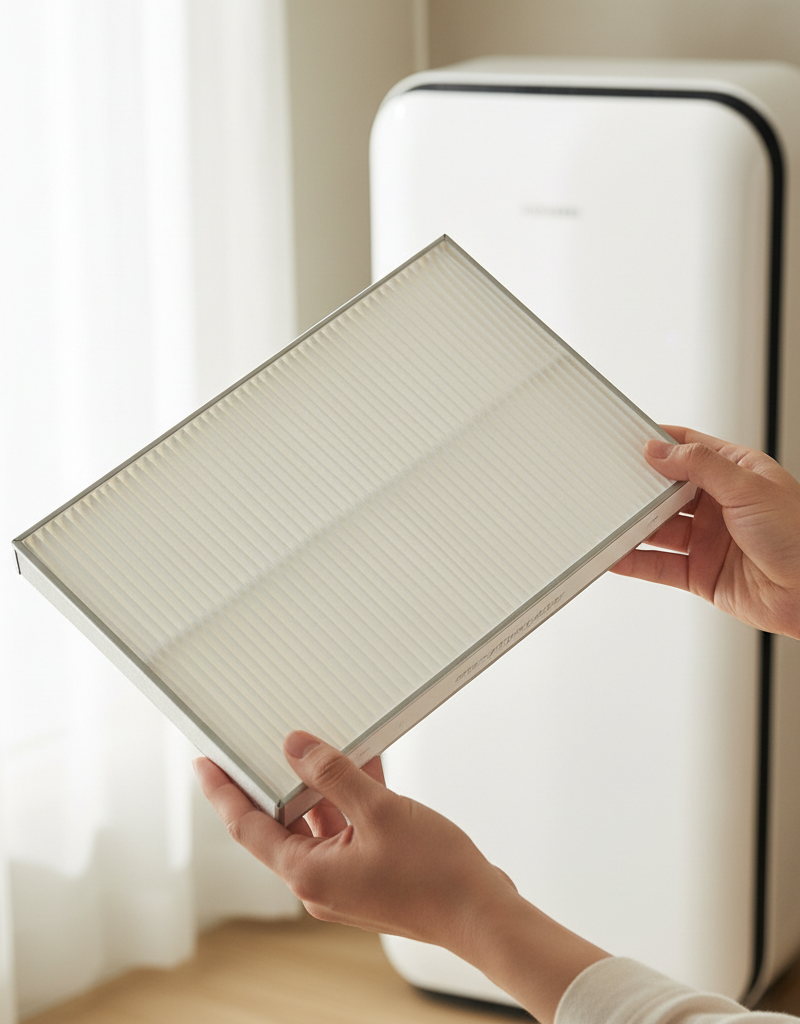
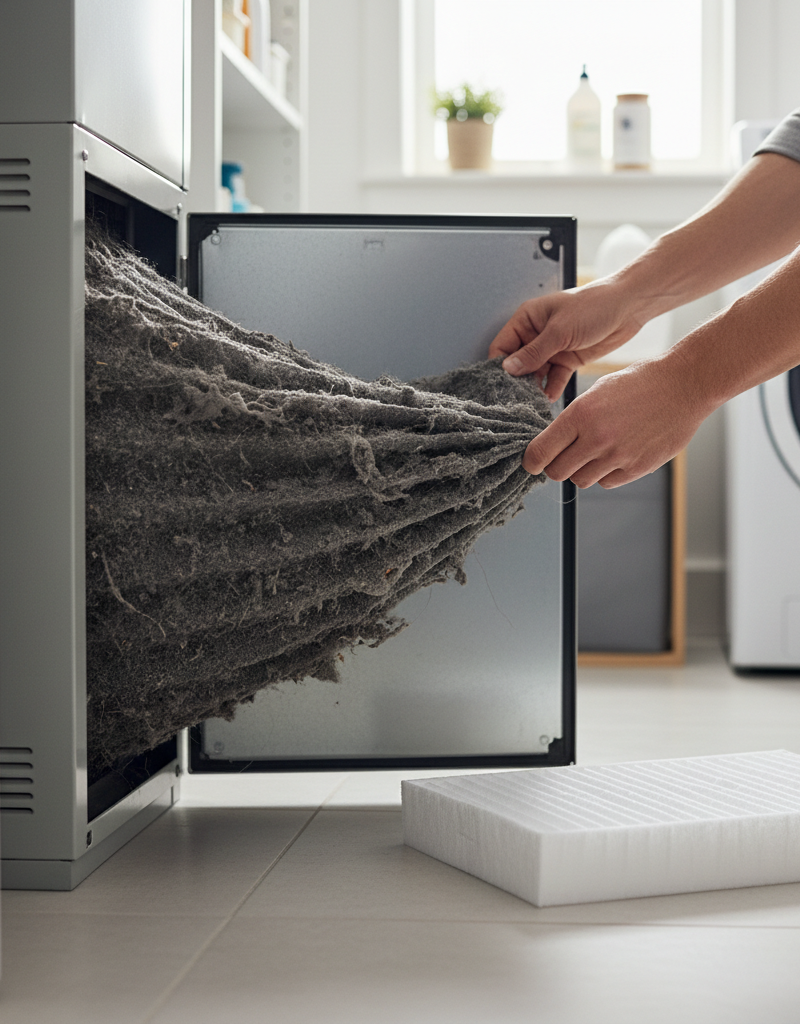
This is the first thing I check when somebody tells me their AC isn’t cooling. A clogged filter chokes off airflow across the evaporator coil, and the whole system starts acting tired. You’ll usually hear the air handler straining to pull air through.
- How: Pop open the return air vent or the filter slot on your furnace/air handler. Pull out the old filter and note the size. Slide in a fresh one, and make sure the arrows point toward the furnace unit. I tell folks to write the install date on the edge with a marker so they don’t forget when to change it again.
- Frequency: Change it every 30-90 days, depending on pets, allergies, and how dusty your place gets. If you’ve got a shedding dog, think monthly. Easy.
2. Clean the Outdoor Condenser Coils — Let your unit breathe easy, it’s working hard out here.
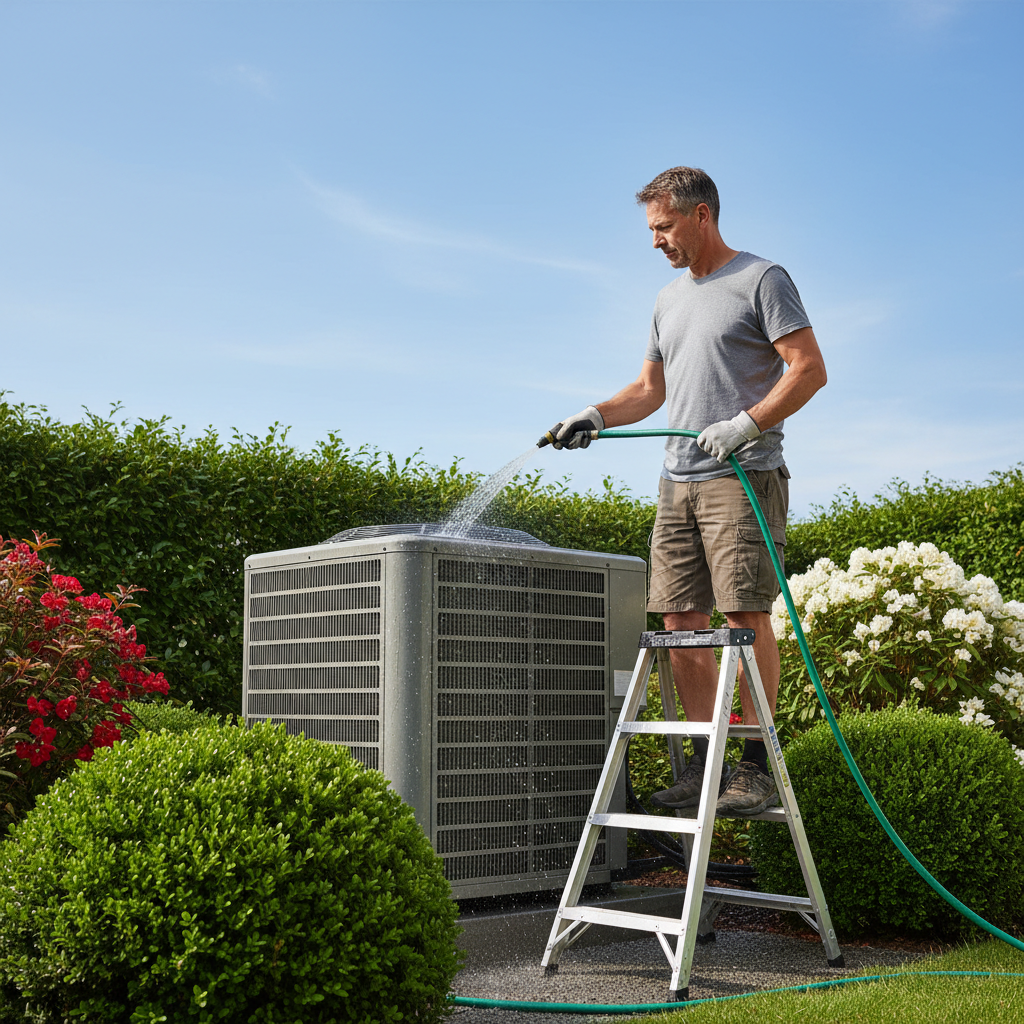
Those fins on the outdoor unit are there to dump heat. If they’re packed with dirt, leaves, grass clippings, or cottonwood fluff, the AC can’t get rid of the heat and it starts running overtime. That beats up the compressor and jacks up the electric bill. One summer in the Montclair neighborhood of Denver, I pulled a condenser cover off a unit that hadn’t been touched in years. It was stuffed with a mat of dog hair and dryer lint. Thing was basically wearing a winter coat.
- Safety First: ALWAYS turn off the power to the outdoor unit at the disconnect box, usually that little box mounted on the wall beside the unit. Better yet, kill the breaker at the main panel that feeds the AC if you want to be extra cautious. Trust me, you do not want those blades kicking on while your hands are in there.
- How: Gently spray the fins from the inside out with a garden hose to push the debris off. You can also use a coil cleaner spray from the hardware store; just follow the can. Don’t grab a pressure washer — you’ll bend the fins up in a hurry.
3. Clear Drain Line Clogs — Prevent water damage and humidity spikes.
Your AC pulls moisture out of the air, and that water’s gotta go somewhere. It drains through a condensate line, usually a PVC pipe. If that line gets clogged with algae or sludge, water backs up and the unit might shut itself off as a safety move. Sometimes you’ll see water pooling around the indoor furnace unit. That’s a bad sign.
- How: Find the condensate drain line. It’s usually a small, ¾-inch PVC pipe coming out of the indoor unit. Pour a cup of distilled white vinegar or a mixture of bleach and water (1 part bleach, 16 parts water) down the access port — usually a T-shaped fitting with a cap. If it’s packed solid, you may need a wet/dry vac on the outdoor end to pull the clog out.
4. Seal Your Ductwork Leaks — Stop paying to cool your attic or crawl space.
Think of your ducts as the highway for cold air. If there are holes, gaps, or loose connections, that air’s taking a side road to places you don’t want to cool. I’ve seen homes where 20-30% of the conditioned air was dumping into unconditioned spaces like attics. That’s money straight out the window.
- How: Head into your attic or crawl space where the ducts run. Look for joints, elbow connections, and any visible tears. Use mastic sealant or specialized aluminum foil tape — not duct tape, because that stuff gives up fast in the heat — to seal every seam and gap you can find. Pay extra attention where the ducts tie into the vents and the main air handler. Run your hand along the seams while the AC is running; you’ll often feel air leaking out.
- Tools: A good mastic sealant and a paintbrush, or quality metal foil tape like Nashua 324A.
5. Add Attic Insulation — Your roof is a giant radiant heater, fight back!
If your attic insulation is thin or flat-out missing, your roof is baking the house all day long. A decent attic insulation layer acts like a thermal blanket, keeping the heat where it belongs — up there — and the cool air down where you live.
- Check: Head into the attic and look at the insulation depth. In most parts of the country, you should have at least 12-18 inches of insulation (R-value R-38 to R-60) — that fluffy stuff should be covering the ceiling joists. If you can see the joists, you probably need more.
- How: This can be a DIY job if you’re careful and patient. You can buy batts (rolls) of fiberglass or mineral wool insulation, or rent a blower for loose-fill cellulose or fiberglass. Just wear a respirator, gloves, and long sleeves — it’s itchy work. It goes real well with attic duct sealing, too.
6. Use Ceiling Fans Correctly — They don’t cool the room, they cool you.
People mix this up all the time. A ceiling fan doesn’t drop the air temperature; it creates a wind-chill effect on your skin so you feel cooler. That means you can often set the thermostat 2-4°F higher and still stay comfortable, which saves energy.
- How: In summer, make sure the blades are spinning counter-clockwise when you’re looking up at the fan. That pushes air straight down. Most fans have a little switch on the motor housing to flip the direction.
- When: Turn ceiling fans off when you leave a room — there’s no point cooling an empty space.
7. Seal Windows and Doors — Stop the hot air invasion.
Drafty windows and doors are basically open invitations for hot, humid air to sneak into a home that’s supposed to be cooled. That forces your AC to run longer just to hold the line.
- How: Check for drafts around windows and doors. You can use an incense stick or a lit candle — if the flame flickers, you’ve got a leak. For windows, add weatherstripping around the sashes and caulk any gaps in the frame. For doors, replace worn-out door sweeps and adjust the threshold. A lot of older homes in Denver, especially the ones built in the 50s and 60s, leak a ton of air around sloppy window seals. A few dollars in caulk and weatherstripping can make a big difference. Real big.
Common Causes
- Dirty Air Filters: They choke airflow and make your AC work too hard to pull air across the coils.
- Lack of Condenser Coil Cleaning: The unit can’t dump heat outside the way it should.
- Refrigerant Leaks: Low refrigerant means the system can’t transfer heat efficiently. That one needs a pro.
- Clogged Condensate Drain: Stops dehumidification, can cause water damage, or shut the unit down.
- Leaky Ductwork: Conditioned air escapes into unconditioned spaces.
- Poor Insulation: Lets heat move into your home from the attic or walls.
- Improper Thermostat Settings: Setting the thermostat too low, or
Related Articles
Keep troubleshooting with these hand-picked guides from FixlyGuide:
- The Hidden Culprit Behind Your AC Not Cooling (and How to Find It) — If your central AC isn't cooling your home, the issue often stems from a surprisingly simple problem that's easy to overlook. Learn how to…
- The Hidden Reason Your AC Isn't Cooling (And Why Most Homeowners Get It Wrong) — When your central AC unit isn't cooling, the culprit often isn't what you think, leading to frustration and unnecessary repair calls.
- The Single Board Secret to Attracting Bluebirds: A Quick DIY House — Discover how to construct an ideal bluebird house using just one cedar board, providing a safe and inviting home for these cherished backya…
- The Secret to Saving 40% on Outdoor Power Tools (Even When There's No Sale) — Unlock deep discounts on outdoor power tools year-round, even without a major holiday sale, by leveraging strategic timing and smart shoppi…
- The 4 Critical Power Tools Every New Homeowner FORGETS to Buy (Don't Be One of Them) — New homeowners often overlook essential power tools that make common home repairs and maintenance tasks significantly easier. Learning whic…
- The $5 Secret to Preventing Ice Dams (and Why Your Neighbors Still Get Them) — Discover the surprising truth about ice dams and how a simple, inexpensive solution can protect your home from costly winter damage.
Estimate your own project cost
National averages are a starting point. Enter your details for a range that fits your house.
HVAC replacement cost
- Equipment$2,200 – $3,800
- Installation labor$1,200 – $2,500
Always insist on a Manual J load calculation — sq-ft sizing is only a rough check. Federal heat-pump rebates may reduce cost significantly.
Educational estimate only — always confirm with written local bids.
Questions to ask before you sign
Ask every contractor the same questions and the cheapest bid stops looking cheapest. Check them off as you go — your progress is saved on this device.
Free, no signup. Bring this to every walkthrough so you compare bids on the same terms.
What should this project cost?
Enter your project details for a realistic cost range before you call anyone.
Cost depends heavily on which system turns out to be the source.
- Regional adjustment
- National average
- Labor share (typical)
- ~$1,620
- Quotes to collect
- 3 written estimates
Educational estimate based on national averages — not a binding quote. Always confirm with written local estimates.
Fixly Project Decision Box
- DIY difficulty
- Advanced
- Estimated time
- Homeowner checks 20–30 minutes
- Cost level
- Moderate
Main tools / materials
- Clean air filter
- Garden hose for condenser coils
- Shop vac for the condensate line
When to stop and call a pro
- Burning smell, smoke, or a tripping breaker
- Refrigerant lines iced over or hissing
- Any work inside the sealed refrigerant circuit (EPA-licensed only)
- Gas smell near a furnace — leave and call the utility
Need professional help?
Find an HVAC Pro Near YouPrice your roof project
Check the numbers in this guide against your own roof and ZIP code.
Free, no signup required. Estimates are educational guidance, not a quote or an inspection.
This article was independently written by FixlyGuide based on the source topic.
Frequently asked questions
How often should I change my AC filter?+
You should change your AC filter every 30-90 days. If you have pets, allergies, or live in a dusty area, aim for monthly. A clean filter is crucial for good airflow and efficient cooling.
Can a dirty outdoor AC unit really affect cooling?+
Absolutely. If the condenser coils on your outdoor unit are caked with dirt, leaves, or grass, the unit can't efficiently release heat outside. This makes your AC work harder, raising your energy bill and reducing cooling performance.
What's the best way to seal leaky ductwork?+
The most effective way is to use mastic sealant or specialized aluminum foil tape (not regular duct tape). Apply it to all joints, connections, and visible holes in your ductwork located in unconditioned spaces like attics or crawl spaces.
Why is my AC running constantly but not cooling well?+
This is a classic sign of low airflow (dirty filter, blocked return vents) or an inability to transfer heat (dirty condenser coils, low refrigerant). It could also be significant air leaks in your home letting hot air in.
Do ceiling fans actually help cool a room?+
Ceiling fans don't lower the air temperature, but they create a wind-chill effect on your skin, making you feel cooler. Running them allows you to set your thermostat 2-4 degrees higher while maintaining comfort, saving energy. Make sure they spin counter-clockwise in summer.
What kind of insulation do I need in my attic?+
Most homes should aim for an R-value of R-38 to R-60 in the attic, which translates to about 12-18 inches of insulation depth. Fiberglass batts, loose-fill fiberglass, or cellulose are common choices. Adding insulation creates a crucial barrier against heat transfer.
When should I call a professional for AC issues?+
Call a pro if you suspect a refrigerant leak (poor cooling, ice on coils), if your outdoor unit isn't running at all, if you hear strange noises like grinding or screeching, or if you can't identify or solve the problem with basic DIY steps. Electrical work beyond swapping a filter or cleaning coils should also be left to licensed technicians.
Can I use duct tape to seal my air ducts?+
No, absolutely not. Despite its name, regular duct tape isn't designed for HVAC applications and will degrade, peel, and fail quickly, especially in hot attics. Always use mastic sealant or UL-listed aluminum foil tape specifically made for duct sealing.
How much does it cost to clean AC coils professionally?+
Professional coil cleaning usually runs between $100 and $250, often as part of a routine AC tune-up. You can save money by doing the outdoor condenser coil cleaning yourself.
Should I close vents in unused rooms?+
It's generally not recommended to close off too many vents. Your HVAC system is designed to circulate a certain volume of air. Closing vents can increase static pressure in the ductwork, potentially reducing efficiency, increasing noise, and even causing damage to your system over time. It's better to ensure proper insulation and sealing than to starve your system of airflow.
My AC keeps freezing up. What's wrong?+
A frozen evaporator coil (ice on the indoor unit) is usually a sign of severely restricted airflow (very dirty filter, blocked return vents) or low refrigerant levels. If it's not a filter, you'll need a professional to diagnose and fix a refrigerant issue or other airflow problems.
What's the ideal thermostat setting for summer?+
While personal comfort varies, energy experts often recommend setting your thermostat to 78°F (or higher) when you're home in the summer. When you're away, you can set it even higher, around 82-85°F. Using ceiling fans can make these higher settings feel perfectly comfortable.
Discussion
Loading comments…