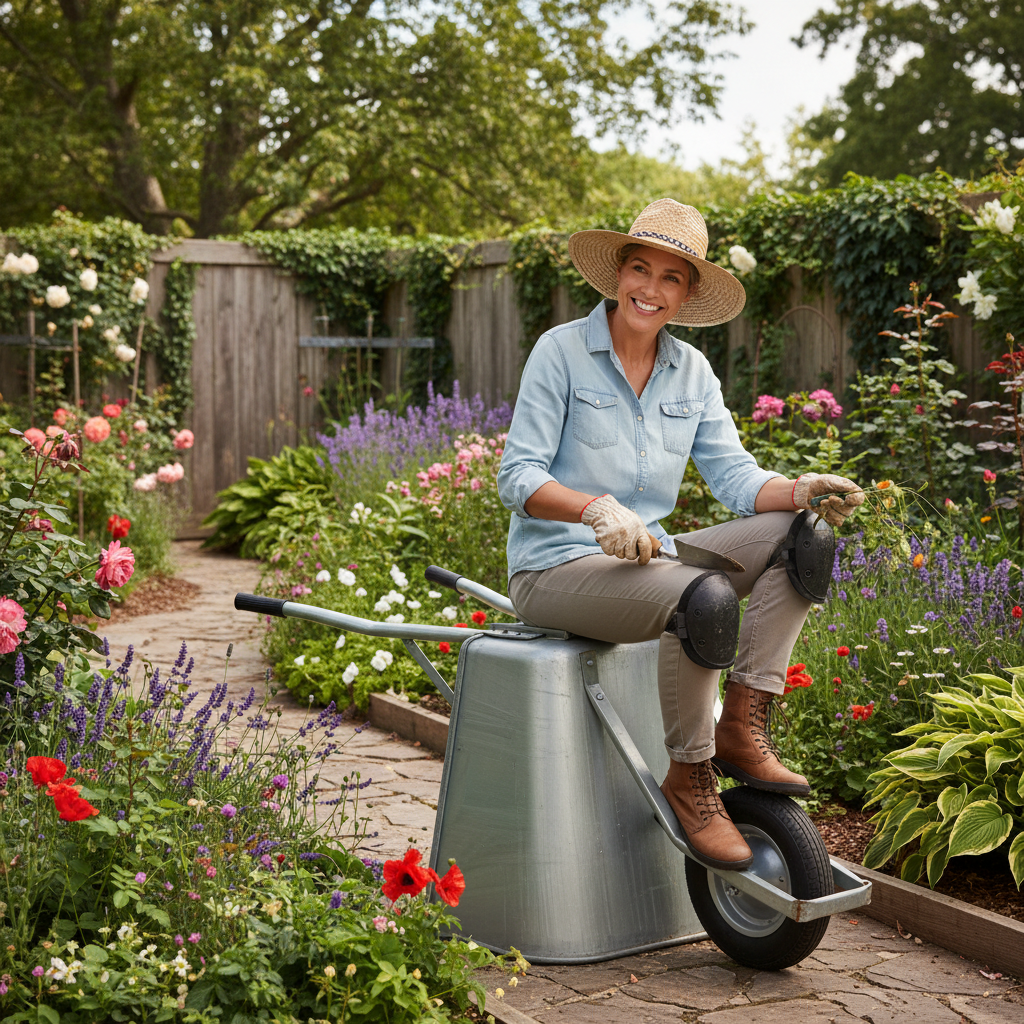
- Distribute your weight evenly.
- You can straddle it or sit facing one side, depending on your task and comfort.
- Safety Note: Always ensure the wheelbarrow is completely stable before applying full weight. If you feel any instability, get off immediately and re-position.
Published June 26, 2026Last updated August 17, 2026
Tools & materials you'll need
Affiliate links- AmazonGardening gloves1 pair · Recommended for comfort and protection
As an Amazon Associate FixlyGuide earns from qualifying purchases — at no extra cost to you. Prices and availability are accurate as of publication and subject to change.
Quick Answer
Turning your wheelbarrow upside-down instantly creates a stable and comfortable stool, perfect for reducing strain on your back and knees during gardening tasks. This ergonomic trick allows you to sit at a convenient height, making weeding, planting, and harvesting much more comfortable and sustainable.
The Problem
Gardening, while rewarding, often involves prolonged periods of bending, kneeling, and squatting. These repetitive motions can put significant stress on your lower back, hips, and knees. Even seasoned gardeners experience aches and pains after a long session in the yard. The constant shifting of positions, getting up and down, and working at ground level without adequate support contributes to fatigue and can exacerbate existing joint issues or lead to new ones. Many homeowners try using buckets or specialized garden stools, but these are often unwieldy, unstable, or simply another item to carry around.
How It Works
A standard wheelbarrow, when inverted, offers a surprisingly stable and ergonomically advantageous seating solution. The key lies in its design. Most residential wheelbarrows feature a robust, bowl-shaped pan made of metal or heavy-duty plastic, supported by a sturdy frame with two legs and a single wheel. When you flip the wheelbarrow over, the pan becomes the seat. The handles, which typically extend to the front, now point upwards and outwards, preventing the wheelbarrow from tipping side to side. The two legs that usually support the pan now provide the primary base, along with the handles creating a tripod-like stability.
The curved bottom of the wheelbarrow pan, when inverted, creates a slightly contoured seat that is more comfortable than a flat surface. The height of this impromptu stool is typically around 18-24 inches, an ideal working height for many ground-level tasks like weeding flowerbeds, planting small shrubs, or harvesting low-growing vegetables like strawberries or peas. This height allows you to keep your back relatively straight, engaging your core muscles for stability rather than relying on awkward bending. Furthermore, the inherent mobility of the wheelbarrow means your seat is always where you need it. Unlike a stationary bench or stool, you can simply slide or wheel your seat along with you as you progress through your garden bed, eliminating the need to constantly get up and reposition. This small adjustment in posture and mobility can significantly reduce the cumulative strain on your musculoskeletal system, allowing for longer, more enjoyable gardening sessions without the typical post-gardening soreness.
Step-by-Step Fix
1. Clear Your Wheelbarrow — Ensure the wheelbarrow is empty of all debris, soil, tools, or water.
- Any contents will make it unstable and potentially dirty your clothes.
2. Position Safely — Place the wheelbarrow on a flat, even patch of ground near your work area.
- Avoid slopes or uneven terrain, which could cause the wheelbarrow to tip.
- Position it so the handles are pointing away from your body when you sit.
3. Carefully Invert — Grip the handles firmly and gently tip the wheelbarrow upside-down.
- Make sure the two legs and the ends of the handles (where you would normally push) are making stable contact with the ground.
- The wheel will now be pointing upwards, and the pan creates your seat.
4. Test Stability — Before fully sitting, gently press down on the inverted pan with your hands.
- Wiggle it slightly to ensure it feels firm and doesn't rock excessively.
- If it wobbles, adjust its position slightly until it's stable.
5. Sit Down Safely — Slowly lower yourself onto the curved bottom of the wheelbarrow pan.
- Distribute your weight evenly.
- You can straddle it or sit facing one side, depending on your task and comfort.
- Safety Note: Always ensure the wheelbarrow is completely stable before applying full weight. If you feel any instability, get off immediately and re-position.
6. Enjoy Your Mobile Seat — Now you have a comfortable, mobile seat for weeding, planting, or pruning.
- When you need to move to a new spot, simply slide the wheelbarrow along the ground or stand up, re-position, and sit down again.
- You can also use the inverted handles to hang lightweight tools, keeping them within easy reach.
Common Causes
While this 'fix' isn't for a problem with the wheelbarrow itself, it's a solution to the common physical strains caused by traditional gardening methods. The 'causes' for needing this trick are:
- Prolonged Bending and Kneeling: The inherent nature of many gardening tasks requires being close to the ground, leading to back and knee strain.
- Lack of Ergonomic Support: Many gardeners either don't have suitable seating or find dedicated garden stools cumbersome.
- Repetitive Motions: Repeatedly getting up and down, or staying in a bent position for extended periods, stresses joints and muscles.
- Unsuitable Work Height: Working from a standing position often means bending over excessively, while kneeling without support puts direct pressure on the knees.
- Carrying Multiple Tools: Having to constantly move separate stools, buckets, or tool caddies around the garden.
Common Mistakes
- Not Clearing the Wheelbarrow First: Forgetting to empty the wheelbarrow can lead to dirt on your clothes, instability, or even damage to items left inside when you sit down. Always ensure it's empty and clean.
- Using on Uneven Ground: Attempting to use the inverted wheelbarrow on sloped or very uneven terrain significantly increases the risk of tipping. Stick to flat, stable surfaces.
- Ignoring Instability: If the wheelbarrow wobbles when you first sit or apply weight, don't ignore it. It's an accident waiting to happen. Adjust its position immediately until it feels rock-solid.
- Using a Damaged Wheelbarrow: If your wheelbarrow has bent legs, a cracked pan, or a wobbly frame, it's not safe to use as a seat. Only use a structurally sound wheelbarrow.
- **Overloading the
Related Articles
Keep troubleshooting with these hand-picked guides from FixlyGuide:
- The Secret to Lush Raised Beds? It's Not Just About How You Water — Smart irrigation for raised garden beds isn't just about automation; it's about delivering the right amount of water precisely when your pl…
- The Hidden Reason Your GFCI Trips (It's Not Always a Faulty Outlet) — A continuously tripping GFCI outlet is a critical safety warning, often indicating moisture, a faulty appliance, or a wiring problem that r…
- The 5 Essential Tools Every New Gardener Needs (And 3 You Can Skip) — Starting a garden doesn't require a huge investment in tools; savvy new gardeners can thrive with just a few key items and save money by kn…
- The 4-Hour — Transform your garden into a self-sufficient oasis with smart strategies for watering, weeding, and pest control, minimizing your effort.
- The 3-Ingredient Secret to Sparking Clean Carpets (That Most Don't Know) — Unlock the secret to brilliantly clean carpets with a simple, potent three-ingredient homemade solution that effectively tackles stains and…
- The #1 Mistake Homeowners Make After Finding Missing Shingles (And How to Fix It Right) — Discover the crucial steps to take after a storm rips shingles from your roof, ensuring a proper, lasting repair and preventing costly futu…
What should this project cost?
Enter your project details for a realistic cost range before you call anyone.
Cost depends heavily on which system turns out to be the source.
- Regional adjustment
- National average
- Labor share (typical)
- ~$1,620
- Quotes to collect
- 3 written estimates
Educational estimate based on national averages — not a binding quote. Always confirm with written local estimates.
This article was independently written by FixlyGuide based on the source topic.
Frequently asked questions
Is using a wheelbarrow as a seat stable and safe?+
Yes, when properly inverted on a flat, even surface, a standard wheelbarrow is surprisingly stable. The two legs and the ends of the handles form a broad, secure base. Always test stability before fully sitting down, and avoid using it on slopes or uneven ground.
What kind of wheelbarrow works best for this trick?+
Most standard residential wheelbarrows with a single wheel and two legs will work well. Metal or heavy-duty plastic pans are equally suitable. Ensure the wheelbarrow is structurally sound and not damaged.
Can this trick really help with back and knee pain?+
Absolutely. By providing a comfortable seated position at an ideal height for ground-level tasks, you reduce the need for constant bending, squatting, and kneeling, which are primary causes of gardening-related back and knee strain. It promotes better posture and reduces fatigue.
What's the best way to move the wheelbarrow seat around the garden?+
Once seated, you can often gently slide the inverted wheelbarrow along the ground a short distance without standing up. For longer moves, simply stand, reposition the wheelbarrow in your new work area, and sit back down.


Discussion
Loading comments…