- The Hidden Reason Your Furnace Short Cycles — And Why Most Homeowners Get It Wrong — Furnace short cycling, characterized by frequent on-off cycles, often points to a few common issues, most of which are surprisingly easy fo…
- Oven Not Heating to Correct Temperature? How to Diagnose and Fix — An oven that doesn't heat to the correct temperature can ruin meals. This guide helps you diagnose common issues like a faulty igniter or h…
- Dryer Not Heating: Fix a Tripped Thermal Fuse Fast — Is your electric dryer running but not heating? This guide walks you through safely diagnosing and replacing a tripped thermal fuse, a comm…
- The $5 Part That Stops Your Dryer From Heating (And How to Replace It in 30 Minutes) — A dryer that tumbles but doesn't heat often points to a blown thermal fuse, a simple and inexpensive fix most homeowners can do themselves.
- The Secret Culprit Behind Your AC Blowing Warm Air (It’s Not What You Think) — Discov
Electrical · Burning smell or sparking
| Project category | Electrical |
|---|---|
| Problem type | Burning smell or sparking |
| Trade required | Electrical |
| Urgency | Emergency — act now |
| Safety risk | High safety risk |
| DIY suitability | Licensed pro only |
| Cost category | Moderate cost |
| Typical timeline | Same-day emergency call |
| Contractor type | Licensed electrician |
Repair option
Kill the circuit at the panel and have the connection repaired immediately.
Replacement option
Circuit or panel replacement when damage extends beyond one device.
Common causes
- Loose connection arcing inside a box
- Overloaded circuit or undersized wiring
- Failed backstab connections in older receptacles
Relevant tools:emergency checklistdiy or hire a pro
Published April 27, 2026Last updated August 17, 2026
Tools & materials you'll need
Affiliate linksAs an Amazon Associate FixlyGuide earns from qualifying purchases — at no extra cost to you. Prices and availability are accurate as of publication and subject to change.
How it works
To understand the source of a burning smell from your vents, it is essential to grasp the fundamental operation of a forced-air furnace. When your thermostat detects a drop in temperature below its set point, it sends a low-voltage signal to the furnace's control board. This initiates a precise ignition sequence. First, an inducer fan starts, drawing air through the heat exchanger and pushing it out the flue to ensure a clear vent path. A pressure switch confirms this airflow, allowing the sequence to proceed. Next, an igniter—either a hot surface igniter that glows orange-hot or a spark igniter—activates. After a few seconds, the gas valve opens, releasing a controlled flow of natural gas or propane to the burners.
Upon ignition, the flames heat the inside of a critical component called the heat exchanger, a clam-shell or tubular assembly of sealed metal chambers. Crucially, the combustion byproducts, including dangerous carbon monoxide (CO), are contained within these chambers and are vented safely out of your home. After the heat exchanger reaches a preset temperature, the main blower motor engages. It pulls cooler air from your home through the return ducts, past the air filter, and forces it over the exterior surface of the hot heat exchanger. The air absorbs thermal energy without ever mixing with the combustion gases. This newly heated air is then pushed through the supply ductwork to your living spaces. During the months the furnace is dormant, household dust, pet dander, and microscopic debris settle on the cool outer surfaces of the heat exchanger and burners. When the furnace fires up for the first time in the season, this layer of accumulated dust is subjected to intense heat (500-700°F) and burns off, creating the characteristic dusty, singed odor that is then circulated through your home.
Step-by-Step Fix
Follow these steps to diagnose and resolve the common causes of a burning smell from your furnace. If the smell is acrid, chemical-like, or persists beyond the first hour of operation, stop and call a professional.
-
Perform an initial system test. — Set your thermostat to "Heat" and let the furnace run for 30-60 minutes. A typical dust burn-off smell is most potent in the first few minutes and should fade significantly or disappear entirely within an hour. If the odor persists, strengthens, or changes to smell like melting plastic, smoldering wires, or oil, immediately shut down the system at the thermostat and the emergency switch.
- Safety: A persistent or chemical-like smell indicates a more serious problem. Do not continue running the furnace.
- Note: Open a few windows during this initial test to help ventilate your home and clear the odor more quickly.
-
Cut all power to the furnace. — Your safety is paramount. First, turn off the furnace service switch, which is typically a standard light switch located on or near the furnace unit. Next, go to your home's main electrical panel and flip the circuit breaker that supplies power to the furnace to the "Off" position.
- Tools: Non-contact voltage tester.
- Verification: After flipping the breaker, use a non-contact voltage tester on the wiring entering the furnace control board to confirm that the power is completely disconnected before proceeding.
-
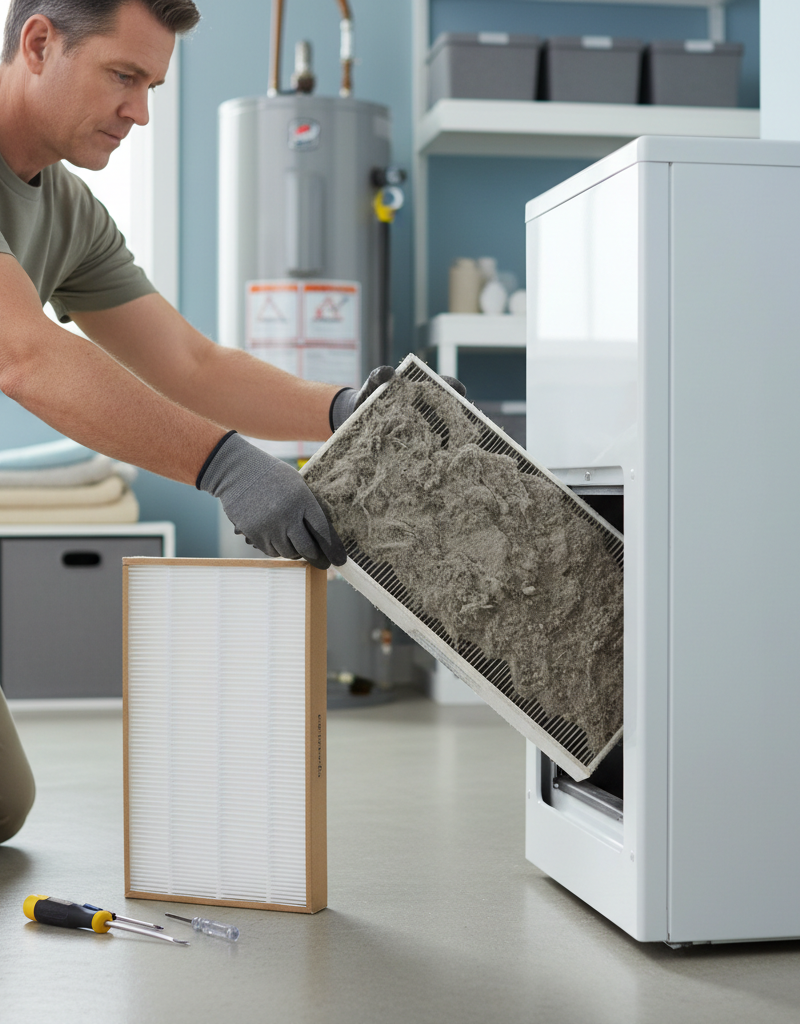
Replace the furnace air filter. — A dirty and clogged air filter is a primary cause of furnace issues. It restricts airflow, forcing the blower motor to work harder and causing the heat exchanger to get hotter than designed, which can intensify burning smells and trip safety limit switches. Slide the old filter out of its slot, located near the blower motor compartment.
- Tools: New furnace filter.
- Instructions: Note the size printed on the side of the old filter and purchase an identical replacement. Observe the airflow arrow on the new filter and ensure it points toward the furnace/blower motor, following the direction of the air being pulled from the return ducts.
-
Clear the furnace closet or utility room. — Furnaces require adequate clearance for proper combustion and ventilation. Remove any boxes, storage containers, laundry, or flammable liquids (paints, solvents, gasoline) from within a three-foot radius of the unit. Debris near the return air intake can be pulled into the system, creating odors and fire hazards.
-
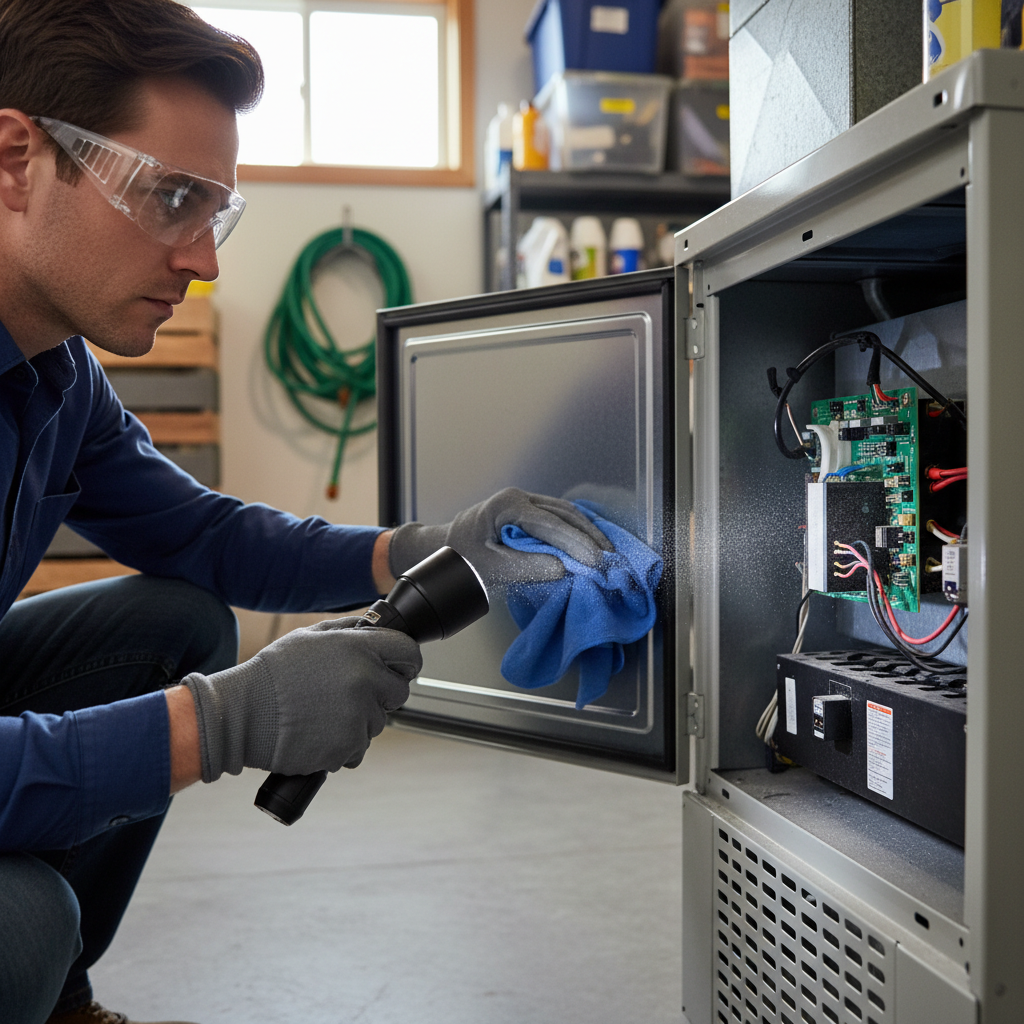
Inspect the blower compartment. — With the power off, remove the service door that covers the blower motor (usually the lower panel). Use a bright flashlight to inspect the "squirrel cage" blower wheel for excessive dust, caked-on debris, or pet hair. Also, visually check the blower motor itself for signs of overheating, such as scorch marks, melted plastic on wiring connectors, or a localized acrid smell.
- Tools: Flashlight, nut driver or screwdriver (to remove panel).
- If you find: Heavy buildup on the blower wheel, proceed to the next step for cleaning. If you see signs of electrical overheating on the motor, do not proceed; call a professional.
-
Clean the blower wheel and motor housing. — If the blower wheel is heavily coated, it can become unbalanced and restrict airflow. Use a vacuum with a brush and crevice tool attachment to carefully remove as much dust as possible from the individual blades of the wheel and the surrounding compartment. A can of compressed air can help dislodge stubborn dust from the motor's ventilation ports.
- Caution: Work carefully to avoid damaging the motor wiring or the delicate fins on the blower wheel. Do not use any liquids or chemical cleaners.
-
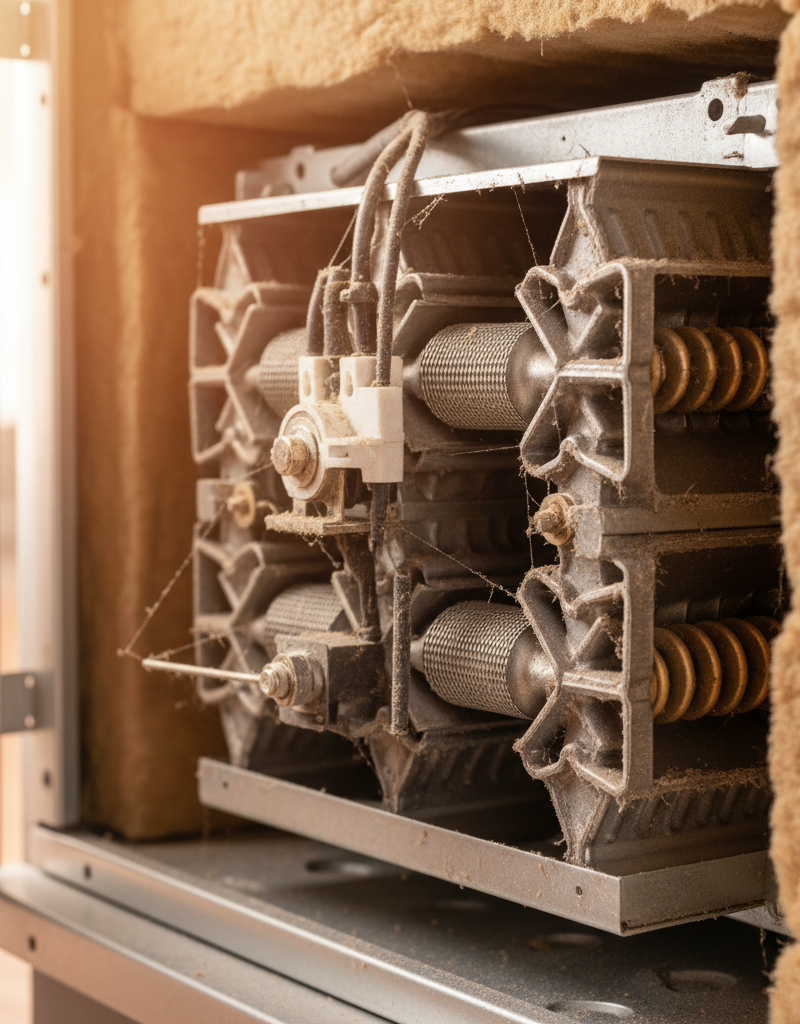
Inspect the burner and heat exchanger assembly. — Remove the upper service panel to access the burner assembly. Use your flashlight to look at the burners, the igniter (a small, often D-shaped ceramic element or a spark probe), and the visible face of the heat exchanger tubes. You may see a fine layer of white or gray dust, which is normal. Look for more concerning signs like thick black soot, heavy rust flakes, or scorch marks on the cabinet wall around the burners, which could indicate flame rollout.
- Warning: The hot surface igniter is extremely fragile. Do not touch or bump it with your vacuum or tools. A cracked igniter will prevent your furnace from starting.
-
Gently vacuum the burner compartment. — Use a vacuum with a soft brush attachment to carefully clean dust and any small debris from the floor of the compartment. Meticulously clean around the gas valve and burner assembly without touching the components directly. Removing this dust prevents it from being pulled into the burner flames and contributing to odors.
-
Check for blocked vents and duct leaks. — Walk through your home and ensure that at least 80% of your supply and return air vents are open and unobstructed by furniture, rugs, or drapes. Closed vents increase static pressure, which can cause the furnace to overheat. While in the utility room, check the return ductwork near the furnace for any obvious gaps or disconnected seams and seal them with mastic sealant or foil tape.
-
Reassemble and test the system. — Securely reinstall both the burner and blower compartment service panels. The panels often have a safety switch that prevents the furnace from operating if they are not properly in place. Restore power by flipping the circuit breaker on, then turning on the service switch. Set your thermostat to heat and listen for the furnace to start. Monitor for any recurring smells over the next few cycles.
Common mistakes
Avoiding these frequent errors ensures a safe and effective diagnosis and repair.
- Ignoring Persistent or Chemical Odors. The most dangerous mistake is assuming every burning smell is benign dust. If an odor smells strongly of burning plastic, rubber, or electrical components, or if it doesn't fade after one hour, it signifies a hazardous condition like an overheating motor or failing wiring. Shut down the system immediately and call a professional.
- Using an Incorrect Air Filter. Many homeowners grab any filter of the right dimensions. However, using a filter with a MERV (Minimum Efficiency Reporting Value) rating that is too high for your system can severely restrict airflow, causing the furnace to overheat and short cycle. Always adhere to the furnace manufacturer's recommendation for MERV rating, and never install a filter backward against the indicated airflow arrow.
- Aggressively Cleaning Internal Components. Using water, harsh chemical cleaners, or excessive force inside the burner or blower compartments can cause significant damage. You can easily crack a fragile hot surface igniter, bend a flame sensor, short out a control board with moisture, or unbalance the blower wheel. Stick to gentle vacuuming of surrounding surfaces only.
- Forgetting to Kill All Power. Failing to turn off both the service switch and the circuit breaker is a critical oversight. The low-voltage wiring from the thermostat remains live even with the service switch off, and the main 120V power can deliver a fatal shock or damage the control board if accidentally shorted. Always verify with a non-contact tester.
- Storing Flammable Materials Nearby. It's common for a furnace utility closet to become a storage area. Storing gasoline, paint thinner, aerosol cans, propane tanks, or even stacks of paper and cardboard within three feet of the appliance creates a serious fire hazard. These items can release flammable vapors that can be ignited by the furnace burners.
- Sealing Off Too Many Vents. In an attempt to direct heat to specific rooms, homeowners often close the vents in unused areas. Closing more than 20% of your home's supply registers can dramatically increase static pressure within the ductwork. This strains the blower motor and can cause the furnace to overheat, potentially cracking the heat exchanger over time.
Cost & time breakdown
The cost and time associated with fixing a burning smell vary widely, from a simple filter change to a major component replacement.
| Task | DIY cost | Pro cost | Time |
|---|---|---|---|
| Furnace Air Filter Replacement | $5 - $40 | $75 - $150 (as part of a tune-up) | 5 minutes |
| Basic DIY Furnace Cleaning | $0 - $15 (for vacuum attachments) | N/A | 30-60 minutes |
| Annual Professional Furnace Tune-Up | N/A | $100 - $250 | 1-2 hours |
| Blower Motor Replacement | $150 - $450 (for the motor) | $500 - $1,100 | 2-4 hours |
| Emergency HVAC Service Call | N/A | $150 - $400 (diagnosis fee only) | 1-3 hours |
| Heat Exchanger Replacement | Not a DIY job | $2,000 - $4,000+ | 4-8 hours |
When to call a pro
While dust burn-off is a common DIY fix, certain symptoms demand immediate professional attention due to severe safety risks. Turn off your furnace and call a qualified HVAC technician if you encounter any of the following:
- A "Rotten Egg" or Sulfur Smell: This distinct odor is added to natural gas and propane to signal a leak. If you smell this, do not operate any light switches or electronics. Evacuate your home immediately, and then call your gas utility's emergency line from a safe distance outside.
- A Strong Electrical or Melting Plastic Odor: An acrid smell that stings the nostrils points to an electrical fault. This could be an overheating blower motor, a failing capacitor, or melting wire insulation, all of which present a significant fire hazard.
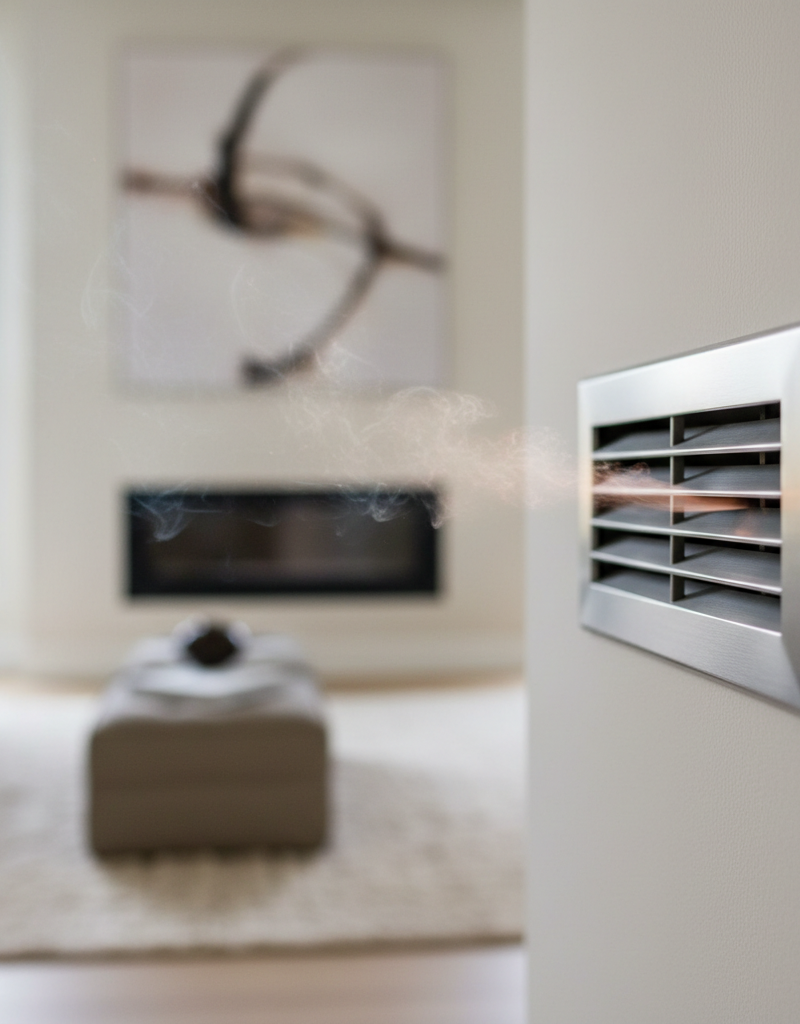
- Visible Smoke from Vents or the Furnace: Any visible smoke, no matter how faint, is a clear sign that something is actively burning or smoldering. This is an emergency that requires shutting down the system and calling for professional service.
- Loud, Atypical Noises: If the burning smell is accompanied by loud banging, screeching, grinding, or scraping sounds, it indicates a serious mechanical failure. This could be a disintegrating blower wheel, failed motor bearings, or other internal damage.
- Carbon Monoxide Detector Activation: If your CO detector sounds an alarm, treat it as a life-threatening emergency. A cracked heat exchanger could be leaking deadly, odorless carbon monoxide into your home's air supply. Evacuate everyone immediately and call 911 or the fire department.
Prevention & maintenance
Proactive maintenance is the best way to ensure your furnace operates safely and efficiently, preventing odors and premature failures.
- Change Air Filters Religiously. This is the single most important maintenance task. For standard 1-inch filters, replace them every 30-90 days. For larger 4-5 inch media filters, inspect them every 6 months and replace annually. A clean filter protects all internal components from dust and ensures proper airflow.
- Schedule Annual Professional Inspections. Before each heating season, have a certified HVAC technician perform a full tune-up. They will professionally clean the burners, flame sensor, and blower, test safety controls, check gas pressure, and inspect the heat exchanger for cracks—a critical safety check.
- Maintain Clear Space Around the Furnace. Enforce a strict three-foot clearance zone around your furnace, water heater, and other combustion appliances. This negative space is required for proper ventilation and prevents combustible materials from becoming a fire hazard.
- Install and Test Carbon Monoxide Detectors. Place CO detectors on every floor of your home, especially outside sleeping areas and near the furnace room. Test them monthly and replace the units entirely every 5 to 10 years, according to the manufacturer's date code on the back.
- Keep Vents and Registers Clean. Periodically remove your vent covers and use a vacuum to clean out any dust, pet hair, or debris that has fallen inside. This reduces the amount of material that can be pulled into the ductwork and settle on the heat exchanger.
- Listen for Changes. Pay attention to the typical sounds your furnace makes during a heating cycle. New noises like rattling, buzzing, or grinding are early indicators of a developing problem that is best addressed before it leads to a complete breakdown.
Related Articles
Keep troubleshooting with these hand-picked guides from FixlyGuide:
- The Hidden Reason Your Furnace Short Cycles — And Why Most Homeowners Get It Wrong — Furnace short cycling, characterized by frequent on-off cycles, often points to a few common issues, most of which are surprisingly easy fo…
- Oven Not Heating to Correct Temperature? How to Diagnose and Fix — An oven that doesn't heat to the correct temperature can ruin meals. This guide helps you diagnose common issues like a faulty igniter or h…
- Dryer Not Heating: Fix a Tripped Thermal Fuse Fast — Is your electric dryer running but not heating? This guide walks you through safely diagnosing and replacing a tripped thermal fuse, a comm…
- The $5 Part That Stops Your Dryer From Heating (And How to Replace It in 30 Minutes) — A dryer that tumbles but doesn't heat often points to a blown thermal fuse, a simple and inexpensive fix most homeowners can do themselves.
- The Secret Culprit Behind Your AC Blowing Warm Air (It’s Not What You Think) — Discov
Should you do this yourself?
Answer five quick questions before you start. Safety outranks savings every time.
Your experience with work like this
How high do you have to work?
Does the job involve any of these?
Will it need a permit?
Specialty tools
Free and instant. Educational guidance only — not a quote, inspection, or professional diagnosis.
Estimate your own project cost
National averages are a starting point. Enter your details for a range that fits your house.
HVAC replacement cost
- Equipment$2,200 – $3,800
- Installation labor$1,200 – $2,500
Always insist on a Manual J load calculation — sq-ft sizing is only a rough check. Federal heat-pump rebates may reduce cost significantly.
Educational estimate only — always confirm with written local bids.
What should this project cost?
Enter your project details for a realistic cost range before you call anyone.
Service calls and common repairs run $150–$900; full system replacement typically $6,000–$12,000.
- Regional adjustment
- National average
- Labor share (typical)
- ~$1,935
- Quotes to collect
- 3 written estimates
Educational estimate based on national averages — not a binding quote. Always confirm with written local estimates.
Fixly Project Decision Box
- DIY difficulty
- Advanced
- Estimated time
- Homeowner checks 20–30 minutes
- Cost level
- Moderate
Main tools / materials
- Clean air filter
- Garden hose for condenser coils
- Shop vac for the condensate line
When to stop and call a pro
- Burning smell, smoke, or a tripping breaker
- Refrigerant lines iced over or hissing
- Any work inside the sealed refrigerant circuit (EPA-licensed only)
- Gas smell near a furnace — leave and call the utility
Need professional help?
Find an HVAC Pro Near YouBefore you start
Check the difficulty, permits, and safety risk — then decide whether to call a pro.
Free, no signup required. Estimates are educational guidance, not a quote or an inspection.
Get the print-ready PDF of this guide
A clean, ad-free, printable version you can keep on your phone or pin to the workshop wall. Free with a FixlyGuide account.
- Print-optimized layout
- Tools, materials & every step included
- Saved to your account
Frequently asked questions
Is a burning smell from the vents dangerous?+
A slight burning or dusty smell when the heat first turns on is usually harmless, caused by dust burning off the heat exchanger. However, if the smell is strong, acrid, persistent, or accompanied by smoke or a chemical odor, it could indicate a serious problem like an electrical issue or gas leak, and you should turn off your furnace and call a professional.
How long should the burning smell last?+
If the smell is due to dust burning off, it should typically last only a few minutes to an hour after the furnace's initial firing for the season. If the smell persists for several hours or days, or if it reappears frequently, it's a sign that a more significant issue might be at play, and professional diagnosis is recommended.
Can a dirty air filter cause a burning smell?+
Yes, a heavily clogged air filter can restrict airflow, causing the furnace to overheat and potentially leading to components like the blower motor or wiring getting too hot, which can produce a burning odor. Always check and replace your air filter regularly, especially if you notice unusual smells.
Discussion
Loading comments…