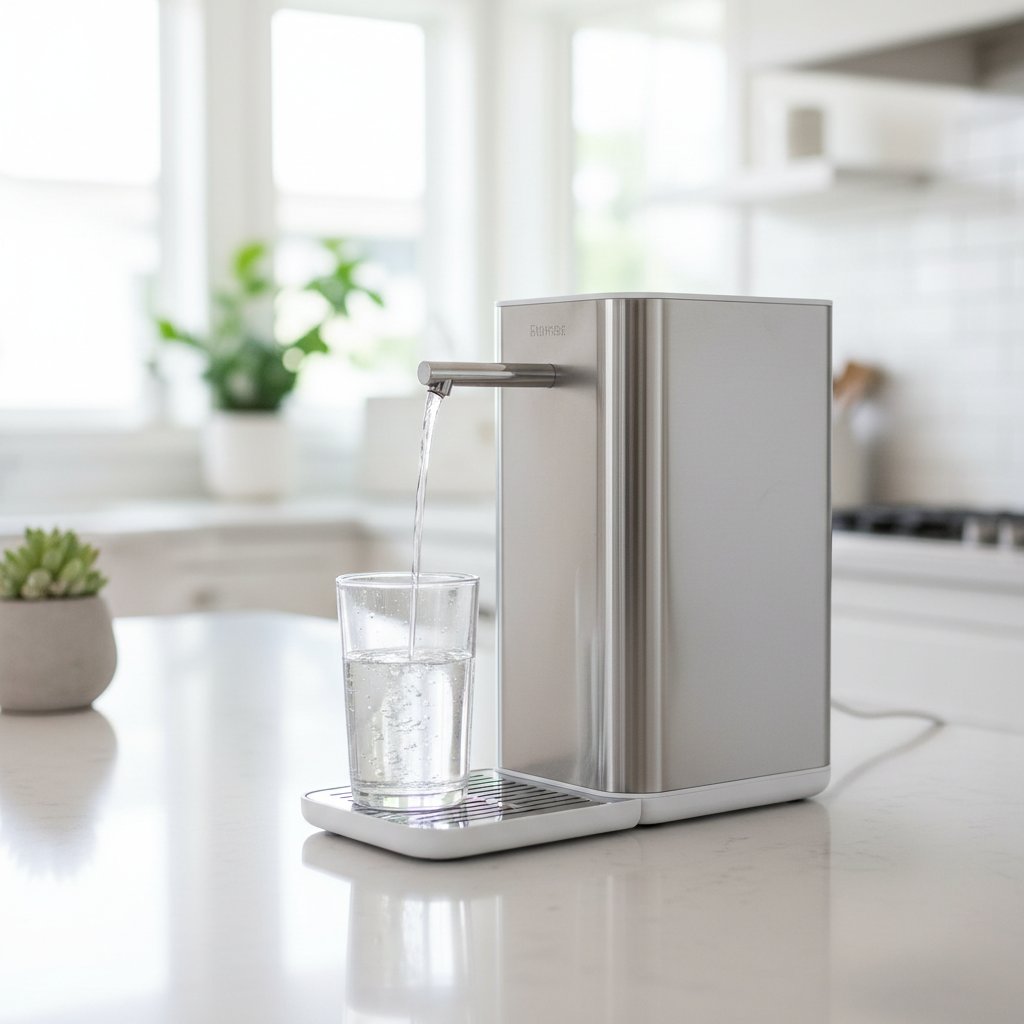
- Unbox and Assemble Carefully — Remove all components and protective packaging. Most countertop RO systems are designed for tool-free assembly. Identify the main unit, water tank (if separate), power cord, and any filter cartridges.
- Safety Note: Always ensure the unit is unplugged during assembly or filter changes.
- Lay out all parts on a clean, dry surface to prevent loss or damage.
- Install Filter Cartridges — Locate the filter bays, usually accessed by removing a panel or twisting a cover. Insert the filter cartridges into their designated slots. Filters are often numbered or color-coded for correct placement.
- Twist or push until securely seated. Listen for a click or feel resistance.
Kitchen · Kitchen remodel
| Project category | Kitchen |
|---|---|
| Problem type | Kitchen remodel |
| Trade required | General contracting |
| Urgency | Planned project |
| Safety risk | Low safety risk |
| DIY suitability | Pro recommended |
| Cost category | Major investment |
| Typical timeline | Design and cabinet lead time 8–16 weeks; build 4–8 weeks |
| Contractor type | Kitchen remodeler or general contractor |
Repair option
Refacing, new counters, or hardware for a fraction of a gut remodel.
Replacement option
Full remodel when layout, plumbing, or electrical needs to change.
Common causes
- Dated layout
- Failing cabinets or counters
- Adding function or resale value
Relevant tools:project cost estimatorcompare quoteshome improvement material prices
Published June 1, 2026Last updated August 17, 2026
Tools & materials you'll need
Affiliate linksAs an Amazon Associate FixlyGuide earns from qualifying purchases — at no extra cost to you. Prices and availability are accurate as of publication and subject to change.
Quick Answer
Many homeowners believe all countertop water filters are created equal, but there's a vast difference in filtration capability, cost-effectiveness, and even water waste between a basic filter and a countertop reverse osmosis (RO) system. Countertop RO systems offer a far more comprehensive purification by employing multiple stages, including a semi-permeable membrane that dramatically reduces impurities like lead, fluoride, chlorine, and even microscopic contaminants. This results in healthier, better-tasting water and, over time, can actually be more economical than frequently replacing cartridges in less effective filters, all without the need for complex under-sink plumbing adaptations.
The Problem
Homeowners often seek convenient solutions for better drinking water, turning to countertop filters as an easy alternative to whole-home systems or bottled water. The problem arises when these choices are made without understanding the fundamental differences in filtration technology. A simple activated carbon filter, while improving taste and odor, leaves behind a host of harmful contaminants like heavy metals, pesticides, pharmaceuticals, and dissolved solids. This leads to a false sense of security, continued exposure to impurities, and a recurring expense on filters that aren't truly solving the problem. Furthermore, the convenience of on-demand filtered water can be lost if a system requires slow gravity filtration or constant refilling of a pitcher.
How It Works
Understanding how different filtration methods function is key to making an informed decision. A basic countertop filter, often found in pitcher filters or simple faucet attachments, primarily relies on activated carbon. Water passes through a bed of carbon, which has a porous structure that traps larger particles and adsorbs chlorine, certain volatile organic compounds (VOCs), and compounds causing bad tastes and odors. Think of it like a very fine sieve that also has a sticky surface to catch some chemicals. While effective for aesthetic improvements, activated carbon does not remove dissolved minerals, heavy metals like lead or mercury, fluoride, nitrates, or many pharmaceuticals.
Reverse Osmosis (RO) operates on a fundamentally different, and far more comprehensive, principle. It's a multi-stage process that typically involves several pre-filters, an RO membrane, and a post-filter. Here's the breakdown:
- Sediment Filter: The first stage usually involves a sediment filter, which removes larger particles like rust, dirt, and sand. This protects the subsequent filters from premature clogging.
- Carbon Pre-filter: Next, a granular or block carbon filter further reduces chlorine, chloramines, and other organic chemicals that can damage the delicate RO membrane.
- RO Membrane: This is the heart of the system. Water is forced under pressure against a semi-permeable membrane with incredibly tiny pores. These pores are so small they allow only pure water molecules to pass through, effectively rejecting 90-99% of dissolved inorganic solids, salts, heavy metals (lead, arsenic, copper), fluoride, pesticides, nitrates, and even some bacteria and viruses. The rejected contaminants are flushed away in a separate stream of wastewater.
- Carbon Post-filter: After passing through the RO membrane, the purified water goes through another carbon filter (often a granular activated carbon, or GAC). This "polishing" filter removes any remaining trace odors or tastes, ensuring the water is crystal clear and fresh-tasting.
Some countertop RO systems integrate additional stages, such as UV sterilization for an extra layer of protection against microorganisms or remineralization filters to add beneficial minerals back into the water after the RO process. The key takeaway is the RO membrane's ability to physically separate impurities at a molecular level, something basic carbon filters simply cannot do.
Step-by-Step Fix
While "fix" might imply repair, this section focuses on the setup and maintenance of a typical countertop RO system, often replacing an inadequate filter.
- Unbox and Assemble Carefully — Remove all components and protective packaging. Most countertop RO systems are designed for tool-free assembly. Identify the main unit, water tank (if separate), power cord, and any filter cartridges.
- Safety Note: Always ensure the unit is unplugged during assembly or filter changes.
- Lay out all parts on a clean, dry surface to prevent loss or damage.
- Install Filter Cartridges — Locate the filter bays, usually accessed by removing a panel or twisting a cover. Insert the filter cartridges into their designated slots. Filters are often numbered or color-coded for correct placement.
- Twist or push until securely seated. Listen for a click or feel resistance.
- Check the user manual for the specific order of filters, as incorrect placement can impair performance.
- Fill the Water Reservoir — Carefully fill the raw water reservoir (the tank that holds the untreated tap water) to the maximum fill line. Do not overfill.
- Use regular tap water initially for flushing the system.
- Connect Power and Begin Flushing Cycle — Plug the unit into a grounded electrical outlet. Follow the instruction manual to initiate the initial flushing cycle. This purges air from the system and flushes out any manufacturing residues (carbon dust, etc.).
- Expect: This process can take 10-30 minutes and will produce a significant amount of wastewater. Some systems cycle automatically.
- Empty the wastewater tank as directed by the system.
- Test the Water (Optional but Recommended) — Once flushing is complete, dispense a small amount of purified water. For peace of mind, consider using a TDS (Total Dissolved Solids) meter to measure the purified water and compare it to your tap water.
- If this doesn't work: If the TDS reading isn't significantly lower (e.g., 90% reduction), recheck filter installation and ensure all connections are secure. Run another flush cycle.
- Ongoing Maintenance: Regular Filter Changes — Adhere strictly to the manufacturer's recommended filter replacement schedule. This is typically every 6-12 months for pre/post-filters and every 24-36 months for the RO membrane, depending on water quality and usage.
- Tip: Keep a spare set of filters on hand for quick replacement.
- Safety Note: Always unplug the unit before changing filters.
- Clean the Water Tanks — Periodically clean the raw water reservoir and the purified water tank (if accessible). Use mild soap and water, then rinse thoroughly. This prevents bacterial growth and maintains water quality.
- Consult your manual for specific cleaning instructions.
Common Causes
- Misunderstanding Filtration Basics: Many homeowners simply don't know the difference between basic filtration and advanced purification like RO. They assume any filter removes "all the bad stuff."
- Over-reliance on Pitcher Filters: While convenient for small amounts, pitcher filters are typically slow, low-capacity activated carbon filters that require frequent refills and don't remove most significant contaminants.
- Cost Perception: The upfront cost of an RO system, even a countertop one, can deter homeowners who might mistakenly think cheaper pitcher filters are equivalent.
- Fear of Installation: Previously, RO systems required under-sink plumbing. Countertop versions eliminate this barrier, but the perception of complex installation often remains.
- Ignoring Local Water Reports: Not knowing what contaminants are actually in their municipal water (or well water) prevents homeowners from choosing the right filtration system.
Common Mistakes
- Assuming "Filtered" Means "Pure": A common pitfall is believing any filtration vastly improves water quality. Many filters only address taste and odor, leaving harmful contaminants behind. Do this instead: Understand the specific contaminants your local water supply contains and choose a filter rated to remove them (e.g., lead, PFAS, chlorine).
- Neglecting Filter Replacement Schedules: Overdue filter changes reduce efficiency, can allow contaminants to "break through," and even cause bacterial buildup. Do this instead: Mark filter change dates on a calendar or set phone reminders. Most RO systems have indicator lights for replacements.
- Using a TDS Meter Incorrectly: A TDS meter measures dissolved solids, which RO systems excel at removing. However, it doesn't tell you what those solids are (some can be benign minerals), nor does it detect organic chemicals. Do this instead: Use a TDS meter as a general indicator of RO membrane health; a sudden rise in TDS in purified water often signals a failing membrane. For specific contaminant testing, use lab test kits.
- Ignoring Wastewater Production: RO systems produce some wastewater as they flush contaminants. Homeowners sometimes worry about this without understanding it's a necessary part of the purification process. Do this instead: Acknowledge that the health benefits outweigh the water usage. Modern countertop RO systems are often more efficient than older under-sink models, with waste ratios as low as 1:1.
- Overlooking "Added Minerals" Claims: Some filters claim to add beneficial minerals. While RO removes most minerals (good and bad), adding them back needs to be done carefully. Do this instead: If concerned about mineral content, specifically look for systems with a remineralization stage or consider mineral drops for your purified water rather than relying on vague filter promises.
Cost & Time Breakdown
| Task | DIY Cost | Pro Cost | Time |
|---|---|---|---|
| Countertop RO System | $200–$600 | N/A | 15–30 min setup |
| Filter Cartridge Set | $50–$150/year | N/A | 10 min/change |
| RO Membrane | $80–$180/2-3 years | N/A | 15 min/change |
| TDS Meter (optional) | $15–$30 | N/A | 1 min/test |
Tips & Prevention
- Research Your Water Quality: Obtain your municipal water quality report (usually available online from your water provider). For well water, get it professionally tested annually. This informs what contaminants you need to filter.
- Compare RO Ratios: Look for countertop RO systems with a good "pure to waste water" ratio. Newer models are more efficient; a 1:1 ratio or better (e.g., 2:1 for pure:waste) is excellent.
- Consider On-Demand Hot Water: Some advanced countertop RO systems offer instant hot water, which can reduce reliance on kettles and traditional water heaters for specific uses, saving energy and time.
- Taste Test Periodically: While not scientific, a noticeable decline in taste or an odd odor can be an early indicator that filters are nearing the end of their life.
- Register Your Product: Registering your RO system with the manufacturer can ensure you receive warranty support and reminders for filter changes.
- Pre-Filter Protection: If your tap water has significant sediment, occasionally pre-filtering it with a simpler pitcher filter before adding it to the RO system's reservoir can extend the life of your RO unit's own pre-filters.
When to Call a Professional
Countertop reverse osmosis systems are specifically designed for DIY installation and maintenance, meaning homeowners should almost never need to call a professional for setup or routine filter changes. If you encounter a persistent leak that you cannot resolve by reseating filters or tightening connections, or if the unit completely fails to power on and troubleshooting steps in the manual are exhausted, then contacting the manufacturer's customer support is the appropriate next step for warranty service. There is no plumbing expertise required beyond what
Related Articles
Keep troubleshooting with these hand-picked guides from FixlyGuide:
- The Hidden Reason Your AC Isn't Cooling (And Why Most Homeowners Get It Wrong) — When your central AC unit isn't cooling, the culprit often isn't what you think, leading to frustration and unnecessary repair calls.
- The 7 Critical Household Filters You're Forgetting (And What They Cost You) — Neglected household filters are quietly costing you money, diminishing air quality, and paving the way for expensive repairs. Discover the…
- 7 Hidden Equity Drains Costing You Thousands Annually — Your home is an asset, but silent problems like minor leaks, poor insulation, and deferred maintenance can drain its value. Discover the se…
- 7 Inspection Red Flags That Secretly Signal a $20,000 Bill — Don't let your dream home become a money pit. Many buyers and even some inspectors overlook subtle home inspection red flags that lead to f…
- Is a Wall-Mounted Pressure Washer Right for Your Garage? The Unvarnished Truth — Discover if a wall-mounted pressure washer is the right cleaning solution for your home, offering a powerful and space-saving alternative t…
- The #1 Mistake Homeowners Make With HVAC Filters (And How Often to Really Change Them) — Discover the crucial mistake most homeowners make with HVAC filters and the specific schedule you should follow to avoid costly HVAC issues…
What should this project cost?
Enter your project details for a realistic cost range before you call anyone.
Cost depends heavily on which system turns out to be the source.
- Regional adjustment
- National average
- Labor share (typical)
- ~$1,620
- Quotes to collect
- 3 written estimates
Educational estimate based on national averages — not a binding quote. Always confirm with written local estimates.
Get the print-ready PDF of this guide
A clean, ad-free, printable version you can keep on your phone or pin to the workshop wall. Free with a FixlyGuide account.
- Print-optimized layout
- Tools, materials & every step included
- Saved to your account
This article was independently written by FixlyGuide based on the source topic.
Frequently asked questions
What's the main difference between a regular countertop filter and a countertop RO system?+
The main difference lies in the level of purification. Regular countertop filters, typically using activated carbon, primarily remove taste, odor, and some chlorine. A countertop Reverse Osmosis (RO) system uses multiple stages, including a semi-permeable membrane, to remove up to 99% of dissolved solids, heavy metals, chemicals, and microscopic contaminants that simpler filters miss.
Are countertop RO systems worth the investment?+
Yes, for many homeowners, a countertop RO system is a worthwhile investment. While the upfront cost is higher than basic filters, they deliver significantly cleaner and healthier water, can be more cost-effective long-term due to less frequent and more impactful filter changes, and eliminate the need for expensive bottled water or complex under-sink installations.
Do countertop RO systems waste a lot of water?+
All RO systems produce some wastewater as contaminants are flushed away. However, modern countertop RO systems are much more efficient than older models, with some achieving pure-to-waste ratios as low as 1:1 or 2:1. The health benefits and superior water quality often outweigh this necessary water usage, which is typically far less than what's used in flushing a toilet or taking a shower.


Discussion
Loading comments…