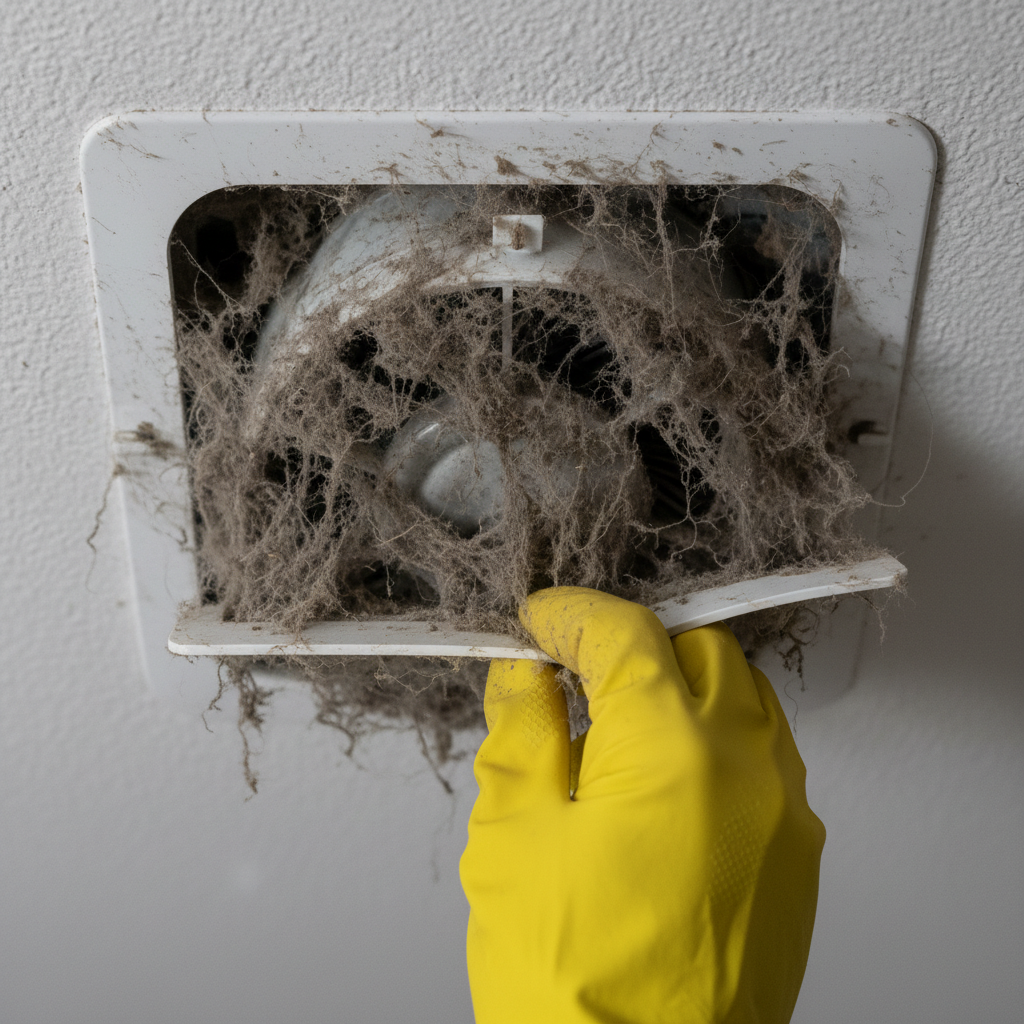
- Vacuum Cleaner with Brush Attachment: For removing loose dust and debris.
- Krud Kutter Original Cleaner & Degreaser: A powerful, safe solvent for cutting through greasy buildup.
- Dawn Dish Soap: A few drops mixed with warm water for general cleaning of the plastic cover.
- Microfiber Cloths (2-3): One for applying cleaner, one for rinsing/wiping, and one for drying.
- Old Toothbrush or Small Scrub Brush: For agitating tight corners and grimy fan blades.
Bathroom · Bathroom remodel
| Project category | Bathroom |
|---|---|
| Problem type | Bathroom remodel |
| Trade required | General contracting |
| Urgency | Planned project |
| Safety risk | Low safety risk |
| DIY suitability | Pro recommended |
| Cost category | High cost |
| Typical timeline | Typically 2–4 weeks on site |
| Contractor type | Bathroom remodeler or licensed plumber |
Repair option
Refresh fixtures, grout, and vanity without moving plumbing.
Replacement option
Gut remodel when the pan leaks or the layout changes.
Common causes
- Dated finishes
- Failing tile or pan
- Accessibility needs
Relevant tools:project cost estimatorcompare quotes
Published June 3, 2026Last updated August 17, 2026
Tools & materials you'll need
Affiliate linksAs an Amazon Associate FixlyGuide earns from qualifying purchases — at no extra cost to you. Prices and availability are accurate as of publication and subject to change.
Quick Answer
To restore your bathroom fan's performance, turn off the power at the breaker, remove the cover, and unplug the motor. Use a vacuum with a brush attachment and a damp microfiber cloth with a degreaser like Krud Kutter to wipe down the cover, fan blades, and housing. For stubborn grime, a toothbrush and soapy water work well. Allow all parts to dry completely before reassembling and restoring power.
Why This Works
A bathroom exhaust fan that no longer clears steam isn't necessarily broken; it's often just chocked by a surprising amount of accumulated dust, lint, and hair. This buildup, when combined with the humid, greasy environment of a bathroom, creates a thick, sticky film that coats the fan blades, the motor, and the inside of the housing. This grime fundamentally disrupts the fan's aerodynamics. The carefully engineered curve of the fan blades is compromised, preventing them from effectively grabbing air and creating the negative pressure required to pull moist air out of the room. The added weight and resistance also forces the motor to work harder, reducing its rotational speed (RPMs) and making it less efficient. It's a vicious cycle: the slower the fan spins, the less air it moves, and the more particulates drop out of the air and stick to the grimy surfaces, further impeding airflow.
Deep cleaning these components with a proper solvent-based degreaser and agitation is the key to restoring function. A product like Krud Kutter contains surfactants and solvents that are specifically designed to break down greasy, oily soils. The surfactants emulsify the grime, lifting it from the surface, while the solvents dissolve the oils and residues that bind the dust and hair together. Unlike a simple pH-based cleaner (like vinegar or plain soap), a degreaser chemically breaks the bonds of the sticky matrix. Using a vacuum first removes the loose, heavy debris, allowing the chemical cleaner to work directly on the impacted grime. Gentle agitation with a microfiber cloth or soft brush physically dislodges the loosened soil. Giving the components ample time to dry is a critical final step, preventing any potential electrical shorts and ensuring that damp surfaces don't immediately attract a new layer of dust.
What You Need
- Vacuum Cleaner with Brush Attachment: For removing loose dust and debris.
- Krud Kutter Original Cleaner & Degreaser: A powerful, safe solvent for cutting through greasy buildup.
- Dawn Dish Soap: A few drops mixed with warm water for general cleaning of the plastic cover.
- Microfiber Cloths (2-3): One for applying cleaner, one for rinsing/wiping, and one for drying.
- Old Toothbrush or Small Scrub Brush: For agitating tight corners and grimy fan blades.
- Bucket or Small Basin: To hold your cleaning solution.
- Step Stool or Ladder: To safely reach the ceiling-mounted fan.
- Can of Compressed Air: For blowing dust out of the motor housing.
- Safety Goggles: To protect your eyes from falling dust and debris.
- Dust Mask: To prevent inhaling aerosolized dust and cleaner.
- Nitrile Gloves: To protect your hands from grime and cleaning agents.
- Screwdriver (optional): Some fan models may require a screwdriver to remove the motor assembly.
Step-by-Step Method
-
Safety First: Kill the Power — Before you do anything else, go to your home’s main breaker box and shut off the circuit that powers the bathroom. Flick the bathroom light switch on and off to confirm the power is completely cut. This is a non-negotiable safety step to prevent electrical shock.
-
Remove the Fan Cover — Most modern fan covers are held in place by two spring-loaded metal clips. Gently pull down on the cover about 1-2 inches. You should feel the tension. Squeeze the clips together with your fingers and the cover will release from the housing. Some older models might have a central screw or knob; simply unscrew it to remove the cover.
-
Inspect and Unplug the Motor — With the cover off, you’ll see the fan motor and blower wheel. It will likely be covered in a thick layer of dust. Look for the electrical plug that connects the motor to the housing’s power receptacle. Carefully unplug it. If your fan is hardwired or has a motor assembly that doesn't unplug, you may need a screwdriver to release a few screws holding the motor plate to the housing. Take a picture with your phone before disassembly to remember how it goes back together.
-
Initial Dry Dust Removal — Using your vacuum cleaner’s soft brush attachment, thoroughly vacuum the inside of the fan housing, the blower wheel (the "squirrel cage" part), and the motor itself. The goal is to remove as much loose, heavy dust and lint as possible before introducing any liquid cleaners. This prevents you from just turning the dust into a muddy mess.
-
Wash the Fan Cover — Take the plastic fan cover to a sink or tub. Fill a basin with warm water and a few drops of Dawn dish soap. Submerge the cover and use an old toothbrush to gently scrub the vents and crevices. For greasy, stubborn grime, spray it with Krud Kutter and let it sit for 3-5 minutes (dwell time) before scrubbing. Rinse it thoroughly and set it aside on a towel to air dry completely.
-
Deep Clean the Blower Wheel & Motor — Spray a clean microfiber cloth with Krud Kutter; do not spray directly onto the motor. Carefully and meticulously wipe down each individual blade of the blower wheel. Use an old toothbrush sprayed with the cleaner to get into the tight spaces between the blades where grime is heaviest. Wipe down the exterior of the motor housing as well. You'll be amazed at the gunk that comes off.
-
Clear the Housing Interior — Now, use your Krud Kutter-dampened cloth to wipe the entire inside of the metal fan housing mounted in the ceiling. Pay special attention to the exhaust port where the air exits into the ductwork. Use the toothbrush to scrub any caked-on residue. Use a final, separate microfiber cloth dampened with just water to "rinse" any cleaner residue from the housing.
-
Blast the Motor Interior — Take the can of compressed air and, using short, controlled bursts, blow any remaining dust out of the motor’s vents and internal components. This helps ensure the motor can stay cool and operate efficiently. Do this in a well-ventilated area, as it will kick up fine dust particles.
-
Allow for Complete Drying — Do not rush this step. The fan cover, blower wheel, and motor assembly must be 100% dry before you reassemble and reintroduce electricity. Allow at least 1-2 hours for all components to air dry completely. You can place them in front of a separate fan to speed up the process if needed.
-
Reassemble the Fan — Carefully reinstall the motor and blower wheel assembly, screwing it in place if you removed it. Plug the motor’s electrical cord back into its receptacle in the housing. Re-attach the fan cover by squeezing the metal clips and guiding them back into their slots in the housing. The cover should sit flush with the ceiling.
-
Restore Power and Test — Go back to your breaker box and turn the circuit back on. Turn on the bathroom fan. It should sound much quieter and more powerful. To test its effectiveness, turn on the shower to hot for a few minutes to generate steam. The revitalized fan should now pull the moist air out of the room efficiently, preventing the mirror from fogging up as much.
Common Mistakes
- Forgetting to Kill the Power: The single most dangerous mistake. Always turn off the corresponding breaker before beginning work.
- Spraying Cleaner Directly on the Motor: This can force liquid into the motor windings, causing a short circuit or permanent damage. Always apply cleaner to your cloth first.
- Using a Harsh Abrasive: Never use a scouring pad or abrasive cleaner like Bar Keepers Friend on the delicate plastic fan cover or blower wheel, as it will cause permanent scratches.
- Not Allowing Adequate Drying Time: Reassembling the unit while components are still damp is a serious electrical hazard and can cause moisture to be trapped, leading to mold or rust.
- Bending the Fan Blades: The "squirrel cage" blower wheel is balanced for optimal performance. Applying too much pressure and bending the blades can cause the fan to become noisy and wobbly.
- Ignoring the Ductwork: While cleaning the fan itself is a huge improvement, if the exhaust duct leading outside is clogged with a bird's nest or years of lint, the fan still won't be able to move air effectively. If the fan is clean but performance is still poor, the duct is the next place to investigate.
Cost & Time Breakdown
| Task | DIY Cost | Pro Cost | Time |
|---|---|---|---|
| Gather Supplies | $20 - $30 (if you don't own cleaners) | N/A | 15 mins |
| Disassembly & Cleaning | $0 | $75 - $150 | 45 - 60 mins |
| Drying Time | $0 | N/A | 1 - 2 hours (passive) |
| Reassembly & Testing | $0 | N/A | 15 mins |
| Total | $20 - $30 | $75 - $150 | ~2-3 Hours (including drying time) |
Prevention & Maintenance
- Run the Fan Longer: Keep the fan running for at least 20-30 minutes after every shower or bath to ensure all residual humidity has been exhausted.
- Regular Quick Cleans: Every 2-3 months, pop the cover off and give it a quick vacuum and wipe-down. This prevents the heavy, greasy buildup that requires a deep clean.
- Check the Exterior Vent: Twice a year, check the exterior vent cap on your roof or wall to ensure the damper flap isn't stuck closed and that it's free of nests, leaves, or other debris.
- "The Toilet Paper Test": To check if your fan is pulling air effectively, hold a single square of toilet paper up to the cover while the fan is running. If the fan can hold the paper against the grate, it has sufficient suction.
- Consider a Timer Switch: Replace your standard fan switch with a timer switch. This allows you to set the fan to run for a predetermined time (e.g., 60 minutes) and then automatically shut off, ensuring adequate ventilation without having to remember.
When to Call a Professional
While cleaning a standard bathroom fan is a very manageable DIY project, there are specific scenarios where calling in a licensed electrician or an HVAC technician is the safest and most effective course of action. If you turn off the breaker, clean the fan meticulously, and it still doesn't turn on when you restore power, the motor itself has likely failed and will need to be replaced. This is a job for an electrician. Furthermore, if you open the fan housing and see signs of scorching, melted wires, or rust around the electrical connections, do not proceed. These are indicators of more significant electrical or moisture problems that require professional diagnosis.
Another key reason to call a pro is if, after a thorough cleaning, the fan runs but still doesn't clear steam. This strongly suggests the problem isn't the fan itself, but a blockage in the exhaust ductwork. HVAC professionals have specialized tools like long flexible brushes and high-powered vacuums to effectively clean out the entire length of the duct, which can be a difficult and messy job for a homeowner. Finally, if your fan is making loud grinding, scraping, or rattling noises even after cleaning, the motor bearings are likely shot, and the entire unit will need to be replaced by a professional.
What should this project cost?
Enter your project details for a realistic cost range before you call anyone.
Mid-range remodels commonly $12,000–$22,000; small repairs often under $600.
- Regional adjustment
- National average
- Labor share (typical)
- ~$5,603
- Quotes to collect
- 3 written estimates
Educational estimate based on national averages — not a binding quote. Always confirm with written local estimates.
Get the print-ready PDF of this guide
A clean, ad-free, printable version you can keep on your phone or pin to the workshop wall. Free with a FixlyGuide account.
- Print-optimized layout
- Tools, materials & every step included
- Saved to your account
Frequently asked questions
How often should I clean my bathroom exhaust fan?+
You should perform a quick cleaning (vacuuming the vent) every 2-3 months. A deep cleaning, as detailed in this guide, should be done annually or whenever you notice it is no longer effectively clearing steam from the room.
What's the black stuff on my bathroom fan?+
The black gunk is typically a combination of household dust, lint from towels and clothing, hair, and sometimes mold, all bound together by moisture and aerosolized personal care products (like hairspray). Cleaning it off is essential for both function and air quality.
Can I use bleach to clean my bathroom fan?+
It is not recommended. Bleach is a harsh oxidizer that can damage the plastic components and potentially the motor's finish. A dedicated degreaser like Krud Kutter followed by simple soap and water is much safer and more effective for the type of grime found on fans.
My fan is clean but still weak. What now?+
If the fan is clean and the motor is running, the issue is almost certainly a blockage in the exhaust ductwork. You can check the exterior vent for obvious obstructions, but cleaning the full length of the duct usually requires professional tools from an HVAC service.
Discussion
Loading comments…