- Regular Household Bleach: Clorox Disinfecting Bleach or a similar brand containing 5-6% sodium hypochlorite.
- Baking Soda: A standard box of Arm & Hammer or any other brand.
- Stiff-Bristled Brush: A grout brush or an old toothbrush is perfect. Avoid wire brushes, which can destroy the caulk.
- Small Bowl or Cup: For mixing your cleaning paste. Do not use metal.
- Spatula or Putty Knife: For applying the paste neatly.
Published May 27, 2026Last updated August 17, 2026
Tools & materials you'll need
Affiliate linksAs an Amazon Associate FixlyGuide earns from qualifying purchases — at no extra cost to you. Prices and availability are accurate as of publication and subject to change.
'''
Quick Answer
To effectively kill and remove black mold from non-porous bathroom caulk, you need a cleaning agent with a long dwell time. Create a thick paste using one part household bleach (like Clorox) and two parts baking soda (such as Arm & Hammer). Apply this paste directly to the moldy caulk line, ensuring complete coverage. For maximum effect, let it sit for at least two hours, or even overnight for deeply embedded stains. After the dwell time, scrub the area firmly with a stiff-bristled brush, rinse with cool water, and dry the surface completely. The secret is the paste consistency, which prevents the bleach from running off before it can neutralize the mold.
Why This Works
The black or dark green substance colonizing your shower seams is typically a form of mold, often from the Cladosporium genus. It thrives in the consistently damp, warm, and poorly ventilated environment of a bathroom. Silicone and acrylic caulk, while water-resistant, provide a surprisingly accommodating surface for mold growth, especially as they age and develop microscopic cracks. Soap scum and body oils also provide a nutrient source for the mold to feed on.
This cleaning method is rooted in basic surface chemistry and an understanding of mold biology. The primary killing agent here is sodium hypochlorite, the active ingredient in household bleach. It's a powerful oxidizing agent that chemically destroys mold cells by breaking down their proteins and cell membranes. However, bleach is a liquid with high surface tension, meaning it wants to bead up and run off a smooth surface like caulk. It evaporates relatively quickly, too. Without sufficient contact time—what professionals call "dwell time"—it can't fully penetrate and kill the mold colony's "roots," or hyphae.
This is where baking soda (sodium bicarbonate) becomes the hero. It serves two purposes. First, it's a mild abrasive that helps mechanically scrub away the surface layer of mold. Second, and more importantly, it acts as a thickener. By mixing it with bleach, you create a viscous paste. This paste defies gravity and surface tension, clinging to the vertical and horizontal caulk lines. This extended contact keeps the sodium hypochlorite active and concentrated directly on the mold for hours, allowing it to work its way deep into the colony and the caulk's surface imperfections. Covering the paste with plastic wrap further enhances this by preventing evaporation, ensuring the bleach stays wet and chemically active for the entire duration of the treatment. Simply spraying bleach on the caulk is often ineffective because it runs off in seconds; this paste method ensures the necessary prolonged chemical assault.
What You Need
- Regular Household Bleach: Clorox Disinfecting Bleach or a similar brand containing 5-6% sodium hypochlorite.
- Baking Soda: A standard box of Arm & Hammer or any other brand.
- Stiff-Bristled Brush: A grout brush or an old toothbrush is perfect. Avoid wire brushes, which can destroy the caulk.
- Small Bowl or Cup: For mixing your cleaning paste. Do not use metal.
- Spatula or Putty Knife: For applying the paste neatly.
- Nitrile or Latex Gloves: Essential for protecting your hands from bleach.
- Safety Glasses or Goggles: To protect your eyes from accidental splashes.
- Microfiber Cloths: For cleaning, rinsing, and drying.
- Optional: Plastic Wrap: To cover the paste and keep it from drying out during long dwell times.
- Optional: Fan: To accelerate drying after the final rinse.
Step-by-Step Method
-
Ventilate the Bathroom Thoroughly — This is a non-negotiable safety step. Open any windows, bring in a small fan pointing towards the exterior, and turn on your bathroom's exhaust fan. Bleach fumes can be overwhelming and dangerous in a confined space. Put on your gloves and safety glasses now.
-
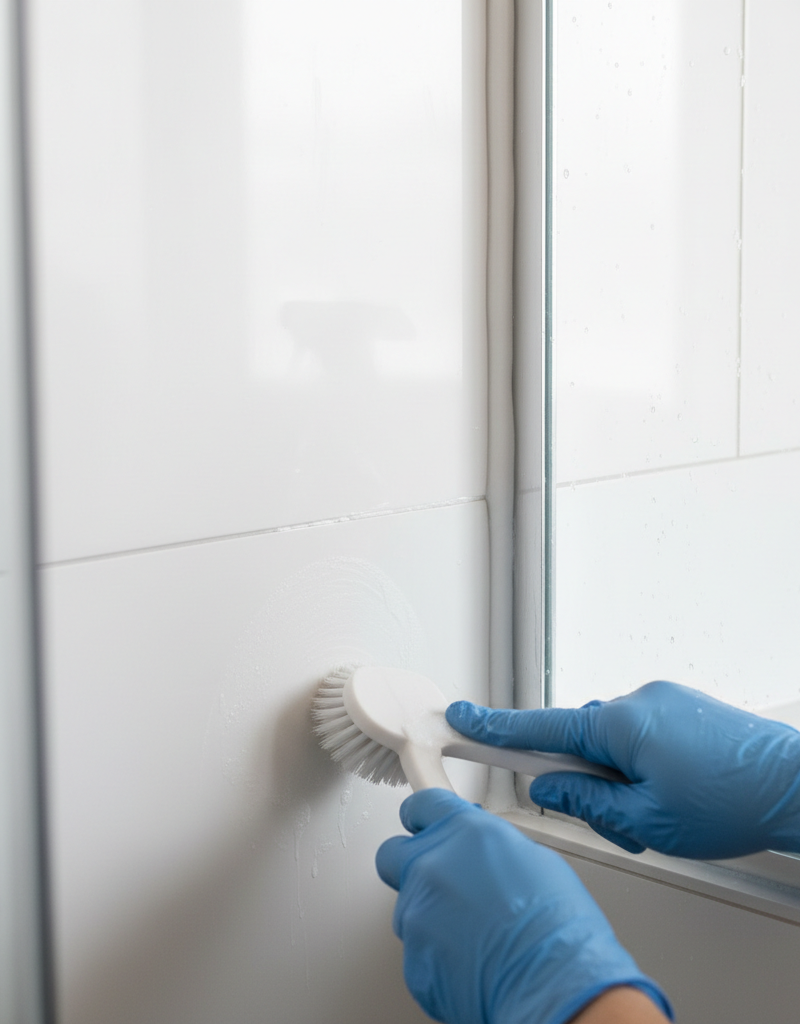
Perform a Preliminary Clean — Before attacking the mold, you need to remove the soap scum and grime that protects it. Mix a few drops of a strong dish soap, like Dawn Powerwash, into a spray bottle of warm water. Spray the caulk and surrounding tile and scrub lightly with your brush. Rinse well. This allows your mold-killing paste to work directly on the target.
-
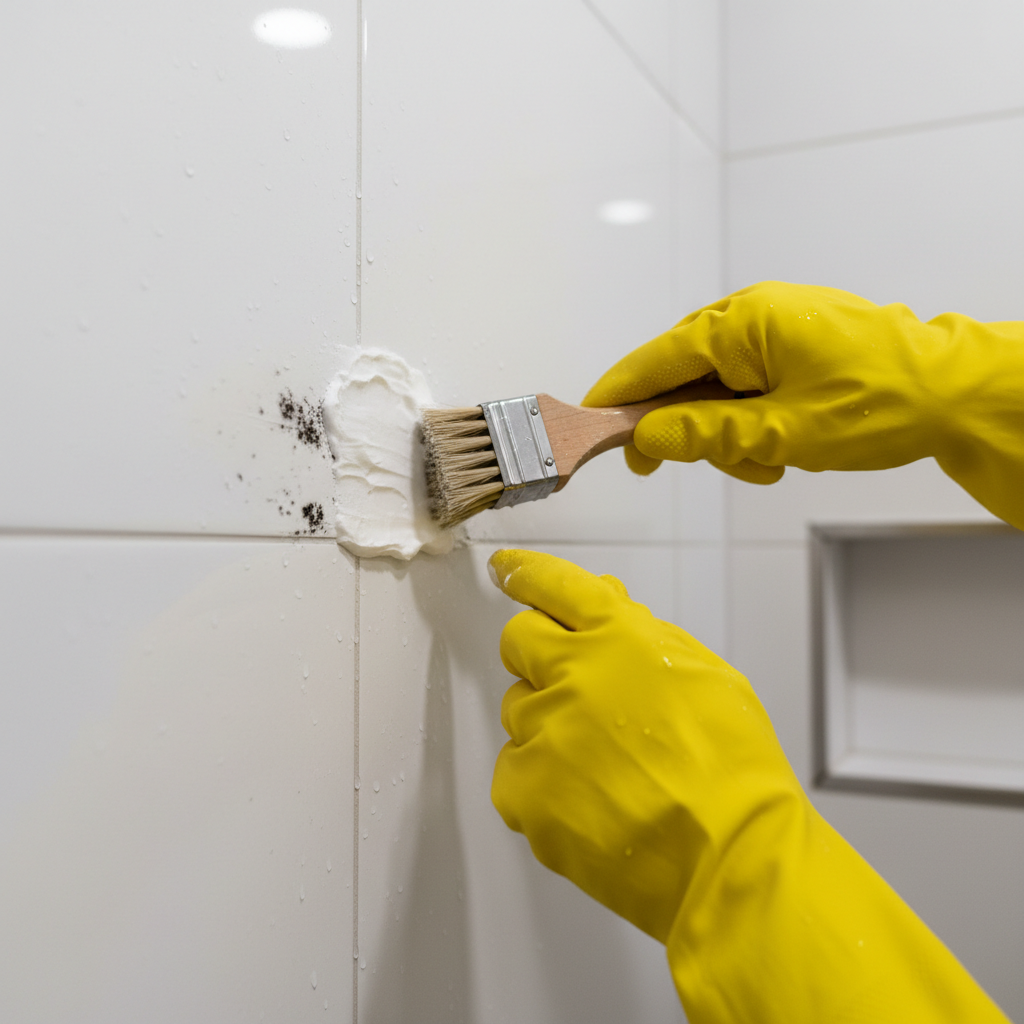
Mix the Bleach Paste — In your small plastic or glass bowl, combine a small amount of bleach and baking soda. A good starting ratio is about 1/2 cup of baking soda to 1/4 cup of bleach. Stir slowly. The goal is a thick, frosting-like consistency. It should be thick enough to hold its shape on the spatula without dripping. If it’s too runny, add more baking soda; if it’s too powdery, add a tiny bit more bleach.
-
Apply the Paste to the Caulk — Using your small spatula, putty knife, or even the back of a spoon, carefully apply a thick layer (about 1/4-inch thick) of the bleach paste directly onto the black mold on the caulk lines. Ensure you cover all the discolored areas completely.
-
Let It Dwell (Be Patient!) — This is the most critical step. For moderate stains, let the paste sit for a minimum of one hour. For stubborn, deep-set black stains that have been there for months, you will need a much longer dwell time. The best approach for these is to apply the paste, cover it with a strip of plastic wrap to keep it moist and active, and let it sit overnight (8-12 hours).
-
Scrub and Agitate — After the dwell time, it's time for mechanical action. Dip your stiff-bristled brush in a bit of water and begin scrubbing the paste-covered caulk lines firmly. You should see the paste turn dark as the dead mold lifts from the surface. Work in small sections, applying consistent pressure.
-
Rinse Thoroughly with Cool Water — Use your shower sprayer on a cool setting or a spray bottle filled with clean, cool water to rinse away all the paste and dislodged mold. Using hot water can create more fumes, so stick to cool. Inspect the caulk lines closely.
-
Dry the Area Completely — This step is vital to prevent immediate regrowth. Use a clean, dry microfiber cloth to wipe down the caulk, tiles, and entire shower area. To be absolutely sure, aim a fan at the cleaned area for an hour to ensure it is bone dry.
-
Assess and Repeat if Necessary — If some faint staining remains, the mold was likely very deeply embedded. You can repeat the entire process for another round. If a second application doesn't fully remove it, the caulk itself may be permanently stained or compromised, at which point replacement is the only option.
Common Mistakes
- Inadequate Ventilation: The #1 mistake. Working with bleach in an enclosed bathroom can lead to respiratory irritation and lightheadedness. Always ensure airflow.
- Mixing Chemicals: NEVER mix bleach with ammonia-based cleaners (like many glass cleaners) or acidic cleaners (like vinegar or some toilet bowl cleaners). This creates highly toxic chloramine or chlorine gas.
- Not Enough Dwell Time: Simply scrubbing with a bleach solution is not enough. The paste needs hours to sit and penetrate the mold colony. Rushing this step will yield poor results.
- Using an Abrasive Scrubber: Using steel wool or a wire brush will gouge and tear the silicone caulk, creating new places for mold to grow and likely necessitating a full replacement.
- Leaving the Area Damp: Finishing the cleaning process but leaving the caulk wet is an invitation for mold to return within days. The final drying step is as important as the cleaning itself.
- Ignoring the Root Cause: If you don't address the underlying moisture issues in your bathroom, the mold will always come back. This is a treatment, but prevention is the cure.
Cost & Time Breakdown
| Task | DIY Cost | Pro Cost (Caulk Replacement) | Time |
|---|---|---|---|
| Supplies Acquisition | $15 - $25 | N/A | 30 minutes |
| Surface Prep & Cleaning | Included in supplies | Included in labor | 20 minutes |
| Paste Application | Included in supplies | Included in labor | 15-20 minutes |
| Dwell Time | $0 | N/A | 2 to 12 hours |
| Scrub & Rinse | Included in supplies | Included in labor | 20 minutes |
| Professional Service | N/A | $150 - $400+ | 2-4 hours |
Prevention & Maintenance
Killing the existing mold is only half the battle. To keep your caulk lines pristine, you must change the environmental conditions that allow it to grow.
- Improve Ventilation: Run your bathroom exhaust fan during your shower and for at least 30 minutes afterward to vent humid air outside.
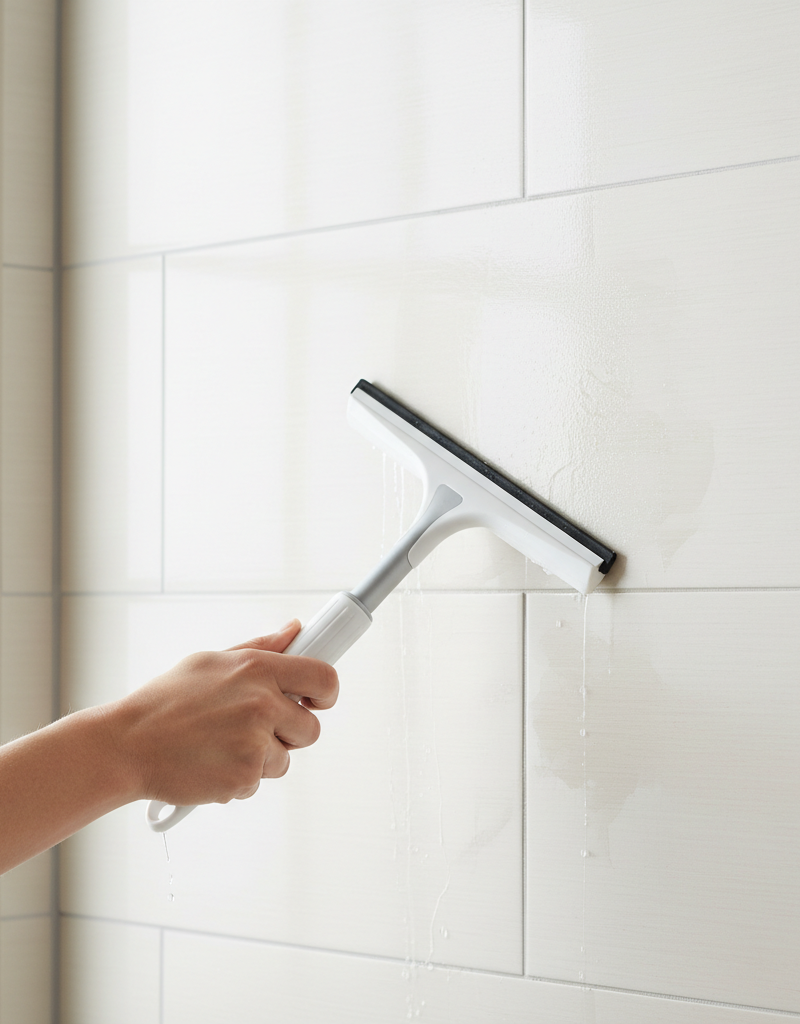
- Squeegee After Every Shower: Use a shower squeegee on glass doors and tile walls. This removes the vast majority of water that would otherwise evaporate and raise the room's humidity.
- Dry the Caulk Lines: After squeegeeing, take 30 seconds to wipe down the caulk lines specifically with a dedicated microfiber cloth. This is the single most effective preventative habit.
- Use a Daily Shower Spray: Products like Wet & Forget Shower or a homemade spray of 1 part white vinegar to 3 parts water can be lightly misted on surfaces after use to create an inhospitable pH for mold spores.
- Allow for Airflow: Leave the shower door or curtain open after use to allow the enclosure to air out more quickly.
- Check for Leaks: Regularly inspect your shower head, faucet, and plumbing connections for any slow drips that could be contributing to the moisture problem.
When to Call a Professional
While this DIY method is highly effective for surface mold on non-porous caulk, there are situations where a professional is necessary. If the mold covers a large, widespread area (generally more than 10 square feet), it could indicate a more serious, systemic moisture problem. If the drywall or subfloor around the shower feels soft or spongy, the water damage is likely behind the wall, and a mold remediation specialist is required.
Furthermore, if the caulk itself is cracked, peeling away, or turning hard and brittle, it has failed. No amount of cleaning will fix this. The mold is likely growing underneath it. In this case, the only solution is to call a handyman or caulking specialist to have the old caulk completely cut out, the area thoroughly cleaned and sanitized, and a new bead of high-quality, mold-resistant silicone caulk applied. If someone in your home is allergic to mold or has a compromised immune system, it is always best to defer to a professional to ensure safe and complete removal. '''
Should you do this yourself?
Answer five quick questions before you start. Safety outranks savings every time.
Your experience with work like this
How high do you have to work?
Does the job involve any of these?
Will it need a permit?
Specialty tools
Free and instant. Educational guidance only — not a quote, inspection, or professional diagnosis.
What should this project cost?
Enter your project details for a realistic cost range before you call anyone.
Mid-range remodels commonly $12,000–$22,000; small repairs often under $600.
- Regional adjustment
- National average
- Labor share (typical)
- ~$5,603
- Quotes to collect
- 3 written estimates
Educational estimate based on national averages — not a binding quote. Always confirm with written local estimates.
Before you start
Check the difficulty, permits, and safety risk — then decide whether to call a pro.
- Estimate this projectGet a cost range for your scope and ZIP before you call anyone.Open
- Get local estimatesSend one request and compare written estimates from vetted pros.Open
Free, no signup required. Estimates are educational guidance, not a quote or an inspection.
Get the print-ready PDF of this guide
A clean, ad-free, printable version you can keep on your phone or pin to the workshop wall. Free with a FixlyGuide account.
- Print-optimized layout
- Tools, materials & every step included
- Saved to your account
Frequently asked questions
Can I use vinegar or hydrogen peroxide instead of bleach?+
Vinegar and hydrogen peroxide are effective on porous surfaces, but less so on non-porous silicone caulk. More importantly, NEVER mix vinegar or peroxide with bleach, as it can create toxic chlorine gas. For caulk, the oxidizing power of bleach is superior.
What if the black mold comes back after a few weeks?+
If the mold returns quickly, it's a clear sign that the underlying moisture issue has not been resolved. You need to focus on the 'Prevention & Maintenance' steps, particularly running your exhaust fan longer and manually drying the caulk after each shower.
Is the black stuff in my shower definitely mold?+
While it's highly likely to be mold, it can sometimes be confused with stubborn soap scum or mineral deposits. However, true mold will have a fuzzy or slimy texture and will typically concentrate in the caulk lines. Mildew is a type of mold, but it's usually powdery and gray. This cleaning method is effective for both.
The mold is gone, but the caulk is still stained. What do I do?+
If the caulk is permanently stained even after two cleaning attempts, the mold pigment has penetrated the silicone itself. At this point, no amount of surface cleaning will remove the discoloration. The only solution is to have the old caulk removed and replaced.
Discussion
Loading comments…