- Acidic Cleaner: Choose one of the following based on stain severity and preference.
- Bar Keepers Friend Cleanser (Powder): Excellent for creating a targeted paste. Contains oxalic acid.
- CLR Calcium, Lime & Rust Remover (Liquid): A strong liquid acid perfect for direct application.
- White Vinegar: A milder acid (acetic acid) suitable for lighter stains, but requires a much longer dwell time.
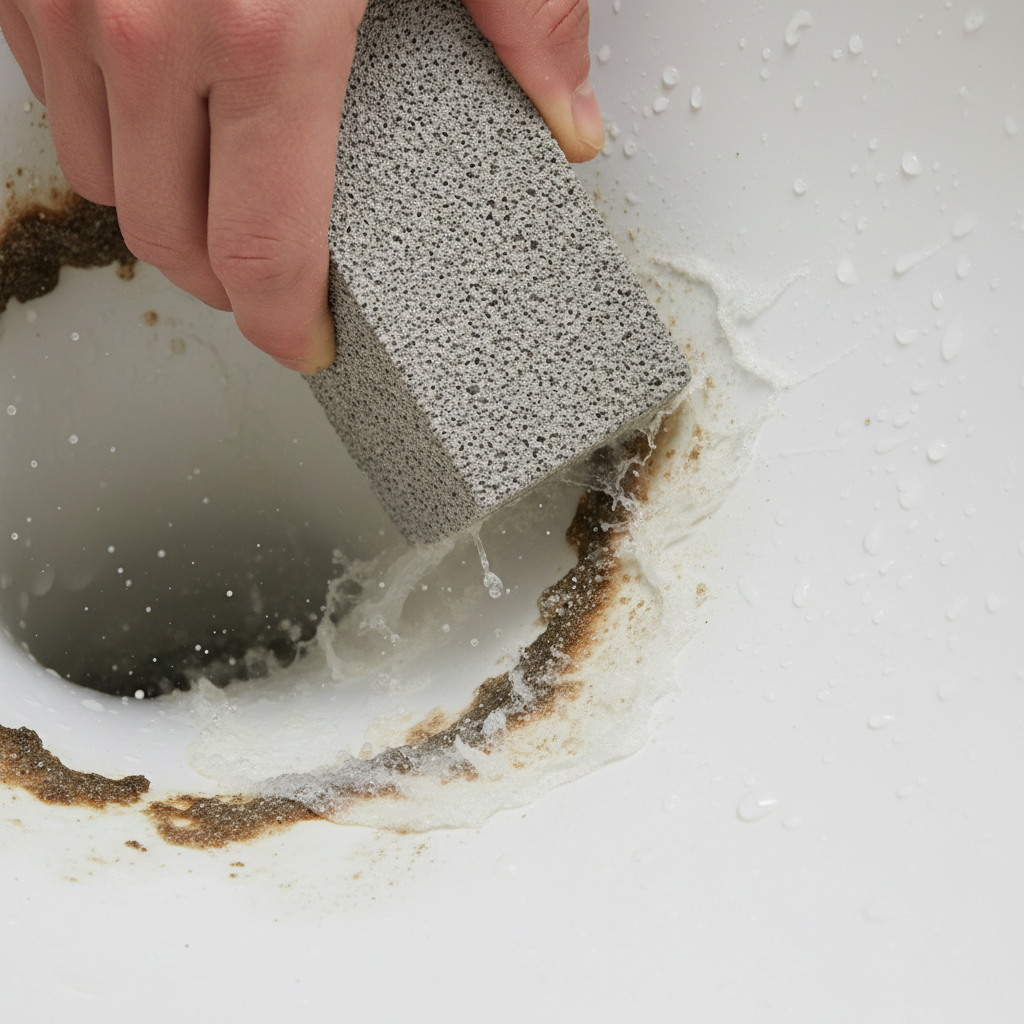
- Abrasive Tool (for very tough stains):
Published May 27, 2026Last updated August 17, 2026
Tools & materials you'll need
Affiliate links- AmazonBar Keepers Friend Cleanser1 can · Or another acidic cleaner like CLR.
As an Amazon Associate FixlyGuide earns from qualifying purchases — at no extra cost to you. Prices and availability are accurate as of publication and subject to change.
Quick Answer
That stubborn ring in your toilet bowl that bleach won’t touch is likely not organic waste, but a buildup of hard water mineral deposits like calcium and magnesium, or even rust. Bleach is an oxidizer, effective against germs and stains from mold or biological waste, but it is chemically incapable of dissolving alkaline mineral scale. To remove these rings, you must use an acidic cleaner (like Bar Keepers Friend or CLR) to dissolve the minerals or a fine abrasive (like a pumice stone) to physically scour them off the porcelain surface.
Why This Works
The frustration of scrubbing a toilet bowl ring with bleach-based cleaners to no effect is a common household problem, and chemistry is the reason why. Your go-to cleaner, household bleach (a solution of sodium hypochlorite), is a powerful oxidizing agent. It works by breaking down the chemical bonds in chromophores (the parts of molecules that give things color), effectively "bleaching" stains from things like mold, mildew, and organic waste. It’s also a potent disinfectant, killing bacteria, viruses, and other pathogens.
However, the persistent ring high up in your toilet bowl is often a completely different type of substance. In the 85% of American homes with hard water, that ring is a line of mineral scale, primarily calcium carbonate and magnesium carbonate. These deposits precipitate out of the water and cling to the porcelain at the waterline. These mineral compounds are alkaline, meaning they have a pH greater than 7. Bleach, also being alkaline, has no chemical mechanism to break them down. It’s like trying to fight fire with more fire; it’s simply the wrong tool for the job.
To dissolve alkaline mineral scale, you need to use an acid (a substance with a pH less than 7). When an acid is applied to the calcium carbonate ring, a chemical reaction occurs that converts the solid, insoluble carbonate into soluble salts that can be easily washed away. This is the principle behind cleaners like Bar Keepers Friend, whose active ingredient is oxalic acid, and CLR (Calcium, Lime, Rust Remover), which uses a blend of acids like lactic and gluconic acid. These products chemically dissolve the ring. The alternative strategy is physical removal. A pumice stone, which is a type of volcanic rock soft enough not to scratch hard porcelain, works as a fine abrasive. It physically grinds down and scours away the mineral deposit without damaging the bowl’s surface, as long as it is kept wet.
What You Need
- Acidic Cleaner: Choose one of the following based on stain severity and preference.
- Bar Keepers Friend Cleanser (Powder): Excellent for creating a targeted paste. Contains oxalic acid.
- CLR Calcium, Lime & Rust Remover (Liquid): A strong liquid acid perfect for direct application.
- White Vinegar: A milder acid (acetic acid) suitable for lighter stains, but requires a much longer dwell time.
- Abrasive Tool (for very tough stains):
- Pumice Scouring Stick (e.g., Pumie brand): The go-to tool for physically removing rings without scratching porcelain.
- Personal Protective Equipment (PPE):
- Waterproof Gloves: Nitrile or heavy-duty rubber gloves are essential to protect your skin from acidic cleaners.
- Safety Goggles: Protect your eyes from splashes.
- Cleaning Tools:
- Stiff-Bristled Toilet Brush: For scrubbing.
- Small Bucket and Cup: To bail water out of the toilet bowl, allowing direct access to the ring.
- Non-Abrasive Sponge or Cloth: For applying cleaner.
Step-by-Step Method
-
Gear Up and Ventilate - Before you begin, open a window or turn on the bathroom exhaust fan to ensure good airflow. Put on your waterproof gloves and safety goggles. Acidic cleaners can irritate the skin and eyes.
-
Shut Off Water and Lower the Level - Reach behind the toilet and turn the water supply valve clockwise until it stops. Flush the toilet once. This will empty the tank and lower the water level in the bowl significantly, exposing the entire ring. For best results, use a small cup to bail the remaining water into a bucket until the waterline is well below the stain.
-
Choose Your Acidic Attack: Paste or Liquid - If using Bar Keepers Friend, sprinkle the powder onto a damp sponge or directly onto the ring area and add a few drops of water to create a thick paste. If using liquid CLR, carefully pour it onto your brush or a sponge and apply it directly and liberally onto the ring.
-
Allow for Critical Dwell Time - This is the most important step. Walk away and let the acid do the work. For a Bar Keepers Friend paste, allow it to sit for 5-10 minutes. For CLR, the manufacturer recommends a dwell time of only 2 minutes before scrubbing. Do not let these acidic cleaners sit for longer than recommended, as it can potentially damage surfaces over time.
-
Scrub with a Toilet Brush - After the dwell time has passed, use your stiff-bristled toilet brush to scrub the ring vigorously. The acid will have dissolved and loosened the mineral deposits, and they should break apart with moderate effort. Scrub the entire area where the ring was, including slightly above and below it.
-
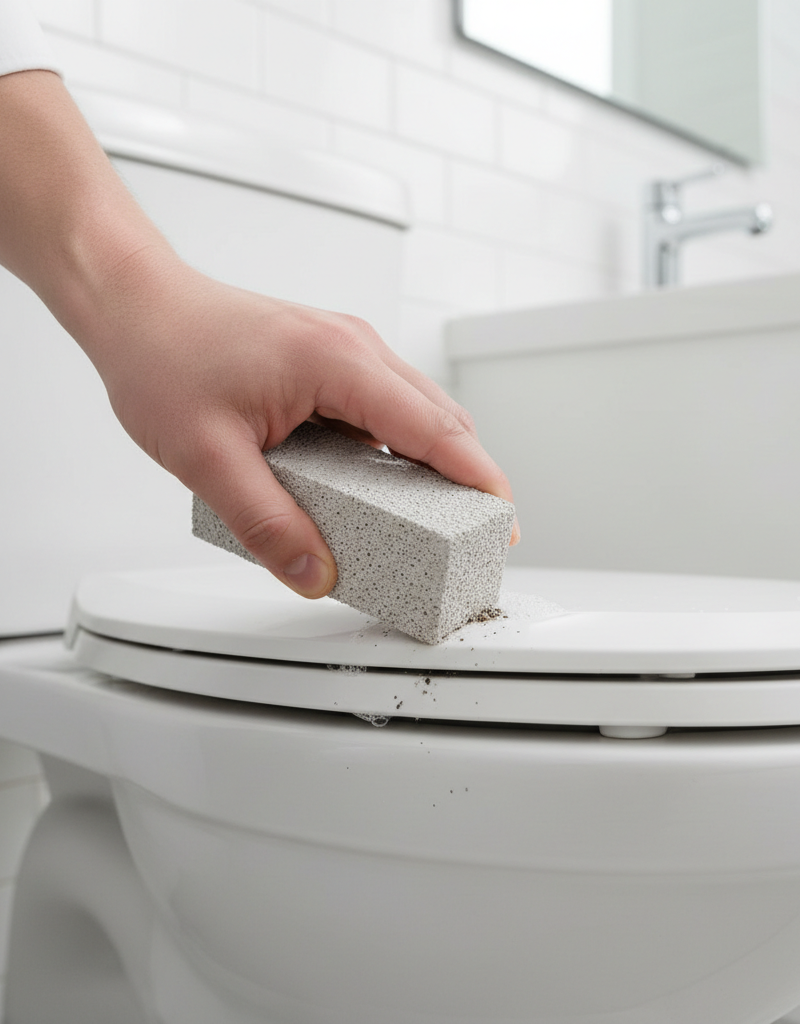
Assess and Introduce the Abrasive Backup - If parts of the ring remain after the acid treatment, it’s time for the pumice stone. It’s crucial that you wet the pumice stone thoroughly in the remaining bowl water. Never use a dry pumice stone, as this can and will leave permanent scratches on the porcelain.
-
Gently Scour the Stain Away - With the wet pumice stone, gently rub the a stubborn section of the ring using a back-and-forth or circular motion. Apply light, consistent pressure. The pumice will form a paste as it wears down, which aids in the cleaning. Continue until the last traces of the ring are gone.
-
Restore Water and Flush Clean - Reach behind the toilet and turn the water supply valve counter-clockwise to turn the water back on. Allow the tank to fill completely. Flush the toilet two or three times to thoroughly rinse away all traces of the acidic cleaner and mineral residue.
-
Perform a Final Disinfection - The acid and pumice removed the stain, but they are not disinfectants. IMPORTANT: After confirming all acid cleaner has been flushed away completely, you can now use your regular disinfectant toilet bowl cleaner (like a Clorox or Lysol product) to kill any remaining germs. Let it sit for 5-10 minutes and give the bowl a final scrub.
-
Inspect Your Gleaming Bowl - Stand back and admire your work. The combination of chemical dissolution and gentle abrasion should have completely eliminated the ring, restoring the bright white finish of your toilet bowl.
Common Mistakes to Avoid
- Mixing Bleach and Acidic Cleaners: This is the most dangerous mistake. Never, ever mix bleach with an acidic cleaner like CLR, Bar Keepers Friend, or even vinegar. The combination creates toxic chlorine gas, which can cause severe respiratory damage and can be lethal in a poorly ventilated space.
- Using a Dry Pumice Stone: A dry pumice stick is harder than porcelain and will leave permanent grey scratches. Always ensure both the pumice and the toilet surface are wet.
- Not Lowering the Water Level: Applying a cleaner to a full bowl of water instantly dilutes it, rendering it ineffective. You must lower the water to allow the cleaner to work at full concentration directly on the stain.
- Impatience and Insufficient Dwell Time: Acids need time to react with and dissolve minerals. Scrubbing too soon, before the cleaner has had a chance to work, will just waste your energy.
- Using Metal Scrapers or Brushes: Do not use steel wool, wire brushes, or metal scrapers on your toilet bowl. They will permanently scratch and ruin the porcelain finish, creating a porous surface that stains even more easily in the future.
- Assuming All Rings are the Same: If your ring is black and slimy, it might be mold, which bleach is effective against. If the ring is pink or orange, it could be Serratia marcescens bacteria. Understand the likely cause of your ring before choosing a cleaner.
Cost & Time Breakdown
| Task | DIY Cost | Pro Cost | Time Estimate |
|---|---|---|---|
| Supplies (Cleaner, Gloves, Brush) | $15 - $30 | N/A | 15 minutes (shopping) |
| Cleaning the Ring (Single Application) | Included Above | $75 - $150 (Plumber/Cleaner minimum fee) | 30-45 minutes |
| Repeat Application for Severe Ring | $0 | Included in fee | +20 minutes |
| Professional House Cleaning Service | N/A | $150 - $250 | 2-3 hours |
Prevention & Maintenance
- Clean Weekly: Don't let mineral deposits get a foothold. Regular weekly cleaning with a quality toilet bowl cleaner and a good scrub is the best prevention.
- Use Vinegar Proactively: Once a month, pour 1-2 cups of white vinegar into the bowl and let it sit overnight. The mild acid will help dissolve any new mineral buildup before it becomes a visible ring. Simply flush in the morning.
- Address Toilet Leaks: A constantly running or "phantom flushing" toilet accelerates mineral deposition. If you can hear your toilet refilling periodically when it hasn’t been flushed, have the flapper valve replaced.
- Consider a Water Softener: If you live in an area with extremely hard water, the ultimate solution is a whole-house water softener. This system removes minerals like calcium and magnesium from your water supply, preventing scale buildup in toilets, pipes, and all other appliances.
- In-Tank Tablets: Use caution with in-tank bleach tablets. While they can help with disinfection, they can also degrade the rubber and plastic components of your flush mechanism over time, potentially causing leaks. If you use them, look for tablets specifically designed not to harm toilet parts.
When to Call a Professional
While removing a toilet bowl ring is typically a straightforward DIY task, there are situations where calling in a professional plumber or cleaning service is the better choice. If the porcelain glaze on your toilet is old, worn, and visibly "etched" or crazed, it has become porous. This allows stains to penetrate deep into the ceramic itself, making them nearly impossible to remove completely with topical cleaners. In this case, the only true solution is to replace the toilet.
You should also call a professional if the ring is a symptom of a larger plumbing problem you can't diagnose, such as rust stains coming from corroded pipes or persistent odd-colored rings that might indicate specific water quality issues. A plumber can assess the health of your pipes and fixtures. Finally, if you have a sensitive septic system and are wary of using even septic-safe acids, a professional cleaning service that is experienced with septic systems can provide peace of mind by using appropriate methods and products. If you have tried both the acid and abrasive methods multiple times with no success, a pro may have access to commercial-grade solutions or be able to determine that the toilet itself is the root of the problem.
Should you do this yourself?
Answer five quick questions before you start. Safety outranks savings every time.
Your experience with work like this
How high do you have to work?
Does the job involve any of these?
Will it need a permit?
Specialty tools
Free and instant. Educational guidance only — not a quote, inspection, or professional diagnosis.
What should this project cost?
Enter your project details for a realistic cost range before you call anyone.
Common repairs run $150–$650; repipes and water-heater replacements reach $1,500–$4,500.
- Regional adjustment
- National average
- Labor share (typical)
- ~$754
- Quotes to collect
- 3 written estimates
Educational estimate based on national averages — not a binding quote. Always confirm with written local estimates.
Fixly Project Decision Box
- DIY difficulty
- Moderate
- Estimated time
- 30 minutes – half a day
- Cost level
- Moderate
Main tools / materials
- Adjustable wrench
- Plunger or drain auger
- Bucket and towels
- Thread tape
When to stop and call a pro
- Water you cannot shut off at the fixture or main
- Sewage backing up into more than one fixture
- Water near electrical panels or outlets
- Gas water heater work beyond relighting a pilot
Need professional help?
Get a Licensed PlumberGet the print-ready PDF of this guide
A clean, ad-free, printable version you can keep on your phone or pin to the workshop wall. Free with a FixlyGuide account.
- Print-optimized layout
- Tools, materials & every step included
- Saved to your account
Frequently asked questions
Why doesn't bleach remove the toilet bowl ring?+
Bleach is an oxidizing agent designed to remove color from organic stains (like mold or waste) and kill germs. Most stubborn toilet rings are from hard water mineral deposits, which are alkaline and require an acidic cleaner to be chemically dissolved.
Is it safe to use a pumice stone on a porcelain toilet?+
Yes, it is completely safe to use a pumice stone on a porcelain toilet as long as you keep both the stone and the toilet surface wet. A wet pumice stone is softer than porcelain and will not scratch it. Never use it dry.
Can I use vinegar to clean the toilet bowl ring?+
Yes, white vinegar is a mild acidic cleaner that can be effective on light to moderate mineral stains. For best results, lower the water level in the bowl and allow 1-2 cups of vinegar to sit on the ring for several hours or overnight before scrubbing.
What should I do if the ring comes back quickly?+
If the ring reappears quickly, it's a sign of very hard water. The best long-term solution is a whole-house water softener. For short-term management, clean the toilet weekly and let vinegar sit in the bowl overnight once a month to prevent buildup.
Discussion
Loading comments…