- Loose Hinge Screws: The most frequent culprit. Over time, the constant movement of opening and closing a door, combined with gravity, can cause wood screws to loosen in their pilot holes, especially in softer wood or particleboard doors.
- House Settling: All houses settle over time, even new ones. This can cause subtle shifts in the wall studs and door frames, leading to doors becoming out of plumb or square.
- Improper Hinge Installation: Hinges that are not perfectly mortised (recessed) or aligned during installation can create built-in stress points that manifest as gaps or binding later on.
- Worn or Damaged Hinges: Less common, but sometimes hinges themselves can become bent or corroded, affecting their ability to hold the door correctly.
- Ploored Framing: If the rough opening in the wall wasn
Published May 27, 2026Last updated August 17, 2026
Tools & materials you'll need
Affiliate linksAs an Amazon Associate FixlyGuide earns from qualifying purchases — at no extra cost to you. Prices and availability are accurate as of publication and subject to change.
Quick Answer
A door that constantly swings open, rattles within its frame, or fails to latch securely can be a persistent nuisance. The common culprits often involve surprisingly small issues such as loose hinge screws, subtle shifts in the door frame over time, or the door slab swelling due to humidity. Fortunately, most of these problems are easily diagnosable and can be corrected with a few basic tools and a bit of patience, often costing less than $5 in materials and taking under an hour of active work.
The Problem
You push your door shut, but it bounces back. Or maybe it rattles whenever a truck drives by, even when closed. Perhaps there's a noticeable gap between the door and the frame on one side, allowing drafts and noise to sneak in. These aren't just minor annoyances; a door that doesn't seal properly compromises your home's energy efficiency, security, and sound insulation. A loose door isn't just a cosmetic flaw; it's a functional defect that can worsen over time, potentially leading to more significant damage to the door slab or frame. The underlying issue is often a misalignment or a loss of structural integrity, preventing the door from sitting flush and secure within its casing.
How It Works
To understand why a door acts up, it helps to visualize how it functions. A door isn't just a flat slab of wood; it's a carefully balanced component of a larger system. The door slab is attached to the door frame via a series of hinges, typically two or three per door. Each hinge consists of two leaves (plates) a knuckle, and a pin. One leaf mounts to the door jamb (the vertical part of the frame), and the other to the door edge. The hinge pin allows the door to pivot smoothly. For the door to operate correctly, these hinges must be perfectly aligned and securely fastened. The door frame itself, comprised of jambs, a head (top piece), and often a threshold, is designed to be plumb (vertically straight) and square within the rough opening of your wall, which is typically framed with 2x4s or 2x6s. The jambs are usually anchored into these wall studs. When the house settles, humidity changes, or screws loosen over time, this delicate balance is disrupted. A loose hinge allows the door to sag, creating uneven gaps. A warped door, perhaps from moisture absorption, changes its physical dimensions, preventing it from fitting squarely into the frame. Even small changes, like a millimeter of movement in a hinge, can translate to a noticeable misalignment at the opposite edge of the door, leading to sticking, rattling, or failure to latch.
Step-by-Step Fix
1. Identify the Source of the Problem — Diagnose whether the door is warped, the hinges are loose, or the frame has shifted.
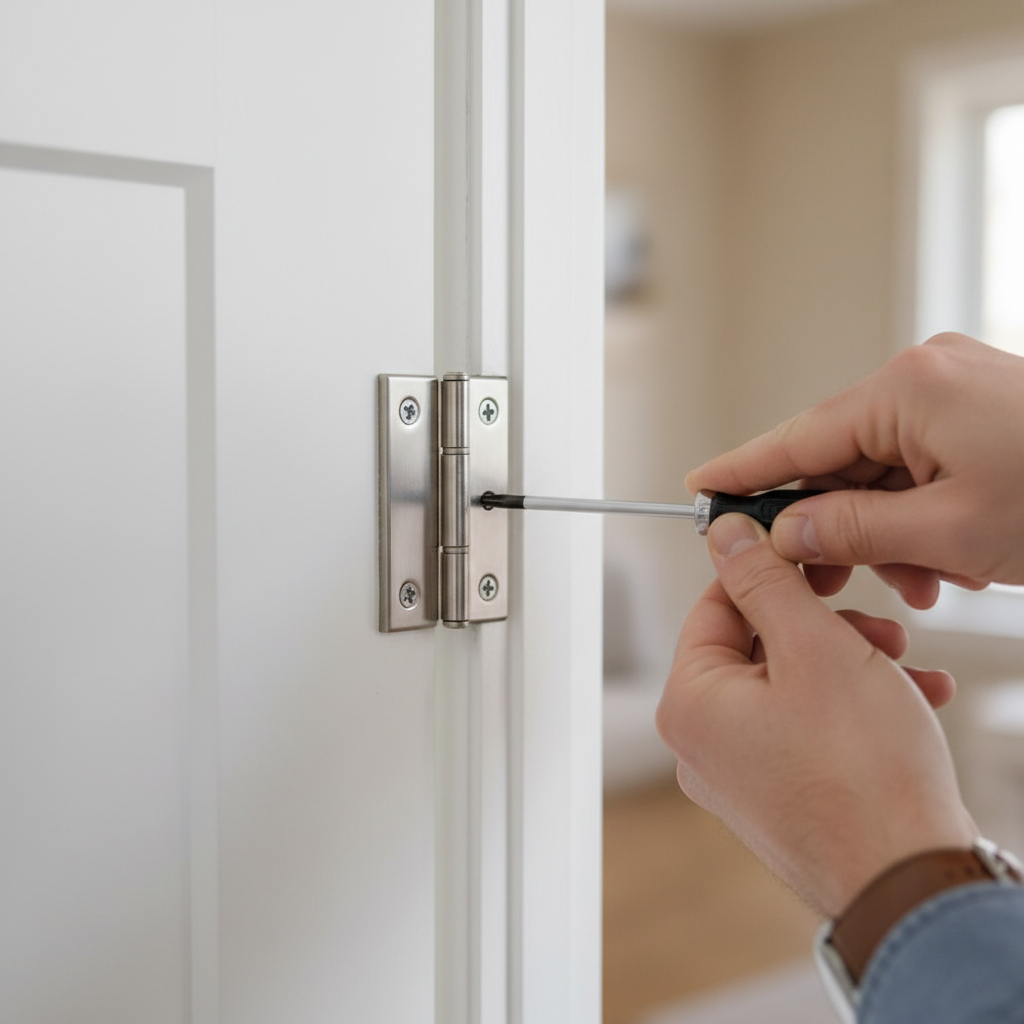
- Check Hinge Screws: Open the door halfway and grasp it firmly. Gently lift the door up and down. If you feel excessive play or hear clicking, loose hinge screws are likely the culprit. Also, visually inspect all hinge screws for looseness or stripping.
- Verify Plumb and Level: Use a 4-foot level to check the vertical plumb of both hinge-side and latch-side jambs. Also, check the horizontal level of the door header. Even a slight deviation can cause issues.
- Assess for Warping: Close the door and stand back. Look at the gaps around the door: top, bottom, and both sides. Are they uniform? If one corner flares out or the door curves inward or outward, it's likely warped. You can also press gently on various parts of the closed door to see if it springs back. A straightedge placed against the door slab can confirm flatness.
2. Tighten Loose Hinge Screws — Firmly secure any wobbly hinges.
- Using a screwdriver (matching the screw head type, usually Phillips), tighten all visible hinge screws on both the door and the frame. Be careful not to overtighten, which can strip the wood.
- If a screw spins freely: The hole is stripped. Remove the screw, insert 2-3 wooden toothpicks or a golf tee (snapped off flush) with wood glue into the hole, let it dry, then re-drill a pilot hole and reinsert the screw. For heavier doors, consider replacing the stripped screws with slightly longer (e.g., 2.5-inch or 3-inch) screws that can reach the framing studs behind the jamb.
3. Shim Protruding Hinges — Adjust hinges that sit too proud of the door or frame.
- If a hinge leaf isn't flush with the door edge or frame, it can cause binding or gaps. This might be due to paint buildup or a slightly misaligned mortise (the routed recess for the hinge).
- Carefully remove the hinge. If paint is the issue, scrape it away with a utility knife. If the mortise is too shallow, you can very carefully deepen it a fraction of an millimeter with a chisel, but this requires a delicate touch. Reattach the hinge, ensuring it sits flush.
4. Recess Sunken Hinges — Use cardboard or thin shims to bring recessed hinges flush.
- If a hinge leaf is too deeply recessed, the door will bind. Remove the hinge and place a thin cardboard shim (e.g., from a cereal box) or a purpose-made hinge shim behind the hinge leaf before reattaching it. Start with one layer and add more if needed.
5. Address Warped Door Slabs — Attempt to correct minor warps with moisture or clamping.
- For minor warps (especially new ones): If the door is solid wood and only slightly warped, you might be able to correct it. Lay the door flat on sawhorses in a well-ventilated area. Place weight (like cinder blocks or heavy books) on the cupped side. You can also try dampening the convex side with a wet cloth, allowing the wood to slowly absorb moisture and expand, reversing the warp. This can take several days or even weeks.
- Advanced Warp Correction: For more severe warps, specialized clamps or professional intervention (planing, cutting, or replacing the door) might be necessary. Sometimes, simply reversing the door (if possible and aesthetically acceptable) can make the warp less noticeable.
6. Adjust the Strike Plate — Ensure the latch engages smoothly and securely.
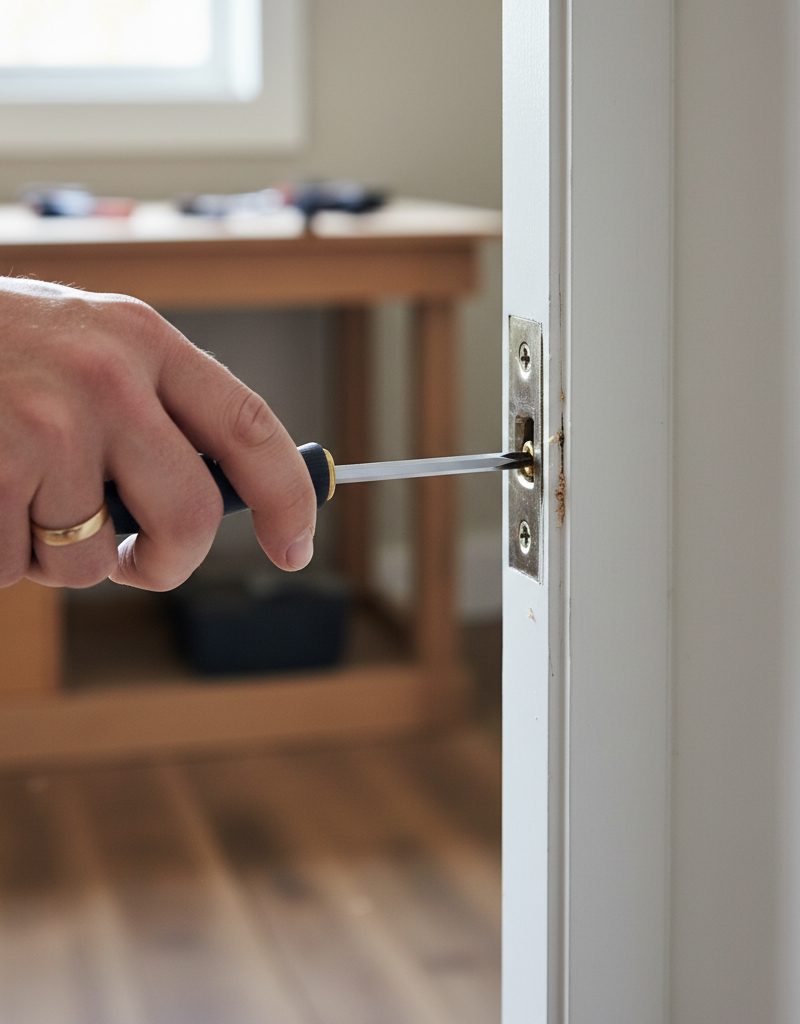
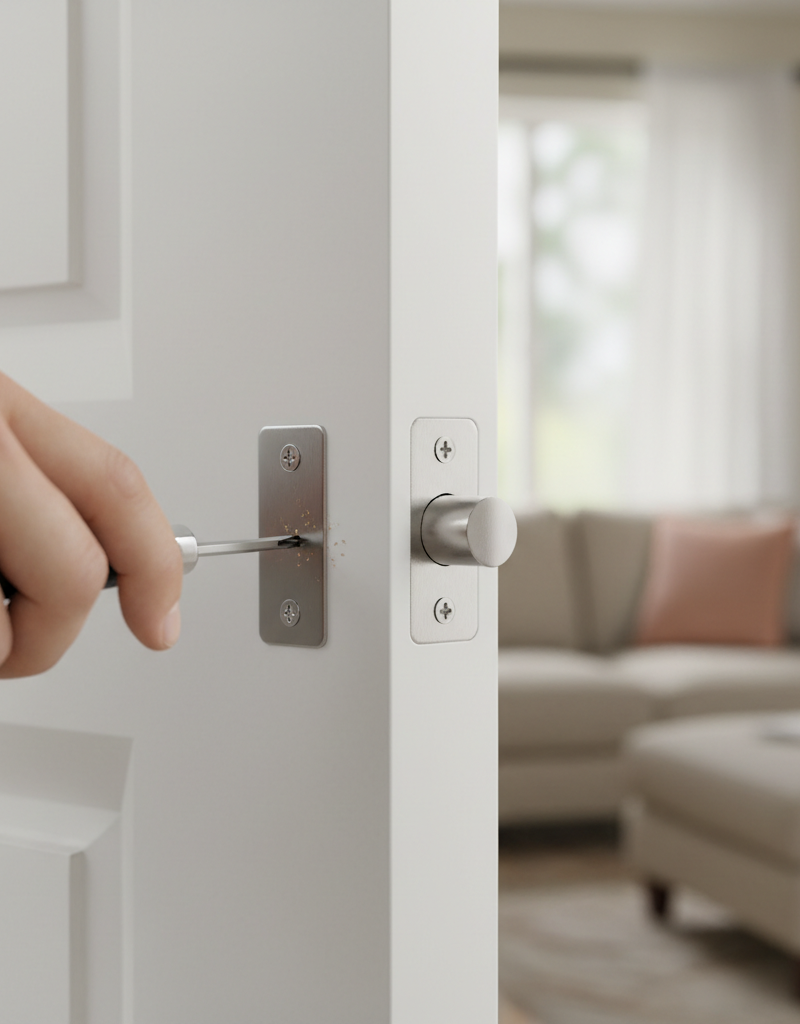
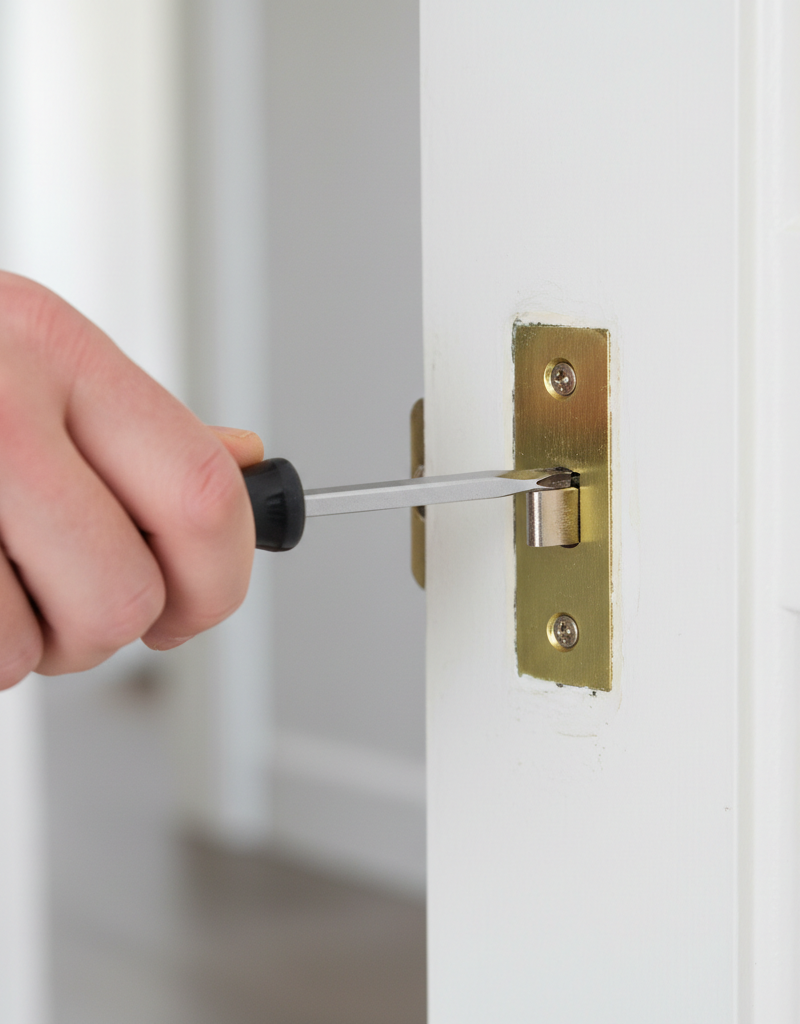
- If the door doesn't latch properly, the strike plate (the metal plate on the door frame that the latch bolt enters) may be misaligned. Look for marks on the strike plate indicating where the latch bolt is hitting.
- Use a file to slightly enlarge the opening of the strike plate in the direction needed for the latch to engage without friction. For vertical adjustments, you may need to unscrew the strike plate, chisel out a little wood from the mortise, or add a shim behind it, then re-attach.
7. Consider Longer Hinge Screws — Anchor hinges more deeply into the wall studs.
- For persistent sagging or movement, particularly on heavier doors, remove one screw from the top hinge (the one closest to the door frame's stud) on the frame side. Replace it with a 2.5-inch or 3-inch wood screw. This longer screw will pass through the door jamb and into the wall stud, providing a much stronger anchor. Repeat this for the middle hinge if needed.
8. Check for Frame Squareness — Diagnose and address minor frame shifts.
- If all else fails, and your level indicates the frame is out of plumb or square, it suggests the house has settled or the frame was never installed perfectly. Minor adjustments might be possible by very carefully driving shims behind the hinge-side jamb (between the jamb and the rough framing) after removing the door trim, but this is an advanced technique. For significant frame issues, professional help is recommended.
Common Causes
- Loose Hinge Screws: The most frequent culprit. Over time, the constant movement of opening and closing a door, combined with gravity, can cause wood screws to loosen in their pilot holes, especially in softer wood or particleboard doors.
- Humidity and Temperature Fluctuations: Wood is hygroscopic, meaning it absorbs and releases moisture from the air. High humidity can cause a door slab to swell and warp, while low humidity can cause it to shrink. This is particularly noticeable with solid wood doors.
- House Settling: All houses settle over time, even new ones. This can cause subtle shifts in the wall studs and door frames, leading to doors becoming out of plumb or square.
- Improper Hinge Installation: Hinges that are not perfectly mortised (recessed) or aligned during installation can create built-in stress points that manifest as gaps or binding later on.
- Worn or Damaged Hinges: Less common, but sometimes hinges themselves can become bent or corroded, affecting their ability to hold the door correctly.
- Ploored Framing: If the rough opening in the wall wasn
Related Articles
Keep troubleshooting with these hand-picked guides from FixlyGuide:
- The Secret to Lush Raised Beds? It's Not Just About How You Water — Smart irrigation for raised garden beds isn't just about automation; it's about delivering the right amount of water precisely when your pl…
- The Hidden Reason Your GFCI Trips (It's Not Always a Faulty Outlet) — A continuously tripping GFCI outlet is a critical safety warning, often indicating moisture, a faulty appliance, or a wiring problem that r…
- Is That Sweet Car Smell a Secret Killer? (& 6 Other Odors to Watch For) — Unusual odors in your car aren't just unpleasant; they're often critical warnings of underlying mechanical issues that could compromise saf…
- The 9 Sneaky Filters Stealing Your Home's Efficiency (And How to Fix It) — Unseen or neglected filters throughout your home can secretly inflate utility bills, degrade air quality, and lead to expensive appliance b…
- The Secret to Scoring Deep Grill Discounts (Before Everyone Else Does) — Unlock massive savings on top-brand grills and outdoor cooking essentials by understanding the overlooked retail inventory cycles before Me…
- The 3 Hidden Reasons Your Interior Door Sticks (and the Easy Fixes) — Your interior door sticking isn't just annoying; it's often a symptom of underlying issues that are surprisingly easy to fix with the right…
Should you do this yourself?
Answer five quick questions before you start. Safety outranks savings every time.
Your experience with work like this
How high do you have to work?
Does the job involve any of these?
Will it need a permit?
Specialty tools
Free and instant. Educational guidance only — not a quote, inspection, or professional diagnosis.
What should this project cost?
Enter your project details for a realistic cost range before you call anyone.
Cost depends heavily on which system turns out to be the source.
- Regional adjustment
- National average
- Labor share (typical)
- ~$1,620
- Quotes to collect
- 3 written estimates
Educational estimate based on national averages — not a binding quote. Always confirm with written local estimates.
This article was independently written by FixlyGuide based on the source topic.
Frequently asked questions
Why does my door keep creaking?+
Door creaking is almost always caused by friction in the hinges. Lubricate the hinge pins with a silicone-based spray lubricant or a few drops of 3-in-1 oil. If the creaking persists, the hinge pins might be bent or corroded and need replacement.
Can I prevent my doors from warping?+
Preventing warping mostly involves controlling humidity levels in your home. Use a dehumidifier in humid environments and ensure your home's HVAC system is properly maintained to regulate indoor climate. For exterior doors, ensure they are properly sealed and protected from direct weather exposure.
When should I replace my door rather than fix it?+
You should consider replacing your door if it has significant structural damage, such as large cracks, extensive wood rot, or severe, uncorrectable warping. If the cost of repair approaches the cost of a new door, or if the door significantly compromises security or energy efficiency, replacement is often the better long-term solution.
Discussion
Loading comments…