- Safety First: Unplug the washing machine from the wall outlet before starting.
- Tools: Shallow pan, old towel, small brush.
- Frequency: Every 3–4 months or if drain issues occur.
HVAC · High energy usage
| Project category | HVAC |
|---|---|
| Problem type | High energy usage |
| Trade required | HVAC |
| Urgency | Planned project |
| Safety risk | Low safety risk |
| DIY suitability | DIY for experienced homeowners |
| Cost category | High cost |
| Typical timeline | Assessment within weeks; replacement planned off-season |
| Contractor type | Licensed HVAC technician |
Repair option
Duct sealing, insulation, and a tune-up before touching the equipment.
Replacement option
High-efficiency replacement sized by a load calculation, not a rule of thumb.
Common causes
- Aging, low-efficiency equipment
- Leaking ducts losing conditioned air
- Insufficient attic insulation
- Oversized system short-cycling
Relevant tools:project cost estimatorrepair or replace
Published May 18, 2026Last updated August 17, 2026
Tools & materials you'll need
Affiliate linksAs an Amazon Associate FixlyGuide earns from qualifying purchases — at no extra cost to you. Prices and availability are accurate as of publication and subject to change.
Quick Answer
Nine key filters in your home—HVAC, refrigerator, water pitcher, whole-house water, washing machine, dryer, kitchen hood, vacuum, and showerhead—must be regularly cleaned or replaced to maintain peak efficiency, protect appliances, and ensure healthy indoor air and water. Neglecting these seemingly minor components can lead to higher utility bills, reduced appliance lifespan, and even health issues due to poor air or water quality. Simple, routine maintenance of these filters is one of the most cost-effective ways to safeguard your home and wallet.
The Problem
It's easy to overlook the unsung heroes of your home: its filters. These essential components are designed to trap dust, allergens, sediment, lint, and other impurities, preventing them from circulating in your air, clogging your water lines, or damaging your appliances. However, when filters become saturated with the very debris they're meant to capture, they cease to function effectively. An overloaded HVAC filter dramatically restricts airflow, forcing your furnace or air conditioner to work harder, consuming more energy and risking premature system failure. A clogged refrigerator water filter not only impairs the taste and safety of your drinking water but can also reduce ice maker efficiency and put a strain on the refrigeration system. Similarly, a lint-choked dryer filter can create a fire hazard and extend drying times, wasting electricity. The problem is insidious because it often develops slowly, making the decline in performance and increase in costs less noticeable until a significant issue arises. Homeowners often don't realize the extent to which neglected filters contribute to higher utility bills, decreased appliance longevity, and a less healthy indoor environment.
How It Works
Filters operate on various principles but share the common goal of separating desirable substances from undesirable ones. Most common home filters, like those in HVAC systems or vacuums, use a mesh or fibrous material designed with specific pore sizes. Air or water passes through, and particles larger than the pores are physically trapped. Activated carbon filters, often found in water pitchers or refrigerator dispensers, utilize a process called adsorption, where contaminants chemically bond to the surface of the carbon material.
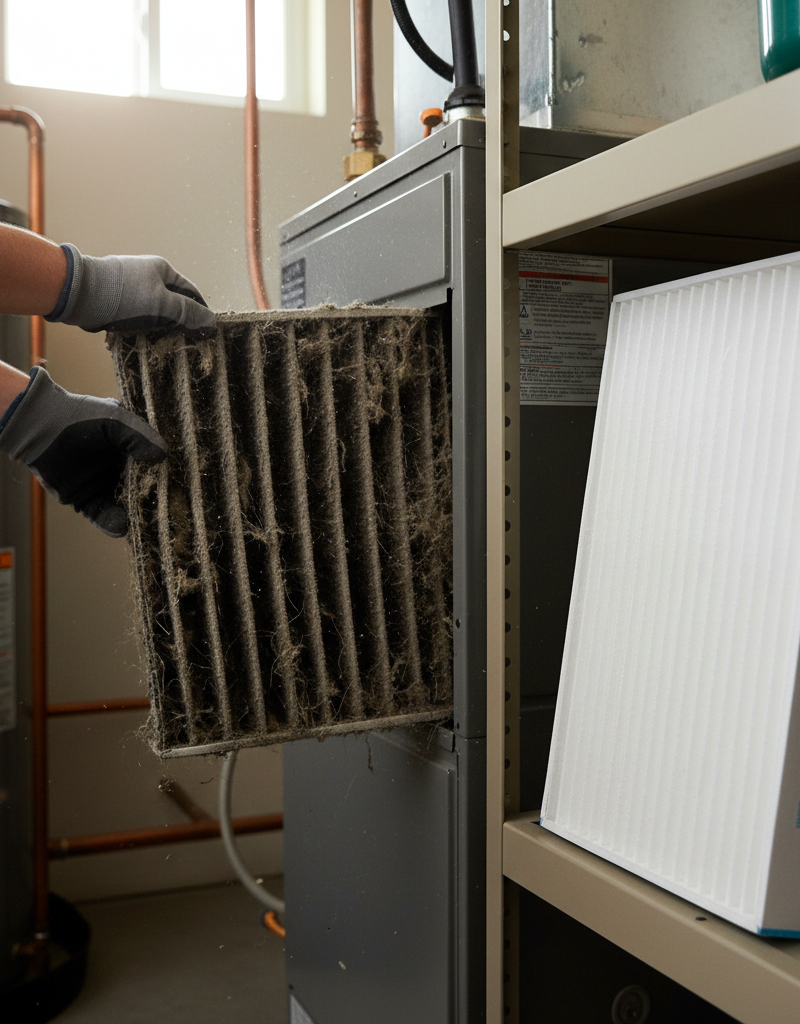
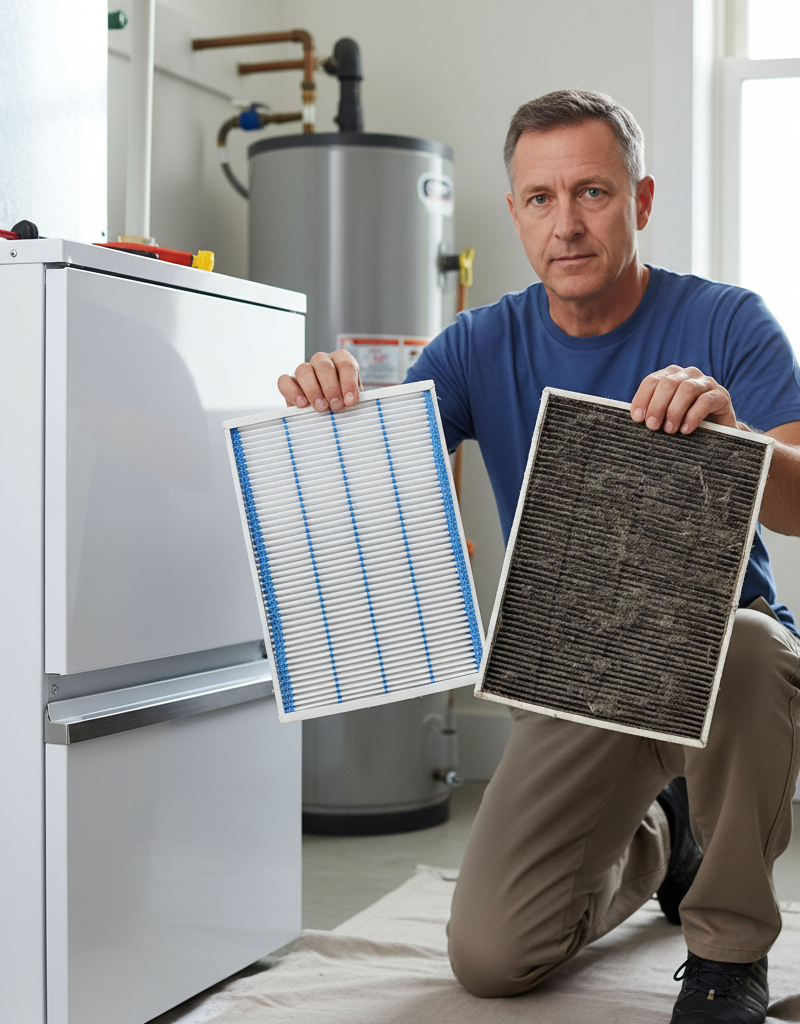
Consider an HVAC (Heating, Ventilation, and Air Conditioning) filter. It's typically a pleated paper or fiberglass screen positioned in the return air duct of your furnace or air handler. As your system pulls air from your home to be heated or cooled, this air first passes through the filter. Dust, pet dander, pollen, and other airborne particulates are caught in the filter's fibers, preventing them from recirculating into your living spaces and, critically, from accumulating on the delicate coils and blower motor of your HVAC unit. A clean filter allows air to flow freely, ensuring efficient heat exchange and proper system operation. When it's dirty, airflow is restricted, causing the blower motor to strain, temperatures to fluctuate, and energy consumption to rise. Similarly, a refrigerator water filter uses a combination of mechanical filtration and activated carbon. Water flows through layers that trap sediment and then through carbon that removes chlorine, odors, and other chemical impurities, improving taste and quality. The effectiveness of any filter directly correlates with its cleanliness and integrity; a compromised or clogged filter is essentially an obstacle, not a purifier.
Step-by-Step Fix
1. Locate and Inspect HVAC Filters — Start by identifying all return air vents in your home. Your main HVAC filter is usually located at the furnace/air handler unit itself, or in a large central return vent in a ceiling or wall. Note the size printed on the existing filter (e.g., 20x25x1).
- Safety First: Turn off your HVAC system at the thermostat before handling the filter.
- If your filter is extremely dirty: Consider a slightly higher MERV rating for your replacement, but consult your HVAC manual to ensure your system can handle the increased airflow resistance. Too high a MERV can damage your unit.
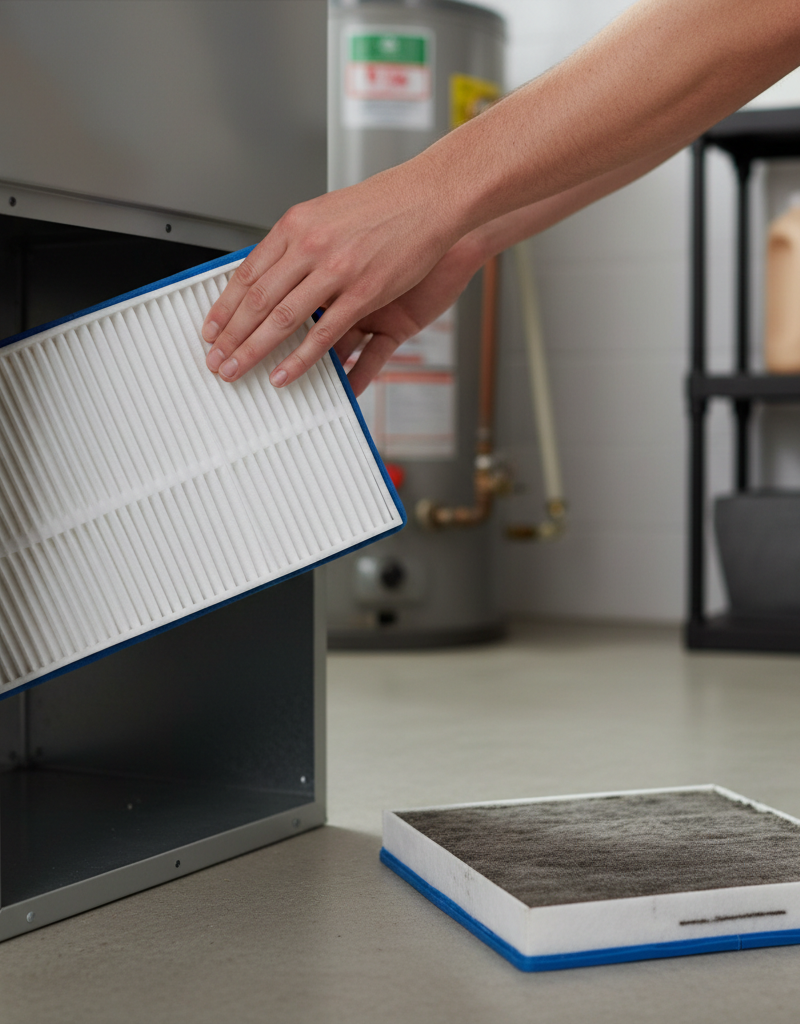
2. Replace HVAC Filters — Slide out the old filter and slide in the new one, ensuring the airflow arrow on the filter points in the direction of the air handler/furnace unit.
- Tools: New filter (matching size and MERV rating).
- Frequency: Replace every 1–3 months, more often with pets or allergies.
3. Check Refrigerator Water Filter — Most modern refrigerators have an indicator light on the dispenser panel that signals when the filter needs replacement. Consult your owner's manual for the exact location, which is often inside the fridge compartment, in the top corner, or in the base grille.
- Diagnostic: If your ice maker is slow or water tastes strange, it's overdue.
- If you can't find it: Some older refrigerators may not have an internal water filter, relying instead on external whole-house filtration or a filter in the water line behind the fridge.
4. Replace Refrigerator Water Filter — Follow your refrigerator's specific instructions. This usually involves a quarter-turn twist or a push-button release. Run a few gallons of water through the new filter to flush out any carbon dust.
- Tools: Replacement filter (exact model number specific to your fridge).
- Frequency: Every 6 months, or when the indicator light comes on.
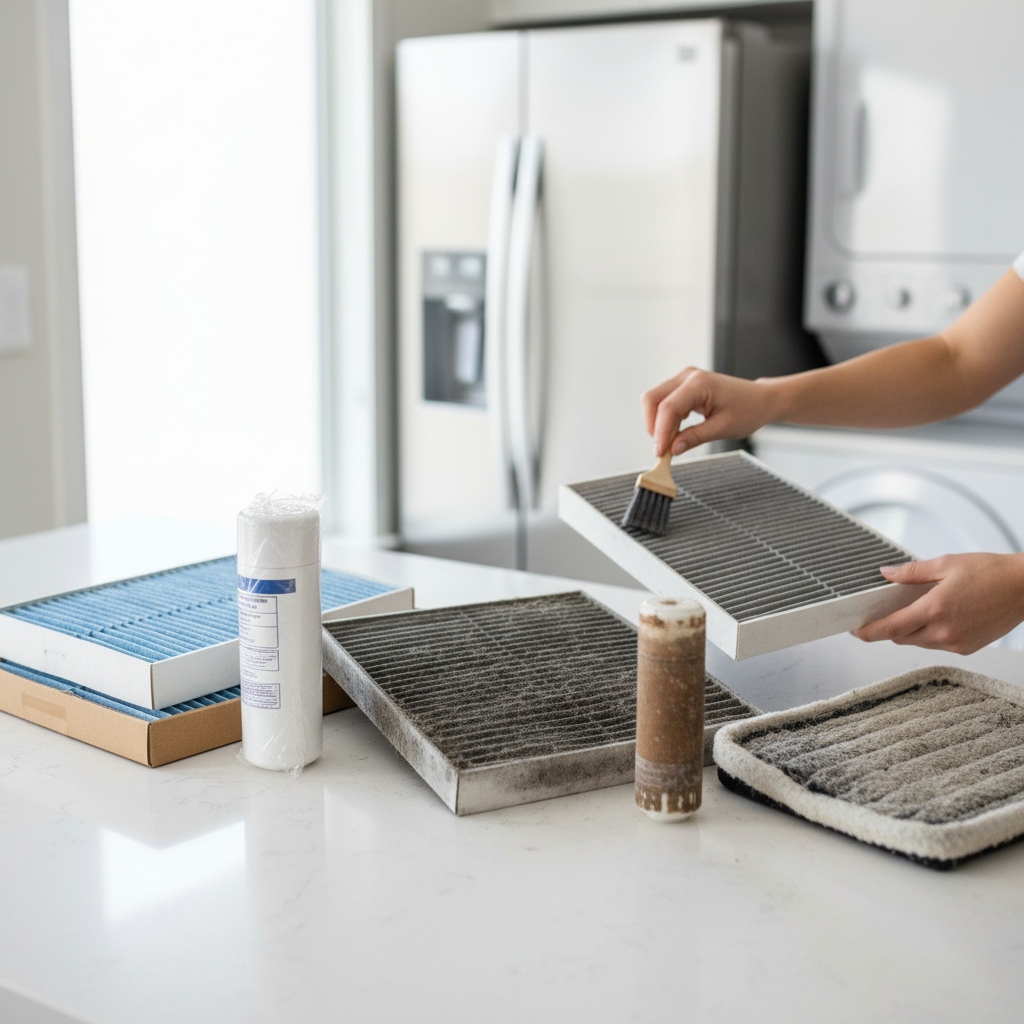
5. Clean Washing Machine Lint Filter — Many front-loading washing machines have a small access panel at the bottom front. Open this panel to reveal a drain hose and a circular filter. Place a shallow pan or towel underneath before slowly unscrewing the filter to drain residual water and remove lint, coins, and other debris.
- Safety First: Unplug the washing machine from the wall outlet before starting.
- Tools: Shallow pan, old towel, small brush.
- Frequency: Every 3–4 months or if drain issues occur.
6. Clean Dryer Lint Filter (and Vent) — After every load, pull out the lint trap from its slot (usually just inside the dryer door) and remove all visible lint. Periodically, use a vacuum attachment to clean deep into the filter housing and the dryer vent hose itself.
- Tools: Vacuum cleaner with hose attachment.
- Frequency: Lint trap after every load; deep clean vent hose annually.
- Important: Blocked dryer vents are a major fire hazard. If drying times are excessive, or clothes feel unusually hot, clean the vent immediately.
7. Clean Kitchen Range Hood Filters — Most range hoods have metal mesh filters that are designed to be washable. Unlatch and remove them (often by pulling a small tab). Wash them in hot, soapy water, or run them through a dishwasher cycle.
- Tools: Dish soap, sponge, or dishwasher.
- Frequency: Every 1–3 months, depending on cooking frequency.
8. Check Whole-House Water Filter — If you have one, your whole-house water filter is typically located where the main water line enters your home, near the water meter or water heater. It's usually a large canister with a clear or opaque housing.
- Safety First: Turn off the main water supply to your home before attempting to change this filter. Open an nearby faucet to relieve pressure.
- Tools: Housing wrench (usually comes with the filter unit), replacement filter cartridge, bucket, towels.
- Frequency: Every 3–6 months; check the manufacturer's recommendation.
9. Inspect and Clean Vacuum Filters — Most modern vacuums have one or more filters: a pre-motor filter (often foam or felt) and a post-motor HEPA filter. Refer to your vacuum's manual for their exact locations and cleaning instructions. Some are washable, while others are replacement-only.
- Tools: Small brush (for dirt removal), warm water (for washable filters).
- Frequency: Clean pre-motor filter monthly; replace HEPA filter annually or as recommended.
Common Causes
- Neglect: Pure and simple forgetfulness is the number one cause of dirty filters. Out of sight, out of mind.
- Lack of Awareness: Many homeowners simply don't know they have certain filters (e.g., washing machine, showerhead) or how frequently they need attention.
- Misconceptions: Believing filters last longer than they do, or that a
Related Articles
Keep troubleshooting with these hand-picked guides from FixlyGuide:
- The Secret to Lush Raised Beds? It's Not Just About How You Water — Smart irrigation for raised garden beds isn't just about automation; it's about delivering the right amount of water precisely when your pl…
- The Hidden Reason Your GFCI Trips (It's Not Always a Faulty Outlet) — A continuously tripping GFCI outlet is a critical safety warning, often indicating moisture, a faulty appliance, or a wiring problem that r…
- The 5 Essential Tools Every New Gardener Needs (And 3 You Can Skip) — Starting a garden doesn't require a huge investment in tools; savvy new gardeners can thrive with just a few key items and save money by kn…
- The Hidden Reason Your AC Isn't Cooling (And Why Most Homeowners Get It Wrong) — Is your central AC blowing warm air or struggling to cool your home? The culprit is often a silent but serious issue many homeowners overlo…
- The Hidden Reason Your GFCI Trips (It’s Not Always a Bad Outlet) — A tripping GFCI outlet is a safety mechanism doing its job, often indicating a problem like moisture, a faulty appliance, or a wiring issue…
- The #1 Reason Your AC Blows Warm Air (And It's Not What You Think) — A dirty air filter is often the overlooked culprit behind an air conditioner blowing warm air, hindering its ability to cool your home effi…
Should you do this yourself?
Answer five quick questions before you start. Safety outranks savings every time.
Your experience with work like this
How high do you have to work?
Does the job involve any of these?
Will it need a permit?
Specialty tools
Free and instant. Educational guidance only — not a quote, inspection, or professional diagnosis.
Estimate your own project cost
National averages are a starting point. Enter your details for a range that fits your house.
HVAC replacement cost
- Equipment$2,200 – $3,800
- Installation labor$1,200 – $2,500
Always insist on a Manual J load calculation — sq-ft sizing is only a rough check. Federal heat-pump rebates may reduce cost significantly.
Educational estimate only — always confirm with written local bids.
What should this project cost?
Enter your project details for a realistic cost range before you call anyone.
Service calls and common repairs run $150–$900; full system replacement typically $6,000–$12,000.
- Regional adjustment
- National average
- Labor share (typical)
- ~$1,935
- Quotes to collect
- 3 written estimates
Educational estimate based on national averages — not a binding quote. Always confirm with written local estimates.
Fixly Project Decision Box
- DIY difficulty
- Advanced
- Estimated time
- Homeowner checks 20–30 minutes
- Cost level
- Moderate
Main tools / materials
- Clean air filter
- Garden hose for condenser coils
- Shop vac for the condensate line
When to stop and call a pro
- Burning smell, smoke, or a tripping breaker
- Refrigerant lines iced over or hissing
- Any work inside the sealed refrigerant circuit (EPA-licensed only)
- Gas smell near a furnace — leave and call the utility
Need professional help?
Find an HVAC Pro Near YouBefore you start
Check the difficulty, permits, and safety risk — then decide whether to call a pro.
Free, no signup required. Estimates are educational guidance, not a quote or an inspection.
This article was independently written by FixlyGuide based on the source topic.
Frequently asked questions
How often should I change my HVAC filter?+
Most HVAC filters should be changed every 1–3 months. If you have pets, allergies, or live in a dusty area, you may need to change it more frequently, possibly monthly.
What happens if I don't change my refrigerator water filter?+
Neglecting your refrigerator water filter can lead to reduced water flow and ice production, unpleasant tastes or odors in your water and ice, and potentially allow contaminants to pass through, affecting your health. It can also put a strain on your refrigerator's water dispenser system.
Can a dirty dryer lint filter cause a fire?+
Yes, absolutely. A clogged dryer lint filter, especially combined with a blocked dryer vent, is a major fire hazard. Lint is highly flammable, and restricted airflow can cause the dryer to overheat. Always clean the lint trap after every load and deep clean the vent annually.
Discussion
Loading comments…