- Tools: Replacement water filter specific to your fridge model.
- Safety: Always flush new filters thoroughly to remove harmless carbon dust.
- Frequency: Every 6 months or when the indicator light comes on.
HVAC · High energy usage
| Project category | HVAC |
|---|---|
| Problem type | High energy usage |
| Trade required | HVAC |
| Urgency | Planned project |
| Safety risk | Low safety risk |
| DIY suitability | DIY for experienced homeowners |
| Cost category | High cost |
| Typical timeline | Assessment within weeks; replacement planned off-season |
| Contractor type | Licensed HVAC technician |
Repair option
Duct sealing, insulation, and a tune-up before touching the equipment.
Replacement option
High-efficiency replacement sized by a load calculation, not a rule of thumb.
Common causes
- Aging, low-efficiency equipment
- Leaking ducts losing conditioned air
- Insufficient attic insulation
- Oversized system short-cycling
Relevant tools:project cost estimatorrepair or replace
Published May 19, 2026Last updated August 17, 2026
Tools & materials you'll need
Affiliate linksAs an Amazon Associate FixlyGuide earns from qualifying purchases — at no extra cost to you. Prices and availability are accurate as of publication and subject to change.
Quick Answer
Five crucial, often-forgotten filters in your home—HVAC, refrigerator water and air, dryer lint trap, and range hood—are quietly increasing your utility bills and shortening appliance lifespans. By consistently cleaning or replacing these simple components, homeowners can dramatically improve indoor air quality, ensure their appliances run efficiently, and slash energy costs, potentially saving hundreds of dollars each year. Neglecting them leads to poor performance, higher energy consumption, and expensive repairs.
The Problem
Many homeowners diligently change their main HVAC filter, but a house is a system of interconnected, air-moving, water-filtering machines. What many don’t realize is that beyond the prominent HVAC filter, a handful of other, less obvious filters are constantly working behind the scenes. These hidden heroes protect your appliances, purify your air and water, and contribute significantly to your home's overall health and efficiency. However, when these filters become clogged or saturated, they choke the very systems they're designed to protect. An obstructed refrigerator water filter forces the compressor to work harder, a lint-choked dryer takes longer to dry clothes and becomes a fire hazard, and a greasy range hood filter allows smoke and contaminants to build up in your kitchen. The cumulative effect isn't just diminished performance; it's tangible financial drain in the form of higher energy bills, accelerated wear and tear on expensive appliances, and compromised indoor air quality that can affect your family's health. The common thread is that homeowners often don't even know these filters exist, let alone that they require regular maintenance.
How It Works
Understanding how these filters operate clarifies their importance. Each filter type serves a unique function within its respective system.
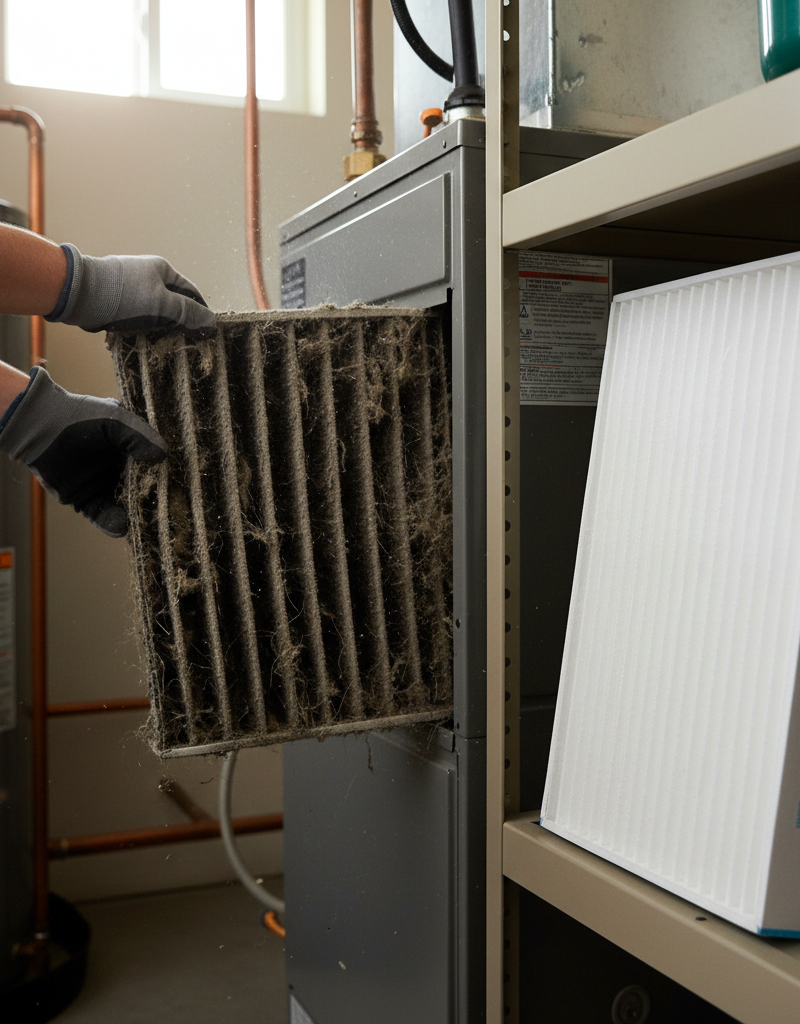
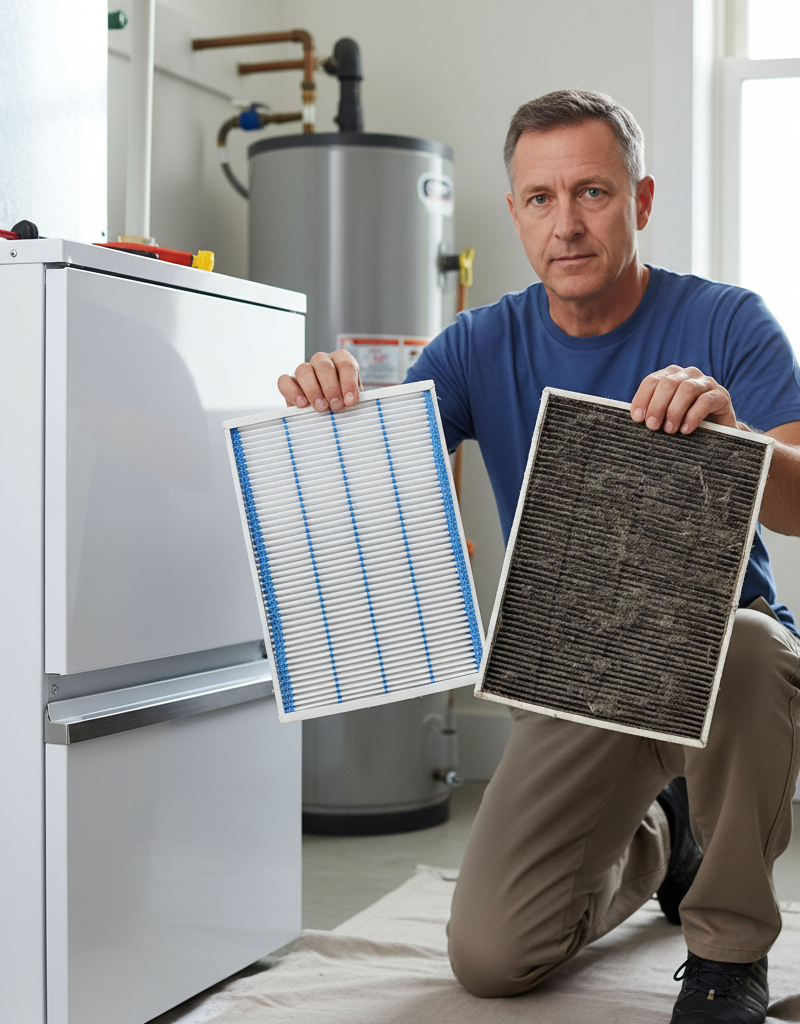
HVAC Filters: These are typically pleated media filters, often made of spun fiberglass or synthetic fibers, designed to capture airborne particles as air circulates through your heating and cooling system. When air is drawn into the return vents, it passes through this filter before entering the air handler. The filter traps dust, pollen, pet dander, mold spores, and other contaminants, preventing them from recirculating into your living spaces and protecting the sensitive internal components of your furnace and air conditioner. A clogged filter restricts airflow, forcing the HVAC fan motor to work harder, decreasing efficiency, and increasing energy consumption. The MERV (Minimum Efficiency Reporting Value) rating indicates the filter's effectiveness at capturing smaller particles; a higher MERV rating means better filtration but can also mean more airflow restriction if not properly maintained or if the system isn't designed for it.
Refrigerator Water Filters: Installed in the water line leading to your refrigerator's ice maker and water dispenser, these filters typically contain activated carbon. Water flows through the carbon bed, which has a highly porous structure designed to trap impurities. The carbon chemically bonds with chlorine, sediment, rust, lead, cysts, and other contaminants, improving the taste and odor of your drinking water and ice. Over time, the carbon becomes saturated with trapped particles, reducing its effectiveness and flow rate. A bypass feature often allows water to flow even with a spent filter, but without filtration.
Refrigerator Air Filters: Found in some modern refrigerators, these small filters use activated carbon to absorb odors inside the fresh food compartment. They help keep produce fresher longer by neutralizing ethylene gas and odors from other foods, preventing flavor transfer. Air circulates through a fan and passes through the carbon filter, which chemically binds with odor molecules. Like water filters, they become saturated and less effective over time.
Dryer Lint Traps: This is a simple screen, usually made of fine mesh, located just inside the dryer door or on top of the dryer. As hot, moist air tumbles clothes, it picks up loose fibers and lint. When this air is exhausted, it passes through the lint trap screen, which physically captures these fibers. This prevents lint from building up in the dryer's exhaust ductwork, which is a major fire hazard and can severely restrict airflow, making the dryer less efficient and increasing drying times. Clean lint traps allow for optimal airflow and safe operation.
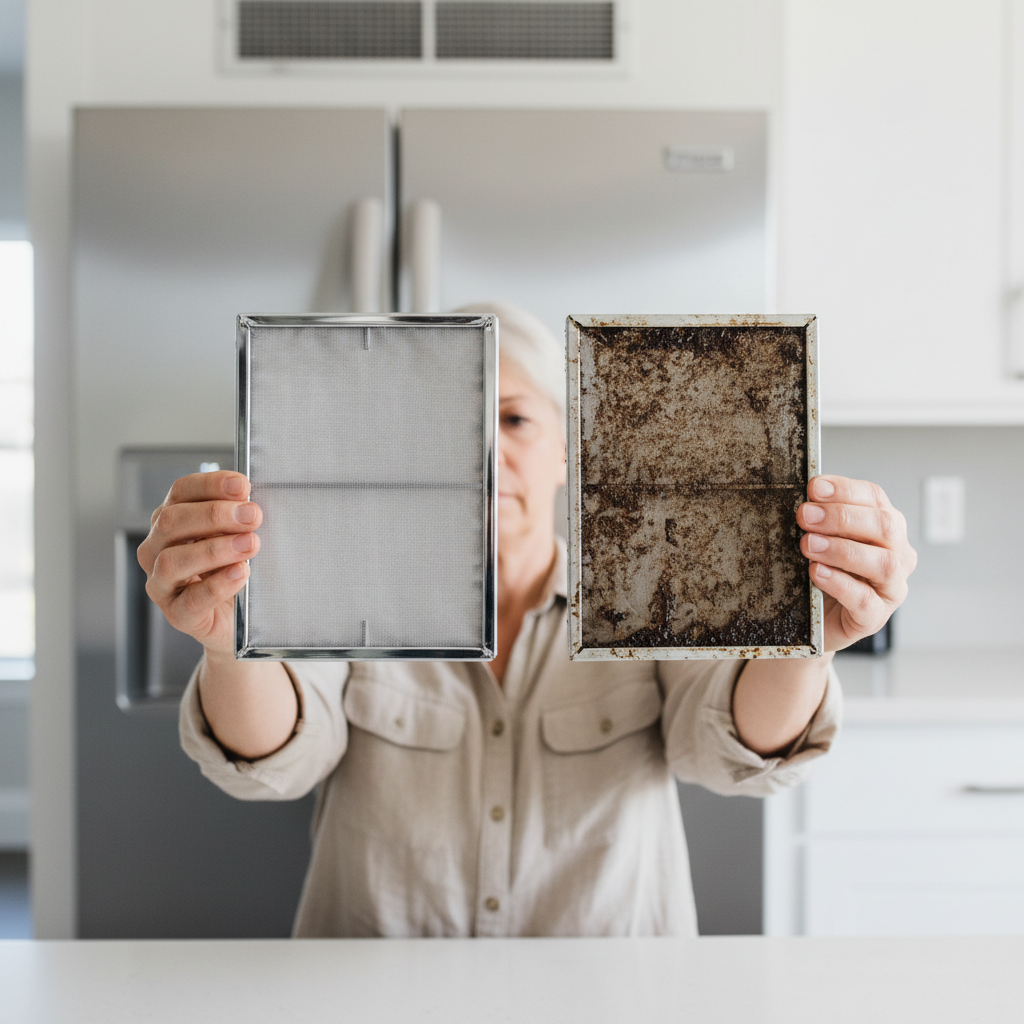
Range Hood Filters: These are typically metallic mesh or baffle filters positioned beneath the range hood, directly above the cooking surface. Their primary function is to capture grease particles, smoke, and some odors as they rise from your stove. The mesh traps grease physically, preventing it from entering the exhaust fan motor and ductwork. This protects the motor, keeps ductwork clean, and reduces the accumulation of greasy residue on kitchen surfaces. Grease-laden filters become less effective at capturing airborne particles and restrict the fan's ability to draw air, leading to poor ventilation and a greasy kitchen.
Step-by-Step Fix
1. HVAC Filter – Consistent Airflow & Clean Air
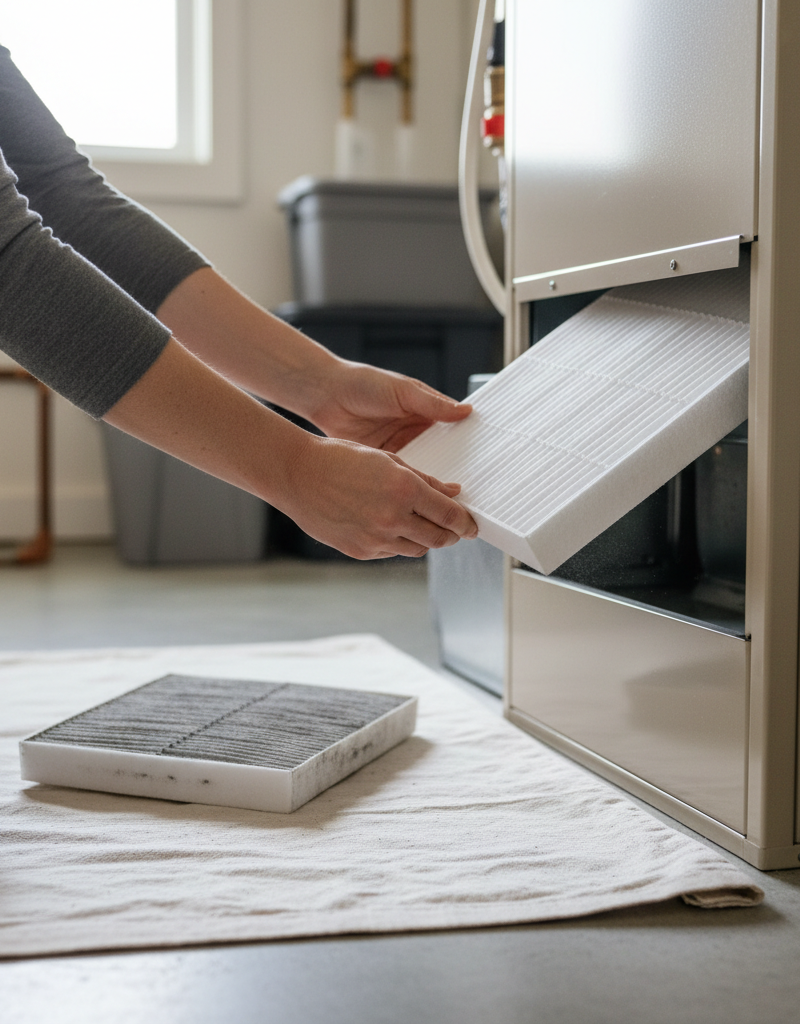
– Locate your HVAC filter, usually in the return air vent or within the furnace unit itself. Turn off the system at the thermostat. Note the direction of the airflow arrow on the old filter before removal. Slide the old filter out and replace it with a new one, ensuring the arrow points in the direction of airflow towards the furnace/air handler. * Tools: New HVAC filter (check size and MERV rating on the old filter). * Frequency: Every 1–3 months, more often with pets or allergies.
2. Refrigerator Water Filter – Fresh-Tasting Water
– The location varies by refrigerator model: inside the fridge compartment, in the base grille, or at the back. Consult your owner's manual. Most twist or push-tab out. Turn off the water supply to the fridge (if accessible) to minimize spills. Remove the old filter, empty any residual water, and insert the new filter firmly until it clicks into place. Run several gallons of water through the dispenser to flush out air and carbon particles. * Tools: Replacement water filter specific to your fridge model. * Safety: Always flush new filters thoroughly to remove harmless carbon dust. * Frequency: Every 6 months or when the indicator light comes on.
3. Refrigerator Air Filter – Odor-Free Fridge
– These small, often rectangular filters are typically located near the top or back of the fresh food compartment. Consult your fridge manual for the exact spot. Simply unclip or twist the old filter out and snap the new one in. Some have a calendar dial to set the replacement month. * Tools: Replacement air filter specific to your fridge model. * Frequency: Every 6 months.
4. Dryer Lint Trap – Fire Prevention & Efficiency
– This is the simplest and most critical to maintain. After every load, pull out the lint screen located in or on top of your dryer. Use your fingers to peel off the accumulated lint. For a more thorough cleaning, once a month, use a vacuum attachment to clean the trap housing and inspect the screen for tears. * Tools: Your hands, small vacuum attachment. * Safety: Never overload your dryer and ensure the vent hose isn't crushed. * Frequency: AFTER EVERY LOAD. Deep clean monthly.
5. Range Hood Filters – Cleaner Air & Kitchen
– Most range hood filters are metal mesh and are removable. Locate the small tabs or levers that hold them in place, then push or slide them out. For heavily soiled filters, soak them in hot, soapy water (dish soap or a degreaser works well) for 15-30 minutes, then scrub with a brush. Rinse thoroughly and let them air dry completely before reinserting. * Tools: Dish soap, degreaser, scrub brush, hot water. * If this doesn't work: If filters are heavily damaged or permanently clogged, replacement is best. Many generic mesh filters are available. * Frequency: Monthly, or more often with heavy frying/cooking.
Common Causes
- Lack of Awareness: Many homeowners are simply unaware that these filters exist or require regular maintenance, often discovering them only when an appliance malfunctions.
- Visible vs. Invisible: HVAC filters are often visible and part of a routine, whereas refrigerator air filters or internal water filters are out of sight, out of mind.
- Perceived Difficulty/Cost: Some homeowners assume filter replacement is complex or expensive, leading to procrastination when in reality, it's usually quick and affordable.
- False Economy: Delaying replacement to
Related Articles
Keep troubleshooting with these hand-picked guides from FixlyGuide:
- The 9 Sneaky Filters Stealing Your Home's Efficiency (And How to Fix It) — Unseen or neglected filters throughout your home can secretly inflate utility bills, degrade air quality, and lead to expensive appliance b…
- The 5 Essential Filters You Forget to Check (Until It's Too Late) — Regularly checking and replacing your home's filters can prevent costly repairs, improve indoor air quality, and lower utility bills.
- The Hidden Reason Your AC Isn't Cooling (And Why Most Homeowners Get It Wrong) — Is your central AC blowing warm air or struggling to cool your home? The culprit is often a silent but serious issue many homeowners overlo…
- The 6 Cleaning Secrets Hiding in Your Power Drill (Plus Attachments to Master) — Your power drill isn't just for DIY projects; with the right attachments, it's a powerful and efficient cleaning tool for tackling tough gr…
- Is That Sweet Car Smell a Secret Killer? (& 6 Other Odors to Watch For) — Unusual odors in your car aren't just unpleasant; they're often critical warnings of underlying mechanical issues that could compromise saf…
- The Secret Reason Your AC Isn't Drying Your Air (And What to Check First) — Your AC should cool and dehumidify, but if your house feels muggy, there's a specific, often overlooked culprit preventing it from doing it…
Estimate your own project cost
National averages are a starting point. Enter your details for a range that fits your house.
HVAC replacement cost
- Equipment$2,200 – $3,800
- Installation labor$1,200 – $2,500
Always insist on a Manual J load calculation — sq-ft sizing is only a rough check. Federal heat-pump rebates may reduce cost significantly.
Educational estimate only — always confirm with written local bids.
Questions to ask before you sign
Ask every contractor the same questions and the cheapest bid stops looking cheapest. Check them off as you go — your progress is saved on this device.
Free, no signup. Bring this to every walkthrough so you compare bids on the same terms.
What should this project cost?
Enter your project details for a realistic cost range before you call anyone.
Service calls and common repairs run $150–$900; full system replacement typically $6,000–$12,000.
- Regional adjustment
- National average
- Labor share (typical)
- ~$1,935
- Quotes to collect
- 3 written estimates
Educational estimate based on national averages — not a binding quote. Always confirm with written local estimates.
Fixly Project Decision Box
- DIY difficulty
- Advanced
- Estimated time
- Homeowner checks 20–30 minutes
- Cost level
- Moderate
Main tools / materials
- Clean air filter
- Garden hose for condenser coils
- Shop vac for the condensate line
When to stop and call a pro
- Burning smell, smoke, or a tripping breaker
- Refrigerant lines iced over or hissing
- Any work inside the sealed refrigerant circuit (EPA-licensed only)
- Gas smell near a furnace — leave and call the utility
Need professional help?
Find an HVAC Pro Near YouCheck these numbers against your project
National averages are a starting point. These tools narrow it to your scope and ZIP.
Free, no signup required. Estimates are educational guidance, not a quote or an inspection.
This article was independently written by FixlyGuide based on the source topic.
Frequently asked questions
How often should I change my HVAC filter?+
For most homes, HVAC filters should be changed every 1–3 months. If you have pets, allergies, or live in a dusty environment, consider changing it monthly. Regular replacement ensures optimal airflow and air quality.
Discussion
Loading comments…