- House Settling: Big one. Foundations move, walls shift a touch, and a door that was perfect last year suddenly won’t latch. That’s just a house being a house.
- Humidity & Temperature Changes: Wood soaks up moisture and gives it back. In sticky summer weather, frames and doors swell and start binding. In dry winter air, they shrink. It’s a constant tug-of-war.
- Loose Hinges: Screws back out over time. If the hinges aren’t tight to the door and frame, the door sags or drifts, and the latch goes out of line.
- Worn Strike Plate: Not as common, but if the hole gets bent up or worn from years of forcing a bad fit, the latch won’t guide through cleanly anymore.
- Improper Installation: Sometimes it was never quite right in the first place. A sloppy install can sit fine for a while, then start causing problems as the house settles.
General remodeling · Renovation planning
| Project category | General remodeling |
|---|---|
| Problem type | Renovation planning |
| Trade required | General contracting |
| Urgency | Planned project |
| Safety risk | Low safety risk |
| DIY suitability | Pro recommended |
| Cost category | Major investment |
| Typical timeline | Design and permitting often 2–4 months before work starts |
| Contractor type | General contractor |
Repair option
Phase the work and fix the building envelope first.
Replacement option
Full renovation with permits, design, and a general contractor.
Common causes
- Space no longer fits how the household lives
- Resale preparation
- Deferred maintenance stacking up
Relevant tools:project cost estimatorcompare quoteshome improvement material prices
Published August 16, 2026Last updated August 17, 2026
Tools & materials you'll need
Affiliate linksAs an Amazon Associate FixlyGuide earns from qualifying purchases — at no extra cost to you. Prices and availability are accurate as of publication and subject to change.
Quick Answer
You know the drill. You push the door shut, and the latch bolt just thunks off the strike plate, or it barely catches and leaves the door sitting there ajar. Annoying as heck, right? Nine times out of ten, that isn’t a busted lock or a bad doorknob. It’s usually plain old misalignment between the latch bolt and the strike plate on the door frame. Good news is, it’s a pretty simple fix, and I’ll walk you through it.
The Problem
I’ve seen this one in new houses and old farmhouses alike. A door that won’t latch right isn’t just a small headache; if it’s an exterior door, it can be a security problem, and if it’s an interior door, it’ll keep popping open when you don’t want it to. Maybe it’s a bedroom door that never quite stays shut. Maybe it’s a bathroom door that won’t give you the privacy you expected. Either way, the issue is the same: the spring-loaded latch bolt—the little angled piece that sticks out from the door—ain’t lining up with the hole in the strike plate, that metal piece screwed into the frame. It might be hitting high, low, or off to one side, or it might just be hanging on by a thread and leaving the door loose.
How It Works
Here’s how a door is supposed to work. You’ve got the door slab hanging on its hinges. Mounted in the door slab is the doorknob assembly, and inside that is the latch mechanism. That mechanism has a beveled latch bolt that pops out when the door’s open. When you close the door, the angled edge of that bolt rides up against the strike plate. The strike plate—metal piece with a hole, usually a little lip—gets recessed into the jamb. As the door keeps closing, the strike plate pushes the bolt inward until it clears the edge, then the bolt springs back out and seats in the hole. That little click you hear? That’s the latch doing its job and keeping the door shut.
Now, here’s where it goes sideways. Houses settle. Wood swells and shrinks with humidity and temperature. Hinges loosen. All those tiny changes add up and throw off the exact alignment door hardware needs to work right. A fraction of an inch can make or break it. If the door sags even a little, the latch can smack the bottom edge of the strike opening. If the frame swells, it might hit the side. The whole fix is about getting that latch bolt and strike plate back in line—usually fine-tuning, not major surgery.
Step-by-Step Fix
Alright, let’s get that door latching like it should. Before you start twisting screws or grabbing a chisel, figure out exactly what’s going on.
Step 1: Diagnose the Problem — Figure out where the latch bolt is hitting.
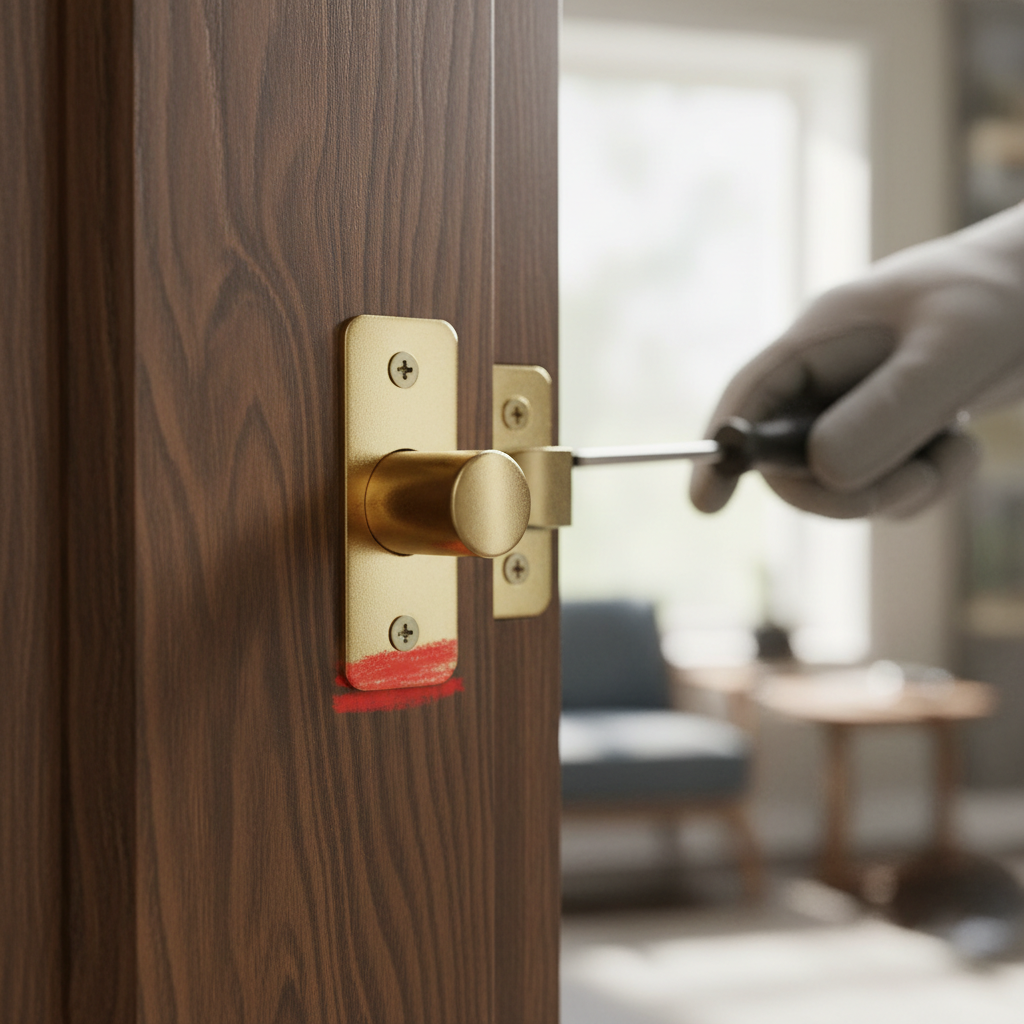
- The Mark Test: This is the one I use first. Grab a crayon, lipstick, or even a dab of toothpaste. Smear a thin layer on the end of the latch bolt. Close the door slowly until the latch makes contact with the strike plate, but don’t force it shut. Open the door and look at the strike plate. You should see a mark showing exactly where the bolt hit. High, low, left, right—you’ll know. That tells you which way you need to move things.
- Visual Inspection: Look at the door when it’s almost closed. Is there a bigger gap at the top or bottom on the hinge side? Does the door look like it’s sagging? You can often see right away if it isn’t sitting square in the frame. And check the hinge screws while you’re at it—tight or loose? Loose hinges are trouble.
Step 2: Tighten Loose Hinge Screws — This is often the easiest fix.
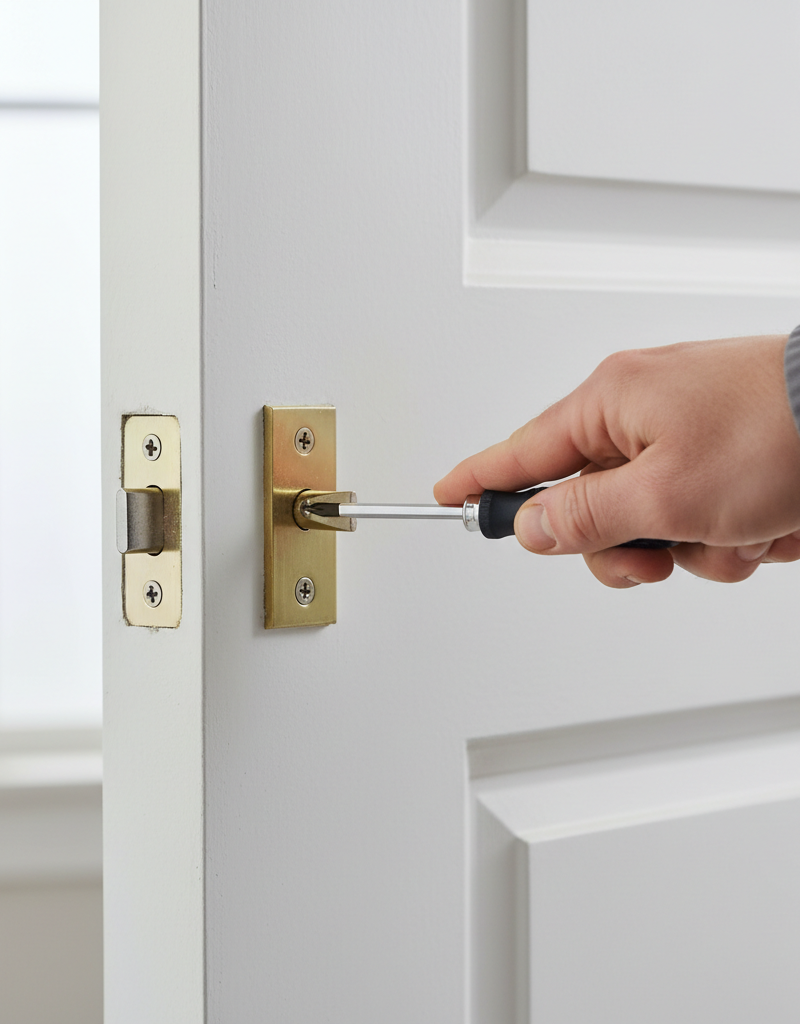
- Grab a Screwdriver: Before you start changing hardware, grab a Phillips head screwdriver that fits the hinge screws snugly. A lot of times, all it takes is tightening those screws on the door hinges. Start with the top hinge, then the middle, then the bottom. Don’t crank them down like you’re mad at them, but get them snug. Loose hinge screws let the door sag and throw the latch off. I’ve been on jobs where a door wouldn’t close right, and after a minute with a drill and driver bit, that thing was fixed. I pulled a bedroom door in Frisco last month that had exactly this problem—the homeowner was ready to order a new slab, and all it needed was tightened hinges.
- Longer Screws: If the screws just spin and won’t tighten, the holes are probably stripped. Try a slightly longer screw (like 2-inch or 2 1/2-inch deck screws) in the top hinge, especially the screw closest to the door stop on the frame side. Those longer screws bite into the framing lumber behind the jamb and pull the door back into line. Old carpenter trick, and it works.
Step 3: Adjust the Strike Plate (Minor Adjustments) — If tightening hinges didn’t do it, this is next.
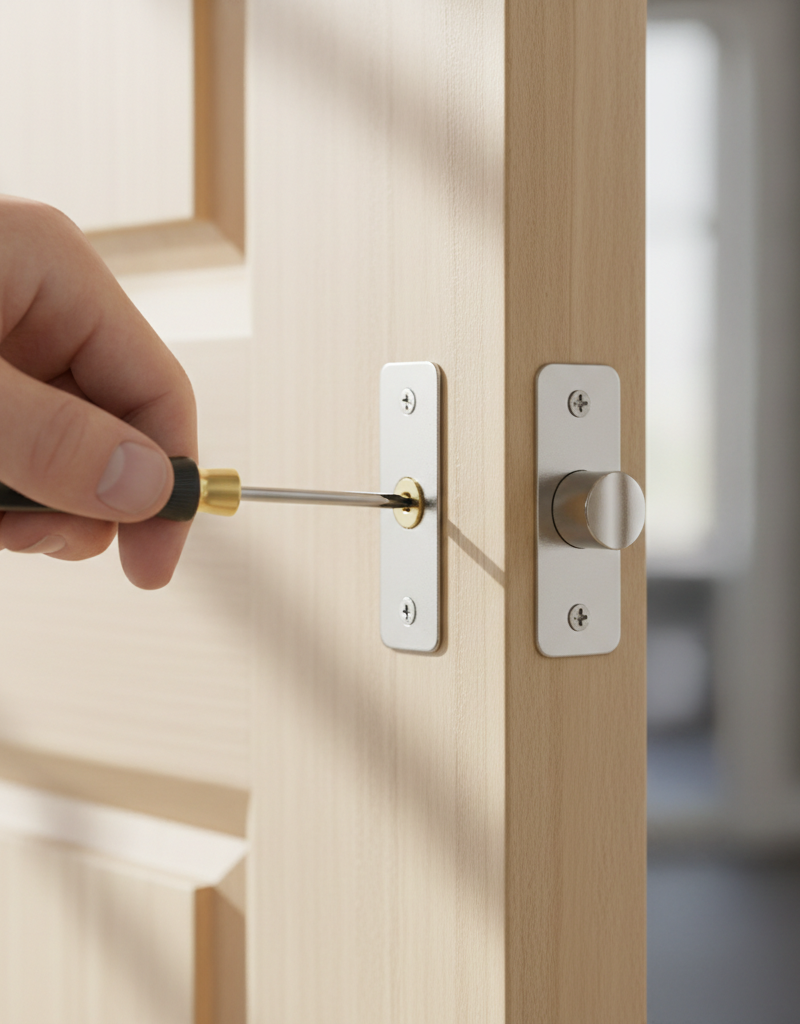
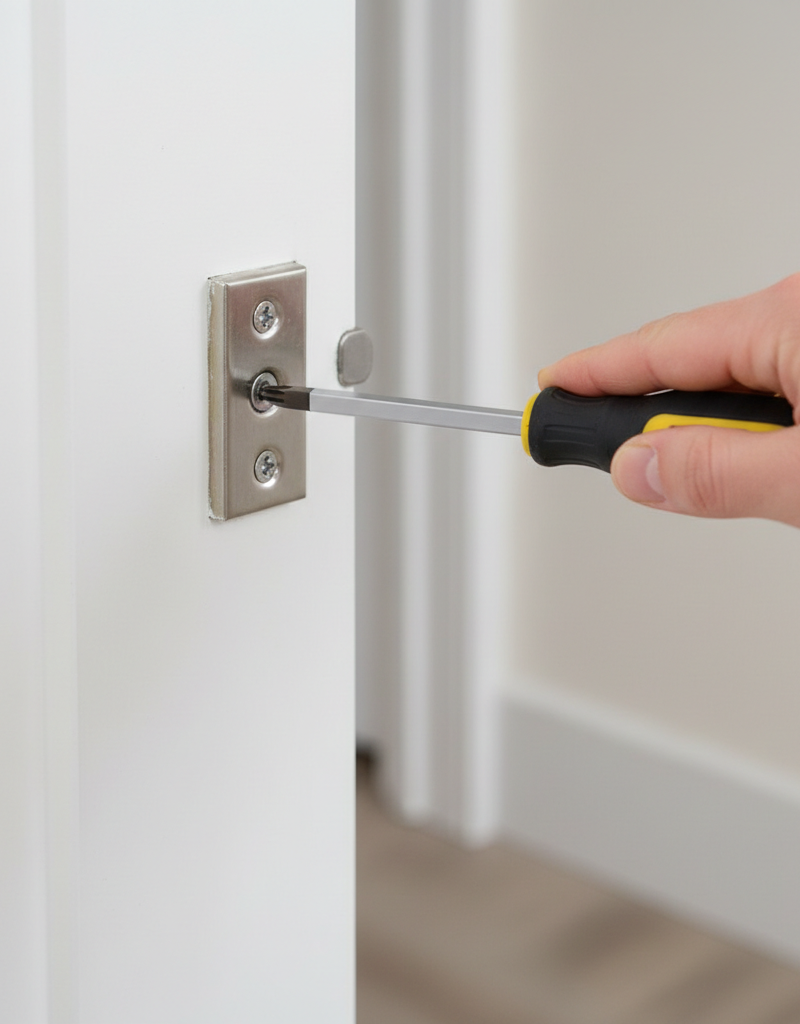
- Loosen and Shift: If your mark test showed the latch bolt hitting a little high or low, you can often fix it by loosening the two screws holding the strike plate. Don’t back them all the way out—just a quarter to a half turn. With the screws loose, you may be able to nudge the strike plate up or down just a hair. Sometimes the original installer made the mortise—the recessed pocket—slightly larger than the plate, so you’ve got a millimeter or two to play with. Shift it, tighten it back down, and test the door. If it works, great. If not, we may need to get a little more aggressive.
- File the Opening: If the latch bolt is catching the top or bottom edge of the strike plate opening by just a hair, and you can’t shift the plate enough, file the opening. Use a small metal file or a Dremel with a grinding bit. Take off just enough metal from the edge that’s in the way. Go slow. Test often. You don’t want to blow the hole out too big—you just need enough clearance for the latch to slip through. We’re talking 1/16-inch or 1/8-inch of material, tops.
Step 4: Adjust the Strike Plate (Major Adjustments) — When nudging or filing isn't enough.
- Enlarge the Mortise: If the latch bolt is hitting way off—high, low, or to the side—and filing the strike plate opening won’t cut it, you’ll need to enlarge the mortise, that recessed area in the jamb where the strike plate sits. You can’t just slide the plate over because it still has to sit flush. Take the strike plate off. Use a sharp utility knife or chisel to score the outline of the new, slightly larger mortise you need. Then carefully chisel out the extra wood. Small bites only. You’re just trying to move the opening enough so the latch centers up. Clean out the mortise and reinstall the plate. Make sure it sits flush with the jamb. You don’t want it proud of the surface.
- Fill Old Screw Holes (if relocating significantly): If you’ve had to move the strike plate a decent amount, the old screw holes may show or keep the new screws from biting. Stuff a few wooden toothpicks or golf tees into the old holes—break them off flush—add a drop of wood glue if you’ve got it, and let it dry. Then drill new pilot holes for the strike plate screws. Fresh wood, better bite.
Step 5: Adjust the Door Stop — Sometimes the problem isn't the latch, but how far the door closes.
- Test the Gap: The door stop is that strip of wood or metal on the frame that the door closes against. If the door is closing too far or not far enough for the latch to catch, the stop might be the culprit. If the door isn’t making full contact with the stop, or if the latch just barely grabs, the stop could be set wrong. Sometimes it shifts over time. Sometimes it was installed off from day one. This gets especially weird when the door swings past the latch bolt and makes it impossible for the bolt to catch.
- Carefully Pry and Adjust: Door stops are usually nailed or glued. If it’s nailed, you can often pry it off carefully with a thin pry bar or flathead screwdriver. Work slow so you don’t chew up the paint or split the wood. Move it inward or outward as needed, then reattach it with finishing nails. If it’s glued and painted over, that’s a bigger pain in the neck, and I’d look at the other fixes first. Measure the current distance from the edge of the frame to the stop, then try moving it 1/16-inch or 1/8-inch at a time. A little trial and error goes a long way here.
Common Causes
- House Settling: Big one. Foundations move, walls shift a touch, and a door that was perfect last year suddenly won’t latch. That’s just a house being a house.
- Humidity & Temperature Changes: Wood soaks up moisture and gives it back. In sticky summer weather, frames and doors swell and start binding. In dry winter air, they shrink. It’s a constant tug-of-war.
- Loose Hinges: Screws back out over time. If the hinges aren’t tight to the door and frame, the door sags or drifts, and the latch goes out of line.
- Worn Strike Plate: Not as common, but if the hole gets bent up or worn from years of forcing a bad fit, the latch won’t guide through cleanly anymore.
- Improper Installation: Sometimes it was never quite right in the first place. A sloppy install can sit fine for a while, then start causing problems as the house settles.
Common Mistakes
- Ignoring Loose Hinges: A lot of people jump straight to the strike plate. Check the hinge screws first. It’s usually the fastest win.
- Filing Too Much: Easy trap. When you’re filing or chiseling, take small bites and test often. You can always remove more. You can’t put it back without extra work.
- Not Checking the Mark: Guessing where the latch is hitting wastes time. Use the crayon or lipstick trick. It saves a bunch of aggravation.
- Forcing the Door: If you keep slamming a door that won’t latch, you’ll only make it worse. You can bend the latch, chew up the strike plate, or loosen the frame more.
- Ignoring the Door Stop: Sometimes the latch is fine, but the door just isn’t closing far enough. That stop matters—check it.
- Assuming the Lock is Broken: Most homeowners think “bad latch” means the whole doorknob is shot. That can happen, sure, but it’s a lot less common than simple alignment trouble. Don’t go buying a new knob until you’ve ruled that out.
Cost & Time Breakdown
Here
Related Articles
Keep troubleshooting with these hand-picked guides from FixlyGuide:
- The 5-Minute Trick for a Door That Won't Latch (And Why It Keeps Happening) — Discover the simplest fixes for a door that won't latch, from minor adjustments to tackling persistent alignment issues.
- The 5-Minute Fix for a Door That Won't Latch (And the Hidden Cause) — Discover the surprisingly simple reasons your door isn't latching and how to fix it in minutes with common household tools.
- The 3 Hidden Reasons Your Door Won't Latch (And the Easy DIY Fixes) — Frustrated by a door that refuses to latch? Discover the common culprits behind this annoying problem and learn simple, effective DIY fixes…
- The 3 Hidden Reasons Your Door Won't Latch (And the Easy Fixes) — Discover the surprising reasons your interior door isn't latching and how to quickly diagnose and fix the issue with simple tools.
- The 3 Hidden Reasons Your Interior Door Sticks (and the Easy Fixes) — Your interior door sticking isn't just annoying; it's often a symptom of underlying issues that are surprisingly easy to fix with the right…
- The #1 Hidden Culprit Behind Your Whole-House Low Water Pressure (It's Not Your City!) — Discover the most common, often overlooked cause of low water pressure throughout your entire home and how to fix it yourself.
Should you do this yourself?
Answer five quick questions before you start. Safety outranks savings every time.
Your experience with work like this
How high do you have to work?
Does the job involve any of these?
Will it need a permit?
Specialty tools
Free and instant. Educational guidance only — not a quote, inspection, or professional diagnosis.
What should this project cost?
Enter your project details for a realistic cost range before you call anyone.
Cost depends heavily on which system turns out to be the source.
- Regional adjustment
- National average
- Labor share (typical)
- ~$1,620
- Quotes to collect
- 3 written estimates
Educational estimate based on national averages — not a binding quote. Always confirm with written local estimates.
Recommended for DIYers & woodworkers
Sponsored
The Top 20 Tools for Workshops of Any Budget
No stationary machines or power tools required — plus 3 fundamental tools that can't be bought at any price.
Get the free guide
Ted's Woodworking — The #1 Woodworking Resource
Detailed instructions, dimensioned drawings, materials & cutting lists, and 3D schematics for every skill level.
See the plansSponsored: links above are affiliate links. FixlyGuide may earn a commission on qualifying purchases — at no extra cost to you.
Frequently asked questions
Why does my door suddenly stop latching?+
Most often, it's due to minor shifts in the house framing or changes in humidity causing the wood to expand or contract. This slight movement can throw off the precise alignment needed between the latch bolt and the strike plate.
Can a loose door handle cause latching problems?+
Yes, but indirectly. If the doorknob assembly itself is loose, it might not properly extend or retract the latch bolt. However, the more common issue is the alignment of the *door* relative to the *frame*, not the handle mechanism itself.
How can I tell if my hinges are the problem?+
If your door sags, has visible gaps around the top or bottom on the hinge side, or wiggles when you open and close it, loose hinges are a likely culprit. Check if the screws are tight; if they spin, the holes are stripped and need longer screws.
What if filing the strike plate isn't enough?+
If filing just a bit of metal from the strike plate opening doesn't work, you'll need to enlarge the mortise (the recessed area) in the door jamb where the strike plate sits. Carefully chisel out a larger opening to accommodate the latch bolt's new position.
My door binds when closing. Is that related to the latch?+
Yes, binding often indicates the door itself is out of square or swollen, which can also prevent the latch from aligning. Address the binding first, as fixing that might solve the latch issue. Check for paint buildup or swollen wood.
Should I use wood glue in stripped screw holes for hinges?+
Absolutely. Filling stripped screw holes with wooden toothpicks or golf tees along with a drop of wood glue before inserting new, longer screws provides a much stronger anchor. Let the glue dry for a few hours for the best hold.
Can I replace just the strike plate?+
You can, but it's usually not necessary unless the plate itself is severely bent or broken. The problem is almost always the *position* of the strike plate relative to the latch, not the plate itself. A new plate might not fix the underlying alignment issue.
When should I consider replacing the entire doorknob assembly?+
Only if you've exhausted all alignment adjustments and you can clearly see the latch bolt itself is damaged, bent, or not retracting/extending properly when you turn the knob. Most latching problems are alignment, not hardware failure.
What's a 'door stop' and how does it affect latching?+
The door stop is the trim piece around the door frame that the door presses against when fully closed. If it's positioned incorrectly, the door might not close far enough for the latch bolt to engage, or it might close too far, causing binding.
Is this a DIY job or should I call a professional?+
For basic alignment issues, this is absolutely a DIY job. You'll typically only need a screwdriver, maybe a chisel or file. If you're dealing with major structural issues, a badly warped door, or if you're uncomfortable using basic hand tools, then call a pro.
Discussion
Loading comments…