- House Settling: Over time, foundations shift, causing door frames to move out of square. This is one of the most frequent culprits for misalignment.
- Humidity and Temperature Changes: Wood materials (doors and frames) expand in high humidity and contract in dry conditions. This swelling or shrinking can significantly alter the fit of a door.
- Loose Hinges: Screws that hold hinges to the door or frame can work themselves loose, allowing the door to sag or shift, pulling the latch bolt out of alignment with the strike plate.
- Worn Latch Mechanism: The internal springs or components within the latch bolt assembly can wear out or become sticky from dirt, preventing the latch bolt from fully extending or retracting.
- Improper Installation: If the door or frame was not installed plumb and square initially, it might develop latching issues sooner rather than later.
General remodeling · Renovation planning
| Project category | General remodeling |
|---|---|
| Problem type | Renovation planning |
| Trade required | General contracting |
| Urgency | Planned project |
| Safety risk | Low safety risk |
| DIY suitability | Pro recommended |
| Cost category | Major investment |
| Typical timeline | Design and permitting often 2–4 months before work starts |
| Contractor type | General contractor |
Repair option
Phase the work and fix the building envelope first.
Replacement option
Full renovation with permits, design, and a general contractor.
Common causes
- Space no longer fits how the household lives
- Resale preparation
- Deferred maintenance stacking up
Relevant tools:project cost estimatorcompare quoteshome improvement material prices
Published June 11, 2026Last updated August 17, 2026
Tools & materials you'll need
Affiliate linksAs an Amazon Associate FixlyGuide earns from qualifying purchases — at no extra cost to you. Prices and availability are accurate as of publication and subject to change.
Quick Answer
A door that refuses to latch or seems to stick often suffers from a misaligned strike plate or loose hinges. The fastest solution usually involves scrutinizing the strike plate's alignment with the door's latch bolt and making small, precise adjustments. By tightening hinge screws, adjusting the strike plate, or even simply lubricating the latch mechanism, you can often restore your door to perfect working order in mere minutes, ensuring secure closure and preventing potential damage to your door frame.
The Problem
It’s a common and frustrating household annoyance: you close a door, but it just won’t catch. Maybe you have to push it shut with extra force, jiggle the handle, or even try multiple times before the latch finally engages. Sometimes, the door seems to latch, but a slight bump or breeze causes it to swing open again. This isn't just irritating; it can compromise privacy, energy efficiency (if it's an exterior door), and security. Over time, forcing a sticky door can also wear down the latch mechanism itself or damage the door frame around the strike plate, leading to more significant repairs.
The root cause often lies in a subtle shift of the door or its frame. Houses settle, humidity changes, and even everyday use can cause components to move out of their original alignment. The latch bolt—the spring-loaded metal piece that extends from the door edge—might be hitting the strike plate at the wrong angle, above or below the strike plate hole, or even missing it entirely. Before you resign yourself to a perpetually ajar door or consider a costly replacement, understand that most latching issues are surprisingly simple to diagnose and fix with basic tools and a little patience.
How It Works
Understanding how a door latch system functions is key to troubleshooting. At its core, a door latch assembly consists of several components working in concert to secure the door:
- The Latch Bolt: This is the angled, spring-loaded metal piece that protrudes from the door's edge. When you turn the doorknob, a spindle within the mechanism retracts the latch bolt into the door. When released, the spring pushes the latch bolt back out.
- The Follower/Spindle: Inside the doorknob assembly, the follower is a component that rotates when the doorknob is turned. It's connected to a spindle, which passes through the door and engages with the latch mechanism.
- The Latch Mechanism Housing: This metal box fits inside a mortise (a recessed cut-out) in the door's edge and contains the springs and levers that operate the latch bolt.
- The Strike Plate: A metal plate mortised into the door frame, it has a hole (or sometimes a ramped opening) designed to receive the latch bolt when the door closes. The small lip or ramp on the strike plate helps guide the latch bolt into the hole and protect the door frame from wear and tear. A dust box, a small metal housing behind the strike plate, provides a cavity for the latch bolt to extend into.
When you close the door, the angled face of the latch bolt slides against the strike plate's lip, causing it to retract slightly into the door. Once the latch bolt reaches the strike plate's hole, the spring mechanism pushes it forward, extending it into the hole and securing the door. If any part of this alignment or mechanism is off—whether it’s loose hinges causing the door to sag, a strike plate that’s moved up or down, or simply a sticky latch bolt—the door won’t latch effectively. Humidity can also cause a door or frame to swell, changing the delicate tolerances required for smooth operation.
Step-by-Step Fix
1. Diagnose the Misalignment — Identify where the latch bolt is hitting.
- Safety First: Ensure no pinch points or falling hazards before you begin. Keep your fingers clear of closing doors.
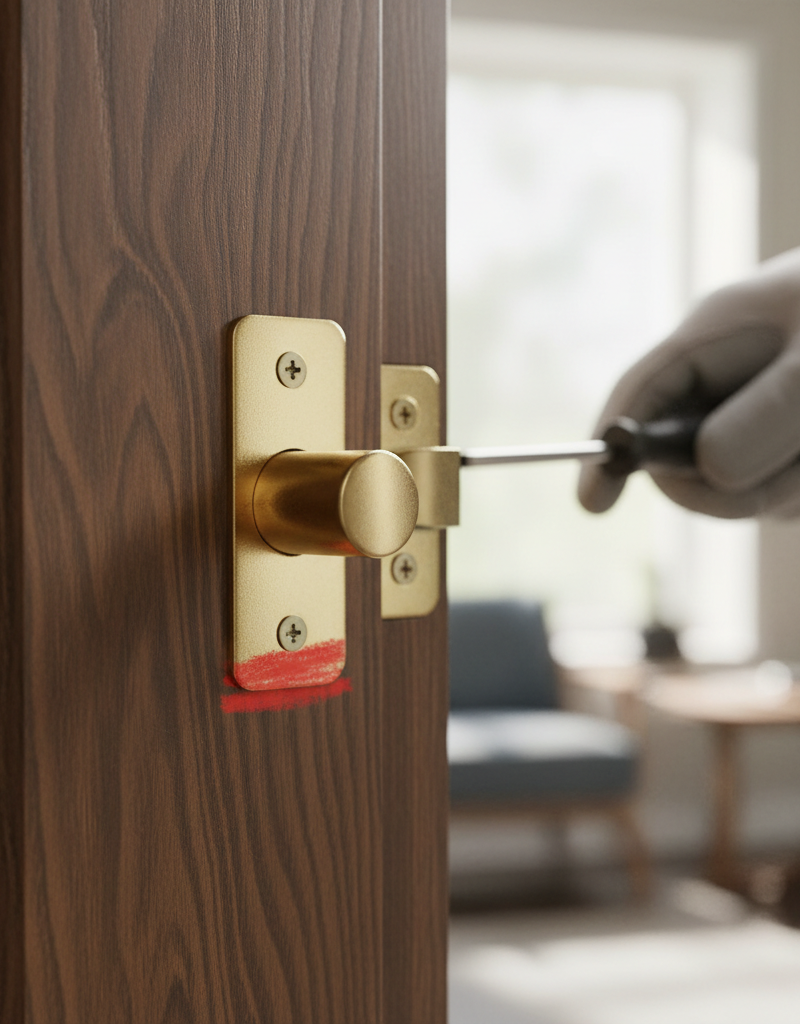
- The Lipstick Test: Apply a small dab of lipstick, chalk, or even a soft pencil mark to the end of your door's latch bolt. Gently close the door until the latch bolt just touches the strike plate (but don't force it to latch). Open the door and examine the strike plate. The mark will indicate exactly where the latch bolt is trying to enter the plate. This is the most crucial diagnostic step. If the mark is high, low, or off-center from the strike plate hole, you've found your culprit. If there's no mark on the strike plate, the latch isn't reaching it at all, suggesting a significant door sag or hinge issue.
2. Tighten Loose Hinge Screws — Eliminate door sag as a factor.
- Tools: Phillips head screwdriver.
- Procedure: A common cause of misalignment is a sagging door due to loose hinge screws. Open the door wide and inspect all screws on both the door-side and frame-side hinge leaves. Using a Phillips head screwdriver, thoroughly tighten every screw. Don't overtighten, but ensure they are snug. If a screw spins freely, it means the wood threads are stripped. Remove the screw, insert a few wooden toothpicks (or a golf tee broken into pieces) into the hole with a dab of wood glue, let it dry for 15-30 minutes, then reinsert the screw. This provides new material for the screw to grip. After tightening, re-check the latching action.
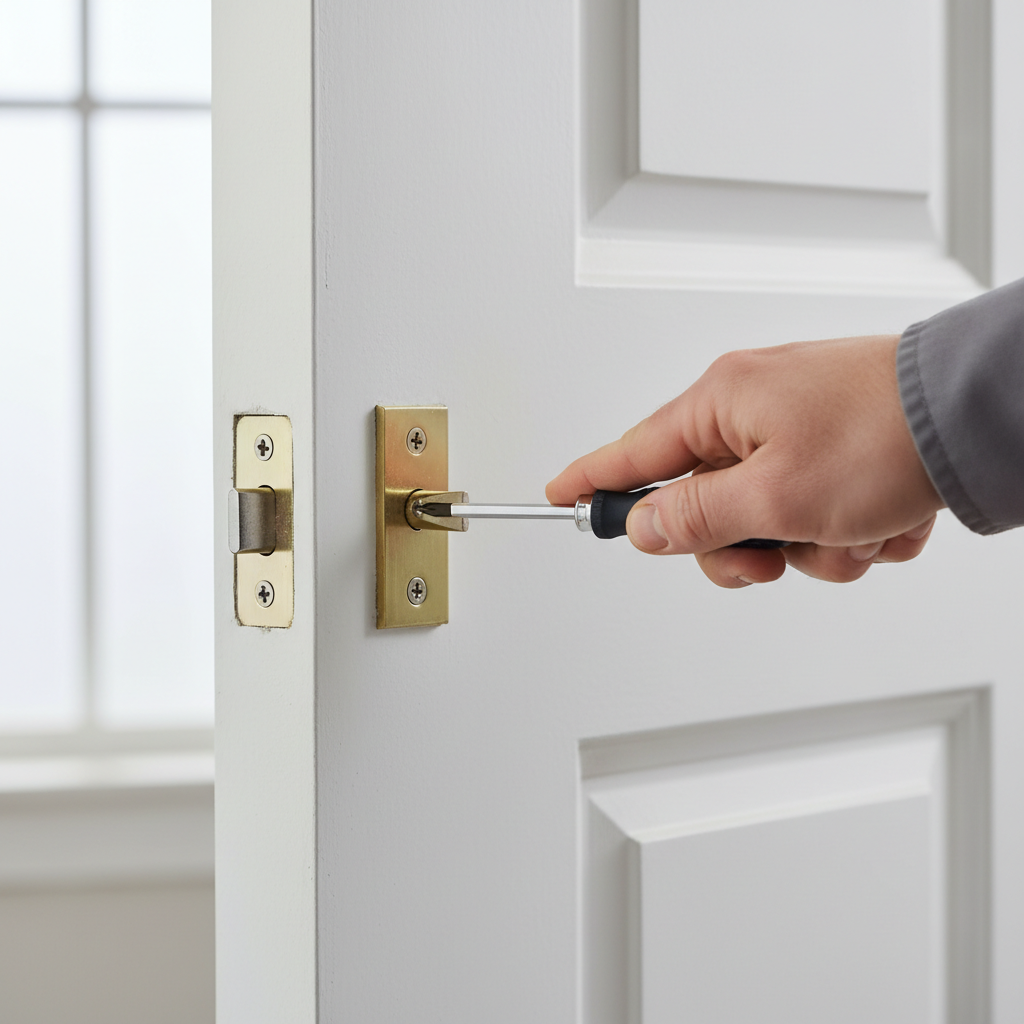
3. Adjust the Strike Plate (Vertical Alignment) — Move the strike plate up or down.
- Tools: Phillips head screwdriver, utility knife, small chisel or wood file, drill with small pilot bit (optional), wood filler.
- Procedure: If your lipstick test showed the latch bolt hitting too high or too low on the strike plate, you need to adjust its vertical position.
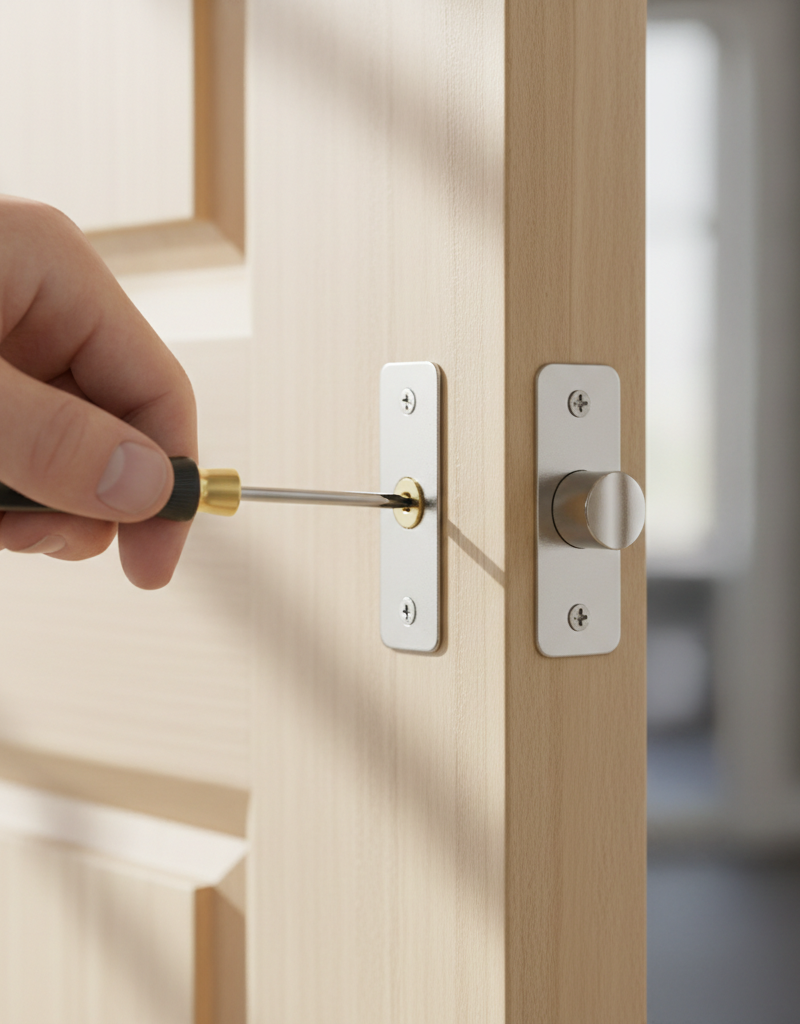
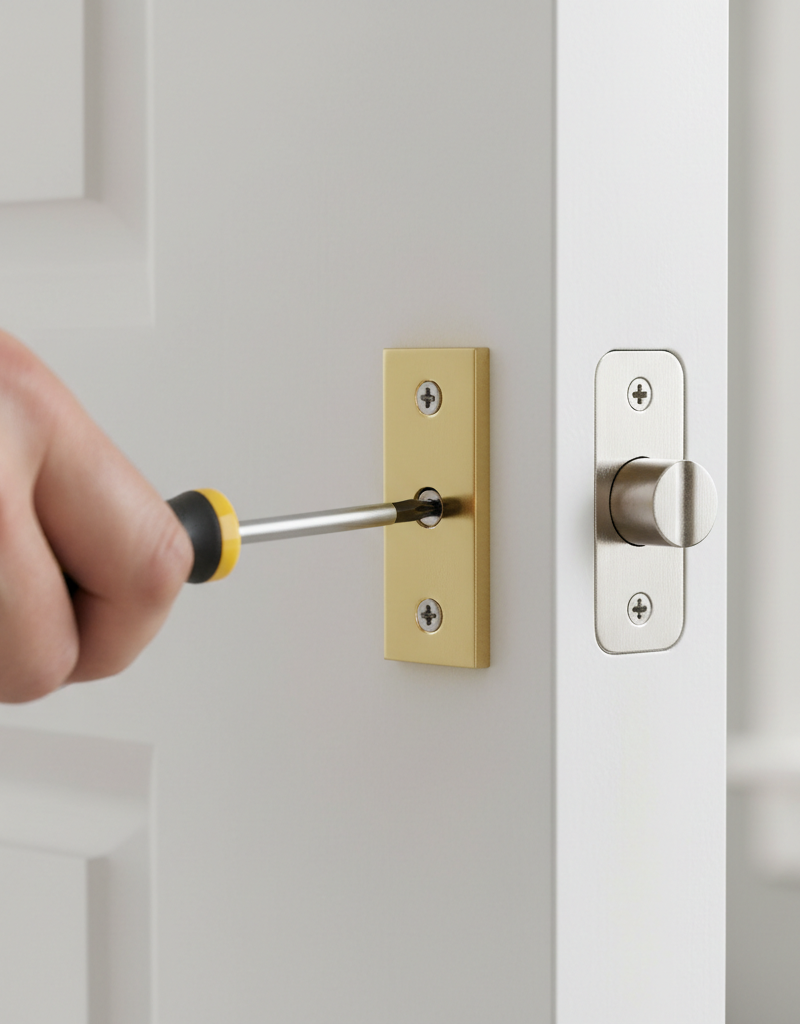
- Option A (Slight Adjustment): Loosen the existing strike plate screws by one or two turns. Use a utility knife to score around the edges of the strike plate to prevent splintering. Gently tap the strike plate up or down a hair (1/16 to 1/8 inch) and then re-tighten the screws. Some strike plates have slightly elongated screw holes that allow for minor vertical play. Re-test.
- Option B (More Significant Adjustment): If Option A isn't enough, you'll need to enlarge the screw holes. Remove the strike plate. Using a small round file or a drill bit slightly larger than the screw shank, carefully extend the top or bottom of the existing screw holes in the desired direction. You might also need to slightly enlarge the top or bottom of the mortise (the recessed area where the plate sits) with a chisel. Re-attach the strike plate, ensuring the latch hole aligns, create new pilot holes if needed, and secure the screws. Fill any visible gaps with wood filler for a clean finish.
4. Adjust the Strike Plate (Horizontal Alignment/Depth) — Move the strike plate in or out.
- Tools: Phillips head screwdriver, small chisel.
- Procedure: If the latch bolt isn't fully engaging because it's hitting the strike plate's edge (not the hole), or if the door rattles when closed, the strike plate might be too far in or out.
- Option A (Move Inwards): If the latch bolt extends past the strike plate hole and the door remains loose, shims are needed. Remove the strike plate. Cut small, thin pieces of cardboard or plastic from a milk jug. Place these shims into the mortise behind the strike plate. Re-install the strike plate, which will now sit slightly further out, allowing the latch bolt to engage more fully. Start with one shim and add more if needed.
- Option B (Move Outwards): If the door doesn't close completely because the latch bolt is hitting the frame before it gets to the strike plate, or if the latch bolt is only catching the very tip of the strike plate hole, you need to move the strike plate deeper into the frame. Remove the strike plate. Using a chisel, carefully remove a small amount of wood from the entire mortise behind the strike plate (deeper into the door jamb). Re-install and test.
5. Adjust the Latch Bolt itself — Ensure the bolt mechanism is smooth.
- Tools: Light lubricant (silicone spray or graphite powder), Phillips head screwdriver.
- Procedure: Sometimes, the latch bolt itself gets sticky or dirty and doesn't fully extend or retract smoothly.
- Cleaning: Remove the doorknob and the latch mechanism from the door edge (usually two screws on the side, near the latch bolt). Using a cloth, wipe away any visible grime or old grease. You can also use a small brush or compressed air to clear out debris from the internal workings.
- Lubrication: Apply a light spray of silicone lubricant or a puff of graphite powder to the moving parts of the latch bolt mechanism. Work the latch bolt in and out several times with your fingers to distribute the lubricant. Reassemble the mechanism and test the door.
6. Replace a Worn Latch Mechanism — When all else fails, a new part might be needed.
- Tools: Phillips head screwdriver, measuring tape.
- Procedure: If the latch bolt operates smoothly but still doesn't engage, and you've tried all alignment adjustments, the internal springs or components of the latch mechanism itself might be worn out. These are relatively inexpensive and easy to replace.
- Sizing: Before purchasing, measure the backset (distance from the door edge to the center of the doorknob hole) and the faceplate dimensions of your existing latch. Purchase a matching replacement.
- Installation: Remove the doorknob assemblies on both sides of the door. Unscrew the two small screws on the faceplate of the latch mechanism (on the door's edge) and carefully pull the old mechanism out. Slide the new one in, ensuring the angled part of the latch bolt faces the direction the door closes. Re-install the faceplate screws and then the doorknob assemblies.
Common Causes
- House Settling: Over time, foundations shift, causing door frames to move out of square. This is one of the most frequent culprits for misalignment.
- Humidity and Temperature Changes: Wood materials (doors and frames) expand in high humidity and contract in dry conditions. This swelling or shrinking can significantly alter the fit of a door.
- Loose Hinges: Screws that hold hinges to the door or frame can work themselves loose, allowing the door to sag or shift, pulling the latch bolt out of alignment with the strike plate.
- Worn Latch Mechanism: The internal springs or components within the latch bolt assembly can wear out or become sticky from dirt, preventing the latch bolt from fully extending or retracting.
- Improper Installation: If the door or frame was not installed plumb and square initially, it might develop latching issues sooner rather than later.
- Excessive Paint Buildup: Multiple layers of paint on the door edge or inside the strike plate opening can reduce the clearance needed for the latch bolt to operate freely.
Common Mistakes
- Ignoring Loose Hinges: Many homeowners jump straight to adjusting the strike plate without first checking and tightening hinge screws. A loose hinge is a primary cause of door sag and misalignment, and fixing it first often resolves the issue without further steps.
- Over-tightening Screws: While necessary to secure hinges and strike plates, overtightening screws can strip the wood, making the problem worse and requiring more difficult repairs like wood plugging.
- Not Diagnosing Accurately: Guessing where the latch bolt is hitting instead of using a simple diagnostic tool like lipstick or chalk leads to trial-and-error adjustments that rarely hit the mark and can damage the frame.
- Filing the Strike Plate Hole Too Much: Removing too much material from the strike plate hole can make the door feel loose or rattle even when latched, and it's difficult to undo. Make small, incremental adjustments.
- Using the Wrong Lubricant: WD-40 is a cleaner, not a long-term lubricant, and can attract dirt. Always use a silicone-based spray lubricant or graphite powder for door mechanisms.
- Skipping the Cleaning Step: Before lubricating or replacing a mechanism, always clean out old grease, dirt, and debris. Lubricating over grime is like putting a band-aid on a dirty wound.
Cost & Time Breakdown
| Task | DIY cost | Pro cost | Time |
|---|---|---|---|
| Tighten Hinge Screws | $0 | $50–$100 | 5–10 min |
| Adjust Strike Plate (minor) | $0–$5 | $75–$150 | 10–30 min |
| Adjust Strike Plate (major) | $5–$15 | $100–$200 | 30–60 min |
| Lubricate Latch Mechanism | $5–$10 | $60–$120 | 10–15 min |
| Replace Latch Mechanism | $15–$40 | $150–$250 | 20–40 min |
| Full Door Re-hanging/Shimming | $20–$50 (materials) | $300–$600+ | 2–4 hours (DIY) |
Tips & Prevention
- Regular Hinge Checks: Periodically (yearly or every six months) check all hinge screws on interior and exterior doors. Tighten any that feel loose to prevent sagging before it becomes an issue.
- Lubricate Annually: A quick spray of silicone lubricant or puff of graphite powder into the latch bolt mechanism once a year can keep things running smoothly and prevent sticking caused by dirt buildup.
- Humidity Control: In areas with significant humidity swings, maintaining consistent indoor humidity (e.g., with a humidifier/dehumidifier) can help prevent wood doors and frames from swelling and shrinking excessively.
- Proper Door Installation: When installing new doors, ensure they are plumb, level, and square within the frame. This prevents long-term alignment problems.
- Avoid Excessive Paint: When painting doors or frames, be mindful not to let paint build up on the door's edge, inside the strike plate mortise, or on the latch bolt itself, as this can impede its movement.
- Address Issues Early: Don't let a minor latching problem persist. Small issues tend to worsen over time, potentially leading to more extensive damage to the door or frame.
When to Call a Professional
While many door latch issues are DIY-friendly, certain situations warrant calling a professional carpenter or handyman. If you've tried all the alignment and lubrication steps and the door still won't latch, or if you notice significant structural damage to the door frame (e.g., large cracks, extensive wood rot), a professional can properly diagnose and repair these complex issues. Similarly, if the entire door seems out of square, hangs unevenly, or requires shimming the hinges significantly just to get it to close, a professional eye can ensure the door frame is correctly squared and the door is properly re-hung, which might involve more advanced carpentry techniques beyond basic adjustments. Do not attempt major structural repairs to the door frame yourself if you lack the experience, as incorrect repairs can compromise the door's stability and appearance.
Related Articles
Keep troubleshooting with these hand-picked guides from FixlyGuide:
- The 3 Hidden Reasons Your Door Won't Latch (And the Easy Fixes) — Discover the surprising reasons your interior door isn't latching and how to quickly diagnose and fix the issue with simple tools.
- The 5-Minute Trick to Fix a Door That Won't Latch (No, It's Not the Latch Itself) — Discover the surprisingly simple trick to fix a door that won't latch properly, often without even touching the latch mechanism itself.
- The 5-Minute Trick for a Door That Won't Latch (And Why It Keeps Happening) — Discover the simplest fixes for a door that won't latch, from minor adjustments to tackling persistent alignment issues.
- The 90-Second Trick to a Latching Door (and Why Yours Might Be Off) — Discover the surprisingly simple reasons most doors fail to latch and how a quick, often overlooked adjustment can solve your problem in un…
- The 3 Hidden Reasons Your Door Won't Latch (And the 10-Minute Fix) — Discover the common culprits behind a door that won't latch properly and learn how to fix it in just 10 minutes, restoring security and pea…
- The Hidden Reason Your GFCI Won't Reset (And It's Not Always a Faulty Outlet) — A GFCI outlet that won't reset usually indicates an underlying electrical issue, most commonly a ground fault or overloaded circuit, not al…
Should you do this yourself?
Answer five quick questions before you start. Safety outranks savings every time.
Your experience with work like this
How high do you have to work?
Does the job involve any of these?
Will it need a permit?
Specialty tools
Free and instant. Educational guidance only — not a quote, inspection, or professional diagnosis.
What should this project cost?
Enter your project details for a realistic cost range before you call anyone.
Cost depends heavily on which system turns out to be the source.
- Regional adjustment
- National average
- Labor share (typical)
- ~$1,620
- Quotes to collect
- 3 written estimates
Educational estimate based on national averages — not a binding quote. Always confirm with written local estimates.
Recommended for DIYers & woodworkers
Sponsored
The Top 20 Tools for Workshops of Any Budget
No stationary machines or power tools required — plus 3 fundamental tools that can't be bought at any price.
Get the free guide
Ted's Woodworking — The #1 Woodworking Resource
Detailed instructions, dimensioned drawings, materials & cutting lists, and 3D schematics for every skill level.
See the plansSponsored: links above are affiliate links. FixlyGuide may earn a commission on qualifying purchases — at no extra cost to you.
Frequently asked questions
Why does my door latch sometimes stick and sometimes work?+
Intermittent latching issues often point to minor misalignments, usually caused by loose hinges or slight swelling/shrinking of the door or frame due to humidity. The latch might catch when conditions are just right, but fail when there's a slight shift. A thorough check of hinge screws and strike plate alignment is key.
Can I use WD-40 to lubricate my door latch?+
No, WD-40 is primarily a penetrating oil and solvent, not a long-term lubricant. It can attract dust and grime, potentially making the problem worse over time. For door latches, use a silicone-based spray lubricant or graphite powder, which won't attract debris.
My door rattles even when it's latched. How can I fix this?+
A rattling door indicates the latch bolt isn't fully engaging or the strike plate is too far recessed. You can usually fix this by adding shims behind the strike plate to bring it slightly forward, allowing the latch bolt to extend more fully into the frame and create a tighter seal.
How do I know if my door hinges are the problem?+
If your door sags or rubs against the frame at the top or bottom, or if there's visible play when you try to lift the door, loose hinges are likely the culprit. Also, observe if the gap around the door is uneven when closed.
What if my door frame itself is warped?+
If the door frame is significantly warped, adjustments to the strike plate and hinges may only offer a temporary fix. A warped frame often indicates a larger structural issue or significant moisture damage and may require professional carpentry to re-square or replace portions of the frame.
Discussion
Loading comments…