- Dirt and Debris Buildup: The primary culprit. Dust, lint, pet hair, and even microscopic key filings accumulate inside the keyway, gumming up the delicate pin mechanism and increasing friction.
- Worn or Dry Lubrication: Factory lubricants can dry out, dissipate, or become sticky and ineffective over time, leading to metal-on-metal grinding.
- Incorrect Lubricant Use: Using oil-based lubricants like WD-40 can provide temporary relief but often attracts more dirt and eventually creates a sticky, gunk-filled environment that exacerbates the problem.
- Corrosion/Rust: In humid environments or on older locks, minor surface corrosion can form on internal components, creating resistance.
- Bent or Worn Key: A slightly bent or excessively worn key won't properly align the pins, making the lock difficult to turn. Try a brand new, unused duplicate key to rule this out.
General remodeling · Renovation planning
| Project category | General remodeling |
|---|---|
| Problem type | Renovation planning |
| Trade required | General contracting |
| Urgency | Planned project |
| Safety risk | Low safety risk |
| DIY suitability | Pro recommended |
| Cost category | Major investment |
| Typical timeline | Design and permitting often 2–4 months before work starts |
| Contractor type | General contractor |
Repair option
Phase the work and fix the building envelope first.
Replacement option
Full renovation with permits, design, and a general contractor.
Common causes
- Space no longer fits how the household lives
- Resale preparation
- Deferred maintenance stacking up
Relevant tools:project cost estimatorcompare quoteshome improvement material prices
Published May 7, 2026Last updated August 17, 2026
Tools & materials you'll need
Affiliate linksAs an Amazon Associate FixlyGuide earns from qualifying purchases — at no extra cost to you. Prices and availability are accurate as of publication and subject to change.
Quick Answer
A door lock that isn't turning smoothly is almost always due to a buildup of dirt, grime, or worn lubricant inside the cylinder. The quickest and most effective fix for most residential locks is to clean and lubricate the mechanism using a specialized graphite or silicone-based lock lubricant, avoiding common oil-based products that can attract more gunk. This process usually takes less than five minutes and requires minimal tools, fully restoring your lock's functionality.
The Problem
You know the drill: you slide your key into the lock, turn, and... nothing. Or maybe it turns with excessive force, a grinding sound, or the sensation that the key might snap off in your hand. This isn't just an annoyance; a sticky door lock is a security risk and a major inconvenience. It can lead to broken keys, being locked out, or, worse, a compromised entry point if the mechanism weakens over time. Many homeowners ignore these initial warning signs, hoping the problem will resolve itself, only for it to escalate into a full-blown emergency. The underlying issue is rarely a broken part, but rather a common culprit: friction and obstruction within the lock cylinder.
How It Works
To understand why your lock isn't turning smoothly, it helps to know how a typical pin tumbler lock functions. Inside the cylindrical housing of your lock, there's a rotating plug. When the correct key is inserted, its uniquely cut notches lift a series of tiny "pin" pairs to a specific height. Each pair consists of a "driver pin" (situated in the outer housing) and a "key pin" (resting on the key). When the key is fully inserted, the top of all the key pins aligns perfectly with the shear line – the point where the plug meets the housing. This creates a clear path, allowing the plug to rotate freely when you turn the key, thereby retracting or extending the lock's bolt.
Over time, several factors can disrupt this precise alignment. Dust, dirt, lint, and even minuscule metal shavings from the key itself can accumulate inside the keyway and around the pins. This debris acts as an abrasive, increasing friction and preventing the pins from moving smoothly into their correct positions. Additionally, the factory lubricant, often a light grease or oil, can dry out, thicken, or become gummy, further impeding pin movement. Humidity can also play a role, causing minor corrosion or making existing gunk more adhesive. When the pins can't move freely to the shear line, the plug resists turning, resulting in that frustrating grinding, sticking, or complete immobility you experience.
Step-by-Step Fix
1. Safety First – Before you begin, ensure the door is unlocked and open.
This prevents accidental lockouts during the repair process. Never attempt to force a jammed lock with excessive pressure, as this can damage the key or the internal mechanism further. If the door is currently locked and completely stuck, you may need to call a locksmith.
2. Clean the Keyway – Remove loose debris from the lock cylinder.
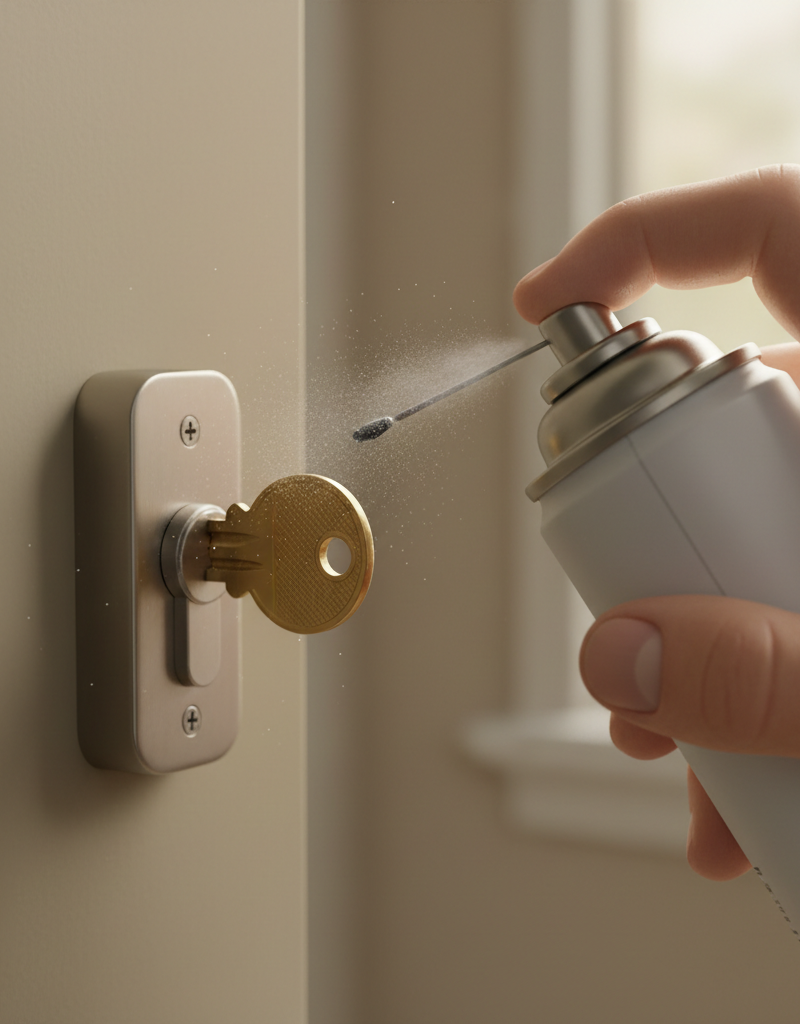
Insert the straw of the compressed air can directly into the keyway. Give several short, firm blasts to dislodge any dust, dirt, or lint. You might see a puff of debris emerge. For very stubborn grime, gently insert a cotton swab or a pipe cleaner into the keyway, rotating it to wipe away visible gunk. Avoid using anything metallic or pointed that could damage the pins.
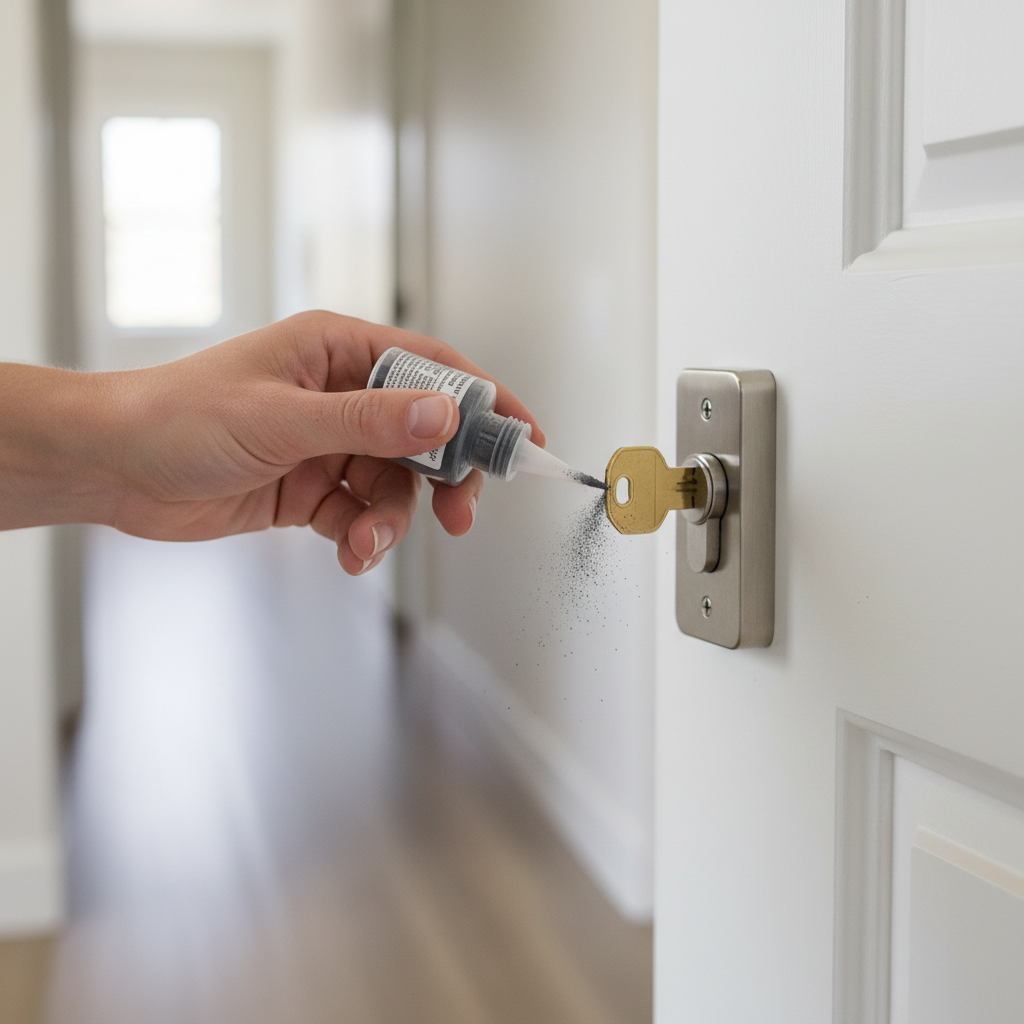
3. Lubricate the Keyway – Apply a specialized lock lubricant.
- Tool: Lock lubricant (graphite powder or silicone spray)
- Safety: Always wear safety glasses when using aerosol sprays.
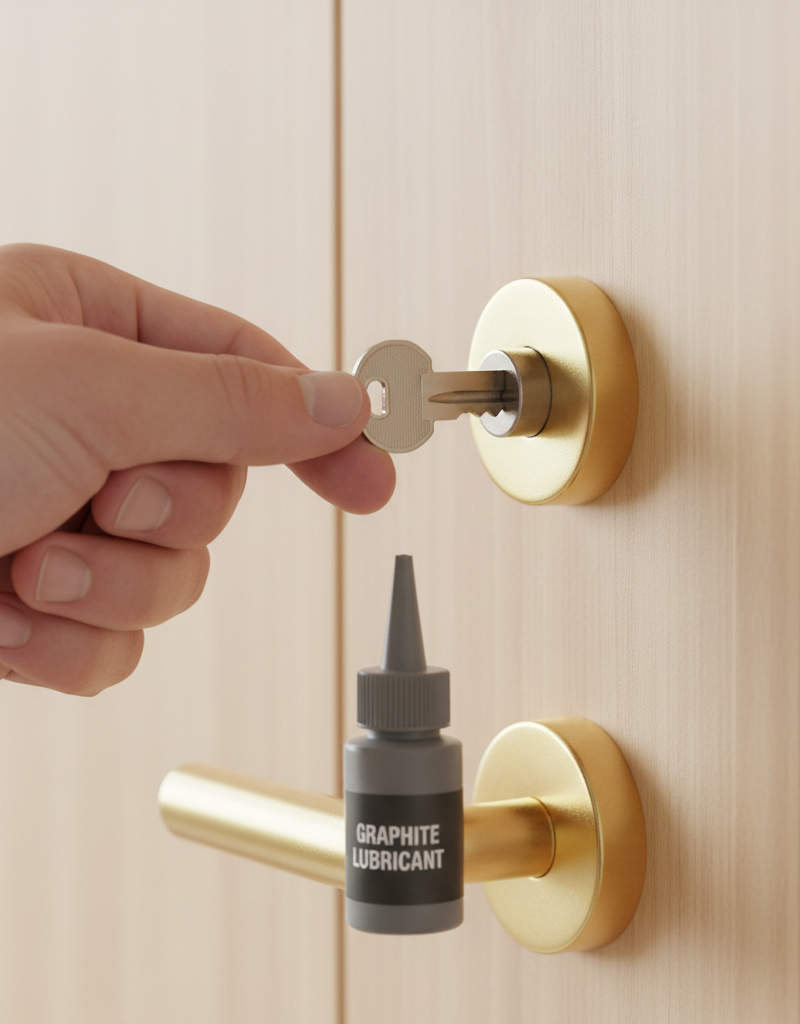
Take your chosen lock lubricant. If using graphite powder, aim the nozzle into the keyway and give it a short squeeze, or gently puff it in. For silicone spray, insert the straw into the keyway and spray for about one second. Avoid WD-40 or oil-based lubricants, as they attract dirt and can gum up the mechanism over time. A small amount is usually sufficient; don't over-saturate.
4. Lubricate The Key – Spread the lubricant evenly throughout the mechanism.
Apply a small amount of the same lubricant (graphite or silicone) directly onto the teeth and shaft of your key. If using graphite, rub the key against the graphite applicator or sprinkle powder onto it. For silicone spray, a quick half-second spray on both sides of the key will suffice. This helps carry the lubricant throughout the internal components.
5. Work the Key – Distribute lubricant and free up pins.
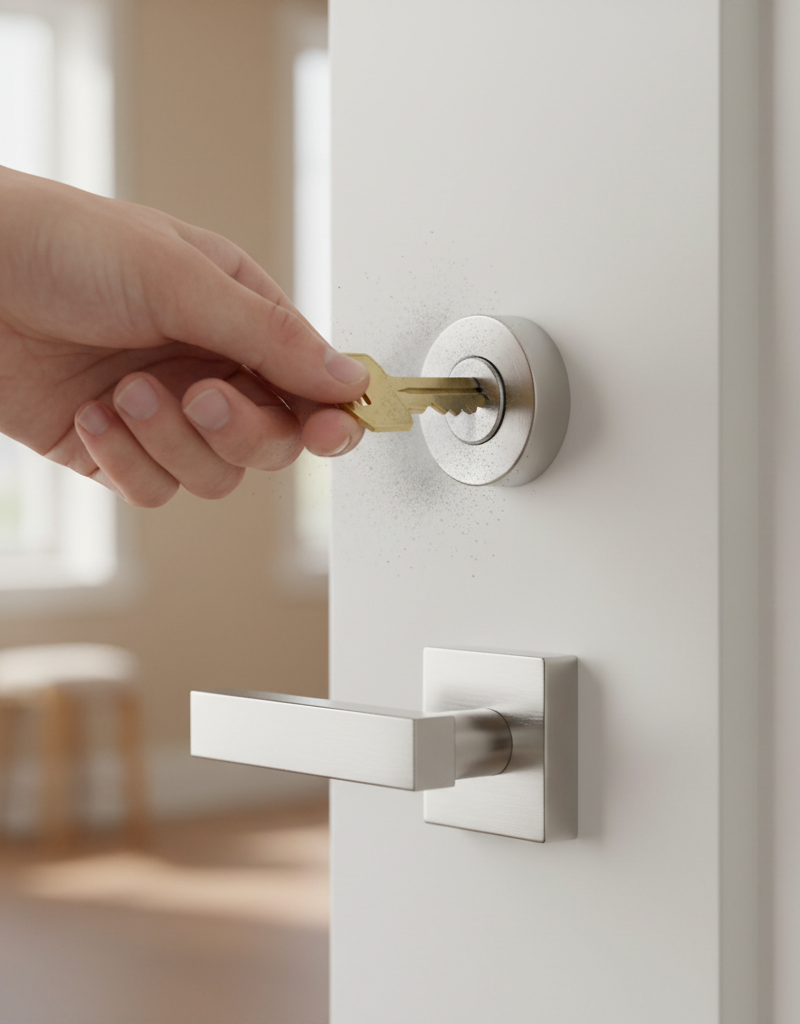
- Insert the lubricated key into the lock. Turn it back and forth gently, clockwise and counter-clockwise, for 30 seconds to a minute. Remove the key, wipe off any excess lubricant or expelled gunk with a paper towel, and re-insert. Repeat this process 3-5 times until the key turns smoothly without resistance. If the key still sticks, repeat steps 3 and 4.
6. Check the Latch/Bolt (If Applicable) – Ensure the bolt itself isn't the issue.
If your issue is with a deadbolt or spring latch, sometimes the bolt itself can stick in the strike plate. With the door open, extend the bolt. Apply a small amount of lock lubricant or a light silicone spray to the moving parts of the bolt and the strike plate opening. Work the bolt in and out with your hand a few times to spread the lubricant.
7. Tighten Mounting Screws – Address any looseness in the lock assembly.
- Tool: Phillips head screwdriver
Sometimes, a loose lock body can cause misalignment, leading to friction. Open the door and locate the mounting screws on the edge of the door (for a spring latch) or on the interior side of the deadbolt assembly. Gently tighten these screws until snug. Do not overtighten, as this can strip the screws or warp the lock body.
8. Clean the Strike Plate – Ensure the plate isn't obstructing the bolt.
- Tool: Small brush or rag
Inspect the strike plate on the door frame. Over time, paint, dirt, or slight warping of the frame can cause the bolt to rub or catch. If you see any buildup, clean it away with a small brush or rag. If the strike plate is severely misaligned or bent, you may need to adjust or replace it (a more advanced fix not covered here).
Common Causes
- Dirt and Debris Buildup: The primary culprit. Dust, lint, pet hair, and even microscopic key filings accumulate inside the keyway, gumming up the delicate pin mechanism and increasing friction.
- Worn or Dry Lubrication: Factory lubricants can dry out, dissipate, or become sticky and ineffective over time, leading to metal-on-metal grinding.
- Incorrect Lubricant Use: Using oil-based lubricants like WD-40 can provide temporary relief but often attracts more dirt and eventually creates a sticky, gunk-filled environment that exacerbates the problem.
- Corrosion/Rust: In humid environments or on older locks, minor surface corrosion can form on internal components, creating resistance.
- Bent or Worn Key: A slightly bent or excessively worn key won't properly align the pins, making the lock difficult to turn. Try a brand new, unused duplicate key to rule this out.
- Loose Lock Assembly: If the lock body itself is loose in the door, its internal components can become misaligned, causing binding when the key is turned.
Common Mistakes
- Using WD-40 or Cooking Oil: These "general purpose" lubricants are not designed for internal lock mechanisms. They can attract and trap more dirt, turning into a gummy mess that worsens the problem long-term. Stick to graphite or silicone.
- Forcing the Key: Applying excessive force when the key sticks can bend or break the key inside the lock, or damage the delicate internal pins, turning a simple fix into a locksmith call.
- Ignoring the Problem: A sticky lock rarely gets better on its own. Ignoring it can lead to more severe wear, broken components, or getting locked out at an inconvenient time.
- Disassembling the Lock Unnecessarily: Unless you're experienced, attempting to take apart the lock cylinder (especially complex ones) is tricky. Springs and tiny pins can easily get lost, making reassembly difficult or impossible.
- Only Lubricating the Key: While lubricating the key helps, you also need to get some lubricant directly into the keyway to address the pins and spring mechanisms inside the cylinder itself.
- Not Cleaning First: Lubricating a lock without first removing some of the accumulated dirt and grime essentially turns the existing gunk into a thick, abrasive paste. Always clear out loose debris first.
Cost & Time Breakdown
| Task | DIY Cost | Pro Cost | Time |
|---|---|---|---|
| Purchase Lock Lubricant | $5–$15 | Included | 0 |
| Cleaning Keyway | $0 | Included | 1–2 minutes |
| Lubricating & Testing | $0 | Included | 3–5 minutes |
| Tightening Screws (if needed) | $0 | Included | 1–2 minutes |
| Total | $5–$15 | $75–$200+ | 5–10 minutes |
Tips & Prevention
- Lubricate Annually: Make lock lubrication a part of your annual home maintenance checklist, especially for heavily used exterior doors. This proactive approach prevents buildup.
- Use the Right Key: Always use a genuine, unworn key for your lock. A worn duplicate can misalign pins and accelerate wear on the lock mechanism.
- Clean Keys Periodically: Wipe down your keys with a clean cloth to remove pocket lint and grime before inserting them into the lock, especially if your keys are often exposed to dirt.
- Protect Exterior Locks: If your exterior locks are exposed to harsh weather, consider a small cover or shield to minimize moisture and debris ingress.
- Avoid Keychains with Too Many Keys: A heavy keychain bouncing during insertion and removal can stress the lock cylinder and key over time.
- Replace Worn Locks: If, after proper cleaning and lubrication, a lock consistently feels gritty or sticky, or if the key is excessively worn, consider replacing the lock. A new lock ensures optimal security and function.
When to Call a Professional
While most sticky lock issues can be resolved with a simple cleaning and lubrication, there are times when calling a professional locksmith is the smartest and safest option. If your key is stuck and cannot be removed, or if it breaks off inside the lock, a locksmith has specialized tools to extract it without damaging the cylinder. If the lock mechanism is completely frozen and will not turn at all, even after attempted lubrication, there might be an internal component failure that requires professional diagnosis and repair or replacement. Furthermore, if you've followed all the steps and the lock still feels rough, grinds excessively, or you suspect tampering or a deeper security issue, a locksmith can assess the lock's integrity and recommend either a rebuild or a new, more secure locking mechanism. Never try to force a completely stuck lock, as this can lead to more costly damage to the door or the lock itself. If you
Related Articles
Keep troubleshooting with these hand-picked guides from FixlyGuide:
- The 3 Hidden Reasons Your Door Won't Latch (And the Easy Fixes) — Discover the surprising reasons your interior door isn't latching and how to quickly diagnose and fix the issue with simple tools.
- The 3 Hidden Reasons Your Door Won't Latch (And the Easy DIY Fixes) — Frustrated by a door that refuses to latch? Discover the common culprits behind this annoying problem and learn simple, effective DIY fixes…
- The 3 Hidden Reasons Your Door Won't Latch (And the Easy Fixes) — A door that won't latch properly is a common household nuisance, often caused by simple issues that are easy to diagnose and repair.
- The 4 Hidden Reasons Your Doorbell Dies (And the 20-Minute Fix) — A non-working doorbell is often caused by simple, hidden issues like a tripped transformer or a corroded button, which homeowners can fix i…
- The 5-Minute Trick to Fix a Window That Won't Stay Open (No Tools Needed!) — Discover the surprisingly simple reasons why your window keeps sliding shut and how to fix it in minutes, often without any tools.
- Is Your Roofline Hiding a $10,000 Secret? 7 Warnings Your Soffit & Fascia Are Failing — Discover the critical signs of soffit and fascia damage that could indicate widespread problems and how to properly address them before the…
Should you do this yourself?
Answer five quick questions before you start. Safety outranks savings every time.
Your experience with work like this
How high do you have to work?
Does the job involve any of these?
Will it need a permit?
Specialty tools
Free and instant. Educational guidance only — not a quote, inspection, or professional diagnosis.
What should this project cost?
Enter your project details for a realistic cost range before you call anyone.
Cost depends heavily on which system turns out to be the source.
- Regional adjustment
- National average
- Labor share (typical)
- ~$1,620
- Quotes to collect
- 3 written estimates
Educational estimate based on national averages — not a binding quote. Always confirm with written local estimates.
Recommended for DIYers & woodworkers
Sponsored
The Top 20 Tools for Workshops of Any Budget
No stationary machines or power tools required — plus 3 fundamental tools that can't be bought at any price.
Get the free guide
Ted's Woodworking — The #1 Woodworking Resource
Detailed instructions, dimensioned drawings, materials & cutting lists, and 3D schematics for every skill level.
See the plansSponsored: links above are affiliate links. FixlyGuide may earn a commission on qualifying purchases — at no extra cost to you.
Frequently asked questions
Why is my door lock suddenly stiff?+
Most often, a door lock becomes stiff due to accumulated dirt, dust, and grime inside the keyway and around the internal pins. The factory lubricant can also dry out or become gummy over time, increasing friction and preventing the pins from moving freely when the key is inserted.
What should I use to lubricate a door lock?+
You should use a specialized lock lubricant, such as graphite powder or a silicone-based spray. Avoid oil-based lubricants like WD-40, cooking oil, or general-purpose oils, as these can attract more dirt and eventually gum up the mechanism, making the problem worse.
Can I use WD-40 on a door lock?+
No, it is generally not recommended to use WD-40 on a door lock. While it might offer temporary relief, WD-40 is a penetrating oil and water displacer, not a long-term lubricant for intricate lock mechanisms. It can attract dust and dirt, leading to a sticky, gummy residue that can worsen the lock's performance over time.
How often should I lubricate my door locks?+
For most residential door locks, an annual lubrication is sufficient, especially for exterior doors exposed to the elements. For heavily used locks or those in dusty environments, you might consider lubricating them every six months as part of your regular home maintenance.
What if my key breaks inside the lock?+
If your key breaks inside the lock, do not attempt to pry it out yourself with tools like tweezers or pliers, as this can damage the lock cylinder further. It's best to call a professional locksmith who has specialized extraction tools to safely remove the broken key without causing additional harm to the lock.
Discussion
Loading comments…