- The Hidden Reason Your AC Isn't Cooling & Why Most Homeowners Get It Wrong — A central AC unit that isn't cooling properly often has a surprising culprit: poor airflow, which can stem from simple issues like a clogge…
- The Hidden Reason Your GFCI Trips (and Why Most Homeowners Miss It) — A continuously tripping GFCI outlet is a safety warning, often signaling common but overlooked issues like moisture intrusion, appliance fa…
- The 5 Essential Tools Every New Gardener Needs (And 3 You Can Skip) — Starting a garden doesn't require a huge investment in tools; savvy new gardeners can thrive with just a few key items and save money by kn…
- The 4 Hidden Reasons Your Lawn Stays Yellow (And How to Fix It FAST) — Uncover the surprising culprits behind a yellow lawn and learn the quick, effective fixes to restore vibrant green growth.
- The Hidden Reason Your GFCI Trips (It’s Not Always a Bad Outlet) — A tripping GFCI outlet is a safety mechanism doing its job, often indicating a problem like moisture, a faulty appliance, or a wiring issue…
Published July 30, 2026Last updated August 17, 2026
Tools & materials you'll need
Affiliate links- AmazonCore aeratorManual for small areas, power aerator for large lawns (rentable)
- AmazonGarden rake
- AmazonSpreaderBroadcast or drop spreader
- AmazonGarden hose
- AmazonSprinklerAppropriate for your lawn size
- AmazonScrewdriver or soil probeFor checking water penetration
- AmazonTuna can or rain gaugeFor measuring irrigation depth
As an Amazon Associate FixlyGuide earns from qualifying purchases — at no extra cost to you. Prices and availability are accurate as of publication and subject to change.
Quick Answer
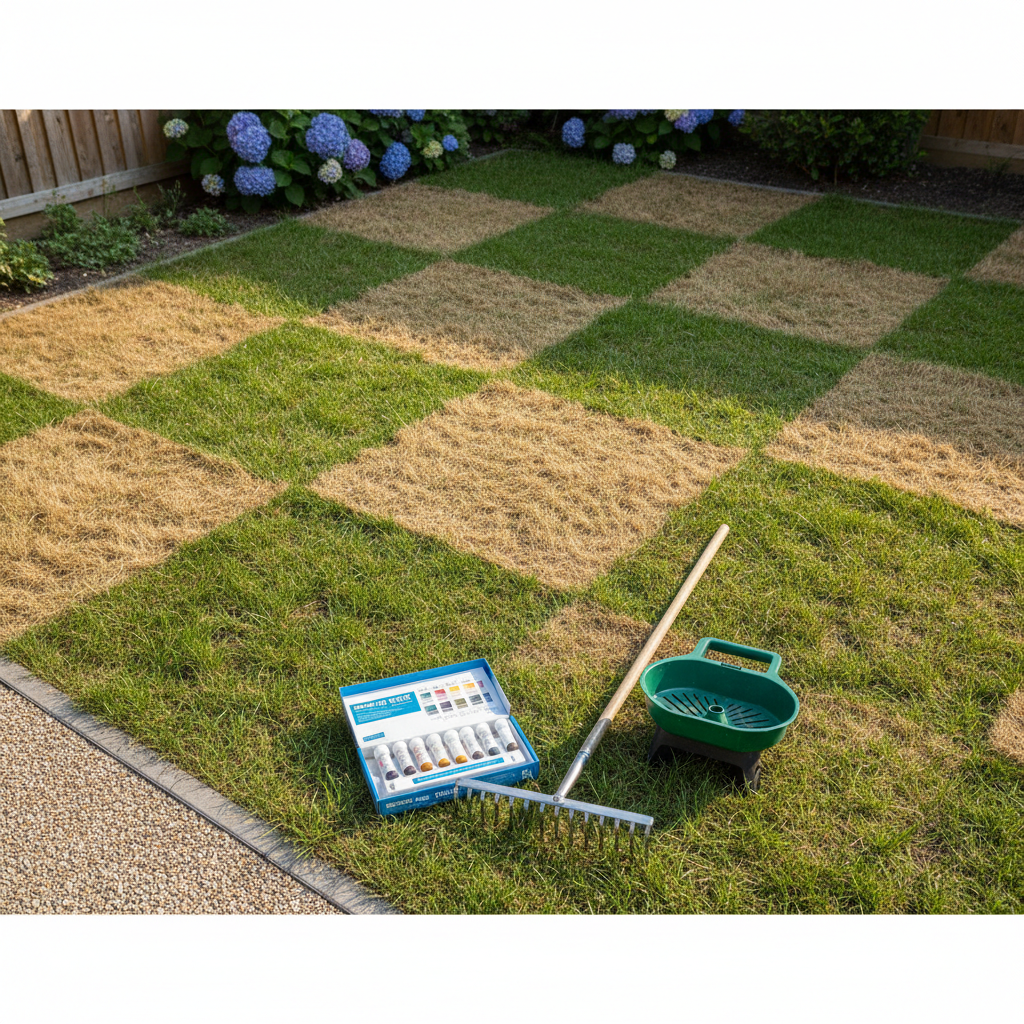
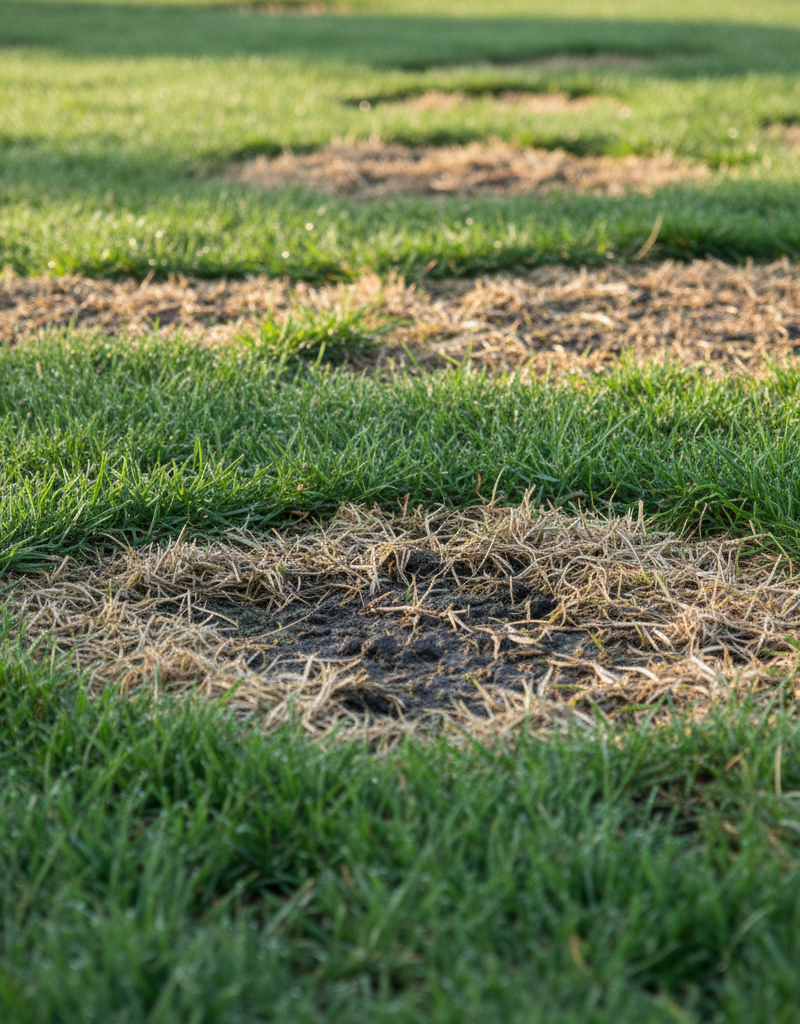
That patchwork quilt you're calling a lawn — with its brown spots, bare gaps, and weirdly bright green streaks — usually means a few common things: inconsistent watering, compacted soil choking out the roots, or a nasty nutrient imbalance. If you want that golf-course green, you’ve gotta play detective and figure out which one’s acting up, or maybe all three at once. The good news? Once you find the culprit, there’s usually a pretty straightforward fix you can handle yourself, and that beats paying a crew a pile of money.
The Problem
I’ve seen it a thousand times. Folks tell me, “My lawn looks terrible, like somebody tossed a bunch of different shades of green and brown out there.” And they’re not wrong. They’ve been watering, maybe tossing down fertilizer too, but nothing seems to change. Most of the time, it ain’t one big disaster. It’s a slow slide from little problems that stack up until the whole yard looks tired.
Think of turf like one big living machine. If one part’s not getting what it needs, the rest starts to go sideways. Those brown patches might be thirsty spots, while the bright green areas could be getting too much fertilizer — or maybe you’ve got a weed or two hogging nutrients. It’s all connected. Ignore the early signs, and you’re setting yourself up for a bigger, pricier mess later.
I had a client out in Glenwood who was sure he had a disease tearing up the yard. I dug up a thatch layer thicker than my boot — no disease, just the grass getting smothered. That thing was toast until we opened it up.
How It Works
Figuring out why your lawn’s struggling really comes down to three things: water, nutrients, and air. Most turfgrasses — Kentucky Bluegrass, Fescue, Perennial Ryegrass, all the usual suspects — do best when those three stay in balance. Mess one up, and the lawn starts telling on you.
Let’s start with water. Grass roots need steady moisture, but not a swamp. When you water, you want that moisture to soak down into the soil, ideally 4 to 6 inches deep. That’s what pushes roots to grow deeper, and deeper roots mean a tougher lawn. If you’re only running the sprinklers for a few minutes every day, the water barely gets below the surface. Then you end up with shallow roots that dry out fast in the sun.
Too much water causes just as many headaches. Overwatering can drown the roots by pushing air out of the soil, and once that happens, the good microbes can’t do their job. Fungal problems start showing up too. A lot of those dead-looking patches? Half the time it’s roots that just couldn’t breathe.
Then there are nutrients. Grass’s gotta eat, same as anything else. The main three are Nitrogen (N), Phosphorous (P), and Potassium (K) — NPK. Nitrogen drives leafy green growth. Phosphorous helps roots get established. Potassium helps with overall plant health and disease resistance. Soil pH matters a lot too. Most turf grasses like a slightly acidic to neutral pH, usually between 6.0 and 7.0.
If the pH is off, the grass can’t take in nutrients properly, even if they’re sitting right there in the soil. It’s like having a fridge full of food and no way to open the door. That’s how you end up with one section yellowing from nitrogen deficiency while another area looks fine because the pH is in the sweet spot.
Finally, air. Soil isn’t just dirt. It’s mineral particles, organic matter, water, and air pockets all mixed together. Those air pockets let roots breathe and keep beneficial microbes alive. Over time, especially in high-traffic spots or heavy clay soil, the ground gets packed down. The air spaces get squeezed shut. Roots suffocate. Water won’t soak in right, nutrients don’t move through, and you get those hard-as-a-rock spots where nothing wants to grow no matter how much you water.
Step-by-Step Fix
Here’s how I go after a patchy, checkerboard lawn. You’ve gotta work it in order.
-
Perform a Soil Test — Identify nutrient deficiencies and pH imbalances first. Grab a soil test kit from your local garden center or send a sample to your county extension office. This is step one for a reason — you can’t fix what you don’t know. I remember a place in Northgate where the homeowner was dead sure he had grubs, but the soil test came back with extreme alkalinity. No grubs. Just pH so far off the grass couldn’t use what was there. You’ll get results showing what nutrients you’re short on and where your pH sits.
- Pro Tip: Take samples from a few different spots, especially the ugly ones, so you’re not guessing off one little patch.
-
Adjust Your Watering Schedule — Ensure deep, infrequent watering cycles. Most lawns need about 1 inch of water per week, whether that comes from rain or sprinklers. Toss a tuna can or rain gauge in the yard and see what your system’s actually putting down. You want water soaking 4-6 inches into the soil. That usually means watering 2-3 times a week, not short little daily sprinkles. Shallow watering makes shallow roots, and shallow roots get cooked fast.
- Check Penetration: After watering for 20 minutes, stick a screwdriver into the soil. It should slide in easily at least 4 inches deep.
-
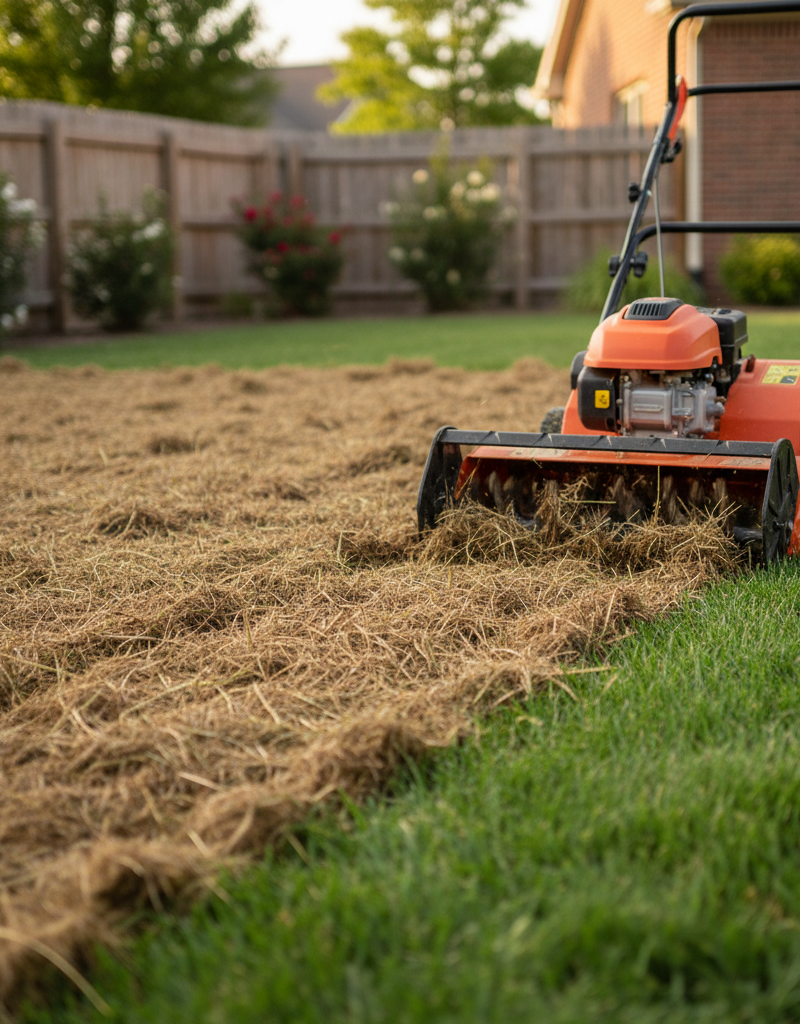
Aerate Compacted Areas — Open up the soil to allow air, water, and nutrients to penetrate. If your soil test shows compaction, or water just sits there puddling on top, it’s time to aerate. For small patches, a manual core aerator does the trick. For bigger lawns, I’d rent a power aerator and call it a day. You’re pulling out little plugs of soil and making channels for air, water, and nutrients to move through. Spring or early fall is the sweet spot, when the grass is actively growing.
- Don't Scalp: Don’t mow more than a third of the grass blade height right before or right after aeration; that just adds stress when the lawn’s already working hard.
-
Overseed Bare and Thin Spots — Fill in the gaps with new grass to create a dense turf. Once you’ve aerated and, if needed, lightly dethatched — meaning you’re pulling out the extra dead grass buildup — spread fresh seed over the bare and thin spots. Match the seed to your existing grass and your climate. Lightly rake it in so it gets good soil contact, then keep it moist, not soaked, until it comes up. That part takes a few weeks.
- Starter Fertilizer: Consider applying a
Related Articles
Keep troubleshooting with these hand-picked guides from FixlyGuide:
- The Hidden Reason Your AC Isn't Cooling & Why Most Homeowners Get It Wrong — A central AC unit that isn't cooling properly often has a surprising culprit: poor airflow, which can stem from simple issues like a clogge…
- The Hidden Reason Your GFCI Trips (and Why Most Homeowners Miss It) — A continuously tripping GFCI outlet is a safety warning, often signaling common but overlooked issues like moisture intrusion, appliance fa…
- The 5 Essential Tools Every New Gardener Needs (And 3 You Can Skip) — Starting a garden doesn't require a huge investment in tools; savvy new gardeners can thrive with just a few key items and save money by kn…
- The 4 Hidden Reasons Your Lawn Stays Yellow (And How to Fix It FAST) — Uncover the surprising culprits behind a yellow lawn and learn the quick, effective fixes to restore vibrant green growth.
- The Hidden Reason Your GFCI Trips (It’s Not Always a Bad Outlet) — A tripping GFCI outlet is a safety mechanism doing its job, often indicating a problem like moisture, a faulty appliance, or a wiring issue…
- The #1 Mistake Turning Your Green Lawn Brown After Watering — Watering your lawn should make it greener, but brown spots appearing afterward can signal common issues like overwatering, fungal disease,…
Should you do this yourself?
Answer five quick questions before you start. Safety outranks savings every time.
Your experience with work like this
How high do you have to work?
Does the job involve any of these?
Will it need a permit?
Specialty tools
Free and instant. Educational guidance only — not a quote, inspection, or professional diagnosis.
What should this project cost?
Enter your project details for a realistic cost range before you call anyone.
Cost depends heavily on which system turns out to be the source.
- Regional adjustment
- National average
- Labor share (typical)
- ~$1,620
- Quotes to collect
- 3 written estimates
Educational estimate based on national averages — not a binding quote. Always confirm with written local estimates.
Before you start
Check the difficulty, permits, and safety risk — then decide whether to call a pro.
- Estimate this projectGet a cost range for your scope and ZIP before you call anyone.Open
- Get local estimatesSend one request and compare written estimates from vetted pros.Open
Free, no signup required. Estimates are educational guidance, not a quote or an inspection.
Get the print-ready PDF of this guide
A clean, ad-free, printable version you can keep on your phone or pin to the workshop wall. Free with a FixlyGuide account.
- Print-optimized layout
- Tools, materials & every step included
- Saved to your account
This article was independently written by FixlyGuide based on the source topic.
Frequently asked questions
Why does my lawn have random brown patches?+
Random brown patches can be caused by inconsistent watering, compacted soil, nutrient deficiencies, or even pet urine. A soil test and observing your watering patterns are good first steps to diagnose the issue.
How often should I water my lawn to prevent brown spots?+
Aim for deep, infrequent watering – typically 1 inch of water per week, applied in 2-3 sessions. This encourages deeper root growth, making your lawn more resilient to drought and brown spots.
What's the best way to fill in bare spots in my lawn?+
First, loosen the soil in the bare spot, then spread a generous layer of new grass seed that matches your existing turf. Lightly rake it in and keep the area consistently moist until the new grass establishes, which usually takes 3-4 weeks.
Is compacted soil really a big deal for my lawn?+
Absolutely. Compacted soil chokes out grass roots by reducing air pockets and preventing water and nutrients from penetrating. This leads to weak grass that's prone to disease and bare spots. Aeration is key to fix it.
When should I fertilize my lawn?+
The best times to fertilize depend on your grass type. Cool-season grasses benefit most from fertilization in early fall and early spring, while warm-season grasses prefer late spring and early summer. Always get a soil test first to know what nutrients you actually need.
What does a good dethatching look like?+
Good dethatching removes the layer of dead grass and organic matter that sits above the soil surface but below the green grass blades. You're aiming to pull up a significant amount of matted material, allowing air, water, and nutrients to reach the soil more effectively without damaging healthy roots.
Can I over-aerate my lawn?+
It's tough to truly over-aerate. For most homeowners, aerating once a year in the spring or fall is sufficient. If you have extremely heavy clay soil or very high traffic, you might consider aerating twice a year. More frequent aeration isn't usually necessary and could be overkill.
My grass is green but very thin – what's wrong?+
Thin but green grass often indicates a lack of density, possibly due to insufficient sunlight, improper mowing height (cutting too short), or a need for overseeding to introduce more grass plants. A balanced fertilizer can help, but ensuring proper light and adding more seed are crucial for thickness.

Discussion
Loading comments…