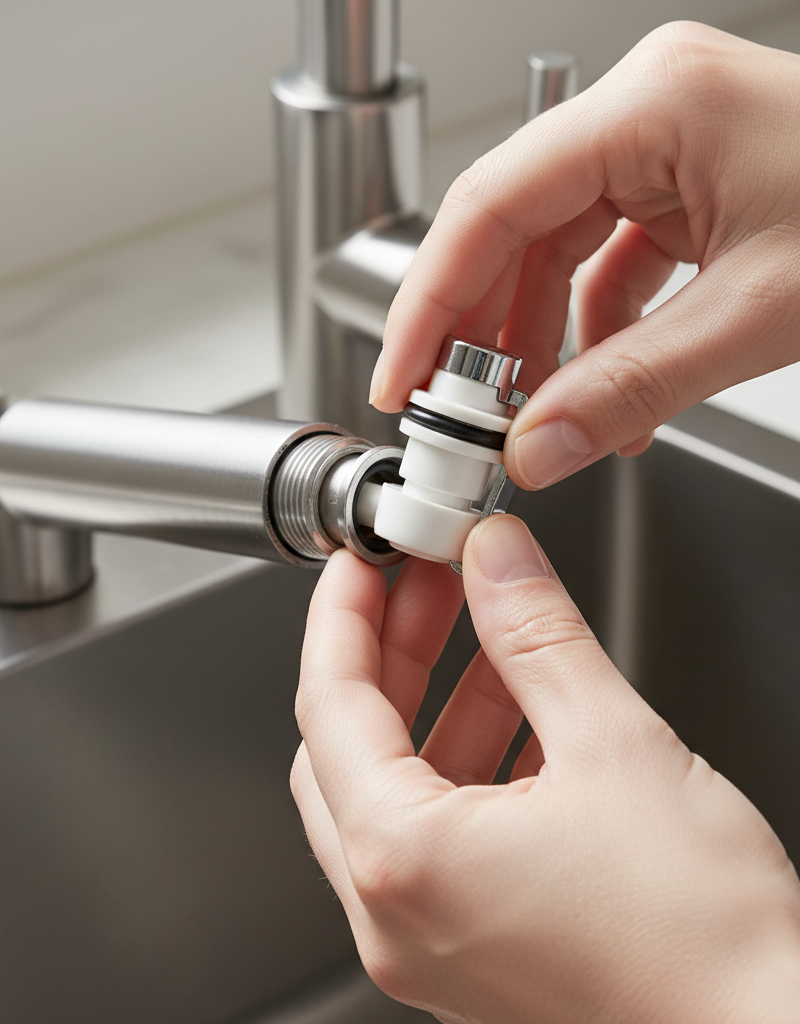
- Side of Faucet Body: Some faucets have a small, threaded cap on the side of the main body, under the spout. The diverter is directly beneath this cap.
- Front or Back of Faucet Base: On gooseneck-style faucets, it is often located under the spout at the front or back of the vertical faucet column.
- Inside the Spout Base: On many models (especially older ones), you must first remove the entire spout to access the diverter, which sits vertically inside the faucet body.
Plumbing · Clog
| Project category | Plumbing |
|---|---|
| Problem type | Clog |
| Trade required | Plumbing |
| Urgency | Soon — within weeks |
| Safety risk | Low safety risk |
| DIY suitability | DIY friendly |
| Cost category | Low cost |
| Typical timeline | Same-day DIY attempt; pro visit within a day or two |
| Contractor type | Licensed plumber |
Repair option
Plunger, hand auger, or trap cleanout before chemicals.
Replacement option
Line replacement when clogs return in the same spot repeatedly.
Common causes
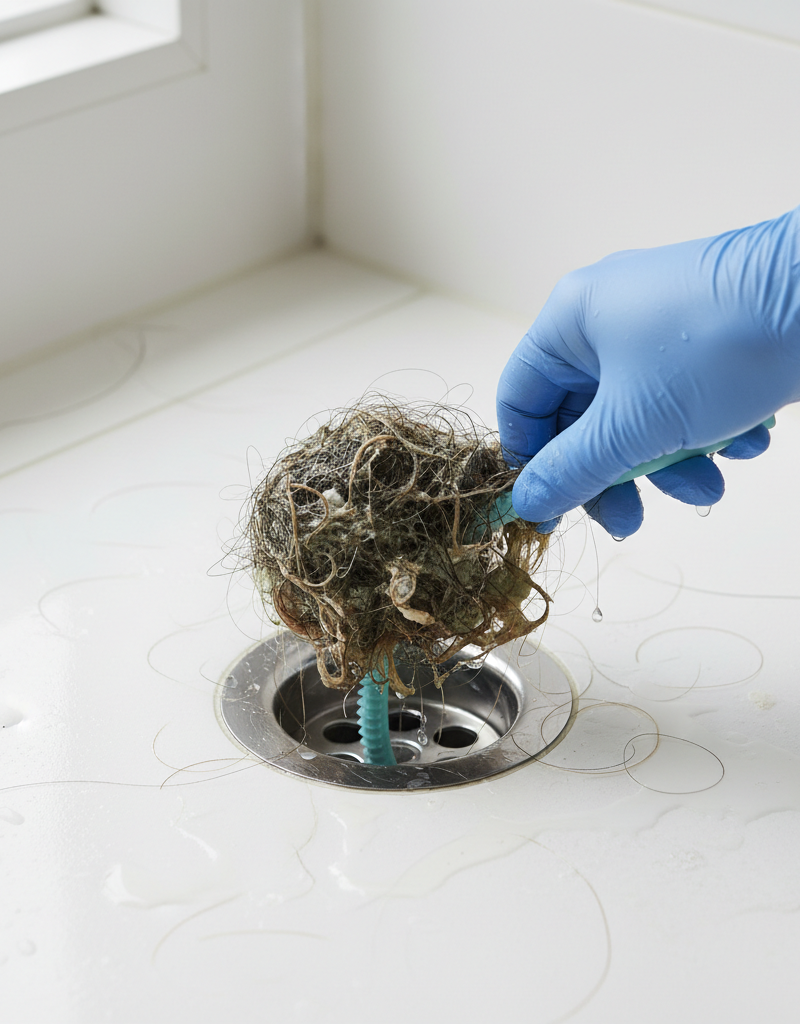
- Hair and soap buildup in the trap
- Grease cooling in the branch line
- Flushed wipes or foreign objects
Relevant tools:diy difficultydiy or hire a pro
Published April 27, 2026Last updated August 17, 2026
Tools & materials you'll need
Affiliate linksAs an Amazon Associate FixlyGuide earns from qualifying purchases — at no extra cost to you. Prices and availability are accurate as of publication and subject to change.
How it works
To diagnose low pressure in a side sprayer, it is essential to understand its mechanical relationship with the main faucet. Unlike pull-down or pull-out faucets where the hose is an integrated part of the spout, a side sprayer is a separate component that relies on a dedicated internal mechanism to receive water. This mechanism is the diverter valve, a small plunger or shuttle valve typically located within the main faucet body.
When you turn on the faucet, water flows from the hot and cold supply lines, through the faucet's main valve (cartridge or ball), and heads toward the spout. The diverter valve sits in this path. By default, its internal plunger is positioned by water pressure to allow unobstructed flow to the main spout. When you press the trigger on the side sprayer, you release the static water pressure held within the sprayer hose. This pressure drop on one side of the diverter valve creates a differential, causing the plunger to shift. This movement blocks the path to the main spout and simultaneously opens a channel directing the full flow of water into the sprayer hose. The water then travels through the hose and exits the nozzles on the sprayer head.
Low pressure is almost always a result of an obstruction or failure at one of three points in this sequence: mineral buildup in the sprayer head nozzles, a kink or internal collapse in the hose, or—most commonly—a clogged or stuck diverter valve that fails to fully shift and redirect the water.
Step-by-Step Fix
Follow these steps in order to diagnose and resolve the cause of low pressure. Do not skip steps, as they are designed to move from the simplest to the most complex potential fixes.
1. Perform an Initial Diagnostic Test — Observe the water flow to narrow down the problem. Turn the kitchen faucet on to a steady, medium-flow stream. Now, squeeze and hold the sprayer trigger. Watch the flow from the main spout. If the flow from the spout significantly decreases or stops completely while the sprayer is activated (even if weakly), the diverter valve is likely functioning correctly. The problem is probably in the sprayer head or hose. If the flow from the spout continues largely unchanged, the diverter valve is stuck and is the primary suspect.
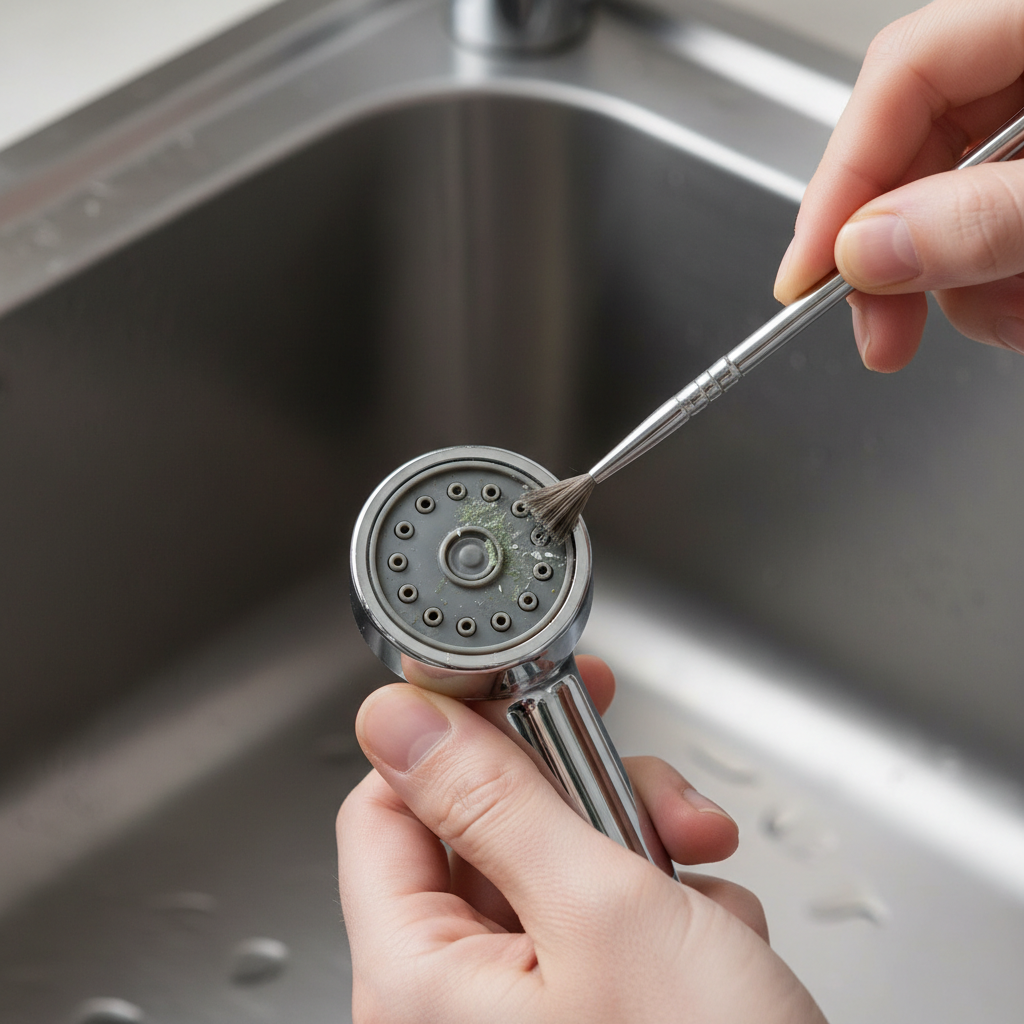
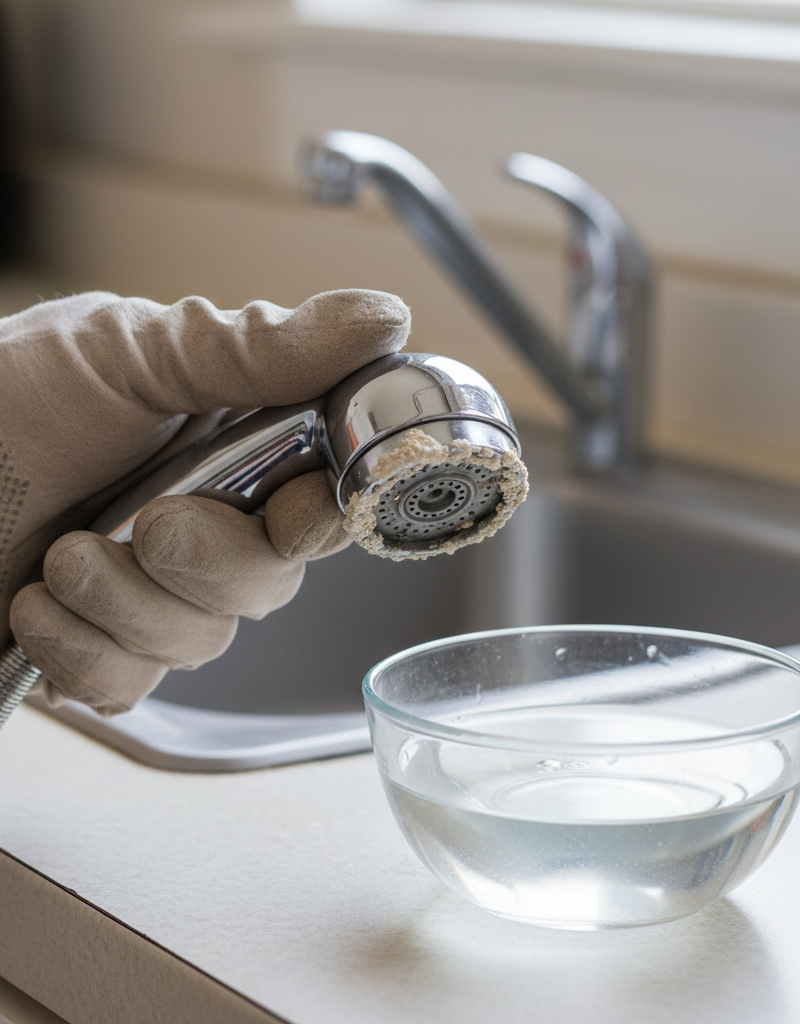
2. Thoroughly Clean the Sprayer Head — The most common and easiest fix for mineral buildup. Unscrew the sprayer head from the end of the hose; it typically detaches with a counter-clockwise turn. Inside the connection point, look for a small rubber washer and sometimes a debris screen; remove them carefully with a small pick and set them aside. Submerge the sprayer head and screen in a bowl of 50/50 white vinegar and warm water for at least one hour (or overnight for heavy buildup). After soaking, use an old toothbrush to scrub the exterior spray holes and the interior threads. Use a straightened paperclip or a pin to gently poke into each spray nozzle to dislodge any remaining mineral deposits. Rinse all parts thoroughly under running water before reassembling.
- Tools: Bowl, white vinegar, old toothbrush, paperclip.
- If this doesn't work: The clog is located further up the system, in the hose or the faucet body.
3. Inspect and Test the Sprayer Hose — Check for physical blockages and internal failure. With the sprayer head still detached, pull the entire length of the hose out from its housing under the sink. Visually inspect it for obvious kinks, twists, or flat spots. Straighten any kinks. Run your fingers firmly along the hose's length to feel for hard, inflexible sections which could indicate internal mineral buildup or a collapsed inner lining. Place the end of the hose in the sink or a bucket and briefly turn on the faucet and press the sprayer button (if your model requires it) to check the flow directly from the hose. A strong flow indicates the hose is clear; a weak flow points to a blockage inside the hose or at its connection point to the faucet.
- Safety Note: Be prepared to turn the water off quickly to avoid splashing.
- If flow is weak: The hose may need replacement, or the clog is at the faucet connection.
4. Shut Off the Water Supply — A mandatory safety step before any disassembly of the faucet. Clear the area under the sink to give yourself room to work. Locate the two water shutoff valves on the wall or floor of the cabinet, one for hot and one for cold. Turn both valve handles clockwise until they are firmly closed. Turn the faucet handle on in the "warm" position to relieve any residual pressure in the lines and confirm that the water is completely off.
- Pro Tip: If your shutoff valves are frozen or leak when you try to turn them, stop immediately. The repair has now expanded to include replacing the valves, which is often a job for a professional.
5. Locate the Diverter Valve — Finding the culprit requires some investigation. The diverter valve's location varies by faucet brand and model. Using a flashlight and an inspection mirror will be helpful. Common locations include:
- Side of Faucet Body: Some faucets have a small, threaded cap on the side of the main body, under the spout. The diverter is directly beneath this cap.
- Front or Back of Faucet Base: On gooseneck-style faucets, it is often located under the spout at the front or back of the vertical faucet column.
- Inside the Spout Base: On many models (especially older ones), you must first remove the entire spout to access the diverter, which sits vertically inside the faucet body.
Consult your faucet’s manual or search online for your model number plus "diverter valve location" for a precise diagram.
6. Remove the Faucet Spout (If Necessary) — Gain access to internally located diverters. If the diverter is not externally accessible, you must remove the spout. Look for a small set screw at the back of the spout base, often hidden by a decorative cap. Use a small Allen wrench (hex key) to loosen this screw. On other models, there may be a larger threaded collar at the base of the spout; unscrew this collar (you may need channel-lock pliers with a rag to protect the finish). Once loosened, gently pull the spout straight up, wiggling it side to side. Be prepared for some water to drip out.
- Tools: Allen wrench set, channel-lock pliers, rag.
- Caution: The spout is sealed with one or more O-rings. Be careful not to tear them during removal.
7. Extract the Diverter Valve — Carefully remove the small but critical component. With the spout removed or the access cap unscrewed, look down into the faucet body. You should see the top of the diverter valve. It is a small plastic or brass cylinder, often with a slotted top for a flathead screwdriver or tabs that can be gripped with needle-nose pliers. Some can be pulled straight out with pliers, while others must be unscrewed. Remove it slowly and take note of its orientation.
- Tools: Flashlight, needle-nose pliers, flathead screwdriver.
- Pro Tip: Take a picture of the diverter in place before you remove it for reference during installation. Close the sink drain to prevent dropping small parts.
8. Clean or Replace the Diverter Valve — Restoration or renewal is your final step. Inspect the old diverter. It will likely be coated in mineral scale or have hardened rubber seals. You can attempt to clean it by soaking it in vinegar and scrubbing with a small brush, but this is often a temporary fix. Diverter valves are inexpensive ($10-$25) and model-specific. For a reliable, long-term repair, it is best to replace it. Take the old valve to a hardware or plumbing supply store (or use clear photos) to find an exact match.
- Best Practice: Lightly coat the O-rings on the new diverter valve with plumber's grease before installation. This ensures a good seal and makes future removal easier.
9. Reassemble and Test the Faucet — Carefully put everything back and check for leaks. Insert the new or cleaned diverter valve into its port, ensuring it is seated correctly. If you removed the spout, apply a thin layer of plumber's grease to the spout O-rings and carefully press it back down onto the faucet body. Tighten the set screw or threaded collar. Reattach the sprayer hose and head. Once everything is reassembled, turn the water supply valves back on (counter-clockwise) slowly. Check for any leaks around the base of the spout and at the hose connection under the sink. Finally, turn the faucet on and test the sprayer function. The pressure should be fully restored.
Common mistakes
- Using the wrong tools and damaging the finish: Never use bare metal pliers on a finished faucet surface. Professional plumbers use strap wrenches or wrap the faucet components in a thick rag or rubber sheet before applying channel-lock pliers to prevent scratching or deforming the chrome, nickel, or bronze finish.
- Forgetting to close the sink drain: Before disassembling any part of the faucet, close the sink drain stopper. Small, critical parts like set screws, O-rings, or even the diverter valve itself are easily dropped and can be lost down the drain permanently, complicating a simple repair.
- Overtightening connections: Plastic threads on sprayer heads and some hose connections are easily stripped or cracked. These parts are designed to seal with a rubber washer, not brute force. Hand-tighten a connection first, then use a wrench for a final quarter-turn if needed. If it leaks, disassemble, check the washer, and retighten; do not simply crank it down harder.
- Buying a "universal" diverter valve: Diverter valves are highly specific to faucet brands and even a manufacturer's different product lines. A "universal" kit is unlikely to fit or function correctly. Always take the old part with you for a physical match or confirm the exact part number using your faucet's model number.
- Not lubricating O-rings during reassembly: The rubber O-rings at the base of the spout and on the diverter valve create the necessary watertight seals. Reinstalling them dry can cause them to pinch, tear, or roll out of place, leading to persistent leaks from the faucet base. A small dab of silicone-based plumber's grease protects the rubber and ensures a proper seal.
Cost & time breakdown
Costs are estimates and can vary based on your location and the specific brand of your faucet. Professional costs include a typical service call fee.
| Task | DIY Cost | Pro Cost | Time |
|---|---|---|---|
| Clean Sprayer Head | $0 - $5 (for vinegar) | N/A (unlikely to be a standalone service) | 30-60 minutes (including soak time) |
| Replace Sprayer Head & Hose Kit | $25 - $60 | $140 - $220 | 20-40 minutes |
| Replace Diverter Valve | $10 - $30 (part + plumber's grease) | $150 - $275 | 1-2 hours |
| Replace entire Kitchen Faucet | $120 - $500+ (for new faucet) | $300 - $800+ | 2-4 hours |
When to call a pro
While this is a manageable DIY project for most, certain signs indicate it's better to call a licensed plumber. If the shutoff valves under your sink are seized and won't turn, or if they leak when you operate them, stop immediately. These valves must be replaced before any other work can proceed, a job that often requires shutting off water to the entire house. Call a professional if the faucet body itself is heavily corroded, pitted, or cracked, as attempting to remove a seized spout or parts can cause the entire assembly to break. If you've correctly replaced the diverter valve and sprayer hose but the pressure is still low, there may be a more complex internal blockage or a manufacturing defect in the faucet body. Finally, if you are not comfortable with the level of disassembly required or if you accidentally cause a leak you cannot control, it's safest to shut off the water and call for professional help.
Prevention & maintenance
- Regularly Clean the Sprayer Head: Every 3-4 months, unscrew the sprayer head and soak it in vinegar for an hour to dissolve mineral deposits before they become major blockages. This is the single most effective preventative step.
- Exercise the Shutoff Valves: Once or twice a year, turn the hot and cold shutoff valves under the sink all the way off and then all the way back on. This prevents them from seizing due to mineral buildup, ensuring they will work when you need them.
- Check the Hose Annually: Pull the sprayer hose out completely and inspect it for early signs of wear, such as fraying on the outside or stiff, inflexible spots. This helps you catch a failing hose before it springs a leak under your sink.
- Install a Water Softener: If you live in an area with very hard water, the ultimate preventative measure is a whole-house water softener. This will prevent mineral scale from building up in your faucet diverter, sprayer head, and all other water-using appliances.
- Flush After Water Main Work: If your utility provider performs work on the local water main, sediment can be stirred up and enter your home's plumbing. After such work, remove your sprayer head and faucet aerator and run the water for several minutes to flush the lines before reattaching them.
Related Articles
Keep troubleshooting with these hand-picked guides from FixlyGuide:
- The Secret Culprit Behind Your Waning Kitchen Sprayer Pressure (It’s Not Clogging) — Low water pressure from your kitchen sink sprayer often stems from a surprisingly simple issue: a clogged diverter valve or a faulty O-ring…
- The Secret Culprit Behind Your Dishwasher Not Draining (It's Not Always a Clog) — Your dishwasher not draining can stem from simple fixes to more complex issues, often involving the air gap, drain hose, or filter.
- The Secret Culprit Behind Your Leaking Washer (It's Not Always the Hose) — A washing machine leaking water from the bottom can often be traced to common, easily fixable issues like loose hoses or a clogged drain pu…
- The Secret Culprit Behind Your Dishwasher's Standing Water (It's Not Always a Clog) — Don't assume a clog is the only reason your dishwasher isn't draining; often, the fix is simpler than you think.
- The Dirty Secret KITCHEN SINKS DRAIN SLOWLY — And It’s NOT Always a Clog — Discover the often-overlooked culprits behind a slow-draining kitchen sink that aren't always a simple clog, and learn how to fix them.
- The 3 Hidden Reasons Your Gutters Fail in Heavy Rain (It’s Not Just Leaves) — Overflowing gutters during heavy rain often stem from a few common, yet overlooked, issues beyond simple leaf clogs, leading to potential s…
Should you do this yourself?
Answer five quick questions before you start. Safety outranks savings every time.
Your experience with work like this
How high do you have to work?
Does the job involve any of these?
Will it need a permit?
Specialty tools
Free and instant. Educational guidance only — not a quote, inspection, or professional diagnosis.
What should this project cost?
Enter your project details for a realistic cost range before you call anyone.
Common repairs run $150–$650; repipes and water-heater replacements reach $1,500–$4,500.
- Regional adjustment
- National average
- Labor share (typical)
- ~$754
- Quotes to collect
- 3 written estimates
Educational estimate based on national averages — not a binding quote. Always confirm with written local estimates.
Fixly Project Decision Box
- DIY difficulty
- Moderate
- Estimated time
- 30 minutes – half a day
- Cost level
- Moderate
Main tools / materials
- Adjustable wrench
- Plunger or drain auger
- Bucket and towels
- Thread tape
When to stop and call a pro
- Water you cannot shut off at the fixture or main
- Sewage backing up into more than one fixture
- Water near electrical panels or outlets
- Gas water heater work beyond relighting a pilot
Need professional help?
Get a Licensed PlumberBefore you start
Check the difficulty, permits, and safety risk — then decide whether to call a pro.
- Estimate this projectGet a cost range for your scope and ZIP before you call anyone.Open
- Get local estimatesSend one request and compare written estimates from vetted pros.Open
Free, no signup required. Estimates are educational guidance, not a quote or an inspection.
Frequently asked questions
Why is my kitchen sink sprayer suddenly weak?+
A sudden drop in sprayer pressure is most often due to mineral buildup in the sprayer head or the diverter valve, a kink in the sprayer hose, or a loose connection allowing air to enter the line.
Can I clean the diverter valve myself?+
Yes, cleaning the diverter valve is a common DIY fix. It typically involves disassembling a portion of your faucet (usually from under the sink), removing the small valve, cleaning it with vinegar or a stiff brush, and reinstalling it.
What if cleaning the sprayer head and diverter valve doesn't work?+
If cleaning doesn't resolve the issue, inspect the sprayer hose for internal damage or kinks. If the hose is clear, check all connections for tightness. A completely failed diverter valve or a severely degraded hose may need to be replaced.
How often should I clean my kitchen sink sprayer?+
In areas with hard water, it's a good practice to inspect and clean your sprayer head every 6-12 months. The diverter valve typically only needs attention if pressure issues arise, but a preventative cleaning every few years can prolong its life.
Discussion
Loading comments…