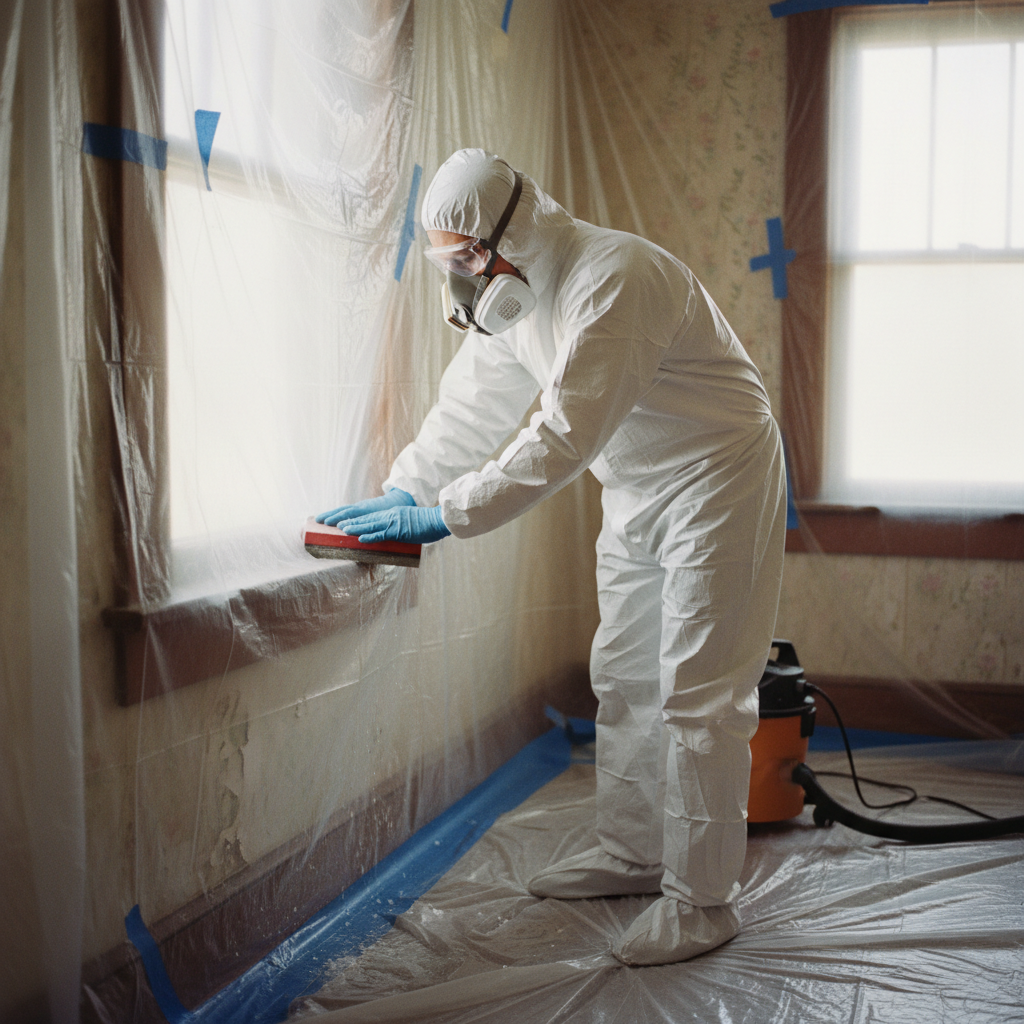
- Gear Up — Protect Yourself
- If you've got facial hair, make sure your respirator still seals. No seal, no protection. Simple as that.
- Keep a separate pair of shoes or boot covers just for the job. You don't want to track that dust through the kitchen and then wonder why the dog looks like he rolled in chalk.
Published July 25, 2026Last updated August 17, 2026
Tools & materials you'll need
Affiliate linksAs an Amazon Associate FixlyGuide earns from qualifying purchases — at no extra cost to you. Prices and availability are accurate as of publication and subject to change.
Quick Answer
Look, here's the deal: if your house went up before 1978, you've probably got lead paint somewhere. It's not usually a problem when it's just sitting there, smooth and untouched. The real trouble starts when you sand, scrape, drill, or start tearing into it. That's when you kick up microscopic lead dust, and that stuff is poison, plain and simple — especially for kids. Always get a test, and if it comes back hot, put on your safety gear and lock down the work zone before you even think about cracking open that can of primer.
The Problem
I've seen this a hundred times. Homeowners, good intentions and a can-do attitude, start ripping into an old window frame or sanding down some trim, and they don't even realize they're making a toxic dust storm. Lead paint isn't like asbestos where it's only a problem if it's friable; with lead, any disturbance is a risk. Even a little bit of dust, invisible to the naked eye, can cause serious developmental problems in children and neurological issues in adults. I had a job out in Springfield back in '08, a beautiful old Victorian. The owners wanted to strip all the old woodwork. We tested, found lead practically everywhere. Had to basically turn their living room into a hazmat zone for a week, all sealed off with poly sheeting, negative air machines humming. It was a miserable slog, but there was no dice any other way. You just can't mess around with this stuff.
How It Works
Back in the day, lead was a miracle additive for paint. It made it more durable, helped it dry faster, and gave it a richer, more vibrant color. That's why you find it on everything from trim and doors to windows and even walls in older homes. The problem is, lead's a heavy metal. Once paint containing lead starts to chip, peel, or gets pulverized into dust — say, when you're sanding it down, cutting into a wall, or even just opening and closing an old painted window over and over — those lead particles go airborne. They can settle on surfaces, get tracked through the house, or worse, get inhaled. Once in the body, lead mimics other essential metals and gets stored in bones and organs, where it slowly builds up. Your body doesn't flush it out easily, and that's why even low-level, long-term exposure is so dangerous. For kids, their developing brains and nervous systems are especially vulnerable. Even a small amount of lead exposure can lead to learning disabilities, behavioral problems, and reduced IQ. For adults, we're talking about kidney damage, high blood pressure, and reproductive issues. It's a silent threat because you can't see, smell, or taste it.
Step-by-Step Fix
Okay, so you've tested, and you know you've got lead. Don't panic, but don't get sloppy either. Here's how I'd handle a small repair where lead paint is in the mix.
-
Prep the Zone — Containment is King
- First thing, clear out the room. Move out all the furniture, rugs, curtains, everything you can. If you can't move it, cover it tight with 6-mil plastic sheeting and painter's tape. Then lay down more 6-mil plastic on the floor, stretching at least 6 feet beyond your work area. Tape every seam and secure it to the baseboards. Think of it like building a little clean room.
- Shut down your HVAC. Turn off the furnace or AC so you aren't circulating lead dust through the whole house. Close all windows and doors in the work area, and tape over any gaps so dust doesn't wander.
-
Gear Up — Protect Yourself
- You need personal protective equipment (PPE). Don't skimp here. A P100 respirator is a must — those cheap paper masks won't cut it. You'll also need disposable coveralls, disposable gloves (nitrile is good), and eye protection. I always tell guys, don't suit up halfway and call it a day.
- If you've got facial hair, make sure your respirator still seals. No seal, no protection. Simple as that.
- Keep a separate pair of shoes or boot covers just for the job. You don't want to track that dust through the kitchen and then wonder why the dog looks like he rolled in chalk.
-
Use Lead-Safe Work Practices — No Dry Sanding, Ever
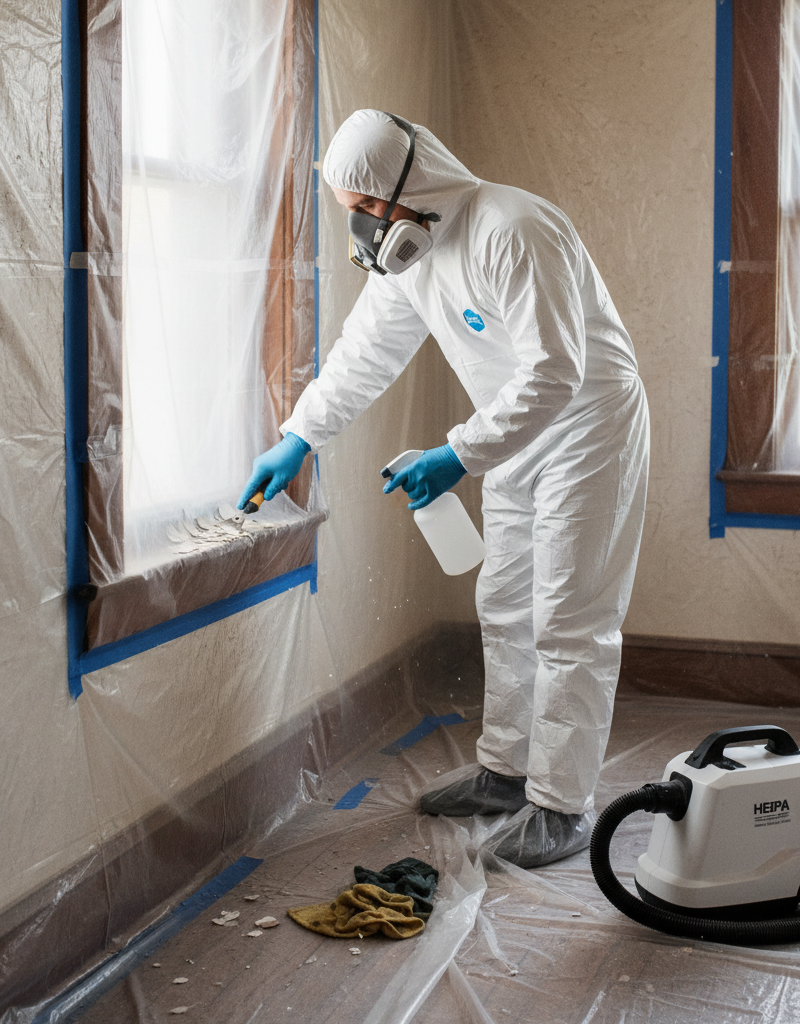
- Wet methods are your friend. Lightly mist painted surfaces before scraping or cutting to keep dust down. A little water goes a long way.
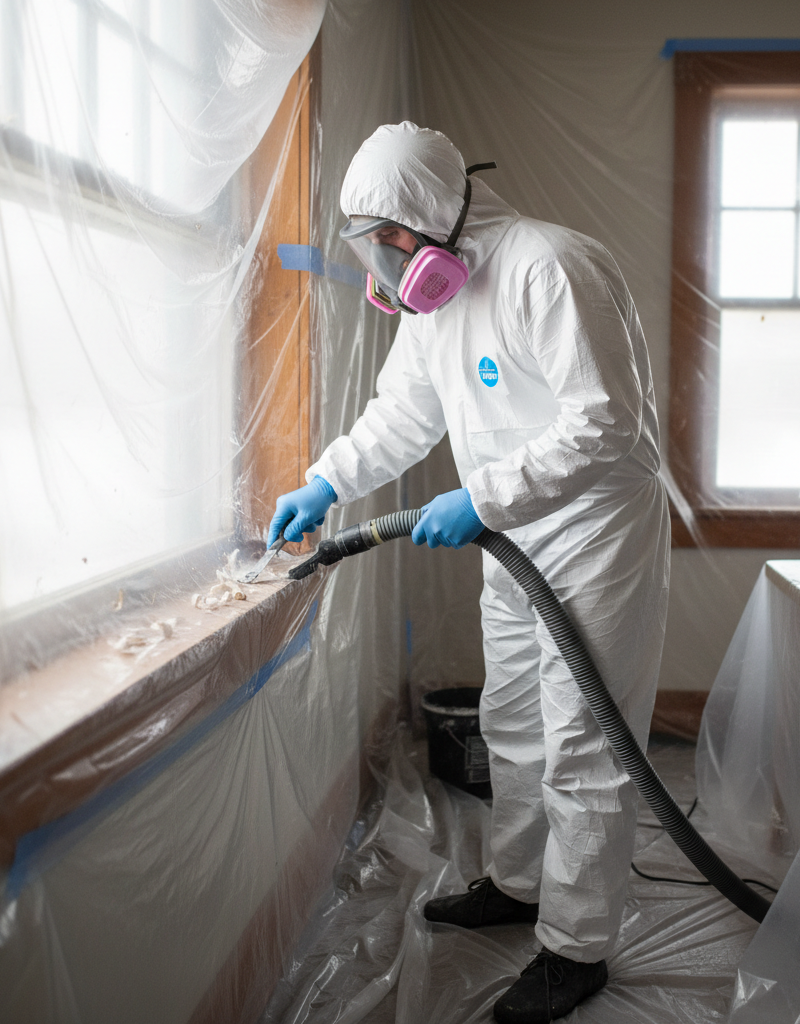
- Use hand tools instead of power sanders whenever you can. If you absolutely have to use a power tool, it needs a HEPA vacuum attachment. No exceptions.
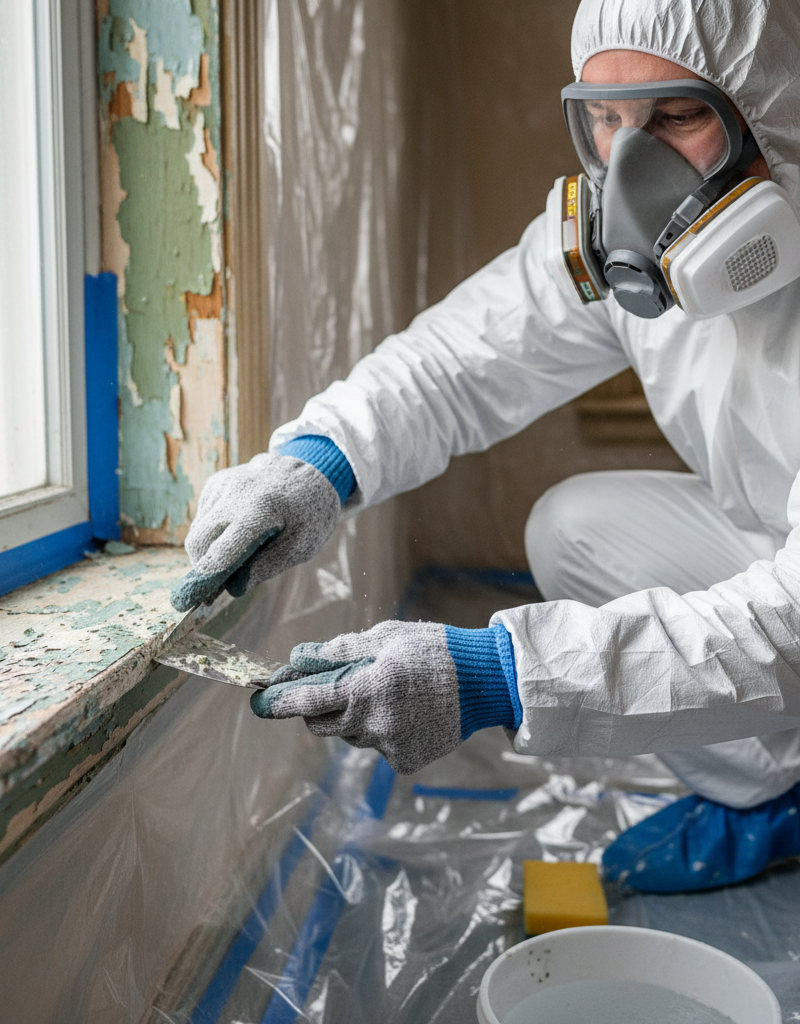
- Score paint lines with a utility knife before prying trim loose. That helps stop the surrounding paint from chipping and flaking everywhere.
- Work slowly. Lead dust loves chaos. The faster and rougher you go, the uglier it gets.
-
Clean Up Like You Mean It — HEPA and Soap, Not a Shop Rag
- Don't sweep. Don't use a regular vacuum either. A household vac will just blow fine dust back into the air.
- Vacuum everything with a HEPA-rated vacuum. Then wet-wipe all surfaces with disposable cloths and a cleaner that's made for lead cleanup.
- Fold your plastic sheeting inward as you take it up so you trap the debris inside. Bag it, seal it, and dispose of it according to your local rules.
- Wash your hands, face, and tools before you leave the area. I pulled a water heater in Frisco last month that had exactly this kind of dust problem around an old utility closet, and the cleanup took longer than the repair. That's just how it goes sometimes.
-
Finish and Verify — Don't Skip the Last Check
- After cleanup, inspect the area under bright light. If you see dust, residue, or paint chips, you're not done.
- If the repair was major, get a clearance test or at least verify the surface is clean before reopening the space.
- Once everything passes muster, you can remove the containment and call it a day.
Related Articles
Keep troubleshooting with these hand-picked guides from FixlyGuide:
- 7 Inspection Red Flags That Secretly Signal a $20,000 Bill — Don't let your dream home become a money pit. Many buyers and even some inspectors overlook subtle home inspection red flags that lead to f…
- The 12 Checks That Prevent 80% of Costly Home Repairs — Don't wait for a disaster. Our comprehensive monthly home maintenance checklist reveals the surprising, simple tasks that catch small issue…
- Your Home's Secret To-Do List: Are You Missing It? — Most new homeowners focus on decorating, but ignoring a basic home maintenance checklist can lead to thousands in unexpected repairs. Learn…
- Is That Sweet Car Smell a Secret Killer? (& 6 Other Odors to Watch For) — Unusual odors in your car aren't just unpleasant; they're often critical warnings of underlying mechanical issues that could compromise saf…
- The Single Board Secret to Attracting Bluebirds: A Quick DIY House — Discover how to construct an ideal bluebird house using just one cedar board, providing a safe and inviting home for these cherished backya…
- The Dryer Fire Hazard Hiding in Plain Sight (and How to Eliminate It in 30 Minutes) — Lint buildup in your dryer vent is a silent fire hazard. Learn how to clean it thoroughly and prevent a potential disaster with simple tool…
What should this project cost?
Enter your project details for a realistic cost range before you call anyone.
Cost depends heavily on which system turns out to be the source.
- Regional adjustment
- National average
- Labor share (typical)
- ~$1,620
- Quotes to collect
- 3 written estimates
Educational estimate based on national averages — not a binding quote. Always confirm with written local estimates.
Get the print-ready PDF of this guide
A clean, ad-free, printable version you can keep on your phone or pin to the workshop wall. Free with a FixlyGuide account.
- Print-optimized layout
- Tools, materials & every step included
- Saved to your account
This article was independently written by FixlyGuide based on the source topic.
Frequently asked questions
How can I tell if my house has lead paint?+
The only way to know for sure is to test it. You can buy DIY lead test kits, but for reliable results, I always recommend hiring a certified lead inspector. They'll use an XRF gun for non-destructive testing or take samples for lab analysis.
Is it safe to paint over lead paint?+
Generally, yes, as long as the underlying lead paint is intact and not flaking. Encapsulating it with a new layer of paint is a common method to manage lead paint without disturbing it. Just make sure to clean the surface thoroughly first and use a good quality primer.
What are the common health risks of lead exposure?+
For children, lead exposure can cause learning disabilities, behavioral problems, and developmental delays. Adults can experience high blood pressure, kidney damage, joint pain, and reproductive issues. It's serious stuff, even at low levels.
What's the most dangerous way to disturb lead paint?+
Any activity that creates dust or fumes is high risk. That means sanding, scraping, using heat guns, torching, or demolition. Even dry scraping can send invisible lead particles into the air. Wet methods are always safer.
Do I need to hire a professional for all lead paint work?+
Not necessarily for minor, non-dust-generating repairs. But if you're talking about extensive renovation, removal of large areas of lead paint, or any project that will create significant dust, absolutely call a lead-safe certified contractor. They have the training and equipment to do it safely.
How do I clean up lead dust?+
Regular vacuum cleaners just spread the dust. You need a HEPA-filtered vacuum. Wet mop with a general all-purpose cleaner and multiple rinses. Always dispose of cleaning materials and filters as hazardous waste. Never dry sweep.
What's the 'RRP' rule and how does it affect me?+
RRP stands for Lead Renovation, Repair, and Painting Rule. It's an EPA regulation that requires contractors working on homes built before 1978 to be certified and follow lead-safe work practices. As a homeowner, it means you should only hire RRP-certified professionals for these types of jobs.
How much does lead paint testing cost?+
DIY kits are cheap, maybe $15-30. A professional XRF test for an average home might run you anywhere from $300 to $600, depending on your location and the size of your house. It's a small price to pay for peace of mind.
Discussion
Loading comments…