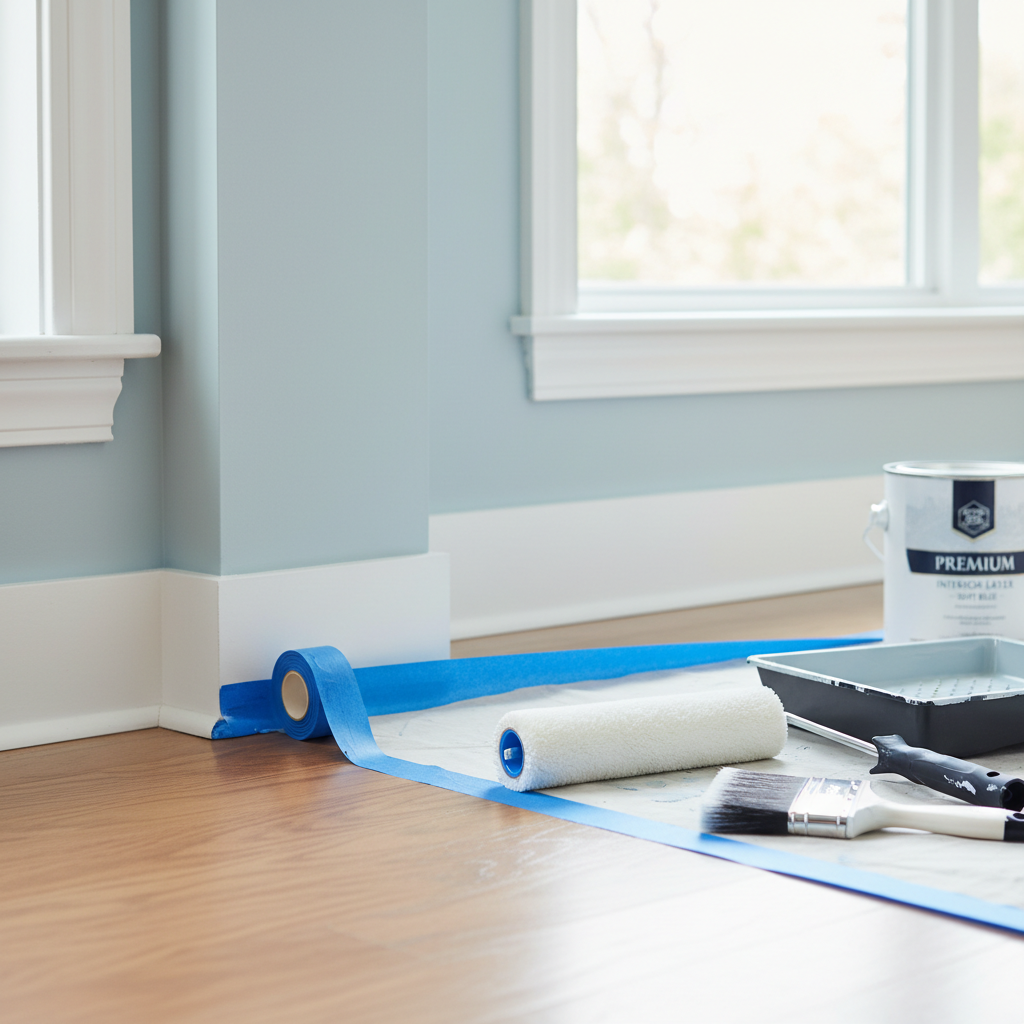
- Clean Your Walls Like a Pro – Before any paint touches the surface, ensure it's spotless. Use a mixture of warm water and a small amount of mild detergent (like dish soap) or a dedicated wall cleaner.
- Wipe down walls from top to bottom with a sponge.
- Rinse thoroughly with clean water to remove any soap residue.
- Allow walls to dry completely, typically 30-60 minutes, before proceeding. Dust, grease, and grime are common causes of poor paint adhesion.
General remodeling · Renovation planning
| Project category | General remodeling |
|---|---|
| Problem type | Renovation planning |
| Trade required | General contracting |
| Urgency | Planned project |
| Safety risk | Low safety risk |
| DIY suitability | Pro recommended |
| Cost category | Major investment |
| Typical timeline | Design and permitting often 2–4 months before work starts |
| Contractor type | General contractor |
Repair option
Phase the work and fix the building envelope first.
Replacement option
Full renovation with permits, design, and a general contractor.
Common causes
- Space no longer fits how the household lives
- Resale preparation
- Deferred maintenance stacking up
Relevant tools:project cost estimatorcompare quoteshome improvement material prices
Published May 3, 2026Last updated August 17, 2026
Tools & materials you'll need
Affiliate linksAs an Amazon Associate FixlyGuide earns from qualifying purchases — at no extra cost to you. Prices and availability are accurate as of publication and subject to change.
Quick Answer
Achieving a professional-quality paint finish yourself is entirely possible by focusing on detailed preparation, using the right tools, and applying paint correctly. Key steps include thorough cleaning, proper taping and priming, and using consistent brush and roller techniques to avoid streaks and drips, ultimately delivering a smooth, durable surface. By addressing common DIY mistakes like inadequate surface prep or uneven application, you can transform your room with results that rival those of a seasoned professional, saving money and boosting your home’s aesthetic appeal.
The Problem
Many homeowners embark on painting a room with enthusiasm, only to be disappointed by the final result. Common issues range from visible brushstrokes and roller marks to peeling paint, uneven color, and messy edges. These problems often stem from a lack of understanding of proper techniques, insufficient preparation, or using the wrong tools for the job. Instead of a smooth, uniform, and pristine finish that elevates the room, they end up with a paint job that looks distinctly amateurish, diminishing the room's appeal and potentially requiring a costly do-over. The core problem isn't a lack of effort, but a lack of informed execution.
How It Works
Painting a room is more than just applying color; it's a multi-stage process where each step builds upon the last, influencing the final outcome. Understanding the 'why' behind each step helps ensure success. First, surface preparation is critical because paint adhesion and finish quality depend entirely on a clean, smooth, and stable substrate. Dirt, grease, dust, or loose paint will prevent new paint from bonding properly, leading to peeling or an uneven look. Filling holes and sanding ensures a seamless surface, eliminating imperfections that would otherwise be highlighted by fresh paint.
Next, priming creates a uniform base for the topcoat. Primer serves several functions: it seals porous surfaces (like new drywall) to prevent the topcoat from soaking in unevenly, blocks stains from bleeding through, improves paint adhesion, and ensures true color rendition, especially when changing from a dark to a light color. Without primer, you might need extra coats of paint, and the color could look patchy.
Paint application itself involves both cutting in and rolling. 'Cutting in' refers to using a brush to paint precise lines along edges, corners, and around trim where a roller can't reach. This technique requires a steady hand and a well-loaded brush to create a clean, straight border. Rolling fills in the larger wall areas. The key to a streak-free finish with a roller is consistent pressure, proper paint loading, and maintaining a 'wet edge' – always rolling into the previously applied wet paint to blend seamlessly. Even application prevents lap marks and ensures uniform coverage. Finally, allowing adequate drying time between coats and before reintroducing furniture is crucial for paint to fully cure and achieve its intended durability and finish.
Step-by-Step Fix
Here’s how to avoid common painting mistakes and achieve a professional finish:
-
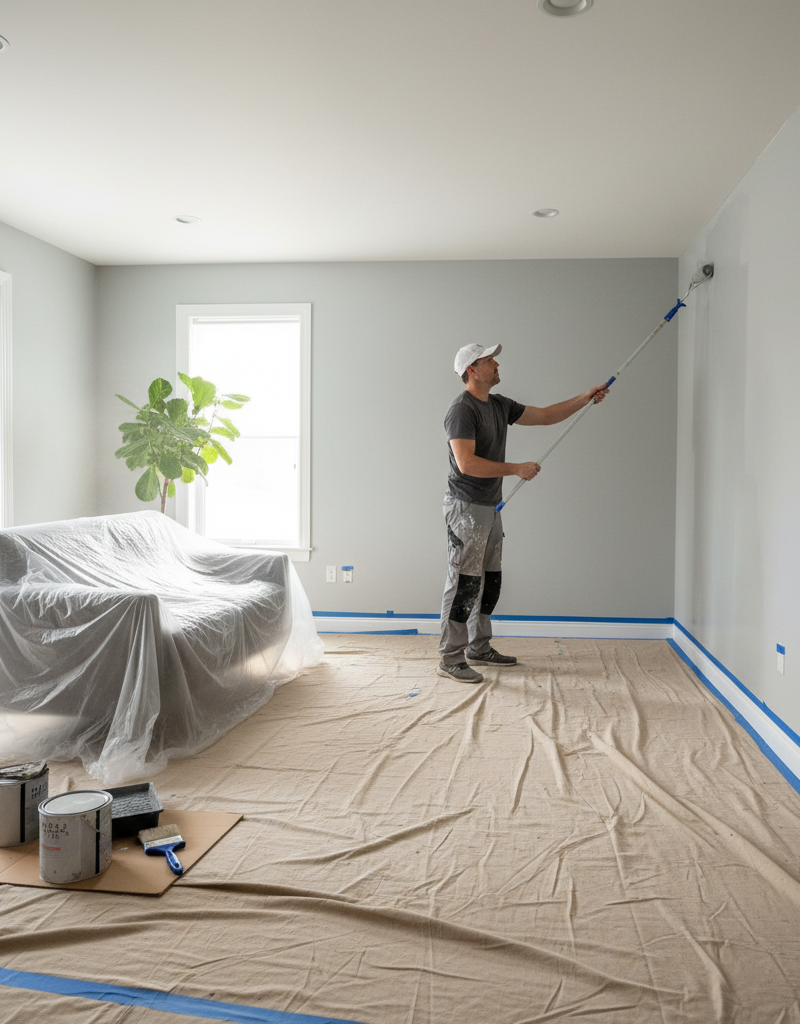
Prep the Room Thoroughly – Do not skip this step. Clear out all furniture if possible, or move it to the center of the room and cover it completely with plastic sheeting. Remove all wall hangings, outlet covers, switch plates, and light fixtures.
- Safety Note: Always turn off power at the breaker before removing switch plates or working near electrical outlets.
-
Clean Your Walls Like a Pro – Before any paint touches the surface, ensure it's spotless. Use a mixture of warm water and a small amount of mild detergent (like dish soap) or a dedicated wall cleaner.
- Wipe down walls from top to bottom with a sponge.
- Rinse thoroughly with clean water to remove any soap residue.
- Allow walls to dry completely, typically 30-60 minutes, before proceeding. Dust, grease, and grime are common causes of poor paint adhesion.
-
Repair Imperfections (Fills and Sands) – Don’t let small holes or cracks ruin your smooth finish. Use spackle or a lightweight joint compound to fill nail holes, small dents, and minor cracks.
- Apply with a putty knife, slightly overfilling the imperfection.
- Once dry (check product instructions, usually 1-2 hours), sand smooth with 120-grit sandpaper until it's flush with the wall.
- Wipe away all sanding dust with a damp cloth.
-
Tape Off Like a Surgeon – Precision tapping is key to crisp lines. Use high-quality painter’s tape (blue or green tape) for clean edges around trim, baseboards, window frames, and the ceiling line.
- Press the tape firmly with a putty knife or your finger to ensure a tight seal and prevent paint bleed-under.
- For extra protection, consider 'back-caulking' – apply a thin bead of paintable caulk along the edge of the tape where it meets the surface you're protecting, then smooth it to create a perfect seal. This is an advanced trick for razor-sharp lines.
-
Prime for Perfection – Don't underestimate the power of primer, especially when changing colors dramatically, painting over repairs, or dealing with stained walls.
- Use a high-quality primer-sealer.
- Apply one even coat of primer using a roller for large areas and a brush for edges and corners, just as you would with paint.
- Allow adequate drying time as per manufacturer instructions (typically 1-2 hours) before painting.
-
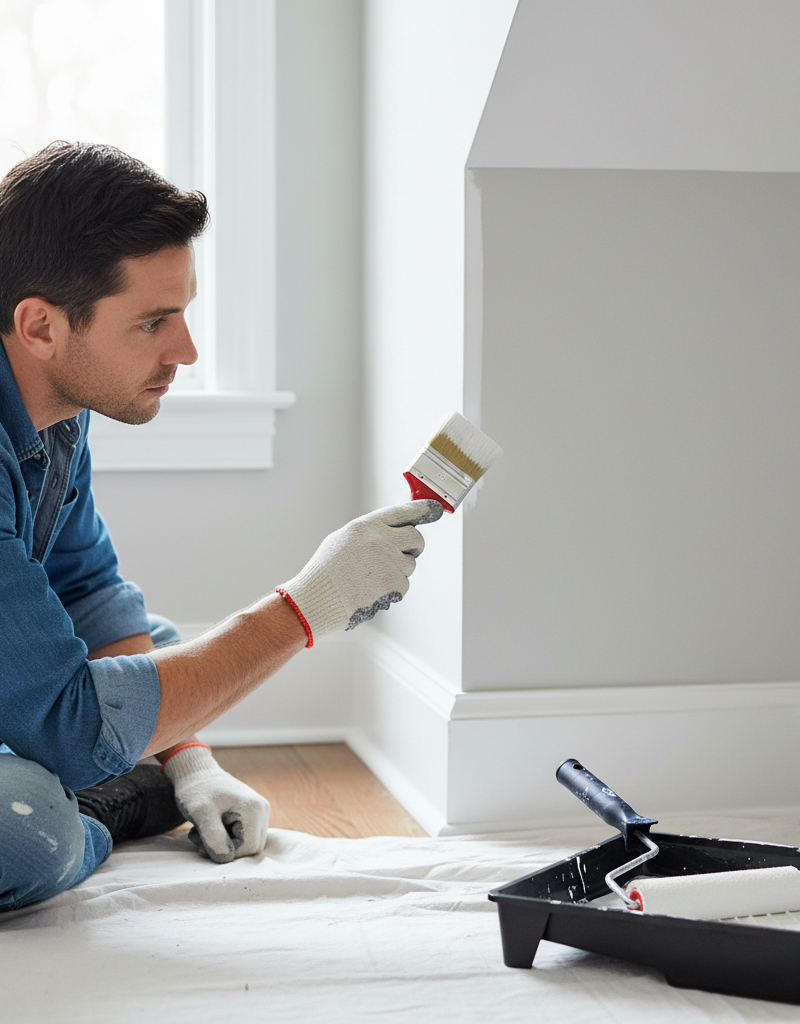
Master the Art of Cutting In – 'Cutting in' creates the clean lines where walls meet ceilings, trim, and corners. Use a 2-inch angled sash brush.
- Dip the brush about one-third of the way into the paint, then tap off excess gently on the side of the can (don't wipe it on the rim, which overloads one side).
- Starting about half an inch away from the edge, guide the brush parallel to the line, gradually moving closer until the bristles just touch the ceiling or trim.
- Use long, steady strokes to create smooth, consistent lines. Don't press too hard, as this can cause paint to seep under the tape.
-
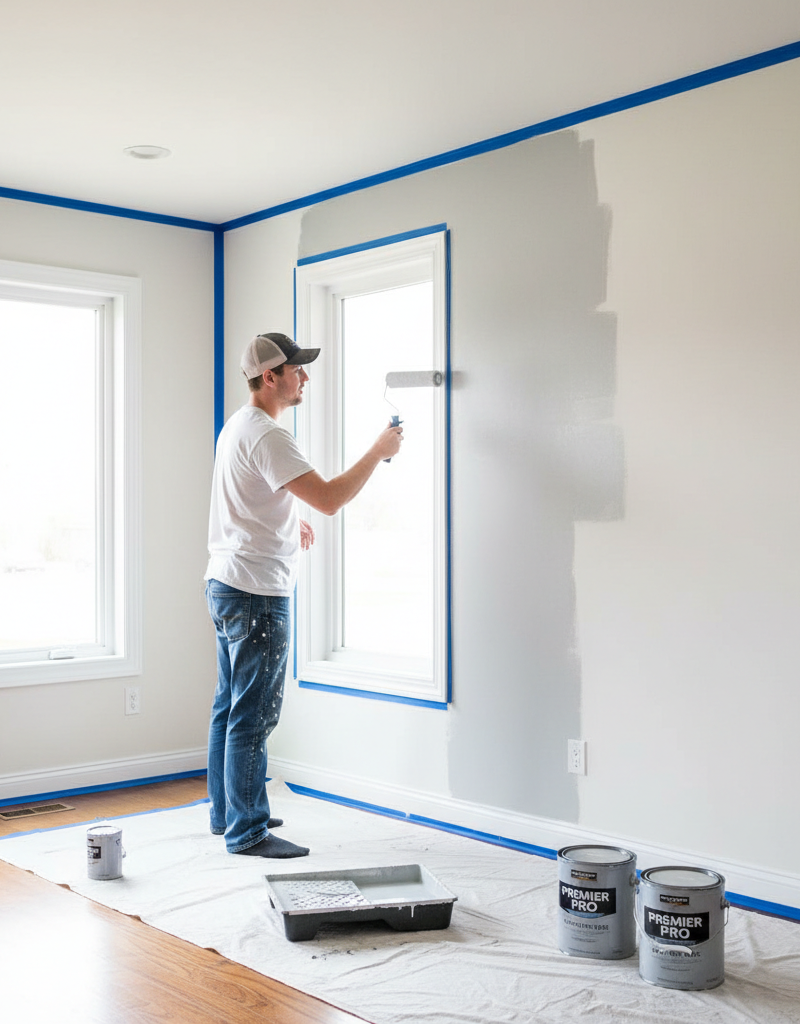
Roll with a Wet Edge – When rolling large wall sections, the goal is uniform coverage without lap marks.
- Use a high-quality roller cover appropriate for your paint type and wall texture (e.g., typically 3/8-inch nap for smooth walls, 1/2-inch for textured).
- Load the roller evenly in a paint tray, rolling it back and forth a few times to saturate it without dripping.
- Start rolling about 6-12 inches from a corner, using a 'W' or 'M' pattern to apply paint to an area roughly 3x3 feet.
- Then, without reloading the roller, fill in the 'W' or 'M' pattern with vertical strokes, working from top to bottom.
- Always maintain a 'wet edge' by slightly overlapping your previous stroke. This prevents visible roller marks.
- Work in sections, moving across the wall.
-
Apply Multiple Thin Coats – Resist the urge to apply one thick coat. Two thin coats are always better than one thick one.
- Thick coats are prone to drips, uneven drying, and an inferior finish.
- Allow the first coat to dry completely according to paint manufacturer instructions (usually 2-4 hours, but check your specific paint) before applying the second coat.
- Lightly sand any drips or imperfections with fine-grit sandpaper (220-grit) if necessary between coats, then wipe clean.
-
Remove Tape at the Right Time – Timing is everything for clean lines. Remove painter's tape when the paint is still slightly wet (after the final coat) or when it's completely dry and cured (at least 24 hours, preferably longer).
- Removing it when partially dry can cause paint to tear or peel along with the tape.
- Pull the tape slowly at a 45-degree angle away from the freshly painted surface.
- If you waited until it was fully dry and notice any slight tearing, you can gently score the edge of the tape with a utility knife before peeling to ensure a clean break.
Common Causes
- Poor Surface Preparation: The most common culprit. Dirt, grease, loose paint, and un-repaired holes prevent paint from adhering properly, leading to peeling, bubbling, and an unprofessional look.
- Skipping Primer: Without primer, especially on new drywall, patched areas, or when changing drastically dark to light colors, paint absorbs unevenly, creating patchy color and requiring more coats.
- Using Low-Quality Tools: Cheap brushes shed bristles, leave streaks, and don't hold paint well. Low-quality roller covers leave lint or an uneven texture. Good tools make a significant difference.
- Improper Paint Application: Overloading brushes/rollers, applying paint too thickly, not maintaining a wet edge, or inconsistent pressure leads to drips, streaks, lap marks, and uneven coverage.
- Inadequate Drying Time: Not allowing enough time between coats means the underlying coat isn't fully cured, risking adhesion issues, dragging, or an uneven finish when applying the next layer.
- Ignoring Temperature and Humidity: Extreme temperatures or high humidity can affect paint drying and curing times, potentially leading to blistering, cracking, or poor adhesion.
- Insufficient Lighting: Painting in poor light can make it difficult to spot imperfections, missed spots, or uneven application until it's too late.
Common Mistakes
- **Using a
Related Articles
Keep troubleshooting with these hand-picked guides from FixlyGuide:
- The 7 Critical Mistakes Almost Everyone Makes When Painting a Room — Unlock the secrets to a flawless, professional-looking paint job by avoiding common pitfalls and mastering essential techniques for perfect…
- The 7 Mistakes That Ruin a Perfect Paint Job (and How to Fix Them) — Painting a room like a pro isn't just about technique—it's about avoiding common pitfalls that lead to streaks, drips, and uneven finishes.…
- That 'Wet Edge' Trick: Paint a Room in a Single Day — Tired of paint jobs that drag on all weekend? The secret to a flawless, fast finish isn't working harder—it's using the pro 'wet edge' syst…
- The 7 Critical Wall Prep Mistakes That Ruin Your Paint Job (And How to Fix Them) — Discover the crucial wall preparation steps often overlooked by DIYers that lead to peeling, cracking, and uneven paint finishes, and learn…
- The #1 Mistake Homeowners Make Installing Floating Shelves (and How to Fix It) — Discover the most common error DIYers make when mounting floating shelves into drywall and how to ensure your shelves are sturdy and secure.
- The 3 Hidden Mistakes That Make Landscape Edging Fail (And How to Fix Them) — Discover common mistakes homeowners make when installing landscape edging and learn the correct methods to achieve a durable, professional-…
Should you do this yourself?
Answer five quick questions before you start. Safety outranks savings every time.
Your experience with work like this
How high do you have to work?
Does the job involve any of these?
Will it need a permit?
Specialty tools
Free and instant. Educational guidance only — not a quote, inspection, or professional diagnosis.
Estimate your own project cost
National averages are a starting point. Enter your details for a range that fits your house.
Interior paint estimator
- Paint$96
- Supplies (tape, rollers, drop cloth)$35
- Estimated total (DIY)$131
Hiring a pro? Add roughly $1.50–$4.00/sq ft for labor depending on prep work and trim detail.
Educational estimate only — always confirm with written local bids.
What should this project cost?
Enter your project details for a realistic cost range before you call anyone.
Interior rooms run $400–$1,200; whole-home exterior painting commonly $4,000–$12,000.
- Regional adjustment
- National average
- Labor share (typical)
- ~$2,003
- Quotes to collect
- 3 written estimates
Educational estimate based on national averages — not a binding quote. Always confirm with written local estimates.
Before you start
Check the difficulty, permits, and safety risk — then decide whether to call a pro.
Free, no signup required. Estimates are educational guidance, not a quote or an inspection.
Get the print-ready PDF of this guide
A clean, ad-free, printable version you can keep on your phone or pin to the workshop wall. Free with a FixlyGuide account.
- Print-optimized layout
- Tools, materials & every step included
- Saved to your account
Recommended for DIYers & woodworkers
Sponsored
The Top 20 Tools for Workshops of Any Budget
No stationary machines or power tools required — plus 3 fundamental tools that can't be bought at any price.
Get the free guide
Ted's Woodworking — The #1 Woodworking Resource
Detailed instructions, dimensioned drawings, materials & cutting lists, and 3D schematics for every skill level.
See the plansSponsored: links above are affiliate links. FixlyGuide may earn a commission on qualifying purchases — at no extra cost to you.
Frequently asked questions
How do professionals get such straight paint lines?+
Professionals achieve straight lines through meticulous taping with high-quality painter's tape, ensuring it's firmly pressed down. An advanced technique is 'back-caulking,' where a thin bead of paintable caulk is applied along the tape edge and smoothed, creating a perfect seal that prevents paint bleed-under. They also use angled sash brushes with precision.
Should I cut in before or after rolling?+
Generally, it's best to cut in around the edges and corners of one wall section first, then immediately roll that section. This ensures you're always working with a 'wet edge,' allowing the brushed and rolled paint to blend seamlessly without visible lines or differences in texture. Once an entire wall is cut in and rolled, move to the next.
How many coats of paint do I need for a perfect finish?+
For a truly professional and durable finish, two coats of quality paint are almost always recommended, especially when changing colors or covering repairs. While some highly pigmented paints claim one-coat coverage, a second thin, even coat provides richer color, better durability, and a more uniform appearance. Always allow adequate drying time between coats.
Why does my paint job look streaky or show roller marks?+
Streaks and roller marks are usually caused by uneven paint application, not maintaining a 'wet edge,' or using the wrong type/quality of roller cover. Ensure you load your roller evenly, use moderate and consistent pressure, and always overlap your previous stroke slightly while the paint is still wet. Using a roller with the correct nap for your wall texture is also crucial.
How long should I wait between paint coats?+
The waiting time between coats varies depending on the paint type, brand, temperature, and humidity. Always refer to the manufacturer's instructions on the paint can, but typically, most latex paints require 2-4 hours of drying time between coats. Applying a second coat too soon can lead to dragging, uneven coverage, or adhesion issues.
Discussion
Loading comments…