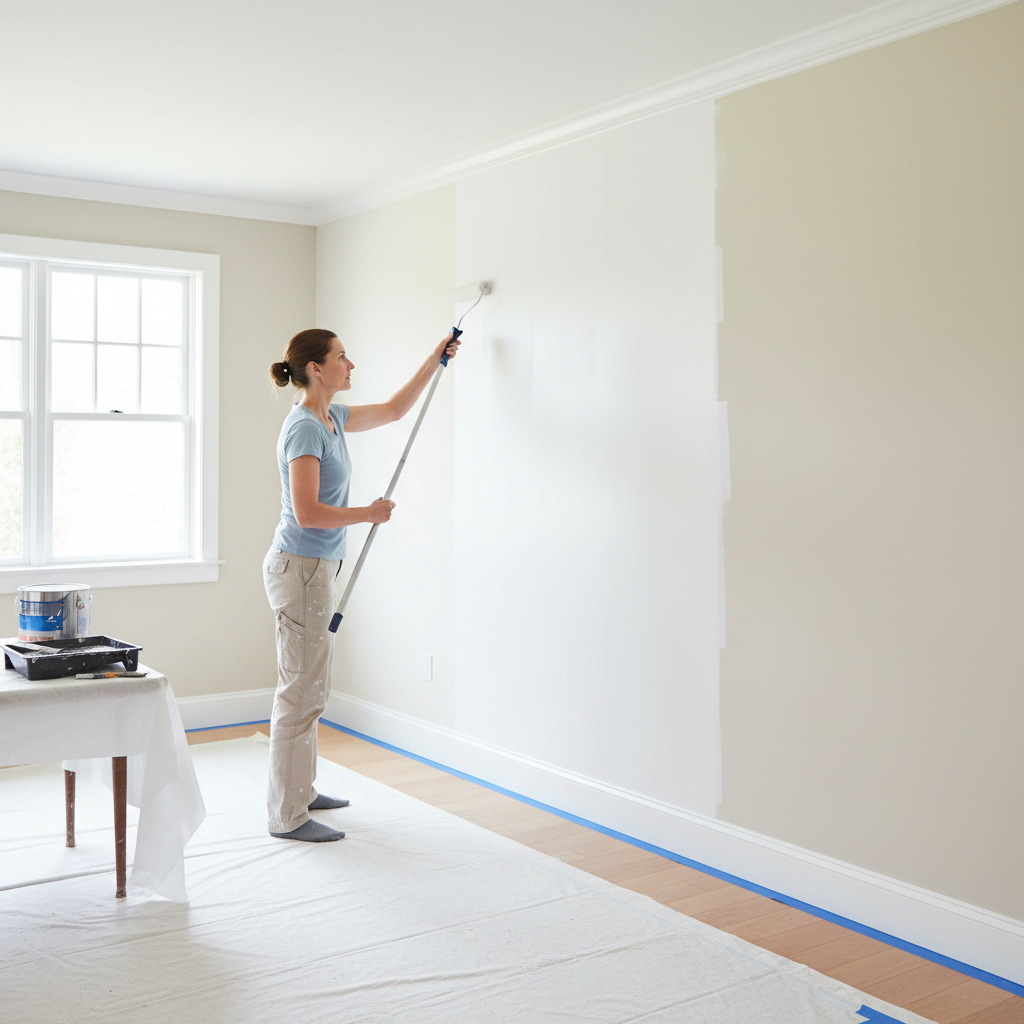
- Remove all furniture from the room if possible. If not, move it to the center and cover it completely with plastic sheeting. Take down wall decor, curtains, and switch plates. Store everything in a safe, labeled container.
- Lay down canvas drop cloths across the entire floor, extending right to the baseboards. Canvas is preferred over plastic because it absorbs drips and is less slippery. Secure edges with painter's tape if needed.
- Safety Note: Ensure good ventilation before and during painting by opening windows and using fans. Wear old clothes, and consider gloves and eye protection.
General remodeling · Renovation planning
| Project category | General remodeling |
|---|---|
| Problem type | Renovation planning |
| Trade required | General contracting |
| Urgency | Planned project |
| Safety risk | Low safety risk |
| DIY suitability | Pro recommended |
| Cost category | Major investment |
| Typical timeline | Design and permitting often 2–4 months before work starts |
| Contractor type | General contractor |
Repair option
Phase the work and fix the building envelope first.
Replacement option
Full renovation with permits, design, and a general contractor.
Common causes
- Space no longer fits how the household lives
- Resale preparation
- Deferred maintenance stacking up
Relevant tools:project cost estimatorcompare quoteshome improvement material prices
Published June 2, 2026Last updated August 17, 2026
Tools & materials you'll need
Affiliate links- AmazonCanvas drop clothsenough to cover floor
- AmazonPainter's tape1-2 rolls · high-quality, blue or green
- AmazonSpackle or lightweight joint compound
- AmazonSanding sponges or fine-grit sandpaper (120, 150, 220)
- AmazonPaint cleaner (TSP substitute)
- AmazonRoller covers3/8-inch nap for smooth walls
- AmazonPaint tray and liners
As an Amazon Associate FixlyGuide earns from qualifying purchases — at no extra cost to you. Prices and availability are accurate as of publication and subject to change.
Quick Answer
Achieving a professional-quality paint job in a room goes beyond just applying paint. It involves meticulous preparation, understanding proper application techniques, and selecting the right tools to create a durable, smooth, and blemish-free finish that truly transforms your space. The secret lies in a system of thorough surface preparation, strategic primer application, precise cutting-in, and efficient rolling techniques that minimize drips, streaks, and brush marks, ensuring a lasting and beautiful result.
The Problem
You've decided to refresh a room with a new coat of paint, but the thought of uneven coverage, visible brush strokes, drips, or paint bleeding onto trim fills you with dread. Many homeowners jump into painting without the foundational knowledge that professionals rely on. This often leads to frustrating results: patchy walls, rough textures, paint peeling prematurely, or simply a finish that looks amateurish rather than crisp and clean. The problem isn't necessarily your effort, but a lack of understanding of the techniques and preparation steps that elevate a good paint job to a great one. You want a smooth, uniform, and durable finish that looks like it was done by an expert, but you're not sure how to avoid the common pitfalls that plague DIY painters.
How It Works
Painting a room effectively is a system that relies on proper adhesion and even film build. Paint itself is a liquid coating designed to dry into a solid film, protecting and decorating the surface. The 'how it works' aspect of a professional finish begins long before the first brushstroke. First, surfaces must be clean, dry, and smooth. Any grease, dust, or previous imperfections will prevent the new paint from adhering properly, leading to peeling or an uneven look. Priming plays a crucial role; it creates a uniform surface for the topcoat, blocks stains, improves adhesion, and often reduces the number of topcoats needed, especially when changing colors dramatically. Different primers are formulated for different substrates – oil-based for stain blocking, water-based for general use and easy cleanup, and shellac-based for severe stains or odors.
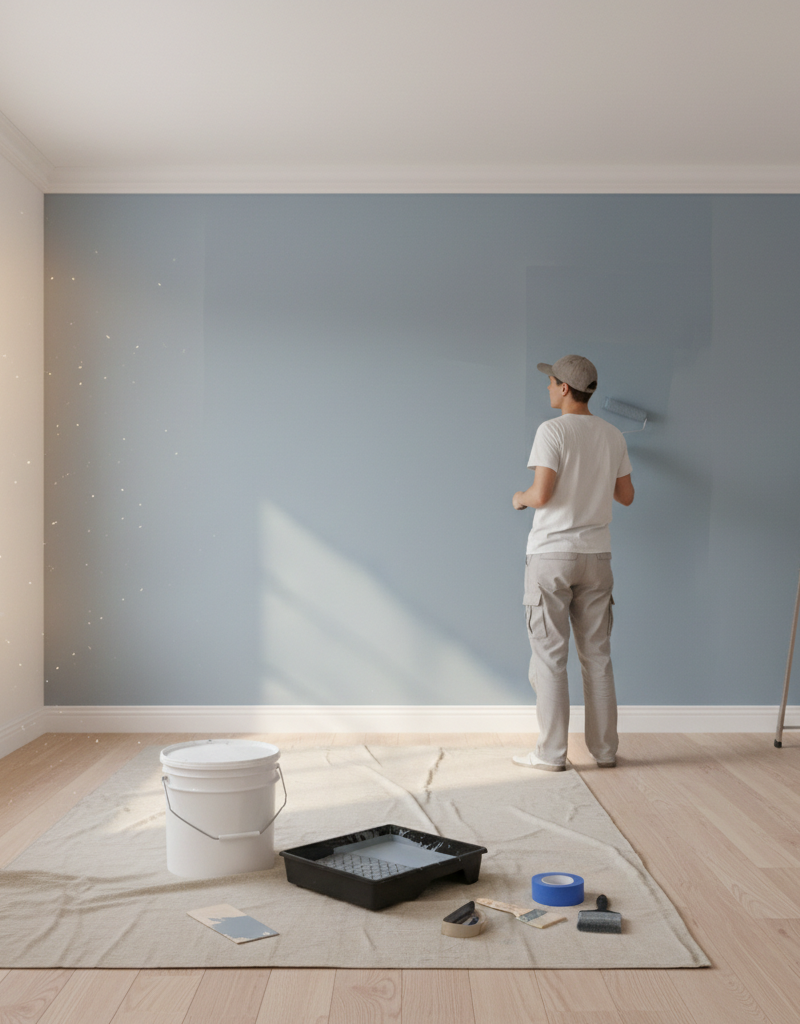
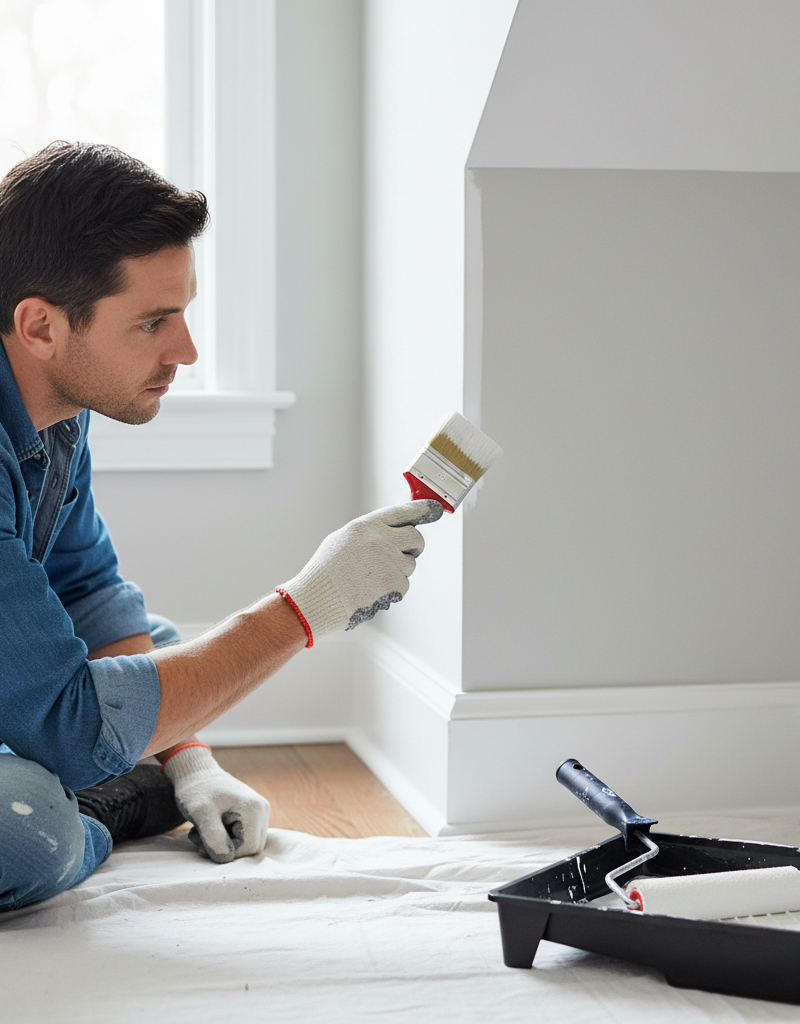
Once the surface is prepared and primed, the application method becomes critical. Brushes are used for 'cutting in' – painting precise lines around trim, ceilings, and corners. Quality brushes have tapered bristles that hold more paint and release it evenly. Rollers cover large areas efficiently. Roller nap (the pile height) is chosen based on surface texture: shorter naps for smooth surfaces like drywall, longer naps for textured surfaces. The technique involves loading the roller evenly and applying paint in overlapping 'W' or 'M' patterns to distribute it uniformly, then finishing with light, straight strokes to smooth out inconsistencies and eliminate roller marks. Working in sections, maintaining a 'wet edge,' prevents lap marks, where partially dried paint overlaps with fresh paint, creating visible lines. Understanding these mechanics ensures optimal adhesion, coverage, and a truly professional appearance.
Step-by-Step Fix
1. Clear the Room and Protect Everything Else — This is the most underrated step for a smooth workflow and clean results.
- Remove all furniture from the room if possible. If not, move it to the center and cover it completely with plastic sheeting. Take down wall decor, curtains, and switch plates. Store everything in a safe, labeled container.
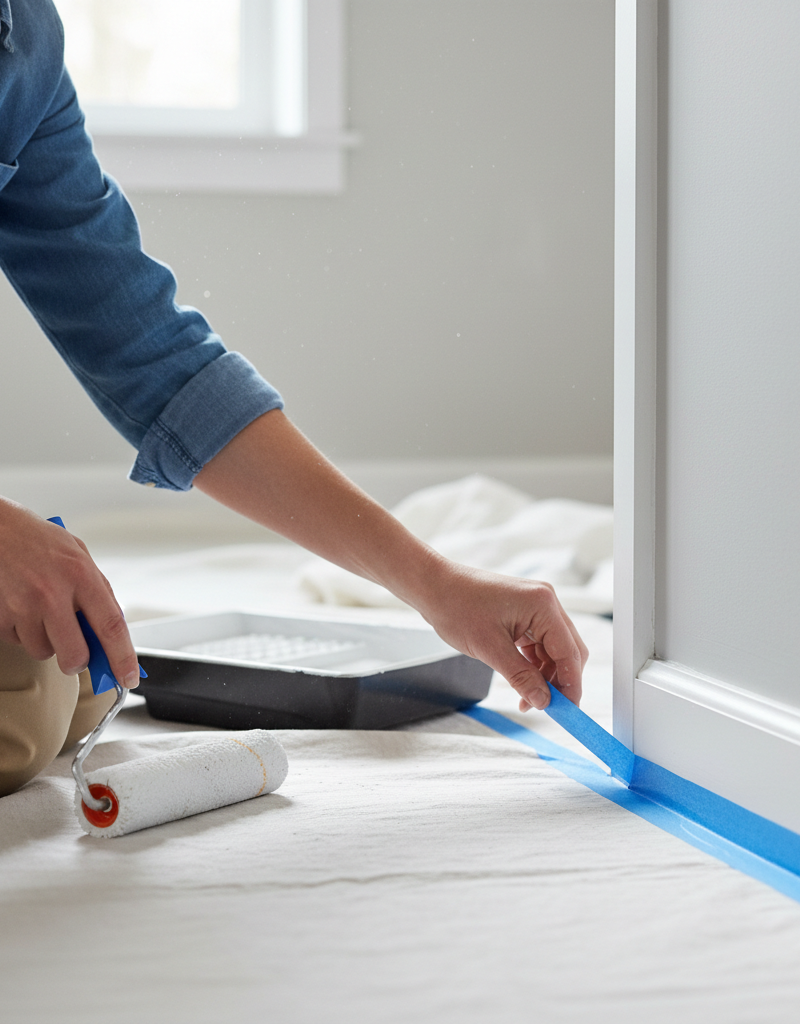
- Lay down canvas drop cloths across the entire floor, extending right to the baseboards. Canvas is preferred over plastic because it absorbs drips and is less slippery. Secure edges with painter's tape if needed.
- Safety Note: Ensure good ventilation before and during painting by opening windows and using fans. Wear old clothes, and consider gloves and eye protection.
2. Clean Walls and Ceilings Thoroughly — Paint won't stick to dirt, grime, or grease.
- Mix a solution of warm water and a small amount of mild detergent (like dish soap) or a specialized paint cleaner (TSP substitute is excellent).
- Using a sponge, wipe down all surfaces you intend to paint, starting from the top down. Pay special attention to high-traffic areas, kitchens, and bathrooms where grease and grime accumulate.
- Rinse thoroughly with clean water, wiping with a fresh, damp sponge. Allow the walls to dry completely, which can take several hours depending on humidity.
- If your walls are particularly greasy or stained: Use a degreaser or a stronger cleaning solution (e.g., TSP substitute) followed by thorough rinsing. For stubborn stains (water marks, nicotine), a stain-blocking primer is essential.
3. Repair Any Imperfections — A smooth wall is the foundation of a flawless finish.
- Examine walls for cracks, holes (from nails or screws), and dents. Use a putty knife to fill small holes and cracks with spackle or lightweight joint compound.
- For larger holes, use a patching compound designed for drywall, possibly with mesh tape for reinforcement.
- Allow fillers to dry completely according to manufacturer instructions. This is crucial for proper adhesion and a smooth finish.
- Lightly sand all repaired areas with 120-grit or 150-grit sandpaper until perfectly smooth and flush with the wall. Feather the edges. Wipe away all dust with a damp cloth.
4. Sand for Optimal Adhesion — This step is often skipped by DIYers, but pros never miss it.
- Lightly sand all glossy surfaces (e.g., existing semi-gloss paint, old oil-based paint) with 220-grit sandpaper or a sanding sponge. This creates a
Related Articles
Keep troubleshooting with these hand-picked guides from FixlyGuide:
- The 7 Critical Wall Prep Mistakes That Ruin Your New Paint Job — Learn the essential steps to prepare your walls before painting to achieve a flawless, long-lasting finish and avoid common DIY disasters.
- The 7 Mistakes That Ruin a Paint Job (Before You Even Open the Can) — Proper wall preparation is the unseen foundation of a flawless interior paint job, preventing issues like peeling, uneven finishes, and vis…
- The 7 Critical Mistakes Almost Everyone Makes When Painting a Room — Unlock the secrets to a flawless, professional-looking paint job by avoiding common pitfalls and mastering essential techniques for perfect…
- The 15-Minute Drywall Hole Fix Plumbers Don't Want You to Know — Discover the surprisingly simple, super-fast method for patching small drywall holes that avoids messy muds and sanding.
- The 1 Common Mistake That Makes Drywall Patches Obvious (And How to Fix It) — Learn the common pitfall in drywall repair that leaves unsightly patches and how to achieve a seamless, invisible fix every time.
- The 3 Hidden Mistakes That Make Your Deck Sealer Fail (And How to Fix Them) — Resealing your wood deck protects it from weather and extends its life. Learn how to avoid common mistakes for a long-lasting finish and vi…
What should this project cost?
Enter your project details for a realistic cost range before you call anyone.
Interior rooms run $400–$1,200; whole-home exterior painting commonly $4,000–$12,000.
- Regional adjustment
- National average
- Labor share (typical)
- ~$2,003
- Quotes to collect
- 3 written estimates
Educational estimate based on national averages — not a binding quote. Always confirm with written local estimates.
Recommended for DIYers & woodworkers
Sponsored
The Top 20 Tools for Workshops of Any Budget
No stationary machines or power tools required — plus 3 fundamental tools that can't be bought at any price.
Get the free guide
Ted's Woodworking — The #1 Woodworking Resource
Detailed instructions, dimensioned drawings, materials & cutting lists, and 3D schematics for every skill level.
See the plansSponsored: links above are affiliate links. FixlyGuide may earn a commission on qualifying purchases — at no extra cost to you.
Frequently asked questions
How do pros get sharp paint lines without tape?+
Pros often 'freehand' cut-in using a high-quality angled brush and a steady hand, loading the brush correctly and maintaining consistent pressure. They might also apply a very thin bead of caulk along trim edges before painting to fill gaps and create a perfectly smooth, straight line, wiping off excess immediately.
Discussion
Loading comments…