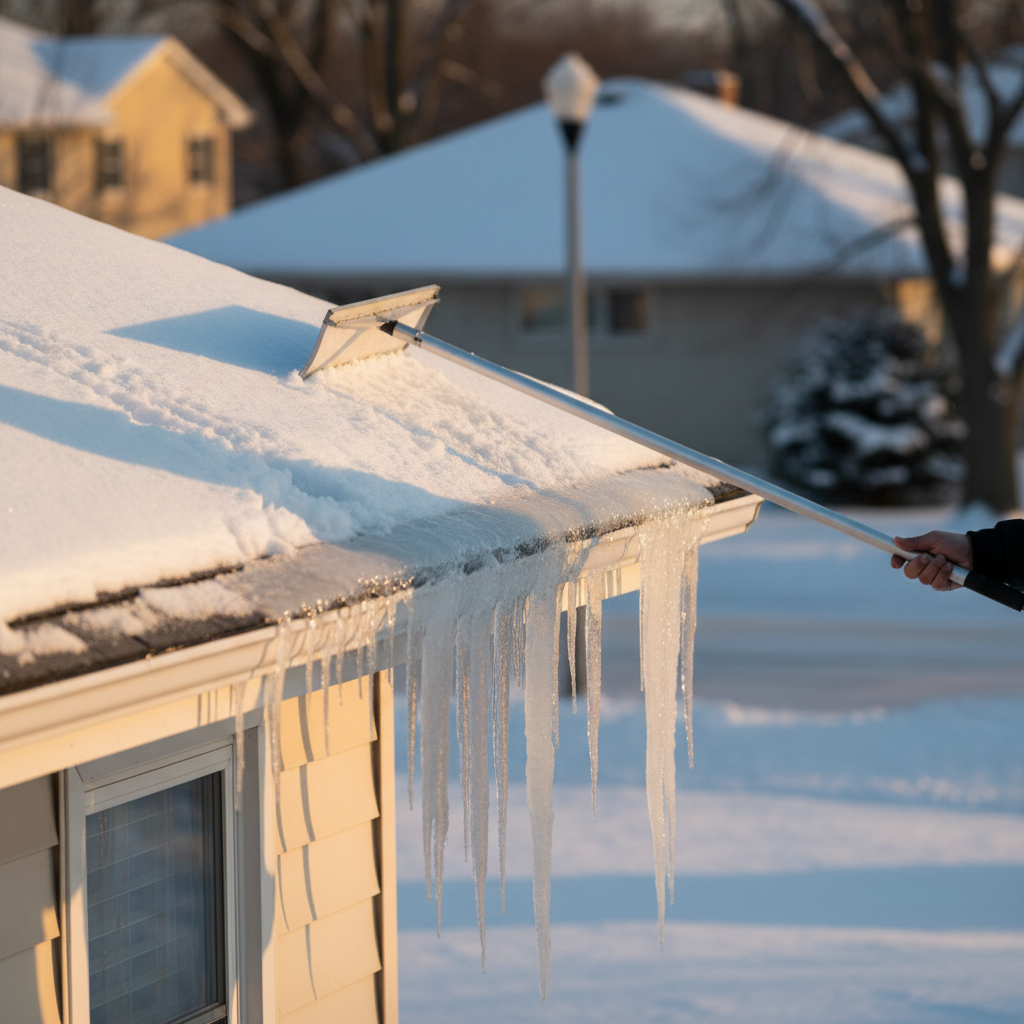
- Poor Attic Insulation: Insufficient insulation in your attic allows heat from your living space to escape into the attic, warming the roof deck and melting snow. This is the primary driver of most ice dams.
- Inadequate Attic Ventilation: Even with good insulation, a lack of proper attic ventilation can trap warm air, leading to heat buildup and subsequent snowmelt on the roof deck. Soffit and ridge vents need to work together effectively.
- Air Leaks into the Attic: Gaps around can lights, attic hatches, plumbing vents, electrical wiring penetrations, and chimney chases allow warm, moist air from your home to directly enter the attic, heating the roof from below.
- Clogged Gutters: Gutters filled with leaves and debris can trap water and ice, providing a base for ice dams to form and exacerbating drainage issues once a dam is present.
- Varied Roof Exposures: Different sections of a roof can heat up or cool down at different rates due to sun exposure, creating localized melting and refreezing zones.
General remodeling · Renovation planning
| Project category | General remodeling |
|---|---|
| Problem type | Renovation planning |
| Trade required | General contracting |
| Urgency | Planned project |
| Safety risk | Low safety risk |
| DIY suitability | Pro recommended |
| Cost category | Major investment |
| Typical timeline | Design and permitting often 2–4 months before work starts |
| Contractor type | General contractor |
Repair option
Phase the work and fix the building envelope first.
Replacement option
Full renovation with permits, design, and a general contractor.
Common causes
- Space no longer fits how the household lives
- Resale preparation
- Deferred maintenance stacking up
Relevant tools:project cost estimatorcompare quoteshome improvement material prices
Published May 2, 2026Last updated August 18, 2026
Tools & materials you'll need
Affiliate linksAs an Amazon Associate FixlyGuide earns from qualifying purchases — at no extra cost to you. Prices and availability are accurate as of publication and subject to change.
Quick Answer
Ice dams are a common winter nuisance that can cause significant damage to your roof, gutters, and even the interior of your home. While the temptation is to tackle them aggressively, the safest and most effective solutions involve a combination of careful physical removal and understanding the underlying causes. For small, accessible dams, a roof rake used from the ground is your best bet. For larger, more stubborn dams, professional steam removal is the recommended approach. Avoid methods that can damage your roof, such as chipping with shovels or using salt, and always prioritize personal safety.
The Problem
That thick, icy ridge forming at the edge of your roof isn't just an aesthetic issue – it's a silent threat to your home's integrity. Ice dams form when melting snow on warmer parts of your roof runs down to colder eaves, where it refreezes. This creates a barrier that prevents further meltwater from draining off the roof. As more snow melts, the water pools behind the ice dam, creating a miniature pond on your roof. This standing water can then back up under your shingles, seep into your attic, walls, and ceilings, leading to stained drywall, peeling paint, ruined insulation, and even structural damage and mold growth. Beyond the water damage, the sheer weight of a large ice dam can stress gutters, fascias, and even the roof structure itself.
How It Works
Understanding how ice dams form is crucial to preventing and removing them safely. It all starts with uneven roof temperatures. When your attic is poorly insulated or ventilated, heat from your home rises and warms the roof deck. Even a slight temperature difference can cause the snow directly above your heated living space to melt. This meltwater then flows down the roof until it reaches the unheated eaves, which are typically colder because they extend beyond the heated portion of your home and are exposed to ambient outdoor temperatures. As the meltwater hits these freezing cold eaves, it refreezes, forming an initial ice ridge. More melting snow adds to this ridge, causing it to grow into a formidable dam. Once an ice dam is established, water gets trapped behind it. This trapped water, unable to drain, then backs up underneath the shingles. Standard roofing shingles are designed to shed water downwards, not to withstand standing water backing up under them. The water will find its way through nail holes, shingle overlaps, and even microscopic cracks, leading to leaks within your home. The cycle continues as long as there is snow on the roof and a temperature differential, exacerbating the problem and potential damage.
Step-by-Step Fix
SAFETY FIRST – Never step on an icy roof. Work from the ground or a secure ladder with a spotter.
1. Clear Snow from the Lower Roof – Begin by removing the immediate source of meltwater.
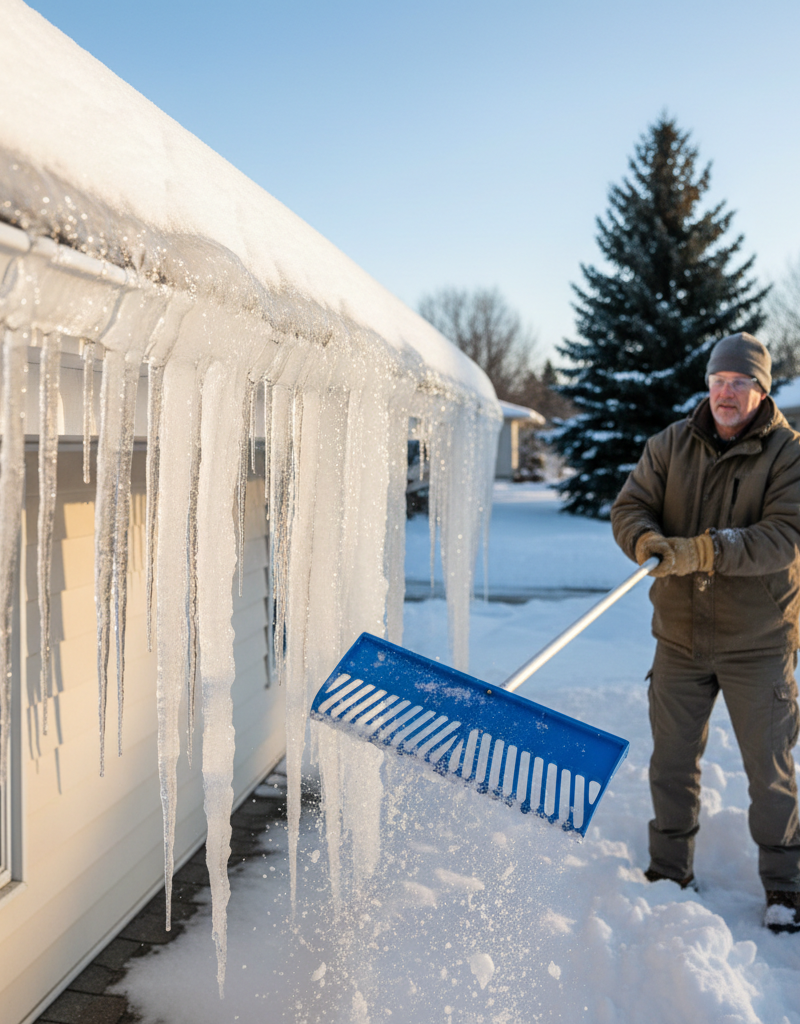
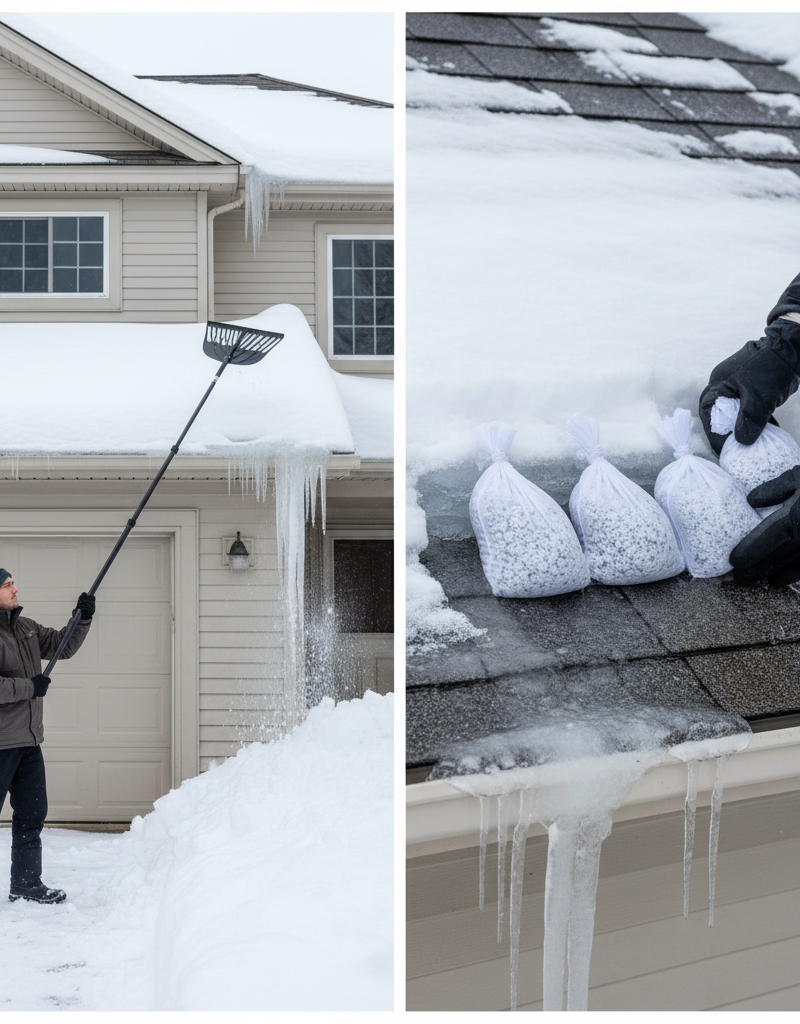
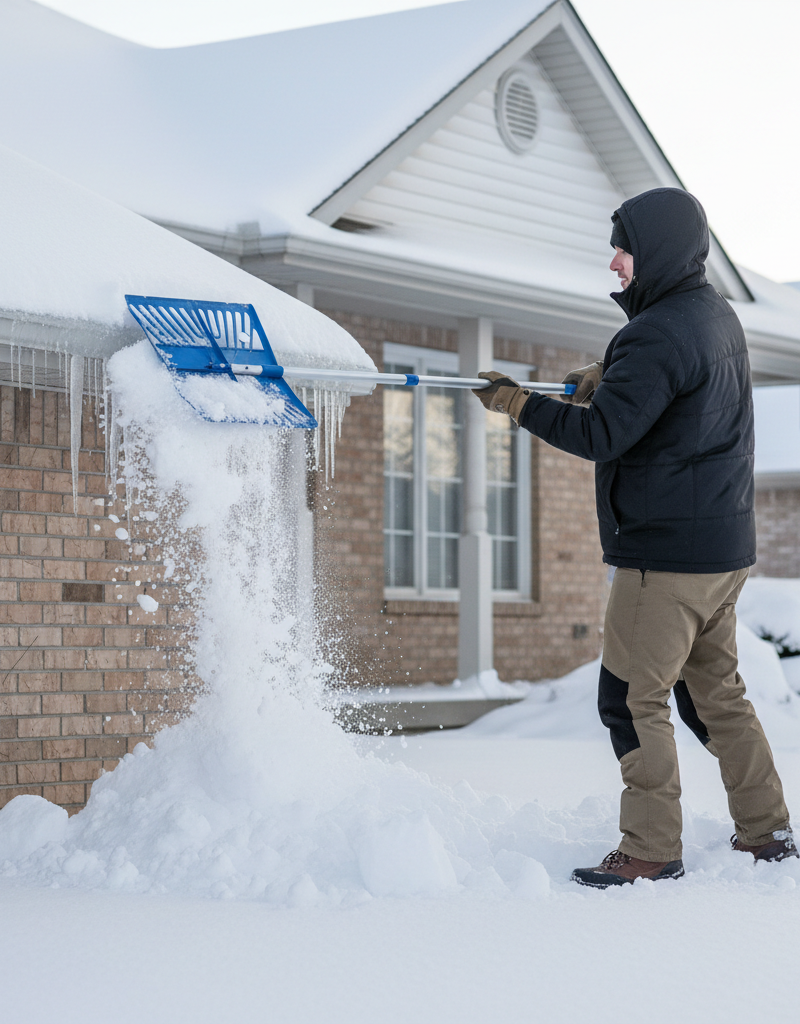
Use a long-handled roof rake to carefully pull snow off the first 3-5 feet of your roof, starting from the eaves and working your way upwards. Clear an area directly above where the ice dam has formed. This removes the fuel for the ice dam and prevents further growth. Be gentle and avoid digging into the shingles.
2. Create Channels in the Ice Dam (for minor dams) – Allow trapped water to drain if the dam is small and accessible.
For smaller, manageable ice dams, you can create channels through the ice. Fill an old sock or pantyhose with calcium chloride (rock salt – NOT table salt). Place this sock across the ice dam, perpendicular to the eaves, where the water is pooling. The calcium chloride will slowly melt a channel through the ice, allowing trapped water to drain. Repeat every few feet along the dam. This method is slow and should only be used on very minor dams due to potential landscape damage from runoff.
3. Use a Steam Generator (Professional Recommended) – This is the safest and most effective method for significant ice dams.
Professional ice dam removal companies use low-pressure steam machines to safely melt ice dams without damaging the roof. The steam gently melts the ice, creating channels and releasing the dam in manageable pieces. If you rent or purchase a steam generator, ensure it's specifically designed for ice dam removal. Never use a pressure washer, even a hot water one, as the high pressure can seriously damage your shingles and force water under them, exacerbating leaks.
- If you rent: Follow all manufacturer instructions. Work slowly and methodically.
- If you hire: Ensure the company is insured and uses low-pressure steam.
4. Gently Break and Remove Ice (from the ground only) – Exercise extreme caution to avoid roof damage.
From the safety of the ground, use a specialized ice dam chisel or a roof rake with an ice-breaking attachment to gently tap and break off small pieces of the ice dam. Aim for the top edge of the dam, working downwards. Do not swing or hit forcefully. The goal is to break the dam into small, manageable chunks that can slide off or be easily removed. Never use a pickaxe, shovel, or any tool that could gouge the roof.
5. Clear Gutters and Downspouts – Ensure meltwater has a clear path once the dam is gone.
Once the ice dam is removed or significantly reduced, ensure your gutters and downspouts are clear of ice and debris. Accumulated ice in gutters can contribute to ice dam formation and restrict drainage. Use warm water (not boiling) to flush out frozen gutters and downspouts if they remain blocked after the dam removal.
6. Monitor for Further Formation – Address underlying causes to prevent recurrence.
After removing an ice dam, regularly check your roof for new signs of formation, especially after fresh snowfall or significant temperature fluctuations. The best way to prevent future ice dams is to address the underlying causes of heat loss from your attic.
- If new dams form quickly: Your attic likely has significant heat loss.
- Consider a temporary solution: Heating cables can prevent ice dams in specific areas, but they are an energy drain and not a permanent fix.
Common Causes
- Poor Attic Insulation: Insufficient insulation in your attic allows heat from your living space to escape into the attic, warming the roof deck and melting snow. This is the primary driver of most ice dams.
- Inadequate Attic Ventilation: Even with good insulation, a lack of proper attic ventilation can trap warm air, leading to heat buildup and subsequent snowmelt on the roof deck. Soffit and ridge vents need to work together effectively.
- Air Leaks into the Attic: Gaps around can lights, attic hatches, plumbing vents, electrical wiring penetrations, and chimney chases allow warm, moist air from your home to directly enter the attic, heating the roof from below.
- Clogged Gutters: Gutters filled with leaves and debris can trap water and ice, providing a base for ice dams to form and exacerbating drainage issues once a dam is present.
- Varied Roof Exposures: Different sections of a roof can heat up or cool down at different rates due to sun exposure, creating localized melting and refreezing zones.
- Mild but Consistent Snowfall: Extended periods of temperatures just below freezing after a fresh snowfall can create ideal conditions for ice dam formation.
Common Mistakes
- Smashing the Ice with a Shovel or Axe: This is highly likely to damage your shingles, tear through the underlayment, and create new leaks. Never use blunt force on your roof.
- Using Salt on Shingles: While rock salt (calcium chloride) can melt ice, it's corrosive and can damage your roofing materials, gutters, and landscaping below. Use it sparingly and strategically (e.g., in a sock) if at all.
- Using a Pressure Washer: Even with hot water, the high pressure from a pressure washer can blast granules off shingles, force water underneath them, and severely compromise your roof's integrity. It's a guaranteed way to cause new leaks.
- Ignoring the Underlying Problem: Removing ice dams is a temporary fix. If you don't address the root cause – usually poor insulation and ventilation – the ice dams will return every winter.
- Climbing onto an Icy Roof: This is incredibly dangerous and can lead to serious injury or even death. Always work from a stable ladder or the ground using proper extension tools.
- Using a Heat Gun or Torch: Direct, intense heat can damage shingles, warp soffits, and is a significant fire hazard. Never use open flame or directed high heat to melt ice on your roof.
Cost & Time Breakdown
| Task | DIY Cost | Pro Cost | Time |
|---|---|---|---|
| Roof Rake Snow Removal | $40–$100 (for rake) | $150–$300 | 30 mins – 1 hour |
| Calcium Chloride Channels | $10–$20 | — | 1–2 hours (passive melt) |
| Small Dam Physical Removal | $0 (if tools owned) | Included in removal | 30–60 minutes |
| Professional Steam Removal | — | $400–$1,000+ per job | 2–6 hours |
| Attic Insulation & Ventilation | $800–$3,000+ | $1,500–$5,000+ | 1–3 days (for prevention) |
Tips & Prevention
- Ensure Adequate Attic Insulation: Aim for at least R-49 (16 inches) of insulation in your attic to prevent heat transfer from your living space to the roof deck. This is the single most effective prevention.
- Improve Attic Ventilation: Ensure you have unobstructed soffit vents and a continuous ridge vent (or ample exhaust vents) to allow cool outdoor air to enter and warm attic air to escape. This keeps the attic temperature closer to the outdoor temperature.
- Seal All Air Leaks: Use expanding foam or caulk to seal any gaps, holes, or penetrations from your living space into the attic. Common culprits include wiring holes, plumbing stacks, exhaust fan ducts, and the attic hatch.
- Clean Gutters Regularly: Ensure gutters are free of leaves, twigs, and other debris before winter sets in. Clear gutters allow meltwater to drain freely, reducing the potential for ice to build up.
- Install Ice and Water Shield: If you're re-roofing, ensure ice and water shield is installed under the shingles extending at least 2 feet inside the exterior wall line. This provides an extra barrier against water penetration.
- Use Roof Heating Cables (with caution): As a last resort for chronic problem areas, self-regulating heating cables can be installed along the eaves and in gutters. These are energy-intensive and not a substitute for proper insulation and ventilation.
When to Call a Professional
You should call a professional ice dam removal service when the ice dam is extensive, causing active leaks into your home, or when you cannot safely reach or remove it from the ground. Professionals have the specialized equipment, such as low-pressure steam generators, and the training to work safely on roofs, even in icy conditions. They can also work quickly to mitigate ongoing damage. If you're observing substantial leakage, significant sagging of gutters, or feel unsafe attempting any DIY removal, it's time to bring in the experts. They can assess the situation, safely remove the dam without damaging your roof, and often provide recommendations for long-term prevention strategies to stop future ice dams from forming.
Related Articles
Keep troubleshooting with these hand-picked guides from FixlyGuide:
- The $30 Secret to Banishing Ice Dams Without Damaging Your Roof — Discover how a simple, inexpensive trick can safely eliminate dangerous ice dams from your roof and prevent costly damage to your home.
- That melting ice could cost you $20,000 in water damage — Safely removing ice dams protects your roof and prevents costly water damage to your home.
- The $30 Trick to Melting Ice Dams (Before They Destroy Your Roof) — Discover how to safely remove ice dams from your roof instantly with common household items, preventing costly damage. Stay safe while tack…
- The #1 Mistake Homeowners Make When Diagnosing Low Water Pressure (It's Not Your Pipes!) — Discover the most overlooked culprit behind low water pressure throughout your entire house and learn how to fix it with simple steps.
- The #1 Backsplash Mistake Most DIYers Make (And How to Fix It Before It's Too Late) — Discover the most overlooked mistake in beginner backsplash installations and how to prevent or fix it for a professional-looking finish.
- The #1 Mistake Homeowners Make When Their AC Drain Clogs (And The $5 Fix) — Discover the most common error homeowners make when tackling a clogged AC drain line and learn a simple, inexpensive solution to prevent co…
Should you do this yourself?
Answer five quick questions before you start. Safety outranks savings every time.
Your experience with work like this
How high do you have to work?
Does the job involve any of these?
Will it need a permit?
Specialty tools
Free and instant. Educational guidance only — not a quote, inspection, or professional diagnosis.
Estimate your own project cost
National averages are a starting point. Enter your details for a range that fits your house.
Roof replacement cost
- Per square (installed)$604 – $866
Add $500–$2,500 if decking is rotten and needs replacement. Storm damage may be covered by insurance.
Educational estimate only — always confirm with written local bids.
Decide what your roof needs
Two minutes of questions turns "something is wrong up there" into a clear next step.
- Repair or replace your roof?Answer 10 questions about age, leaks, and damage to get a clear next step.Open
- Compare contractor quotesScore up to four bids on price, warranty, licensing, and timeline.Open
- Get local estimatesSend one request and compare written estimates from vetted pros.Open
Free, no signup required. Estimates are educational guidance, not a quote or an inspection.
Recommended for DIYers & woodworkers
Sponsored
The Top 20 Tools for Workshops of Any Budget
No stationary machines or power tools required — plus 3 fundamental tools that can't be bought at any price.
Get the free guide
Ted's Woodworking — The #1 Woodworking Resource
Detailed instructions, dimensioned drawings, materials & cutting lists, and 3D schematics for every skill level.
See the plansSponsored: links above are affiliate links. FixlyGuide may earn a commission on qualifying purchases — at no extra cost to you.
Frequently asked questions
What is the best way to remove an ice dam?+
The best way to remove an ice dam is with a professional low-pressure steam generator. For smaller dams, a roof rake used from the ground to clear snow, followed by calcium chloride in a sock to create drainage channels, can be effective and safe.
Can I use salt to melt ice dams on my roof?+
While calcium chloride (rock salt) can melt ice, direct application to shingles can cause damage and corrosion. It's best used sparingly and strategically, such as inside a sock placed perpendicular to the dam, to create drainage channels. Avoid using regular table salt, which is less effective and can be more corrosive.
How do I prevent ice dams from forming in the first place?+
The most effective prevention involves addressing heat loss from your attic. This means ensuring your attic has adequate insulation (R-49 or higher), proper ventilation (soffit and ridge vents), and sealing all air leaks from your living space into the attic. Keeping gutters clean also helps.
Discussion
Loading comments…