- Choose a cloudy, calm day: Sunlight can dry the solution too fast and kill the effectiveness. Wind just blows it all over the place.
- Start at the top: Work from the ridge down to the eaves. Don't soak the roof. You want even coverage, just enough to wet the moss and streaks thoroughly. Don't let it run off like a waterfall.
- Target growth: Hit the heavy moss, lichen, and algae stains a little harder. On my jobs, I often spot-treat the worst areas with a stronger mix or come back with a second pass after about 15-20 minutes.
Published July 30, 2026Last updated August 17, 2026
Tools & materials you'll need
Affiliate linksAs an Amazon Associate FixlyGuide earns from qualifying purchases — at no extra cost to you. Prices and availability are accurate as of publication and subject to change.
Quick Answer
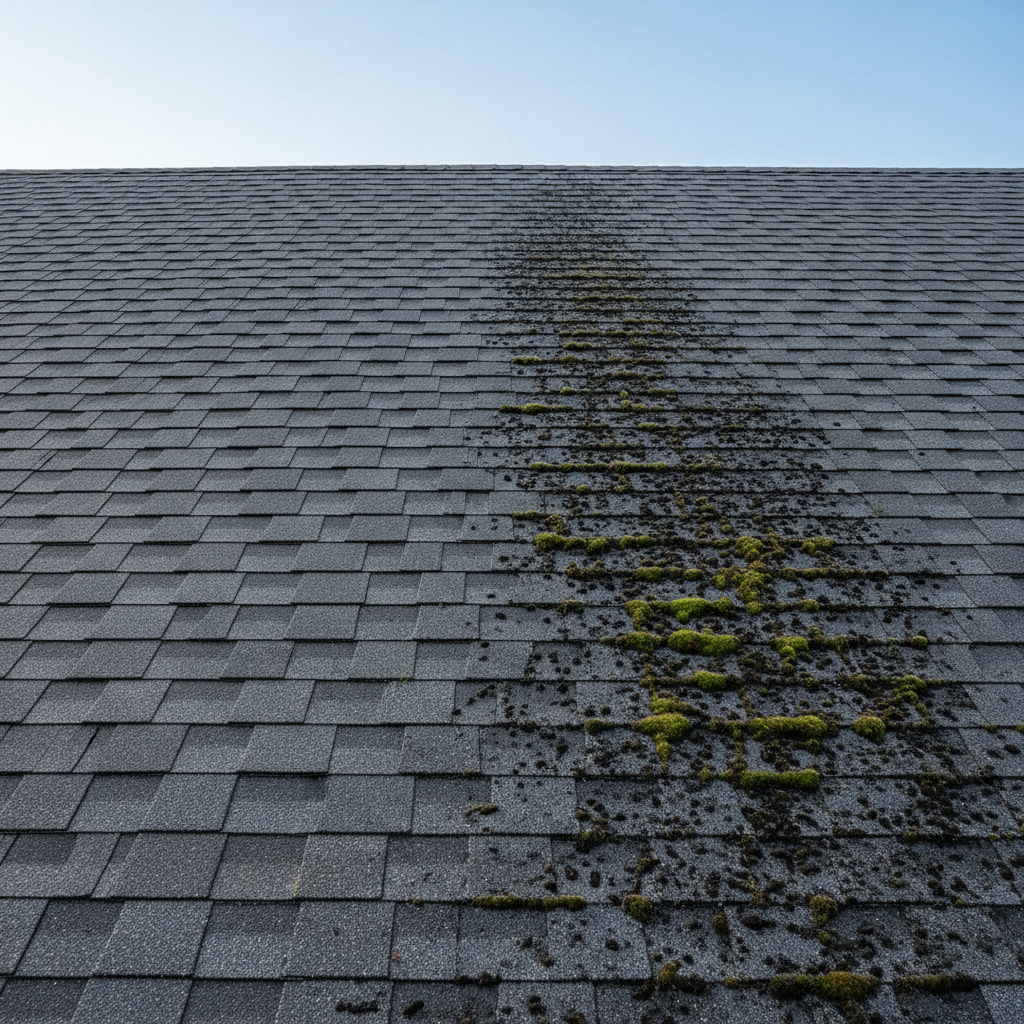
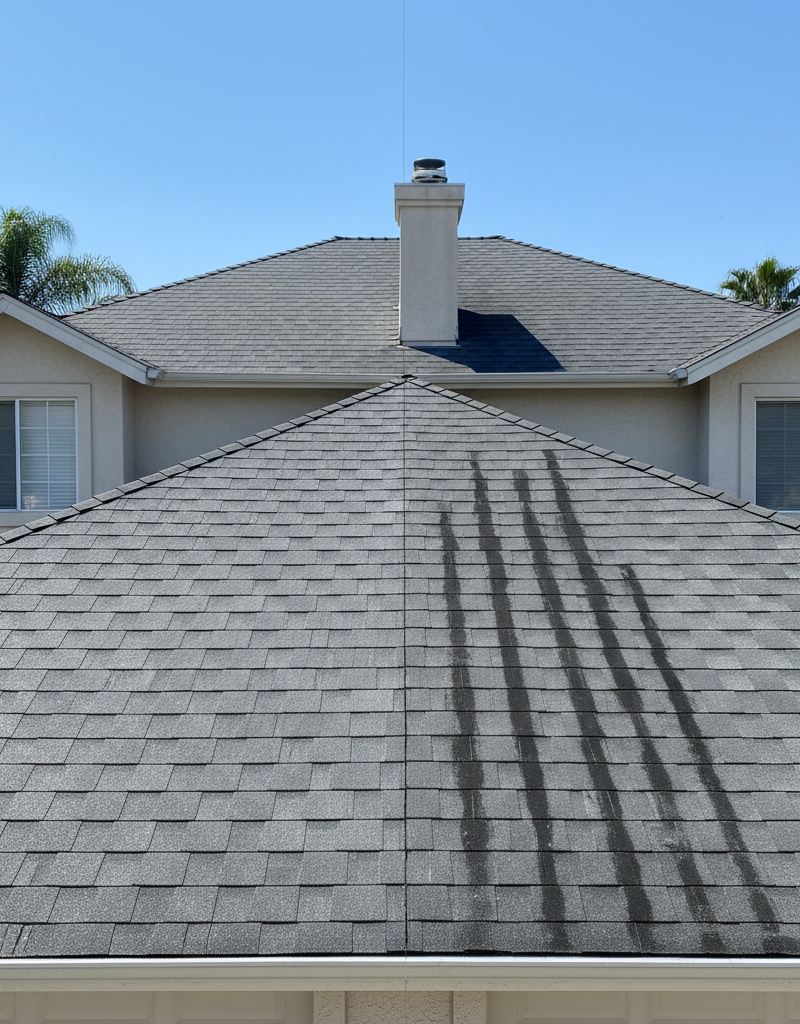
That grimy, streaky roof isn't just an eyesore — it's rough on your shingles and can set you up for thousands in repairs you didn't need to eat. Those black streaks? That's usually Gloeocapsa magma, a type of algae that feeds on the limestone filler in asphalt shingles, chewing them up bit by bit. And moss? That stuff acts like a sponge, holding moisture against the roof deck and practically inviting rot to move in. Regular, gentle cleaning isn't about making the place pretty — it's about giving your roof a fair shot at a long life and keeping real money in your pocket.
The Problem
I've seen this a pile of times in my 25+ years on the job: a homeowner calls me out for what they think is a leak, and I climb up there and find a full-on jungle. Moss, lichen, algae — the whole ugly mix. They've ignored the dark streaks and green patches for years, usually because they figure it's just dirt or they don't want to "damage the shingles" by cleaning. Truth is, leaving it alone is what does the damage. That organic crud isn't just sitting there; it's breaking down your roof, trapping moisture, and setting the stage for rot and early shingle failure. I had a client in Brookhaven last year who swore his roof was fine, looked great from the street. Up close, though, I spotted early rot under a thick mat of moss near his chimney flashing. If he'd cleaned it a few years earlier, he'd have dodged a $700 flashing repair. No kidding.
How It Works
To get why you can't just shrug off a dirty roof, you've got to understand what's actually growing up there. We're not talking dust and pollen. We're talking living stuff that loves damp, shaded spots.
First, there's Gloeocapsa magma, the troublemaker behind those ugly black or green streaks. This isn't surface grime. It's a tough cyanobacterium that actually eats away at the limestone filler in asphalt shingles. As it spreads, it slowly ruins the shingle surface, speeding up granular loss — those little grit particles that shield your shingles from UV rays and help with fire resistance. Lose those granules and the shingles age fast. They get brittle. They don't hold up.
Then you've got moss and lichen. Moss is basically a tiny sponge. It grows in thick mats, lifting shingle edges and making little paths for water to sneak underneath. When it rains, the moss soaks up water and hangs onto it way longer than the shingles ought to stay wet. That extra moisture is bad news for the roof deck, especially around fasteners and seams. In winter, that trapped water freezes, expands, and actually pries shingles apart or lifts them, which opens the door for even more water. Lichen, which is part algae and part fungus, grabs onto the shingle surface with root-like structures (rhizines) that are a pain to remove. Those rhizines dig in, and if you go at them with a scraper or wire brush, you'll usually rip off granules or tear the shingle itself. I've replaced whole sections where homeowners tried to scrub lichen off with a wire brush — that thing's toast after that.
All of this growth also blocks sunlight from drying the roof, which leaves you with a damp surface that keeps feeding more growth and more breakdown. This isn't just a curb-appeal problem; it's the stuff that keeps your house sealed up starting to fail early. A healthy shingle sheds water and dries out quick. A shingle coated in growth stays wet, breaks down faster, and starts looking for a leak.
Step-by-Step Fix
1. Safety First, Always — Don't skip this
- Ladder safety: Set your ladder on solid, level ground. Extend it at least 3 feet above the eave. Use a spotter if you've got one handy. Don't work on a wet or icy roof. Wear non-slip shoes with real grip. For anything other than a very low-pitch roof, I'd seriously think about a fall arrest system. A busted bone costs a lot more than the gear.
- Electrical awareness: Keep an eye out for power lines. Stay clear of outdoor outlets, light fixtures, and anything else that doesn't like water. If overspray's a concern, shut off power to exterior circuits.
- Protect plants: Wet down the plants, shrubs, and anything else you don't want getting hit with cleaner. Throw tarps over them if you need to. Rinse them before, during, and after the job. Bleach won't be polite about it.
2. Gear Up — Gather your tools and materials
- Safety: Non-slip shoes, safety glasses, gloves, long sleeves, long pants. If the roof feels sketchy, use a safety harness. Simple as that.
- Application: A pump sprayer — just a regular 1-2 gallon garden sprayer — works fine. Don't use a pressure washer. I'll get to why in a second, but for now, just don't.
- Cleaning solution: Use a bleach-based roof cleaner made for roofs, like Wet & Forget or Spray & Forget, or mix your own 50/50 bleach and water solution. Some pros push up to 75% bleach for the ugly stuff, but 50% is a solid DIY starting point. Add a splash of dish soap — about ½ teaspoon per gallon — so it clings better.
3. Prep the Area — Get everything ready to go
- Clear debris: Knock off loose leaves, twigs, and heavy dirt with a soft-bristle brush, leaf blower, or a garden hose on low pressure. You want the growth exposed so the cleaner can actually hit it.
- Protect gutters: If your gutters are clean, you might block the downspouts for a bit to catch runoff and keep it off the lawn. Or just steer the runoff away from sensitive plants. Me? I usually just soak the plants well and call it a day.
4. Mix Your Solution (If Not Using a Pre-Made Product) — Get the mix right
- Measure carefully: For a 50/50 mix, pour one gallon of household bleach (5.25% or 6% sodium hypochlorite) into your pump sprayer, then add one gallon of water. Add that tiny bit of dish soap too. Swirl it gently — don't shake it hard or you'll have suds popping out everywhere.
- Ventilation: Mix it outside or in a very well-ventilated area. Bleach fumes are no joke.
5. Apply the Cleaner — Even coverage is key
- Choose a cloudy, calm day: Sunlight can dry the solution too fast and kill the effectiveness. Wind just blows it all over the place.
- Start at the top: Work from the ridge down to the eaves. Don't soak the roof. You want even coverage, just enough to wet the moss and streaks thoroughly. Don't let it run off like a waterfall.
- Target growth: Hit the heavy moss, lichen, and algae stains a little harder. On my jobs, I often spot-treat the worst areas with a stronger mix or come back with a second pass after about 15-20 minutes.
- Don't rinse immediately: This isn't a car wash. The cleaner needs time to work. A lot of roof products are made to stay on and let rain rinse them off later. With a bleach solution, give it 15-30 minutes, and keep an eye on it so it doesn't dry out. If it starts drying, mist it with plain water.
6. Gentle Rinse or Let Nature Do It — The delicate part
- Manufacturer instructions: For commercial products, follow their directions for rinsing. Some are
Related Articles
Keep troubleshooting with these hand-picked guides from FixlyGuide:
- The Hidden Reason Your GFCI Trips (It’s Not Always a Short Circuit) — A persistently tripping GFCI outlet is often a sign of a hidden electrical issue, frequently caused by moisture, a faulty appliance, or sub…
- Is Your Water Heater Lying? The Real Reason You Have No Hot Water — A malfunctioning water heater thermostat is often the secret culprit behind frustrating hot water issues, from icy showers to dangerously s…
- The 3 Crucial Mistakes That Ruin Wall Stripes (And How to Fix Them) — Achieving crisp, professional-looking painted stripes on a wall is a rewarding DIY project, but it's easy to make common mistakes that lead…
- The 6-Minute Secret to a Sparkling Bathroom (It’s Not What You Think) — Unleash the hidden power of your cordless drill to tackle stubborn household grime, from tile grout to dryer vents, with specialized attach…
- The 3 Critical Mistakes Wrecking Your Lawn (And the Liquid Fix) — Unlock the secret to a verdant lawn by learning how to avoid critical fertilization errors and choosing the right liquid solution.
- The #1 Mistake Homeowners Make When Caulking a Bathroom Sink (And How to Fix It) — Discover the most common caulk mistake homeowners make around bathroom sinks and follow simple steps to achieve a lasting, watertight seal.
What should this project cost?
Enter your project details for a realistic cost range before you call anyone.
Spot repairs commonly run $400–$1,800; full replacement typically $9,000–$18,000 for an average home.
- Regional adjustment
- National average
- Labor share (typical)
- ~$2,948
- Quotes to collect
- 3 written estimates
Educational estimate based on national averages — not a binding quote. Always confirm with written local estimates.
Fixly Project Decision Box
- DIY difficulty
- Professional Recommended
- Estimated time
- Inspection 1–2 hours · repairs 1–3 days
- Cost level
- High
Main tools / materials
- Binoculars for a ground-level look
- Flashlight for attic checks
- Moisture meter
- Roofing cement (temporary patch only)
When to stop and call a pro
- Active leak near lights, fans, or any wiring
- Sagging, bulging, or water-filled ceiling
- Steep, wet, or two-story roof — do not climb it
- Storm or hail damage you plan to claim on insurance
Need professional help?
Free roof assessment first — no phone calls until you ask for them.
Get Local Roofing HelpDecide what your roof needs
Two minutes of questions turns "something is wrong up there" into a clear next step.
- Repair or replace your roof?Answer 10 questions about age, leaks, and damage to get a clear next step.Open
- Compare contractor quotesScore up to four bids on price, warranty, licensing, and timeline.Open
- Get local estimatesSend one request and compare written estimates from vetted pros.Open
Free, no signup required. Estimates are educational guidance, not a quote or an inspection.
This article was independently written by FixlyGuide based on the source topic.
Frequently asked questions
How often should I clean my roof?+
I tell homeowners every 1-3 years, depending on your climate and how much shade your roof gets. If you're in a damp, shaded area, you'll see growth sooner. But don't wait until it's a jungle – preventing heavy buildup is much easier than tackling it.
Can I use a pressure washer on my roof?+
Absolutely not. This is one of the biggest mistakes I see. A pressure washer, even at a low setting, can strip granules right off your shingles, compromise the shingle itself, and even push water under laps, leading to leaks. It can also void your shingle warranty. Stick to a garden hose and chemical cleaning methods.
What causes the black streaks on my roof?+
Those ugly black streaks are usually an algae called *Gloeocapsa magma*. It feeds on the limestone filler in your asphalt shingles. It's not just cosmetic; it's slowly eating away at your roof over time.
Is roof cleaning safe for my plants and landscaping?+
It can be if you're careful. Always wet down any plants or shrubs around your house thoroughly before applying any cleaning solution, and rinse them during and after the process. Covering them with tarps can also help. Bleach-based solutions, if not diluted by water, can definitely harm or kill plants.
How long does a roof cleaning last?+
Typically, a good cleaning will keep your roof clear of significant growth for 2-3 years, sometimes longer. Using
Will cleaning my roof void my warranty?+
Here's the deal: aggressive cleaning methods, especially pressure washing, can definitely void your shingle warranty. However, using approved, gentle chemical cleaners (like those commonly available) and low-pressure rinsing generally won't. Always check your shingle manufacturer's warranty details if you're concerned. Most manufacturers expect homeowners to maintain their roofs properly.
What's the best time of year to clean my roof?+
I usually recommend late spring or early fall. You want temperatures above 50°F (10°C) but not scorching hot, and a few days without heavy rain in the forecast. A cloudy day is ideal to prevent your cleaning solution from drying out too quickly before it does its job.
Can I DIY roof cleaning, or should I hire a pro?+
You can definitely DIY roof cleaning if you're comfortable and safe on a ladder, and your roof isn't too steep or high. But if you have a multi-story house, a very steep pitch, significant balance issues, or simply aren't confident working at heights, hire a pro. The cost of an ER visit will far outweigh what you save doing it yourself. Pros also have specialized equipment and experience to get it done efficiently and safely.


Discussion
Loading comments…