- The 5 Hidden Signs Your Soffit and Fascia Are Failing (Before It's Too Late) — Learn to identify the key signs of damaged soffit and fascia to prevent costly structural issues and protect your home's integrity.
- The 4 Hidden Signs Your Soffit & Fascia Are Failing (And What To Do) — Spotting early signs of soffit and fascia damage can prevent costly repairs and protect your home's structure from water and pest intrusion.
- The 1 Mistake Homeowners Make When Spotting Soffit Damage — Ignoring early soffit and fascia damage can lead to costly structural repairs, but many homeowners misdiagnose the problem, compounding the…
- The 1 Mistake Homeowners Make When Spotting Soffit Damage — Ignoring early signs of soffit and fascia damage can lead to costly structural issues. Learn to identify and fix common problems the right…
- Is Your Roofline Hiding a $10,000 Secret? 7 Soffit & Fascia Warning Signs — Discover the critical warning signs of soffit and fascia damage, why these often-overlooked components are crucial, and how to tackle commo…
General remodeling · Renovation planning
| Project category | General remodeling |
|---|---|
| Problem type | Renovation planning |
| Trade required | General contracting |
| Urgency | Planned project |
| Safety risk | Low safety risk |
| DIY suitability | Pro recommended |
| Cost category | Major investment |
| Typical timeline | Design and permitting often 2–4 months before work starts |
| Contractor type | General contractor |
Repair option
Phase the work and fix the building envelope first.
Replacement option
Full renovation with permits, design, and a general contractor.
Common causes
- Space no longer fits how the household lives
- Resale preparation
- Deferred maintenance stacking up
Relevant tools:project cost estimatorcompare quoteshome improvement material prices
Published July 24, 2026Last updated August 17, 2026
Tools & materials you'll need
Affiliate links- AmazonExterior-grade wood fillerfor small patches, if applicable
- AmazonWood hardenere.g., Minwax Wood Hardener
- AmazonExterior-grade lumberpressure-treated pine, 1x6 or 1x8, matched to existing
- AmazonExterior-grade plywood or matching soffit materialif replacing soffit sections
- AmazonExterior screws (2-inch or 2.5-inch)galvanized or stainless steel for weather resistance
As an Amazon Associate FixlyGuide earns from qualifying purchases — at no extra cost to you. Prices and availability are accurate as of publication and subject to change.
Quick Answer
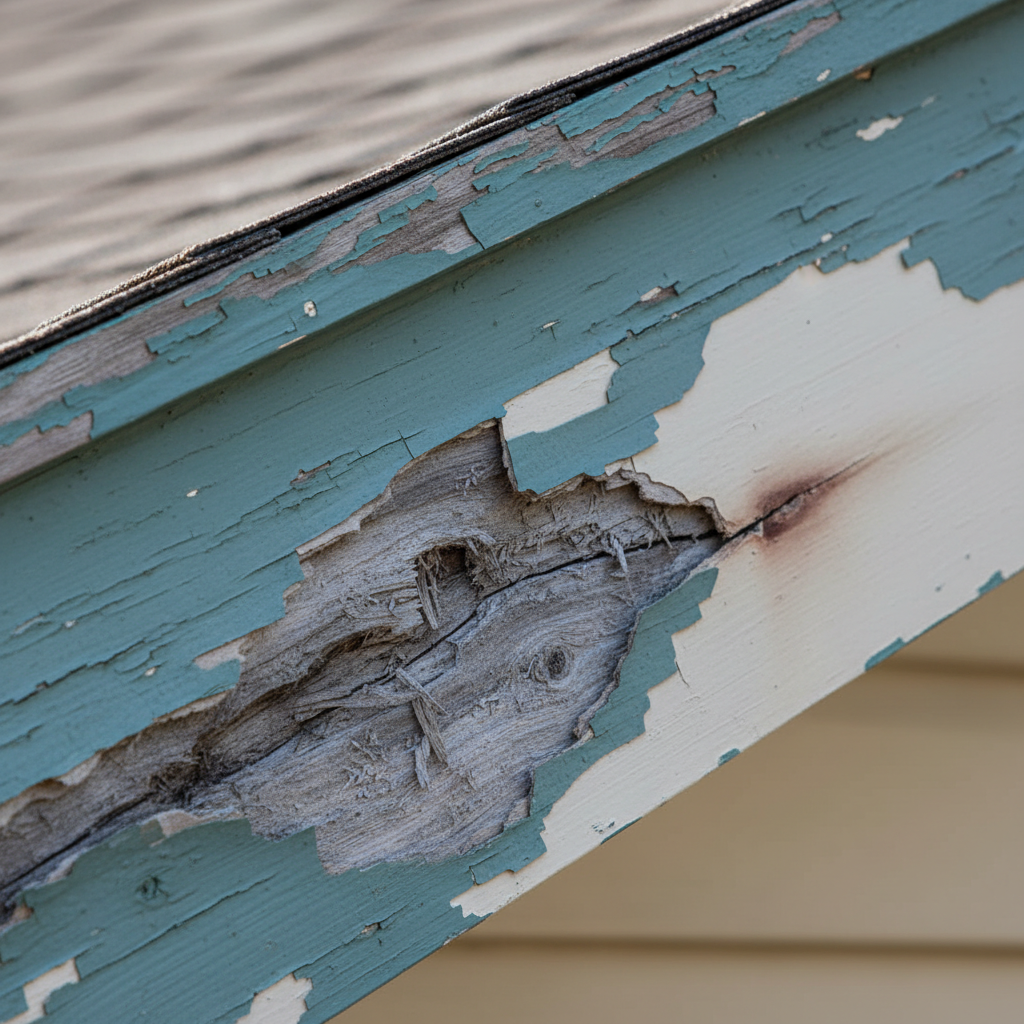
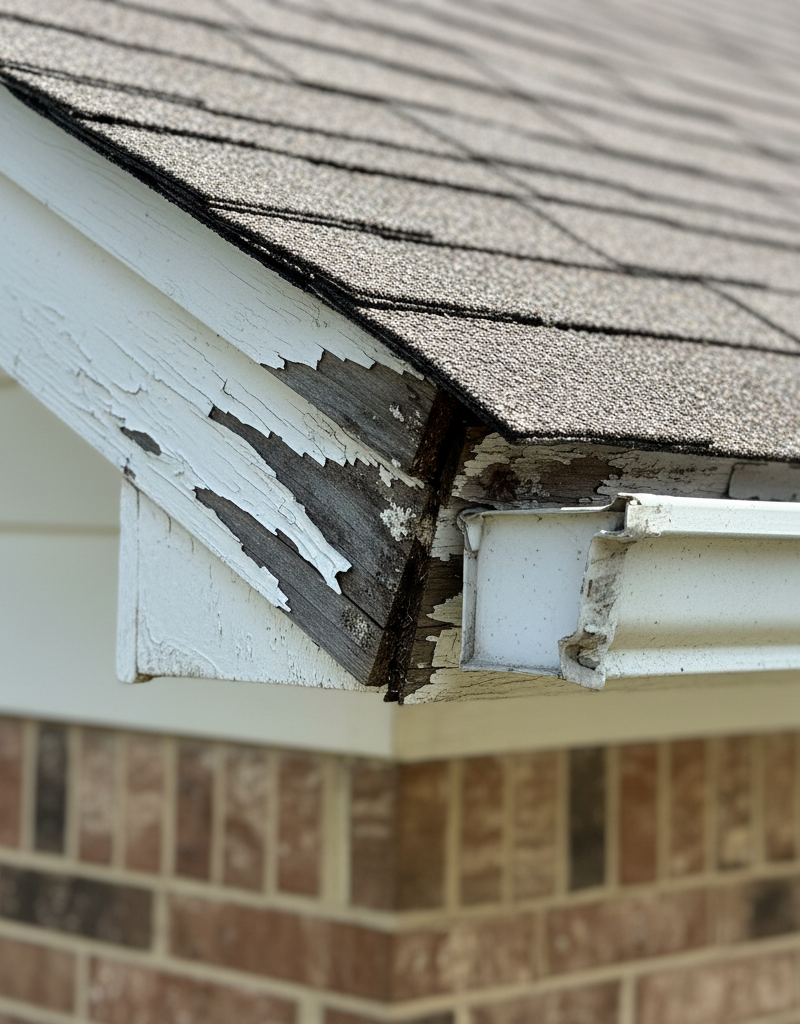
Rotten soffit or fascia usually shows up as peeling paint, crumbly wood, or sections that sag along the roofline. A lot of the time it starts small, and you won’t notice it from the ground. Catch it early, though, and it can be a pretty simple DIY fix. Leave it alone, and now you’re talking water damage, pests, and some real money to fix the roof and eaves.
The Problem
I’ve seen this a hundred times. A homeowner calls me out for a roof leak, and while I’m up there I spot it—a soft, mushy fascia board or a dark, stained section of soffit. They’re usually shocked. “But I just painted the house last year!” they’ll tell me. Yeah, well, paint hides a lot. Especially on trim pieces you’re not staring at every day.
Here’s the thing: soffit and fascia aren’t just there to look neat. The soffit runs under the eaves, and the fascia caps the ends of the roof rafters. Together, they help guard your home from water, pests, and attic problems. If they start rotting, you’ve got more than a cosmetic issue. You’ve got an opening for trouble. Water gets in. Bugs find a way. Before long, you’re looking at rotted roof sheathing, damaged rafters, maybe even mold up in the attic. I pulled a water heater in Frisco last month that had exactly this kind of hidden rot nearby—looked minor from the driveway, but once I got eyes on it, that thing was toast.
Catching it early makes all the difference. Sometimes it’s a couple hours and a few hundred bucks for a DIY patch. Other times, it turns into a multi-day pro job that’ll cost you thousands. Big spread there.
How It Works
Let’s talk about what’s actually going on.
The fascia board is the long, straight board that runs along the lower edge of your roof, right under the shingles and usually behind the gutters. Its job is simple: it covers the exposed ends of the rafters or trusses, keeps weather off that wood, and gives the gutters something solid to mount to. Most of the time it’s wood—pine, fir, sometimes composite. You’ll usually see a 1x6 or 1x8, though houses vary. Once water keeps getting at it, especially where paint has cracked or peeled, the board starts soaking it up. Then rot sets in. No mystery there.
The soffit is the material that closes the gap between the siding and the edge of the roof, tucked up under the eave. Basically, it’s the underside of your roof overhang. It protects the rafters from the weather and helps vent the attic. A lot of soffits aren’t solid either—they’ve got vents, little holes, slits, or a perforated strip so air can move into the attic. That airflow matters. It helps keep heat and moisture from building up, which cuts down on mold and slows down wear on the roof parts. Soffits can be wood plywood or individual planks, vinyl, aluminum, or fiber cement. If a gutter’s acting up, or there’s a roof leak, water often runs right over the fascia and drips onto the soffit, and that’s where the decay starts. If the vents get clogged or busted, the attic can’t breathe. Then you’re stacking problems on top of problems. One piece fails, another one follows. That’s how these jobs go.
Step-by-Step Fix
Okay, so you found some rotten spots. Don’t lose your head. If it’s small and local, this is often a very doable DIY repair. Here’s how I’d handle it.
-
Safety First, Always — Before you even set that ladder, make sure it’s on solid, level ground. Get a spotter if you can. You’ll be working overhead and reaching around, so don’t get sloppy. I always tell folks this: spend the extra few minutes getting the ladder right, or you might spend the day in the ER instead. Wear safety glasses when you’re cutting or prying, gloves that actually fit, and a dust mask too—especially if the old paint might have lead or you’re kicking up a bunch of sawdust.
-
Assess the Damage (Really Look Closely) — Get up there and poke around. Use a screwdriver or awl. If the wood feels soft, spongy, or it crumbles easy, you’ve got rot. Don’t stop at the paint surface. A tiny stain can hide a lot more damage underneath. Mark out every bit of compromised material you need to remove. Don’t be timid here. I’d rather cut out an inch too much good wood than leave a rotten pocket behind to spread.
-
Cut Out the Rotten Section — This is where an oscillating multi-tool really earns its keep, though a good handsaw works if you’re careful. For fascia, I usually cut back to the nearest rafter tail on both sides of the bad spot. That gives you solid wood to fasten the new piece to. For soffit, cut a clean rectangular opening. Straightedge and pencil. Simple. Clean cuts make the replacement fit a whole lot better. If the rot runs past a single rafter bay, you may have to open up a longer section.
- Pro Tip: If you’re taking out a long stretch of fascia, sometimes it’s easier to pull the gutter first so you can actually get at the board. Just label the gutter pieces if you’re planning to put them back in the same spot. Saves headaches later.
-
Prepare the Opening — After the bad wood is out, clean the whole area up. Scrape loose debris, paint chips, mold—anything hanging on. If you’ve exposed raw rafter tails or attic framing, check them carefully. If they’re soft, you may be past a simple repair and need a pro for a bigger fix. If they’re still solid, brush on a wood hardener—I like Minwax wood hardener; it soaks in and firms up any slightly punky spots you might’ve missed. Let it dry fully per the instructions, which might be an hour or two depending on humidity.
-
Measure and Cut Your Replacement Piece — Measure the opening carefully. You want a snug fit, but not so tight you’re fighting it with a hammer. For fascia, use the same lumber size as what came out, like 1x6 pressure-treated pine, which is a common pick. If you’re replacing a section of plywood soffit, use exterior-grade ACX plywood matched to the original thickness (usually 3/8
Related Articles
Keep troubleshooting with these hand-picked guides from FixlyGuide:
- The 5 Hidden Signs Your Soffit and Fascia Are Failing (Before It's Too Late) — Learn to identify the key signs of damaged soffit and fascia to prevent costly structural issues and protect your home's integrity.
- The 4 Hidden Signs Your Soffit & Fascia Are Failing (And What To Do) — Spotting early signs of soffit and fascia damage can prevent costly repairs and protect your home's structure from water and pest intrusion.
- The #1 Mistake Homeowners Make When Spotting Soffit Damage — Ignoring early soffit and fascia damage can lead to costly structural repairs, but many homeowners misdiagnose the problem, compounding the…
- The #1 Mistake Homeowners Make When Spotting Soffit Damage — Ignoring early signs of soffit and fascia damage can lead to costly structural issues. Learn to identify and fix common problems the right…
- Is Your Roofline Hiding a $10,000 Secret? 7 Soffit & Fascia Warning Signs — Discover the critical warning signs of soffit and fascia damage, why these often-overlooked components are crucial, and how to tackle commo…
- The One Hidden Sign of a Roof Leak Most Homeowners Miss (And the $10 Fix) — Catching a roof leak early can save thousands in repairs. Learn the elusive signs and a simple, effective fix before minor issues become ma…
Should you do this yourself?
Answer five quick questions before you start. Safety outranks savings every time.
Your experience with work like this
How high do you have to work?
Does the job involve any of these?
Will it need a permit?
Specialty tools
Free and instant. Educational guidance only — not a quote, inspection, or professional diagnosis.
What should this project cost?
Enter your project details for a realistic cost range before you call anyone.
Cost depends heavily on which system turns out to be the source.
- Regional adjustment
- National average
- Labor share (typical)
- ~$1,620
- Quotes to collect
- 3 written estimates
Educational estimate based on national averages — not a binding quote. Always confirm with written local estimates.
Decide what your roof needs
Two minutes of questions turns "something is wrong up there" into a clear next step.
- Repair or replace your roof?Answer 10 questions about age, leaks, and damage to get a clear next step.Open
- Compare contractor quotesScore up to four bids on price, warranty, licensing, and timeline.Open
- Get local estimatesSend one request and compare written estimates from vetted pros.Open
Free, no signup required. Estimates are educational guidance, not a quote or an inspection.
Get the print-ready PDF of this guide
A clean, ad-free, printable version you can keep on your phone or pin to the workshop wall. Free with a FixlyGuide account.
- Print-optimized layout
- Tools, materials & every step included
- Saved to your account
Recommended for DIYers & woodworkers
Sponsored
The Top 20 Tools for Workshops of Any Budget
No stationary machines or power tools required — plus 3 fundamental tools that can't be bought at any price.
Get the free guide
Ted's Woodworking — The #1 Woodworking Resource
Detailed instructions, dimensioned drawings, materials & cutting lists, and 3D schematics for every skill level.
See the plansSponsored: links above are affiliate links. FixlyGuide may earn a commission on qualifying purchases — at no extra cost to you.
Frequently asked questions
How can I tell if my soffit or fascia is rotten?+
Look for peeling paint, discoloration, soft or crumbling wood when poked with a screwdriver, sagging sections, or pest infestations like wasp nests or signs of rodents. Often, water stains near gutters are a tell-tale sign of moisture intrusion leading to rot.
Can I repair rotten soffit or fascia myself?+
For small, localized sections of rot, absolutely. If the damage is extensive, involves structural components like rafters, or is in hard-to-reach areas, it's best to call a professional. Always prioritize safety when working on a ladder.
What causes soffit and fascia to rot?+
The primary cause is prolonged moisture exposure, usually from clogged or overflowing gutters, leaky roofs, or poorly maintained drip edges. Lack of proper paint protection also allows moisture to penetrate the wood, leading to decay.
How much does it cost to repair rotten soffit or fascia?+
DIY repairs for small sections might cost $50-$200 for materials. Professional repairs can range from $300 for a small patch to several thousand dollars for extensive damage or full replacement of a house side. Costs vary widely based on materials and labor.
How do I prevent soffit and fascia rot?+
Regular gutter cleaning, ensuring gutters drain properly, maintaining your roof (especially the drip edge), and keeping soffit and fascia well-painted and sealed are your best defenses against rot. Proper attic ventilation also helps prevent moisture buildup.
What if the rot extends into the rafters?+
If you find that the rot has spread beyond the soffit or fascia into the roof rafters, this becomes a structural repair. While some very minor rafter end rot can be 'sister-joisted' by an experienced DIYer, it's generally best to consult a licensed contractor or roofer for this type of extensive damage to ensure structural integrity and safety.
How long does soffit and fascia usually last?+
Wood soffit and fascia that are well-maintained, regularly painted, and protected from moisture can last 20-30 years or more. Vinyl or aluminum options often last longer, typically 30-50 years, as they are less susceptible to rot.
Should I replace wood soffit/fascia with vinyl or aluminum?+
It's a common upgrade. Vinyl and aluminum are much more resistant to moisture, require less maintenance (no painting!), and won't rot. They cost more upfront but can save a lot in long-term maintenance. If you're replacing extensive sections, it's often a good time to consider the upgrade.

Discussion
Loading comments…