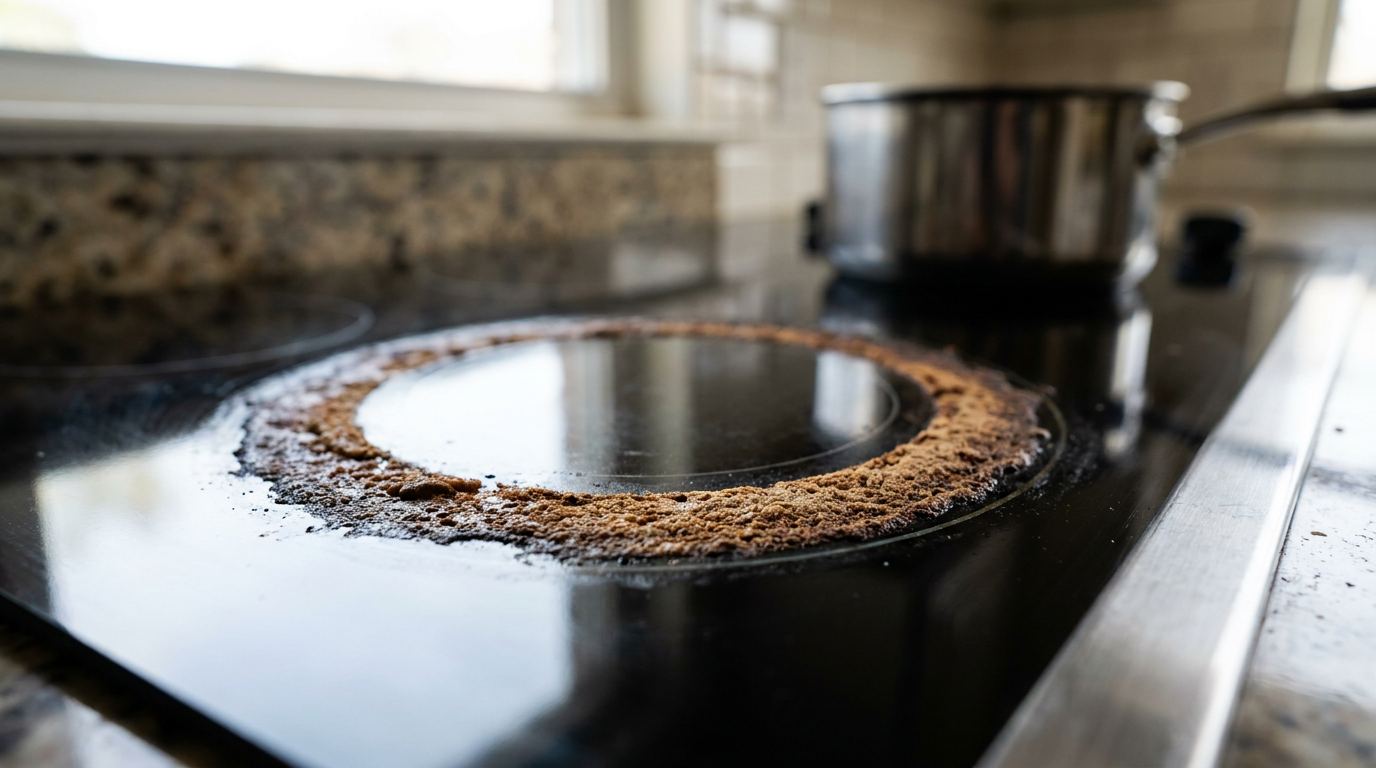
- Scrape off loose debris with a dry paper towel — Sweep away crumbs, coarse salt granules, or peppercorns sitting on the surface.
- If you drag an abrasive salt grain under a cloth or razor, you’ll gouge the glass.
- Toss the dry debris straight into the trash before you add any liquid.
General remodeling · Renovation planning
| Project category | General remodeling |
|---|---|
| Problem type | Renovation planning |
| Trade required | General contracting |
| Urgency | Planned project |
| Safety risk | Low safety risk |
| DIY suitability | Pro recommended |
| Cost category | Major investment |
| Typical timeline | Design and permitting often 2–4 months before work starts |
| Contractor type | General contractor |
Repair option
Phase the work and fix the building envelope first.
Replacement option
Full renovation with permits, design, and a general contractor.
Common causes
- Space no longer fits how the household lives
- Resale preparation
- Deferred maintenance stacking up
Relevant tools:project cost estimatorcompare quoteshome improvement material prices
Published October 20, 2026Last updated October 20, 2026
Tools & materials you'll need
Affiliate linksAs an Amazon Associate FixlyGuide earns from qualifying purchases — at no extra cost to you. Prices and availability are accurate as of publication and subject to change.
Quick Answer
To get stubborn burnt residue off a glass-ceramic stovetop without scratching it, I’d start with a thick paste of baking soda and warm water, then lay a damp microfiber towel heated to around 120°F over the spot and let it soften for 30 minutes. After that, I’d hold a fresh, single-edge razor blade flat at a 30-degree angle and scrape off the loosened carbon. Then I’d finish it off with a dedicated cooktop cleaner and a clean microfiber cloth. Simple enough, right? Not exactly. But it works.
The Problem
You boil pasta water or sear steaks in a heavy skillet, step away for sixty seconds, and a starchy spillover hits the 400°F burner. Now you’ve got an opaque, rock-hard ring fused right onto the glass. You spray your usual all-purpose cleaner, grab a blue sponge, scrub until your wrist’s barking, and wipe it dry—only to see that burnt crust show back up the second the moisture’s gone.
Glass-ceramic cooktops look slick, but they’re unforgiving. Regular dish soap and kitchen degreasers only take care of surface grease; they won’t touch pyrolyzed organic matter. And yeah, folks panic and grab scouring powders, green abrasive pads, or steel wool. Bad move. Those tools gouge the tempered glass for good, leaving tiny scratches that catch grease and make the whole top look cloudy every time you fire it up.
I pulled a water heater in Frisco last month that had exactly this kind of “I’ll just scrub harder” damage on a nearby cooktop, and the homeowner was shocked the finish never came back. No dice once the glass gets scarred.
How It Works
Glass cooktops aren’t regular window glass; they’re made from a polycrystalline ceramic-glass composite, commonly lithium aluminosilicate. Manufacturers build this stuff to have a near-zero thermal expansion coefficient. That’s why it can take fast temperature swings from room temperature up to 1,300°F without popping like a cheap dinner plate.
But heat also works against you during a boil-over. When food spills onto an active radiant or induction burner, the liquid flashes off fast. What’s left—sugars, proteins, starches, and animal fats—goes through pyrolysis. The organic compound breaks down with heat and no oxygen, and it cross-links right into microscopic surface pores in the ceramic substrate. It doesn’t sit on the glass; it chemically bakes into a dense carbon shell.
To break that bond, you’ve got to loosen the carbon matrix without grinding hard enough to score the glass. Ceramic glass sits around 6 to 6.5 on the Mohs hardness scale. Standard carbon steel blades sit at roughly 5 to 5.5. So the steel blade’s softer than the cooktop, and a flat razor can skate across the glass while slicing through the brittle carbon deposits—if you keep the right angle and keep the surface wet. That part matters. A lot.
Step-by-Step Fix
-
Let the cooktop cool completely — Don’t clean a hot glass-ceramic surface with wet cleaners or metal blades. Wait at least 45 minutes after cooking until the built-in hot surface indicator light clicks off and the glass is cool to the touch (under 85°F).
- If the glass is warm, cool liquids can shock it and crack the cooktop assembly.
- I always test by hovering my palm 2 inches above the burner zone before I touch anything.
-
Scrape off loose debris with a dry paper towel — Sweep away crumbs, coarse salt granules, or peppercorns sitting on the surface.
- If you drag an abrasive salt grain under a cloth or razor, you’ll gouge the glass.
- Toss the dry debris straight into the trash before you add any liquid.
-
Mix an alkaline baking soda paste — In a small bowl, combine 1/2 cup of pure baking soda with 3 tablespoons of warm tap water until it’s spreadable, kind of like toothpaste.
- Baking soda ranks at 2.5 on the Mohs hardness scale, so it’s safe for glass cooktops.
- Its mild alkalinity, pH around 8.3, helps loosen and emulsify acidic grease chains.
-
Spread the paste over the burnt rings — Slather the paste generously over every scorched circle, laying it on about 1/8-inch thick.
- Cover the burnt crust edge-to-edge.
- Don’t smear paste over surrounding silicone seals or the metal trim edges.
-
Apply a heated towel compress — Saturate a clean microfiber towel in hot water (around 120°F to 130°F), wring it out until it’s damp, and drape it directly over the baking soda paste.
- That trapped moisture and warmth soften the carbonized bond faster than dry scrubbing ever will.
- Let it sit undisturbed for a full 30 minutes.
-
Inspect and prep your razor blade — Grab a brand-new, single-edge industrial razor blade mounted in a safety scraper handle.
- Run your fingernail gently across the edge to check for nicks or burrs.
- Toss used, rusted, or pitted blades immediately—a microscopic nick will gouge your cooktop permanently.
-
Scrape the crust at a strict 30-degree angle — Lift the towel, leave the wet paste behind as a lubricant, and rest the razor flat against the glass, tilting it upward between 30 and 40 degrees.
- Push forward with smooth, steady pressure; don’t pull the blade backward or dig the corners into the glass.
- You should hear a crisp shaving sound as the burnt rings peel off in curls.
- If the paste dries out while you work, mist the glass lightly with warm water from a spray bottle to keep things slick.
-
Wipe down the lifted sludge — Use the damp microfiber towel to scoop up the scraped carbon deposits and spent baking soda residue.
- Rinse the towel thoroughly in hot running water and wipe the stove down a second time.
- Check the glass at an eye-level angle under kitchen light to spot any stubborn remnant spots.
-
Apply a specialized cooktop conditioning cream — Shake a bottle of dedicated cooktop cream, which contains micro-abrasive feldspar and dimethicone, and squeeze a quarter-sized dollop onto the clean burner area.
- Rub the cream across the glass in firm circular motions using a non-scratch yellow foam scrubbing pad.
- This buffs away microscopic carbon ghosting and leaves a temporary hydrophobic silicone layer that resists future burn-ins.
-
Buff the glass dry — Take a dry, plush microfiber cloth and buff the hazy residue until the entire cooktop shines.
- Check the reflection under your overhead range hood light.
- The surface should feel slick and frictionless under your fingertips.
Common Causes
- Sugary spillover crystallization: Boiling jams, syrups, tomato sauces, or barbecue glazes hit the hot burner, melt down, and bond straight into the glass pores.
- Starchy water boil-overs: Pasta water and potato starch boil over, dry out, and leave an opaque baked-on white ring that normal detergents can’t touch.
- Dirty skillet bottoms: Grease, carbon, or baked enamel stuck to the bottom of frying pans transfers right onto the glass under heat and pressure.
- Burnt plastic or melted bags: Brushing a plastic bread wrapper or grocery bag against a cooling burner melts polymer resins into the glass almost instantly.
- Using abrasive scouring pads: Green Scotch-Brite pads, scouring wire, and pumice powders cut micro-grooves into the glass, and those grooves grab future spills.
Common Mistakes
- Using a dry razor blade: Scraping without baking soda paste or cooktop cleaner as a liquid lubricant creates brutal friction that can make the steel chatter and chip the glass. Keep the surface wet while you scrape.
- Tilting the blade too steep or using blade corners: Holding the razor blade at a 70-degree angle or gouging with the sharp corners will slice microscopic divots into the ceramic matrix. Keep the blade flat at a 30-degree approach.
- Scrubbing with green abrasive pads: Green Scotch-Brite pads contain aluminum oxide, which rates an 8.5 to 9 on the Mohs hardness scale—way harder than your cooktop’s glass (6.0 to 6.5). Green pads will trash the finish with matte scuffs.
- Applying vinegar directly over hot burners: Vinegar sprayed on a blazing hot surface can etch the glass coating and kick pungent acetic acid fumes into your kitchen. Wait until the unit is cold.
- Letting sugary spills sit until next time: Sugar can pit hot ceramic glass if it’s left to cool over and over. Wipe away boiling sugar spills immediately with an oven mitt and a dry paper towel while they’re still soft.
Cost & Time Breakdown
| Task | DIY Cost | Pro Cost | Time |
|---|---|---|---|
| Initial Baking Soda Steam Soak | $1–$3 | N/A | 30 minutes |
| Precision Razor Scraping | $5–$8 (scraper kit) | $90–$150 (appliance detailer) | 10–15 minutes |
| Cooktop Cream Buff & Polish | $8–$12 (cleaner bottle) | Included in service | 5–10 minutes |
| Bottom-of-Pan Degreasing | $0–$5 | N/A | 15 minutes |
| Complete Cooktop Restoration | $14–$23 | $120–$200 | 45–60 minutes |
Tips & Prevention
- Check cookware bottoms before every use: Wipe down the bottoms of your frying pans and pots before you set them on the glass; leftover oil underneath a pan can scorch onto the burner within 90 seconds.
- Never slide cast iron across the glass: Rough cast iron and coarse stoneware grind carbon into the cooktop; always lift pots straight up and set them down gently.
- Keep a dedicated cooktop cleaner bottle handy: Do a 60-second buff with conditioning polish once a week. The dimethicone coating keeps spills floating on top of the surface instead of sticking to the glass.
- Address boil-overs quickly during cooking: If a pot boils over, slide it to an adjacent cold burner zone right away so the spill doesn’t bake into the hot glass under the pot base.
- Check for localized burner bubbling or pits: If you run your fingernail over the glass when it’s clean and feel a sharp depression rather than a raised bump, that’s not burnt food—the glass has pitted from high-heat sugar contact and needs close watching.
When to Call a Professional
A stubborn burnt crust can almost always be cleaned up with baking soda, a sharp razor, and cooktop cream. But some glass problems are structural, not cosmetic. If you spot a crack that cuts across the glass, a deep chip with radiating stress fractures, or visible electrical arching underneath the cooktop, stop using the appliance immediately.
Operating a cracked glass-ceramic cooktop is a real shock and fire hazard. Spills can seep through the fractures straight onto 240-volt electrical heating elements or inductive coils below. If the glass itself is cracked, the whole glass assembly has to be replaced. Replacement cooktop tops generally cost between $250 and $600 for the part, plus $150 to $250 for professional appliance labor. On older units, replacing the entire range often makes more financial sense than swapping the glass panel.
Related Articles
Keep troubleshooting with these hand-picked guides from FixlyGuide:
- The #1 Bathtub Recaulking Mistake (And How to Flawlessly Seal Yours) — Discover the biggest mistake homeowners make when recaulking bathtubs and learn the proper steps to achieve a long-lasting, watertight seal.
- The #1 Mistake Homeowners Make with Ice Dams (and How to Fix It SAFELY) — Learn the safest and most effective ways to remove ice dams from your roof and prevent costly damage to your home, avoiding common DIY pitf…
- Your Dishwasher Smells? The Filter You Forgot Exists — Frustrated by a dishwasher that still stinks after a cleaning cycle? The culprit is likely a hidden, secondary filter trapping rotten food…
- The #1 Reason Your Baseboards Are Pulling Away (It's Not What You Think) — Discover why your baseboards are separating from the wall, often due to humidity changes, and learn how to fix them securely with common to…
- The Grimy Mystery: Why Your Garbage Disposal Stinks (Even After You Clean It) — If your garbage disposal still stinks after you've run all the usual home remedies, it's not you – it's likely a hidden build-up causing th…
- Glass Cooktop Cracked? 3 Reasons for the Damage—And What to Do Next — A cracked glass cooktop is a shocking sight, but understanding the cause—thermal shock, impact, or stress fractures—is the first step towar…
What should this project cost?
Enter your project details for a realistic cost range before you call anyone.
Cost depends heavily on which system turns out to be the source.
- Regional adjustment
- National average
- Labor share (typical)
- ~$1,620
- Quotes to collect
- 3 written estimates
Educational estimate based on national averages — not a binding quote. Always confirm with written local estimates.
Get the print-ready PDF of this guide
A clean, ad-free, printable version you can keep on your phone or pin to the workshop wall. Free with a FixlyGuide account.
- Print-optimized layout
- Tools, materials & every step included
- Saved to your account
Recommended for DIYers & woodworkers
Sponsored
The Top 20 Tools for Workshops of Any Budget
No stationary machines or power tools required — plus 3 fundamental tools that can't be bought at any price.
Get the free guide
Ted's Woodworking — The #1 Woodworking Resource
Detailed instructions, dimensioned drawings, materials & cutting lists, and 3D schematics for every skill level.
See the plansSponsored: links above are affiliate links. FixlyGuide may earn a commission on qualifying purchases — at no extra cost to you.
Frequently asked questions
Will a razor blade scratch my glass cooktop?+
No, as long as you use a fresh blade, lubricate the glass with cleaner or wet baking soda, and hold it at a 30- to 40-degree angle. Never use dull, rusty, or nicked blades, and never let the blade corners gouge into the surface.
Can I use a green Scotch-Brite pad on a smooth cooktop?+
No. Green scouring pads are infused with aluminum oxide or minerals that score 8.5 to 9 on the Mohs hardness scale. Because glass cooktops rate around 6 to 6.5, green pads will leave cloudy, permanent scratch patterns. Use yellow sponge pads rated non-scratch.
Can I use vinegar on my glass stove?+
Yes, but only on a completely cool stove. Spraying vinegar directly onto a hot cooktop can bake the acid into the glass coating, causing hazy chemical etching. Let the stove cool down to room temperature first.
Why do white cloudy rings stay on my burner after cleaning?+
White rings are typically mineral scale from hard water boil-overs or caramelized starch deposits. Pure vinegar dissolves hard water minerals quickly; if that fails, use baking soda paste and a razor blade for starch carbon.
What should I do if the razor blade will not budge the burnt spot?+
Do not push hard. Instead, re-saturate the spot with warm baking soda paste and let a damp, heated microfiber towel steam the area for an extra 20 to 30 minutes to soften the bond before scraping again.
How do I remove melted plastic or grocery bags from the cooktop?+
Immediately turn off the burner. If it is still soft, carefully scrape the bulk away with a silicone spatula or a wooden spoon, keeping your hands protected with an oven mitt. Once cold, freeze remaining plastic with an ice cube and flick it off with a razor blade.
Is dedicated cooktop cleaner really necessary, or is dish soap enough?+
A dedicated cooktop cleaner contains mild polishing agents (like feldspar) that smooth the surface, along with silicone oils that create a protective barrier. Standard dish soap only lifts surface grease and does nothing to prevent future burn-ins.
Can I use cast iron skillets on a glass cooktop without ruining it?+
Yes, but check the pan bottom for rough seams, burrs, or built-up carbon before cooking. Always lift cast iron pots straight up instead of sliding them across the burners to avoid scratching the glass.
Discussion
Loading comments…