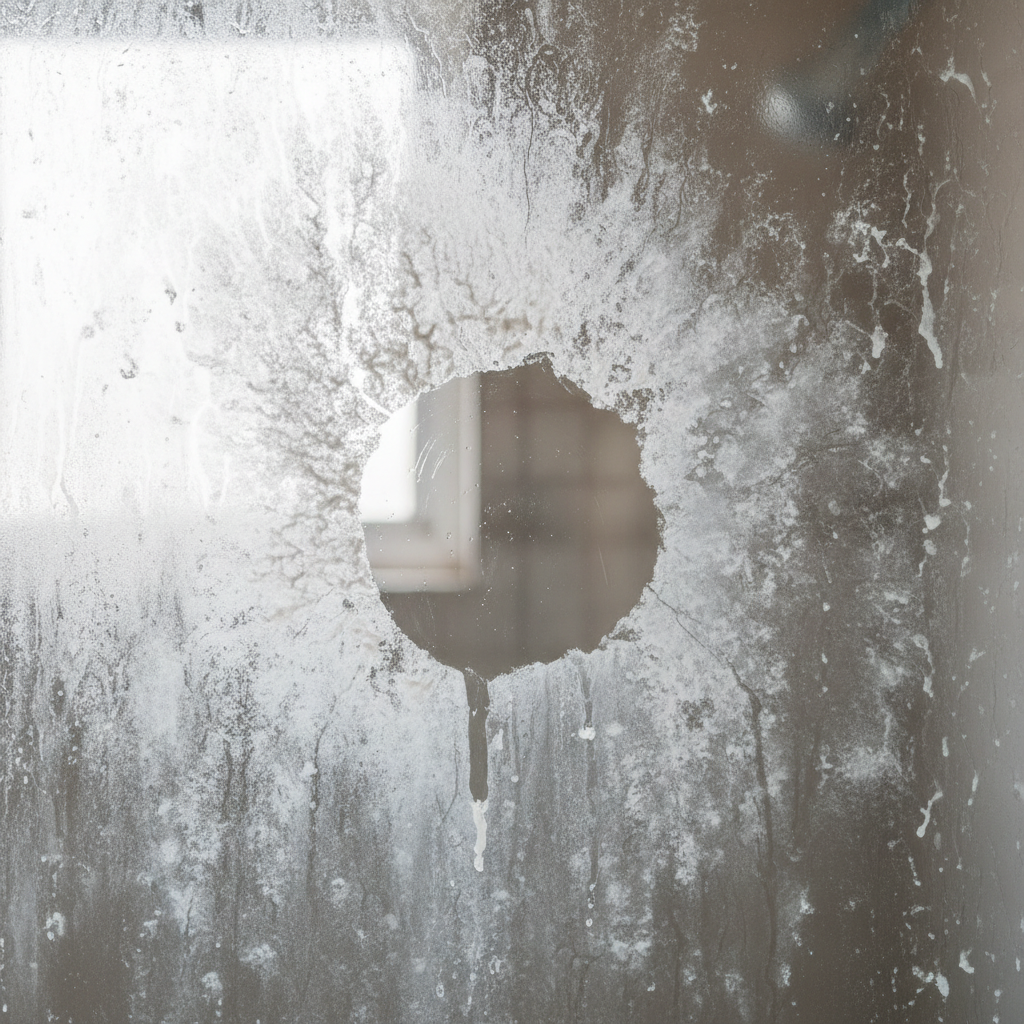
- Hard Water: This is the big one. Water with high concentrations of dissolved minerals (calcium, magnesium) is the main culprit. If you’ve got it, you’ll see it on your dishes too.
- Lack of Squeegeeing/Wiping: Letting water air-dry on the glass after every shower is basically an open invite for mineral deposits.
- Ineffective Cleaners: Soap-based cleaners or general bathroom sprays that aren’t made to dissolve mineral scale won’t get the job done.
- Poor Ventilation: A steamy bathroom keeps surfaces wet longer, which gives minerals more time to stick as the water evaporates.
- Old Shower Doors/Glass: Older glass can get microscopically pitted over time, which gives minerals more little hideouts to latch onto and makes cleanup harder.
General remodeling · Renovation planning
| Project category | General remodeling |
|---|---|
| Problem type | Renovation planning |
| Trade required | General contracting |
| Urgency | Planned project |
| Safety risk | Low safety risk |
| DIY suitability | Pro recommended |
| Cost category | Major investment |
| Typical timeline | Design and permitting often 2–4 months before work starts |
| Contractor type | General contractor |
Repair option
Phase the work and fix the building envelope first.
Replacement option
Full renovation with permits, design, and a general contractor.
Common causes
- Space no longer fits how the household lives
- Resale preparation
- Deferred maintenance stacking up
Relevant tools:project cost estimatorcompare quoteshome improvement material prices
Published September 13, 2026Last updated September 13, 2026
Tools & materials you'll need
Affiliate linksAs an Amazon Associate FixlyGuide earns from qualifying purchases — at no extra cost to you. Prices and availability are accurate as of publication and subject to change.
Quick Answer
You’re scrubbing your shower doors, putting in the elbow grease, and they still look cloudy, right? Don’t beat yourself up; it’s not your fault. What you’re seeing is almost certainly hard water mineral buildup – calcium and magnesium deposits that bond to the glass. Regular soap and water just won’t touch it. You need something acidic to break down those minerals, and a bit of mechanical action to get ’em off for good.
The Problem
I get calls about this all the time. Homeowners, frustrated as heck, tell me they clean their bathrooms religiously, but those shower doors just never look truly clean. They spray, they scrub, they wipe, and still, that hazy, streaky, sometimes crusty film hangs on. It’ll make you want to rip the whole door out, won’t it? But here’s the deal: it’s not dirt, and it’s not soap scum, at least not in the way most folks think. It’s mineral deposits from your water, usually calcium and magnesium, left behind every time water evaporates off the glass. Over time, those layers stack up and turn into that stubborn film. Then it grabs more soap scum and body oils, and now you’ve got a real pain in the neck.
How It Works
Alright, let’s talk about how this invisible enemy works. Most municipal water supplies, and especially well water, carry dissolved minerals. We call that hard water. When it hits your shower doors and dries, the H2O evaporates, but those dissolved minerals? They stay behind. They don’t just sit there loose, either — they actually form a chemical bond with the glass surface. Picture super-fine concrete building up, layer by microscopic layer. The more often the glass gets wet and dries without being squeegeed or wiped, the thicker that mineral scale gets. These minerals, mainly calcium carbonate and magnesium carbonate, are alkaline. That’s the key. Your typical pH-neutral bathroom cleaner or soap isn’t going to dissolve them. They need an acid to break that bond. Commercial cleaners often use stronger acids, but even plain white vinegar (acetic acid) can do the trick if you give it time. Once the acid loosens the bond, then the mechanical action — scrubbing, scraping — can knock the softened minerals loose. Without the acid, you’re just rubbing dirt around on top of a concrete-like film. That’s why it feels like you’re cleaning, but the glass never really looks clean.
Step-by-Step Fix
This isn’t a fast wipe-down job, but you can absolutely handle it yourself if you’ve got a little patience and the right tools.
-
Gather Your Arsenal — Don’t start with half the gear missing.
- Before you get after it, make sure all your tools and cleaners are laid out. Nothing’s worse than being halfway through a nasty job and realizing you’re missing something. I’ve seen folks wing it and make twice the mess. You’ll need gloves, a good spray bottle, your acidic cleaner, non-scratch scrubbing pads, microfiber cloths, and maybe a utility knife for the really ugly spots.
-
Ventilate the Area — Safety first, no question.
- Crack a window or flip on the bathroom fan. You’re going to be using something acidic, even if it’s just vinegar, and you don’t want to be breathing fumes in a closed room. That’s not being fussy — that’s just smart.
-
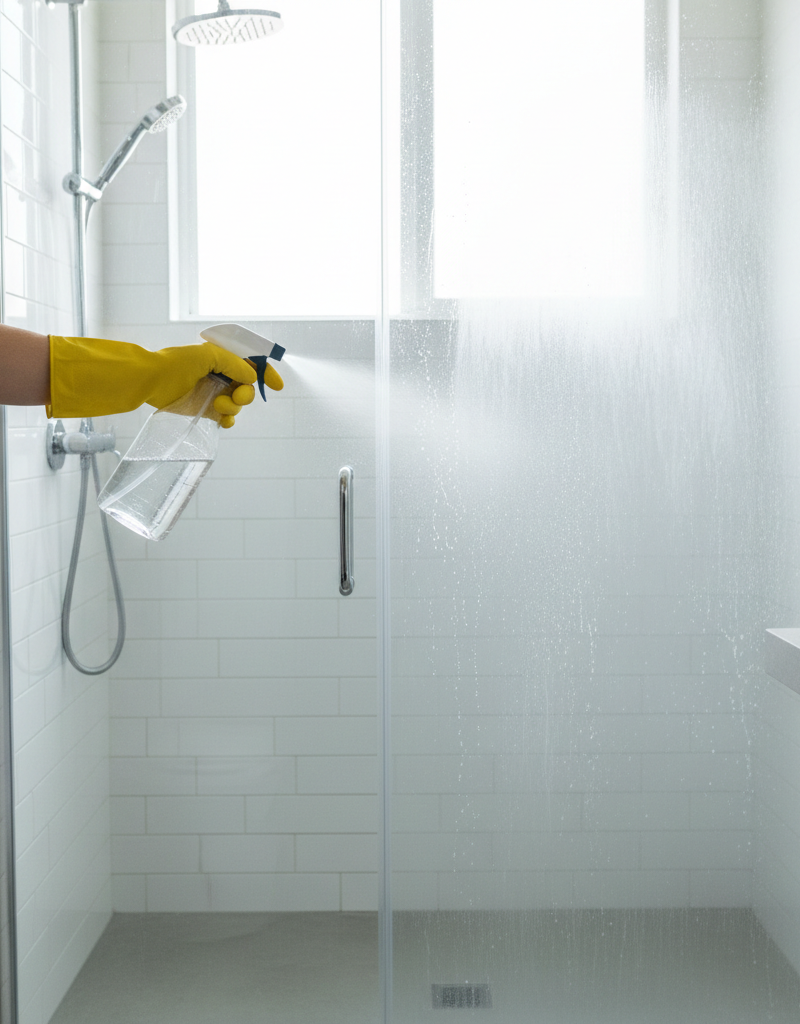
Apply Your Acidic Cleaner — Let it sit and work.
- For light to moderate buildup, a 50/50 mix of white vinegar and water in a spray bottle works pretty well. For heavier stuff, use straight white vinegar or a commercial hard water stain remover. Spray a generous, even coat over the whole glass surface. Don’t just mist it; really wet it down. Let it sit for at least 15-30 minutes. For nasty buildup, I’ve soaked paper towels in vinegar and stuck them to the glass, then let them sit for an hour or even overnight. I pulled a shower door in Frisco last month that had exactly this mess — you couldn’t see through it unless the sun hit it just right. Same story, different house.
-
Scrub with a Non-Abrasive Pad — A little muscle, not a wrecking ball.
- After the soak, grab your non-scratch pad (melamine foam erasers work great, or even a fine-grade steel wool like #0000 if you’re very careful and it’s actual glass, not plastic). Scrub in small, overlapping circles. You should feel the grime start to let go. If it’s still hanging on, hit it with more cleaner and give it more time. Don’t lean on it like you’re sanding a deck — let the acid do the heavy lifting.
-
Rinse Thoroughly — Get all that loosened junk off.
- Use clean water, either from your shower head or a spray bottle, to rinse away every bit of loosened mineral deposit and cleaner residue. Get into the corners, the edges, the whole bit. You want to see clean water running off the glass.
-
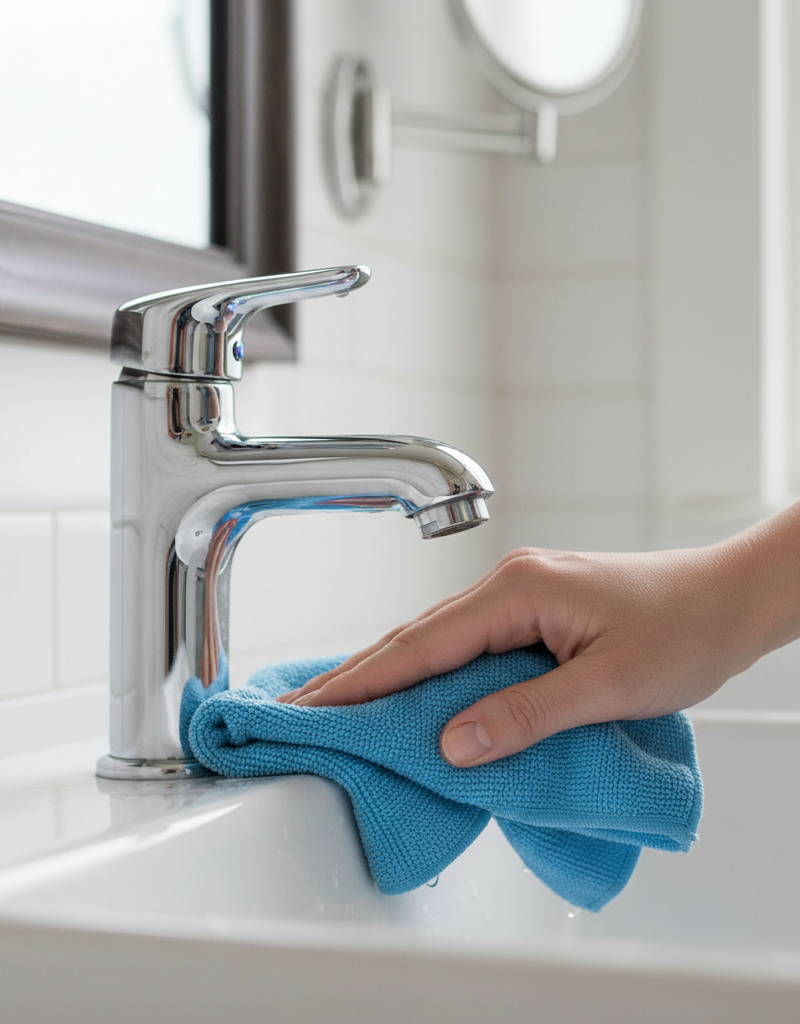
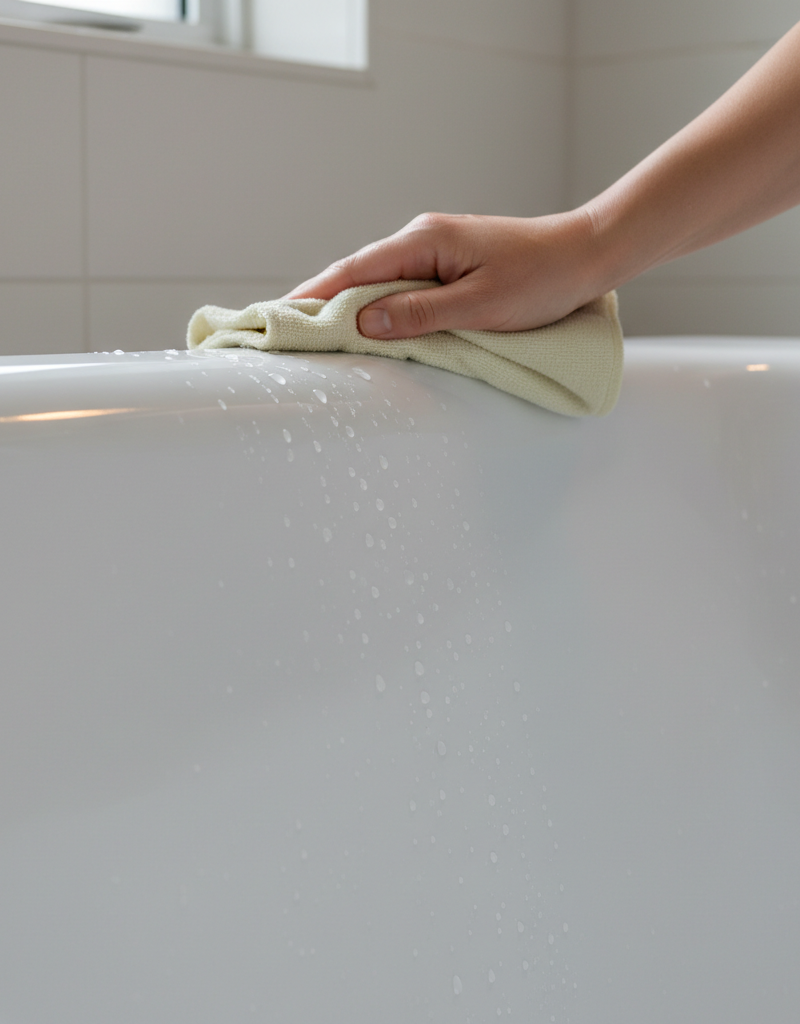
Wipe Dry with Microfiber — Stop new spots before they start.
- Right after rinsing, dry the glass completely with a clean, lint-free microfiber cloth. This step matters. A lot. If you let it air dry, you’re inviting new water spots right back in, and then you’re back where you started. Check the glass for any stubborn leftovers.
-
Repeat as Necessary — Old buildup can take more than one round.
- For really old, heavy buildup, you might need to run through steps 3-6 a couple of times. Don’t get discouraged if it doesn’t all come off the first pass. Sometimes it takes a few rounds to break down years of mineral gunk.
-
Attack the Edges/Corners — That’s where the ugly stuff hides.
- A lot of the worst buildup shows up in the corners, along the frame, and around the hinges. For those spots, a stiff-bristled brush or an old toothbrush can work great after a good soak. For super-thick, almost crystalline deposits, a plastic scraper or even a utility knife blade (held at a very shallow angle, almost flat against the glass, very gently) can chip away the worst of it. Be careful, though — you can gouge the glass or yourself if you get sloppy.
-
Consider a Water Repellent Coating — Makes next time a whole lot easier.
- Once the doors are spotless, put on a water repellent made for glass, like a car windshield repellent. These products create a hydrophobic surface, so water beads up and rolls off instead of hanging around. That cuts future mineral buildup way down. You’ll still need to squeegee, but it’s a lot less of a chore.
Common Causes
- Hard Water: This is the big one. Water with high concentrations of dissolved minerals (calcium, magnesium) is the main culprit. If you’ve got it, you’ll see it on your dishes too.
- Lack of Squeegeeing/Wiping: Letting water air-dry on the glass after every shower is basically an open invite for mineral deposits.
- Ineffective Cleaners: Soap-based cleaners or general bathroom sprays that aren’t made to dissolve mineral scale won’t get the job done.
- Poor Ventilation: A steamy bathroom keeps surfaces wet longer, which gives minerals more time to stick as the water evaporates.
- Old Shower Doors/Glass: Older glass can get microscopically pitted over time, which gives minerals more little hideouts to latch onto and makes cleanup harder.
Common Mistakes
- Using Abrasive Scrubbers: Steel wool (other than #0000 fine grade), harsh scouring pads, or powdered cleansers can scratch your glass permanently. Stick with non-scratch stuff.
- Not Letting Cleaner Dwell: If you spray and wipe right away, the acidic cleaner doesn’t get time to break down the mineral bonds. You’ve got to let it sit.
- Ignoring the Problem: Thinking it’ll just “rinse away” or putting off the job lets the buildup stack up, and then the cleanup gets a whole lot harder.
- Using the Wrong Cleaner: Bleach or ammonia-based cleaners won’t touch mineral deposits, and they can create dangerous fumes if mixed with acidic cleaners.
- Forgetting to Squeegee: Cleaning it once is fine, but if you skip daily maintenance, those spots will be right back before long.
Cost & Time Breakdown
Here
Related Articles
Keep troubleshooting with these hand-picked guides from FixlyGuide:
- The Invisible Culprit Behind Your Cloudy Glasses (It Ain't Just Hard Water) — Ever pulled a supposedly clean glass from the dishwasher only to find it covered in a hazy, white film? It's not always hard water, and thi…
- That White Crust On Your Faucet? It's A Big Problem — That chalky, white buildup on your fixtures isn't just ugly—it's limescale from hard water, and it's actively clogging, corroding, and ruin…
- The Caulk Joint Mystery: Why Your Shower Base Keeps Leaking (Even After Recaulking) — Discover why your shower base might still be leaking after recaulking, focusing on common missed spots and structural issues that caulk alo…
- The Silent Rot: What Your Soffits and Fascia Tell You About a Deeper Problem — Ignoring damaged soffit and fascia boards isn't just an aesthetic issue; it's a flashing warning sign your home could be facing serious, ex…
- The #1 Mistake Homeowners Make When Spotting Soffit Damage — Ignoring early soffit and fascia damage can lead to costly structural repairs, but many homeowners misdiagnose the problem, compounding the…
- The Grimy Cloud: Why Your Glass Shower Doors Won't Sparkle — Tired of scrubbing your glass shower doors only for them to remain cloudy and grimy? I'll show you why those hard water stains and soap scu…
What should this project cost?
Enter your project details for a realistic cost range before you call anyone.
Mid-range remodels commonly $12,000–$22,000; small repairs often under $600.
- Regional adjustment
- National average
- Labor share (typical)
- ~$5,603
- Quotes to collect
- 3 written estimates
Educational estimate based on national averages — not a binding quote. Always confirm with written local estimates.
Get the print-ready PDF of this guide
A clean, ad-free, printable version you can keep on your phone or pin to the workshop wall. Free with a FixlyGuide account.
- Print-optimized layout
- Tools, materials & every step included
- Saved to your account
Recommended for DIYers & woodworkers
Sponsored
The Top 20 Tools for Workshops of Any Budget
No stationary machines or power tools required — plus 3 fundamental tools that can't be bought at any price.
Get the free guide
Ted's Woodworking — The #1 Woodworking Resource
Detailed instructions, dimensioned drawings, materials & cutting lists, and 3D schematics for every skill level.
See the plansSponsored: links above are affiliate links. FixlyGuide may earn a commission on qualifying purchases — at no extra cost to you.
Frequently asked questions
What causes the white film on my shower doors?+
That white, hazy film is almost always caused by hard water minerals, primarily calcium and magnesium. These dissolved minerals are left behind when water evaporates off the glass surface, building up over time into stubborn scale.
Can I use bleach to clean hard water stains?+
No, bleach is ineffective against hard water mineral deposits and can actually cause dangerous fumes if mixed with other common bathroom cleaners, especially acidic ones like vinegar. Stick to acidic solutions for mineral removal.
How often should I clean my shower doors to prevent buildup?+
For best results, squeegee or wipe down your shower doors after every single use. Beyond that, a weekly wipe-down with an acidic cleaner like vinegar can prevent significant buildup, and a deep clean every 1-2 months should keep them sparkling.
Is it safe to use a razor blade on shower glass?+
You can use a utility knife or razor blade very carefully, holding it at a super shallow angle (almost flat) to *gently* scrape off severe, crusted buildup. However, this carries a risk of scratching the glass, so proceed with extreme caution and only as a last resort on true glass, never plastic.
What's the best homemade cleaner for shower doors?+
A 50/50 solution of white vinegar and water is an excellent and safe homemade cleaner for hard water stains. For tougher jobs, straight white vinegar works well. You can also add a squirt of dish soap to help it cling and cut through soap scum.
Will a water softener help with shower door stains?+
Absolutely. A whole-house water softener removes the minerals that cause hard water stains in the first place. It's an upfront investment, but it makes cleaning easier on all your fixtures and appliances, and your shower doors will stay cleaner much longer.
My shower doors are plastic, not glass. Can I use the same methods?+
While the principle is similar, be very cautious with plastic (acrylic or fiberglass) shower doors. Strong acids or abrasive scrubbers can permanently damage or fog the plastic. Test any cleaner in an inconspicuous area first, and opt for gentler acidic cleaners like diluted vinegar.
Why do my shower doors still look streaky after I clean them?+
Streaks often occur if you don't rinse thoroughly enough, leaving cleaner residue, or if you let the glass air dry, allowing new water spots to form. Always rinse completely and then immediately dry with a clean, lint-free microfiber cloth for a streak-free finish.
Can I use oven cleaner on shower doors for tough stains?+
No, never use oven cleaner on shower doors. Oven cleaners are extremely harsh and formulated for baked-on grease, not mineral deposits. They can permanently damage glass, etch finishes, and are dangerous to use in a bathroom environment due to strong fumes and corrosive properties.
What can I do to prevent hard water stains from coming back quickly?+
After cleaning, make a habit of squeegeeing the doors after every shower. You can also apply a glass sealant or water repellent product. For a long-term solution, consider installing a whole-house water softener to reduce mineral content in your water.
Discussion
Loading comments…