- Infrequent Cleaning: Letting those deposits sit for weeks or months makes them a whole lot harder to remove. A quick daily wipe helps more than people think.
- Soap Scum: Soap and hard water react and leave behind that sticky whitish film that clings to surfaces and traps other grime.
- Toothpaste Splatter: Happens all the time. Tiny flecks dry on the faucet and add another layer of junk.
- Incorrect Cleaners: Abrasive scrubbers or harsh chemicals that aren’t meant for mineral removal can wreck the finish and make it duller, not better.
Bathroom · Bathroom remodel
| Project category | Bathroom |
|---|---|
| Problem type | Bathroom remodel |
| Trade required | General contracting |
| Urgency | Planned project |
| Safety risk | Low safety risk |
| DIY suitability | Pro recommended |
| Cost category | High cost |
| Typical timeline | Typically 2–4 weeks on site |
| Contractor type | Bathroom remodeler or licensed plumber |
Repair option
Refresh fixtures, grout, and vanity without moving plumbing.
Replacement option
Gut remodel when the pan leaks or the layout changes.
Common causes
- Dated finishes
- Failing tile or pan
- Accessibility needs
Relevant tools:project cost estimatorcompare quotes
Published August 26, 2026Last updated August 26, 2026
Tools & materials you'll need
Affiliate linksAs an Amazon Associate FixlyGuide earns from qualifying purchases — at no extra cost to you. Prices and availability are accurate as of publication and subject to change.
Quick Answer
Your once-shiny bathroom faucet looking dull and grimy? Nine times out of ten, it’s not a lost cause. It’s hard water deposits, soap scum, and everyday crud beating up the finish. I’ve cleaned up hundreds of these. The good news is, you can usually bring that sparkle back with a few household items and a little elbow grease. We’re talking about breaking down those mineral layers hiding the chrome or brushed nickel underneath.
The Problem
Walk into just about any bathroom, and one of the first things you notice, or don’t notice, is the faucet. When it’s shining, the whole sink area looks cleaner. When it’s got that white, chalky film — sometimes with green or reddish spots — it just looks dirty, even if you’ve scrubbed everything else.
That film isn’t just dirt. It’s mostly mineral deposits from hard water — calcium and magnesium — mixed with soap scum and maybe a little toothpaste splash here and there. Over time, those layers build up and start etching into the surface, so the faucet looks permanently dull even after a quick wipe. Frustrating? Yep. I’ve seen brand new faucets look ten years old in high-mineral water areas after only a few months.
How It Works
So what’s actually going on? Water, especially in certain regions, carries dissolved minerals like calcium carbonate and magnesium. Once that water evaporates off your faucet, it leaves those minerals behind. Think of it like a tiny invisible rock layer forming every time someone uses the sink.
Then you’ve got soap scum — that sticky residue from soap reacting with hard water — and now you’ve got a nasty combo. These deposits are alkaline, meaning they sit opposite acids on the pH scale. That’s why plain water or mild soap won’t do much; they don’t chemically break that mineral bond. You need something acidic.
Acids, like the ones in vinegar or citric acid, react with the alkaline deposits and dissolve them, which makes the gunk easy to wipe away. It’s a chemical reaction that breaks down the hardened crud. Once the minerals are gone, the finish underneath — chrome, brushed nickel, bronze, whatever you’ve got — can reflect light again and look right. If you don’t break that bond, you’re just polishing over the mess.
Step-by-Step Fix
Ready to get that faucet gleaming? Here’s how I’d do it.
-
Prep the Area — Clear the decks
Move toothbrushes, soap dishes, and anything else off the sink and away from the faucet before you start. You don’t want cleaning solution landing on stuff that doesn’t need it. Clear space makes the job easier, and safer too. I always throw an old towel around the base to catch drips. Saves cleanup later. -
Choose Your Weapon — Vinegar or citric acid
For most hard water buildup, white vinegar is your best friend. Cheap, safe, gets the job done. If the smell bugs you, or the spots are really stubborn, citric acid powder mixed with a little water into a paste works great. I usually start with plain white vinegar, 5% acidity, unless it’s a particularly gnarly job. And don’t go after plated finishes with abrasive cleaners or scour pads — that thing’s toast if you scratch it. -
Apply the Acid — Let it soak
This is where patience pays off. Soak a few paper towels or old rags in white vinegar. Wrap those vinegar-soaked towels around the faucet and cover all the grimy areas, especially around the base and spout. If you’re using citric acid paste, smear on a thick layer. For faucet aerators, unscrew them and soak the screen in a small bowl of vinegar for about 20-30 minutes. Let the acid work for at least 30 minutes, but for heavy buildup, I’ve left it on for a couple of hours. I pulled a water heater in Frisco last month that had exactly this kind of mineral crust on the nearby bath faucet — looked like it had been dipped in chalk. I had to re-wrap it twice and let it sit for a full three hours before it finally started giving up. Serious mineral fight. -
Scrub Gently — Loosen the grunge
After soaking, peel off the towels. Now grab an old toothbrush or a soft-bristled brush and gently work at the softened deposits. You should see them flake off or dissolve pretty quick. For tight spots around the handle or spout, a wooden toothpick or bamboo skewer can help pop loose stubborn bits without scratching the finish. Don’t muscle it. Let the acid do most of the work — you’re just nudging it along. -
Rinse Thoroughly — Wash it all away
Once you’ve scrubbed, rinse the faucet with clean water. Make sure every trace of cleaner and loosened grime is gone. You may need to wipe it down with a damp cloth a few times to get it all off. Give it a close look and catch any spots you missed. -
Polish to a Shine — The finishing touch
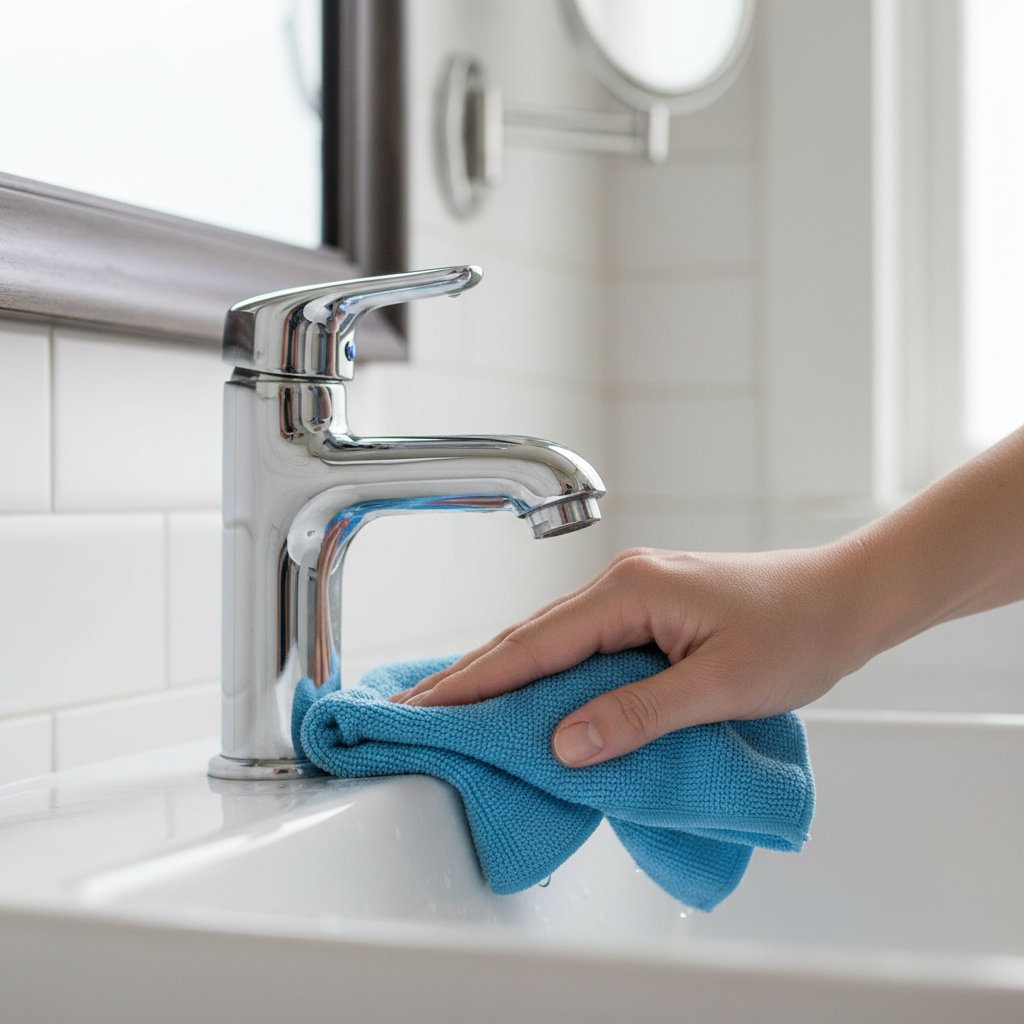
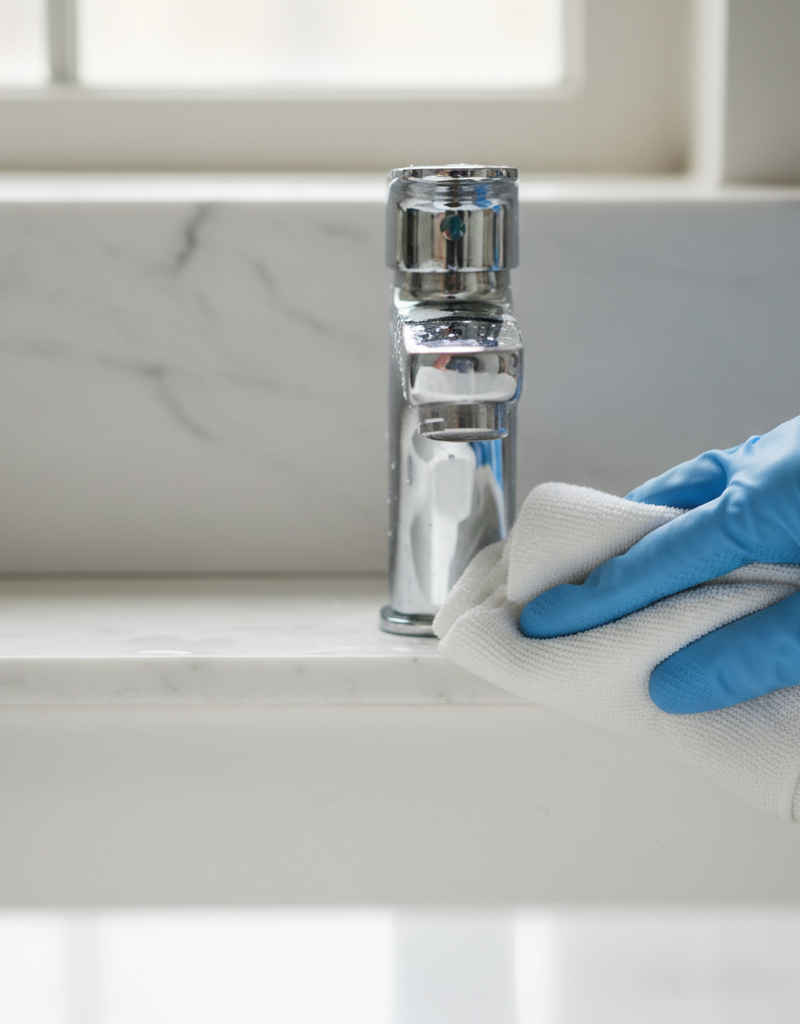
Dry the faucet completely with a clean, soft microfiber cloth. Drying matters. It helps keep new water spots from showing up right away. For a little extra sparkle, especially on chrome, I sometimes use a tiny dab of car wax or even olive oil on a cloth. Buff it lightly. That leaves a barrier so future water spots don’t stick as easy and wipe off cleaner. Just keep it tiny — you don’t want it feeling greasy. -
Reassemble Aerator — Clear water flow
If you took the aerator off, scrub it with an old toothbrush, rinse it out, and screw it back on. Turn the water on for a second and make sure the flow’s good and there aren’t any leaks.
Common Causes
- Hard Water: This is the big one. Water with a lot of minerals — calcium, magnesium — leaves behind white, chalky deposits as it evaporates. Most homes deal with some level of hard water, but some areas are way worse than others. I’ve seen levels as high as 10-15 grains per gallon in some towns, and that really speeds up buildup.
- Infrequent Cleaning: Letting those deposits sit for weeks or months makes them a whole lot harder to remove. A quick daily wipe helps more than people think.
- Soap Scum: Soap and hard water react and leave behind that sticky whitish film that clings to surfaces and traps other grime.
- Toothpaste Splatter: Happens all the time. Tiny flecks dry on the faucet and add another layer of junk.
- Incorrect Cleaners: Abrasive scrubbers or harsh chemicals that aren’t meant for mineral removal can wreck the finish and make it duller, not better.
Common Mistakes
- Using Abrasive Cleaners: Steel wool, scouring pads, or harsh powdered cleansers will scratch and permanently damage plated finishes like chrome or brushed nickel. Once that happens, you’re not getting the shine back the same way.
- Not Letting Acid Soak: Spraying vinegar and wiping it off right away won’t do much on serious buildup. You need soak time for the acid to break down the minerals. Give it at least 30 minutes, sometimes more.
- Ignoring the Aerator: Folks clean the visible parts and forget the aerator all the time. A clogged aerator can hurt water pressure and mess with spray patterns. And yep, it’s usually caked with minerals too.
- Mixing Cleaning Products: Never mix different chemicals, especially ammonia-based cleaners with bleach-based ones. That can make toxic fumes. Stick with one product at a time, and rinse well between products if you’re switching.
- Not Drying After Cleaning: Letting a faucet air-dry after cleaning just invites new water spots. Dry and buff it every time if you want it to stay looking right.
Cost & Time Breakdown
| Task | DIY cost | Pro cost | Time |
|---|---|---|---|
| Basic Cleaning (no disassembly) | $5-$10 | N/A | 30-60 min |
| Heavy Buildup (aerator soak) | $10-$20 | N/A | 1-2 hours |
| Faucet Replacement | $100-$400+ | $300-$800+ | 2-4 hours |
| Whole-house Water Softener | $500-$2000+ | $1500-$4000+ | 4-8 hours (install) |
Tips & Prevention
- Daily Wipe-Down: A quick dry cloth wipe after each use keeps most water spots and mineral buildup from starting. Honestly, it’s probably the best habit you can build.
- Weekly Gentle Clean: Spray a 50/50 vinegar-water mix and wipe it down once a week. Keeps the light buildup from getting ahead of you.
- Regular Deep Clean: Every 1-3 months, depending on how hard your water is, do the full vinegar-soak treatment. That keeps the crusty stuff from taking over.
- Consider a Water Softener: If your whole house is fighting extremely hard water, a whole-house water softener is the long game. It’s an investment, sure, but it helps your fixtures, appliances, and even your skin. Expect to pay anywhere from $1,000 to $2,500 for a good unit installed.
- Check for Leaks: A dripping faucet keeps feeding the problem with constant water and minerals. Fix leaks fast; your fixtures will thank you.
When to Call a Professional
Cleaning faucet grime is usually a DIY deal, but there are times I’d tell you to bring in a pro. If your faucet keeps dripping or leaking from the base even after cleaning, you might be dealing with a deeper plumbing issue like a worn-out O-ring or cartridge that needs replacement — that’s plumber territory. Same goes for stubborn stains that acidic cleaners won’t touch, especially on specialty finishes like oil-rubbed bronze where discoloration is a real worry. A pro can usually tell you whether it’s safe to clean harder or whether you’re about to make things worse.
And if you’re thinking about a whole-house water softener install, call a licensed plumber. That’s not a tiny weekend project. It needs to be done right so your whole plumbing system stays protected and works the way it should for years. Don’t mess with main water lines if you’re not comfortable — you could cause a flood.
Related Articles
Keep troubleshooting with these hand-picked guides from FixlyGuide:
- The Grimy Secret Under Your Oven: Why Your Kitchen Never Feels Truly Clean — Your oven and range hood are silent culprits in your kitchen's battle against persistent grease and grime. This guide tackles how to deep c…
- The Mystery Smell: Why Your Fridge Stinks (Even After Cleaning It) — That persistent, foul odor in your refrigerator isn't just gross; it's often a sign of hidden issues. Learn the real culprits behind linger…
- The Caulk Stain That Won't Quit: Why Your Shower Stays Grimy — Is that stubborn, discolored caulk making your clean shower look perpetually dirty? It's not just surface grime; it's often mold or mildew,…
- That Mystery Haze on Your Dishware? Your Dishwasher's the Culprit — If your 'clean' dishes come out looking cloudy, streaky, or gritty, it's not you – it's your dishwasher, and I'll show you how to fix it.
- The Secret to Banishing Old Pet Odors (Even When You Can't Find the Stain) — Don't let hidden pet accidents ruin your home's fresh scent; this guide reveals how to find and eliminate old pet odors and their invisible…
- The Nasty Truth About Your Bathroom Sink Smell (And the $10 Fix) — Uncover the real culprit behind that foul odor from your bathroom sink drain and learn a simple, effective, and cheap DIY fix to eliminate…
Should you do this yourself?
Answer five quick questions before you start. Safety outranks savings every time.
Your experience with work like this
How high do you have to work?
Does the job involve any of these?
Will it need a permit?
Specialty tools
Free and instant. Educational guidance only — not a quote, inspection, or professional diagnosis.
What should this project cost?
Enter your project details for a realistic cost range before you call anyone.
Mid-range remodels commonly $12,000–$22,000; small repairs often under $600.
- Regional adjustment
- National average
- Labor share (typical)
- ~$5,603
- Quotes to collect
- 3 written estimates
Educational estimate based on national averages — not a binding quote. Always confirm with written local estimates.
Fixly Project Decision Box
- DIY difficulty
- Moderate
- Estimated time
- 30 minutes – half a day
- Cost level
- Moderate
Main tools / materials
- Adjustable wrench
- Plunger or drain auger
- Bucket and towels
- Thread tape
When to stop and call a pro
- Water you cannot shut off at the fixture or main
- Sewage backing up into more than one fixture
- Water near electrical panels or outlets
- Gas water heater work beyond relighting a pilot
Need professional help?
Get a Licensed PlumberBefore you start
Check the difficulty, permits, and safety risk — then decide whether to call a pro.
- Estimate this projectGet a cost range for your scope and ZIP before you call anyone.Open
- Get local estimatesSend one request and compare written estimates from vetted pros.Open
Free, no signup required. Estimates are educational guidance, not a quote or an inspection.
Get the print-ready PDF of this guide
A clean, ad-free, printable version you can keep on your phone or pin to the workshop wall. Free with a FixlyGuide account.
- Print-optimized layout
- Tools, materials & every step included
- Saved to your account
Frequently asked questions
Why does my bathroom faucet keep getting dull?+
Your faucet likely gets dull due to hard water deposits (calcium and magnesium minerals) left behind as water evaporates, combined with soap scum and other grime. These layers build up over time, obscuring the original finish.
Can I use bleach to clean hard water stains on my faucet?+
No, you should avoid using bleach or abrasive cleaners on hard water stains. Bleach is not effective at dissolving mineral deposits, and abrasive cleaners can permanently scratch and damage the faucet's finish, making it look worse.
Is vinegar safe for all faucet finishes?+
White vinegar is generally safe for most common finishes like chrome, stainless steel, and brushed nickel. However, always test a small, inconspicuous area first, especially on specialized or older finishes like oil-rubbed bronze, to ensure it doesn't cause discoloration. Don't let it sit too long on porous materials like natural stone.
How often should I clean my bathroom faucet for hard water stains?+
For best results, aim for a quick wipe-down with a dry cloth daily. A gentle clean with a vinegar-water solution weekly can prevent buildup. For deeper cleaning with a soak, do it every 1-3 months, depending on your water hardness.
What if the stains are really stubborn and vinegar isn't working?+
For extremely stubborn stains, try a paste made from citric acid powder and a little water. Apply it thickly and let it sit for several hours, or even overnight, before gently scrubbing. Repeat the process if necessary.
My faucet's water flow is weak. Is it related to faucet grime?+
Yes, a weak water flow is often caused by mineral buildup inside the faucet's aerator. Unscrewing and soaking the aerator screen in white vinegar can clear these clogs and restore proper water pressure.
Can I prevent hard water stains from returning?+
Regular maintenance is key. Wipe the faucet dry after each use. Consider applying a thin layer of car wax or olive oil after cleaning to create a protective barrier. For persistent issues, a whole-house water softener is the most effective long-term solution.
When should I call a plumber instead of trying to clean it myself?+
If your faucet is leaking or dripping persistently, if you notice structural damage, or if you're unable to reassemble components like the aerator, it's time to call a plumber. They can diagnose and fix underlying plumbing issues.

Discussion
Loading comments…