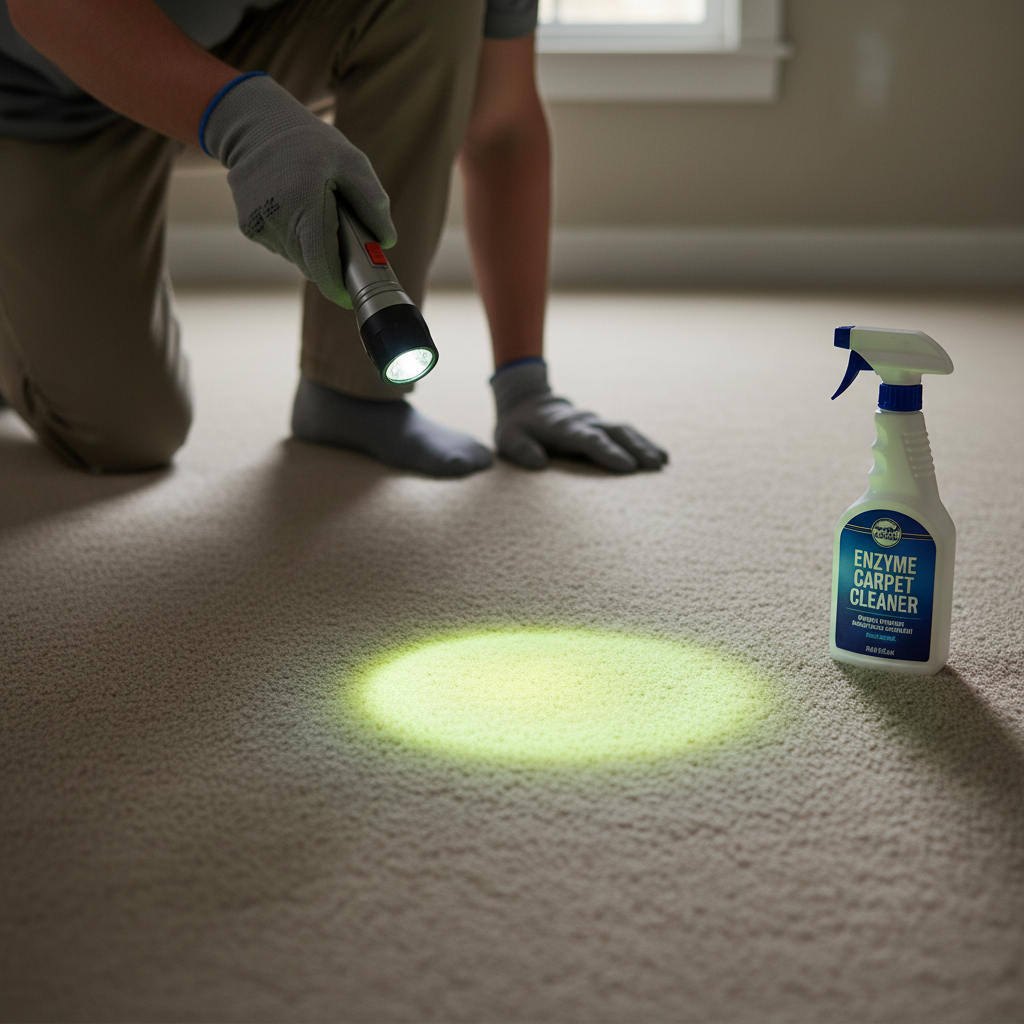
- Pre-Clean the Area — Get rid of the surface junk first.
- Safety: Wear gloves. Open windows for ventilation.
- Process: If there’s visible residue, gently blot it up with paper towels. For carpets, you can use a shop vac to pick up loose debris. Don’t scrub yet; you don’t want to push any leftover urine deeper or spread it around.
Published August 25, 2026Last updated August 25, 2026
Tools & materials you'll need
Affiliate linksAs an Amazon Associate FixlyGuide earns from qualifying purchases — at no extra cost to you. Prices and availability are accurate as of publication and subject to change.
Quick Answer
That lingering pet odor, even after you’ve cleaned what you thought was the spot, usually means the urine’s soaked deeper than you realize. It’s not just the surface you’re fighting; it’s those uric acid crystals buried in carpet padding, subflooring, or upholstery foam. You’ve gotta break ’em down chemically, and enzyme cleaners are your best bet for that. Don’t just cover it up—kill the source.
The Problem
I’ve walked into hundreds of homes where folks swear they cleaned “the spot” a dozen times, yet that same pet odor still hangs in the air. Sometimes you can’t even see a stain, but your nose knows. Pet urine, especially cat urine, is a stubborn little monster. It soaks into porous materials—carpet, wood, concrete, fabric—and once it dries, it leaves uric acid crystals behind. Those crystals are like tiny stink bombs waiting around. When humidity kicks up, or they get damp again, they wake up and start releasing ammonia and mercaptan compounds that’ll smack you right in the face. You can scrub the top all day with soap and water, but if you don’t get to those crystals and break ’em down, the smell’s gonna come back. Been there. Fixed that. It’s frustrating, sure, but it’s a chemistry problem, not just a dirty spot.
How It Works
Alright, let’s talk science for a minute, but I’m not gonna turn this into a lab lecture. When your furry troublemaker has an accident, that urine isn’t just water. It’s got urea, uric acid, creatinine, pheromones, and a handful of other stuff in there. The urea breaks down first, which is where that ammonia smell comes from. But the real pain is the uric acid. Unlike urea, uric acid doesn’t dissolve easy in water once it’s dried and crystallized. It clings to carpet fibers, wood, concrete—whatever it can grab. As those crystals break down over time, especially in warm, humid conditions, they give off those nasty sulfur-like odors (mercaptans, for the chemistry crowd) that’ll curl your nose hairs. Regular cleaners, detergents, and even steam cleaners usually don’t remove those crystals; they can just thin ’em out or spread ’em around, and now you’ve got a bigger problem. That’s where enzyme cleaners come in. They’re not just masking agents. They’ve got beneficial bacteria that produce enzymes, and those enzymes literally eat the uric acid crystals and other odor-causing organic matter, breaking everything down into harmless gases and water. Think tiny microscopic Pac-Men chewing through the stink. It’s a biological process, and it takes time—sometimes 24 to 48 hours—for the enzymes to do their thing. You’re not just cleaning; you’re starting a chemical breakdown.
Step-by-Step Fix
This isn’t a quick wipe-down. It’s a multi-stage assault on invisible stink. I’ve used this method on old rental properties that smelled like a cat rescue gone sideways and on dog messes that soaked right through to the subfloor. Stick with it, and you’ll get there.
-
Locate the Invisible Stain — You can’t fix what you can’t find.
- Tools: UV "black light" flashlight (365nm or 395nm wavelength), darkened room.
- Process: Wait until it’s dark, or make the room as dark as possible by closing blinds and turning off lights. Grab your UV flashlight and slowly scan the floor, walls, and furniture, keeping it about 12-18 inches from the surface. Old urine stains will glow a dull yellow, green, or even a pale blue under the UV light. Mark those spots with painter’s tape or chalk. Don’t skip this step—you’d be shocked how much you miss with the naked eye. I once found a stain on a baseboard that ran all the way up to the window sill in a house in Cranford, New Jersey, and the homeowner had been blasting air freshener at it for months. No dice.
-
Pre-Clean the Area — Get rid of the surface junk first.
- Safety: Wear gloves. Open windows for ventilation.
- Process: If there’s visible residue, gently blot it up with paper towels. For carpets, you can use a shop vac to pick up loose debris. Don’t scrub yet; you don’t want to push any leftover urine deeper or spread it around.
-
Saturate with Enzyme Cleaner — This is where the work starts.
- Tools: Enzyme-based pet odor eliminator (like Nature's Miracle, Rocco & Roxie, or a commercial-grade product), spray bottle or pour bottle.
- Process: This isn’t a light spritz. You need to saturate the stained areas. For carpet, pour enough enzyme cleaner so it soaks through the fibers and into the padding, matching the depth of the original urine. If it’s a small spot, a spray bottle works fine, but for bigger areas, you’ll need to pour it on. The whole point is getting those enzymes down to the uric acid crystals. Follow the product’s directions, but in general, be generous. On concrete or wood subfloors, make sure the entire stained area is visibly wet with cleaner.
-
Let it Dwell (and Do Its Job) — Patience matters here.
- Timing: Allow the cleaner to dwell for at least 10-24 hours, or even longer if the odor is severe or very old. Keep pets and kids away from the treated area during this time. Some products say to keep the area moist; you can cover it with plastic sheeting if needed, but a slow air dry usually does the trick.
- Important: Don’t rush it by drying it out too fast. The enzymes need time to break down the uric acid.
-
Extract the Residue — Pull the dissolved mess out.
- Tools: Wet/dry shop vacuum, clean towels, warm water.
- Process: Once the enzyme cleaner has done its thing and dried, or at least mostly dried, it’s time to extract the residue. For carpets, a wet/dry shop vac is your best friend. Fill it with clean, warm water (no soap!) and run it over the treated area, sucking up as much moisture as possible. Do that a few times until the water coming out looks clear. If you don’t have a shop vac, use clean absorbent towels and step on them to blot up the moisture. This step matters because you’re getting rid of the broken-down urine and cleaner, not just leaving it there to dry.
-
Air Dry Thoroughly — Don’t trap moisture.
- Process: Once extracted, let the area air dry completely. Use fans, open windows, or a dehumidifier to speed things along. Check for any lingering dampness before you put furniture back or let pets back in. Trapped moisture can lead to mold, and that’s a whole other headache you don’t need.
-
Re-Evaluate with UV Light — Double-check your work.
- Process: Once everything’s completely dry, re-scan the area with your UV light. If you still see glowing spots, it means you didn’t get all the uric acid crystals. Don’t panic—it’s common with really old or deep stains. Repeat steps 3-6 on the spots that are still showing up. Sometimes you need more than one round on bad jobs.
-
Address Subfloor/Wall Issues (If Needed) — Deeper problems need deeper fixes.
- Tools: Primer/sealer (odor-blocking like Kilz or Zinsser BIN), paint brush/roller, plastic sheeting, fan, respirator mask.
- Process: If urine has soaked through carpet and padding into the subfloor (plywood, concrete) or drywall, you’ll need to treat those surfaces directly. After cleaning and extracting the enzyme cleaner from the subfloor, let it dry. Then apply an odor-blocking primer/sealer. Kilz or Zinsser BIN are my go-to choices for this. These primers lock in any leftover odor and build a barrier. You might need two coats. Keep the area well-ventilated while you’re working and while it’s drying. For drywall, you may need to cut out and replace badly saturated sections, because urine can wreck the gypsum. That’s not a fun job, but sometimes it’s the only way to truly get rid of the smell.
Common Causes
- Inadequate Cleaning: Regular household cleaners don’t break down uric acid crystals, so the odor source sticks around.
- Deep Saturation: Urine soaking into carpet padding, subflooring, or upholstery foam makes surface cleaning pretty useless.
- Age of the Stain: Older dried stains have tougher uric acid crystals that are harder to remove without enzymes.
- High Humidity: Moisture in the air can wake up dried uric acid crystals and make the smell come back.
- Repeated Accidents: Same spot gets hit over and over, and the uric acid builds up.
- Unspayed/Unneutered Pets: Hormonal marking behavior can lead to more frequent, more stubborn accidents.
Common Mistakes
- Using Ammonia-Based Cleaners: Ammonia in cleaners can actually encourage pets to re-mark the area, which is about the last thing you want. And urine already has ammonia in it—why pile on more?
- Steam Cleaning Without Enzyme Treatment: Heat from steam can bond uric acid crystals to carpet fibers and padding, which basically sets the stain and smell. Always hit it with enzyme cleaner first.
- Not Saturating Enough: If the cleaner doesn’t reach all the crystals, the odor sticks around. You’ve gotta get it deep.
- Drying Too Fast: The enzymes need time to work. Rush the drying and you can shut the whole process down before it finishes.
- Ignoring Subfloor/Drywall: If urine got into the materials underneath, only cleaning the carpet is a band-aid. The smell’ll wick back up.
- Overlooking Walls & Furniture: Pets don’t always pee on the floor. Check vertical surfaces and the sides of furniture with your UV light.
Cost & Time Breakdown
Getting rid of old pet odors can cost you some cash and a fair bit of elbow grease. Here’s the rough breakdown:
| Task | DIY Cost ($) | Pro Cost ($) | Time (DIY) |
|---|---|---|---|
| UV Light (one-time) | $15–$30 | N/A | 5 min |
| Enzyme Cleaner (1 gallon) | $20–$50 | Included | 10 min application |
| Shop-Vac (rental/purchase) | $30–$80 | Included | 30–60 min |
| Odor-Blocking Primer (if needed) | $30–$60 | Included | 1–2 hours |
| Total (DIY initial) | $95–$220 | N/A | 2–4 hours (active) |
| Total (Pro cleaning service) | N/A | $200–$600+ | 2–4 hours (pro) |
Just keep in mind, the DIY costs above are for materials and basic tools you might not already own. If you end up needing new carpet or subfloor, that bill climbs fast.
Tips & Prevention
- Quick Cleanup is Key: The faster you clean a fresh accident, the less likely it is to sink deep and turn into a long-term headache. Blot, don’t rub.
- Train, Don’t Punish: Handle behavior issues with positive reinforcement and a vet check, especially for repeat offenders.
- Protect Porous Surfaces: Use waterproof pads under pet beds or in high-traffic spots, or go with washable rugs that you can actually clean right.
- Regular Deep Cleans: Even if you don’t see accidents, an occasional enzymatic carpet cleaning helps keep odor buildup from getting started, especially in homes with multiple pets. Aim for every 6-12 months.
- Professional Check-Up: If your pet suddenly starts having accidents, rule out medical issues with a vet visit. Could be a urinary tract infection or something else going on.
- Seal Subfloors: If you’re replacing carpet, consider sealing the subfloor with the right primer before you lay down new flooring. That can save you a lot of grief later.
When to Call a Professional
You’ve done your best, followed the steps, and that smell still won’t leave? That’s when it’s time to bring in the cavalry. If the odor has worked its way deep into the subfloor, concrete, or even the wall studs, or if you’re dealing with multiple, large, or really old contamination spots, a professional carpet and odor remediation specialist might be the smarter move. They’ve got industrial-strength equipment—big extractors that pull moisture from deep in the padding and subfloor—and specialized enzyme treatments you won’t find on the shelf at the hardware store. They can also do ozone treatments or thermal fogging for whole-room odor elimination, and that’s definitely not a DIY Saturday project. Don’t mess with gas lines or structural issues yourself, either. If you’re thinking about tearing out flooring or walls to chase the smell, a pro can look at the damage and tell you straight whether DIY is even worth trying. It might cost more up front, but sometimes it’s the only way to get your home back without pulling your hair out.
FAQ
Q: Why does the pet odor seem worse when it's humid or raining? A: High humidity reactivates the dormant uric acid crystals left behind by dried urine. These crystals absorb moisture from the air, causing them to re-release the foul-smelling gases like ammonia and mercaptans, making the odor more noticeable.
Q: Can I use baking soda or vinegar to eliminate pet odors? A: While baking soda and vinegar can help neutralize some surface odors and fresh stains, they are generally ineffective against the uric acid crystals that cause persistent old pet smells. They don't break down the source; they just mask it temporarily.
Q: How do I know if the urine has soaked into my subfloor? A: If you press on the carpet and feel squishy dampness underneath, or if the odor is extremely strong and pervasive even after treating the carpet, it's highly likely the urine has reached the subfloor. A UV light will often show a glowing stain that's larger than the carpet stain.
Q: Is it safe to use enzyme cleaners around pets and children? A: Most reputable enzyme cleaners are formulated to be non-toxic and safe for use around pets and children once dry. However, it's always best to keep pets and kids away from the treated area while it's wet and to follow the specific safety instructions on the product label.
Q: How long does it take for enzyme cleaners to work? A: Enzyme cleaners require dwell time to effectively break down uric acid crystals. This can range from a few hours to 24-48 hours, depending on the severity and age of the stain. You won't see instant results; patience is key.
Q: What's the difference between an enzyme cleaner and an odor neutralizer? A: An enzyme cleaner uses living bacteria to break down the organic source of the odor (uric acid). An odor neutralizer, on the other hand, typically uses chemicals to bind with or alter the odor molecules, masking or reducing the smell without eliminating its source.
Q: Can I just replace the carpet without treating the subfloor? A: If urine has soaked into the subfloor, simply replacing the carpet won't solve the odor problem. The smell will emanate from the contaminated subfloor and quickly permeate the new carpet. You must treat or seal the subfloor first.
Q: My pet keeps having accidents in the same spot. What should I do? A: This often indicates a behavioral or medical issue. Consult your veterinarian to rule out health problems. For behavioral marking, thoroughly eliminate the odor from the spot using enzyme cleaners and consider deterrents or professional pet training to break the habit.
Related Articles
Keep troubleshooting with these hand-picked guides from FixlyGuide:
- That Mystery Haze on Your Dishware? Your Dishwasher's the Culprit — If your 'clean' dishes come out looking cloudy, streaky, or gritty, it's not you – it's your dishwasher, and I'll show you how to fix it.
- The 'Triple Lift' Trick for Erasing Set-In Couch Stains — Don't despair over that old, set-in stain on your white sofa. Our guide reveals a powerful, three-phase cleaning method using targeted chem…
- Pet Urine's Hidden Crystals: The Real Cleaning Trick — Permanently eliminate stubborn pet urine odors by using a specific cleaner that dissolves the hidden uric acid crystals that typical carpet…
- Your Shower Glass Isn't Etched, It's Hiding a Mineral Secret — Stop scrubbing endlessly; the secret to dissolving stubborn hard water stains on your shower glass lies in using the right acidic cleaner t…
- The Secret to Dissolving Stubborn Kitchen Grease Buildup — Learn the chemistry-backed method to safely dissolve years of baked-on grease from your range hood and baffle filters, restoring performanc…
- The Nasty Truth About Your Bathroom Sink Smell (And the $10 Fix) — Uncover the real culprit behind that foul odor from your bathroom sink drain and learn a simple, effective, and cheap DIY fix to eliminate…
Should you do this yourself?
Answer five quick questions before you start. Safety outranks savings every time.
Your experience with work like this
How high do you have to work?
Does the job involve any of these?
Will it need a permit?
Specialty tools
Free and instant. Educational guidance only — not a quote, inspection, or professional diagnosis.
What should this project cost?
Enter your project details for a realistic cost range before you call anyone.
Cost depends heavily on which system turns out to be the source.
- Regional adjustment
- National average
- Labor share (typical)
- ~$1,620
- Quotes to collect
- 3 written estimates
Educational estimate based on national averages — not a binding quote. Always confirm with written local estimates.
Before you start
Check the difficulty, permits, and safety risk — then decide whether to call a pro.
- Estimate this projectGet a cost range for your scope and ZIP before you call anyone.Open
- Get local estimatesSend one request and compare written estimates from vetted pros.Open
Free, no signup required. Estimates are educational guidance, not a quote or an inspection.
Get the print-ready PDF of this guide
A clean, ad-free, printable version you can keep on your phone or pin to the workshop wall. Free with a FixlyGuide account.
- Print-optimized layout
- Tools, materials & every step included
- Saved to your account
Frequently asked questions
Why does the pet odor seem worse when it's humid or raining?+
High humidity reactivates the dormant uric acid crystals left behind by dried urine. These crystals absorb moisture from the air, causing them to re-release the foul-smelling gases like ammonia and mercaptans, making the odor more noticeable.
Can I use baking soda or vinegar to eliminate pet odors?+
While baking soda and vinegar can help neutralize some surface odors and fresh stains, they are generally ineffective against the uric acid crystals that cause persistent old pet smells. They don't break down the source; they just mask it temporarily.
How do I know if the urine has soaked into my subfloor?+
If you press on the carpet and feel squishy dampness underneath, or if the odor is extremely strong and pervasive even after treating the carpet, it's highly likely the urine has reached the subfloor. A UV light will often show a glowing stain that's larger than the carpet stain.
Is it safe to use enzyme cleaners around pets and children?+
Most reputable enzyme cleaners are formulated to be non-toxic and safe for use around pets and children once dry. However, it's always best to keep pets and kids away from the treated area while it's wet and to follow the specific safety instructions on the product label.
How long does it takes for enzyme cleaners to work?+
Enzyme cleaners require dwell time to effectively break down uric acid crystals. This can range from a few hours to 24-48 hours, depending on the severity and age of the stain. You won't see instant results; patience is key.
What's the difference between an enzyme cleaner and an odor neutralizer?+
An enzyme cleaner uses living bacteria to break down the organic source of the odor (uric acid). An odor neutralizer, on the other hand, typically uses chemicals to bind with or alter the odor molecules, masking or reducing the smell without eliminating its source.
Can I just replace the carpet without treating the subfloor?+
If urine has soaked into the subfloor, simply replacing the carpet won't solve the odor problem. The smell will emanate from the contaminated subfloor and quickly permeate the new carpet. You must treat or seal the subfloor first.
My pet keeps having accidents in the same spot. What should I do?+
This often indicates a behavioral or medical issue. Consult your veterinarian to rule out health problems. For behavioral marking, thoroughly eliminate the odor from the spot using enzyme cleaners and consider deterrents or professional pet training to break the habit.
Discussion
Loading comments…