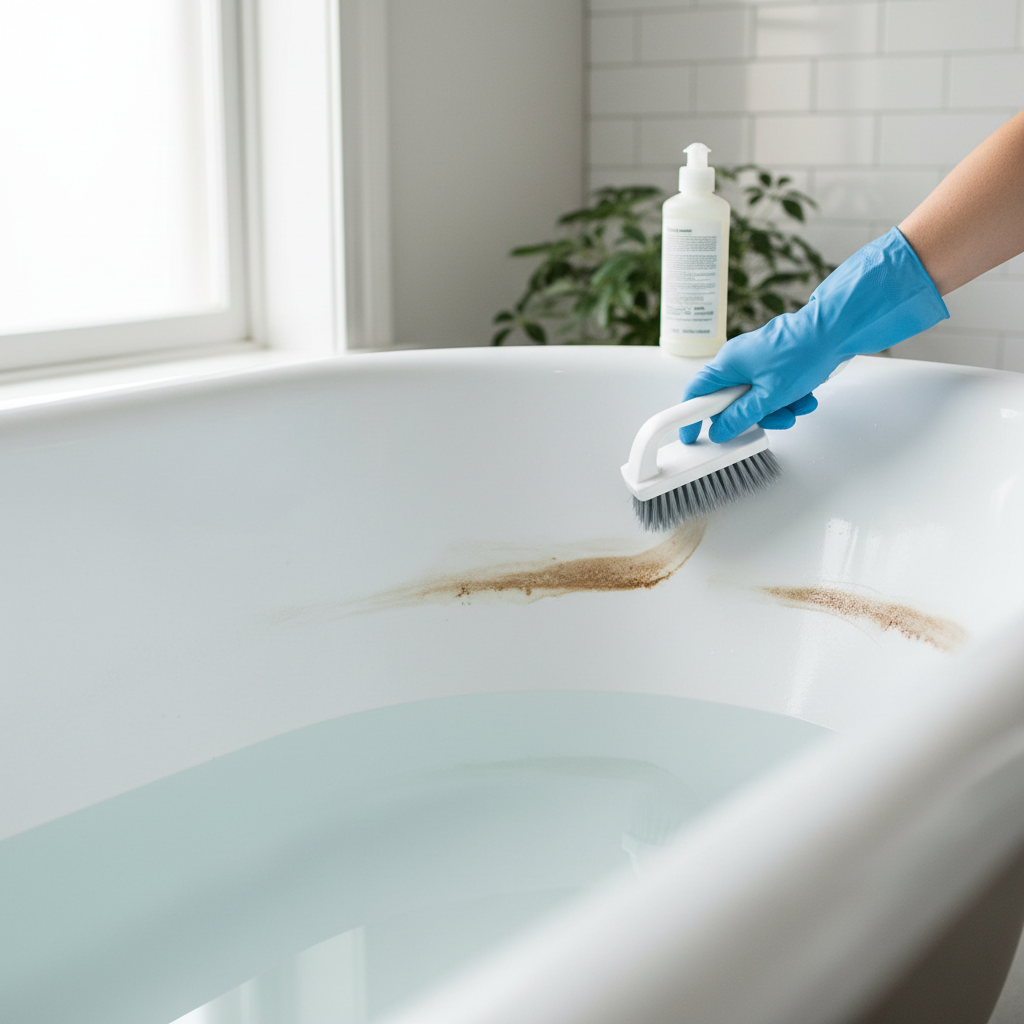
- Infrequent Cleaning: Life gets busy. I get it. But if soap scum, body oils, and mineral deposits sit there for weeks or months, they bond to the tub surface and turn into a real pain.
- Ineffective Cleaners: A generic spray that only handles surface dirt won't touch deep mineral stains or the greasy layers underneath. You need the right chemistry for the job.
- Old or Damaged Tub Surface: After years of use, that smooth tub finish can get scratched or etched. Those tiny flaws act like little hooks, grabbing dirt, minerals, and soap scum so the stains stick harder.
- Leaky Faucets: A slow drip from the faucet, especially if it's hitting the tub wall over and over, means water keeps evaporating in one spot and leaves a concentrated mineral ring right where the drip lands.
Published September 13, 2026Last updated September 13, 2026
Tools & materials you'll need
Affiliate links- AmazonNon-abrasive scrub brush
- AmazonWhite vinegar1 gallon
- AmazonNon-scratch scouring pads
- AmazonAlkaline bathroom cleaner (e.g., soap scum remover)
- AmazonRubber gloves
- AmazonPaper towels
- AmazonBaking sodaOptional, for tough spots
- AmazonHydrogen peroxideOptional, for tough spots
- AmazonCalcium, Lime, Rust (CLR) removerOptional, for very stubborn mineral stains
As an Amazon Associate FixlyGuide earns from qualifying purchases — at no extra cost to you. Prices and availability are accurate as of publication and subject to change.
Quick Answer
That stubborn brown ring around your bathtub isn't just plain old soap scum, though that's part of it. Most times, it's a nasty mix of mineral deposits from hard water—think iron, manganese, or calcium—plus body oils, dead skin, and, yeah, some soap residue. Every now and then, mold or mildew gets in on the act and adds to that grimy edge. The real trick isn't scrubbing like mad; it's using the right cleaner to break down each piece, whether it’s mineral buildup that needs acid or organic gunk that needs something else. Keep after it, and a little prevention goes a long way.
The Problem
Let's be honest, that brown ring is ugly. You scrub, you spray, and it feels like the thing's mocking you. I've seen homeowners burn through bottle after bottle of generic bathroom cleaner, only to watch that nasty line stick around. And it's not just about looks. Those rings can hold onto bacteria and mold, which means your "clean" bathroom isn't quite as clean as you'd like. Leave it long enough, and those mineral deposits can etch into porous surfaces like grout or older porcelain, which makes the whole mess tougher to remove later. What starts as a small annoyance turns into a full-on elbow-grease session, or worse, a surface that never really looks clean again.
How It Works
So what's making that brown ring hang on so tight? Think of your bathtub like a tiny work zone after a long shift. Every shower drops a mix of skin oils, dead skin cells, shampoo, conditioner, soap, and whatever minerals are floating around in your tap water. Once the water dries up, all that junk stays behind.
Hard water is usually the main culprit. It's loaded with dissolved minerals like calcium, magnesium, iron, and manganese. Iron oxidizes when it hits air and water, and that gives you that reddish-brown look. Manganese can leave dark brown or almost black stains. Those minerals love to grab onto the tub surface, especially right at the waterline where water splashes, sits, and dries over and over.
Then you've got the organic side of the mess: body oils, soap scum, and dead skin cells. Soap scum is basically soap reacting with hard water minerals and turning into a sticky film that doesn't rinse away worth a darn. That film acts like glue. It traps the mineral deposits and gives mold and mildew a damp little home to move into. Soap scum by itself usually isn't brown, but it catches all the brown-tinted junk and makes the stain look worse.
So now you're dealing with a layered mess—mineral scale fused to organic grime, all baked on by repeated drying cycles. No wonder one cleaner doesn't solve it. You need something that can handle both the mineral scale and the greasy sludge. I pulled a water heater in Frisco last month that had exactly this kind of build-up on the pan underneath—same story, different surface. Once that stuff gets layered in, it doesn't give up easy.
Step-by-Step Fix
Getting rid of that persistent brown ring takes a little strategy, but I've got a method that usually knocks it out. You'll be surprised how much better your tub looks.
-
Prep the Area — Clear everything out and get some air moving. Before you start spraying chemicals, pull out all your shampoos, soaps, and bath toys. Open a window or kick on the exhaust fan. You don't want to be breathing fumes, especially if you're using more than one cleaner.
- Safety First: Good ventilation matters. If fumes bug you, wear a simple dust mask.
-
Initial Rinse and Scrub — Knock off the loose stuff first. Rinse the tub with hot water. Then use a non-abrasive scrub brush or sponge and give the brown ring a quick pass with a little dish soap. That won't erase it, but it'll clear off the loose surface grime and fresh soap scum so your real cleaner can get to work.
- Tip: Don't grab anything too abrasive, especially on acrylic or fiberglass tubs, or you'll scratch the surface and make future stains stick even harder.
-
Attack Mineral Deposits (Acidic Cleaner) — Break down the hard water stain. For the mineral part, you need acid. My usual go-to is white vinegar. Spray or wipe undiluted white vinegar right onto the brown ring. If it's thick, soak paper towels in vinegar and lay them over the stain so they stick. Let it sit at least 30 minutes, and for ugly stains, a few hours won't hurt. The acid starts dissolving the mineral bonds.
- Alternative: For the really stubborn stuff, a dedicated calcium, lime, and rust (CLR) remover can work wonders. Follow the label like your paycheck depends on it. These are stronger acids, so don't leave them on too long—usually no more than 5-10 minutes.
- Warning: Never mix vinegar or other acids with bleach. That's how you make toxic chlorine gas, and that's no joke.
-
Scrub After Acid Treatment — Work the acid in. After the soak, put on gloves. Use a stiff nylon scrub brush (not wire!) or a non-scratch scouring pad. Scrub hard. You should see some of the brown breaking loose. Rinse it well with water.
-
Tackle Organic Grime (Alkaline/Enzymatic Cleaner) — Go after the soap scum, oils, and mold. Once the mineral layer's weakened, it's time for the organic crud. Spray a good alkaline bathroom cleaner (like one with bleach, if your tub is white porcelain, or a dedicated soap scum remover) or an enzymatic cleaner on the leftover stain. Let it sit for 10-15 minutes. These cleaners break down fats, oils, and proteins.
- If you used CLR: Rinse all of the acidic cleaner away before you put on anything alkaline.
- For mold/mildew: A bleach-based cleaner can work, but only if your tub surface can handle it and you've already rinsed off any acidic cleaner.
-
Second Scrub and Rinse — Finish the job. Keep your gloves on and scrub the area again with your brush or non-scratch pad. You'll usually see more of the stain lifting. Rinse the tub thoroughly with hot water and get every bit of chemical residue off.
-
Deep Cleaning with a Paste (Optional, for really tough spots) — When the stain still hangs on. If you can still see faint traces, I sometimes mix baking soda with a little hydrogen peroxide to make a paste. Smear it on the stain, let it sit for 20-30 minutes, then scrub with a damp sponge. The baking soda gives you mild abrasion, and the peroxide helps with bleaching and breaking down organic gunk.
-
Dry and Polish — Keep new rings from showing up. Once the tub's clean, dry it all the way with a clean towel. That keeps fresh water spots and mineral deposits from forming right away. For an extra step, you can put on a thin coat of car wax or a specialized tub sealant over the clean, dry surface. That makes the tub a little less grabby and easier to clean next time. Just don't turn the floor into an ice rink if you wax it!
Common Causes
More often than not, that brown ring is telling you something about your water and your cleaning routine. Here's what I usually run into:
- Hard Water: This is the big one. If your water's heavy on minerals—especially iron and manganese—they settle out and oxidize, which leaves that reddish-brown or dark brown stain. I once worked a house out on the rural outskirts of Springfield, IL, where the well water had so much iron in it the tub would get a deep orange ring every few weeks. It was a constant fight until they put in a water softener.
- Infrequent Cleaning: Life gets busy. I get it. But if soap scum, body oils, and mineral deposits sit there for weeks or months, they bond to the tub surface and turn into a real pain.
- Ineffective Cleaners: A generic spray that only handles surface dirt won't touch deep mineral stains or the greasy layers underneath. You need the right chemistry for the job.
- Old or Damaged Tub Surface: After years of use, that smooth tub finish can get scratched or etched. Those tiny flaws act like little hooks, grabbing dirt, minerals, and soap scum so the stains stick harder.
- Leaky Faucets: A slow drip from the faucet, especially if it's hitting the tub wall over and over, means water keeps evaporating in one spot and leaves a concentrated mineral ring right where the drip lands.
Common Mistakes
I've seen plenty of well-meaning homeowners make these mistakes, and they can make the problem worse or wreck the tub:
- Using Abrasive Scrubbers: Steel wool, harsh pads, or powdered cleansers can scratch porcelain, acrylic, or fiberglass tubs. Those scratches give stains a place to hide, and then you're fighting them forever.
- Mixing Cleaning Products: Big no-no. Bleach mixed with ammonia (found in many glass cleaners) or with acids like vinegar or CLR can kick off toxic fumes that are dangerous to breathe. Read the labels and rinse well between different cleaners.
- Not Letting Cleaners Dwell: Spraying a cleaner and wiping it off right away doesn't give it time to break down the grime. Let it sit 10-30 minutes and do some of the work for you.
- Ignoring Ventilation: Cleaning products, especially strong ones, kick off fumes. In a closed bathroom, that can mean headaches, dizziness, or worse. Crack a window and run the fan.
- Focusing Only on Soap Scum: A lot of bathroom sprays are fine for soap scum, but they won't touch mineral deposits. If you've got hard water, you need an acidic cleaner in the mix.
- Not Rinsing Thoroughly: Cleaner left behind can attract more dirt, create slippery spots, or damage the tub surface over time. Rinse every bit of it off.
Cost & Time Breakdown
Here's a quick look at what you can expect to spend and how long it'll take, whether you DIY or call a pro.
| Task | DIY cost | Pro cost | Time |
|---|---|---|---|
| Supplies (cleaners, brushes) | $15–$50 | N/A | N/A |
| Remove Light Ring (DIY) | $0–$15 | N/A | 30–60 minutes |
| Remove Heavy Ring (DIY) | $15–$50 | N/A | 1–3 hours (including dwell time) |
| Professional Deep Clean | N/A | $75–$200 | 1–2 hours (for the pro) |
| Tub Refinishing (for etched tubs) | N/A | $300–$600 | 1-2 days (prep, cure time) |
Tips & Prevention
Once you've got that tub shining, you'll want to keep it that way. Prevention beats a deep clean every time.
- Wipe Down After Each Use: This is the best habit, plain and simple. A quick wipe with a sponge or squeegee after a shower pulls off most of the water, soap, and residue before it dries on there. Takes 30 seconds.
- Regular Cleaning: A light scrub with a mild all-purpose cleaner once a week keeps buildup from getting a foothold. Don't let it go more than 7 days.
- Install a Water Softener: If your water's really hard, this is the big fix. It cuts out the minerals that cause the problem in the first place, which helps your tub, shower, and plumbing too. It's an investment, sure, but it pays off over time.
- Fix Leaks Promptly: Even a slow drip can leave a concentrated mineral deposit. Swap out leaky faucet washers or cartridges as soon as you notice them.
- Use Liquid Soaps/Gels: Bar soap reacts with hard water and makes more soap scum. Liquid body washes and gels rinse cleaner and leave less behind.
- Apply a Protective Coating: Every few months, after a deep clean, think about putting on a tub and tile sealer or even a car wax (careful not to make the floor slippery!) on the dry surface. That gives grime less to grab onto and makes wipe-downs easier.
When to Call a Professional
Look, I'm all for DIY, but there are times when it's smarter to bring in a pro. If you've gone through the steps above with strong cleaners and that brown ring still won't budge, or if the stain has etched into the surface of your tub, it might be time for something more serious. A professional cleaning service usually has industrial-strength cleaners and equipment that regular folks don't. And if your tub is old, heavily stained, or the finish is shot, a pro may suggest refinishing or reglazing. That's a specialized job—sanding, priming, and putting on a new durable coating—and it's not a weekend project for most homeowners. If you're seeing heavy etching, chipping, or you think mold is growing under the tub surface, get somebody out there. They can size up the damage and tell you what your options are without you accidentally making things worse.
Related Articles
Keep troubleshooting with these hand-picked guides from FixlyGuide:
- The Mystery Smell: Why Your Fridge Stinks (Even After Cleaning It) — That persistent, foul odor in your refrigerator isn't just gross; it's often a sign of hidden issues. Learn the real culprits behind linger…
- The Caulk Stain That Won't Quit: Why Your Shower Stays Grimy — Is that stubborn, discolored caulk making your clean shower look perpetually dirty? It's not just surface grime; it's often mold or mildew,…
- The Invisible Scum on Your Bathtub: How to Make It Gleam Again — Is your bathtub losing its luster, even after scrubbing? That invisible layer of soap scum and mineral deposits is the culprit. Learn how t…
- That Stubborn Orange Slime Around Your Faucet? Here's the Real Culprit — That pinkish-orange buildup around your kitchen faucet isn't just unsightly; it's a bacterial party in progress, and I'll show you how to s…
- The Soap Scum Monster on Your Shower Walls? Here's Its Kryptonite — Tired of scrubbing that stubborn soap scum on your shower walls? I've got the real-world tricks to blast it away, leaving your shower spark…
- That Mildew Smell in Your Washer? Here’s the Real Reason — Is a musty odor taking over your laundry room? That mildew smell from your washing machine isn't just unpleasant—it's a sign of a deeper pr…
What should this project cost?
Enter your project details for a realistic cost range before you call anyone.
Cost depends heavily on which system turns out to be the source.
- Regional adjustment
- National average
- Labor share (typical)
- ~$1,620
- Quotes to collect
- 3 written estimates
Educational estimate based on national averages — not a binding quote. Always confirm with written local estimates.
Get the print-ready PDF of this guide
A clean, ad-free, printable version you can keep on your phone or pin to the workshop wall. Free with a FixlyGuide account.
- Print-optimized layout
- Tools, materials & every step included
- Saved to your account
Frequently asked questions
What causes the brown ring in my bathtub?+
The brown ring is usually a mix of hard water minerals (like iron and manganese), body oils, dead skin cells, and soap scum. These elements combine and dry onto the tub surface, creating a stubborn, layered stain that regular cleaning often misses.
Can I use bleach to clean the brown ring?+
Bleach can help with organic stains like mold and mildew, but it won't effectively remove mineral deposits from hard water. Plus, you must never mix bleach with acidic cleaners (like vinegar or CLR) as it creates dangerous toxic fumes. Use bleach only on its own, and after thoroughly rinsing any other chemicals.
How can I prevent the brown ring from coming back?+
The best prevention is wiping down the tub after every use to remove excess water and residue. Regular weekly cleaning, fixing leaky faucets, and considering a water softener for hard water are also highly effective strategies.
Is it safe to use strong acids or bases in my tub?+
Use strong cleaners like CLR or heavy-duty alkaline cleaners with caution. Always wear gloves and ensure good ventilation. Read product labels carefully, don't leave them on longer than recommended, and never mix them with other cleaners.
My tub is acrylic/fiberglass. Will these cleaning methods damage it?+
Most of these methods are safe for acrylic and fiberglass, but you must be extra careful with abrasive scrubbers or highly corrosive chemicals. Always test cleaners in an inconspicuous area first, and opt for non-abrasive pads. Vinegar is generally safe, but strong acids like concentrated CLR should be used sparingly and rinsed quickly.
What if the stain is really old and etched into the tub?+
If the stain has etched into the tub surface, it means the finish is damaged, and simple cleaning may not work. You might need to consider professional tub refinishing or reglazing, which involves applying a new surface layer.
Can a water softener help with bathtub rings?+
Absolutely. A water softener removes the minerals (calcium, magnesium, iron) from your water before they reach your tub. This significantly reduces mineral deposit formation, making it much easier to keep your tub clean and preventing future brown rings.
How often should I deep clean my bathtub to avoid this problem?+
Aim for a deep clean every 2-4 weeks, depending on how often the tub is used and how hard your water is. Daily wiping and weekly light cleaning will greatly extend the time needed between deep cleans.


Discussion
Loading comments…